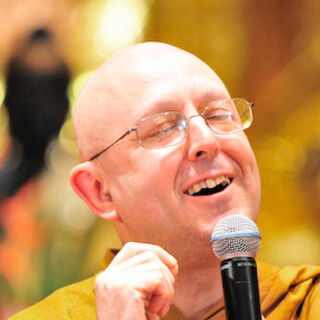
So welcome everybody to today's meditation class.
As usual,
I always have to make the announcement that this is the ongoing class where people come most Saturdays to keep their meditation advancing.
But for those people who come here for the first time,
We have an introduction to meditation class which is being held in the room to my right.
And that class is especially just to introduce people to the basics of meditation,
Just so that this class cannot be sort of too difficult for them.
It's not just the teachings in this class is aimed at those people who have meditated before,
But even the time when we meditate here for about 40-45 minutes,
Can be a bit difficult for those who haven't meditated at all before.
Even if you sit down comfortably,
Just being able to sit down and make the mind comfortable and peaceful still is a difficult thing for 45 minutes.
So here this is for the ongoing class.
So having made that,
As I have to do every week,
For the meditation class,
It's not just,
You know,
Just teaching people when they first come to sit down here what to do,
It's also what happens beforehand.
So even trying to make a few little changes to my schedule,
I just come in here just five or ten minutes before the class starts,
Just so I can settle down instead of just talking to people too much beforehand.
Because you'll find that your mind,
It is just like a car,
It takes a while to slow down.
If you know you are driving one of these huge road trains you see in Australia,
Then you put the brakes on,
It takes maybe a kilometer before you come to a halt.
You've got so much momentum.
And it's the same with a human being,
Sort of if you come in here,
You've been chatting and excited,
And then when you first come in here,
You still sort of carry that momentum,
That disturbance inside.
So it's nice before you start to meditate to have a period five or ten minutes before,
Where you just go a bit slower,
More peaceful,
More relaxed,
So that you are prepared when you come in here to be able to relax some more.
And it's also the reason,
I was talking with one of my fellow monks yesterday,
There's one of the reasons why we have a little 15 minute introduction before we start meditating,
Simply because the speech which I've given,
Whether you understand it or not,
Just does serve the purpose to calm people down,
To get people in a peaceful state,
So that they can just by the time they shut their eyes and usually begin at quarter past three,
By that time they're nice and peaceful.
At least they're more peaceful than they were before.
So anyway,
For the meditation,
Just be able to calm the body and calm the mind down,
To bring it to a rest slowly,
Because when you force it,
You find it doesn't come to a rest at all.
The path of meditation is really learning how to be,
Oh the doors are locked,
There's a door to the right over there,
Aha,
I don't know why they've all been locked today.
But anyway,
It's okay,
Just one door is enough,
That's nice and peaceful.
Anyway,
Just when the,
We do start to meditate,
It is learning how to be both mindful and to be kind.
That combination of awareness and kindness is what makes the meditation work.
And if one is neither got no mindfulness,
No kindness,
You always find it goes to a different place.
So to be able to be mindful and to be kind,
Sometimes people have a difficulty understanding what awareness is.
You think it'd be one of the most easiest of things to understand,
But of course it's not.
Okay,
Someone needs to be outside there.
People are banging in this way and that way.
Okay,
Okay,
Away,
Now we haven't got the middle path open yet.
Okay,
The two side ones are open anyway,
Excellent.
Okay,
Anyway,
So if at last people are settled down,
Then I can begin appropriately.
Very good.
That is open again I think,
Isn't it?
Sorry?
Yeah,
This one's open too,
Isn't it?
Yeah,
Why?
No,
Leave it open.
People can come in.
The first open,
The first book which I wrote was,
Opening the Door of Your Heart.
And if this isn't the heart of our Buddhist center here,
We must always keep it open for the happiness and well-being.
Some people come late,
Sometimes it's just because,
You know,
There's all sorts of things happened before we actually get to this venue.
And so,
Yeah,
Can you open that one as well?
Because otherwise it's going to make no noise.
Yeah,
Get them all open.
Okay,
Everything's open now.
Great.
Okay,
Okay,
Let's start from the beginning.
When we want to control things and make them this way and that way,
It always causes a lot of tension.
But when one is kind to life,
When one's kind to the moment,
When one is even kind to the past and the future,
You find that that is where things become nice and peaceful.
So it's awareness and kindness,
Those two together,
Is what take the body and the mind into deep meditation.
So kindness means opening the door of your heart and the doors to this meditation room and just to let people come and let people go out,
Not controlling things.
Of course there will be noise every now and again,
But that is part of life.
People cough,
People come in and come late,
There's kids who sort of sometimes make a noise.
But we have a choice there.
If somebody coughs,
The sound of the cough just disappears in a second or two.
But the problem is,
Is when we start thinking about it afterwards,
They shouldn't do this,
They should do that,
They should do something different.
We should have different types of doors,
Electronic doors or revolving doors or some other way to transport people in and out when it gets a bit too,
Too late or too early and they want to leave early,
Whatever.
We can actually,
The sound of the door was finished a long time ago,
But it echoes in our mind because of negativity,
A lack of kindness.
And that leads you on to understanding just how we do let go of the past and let go of the future as well.
You know,
All of you probably know things like the mindfulness in the present moment,
The power of now,
And it sounds very easy just to be in the present moment,
Just to be here and let go of all the past and all the future.
This is a hard thing to do.
And it's important thing to do because most of our thinking,
The wandering mind,
Is all about the past and the future mostly.
And so how do we let that go?
We just say let it go.
If we try and keep it out,
Blot it out,
It's just like trying to keep everyone coming at the right time into this meeting.
They always come early or come late,
You can't stop it.
You can't just say,
Oh why can't we,
We,
You can't control things.
So instead what we do is we just learn how to,
Learn how to just be kind to this moment,
To adapt to it,
To embrace it.
So in other words,
We don't fight it,
We let it be.
And if we're kind to the past and if we're kind to the future,
You find that the past and the future gets softened.
And they can be very easily let go of.
What do I mean by being kind to the past?
It means that whatever happened in the past,
Whoever did what,
Whoever and whom,
Or what you did,
We get this wonderful light,
Compassionate,
Seeing things in the most positive light,
Instead of looking to prosecute the person who did those things or prosecute yourself,
We never look at the past in the,
With the idea of a prosecutor in a court of law.
We always look at the past with the eye of a defense attorney.
Always looking at the mitigating circumstances,
Always looking in excuses,
Something which we can forgive ourselves or forgive them.
They weren't in a good mood that day or maybe they misunderstood or maybe we did not remember what happened properly.
Whatever it is,
We learn how to look at the past with compassion,
With forgiveness,
With seeing the most,
The most,
Even,
Even if it's pushing the truth a little bit,
Just seeing it in a way which can just forgive and let go and see the positive side in the past experiences.
When we look at it with compassion and kindness,
Then we actually find that we can let go of the past pretty easily.
And it's the same with the future.
We look at the future with a bit of kindness and positivity and then it's just not so fearful,
Not so anxious about what might happen next.
So just a little bit of kindness,
Care,
Compassion,
Does actually free us from the past and the future.
And that sort of compassion and kindness that gives us the freedom just to be here,
Is also applied to this present moment,
When we're actually mindful and we're actually here,
We learn how just to be here.
When we're kind to this moment,
We embrace it,
To let it be with some kindness.
You'll find it's so easy to be with.
It's just like sometimes with your,
Your family,
With your loved ones,
It's easy to spend time with them,
With people who you care about.
And those are the sort of people which we can spend hours with effortlessly,
Because we're the best friends,
We love one another.
I often say that,
I mentioned it just briefly in passing at the end of my talk last night,
The way to find solitude and be happy in your solitude,
Is to realize that when you are alone,
You are,
You can be,
If you have the right attitude,
You can be with one of your best friends,
Which is yourself.
You're kind to yourself,
You care for yourself.
So in other words,
When you're with yourself alone,
You can feel this wonderful sense of being with a really,
Really good friend.
And then you find it's just so easy just to relax with one another,
You don't need to force it.
The simile which I gave some time ago,
Was the simile of,
Of getting a telephone call in the afternoon.
And you get a,
A person,
So you answer the phone and said,
Hi,
Are you free this afternoon?
They say,
Yeah,
I'm free this afternoon.
And they said,
Do you want to come for a cup of coffee?
He said,
Okay.
They said,
We want to go to my coffee shop,
Not your favorite coffee shop,
My favorite coffee shop.
And I want you to take a latte.
I know you don't like lattes,
But I like lattes,
So that's what you're going to have.
We're going to sit in the back of the coffee shop,
Not the front where you like,
We're going to have a chocolate,
Chocolate chip muffin.
I know you don't like that,
But I like it,
So that's what you're going to have.
We're going to sit in the back and we're going to talk about politics,
Because that's really important.
None of your spiritual mumbo-jumbo,
But politics.
And we're going to sit there and go one hour.
And if somebody comes and tells you where you're going to go,
What you're going to talk about,
What you're going to eat and for how long,
Would you like to spend time with such a control freak?
So in this simile the person says,
Oh I'm terribly sorry,
But I just remembered I've got to go to the dentist.
Terribly sorry,
Maybe next time.
And then you hang up and then just to keep your precepts,
You call your dentist and make an appointment as soon as possible.
And then as soon as you made the appointment,
You get another telephone call from another friend.
And the other friend just tells you,
Oh are you free this afternoon?
Oh no,
I just got this appointment with the dentist.
Oh that's terribly sorry about that,
Because I know this coffee shop you keep telling me about is just really,
Just such delicious coffee.
Just suddenly,
And the biscuits are just to die for,
They're just so amazing.
And I know you're always talking about meditation and Buddhism,
You know,
Even though I don't believe in all of that stuff,
He is really interested.
So I'd love to know,
To spend time so you can explain this thing to me.
And when somebody wants to go to the place you want to go to,
And you know,
Drink and eat what you want to drink and eat,
I want to talk about things which interest you,
What would you do?
You'd say,
Okay I'll be there,
I cancel my dentist appointment,
See you in ten minutes.
And then you spend all afternoon there,
Simply because you're being with a good friend,
Someone who respects you,
And talking about things which also interest you,
Which is one of the reasons why you could spend hours being with a good friend,
Which is one of the reasons you can spend a whole 45 minutes here,
With no problem at all,
Just being with an old friend,
Your mind,
Not telling it what it should be aware of,
Not telling it what it's supposed to be investigating,
Not telling it what it's supposed to be doing,
Just hanging out together,
Two good friends,
You,
Your body and your mind,
Hanging out together as good friends,
Enjoying one another's company.
That is the reason why we can,
We don't wander off,
We don't go thinking about other things,
We don't go into the past or the future,
We just are here,
Happy,
At peace with a good friend,
And you find it soon gets so peaceful and so still,
Just being with one another.
Bit of kindness.
But anyway,
That will be explained even deeper when we do our meditation,
Which is going to beginning now.
I'll be leading this meditation for the first 15 or 20 minutes,
Just giving you a guide about mindfulness and kindness and how those two work together to create a very peaceful state of mind.
So if you'd like to get yourself in your meditation posture,
Whichever that is,
It's okay to sit on chairs,
Okay to sit against the wall,
To lean back if you need to.
People have their stools,
One cushion,
Two cushions,
People have their whatever they've learnt,
Makes it very easy and comfortable to sit without too much aches and pains.
So you sit down and you close your eyes.
And with your eyes closed,
You bring your awareness first of all to your posture.
How are you sitting now?
Can you improve your posture?
Where you're sitting,
Just by adjusting it.
Once you think you have a decent posture,
Let's get a bit more careful and meticulous with it.
Now see if you can be aware of how your legs are positioned.
Can they be improved?
Mind can.
I'm mentioning last night,
When you ask a question,
There's one very effective way of focusing your mindfulness on one particular area.
So I ask my legs,
How are you?
When I ask that question,
I listen afterwards and I can feel my legs need a little bit of adjustment here,
A little bit of adjustment there.
The question allows mindfulness to arise.
And my kindness is willing to fidget,
To adjust this way and that way,
Caring about my legs so that I do get them into the optimum position for meditation.
It's not always the same every time.
It's not one posture you keep to all the time because your body is always changing.
And then once my legs are comfortable,
I move up my body to my butt,
Making sure the bottom is well adjusted on the cushion.
I like a little cushion under the back of,
Not too far forward,
Not too far back,
The optimal position.
Because I know if I don't do this now,
Later on in meditation it'll start to get,
Get irritable.
Aches and pains will start to arise.
Once my butt feels comfortable,
Move up to my back,
Stretch it,
Twist it around until I can find the best position.
Sometimes you look at animals like dogs or cats and just to see just how they can find a comfortable position,
Almost anywhere.
What I'm doing now is being aware of the feelings in my back,
Mindful of them,
Aware of them and being kind enough to move this way,
Move that way,
To find the best position.
This is called sort of feedback.
Mindfulness allows you to get feedback and the kindness will stop at the best position.
I'm going to check my hands,
Make sure that they are well positioned,
Comfortable.
With those hands,
My arms as well.
Spite adjustment could make the body pain free.
Then I relax my shoulders.
How do you relax your shoulders?
Try this,
Try that.
But all the time you are aware of your shoulders and you find just what works for you.
Soon by awareness and kindness you can feel the body muscles just let go,
Release and they relax.
You're learning mindfulness and kindness.
And up to your throat,
Your neck.
People have neck pains or rotations because they put their head in a comfortable position on top of their neck.
You move in until you find the best position for your head.
There's an irritation in the throat,
You may cough if you need to.
But just be aware and notice just how the attitude of your mind,
How you look at things,
Will affect the intensity or otherwise of the irritation.
If you try and control things get tense.
If you relax,
Even an irritation,
An itch in the throat gets less.
And then up to the head.
Relaxing the muscles in the face.
That's something that's reasonably easy to do.
Feel the tightness around my eyes and with a little bit of practice you learn how to relax those muscles,
To loosen them.
You can feel them getting looser around the mouth or along the forehead.
Nothing is tight.
The awareness just goes to the body first.
And the kindness acts to bring ease to your body.
And you feel that,
Experience it for yourself.
What makes the body tight?
It will soon give pain.
What makes it relaxed?
Which gives healing.
And then I go to an inner part of my body.
It's always something which is aching or unbalanced,
Tight.
You go to anywhere in your body which is the most irritating part of your body.
A part which you cannot,
You cannot lessen its disturbances by moving.
Need something else.
And this is what we do.
We focus in on that,
Zoom in on that,
With our awareness,
With our mindfulness.
Just focusing on the irritation as totally as possible.
So once one has mindfulness awareness of an irritating part of your body,
A pain,
An ache,
Then you find that feeling,
That sensation does change.
It does alter.
Why?
What attitude of mind brings ease to that irritation?
What makes it worse?
Mindfulness gives you feedback.
It allows you to learn,
To learn how to relax,
Even an internal part of your own body.
Focus,
Zoom in,
Mindful,
Look out for feedback and learn what relaxes you.
What you are investigating,
What you're getting to know is kindness.
Open the door of your heart to that feeling and observing it getting less,
Less intense.
And then lastly I just look at my whole body.
This is relaxed to the max as best I can.
And quite often just focusing on just how relaxed our body feels,
It becomes quite pleasant.
The body at peace is delightful.
Because later on in the meditation practice you'll find that delight of letting go is an important thing to be aware of.
It takes you into some of the deepest of the meditations.
And now we just use it as a place just to rest until we go on to our mind.
And to understand about our mind,
How peaceful are we,
How irritated are we,
What makes it irritated?
Is it sound or is it our reaction to that sound?
Is it expectations or this wonderful soft mind which allows things just to develop by themselves?
This kindness,
This compassion is what brings your own mind to peace.
Be aware of the peace-o-meter,
How peaceful we are,
How agitated we are.
Once we're aware of that peace-o-meter,
We soon learn what makes us peaceful.
We use feedback to gain insight that kindness,
Letting go,
Allowing things to be,
Is a way of peace.
Thought finding,
Trying to get goals,
You'll find that that leads to more agitation and stress.
You can know that for yourself,
You feel it.
I'm just watching my mind relax more and more.
When it does get relaxed,
Very peaceful,
Again it's so pleasant,
I don't need to escape to the future or the past.
Who wants the past or the future when the present moment is delightful,
Is being here.
And in this present moment,
Soon become aware of your breathing.
It's natural,
It's the only thing which is moving.
So if you can be aware of your breath,
As you breathe in,
Just breathe in naturally,
You don't do the breath.
The body knows how to breathe,
It's been doing it all your life.
You just do the watching,
The observing,
With kindness.
As you breathe in,
Breathe in peace.
Breathe in anything positive,
Health,
Kindness,
Forgiveness.
Breathe that in with every in-breath.
I like just telling myself,
Breathe in peace,
And breathe out,
Let go.
Little mantra words which I say,
But not just say the words,
Focus on the meaning.
Even paint a picture of peace.
This is a metaphor.
Feel it,
Imagine it,
So peace comes in with every breath.
And you let go with every out-breath.
Always checking in with your peace-o-meter to find out what works for you.
I'm now going to be quiet myself,
Just leave you to being aware and being kind,
All the way to the deepest,
The deepest of meditations.
When our legs start speaking,
It will be just before ringing the bell,
The gong to finish the meditation.
.
.
.
.
.
.
.
.
.
.
.
.
.
.
.
.
.
.
.
.
.
.
.
.
.
.
.
.
.
.
.
.
.
.
.
.
.
.
.
.
.
.
.
.
.
.
.
.
.
.
.
.
.
.
.
.
.
.
.
.
.
.
.
.
.
.
.
.
.
.
.
.
.
.
.
.
.
.
.
.
.
.
.
.
.
.