So we're going to do an exercise in mindful movement.
So if you'd like,
Make sure that you have a blanket for the end of the practice.
And when you're ready,
Go ahead and lay down.
So on your back,
With the feet at about hip's distance apart,
The hands are alongside the body,
Palms up.
And give yourself just a moment to arrive in this laying position.
Feeling the back of the body pressing onto the floor or your mat.
Just feeling the heart beating or the other residue from whatever's come before this moment.
So you give yourself over to gravity.
Feeling the weight of the body sinking into the floor.
For a moment having nowhere to go,
Nothing to do.
Just being.
And you might guide the attention from head to your shoulders,
To your chest,
The stomach region.
Just noticing whatever there is to notice in these regions.
Breathing down to the upper legs,
The knees,
The lower legs,
And the feet.
So we're going to do a series of gentle movements.
The imitation is to notice what sensations and thoughts and emotions are present as they arise.
This is a bit like doing a body scan in motion.
It's an exploration.
Exploring with kindness the boundaries and limits that your body indicates.
Noticing how it reacts to intentions,
To movement.
Noticing the automatic reactions.
The thoughts that arise,
Emotions that arise.
The urge to compete with yourself,
Or maybe boredom.
Noticing all these things that can arise.
And then bringing the attention back to wherever we are in the series of movements.
And during the practice your body may indicate its limitations.
That might be with tension,
With pain,
Or just the simple fact that you can't move any further in a particular position.
That moving further might mean losing balance,
Or that there's just nowhere else to go.
Whatever it is,
You can notice these limits.
And be aware that there's hard limits where,
For example pain,
Might indicate that you need to stop whatever the movement is.
But there's also soft limits where there's tension,
And you can play and explore at that edge of tension.
Sometimes backing away,
Sometimes staying right at the tension.
Experimenting and exploring.
And perhaps most importantly,
Make sure to take good care of yourself.
So you're the expert of your own body.
You're always free to stop and exercise a particular movement earlier than indicated.
Or skip one entirely,
If that's what's best for you.
And if you do need to stop or skip,
Maybe you can visualize making the movement.
And trust that over time,
As you practice,
Change your body and its limitations,
They will change on their own.
And that's where patience and kindness and gentleness with yourself can be very useful in this practice.
And so with that,
We begin our movements.
And for the first movement,
You can take a deep breath in,
And then on an out-breath,
Begin to lift the arms up over the head,
As far back as they'll go.
So that might be as they're touching the floor,
But perhaps your limit is before that.
And holding them in that position,
Taking a deep breath in,
And on the out-breath,
Bringing the arms back up,
Towards the ceiling,
And then back down,
Until they're laying at the side of your body again,
And you're back at the starting position.
And then we'll make that same movement again,
So the arms come up,
Elbows are straight,
Fingers move towards the ceiling and then over the head.
And when you get to your limit,
Wherever that is,
Holding,
And taking a breath in and imagining the body lengthening just a little bit,
Allowing the heels and the fingers to come just a bit farther away from each other,
And then releasing,
Bringing the arms back to the starting position,
Laying along the side of the body.
And when the arms have arrived,
Pausing for a moment,
Noticing what this movement has done with the body,
Noticing sensations,
Any places of tension,
And reconnecting with the breath.
And then picking up the feet and bending the knees,
And moving so that the feet are on the ground,
About hip distance apart.
The knees are bent at about a 45 degree angle,
The arms are still next to the body,
And you might notice in this position that there's a small space between the lower back and the floor.
And we're going to play with that space by moving the back first,
Pressing the lower back into the floor,
Using the core muscles to move the lower back into the ground.
And then reversing the movement and arching the lower back just a little bit,
Exaggerating that space that was there naturally.
And then doing this movement a few times,
At your own tempo,
Checking if you're breathing,
And noticing with this movement what impact it has on the rest of the body.
Perhaps noticing the shoulders moving up and down on the ground,
Or noticing pressing into the feet to support the movement,
And then coming back to the center,
Allowing the legs to drop back down to the ground,
And again here taking a breath and noticing what this movement has done with the body.
And then bringing the feet back to the floor,
So the knees are bent at 45 degrees,
And then bringing the knees,
Lifting them up,
And clasping the arms around the knees,
Almost like you're wrapping yourself up into a ball,
And you don't need to pull on the legs,
Just resting the hands there and allowing gravity to bring the legs down towards your chest and stomach.
And in this position,
Kind of rocking and massaging the lower back just a moment,
Whatever way feels right for you,
Perhaps making little circles,
And then reversing them,
Or making some other movement that is right for your body.
And then coming to the center,
And then lifting the chest off of the ground with the head,
So you move the head towards the knees,
The nose pointing to the knees,
As far as is good for you,
And then releasing the upper body back down to the ground,
Still holding the knees,
The legs,
And then repeating this movement,
So lifting the upper body up,
Holding,
Breathing in this position,
Noticing where you feel it the most,
And if there's any tension that's not necessary in the jaw or the shoulders or the neck,
And then releasing slowly back down to the ground until the upper body is resting on the ground,
The head on the ground,
And then setting the feet back down on the ground,
The knees bent.
And resting here,
Taking a moment to just be.
And then allowing the left leg to slide out so the knee is straight and the right leg remains bent,
And then lifting the right knee up so the foot's off the ground and then the hands clasp the leg either behind the thigh or holding onto the shin bone.
And you can rotate this leg,
Making a circle holding onto it,
Rotating the hip and the joint,
First one direction and then the other.
And then coming back to the center,
And again here lifting towards the knee so the nose is pointing towards the knee,
The upper body comes off the ground,
Really using the core muscles.
Holding here,
Breathing,
Release any tension in the shoulders or the jaw or the neck,
And then releasing back down to the ground slowly.
And then you've arrived on the ground,
Extending the right leg flat out,
Straight out onto the ground,
And lifting the left leg.
So clasping the left leg,
Noticing if there's any difference between this leg and the other leg.
Perhaps this leg can go farther,
Maybe not as far.
Maybe you notice more tension.
Whatever you notice in this leg.
And then rotating this leg again in circles,
So rotating the hip joint,
The leg and the hip joint,
In small circles,
Just one direction and then the other.
Coming back to the center.
Taking a deep breath and then lifting,
Allowing the upper body to float from the ground,
The knee towards the nose,
The nose towards the knee,
Holding,
Breathing,
Paying attention to any limits or boundaries that you come across with your own body.
And then bringing the upper body back down to the ground,
Bring the foot down to the ground,
And extending the leg all the way out,
Back to the starting position,
Laying,
Being.
And noticing with this last set of movements,
Noticing what sensations have arisen in the body.
Perhaps noticing what they've done with your heart rate,
Your breathing.
Then we're going to make a next movement.
I'll tell you about it first.
So we're going to move to hands and knees.
But before you do,
First becoming aware of the intention to move.
And then rolling over onto your right side.
And then continuing on to come up on the hands and knees,
But noticing as the body shifts its weight,
At what point the hands take on some of the weight in the knees.
And then you've arrived on hands and knees.
And the knees can be directly under the hips,
The hands directly under the shoulders,
And the back flat like a table.
And then in this position,
You can grip the ground with your fingers.
So the tips of your fingers will turn a little white as you grip the ground.
And then pushing into your hands and knees and allowing the back to arch up,
The head to drop down,
The tailbone to drop down.
And then reversing this movement,
Coming back through the flat back and then allowing the belly to sink down,
The head to come up.
So you're looking upwards.
And then continue this movement back and forth a few times for yourself,
Exploring what's right for you.
Noticing the feeling of being grounded on the floor with knees and hands supported.
And then bringing the movement to an end,
Coming back to center.
And then the next in-breath,
Reaching the right arm forward so that you're balanced on both knees and your left hand,
Noticing how the body does this.
And continuing to breathe,
And with the next in-breath,
Imagining reaching just a little bit further.
And then relaxing,
Still keeping the hand reaching forward.
And then lifting the left leg so that the toes are facing,
Pointing behind you,
The knee is straight,
The leg is in line with the back,
So you're making a line from toes to fingertips,
Paying attention that the back doesn't sink down and arch.
Lengthening,
Lengthening from your center,
Feeling the fingertips pressing into the ground.
And then taking a deep breath and imagining the body lengthening just a little bit further,
Toes and fingers reaching away from each other.
And then releasing,
Bringing the knee and the hand back to the ground.
Pausing for just a second,
Taking a breath.
And then switching sides,
The left hand comes up,
Reaching out in front,
And then the right leg reaches back,
Hand grabbing the ground,
Body supported on two pillars,
And with the next in-breath,
Lengthening again,
Seeing if with that breath you can create just a little bit more space.
And then releasing the stretch,
Coming back to four pillars on the ground.
This table pose.
And then allowing the back side,
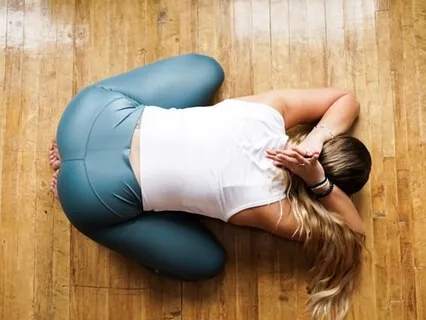
Your sit bones to sink back towards the heels,
Allowing the forehead to come and touch the ground.
Not seeing any tension in the body,
Taking a couple breaths here in this child's pose.
Giving your weight over to the ground.
And then coming back up to hands and knees.
And then turning over so that you're laying back on your back again.
And the feet are going to be on the ground,
Knees bent 45 degrees angles,
The feet about hip distance apart.
Hands alongside the body,
Palms down.
And then feel the feet touching the ground.
You're going to move from the ground into a bridge position where the shoulders will be on the ground and the feet will be on the ground and the body will be suspended between them.
So to do that you can push into your feet,
Bringing the hips up into the air,
Pushing into the ground with the feet.
Pushing the ball of the feet,
The ball of the big toe into the ground,
The heel.
And then rolling back down vertebrae by vertebrae all the way until you're back flat on the ground.
And noticing what effect this movement is having.
Perhaps noticing warmth in the head.
And then you're going to make the same move again,
So pushing into the ground with the feet,
Bringing the hips back up.
And noticing if there's tension in the neck and the shoulders and seeing if by bringing your attention to those places you can soften just a little bit.
Continuing to breathe and then rolling back down.
And then you can,
So leaving the knees bent and the feet on the ground,
You bring the right foot up into the air so the heel is pointing towards the ceiling.
And rotate the foot around,
Giving the ankle joint a nice massage,
Going in circles,
First one in one direction and then the other.
And then driving the heel towards the ceiling,
Paying attention that the lower back stays flat on the ground but the heel is lengthening it towards the ceiling.
And then softening the knee just a little bit,
Putting the hands on the back side of the leg and then not pulling on the leg but allowing the upper body to float up again so the knee and the nose are pointing towards each other.
The knee stays just soft,
Not overly bent,
And the upper body is lifted from the ground.
And then allowing the upper body to come back down,
Dropping the right foot onto the ground and lifting the left leg up.
Again rotating the foot around the ankle joint,
Circles each way.
And then flexing the foot so the heel is pointing towards the ceiling.
Putting the arms or the hands behind the leg and bringing the upper body up,
Knee or nose towards the knee.
Stretching here,
Releasing any unnecessary tension and then bringing the upper body back down.
Foot comes to the ground and then you can roll over onto your right side,
Allowing the legs to be straight,
Resting the head on the right hand or on the upper arm if that's more comfortable.
And then bringing the left leg up into the air,
Stretching it up as far as is comfortable or good for you.
Exploring your boundaries,
Exploring where the leg can't go any further,
Holding it here in the air.
Bottom leg is firm and then bringing the leg back down.
Rolling over to the left side.
Again head resting on the left hand or shoulder and then bringing the right leg up.
The right hand actually presses on the floor in front of the body and the left leg is firm and then the right leg floats up.
Foot is flexed.
Stretching it and then bringing it back down.
And then rolling over onto the stomach.
And so you're on the stomach and you can put the hands and arms alongside the body,
Resting for a moment with the head and the forehead on the ground,
The cheek on the ground.
And for the next movement the legs are going to come up but this is more allowing the legs to float up from the hip bone.
So actually the hip bone you're going to really ground that into the floor,
Allowing it to be stable and imagine the right leg lengthening and as it lengthens it floats up naturally on its own.
Stretching here and then bringing the leg back down and switching legs.
So the left leg again,
Ground the hip bone,
Really presses into the floor and lengthen the left leg and the left leg comes up.
Feel the pressure of the left hip bone bearing just a little bit of extra weight and then bringing the leg back down.
And then we're going to do it again but with both legs this time.
This time lengthening both legs and at the same time lengthening the upper body and the arms come up,
Reaching out,
Reaching out and then releasing.
Noticing for a moment,
Breathing here and then rolling over onto the back side for the final pose.
And if you want to cover yourself with a blanket to stay warm that's fine.
So you'll stretch the legs out,
Feet about hips distance apart,
Maybe a little bit further.
The feet fall slightly outward like the pages of a book.
Arms alongside the body,
Palms facing up.
Bringing the attention close to the body now.
Feeling sensations,
Feeling some energy moving through the body.
And then allowing the eyes to close if they're not already.
And then we're going to scan through the body with the attention starting at the toes this time.
And so first you're going to go to the lower legs and just tensing both legs.
Tensing and then releasing.
And then the arms,
Tensing them both and releasing.
And then arms and legs together,
Tensing,
Releasing.
And then bringing the attention down to the feet.
And from the feet,
Just gently bringing the attention up through the body.
Noticing anywhere that there might be extra tension.
You'll find that they're breathing into it and softening it as much as possible.
Doing this through the whole body all the way up to the head.
And then the eyelids to be soft,
The forehead to be soft.
The jaw to be soft.
Shoulders soft.
Chest open.
Giving the body over to the mat.
Bringing the body sinking into the ground.
And then drawing the attention inward to the sensations of breathing.
Arising in the falling of the belly.
And for the coming few moments of silence,
Just allowing the attention to rest here with the breath.
Knowing that after activity comes rest.
Yin and yang.
And knowing that I'll guide you back out of this after a few moments of silence.
State of mind.
.
.
.
.
.
.
.
.
.
.
.
.