
The world’s largest free audio library for everyday wellbeing
Real people. Real life. Real time.
Retreat categories
All RetreatsYoga RetreatsWellness RetreatsMeditation RetreatsYoga Teacher TrainingWomen's RetreatsYoga Retreats in BaliYoga Retreats in United KingdomYoga Retreats in AustraliaYoga Retreats in ItalyFind Your Perfect Retreat
Discover transformative Retreats led by Insight Timer's best teachers.Reconnect, recharge, and return renewed.
The world’s largest free audio library for everyday wellbeing
Blog categories
Mental Health and WellbeingTips and GuidesScience and ResearchTraditionSpiritualityAt WorkTop Articles
How to Meditate
Meditation is something everyone can do. Practicing can help improve your health and wellbeing.
Explore MeditationMeditation Timer
Free meditation timer with customizable intervals, bells, and ambient sounds.
Meditation Timer Online
COURSE
The Schools Of Buddhism
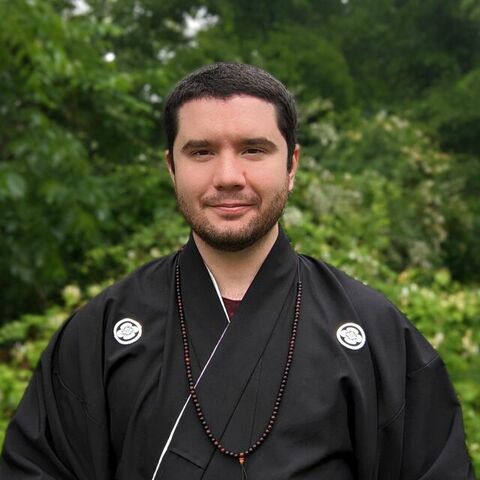
With Silas Day
Buddhism is a vast undertaking. It contains within it hundreds of divergent schools, sects, and traditions, all of which present themselves at times as "The" Buddhism. Yet, if you are just stepping into all of this, where do you begin? How do you even start to learn which is what school? In this course, we will be covering the three main branches of Buddhism, what they are, where they come from, and what makes them different from one another. As well, we will be taking a look at some of the more individualized sects within those three main branches to show different aspects of how, even within a school of thought or tradition, the opinions and practices can be divergent. Yet, at the end of the day, they are all still a part of the Buddhist Tree of Knowledge. So, let's dive in and take a look at the Schools of Buddhism!
Meet your Teacher
read more
10 Days
5.1k students
4.8 stars
11 min / day
Wisdom
English
Ask your teacher
This course includes 49 community questions and 5 audio replies from Silas Day. The community classroom and teacher audio replies are only available via the app.
4.8 (255)
Recent Reviews
Kazza

May 16, 2026
This was a fantastic course. I will continue to study and meditate. But I will now be more understanding of what I’m actually doing!
Caterina
November 24, 2025
Very insightful into the branches of Buddhism. Lesson 10 I found to be uplifting and driven to be kind to ourselves. Thank you.🙏🏻
Jamon
October 24, 2025
Great intro to the different schools. Thank you! 🙏🏾
So
August 2, 2025
Great course! Loved your voice too
Lyn
May 1, 2025
I am grateful you prepared and shared this course. Even in its simplest format I learned something new. You see, gravitating toward and learning from Teachers on this platform is not explicitly divulged what "school" of Buddhism we are learning via them so thanks to this course and to YOU I now have clarity. Thank you for your guidance.
Michelle
January 29, 2025
Good general overview.
Brittany
December 26, 2024
I thoroughly enjoyed this course. Thank you so much for this information. 🙏 I look forward to more offerings from you.
Isabel
October 21, 2024
This was a very helpful overview. I feel like I have a much better understanding of the basic differences between the more prominent schools of Buddhism now.
Elinor
October 18, 2024
A very helpful course, must take for someone just starting to learn about Buddhism
Thom
June 16, 2024
Very informative and enjoyable course. I truly appreciate learning about some of the different branches of Buddhism presented here. For me, the material in the course was presented in a manner that I was able to follow and understand, which was refreshing. Thank you so much, Silas. I look forward to your other courses on Insight Timer.
Aaron
January 30, 2024
Amazing! This was a clear, concise, thoughtful, and emotional course. I highly recommend it fir anyone with an interest in Buddhism.
John
November 1, 2023
Great
Liz
September 2, 2023
Very clear summary of the lineages of Buddhism told with kindness and invitation to the listener. Really beautiful! Thank you.
Ivyjoy
June 4, 2023
Thank you!
Heather
June 3, 2023
Informative and I enjoy the way you use the English language. 🙏
Elöd
April 25, 2023
Highly recommend this course for an excellent overview of the different schools of Buddhism. Listen more than once, pause and take notes. Enjoy and thank you 🙏🏼
Charlie
April 6, 2023
Very useful. It helped me understand a little bit about concepts I've been hearing about for years but never Understood. This is not an in depth course but it gives a nice overview for people who need or want to expand their knowledge.
Cathy
March 19, 2023
An information filled course. I'll probably listen again. It is well worth your time.
Tom
February 3, 2023
Silas presented a wonderful primer on Buddhism. I’m grateful for his easy listening and brief lessons.
Linda
January 25, 2023
Thank you so much for creating this. It has really helped me understand the landscape of Buddhist practice.
More from Silas Day

Trusted by 37 million people. It's free.

Get the app


