Welcome to the Happiness Podcast.
I'm Dr.
Robert Puff.
Have you ever had a week where one single thing goes wrong?
Maybe a flight gets cancelled,
A project at work falls apart,
Or you have an argument with a loved one and suddenly you feel like your entire life is ruined.
We've all probably heard this story before.
Someone has their money invested in something like the stock market.
And their investments go south and they lose everything.
And so often I've seen when this happens.
These people want to die.
They initially feel like their lives are over.
But if you talk to them and ask,
Well,
Do you still have your health?
Yes,
Of course I do.
What about your family?
Is your marriage good?
Oh,
Very good.
And your kids,
They're doing well.
But you want to die?
Teenagers are notorious for doing this.
There was a classmate of mine who was one grade above me and he had gone to visit his girlfriend.
They had been fighting and he went to try to reconcile.
But when he got there,
She didn't want to have anything to do with him.
I was actually out in the area because I live on a lake when I was growing up.
And all of a sudden,
All these police cars and ambulances started flying by me.
After she broke up with him,
He ended up wrapping his car around a tree.
He wasn't 18 yet,
He had his whole life ahead of him.
And he chose to end it because of this catastrophe.
That his girlfriend didn't want to date him anymore.
In psychology,
We call this catastrophizing,
But a more beautiful way to think of it is the two-inch view.
You're standing so close to the campus of your life that a single breaststroke has filled your entire field of vision.
When my classmate ended his life,
For many of us,
Including me,
This was the first time we knew someone our age that had died.
It was very hard to make sense of it.
But many of us do this throughout our lives.
We look so close at our canvas of life that we forget the bigger,
Broader picture of our life.
The universe isn't painting a tragedy.
It's painting a masterpiece.
But to see the beauty,
The depth,
And the purpose of our lives,
We have to learn how to intentionally step back.
I love impressionist paintings.
I think they're my favorite of all the different art eras.
People often ask me,
Who's your favorite?
And often,
I think.
Probably Renoir,
But there are so many impressionist artists that I just love.
And one of the things I love to do is when I'm at a museum,
I like to get really close to the painting.
I always put my hands behind me so I won't get yelled at by the security by getting so close to the painting.
If you've ever done this like me and pressed your nose to the canvas of a vibrant Parisian street scene or a sunlit garden,
The technique,
The painting looks entirely messy.
The artist didn't paint perfect,
Rigid lines.
They use harsh,
Overlapping,
Seemingly random smears of oil paint.
But here's the magic of distance.
The individual strokes make absolutely no sense of its own.
It's only when you step back into the center of the gallery room that the chaotic strokes blend together to capture the light,
Movement,
And life.
The dark,
Messy strokes are exactly what gives a painting its brilliant contrast and depth.
This is exactly how our spiritual or psychological journey works.
When we're in the middle of a painful transition or a season of profound stress,
We're staring at a dark breaststroke and it can feel so chaotic and messy.
But when we pause and step back and think of our life from its whole point of view,
From the day we're born to the day we die,
Or even further,
From an eternal point of view,
That we're going to live forever in this moment of darkness.
It's just a brief stroke in the present moment of now.
With that deep breath.
We stop panicking over a single day.
We realize that the friction and the dark strokes are the exact contrast needed to build our empathy,
Our resilience,
And our ultimate capacity for joy.
Let's for a moment now explore some realized masters of the step back.
The first one,
You probably won't be surprised,
Is Claude Monet.
In 1874 Claude Monet exhibited a painting called Impression,
Sunrise.
I was blessed to be able to see it in person once a few years ago and it's absolutely stunning.
It took my breath away and it was hard to leave it because it was so beautiful.
But at the time he painted it,
The traditional art world was horrified.
A famous art critic wrote a scathing mocking review stating that wallpaper in its embryonic state was more finished than Monet's painting.
He used the word impressionist as a brutal insult.
From two inches away,
Monet's career looked ruined.
He was rejected by the prestigious Paris Salon,
Heavily in debt,
And publicly humiliated.
But Monet didn't panic.
He stepped back,
Trusted his vision,
And embraced the insult.
He and his friends proudly adopted the name,
The Impressionists.
And today,
That ruined career is responsible for the most beloved art movement in history.
The rejection was the exact dark stroke needed to push him towards greatness.
Are you familiar with the story of Steve Jobs?
At 30 years old,
Steve Jobs was brutally fired from Apple,
The very company he had started in his parents' garage.
From a two-inch point of view,
It was a devastating,
Highly public humiliation.
He later said he felt like a complete failure.
It was a massive,
Dark smear on the canvas of his life.
But then he created a masterpiece.
Years later,
He looked back and realized that getting fired was the best thing that could have ever happened to him.
The heaviness of being successful was replaced by a lightness of being a beginner again.
During his time away,
He bought Pixar and eventually returned to Apple with the creative fire that birthed the iPhone.
Without a messy stroke of being fired,
The masterpiece of his later life would not exist.
We decided to go to France for a couple weeks just to get away and relax because we were exhausted.
We didn't have much money so we had to travel very cheaply,
But we had a really nice time.
But on the way back home,
Our flight from Paris landed in New York City before we came home to Los Angeles.
But when we got to New York City,
Our flight was incredibly delayed,
Eight hours delayed.
From the two-inch point of view,
You can imagine how we felt.
We had already had a long flight from Paris to New York City and we were tired and we wanted to get home.
We were both staring directly at the messy strokes of the disrupted plans.
But then,
Thankfully,
I decided to step back.
I realized I had eight hours and New York City wasn't that far from the airport.
So I decided to go to New York City for a little while and I had a really nice time.
But my friend decided he wanted to wait at the airport.
Part.
He couldn't get his eyes off the two-inch view and just saw this is so disruptive.
But I decided to do something different.
And again,
As I said,
It was a really nice time.
And then years later,
When we think about things like this.
We rarely remember the disruption.
We remember the beautiful unscripted detour.
So how do we master the art of perspective in our own lives?
The first thing we can do is ask the 10-year question.
The next time we find our anxiety spiraling over a specific problem,
Let's force ourselves to step back mentally and ask ourselves,
Will this exact problem matter to me in 10 days,
10 months,
Or even 10 years?
If the answer is no,
Give ourselves permission to stop staring at it.
The next thing we can do is start seeking visual awe.
When our minds feel trapped in the two-inch view,
Literally change our physical perspective.
Go to an art museum.
Look out over the ocean,
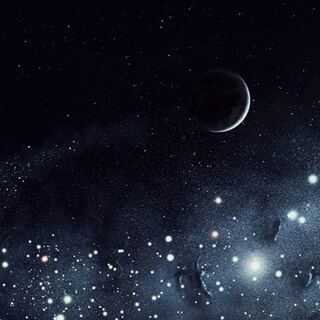
Or simply look up at the stars.
Let the vastness of the world remind our brain that our current stress is just one tiny speck on the massive beautiful canvas of our lives.
And there's so much evidence to support this.
Think of so many times in your past where you're incredibly stressed over something going on.
And now if you think about it,
It seems so irrelevant and almost comical.
This is a big step back,
Putting ourselves in the perspective of the whole universe.
Can take our breath away,
But it's a wonderful thing to engage in.
The third thing we can do is use our breath as a pace backwards.
When we feel panicked of the messy strokes rising,
Use our body to create distance.
Close your eyes.
Take three slow,
Deliberate breaths.
Think of each breath as taking one physical step back from the canvas,
Widening our vision until we find our peace.
In conclusion,
Our lives are masterpieces.
It requires both the light strokes of joy and the dark strokes of adversity.
The combined elements and strokes of all our life create Beautiful.
Picture.
Call us.
Thank you for joining me on the Happiness Podcast.
Until next time.
Accept what is.
Love what is.