Welcome to the Within Us podcast.
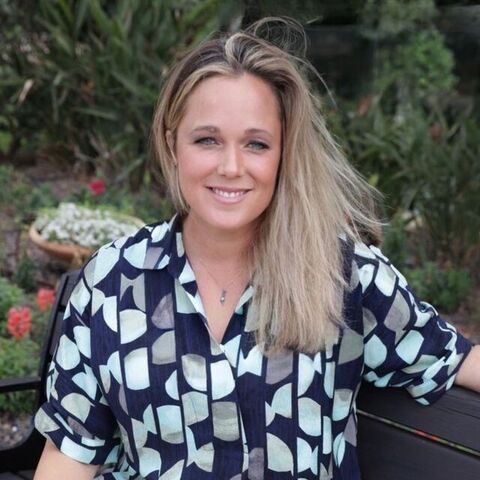
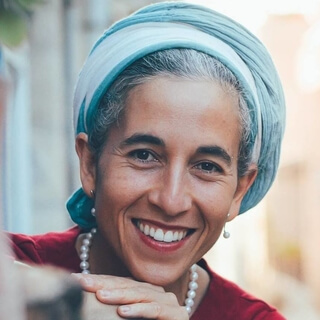
My name is Azriela Jankovic and I'm your host.
I'm a coach.
I'm also a lifetime educator and I believe that there is so much wisdom,
Wellness and wonder both within us and around us at all times.
It's through the meaningful conversations in our lives and learning opportunities that we are able to tune in to this wisdom,
Wellness and wonder.
My goal in producing this podcast is to have the conversations that will bring more wisdom,
Wellness and wonder into all of our lives and in turn into this universe.
Today's episode is particularly close to my heart.
Recently I read a statistic in Time magazine from the Center of Collegiate Mental Health that in the spring of 2017 nearly 40% of college students said they had felt so depressed within the past 12 months that it was difficult for them to function.
61% of students said that they had felt overwhelming anxiety in the same period of time.
Depression and anxiety are pervasive problems in today's world.
They are incredible challenges that stand in the way of our happiness and our success both in our personal lives and our professional lives.
While I could approach this conversation as an educator and a coach and as someone who has spent decades studying what are the remedies for depression and anxiety,
The truth is that I have a very personal story to tell and in today's episode I'm going to begin sharing that story.
In the mid 1990s I was diagnosed for the very first time in my life with a mental illness.
I was sitting in the office of my family doctor.
Five minutes earlier in the waiting room I had filled out a survey asking me about my general moods,
What I ate throughout the day,
How my sleep patterns were and what I was thinking.
My doctor,
Well meaning,
Compassionate and kind glanced over the list and promptly prescribed me my very first bottle of Prozac.
That was the day that my journey toward mental wellness began.
And here we are nearly 25 years later.
Since 1995 there have been breakthrough discoveries in the field of mental health.
And yet so many are still suffering.
My own personal journey has led me around the world into bookstores and research databases,
Into doctors offices,
Healers offices and into nature.
It has led me to a variety of medications,
Meditation,
Vitamin and supplementation,
Rumination,
Contemplation and to today the proclamation that there is always hope.
And I am going to be continually sharing this message and whatever else I can share to help you or anyone else who suffers.
And in today's episode it is my joy and honor to introduce you to one of my personal favorite doctors,
Someone who has helped me on my journey and someone who I believe has a very holistic vision of health and wellness for all of us.
Not only does my guest draw from a wide variety of modalities to promote health,
But he is also a graduate of Harvard Medical School and Duke University's Institute for Integrative Health.
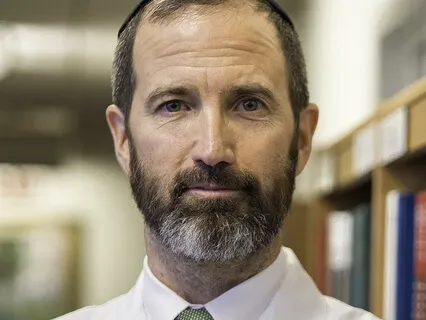
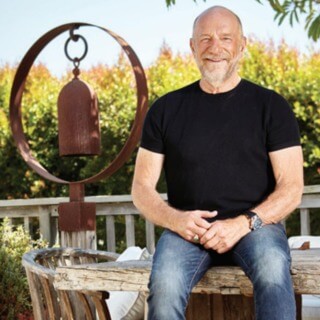
My guest today is Dr.
Andrew David Schiller.
In this episode you'll hear all about new paradigms for health and wellness.
If you or someone who you love is dealing with depression,
Anxiety or chronic pain,
This is an episode for you.
If you are a Generally Well person and you're simply interested in ways of upgrading your health,
Mental,
Physical,
Spiritual,
This is also an episode for you.
With nothing further,
I'd like to introduce you to my guest,
Dr.
Andrew David Schiller.
I know a lot of people think that,
You know,
I'm going to go to the doctor and I'm going to get a diagnosis,
That I'm going to get a medication and the medication is going to heal me.
But from what I'm understanding about your practice,
That's not entirely what goes on all the time.
Yeah,
It's usually not actually.
So the way my practice has evolved over the years,
Most of the patients who come to me have probably two main groups.
One group is people who've got some kind of problem that they've seen lots of other doctors and they haven't gotten a solution.
And it could be chronic pain,
It could be fatigue,
It could be chronic digestive issues,
It could be just anxiety and people have come to me who have things like mental illness and psychiatric disorders that are really serious things,
But the answers that they're getting in terms of the usual medication approach either hasn't worked or hasn't worked completely or stopped working or the side effects were too much.
And so that's one group.
And the other group is people who may have a newer diagnosis,
Somebody who's had pain for six months or two years,
Or someone who has a new diagnosis of an inflammatory disorder or fatigue or fibromyalgia,
Where maybe it's only been going on for a half a year or a year,
But they just know right off the bat,
You know what,
I've heard about the drugs they use for this and I've read up on them and they don't really help most people and there's all kinds of side effects and I'd rather see if I can deal with this with my own lifestyle choices and my outlook and attitude and all of that.
It's incredible to hear that because we know now that more people than ever are suffering from pain,
From depression,
From anxiety,
And there are so many lifestyle factors that can be taken into consideration before these extreme measures that you bring up,
Such as surgery or medications that could in and of themselves cause other problems.
What I appreciate about your approach as I've come to learn about it is that you really try to take all the different factors into consideration and do what your patients need.
You spoke about individuals before and for sure,
Individualization is what's so incredibly important because all the different factors that lead to that chronic pain or illness are very individualized and the healing process itself is very individualized.
There's responding to what's bad and then there's doing what's good.
There's actually a little phrase in the Psalms,
Turn away from,
Which they call evil,
And assetto,
Do good,
And to me,
There's a huge implication for how we deal with chronic illness because surme ra is I've got a symptom,
I've got something that's bad.
What do I do to fix that?
That's primarily what I learned in medical training.
It's all about making the bad symptoms go away.
For sure,
Good doctors are always thinking about what can we do to get at the cause of things,
But by and large,
That's not the protocol and not the way medicine is practiced and especially as healthcare has gotten much more corporate and doctors have less and less time with their patients,
More and more they're responsible for looking at a pattern of symptoms and laboratory values and other special tests and very quickly making a judgment,
Here's what we do to treat that.
That treatment is usually a let's get rid of the problem.
There's a whole other thing when we're going to start thinking about,
Well,
How do we actually enhance this person's capacity to heal?
What does that mean?
Okay,
So essentially to break this down,
You have a patient A who's suffering from say bipolar disorder and she goes to two doctors.
She goes to the first doctor who says depression,
Checkbox,
And prescribes medication that has efficacy in some cases.
Doctor B on the other hand takes the patient suffering from depression and looks at this variety of lifestyle factors.
So rather than treating the depression as the problem,
It's looking deeper at how can we nurture the internal good of this person to possibly alleviate this depression,
Which is actually a symptom,
Not the problem itself.
So let's talk for a minute about what those lifestyle factors are going to contribute to our overall wellbeing.
My perspective as a medical doctor is that it's much better to enhance the health and help the person be healthier and let the disease go away if we can do that.
But also I want to say that there are certain situations where you need to also think about the illness because some people are really sick.
And one of the cautions that I often make to people,
Because I get calls all the time like from a friend of a friend like,
Hey,
I've got this problem,
What should I do?
And sometimes,
Yeah,
Enhance your health and you'll feel better.
And sometimes you know what?
You need to go to the emergency room right now,
Right?
I went to regular medical school and I did a conventional medical residency and I learned in high power academic places and really learned conventional medicine and from the best of the best.
And it was a great privilege to do that.
And I feel like I got a really solid grounding in not only clinical medicine,
But analyzing clinical research and really thinking critically about,
Okay,
How do I best serve the person in front of me?
And I trained,
I did a double combined residency in internal medicine,
Like general medicine,
GP type stuff and physical medicine rehabilitation or PMNR,
Or physiatry.
And PMNR is all about helping people enhance their recovery after they've had various kinds of catastrophes like stroke and spinal cord injury,
Multiple trauma,
Brain injury,
People with chronic pain,
Multiple sclerosis.
It goes a lot of different ways,
But the point is that it's about understanding function and how to enhance function.
And we work with a whole team of people.
I had come into my residency training and medical school already having a pretty significant background in mindfulness meditation and various movement arts like Tai Chi and Qigong.
And I got interested in those things in my twenties because it just looked beautiful.
And I started practicing it and I liked the way I felt with it.
It felt like it made me very resilient and helped me to sort of deal with stress and difficulty.
And I saw it enhancing my performance,
Both my mental intellectual performance when I was like studying my rear end off for MCATs in medical school and training and all of that.
And even athletic performance,
You know,
Like I went from being kind of the guy who was the last pick to,
I really became a good athlete from studying Tai Chi and movement.
It was really interesting.
And so when I went into this world of seeing people recovering from injury,
I already had a perspective like,
Hey,
There are ways to enhance human recovery,
Human health,
Human function.
And those don't really get used so much.
Since then there's much more interest in bringing mindfulness or meditation disciplines and movement arts and yoga.
And those things are starting to get studied in conventional medicine and conventional research,
But we're really just the beginning of understanding,
Well,
What are the real implications?
What really happens when somebody meditates?
What really happens when someone does moving meditation?
When I finished my residency training,
I was the only physiatrist PM&R doc in Western Rhode Island and I worked in a community hospital and it was the kind of thing where the other docs like orthopedics,
Neurosurgery,
Neurology,
Internal medicine,
When they had a patient,
They just know what to do with,
They would say,
Oh,
Well,
Let's send them to physiatry,
Like send them to rehab.
So I was seeing all these patients that nobody else knew what to do.
Okay.
So Dr.
Schiller,
You not only went to Harvard medical school,
But you went to Duke university and studied integrative medicine and you've been utilizing these Eastern methods for healing for decades.
Yes.
And here you are practicing medicine and you are being brought the most difficult cases that nobody knows what to do with.
So what did I do when I was in that situation?
I was presented all these patients that nobody else knew what to do with.
I had a basic broader perspective from my own contemplative practice about stress and stress management and what that can do for a person's focus,
For their sense of calm and clarity,
What it can do for pain.
And I also had some experience kind of living inside my body a bit through these movement arts,
Things like Tai Chi yoga,
Where you're actually developing a sense of body awareness that is empowering.
And so I started sharing those practices with my patients and I also was open and I was collaborating more with complimentary practitioners in the community.
And that really started me on a journey of trying to understand more fully,
Well,
What does complimentary medicine have to offer?
And where that started was working with a physical therapist who had done super advanced training and manual therapy using hands-on skill and exquisite knowledge of anatomy and physiology to really work with the tissues,
With the neuromuscular reflexes,
With the deeper sort of stress responses that are reflected through the spinal cord and through the rest of the body.
And so I worked with a couple of people like that and referred patients to them and they did miraculous things.
And then that led me to start studying osteopathy,
Which is one of the grandfathers of all the manual therapy.
And it was generated by a man named Andrew Taylor Still who watched his family die of meningitis and watched them get worse from the medical treatment today.
And so he started studying the natural world,
Natural law and studying anatomy and just empirically learning techniques for helping the body heal hands-on.
Let me give an example.
A patient came to me who was in her thirties.
She was a school teacher who actually got knocked down when she was trying to break up a fight between two students.
She had a mild head injury and she came to me with horrible headaches,
Insomnia,
And an arm that was stuck like this.
If you've ever seen someone who's had a stroke,
They have this flexure posturing and her arm was stuck like that.
She couldn't really straighten it.
She couldn't use it.
She was suffering so intensely.
And what did we do?
We thought about,
Well,
What's going on mechanistically.
There's been trauma.
There's been mental emotional trauma.
I started examining her more carefully than the average doc does.
And what I found was what you call a lot of trigger points,
Right?
I would press here and pain would radiate down to here.
And I'd press here and pain would radiate into her hand.
This is a woman who had seen an orthopedic surgeon who did an EMG that showed that she had nerve compression at this little groove here where the ulnar nerve comes through.
And they were planning to cut and transpose her nerve.
And so what we did was we started working on her tissue and freeing up all of the restricted neuromuscular patterning so that her arm could move.
And guess what?
All of her pain went away.
Her headaches started getting better.
I gave her some medications for sleep.
We did a lot of talking about stress.
She learned to do some gentle breathing exercises.
She reduced stress.
She found more calm.
She built that into her day.
And maybe we can talk about it at some point,
But the phenomenon of physiologic and mental emotional stress permeates all of our physiology.
And when that continues unabated,
The body goes in and the mind go into kind of a protective response.
And in my view,
That protective response is responsible for a lot of suffering and a lot of illness.
I'm fascinated by this response and the way I've come to understand it,
Perhaps you can elaborate as this fight,
Flight or freeze response that our body's natural survival mechanism kicks in and tries to protect us and stop us from doing things that are scary,
Which can mean scary things in the physical world like staying away from threatening places.
But it can also be emotional and we can learn to shut ourselves off from people or emotional experiences or taking risks that could beneficially help us.
Yeah.
Yeah.
I think you're right on.
The way I've come to perceive that and you know,
Modern medicine has done a lot in terms of starting to study the stress response and the implications of the stress response and what we can do about it.
And that started back in the seventies with Herb Benson.
It was like,
You know,
The person who discovered and put this stuff on the map because he was a cardiologist seeing people who were having high blood pressure in his office,
But not at home.
And so he just applied physiology and started measuring the physiology of the stress response and its implications and what it does for things like blood pressure,
Heart rate,
Respirations,
Pain transmission.
And these are things that every medical student learns.
But then I think they kind of forget about it because it doesn't get emphasized in medical training.
It's probably different now than it was back then.
We've got piles of research looking at implications of chronic stress in all kinds of different disease states.
And we've got growing research that's showing us when people do simple basic stress reduction thing,
Whether it's mindfulness meditation or eliciting the relaxation response or TM or other meditation techniques,
Yoga,
Tai chi,
That there's a reversal.
There's a physiologic change that has positive health benefits.
So that's all great.
There's a lot more to it because you brought up this concept of perceiving danger or scary.
And so the way it looks to me after 20 years of doing that is that that perception of danger is something that not only happens to my mental awareness.
Like,
Okay,
When I was 10,
I got knocked over by a dog and bitten.
So when I'm 24,
I see a dog and I immediately get scared.
I'm primed to protect myself from that perceived danger that I've habitually internalized.
But it happens physiologically too.
If you put your hand on a hot stove,
Boom,
Your body withdraws from that immediately and it's a reflex.
You're not even thinking about it.
And if a person has chronic pain,
Like the case I talked about before with this woman who fell and out of these injuries,
She developed a whole set of bodily postures that were protecting,
So to speak,
Against the painful experience that she initially had when she got injured.
And those got sort of stuck into her neuromuscular memory.
And what the physical therapist with her awesome hands-on skills did was release those neuromuscular reflexes so she had normal movement.
So it freed up her nerves so she didn't need a surgery,
Et cetera,
Et cetera.
It goes further than that because if you look in the last 10 or so years of physiologic and metabolomic study,
That means studying the environment of our cells,
How the immune system functions,
How the immune system functions to threat.
The way that the biologist and the physiologist are talking is that we have damage-associated and threat-associated molecular patterns.
There are certain protein complexes that are activated by stress that generate a cascade of inflammation on a cellular level.
So chronic stress,
And again,
That can be scared here or physical stress of any sort.
It could be inflammation,
It could be toxic exposure,
It could be chronic noise,
It could be things that I have habituated that I'm not even noticing anymore,
But meanwhile it's going on in my body and my immune system is starting to react to it.
There's a concept that has come up in the medical literature in the past number of years called the cell danger response.
And the idea that they're putting out there is that our mitochondria,
Our mitochondria are organs in our cells that produce cellular energy.
The function of our mitochondria is to mobilize all of our cells to do whatever they have to do,
Whether it's our brain cells or my muscle cells or my liver cells or my heart cells.
The mitochondria give the cellular energy so that organ can function.
When the cell danger response gets activated,
It shifts mitochondrial function and the mitochondrial get less dysfunctional and there's less cellular energy to go around.
And if you were to look into the mainstream literature in almost every specialty,
Neurology,
Endocrinology,
Pain medicine,
And so on,
They're talking about mitochondrial dysfunction as being a fundamental issue in so many chronic illnesses.
And we're talking about stress being a fundamental issue in so many chronic illnesses.
So essentially what you're saying is that the emotional and cognitive and physical stresses that we have are lowering our energy on the most cellular levels.
It could be.
And so I think it's important to distinguish between here are pathways that we see that show up in some people and they don't show up in everybody.
We know that there's a lot of individual variability and there are some people who are really resilient and robust and they're out there and it's noisy and they're hammering and they're getting punched and hit and they're still thinking they have lots of energy.
But then we also know people who have trauma,
That traumatic experiences,
For instance,
Or have chronic stress who get exhausted and wiped out.
And so what that speaks to is the complexity of the human organism and that there's so many different variables and there's so many different factors,
Genetic as well as lifestyle and previous experience issues that determine how an individual is going to respond.
Individual I think that makes so much sense in terms of each one of us having our bio individuality and I'm curious in terms of your practice when the average patient comes to see you,
What their issues are and what they expect in terms of medicine versus what they get.
Somebody called me not so long ago,
Close friend,
You know,
My wife's starting to having what seems like panic attacks.
What can we do about that?
And I got a little history.
She's six months pregnant.
Has she ever had panic attacks before?
No.
And there was no reason I could see why she should suddenly have panic attacks.
I said,
You know,
I think you guys should go to a doctor today.
And they went to a doctor that day and they did some tests and she had a kidney infection with bacteria in her blood.
And six hours later,
She's in the hospital getting IV antibiotics.
And she had a six month old baby and she hadn't gone in.
Let's not even talk about what could have happened there.
I really appreciate your sharing that with us.
Sure.
There are some things that an expression that came to mind to me many years ago when I was kind of how do I deal with all these really difficult patients?
And I started studying complementary stuff.
And I was speaking with a mentor who's a medical doctor,
Integrative medicine doctor,
Kind of brings it all together.
And he said,
Look,
It's important you should be open minded,
But not so open minded that your brain falls out.
So that's great,
Right?
I've been holding on to that for a long time.
And we do need to do that.
We have to be open,
But discerning together.
The way I think about everything,
Like I look at a person holistically,
And I think about three Ms and the three Ms are three windows of physiology and anatomy and functioning of the whole human being.
And one of them is the mind body system.
And the second one is the mechanical or structural system of the body,
The bones,
Joints,
Nerves,
All of that stuff that helps us move around,
But also creates the structure in which all of our organs live.
And the third one is metabolic or biochemical.
So it's a way of thinking about it.
And so I have a little diagram with three circles that are interlocking like Venn diagrams.
And where those circles meet in the center,
That's where reality happens.
Because we know,
For instance,
That if I do regular aerobic exercise,
I take my mechanical structural system and I work it.
My muscles are pumping.
My heart is pumping.
It actually increases my stress response because that's what exercise does.
And then a few things happen.
All that action of my muscles shifts the way my body is metabolizing.
It affects my mitochondrial function.
It affects my glucose metabolism.
It affects a whole host of chemicals that are moving through my body,
Affecting everything.
It evokes an expression of natural opioids,
Endorphins and enkephalins that have mood balancing effects and affect almost every one of our bodily systems.
So my mechanical structural motor system,
When I do exercise,
Creates a metabolic shift in my reality.
And that creates a mental shift in my reality.
And if you want to add to the mechanical mental connection,
I don't really want to exercise.
I'm tired.
But wait,
I know I feel good when I exercise.
So I get up and I push myself and I get to the gym or I go for a walk or whatever it is.
And what I've just done,
I've accessed will.
I've accessed a part of myself that's determined.
It's an intellectual mental part of myself.
And if you look in the sources of the Torah Sages,
They say that will comes from the same place as simcha,
Which is deep,
Purposeful joy.
So just activating will and accomplishing what I seek to accomplish gives joy.
It releases dopamine.
It creates biochemistry of feeling better.
That is so beautiful.
That is so beautiful.
Yeah,
Well,
That's the way we were made.
It's beautiful.
That activating our will and essentially doing things that might appear difficult or delaying gratification activates our will,
Which activates our ability to feel true joy.
Friends,
That's everything.
So that's how the mechanical,
Structural motor system,
The body can have an impact on depression.
Let's talk about the metabolic biochemical aspect of our body.
Psychiatry has been dominated by the notion that depression is from impaired serotonin action.
And that's why we give these serotonin reuptake inhibitors,
Things like Selexa and Paxil and Prozac and,
You know,
Et cetera,
Et cetera.
And that's being called into question because we're stuck starting to study more and more.
And what the research is showing us is that there is an inflammatory aspect of depression and there is a mitochondrial dysfunction aspect of depression.
We talked before about mitochondria affecting everything.
Psychiatry in the brain,
That's one of them.
And so what does inflammation do in the body?
First let's distinguish inflammation from like an infection.
If I have an infection in my hand or pneumonia or my leg,
I might see what most doctors are trained or were trained to recognize the four signs of inflammation,
Which are redness,
Swelling,
Pain,
And heat,
Right?
And what we're discovering is that there's something that they're calling sterile inflammation.
And sterile inflammation is a low-grade activation of the immune system,
Which isn't showing up in response to some fiery infection,
But the immune system is pushed in the direction of producing inflammatory chemicals called cytokines and chemokines.
The immune cells are activated and there's a situation that's called oxidative stress.
Oxidative stress is biochemical stress.
We've all heard of antioxidants.
Why are antioxidants good and should I take antioxidants or not?
Should I get them in food?
Should I take them in pills?
A lot of controversy,
A lot we don't understand.
But the underlying principle is that chronic inflammation,
Which gets more and more significant as we get older,
Is associated with oxidative stress and is associated with various dysfunctions and illnesses.
And depression is one of them.
And so a lot of us are starting to treat our people who have depression by thinking about what are the sources of inflammation?
What are the sources of oxidative stress?
There are influences,
For instance,
The overall health of your intestinal tract,
Which is in part related to all of the bacteria that live in there.
You may have heard of the biome.
And the biome live in synergy with the barrier of the gut.
The barrier of the gut is meant to allow digested food through the gut wall and into the bloodstream so that you can get nourished.
It's meant to allow water to pass back and forth so you can have stool that passes through in a healthy way.
But part of what happens when we get sick is that there's this phenomenon called intestinal permeability.
And intestinal permeability and dysbiosis seem to go side by side.
This is not well understood stuff.
We've got research more and more showing how dysbiosis and intestinal permeability are implicated in chronic systemic inflammation.
And that has an influence on things like brain function and mood and pain and diabetes and obesity and the list goes on and on.
So essentially what you're saying is that within our gut,
The function is going to determine the way that we process everything that we consume.
We could go into much more depth.
So you're going to address the gut health when you have this patient that's suffering and look at nutrition.
Yeah,
Exactly.
And we talked about metabolic biochemical stuff in relation to depression and all this we could say in relation to pain as well.
I started treating people with depression because I started off treating people with pain and found that,
Oh wow,
The mood's getting better too.
And just from reading the science and finding out,
You know what,
There's common underlying deep physiologic abnormalities or dysfunctions that are giving rise to these symptomatic states.
So let's get at those dysfunctions.
It's a way of going upstream more towards cause.
So we talked about mechanical motor,
Metabolic biochemical.
Then there's the mind body thing,
Right?
And I always go back to Victor Franco.
Victor Franco wrote this amazing book called Man's Search for Meaning,
And he was a psychiatrist who went through Auschwitz.
He lived through hell and he watched other people living and dying in hell.
And he made some observations that what enabled people to live was that they had a purpose that was beyond themselves.
It was the people who were helping other people.
It was the people who were connected to faith or prayer.
It was the people who had some sort of higher aspiration than just surviving.
Those were the people who survived.
And so it's interesting because it relates,
In my mind,
It relates back to our whole stress response thing,
Right?
Because we have a stress response.
We have a stress system to help protect us from danger.
And in various situations,
That system goes on overdrive and it gets stuck like the gas and the breaker on at the same time.
And that creates all sorts of physiologic changes.
And then we've got Victor Franco coming along and saying,
Wait a second,
The people who were lives were threatened,
Who saw people dying all around them.
If they stayed connected to a higher purpose and didn't just focus on their survival,
They gave away half their potato to their neighbor instead of eating all of it to themselves.
Somehow that empowered them to endure and actually survive that hell.
And in my eyes,
I see the same thing to much less degree when a person has a stress-related situation that's creating a sense of threat.
They're feeling depressed.
They've got chronic pain,
But wait,
They're still plugged into purpose.
They're doing things that matter.
They're doing some kind of meditation practice.
And we spoke before about meditation as reducing stress and reducing that stress response.
But the other thing that happens in meditation is that a person gets connected to their inner self to a greater degree frequently.
And what they frequently find is a sense of,
Oh,
Wow,
This is who I am inside.
And from that,
Oh,
Wow,
This is who I am inside,
There's a sense of purpose.
And there's a sense of intention and will and desire.
And if it reconnects them to their will and the desire,
That can be part of what also helps lift them out of depression.
And that's not to say that depression is just all in your mind.
Just think good and it will be good.
That's true for some people,
But not everybody.
Some people have a really significant physiologic issue that's locking them into that depressed state and they need to address those pieces too.
But again,
Back to those three circles,
Let's address all those aspects of a person's being so that we're doing what can be done in the mechanical,
Structural,
Motor,
Exercise,
Stretching,
Whatever it is,
Body work,
Acupuncture.
And then we're also addressing the metabolic issues.
And we're also empowering that person to plug into that inner healer with the intention of their mind,
With their attention,
With their focus,
With their desire to do things that are meaningful for them.
It makes so much sense to me.
And I'm so glad you brought up the interdisciplinary nature,
This interconnectedness.
And so often as an educator and as a coach,
I've seen people thinking,
You know,
I'm thinking good,
I'm thinking positive,
I'm practicing gratitude and I'm visualizing my success,
But I just can't do it.
Right.
I just can't do it.
And we live in this world that's so noisy with social media,
The world of motivation and inspiration and,
And,
And,
You know,
The power of the mind.
And,
And I believe that it is so strong,
But I'm so happy that you're bringing up this physiological component because I believe that once we recognize the stress,
The suffering that is going on in our mind,
Body,
Spirit,
We can have compassion upon ourselves and begin with compassion and just say,
Of course,
This is hard.
Of course you're suffering.
Of course you might know what your purpose is and maybe you're just too scared to actualize it or,
You know,
This is a process and I really appreciate the compassion in your practice to acknowledge that as well.
Yeah.
Yeah.
I'm really glad you said that because I didn't yet.
And so thank you for putting it out there because well,
You did it as you were explaining that this isn't just about thinking good and it'll be good.
This isn't about snapping our fingers,
Right?
You see hard cases,
People suffer.
Yeah.
And you know,
I,
I've seen probably 40,
000 patients in my career.
It's a lot.
And one of the themes that comes up over and over again is just like you talk about,
It's blame and shame.
And most of us are really hard on ourselves.
We've got to,
We've got whatever,
Let's not try to philosophize about it,
But most of us are really hard on ourselves.
There's a lot of,
I'm just going to cry.
I'm going to cry instead of philosophize right now.
That's okay.
Sometimes you got to cry.
Crying is incredibly healthy.
You know,
A lot of times my patients come,
We sit down and they cry and I'm like,
Great,
It's okay to cry because for so many of us,
There's this voice inside.
You gotta be cool.
You gotta be calm.
You gotta be,
Have to hold it together.
You know,
It's like it was a pop song.
It was a hit.
And it's such a distortion of reality because we are vulnerable and we're human.
And the degree that we can actually accept our humanity and vulnerability,
We can actually start to acknowledge what's really going on in ourselves and actually start to activate our will from a place of reality as opposed to the fantasy of I'm supposed to be like this.
I'm supposed to be like this.
And that song that I want to play in the background came out in the what,
90s or something.
We're living in an age of so much fabrication where we can turn on the,
Open our internet in any moment and see people who we've never met living the life of their dreams as it appears and this pressure to feel like we need to have that image or we need to look a certain way,
Smarter,
Beautiful,
Or successful has never been more than it is right now.
Yeah,
Sure.
Yeah,
You mean cause we see so many false images of what we could be and we think,
Oh,
I need to be that instead of who I am.
And a hundred percent and we can edit.
Life is being presented in an edited fashion.
Yeah,
Right.
Sure.
So,
So I think it's,
I think it's such a,
Such an important point.
This point of being okay with our vulnerability,
Being at peace with our imperfections,
Even our diagnoses,
Realizing that,
That these are,
These can be vehicles to our growth and that we don't have to identify with,
With our failings or our apparent lackings in any moment.
We are so much more than that.
We spoke before briefly about how healing is so individualized and I've had,
I've had the honor and pleasure of getting to watch a number of people who were really in a hard,
Difficult,
Stuck place with chronic pain and fatigue and horrible stuff.
And through their willingness to be vulnerable and real with themselves through developing mind body skills,
First of all,
There's quieting and calming.
Like we talked about reducing that stress response,
Which is a physiology of relaxation,
But then there's an aspect of,
Of awareness that's compassionate and not judgmental and their willingness to kind of see the reality and see their self judgment and see how hard things are to acknowledge and hold their difficult emotion without blaming themselves to like feel sad,
To be able to feel scared,
To feel angry,
To feel powerless and helpless and to acknowledge that those are real parts of their experience is so profoundly empowering because every one of those negative emotions,
In my experience,
The person's able to hold it and bring the right kind of attention and awareness to it.
What they find inside of it is actually an empowering energy of their own selves and part of reclaiming the self and a reclaiming health has to do with seeing all of those pieces and,
And,
You know,
There's a concept in the,
In the Torah Sages that difficult stuff is like this,
The shell that surrounds the fruit and the fruit is a little spark of vitality in life.
So if I could give an example of that,
One of my patients who had a lot of trauma and really had been hurt by someone who should have been loving and you know,
We know that that generates huge amounts of later in life health problems,
Including chronic pain and depression and anxiety and all kinds of stuff that's very difficult to deal with and this person chose to deal with it in part by facing those painful places and facing not necessarily going back in time to those memories,
But relating to the actual experience in the moment of what she was feeling in her heart,
Her emotions and in her body because emotions are embodied and when she with guidance and again,
I'm not a psychotherapist,
I encourage people to start down this road.
I teach them tools and mindfulness for actually being present.
Some people really need a face to face one on one to actually help hold those challenging painful things.
So it's not to be taken lightly,
Right,
But by learning to be present and finding inside her own self huge anger and rage,
Rage,
Rage at this person who hurt,
At this experiences of being hurt that were associated with the memory,
But she felt it in herself,
Rage,
Being with that rage and learning to be and allow the rage and learning to let that rage soften in that awareness and generating a loving energy of the heart for herself,
Compassionate,
Compassion for the part of herself that had the rage and the grief and the sorrow.
It's okay that you're angry,
That anger is a natural emotion.
And then finding in the rage,
There is a sense of,
Wait,
I'm here and I'm alive and I want to live and the rage is like a shell outside that sense of self wanting to express itself.
It's so beautiful.
Yeah.
So in my mind,
That kind of work of coming to relate to the difficult emotions is very connected with the work of plugging back into the sense of purpose and into the sense of who am I in the world and what's my reality and who could I be tomorrow?
But it happens through a process of accepting who I am today.
I could not agree with you more.
It just makes so much sense and it's so beautiful and I've experienced it as I'm sure you have and perhaps we'll continue to experience it.
I think this is all a journey.
So we've talked a bit about how stress and self protective mechanisms can activate various mental,
Emotional and physiologic processes that actually shut down life and they shut down health and they shut down the expression of life and we're acknowledging how important it is to work with those protective mechanisms.
What I'd add to that is that there are other mechanisms inside of us that are actually health oriented.
They're inside of us and they're beyond us,
Right?
So I live in a faith tradition that has a map of human consciousness and in that map of human consciousness brought by the Torah Sages,
We have a physical body and then we have an aspect of our soul that is bound to that physical body and then we have an aspect of our soul that is emotional,
Dynamic,
Empowering.
It's like the energy that moves and then we've got an aspect of our soul that's above our physical body.
It's our spiritual soul and there's more to it than that but that's the basic thing and as you go from below to above,
You go from a more physical concrete reality to a more spiritual abstract reality and as human beings,
We all have that capacity to plug into that aspect of ourselves that is above our physical body and our Sages would say that that's where our inspiration comes from,
That that's where our healing comes from.
The elevated soul contains a blueprint of our life and our purpose and even our physical reality that comes down and incarnates through our DNA and creates our form in this world and from the point of view of those teachings,
Part of what helps heal us is plugging into this higher aspect of ourself.
This is not a religious thing necessarily.
It's a human thing.
It's a map of human consciousness and that regardless of whether you want to,
Regardless of whether you're Jewish and you're living according to Torah teachings or you're agnostic or atheist or there is the potential to start to reflect into and notice this higher aspect of self and part of why I'm so committed to teaching mind-body training and mind-body practices in the context of this map is because going inward is a way of accessing that higher aspect of self and listening to it and allowing it to help us heal and allowing us to clarify,
Okay,
What do I need to be doing on a mental level,
An emotional level?
How can that nourish my physical level?
It's so beautiful.
You're literally able to download this inspiration from on high,
From a place that is beyond all things and activate what it is within us.
I very much believe it.
I'm increasingly taking my practice out of the one-to-one in my office and delivering it one-to-many and that's taking the form of writing more blogs and it's taking the form of making more videos about how people can really use a level-headed integration of conventional medicine and natural healing to help them recover from chronic pain and chronic illness.
I speak to all groups of people in that regard.
Right now in the year 2020,
I'm focusing a bit more on fibromyalgia because I've worked so much with people with fibromyalgia and I think I somehow have always naturally identified with that diagnosis and the folks who have it and I think in part because there's sort of this marginalization that's happened.
Fibromyalgia is kind of this invisible illness because it's been so hard to understand and quantify and modern medicine still doesn't have a handle on it and so many people who have fibro are suffering with really difficult pain and fatigue and other symptoms and the people they love and sometimes their doctors are looking at them and saying,
You look fine and your tests are normal,
Get over it or whatever it is,
Some kind of blaming,
Shaming thing that doesn't acknowledge that you know what,
There's a physiologic process going on here and it's not just about being positive and it's kind of like you mentioned before that aspect of compassion.
In 2020,
I'm delivering more teaching for people with fibromyalgia.
I'm going to be soon launching a live video course for really the mind-body spirit management of fibromyalgia.
The idea is to try to take these principles in a level-headed way and get to the people who need them.
All of it's relevant I think to pretty much everybody who's got chronic illness because so many like we talked about before,
There are these underlying.
I want to make sure that before we finish speaking that our listeners know a little bit about like what you're offering right now in terms of your practice here in Israel and also what you're offering to everyone around the globe online and where they can find you.
So there's my website at www.
Drschiller.
Com and I'm doing more stuff on Facebook.
It's actually a Facebook group that's called What Heals Fibromyalgia.
So drschiller.
Com is S-H-I-L-L-E-R.
Right and it's actually D-R not D-O-C-T-O.
D-R-S-H-I-L-L-E-R.
Com.
It's also going to be linked directly in the show notes as well as links to everything else that Dr.
Schiller is offering.
Dr.
Schiller it has been such a pleasure having you here.
I could have you back and I could tell my whole story.
For our listeners I want to share that I went to see Dr.
Schiller about a year and a bit ago because of my lifelong chronic pain in my foot.
And for those of you that don't know my story I was injured when I was a baby and the injury was a very rare injury and I ended up with a foot that was semi-functional but in a lot of pain.
And over the years I did have a surgery but as time went on and I went in and out of different phases of my life the pain would flare up or go down.
Most recently when I moved to Israel in 2015 the pain came back and came back with a vengeance.
And I was actually referred to surgeons.
I was told by a number of surgeons that surgery was my only option.
And there were days where I couldn't even really walk around the block.
I could barely walk up and down my stairs in my home.
And it brought me a lot of not only physical pain but mental distress and really prohibited me from doing a lot of the things that I loved.
And in 2018 as really like a last resort I went to Dr.
Schiller thinking maybe he would give me some like holistic creams for my foot or maybe he had a drug I could take that somebody else hadn't thought of.
But what I found when I came to Dr.
Schiller was something completely different than what I anticipated.
I knew it right away by the way Dr.
Schiller related to me so compassionately.
And I began to understand immediately that my emotional state and this physical state had so much more to do with deeper parts of myself and responding to the changes that had taken place in my life and the stresses of being a mom of four and moving across the world and having to reinvent myself professionally in a country where I didn't speak the language and so many other things.
I feel fortunate that the care that I received from Dr.
Schiller really kicked in like rapidly.
I saw my life shift dramatically and it's been a total blessing.
It's work on a daily basis but it's work that I love.
And I think that ties into what you say about will and joy that when we're drawing on the deepest parts of our will we experience joy more fully.
So I endorse Dr.
Schiller and we can get into like the nitty gritty of my journey and all my vulnerable stuff at some point.
If my listeners are interested let me know I'm here for you.
And above everything I have compassion for you because this life is a mixed bag.
It is wondrous and it is joyful and sometimes it is really,
Really painful.
So I'm here for you all.
Dr.
Schiller you're amazing.
I'm so grateful for you.
Thank you,
Azrielle.
I'm grateful for you.
And I just wanted to acknowledge something though because you just painted a picture as if I did something to help you.
My recollection is that I didn't really do anything except reminded you of what you already knew.
You came to me and said I'm starting to see that when I don't eat gluten and some other foods my foot hurts less.
And you were saying I know I need to get into a more calm,
Focused state of mind.
And you basically told me everything you needed.
And I just agreed with you and mirrored it back to you and said look you know what you need to do.
Go for it.
And you did.
And then you wrote a book and you made a podcast and your light is on track and you're rocking.
So I think that you did.
Thank you.
You know I really feel like the greatest teachers and the greatest healers take our hand and walk us home.
That's what you did.
And you did it with so much compassion and wisdom and science and resourcefulness.
So thank you.
Thank you for that.
Thank you for this.
I see that your courses deliver a lot of valuable information.
And I think you believe in people.
You really believe in.
Thank God.
I mean I believe in God and God believes in us.
Every day we say how great is your faith?
How great is God's faith in me?
I have to have faith in myself.
That's it.
That's what we're here to do.
So look it was in the middle of a course and this guy like we're in Zoom.
We're in a Zoom conference.
And he asks everyone do you guys mind if I smoke?
And like he's in his own house.
But he's so sweet that he wanted to make sure that his smoking wouldn't bother people.
So he asked and I was like share it go for it.
And I'm like you can do it if you want but do you mind?
Let's just bring some attention to it.
And he's like to what?
I'm having a nicotine fit.
So like I bring him on and unmute and I'm like well why don't we just see what a nicotine fit feels like?
And he sits there and he's like what are you experiencing?
Okay I feel jittery.
I feel pressure in my chest.
I feel irritated.
I feel angry with you that you're not going to smoke.
Like so just be with those feelings.
Notice what's happening in your body.
You know that whole mindful of everything thing.
And then after like 20 seconds he goes huh.
What happened?
He goes I don't know.
It went away.
I don't need to smoke now.
And he's like oh my gosh that's never happened to me my whole life.
Every time I felt nicotine fit coming on I smoked and I've been smoking two packs a day and I just like didn't smoke and I don't need it right now.
And the thing that I wanted you to evoke is that it showed up as a smile.
Like huh because that's what it is you know like when someone's struggling to find something and they can't find it looking all over their house and then they realize it's right there on the shelf and they didn't see it.
Why didn't they see it?
Because their brain was shut down because their stress their fear their thinking to it and at a certain point they just kind of went oh there it is.
And like it's a muscle to help people understand this question of like what can I do to help myself is to look for that to look for that newness to like drop the preconceptions and just be willing to see things new that they never saw before.
And like that's what my osteopathic teachers have been teaching me and it's like it's crazy powerful awesome just like.
I love that so much we might not need everything we think we need and we might not need to continue doing things the way we've always done them.
Yeah yeah yeah.
It's so beautiful.
Thank you so much.
And thank you for joining us here today.
I really hope that you got something out of this episode and that you found something new and perhaps that this episode has renewed your hope in the ability for each one of us to live with more wellness in our lives.
Please do check out the show notes for contact information for Dr.
Schiller.
I know that he has some really exciting courses coming out soon and you can also connect with me on my website which is Dr.
Ozzie dot C O that's D R A Z I dot C O or you can send a join request to my Facebook community circle of insight that is circle of insight on Facebook.
When I'm not podcasting I do one on one coaching and mentoring.
I facilitate masterminding groups online for solopreneurs who are looking to stay inspired accountable and supported both personally and professionally.
I also do live events and seminars.
If you'd like to learn more about what I teach and share you can check out my new book Beyond All Things.
It's a collection of 50 insights to awaken joy purpose and spiritual connection.
Last week I got a really sweet message from one of my readers that it has kept her inspired over the last several months of her starting a new professional venture and that's everything to me.
It really means the world.
I wrote this book because I wanted to compile some of the tips and tools and insights and stories that have inspired me most on my journey and helped me along on my road to wellness.
I want to say that I think it's a lifelong journey.
I know that there are a lot of people out there who will tell you that they were struggling and they found a remedy and now they have the answer and the solution for you.
I will tell you that I've learned a lot on my journey and I've learned a lot more about happiness and wellness and psychology and really how to promote well-being in my own life and in the lives of those that I serve.
I also want you to know that I'm always learning.
I know that there is always more to learn and I think that this life is a journey and part of what makes it exciting is that it can be challenging.
It's really those challenges that can inspire us to grow and to reach new heights.
So as much as I feel like it is my moral obligation to share with you about my journey and what I've found that has helped me,
I also feel very strongly about keeping myself honest and telling you that I'm still learning.
And yes,
I have found a great deal of wellness and happiness in my life but there's always room for more.
So as I learn,
I will share.
I believe that life is all about teaching and learning.
We can do it forever as long as we have on this planet.
And until then,
I hope you got something out of this episode.
I have definitely benefited from Dr.
Schiller and the philosophies that he subscribes to.
And again,
If you have any questions about what you learned on this episode,
You can reach out to Dr.
Schiller,
You can reach out to me and thank you so much for being here.
Thank you.