Good morning and welcome to another episode of Within All Things.
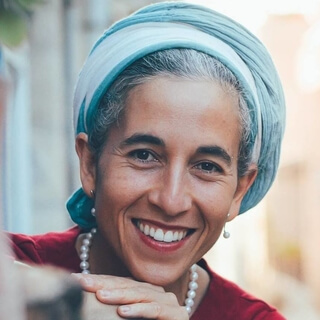
My name is Azriela Jankovic and I will be your host.
This morning's episode is a little bit different.
I'm actually sitting outside on my balcony.
We just built a structure for the annual holiday of the booths.
It's called Sukkot in Hebrew which means booths and it's a really beautiful holiday in which you leave your home for eight days for all of your meals and some people even sleep there and spend time there in a structure covered by all natural materials.
There are a lot of different reasons why we observe this holiday but one reason is that it's really a reminder of the fact that everything in life is transient.
We're really passing through this world and as much as we live in our homes that are built of steel and cement and you know all of these really hard and secure materials ultimately we live under the shelter of something so much greater and so much deeper and so much bigger than all of it and we live in the natural world as well so we have this this juxtaposition of living in the natural world and also having trust that we're part of a oneness that's really greater than ourselves and and obviously we do our best to take care of ourselves and take care of this world and stay safe and ultimately we we turn things over and we give things up to the higher power that infinite one that created us and is sustaining us in all moments and and the one who needs us here to do exactly what it is that we're supposed to be doing.
So a lot of my episodes this week and last week were really about exactly that.
Finding yourself and who you are and even refining that as as life goes on and the different stages and phases that we go through in life at different ages and people who come in and out of our lives and switching jobs and moving to new places and you know having family members born and their family members die and life is constantly changing and as such we have an opportunity in any moment to really reevaluate what it is that we're doing where we want to be going and what we want to be giving and how we want to be serving in this world.
So one of my guests spoke about gifts and talents it was Robin Owens,
Dr.
Robin Owens and she talked about looking for clues in the universe to figure out what it is that you're good at and I know for me people have always come to me for advice and to help them make sense of certain things and so I naturally gravitated toward education.
Now a little backstory is that when I was growing up as a child I wanted to be a rabbi.
I grew up going to these summer camps.
I went to a summer camp in a Jewish summer camp in Malibu where there was this really kind of fun and funky female rabbi I don't know her name but she had a short red spiky hair and she wore these washed out Levi's and she would walk around the outdoor sanctuary and speak inspiring words and she would speak gently but her words were so powerful and I remember at a really young age maybe 10 or 11 seeing her and thinking to myself wow you know when I grow up I want to wear washed out Levi's and walk around a forest and just speak inspirational words of truth and and beauty and funny enough I'm sitting about a hundred yards away from a forest and hopefully gonna say something inspirational today.
So no I'm not a rabbi but yes I did become a teacher.
I got a degree in sociology and a teaching degree and a master's in education and doctorate in education and after I got my doctorate in education I moved across the world and I moved to Israel and for many different reasons decided that I was not going to use my degree in the traditional sense.
I was trained specifically to teach teachers and train teachers and it's something that I've done over the years.
It's not something that I'm doing full-time but today's episode is gonna focus on a combo that I had with a teacher last week who called me for some help and also gonna focus on a conversation I had with a parent this last week who asked me for some advice on a few pretty serious situations and in both of the cases with the teacher and with the parent the advice that I gave them was based on my own education and what I learned and I feel like it's really relevant for so many of us.
It's advice that's helped me over time,
Continues to help me and I think can help a lot of people.
So let's go ahead and get started.
I want to begin by sharing a beautiful quote about the power of words.
Okay so these is a quote more than one quote actually these come from the tradition of Torah and the first one says the following,
Words like the ocean can be stormy or calm an evil mouth like turbulent waves can destroy or kill a sharp tongue like deep water is feared good words like pearls on the ocean floor are precious.
Absolutely beautiful so we see this idea that words can be stormy or calm.
Next we have a quote from the someone who's known as the wisest man of all time who was King Solomon and he said gentle words of the wise are heard but a harsh word stirs up anger.
Again gentle words of the wise are heard and that's what I want to focus on today which are the gentle words.
Now four years ago,
Four plus years ago I moved to Israel and got a job teaching in my first year here and I thought it would be a really neat opportunity to understand the context of schools here that the culture of the schools and there really are a lot of differences so I'm grateful that I had that opportunity and when I went into my interview I spoke in my normal tone of voice which is kind of like this and I've been working on having like a calmer tone for several years now if for many different reasons inspired largely by these teachings and also my own capacity to get really excited about things and I want to get excited about the right things and I think that in a school context or in a parenting context stress can be just a natural state for so many and it's something I've experienced and what I learned in spiritual Jewish teachings is that simply by controlling our voice we're actually influencing our inside so not that our inside feeling is influencing our outside voice we're actually going the opposite way around we're using our words to calm ourselves inside and it's actually a really really powerful practice that has helped me a lot so I walked into my teaching interview and the principal and vice-principal were like perplexed by me and how I was so quiet and I think I think it scared them and I don't even think they wanted to hire me but then they saw that I had all these degrees and I had been teaching and I had all these recommendations and so they just you know took a bet on me and sure enough I didn't have to scream all year long but screaming in here and you're speaking very loudly is the norm and a lot of teachers have to wear microphones because there's such big classrooms there's so many students and it's not even unique to the context here I mean there are more students in the schools here then I saw in most United States schools especially private schools but the tone of voice is definitely louder here than in many of the schools I've seen not all the schools so let's get back to that for a second now classroom management okay I studied classroom management as a topic of my doctoral dissertation and I chose to do it because teachers number one complaint the number one challenge teachers have is controlling a classroom and I really think that this is like a microcosm for all of life like how do we control groups how do we control our own children even how do we control ourselves right control and power is is what we all strive for and and the question is like how are we going to get it interestingly enough in the story of King Solomon he was offered power he was offered three different things by the Almighty who was offered as much power in the world as he he could possibly have all the money in the world he could possibly have or a listening heart and he actually chose the listening heart and as such he was able to acquire the power and the all the money in the world so the power of listening is as we learned from King Solomon so much greater than the power of harsh words or speaking with anger or leading from from a place of fear right so classroom management is really leading from a place of love and I had a conversation with the teacher last week and I'll tell you what we talked about and what she asked me and she had gone from teaching in a really small context to teaching a much bigger group of students in Israel we hear where she and I both live and the students here are incredible and independent and highly energetic as a whole if I could paint you know a general obviously generalization if I could paint a picture for you a lot of energy and she right away was really really struggling and she explained to me that you know she felt intimidated coming in this context where she'd never been and the teachers that were working there had been working for so long and you know she didn't think she was gonna make it and she didn't think she could get them to be quiet and she found herself yelling at them and you know she didn't know what to do she just had to raise her voice so they could hear her so we talked we talked a lot we talked about different strategies and the way that I was trained in in leading a classroom was to pick an approach to discipline and the approach that I chose from an early early age was that of someone named Fred Jones and his approach is called positive discipline and it's all about positive psychology and really noticing what's going right in your classroom so I always use his approach and I learned to get really adept at noticing what was going right so a teacher might walk into a classroom and there are a few kids speaking out right and she has a choice she could say wow everybody quiet down it's so loud in here you know the other day everybody's not making noise it's a couple kids so rather than drawing attention to those few kids making noise and the rest of the class sees you you know kind of flustered or stressed you could draw your attention to the children who are saying wow I'm so happy you're listening and you can hear me and you have such an important lesson here today and focusing on those students and and you know obviously age-appropriate calling attention to them and sensitive ways the focus shifts in the room on what is going right and this is such a powerful tool that can be used with a glance it can really be using a glance if you see you know you're trying to walk your students down the hallway in a line and if you're standing out of line and you just look at the ones that are in line and you draw your attention to them and you know if nothing changes you might come a little closer and you know speak to each student that is in line and pretty soon everyone's gonna be there everyone wants to speak with you you're calm you're coming from a place of love you're centered and you're there for them and they know that you are there because you want to be there and you're teaching them because you are building them and you have something to give them and share with them so ultimately what this teacher and I spoke about let's call her Ann and I spoke about this power of staying calm and focusing on the positive and you know ultimately what she shared with me is that the level of stress from these students speaking out and calling out and you know acting wildly while she's trying to manage the class was causing her physical symptoms and it's not unusual at all you know stress is very very real and it can be experienced as sensations of hotness in the head of faintness even or pressure in the chest or in different areas of the body and what she and I spoke about is a practice of attuning oneself to the breath and it's a practice I learned from one of my mentors originally my mentor and coach Libby Kistner who I love and adore who will hopefully be on the show with me soon and she taught me that in any moment such as this you know we can simply attune ourselves not to what's going on outside of us but to the sensation of our own breath and focusing on that and simply in doing that and taking slow breaths we can calm ourselves down and in calming down we are able to see the picture of what's going on rather than you know getting caught up in that that stress stress is fight or flight so a fight would be anger right turning that fear into anger and a flight would be just kind of wanting to throw your hands up and quit and to nap and that's not a choice for a teacher it's definitely not a choice for a parent so you know these are techniques that can be used in a classroom they can also be used at home in a family you know with our kids focusing on the good that they're doing and let's talk a little bit more about about that so focusing on the good another element of the positive discipline is not punishing and I'm not gonna say that one can never take a child out of class or never send a child to their room or you know never offer a child quiet time alone that's not what I'm saying I'm saying that when we shift our focus to notice the good that's going on there's so much less punishing that has to go on because we're focusing on what are you bringing to the table right here I am with my lesson and my coffee in hands and you know I'm ready for the day I'm ready to give to you and what are you showing up with and for every child is different and every child is fighting a battle that we may or may not know anything about and we're able to see their strengths and their assets and what they bring you know and find whatever it is like that class clown like maybe he's really good at telling jokes and maybe we can use his adeptness with with comedy to to help him learn or to you know contribute to the class so you know by letting go and just learning to notice the good in in each of our students in each of our children we can really develop a nurture that good that's within them so definitely they're not punishing and and you know I told this teacher one simple thing rather than then punishing and you know focusing on like checks and balances and you know who's on the good list and who is on the bad list and things like this you know you could just focus on building relationships with the kids getting to know each child what their names are what their interests are you know taking an interest in what they like and and hearing their voice and helping them feel seen and heard can go so much further than excluding them because ultimately what is the goal of teaching we're trying to enable our students to learn and by including them in the group by acknowledging who they are uniquely we are giving them the ability to do what it is that they're there to do and by excluding a child sending a child out or shaming a child you know we're really really ripping the rug out from underneath them we're not enabling them to do the learning that they have come to do and that we're there to give them so definitely veering toward acknowledging the good and staying away from that punishment I said to her very simply at the end of every day you know just give out one note you know superstar whatever you want to call it and acknowledge one one student that day for something specific that they did and make sure everybody gets a turn you know can be more than one per day make a system that works for you the other thing that she and I spoke about was also empowering the students to learn on their own right what is learning learning is not something that is done to me it is something that I do for myself so oftentimes the teacher might you know give their child a right give their students a writing assignment and then the students turn it in the teacher grades it and gives it back and then the students rewrite it and give it back to the teacher and it's like this back and forth process well I think that the teacher can take a lot of work and time off of her own hands within that process and give this writing project to the student to whom it belongs and sit down with the class and and each child can reread their their paper share a sentence out loud and suppose that week you're speaking about language and and using metaphors or using similes using you know descriptive language you could use the student examples to brainstorm beautiful words and then the students could insert beautiful words into their own writing they could write anonymously with a number at the top of their page instead of their name and they could sit in small groups and pass the papers around the circle and and and look for one skill at a time perhaps they're checking to make sure everybody uses a capital letter at the beginning of each sentence they can check each other's papers now by checking each other's papers it's not that they're doing the teachers work for the teacher it's that they're learning as they're working so this is not about a teacher like shirking off responsibility it's actually about empowering students to do what they are capable of doing teachers can get involved at some point at some place that is determined to be the best place by that teacher but there's just so much the students can do and again we're giving them the gift and we're empowering them to do what they are so so capable of doing and they are learning in the process so they're learning not only about capitalization and metaphors and similes they're also learning about revision and about editing and about the writing process and about the fact that they are empowered to do things on their own right not everything has to be outsourced so that was another one and that cuts down on time and time is so so crucial in our lives now I'm really hoping this teachers having a better week I'm gonna check in with her and see how she's doing she's awesome and she's so hard-working and she just makes so many sacrifices to get to her job and she wants to do so so good by her students so I really wish her the best of luck I know she's gonna be amazing and I'll keep you updated on her progress the next thing that we're gonna speak about in terms of gentle words and raising children in particular is exactly that raising children so I was approached for advice by a really really tremendous woman who was a mother of five children and she came to me to speak with me about two of them in particular and I was really happy she did because in both cases I've done some learning about you know these different problems if you would call them problems let's call them challenges and what are some possible remedies for these situations now raising kids is the hardest job in my opinion and I'll say that a million times over again but it's true and I feel blessed I feel like my education has helped me as a parent it's really helped me in the process of raising my own kids it's never easy it's never easy I don't think it's supposed to be easy I think our kids are really here to involve us and every challenge that is given to us is a gift it's a gift and you know listen climbing a mountain is not easy but it empowers us it strengthens us and so to do our children in this world in really incredible incredible ways so the mother who came to me let's talk about one situation at a time she spoke to me about her son who is 10 and he over the last year or so has been identified by his teachers as someone with behavioral issues and he's in the large class and it's a class of all boys and these large classes of you know young boys especially are very notoriously high energy for good and you know for otherwise it's kind of challenging to sit for so many hours and try to make those students that for so many hours when you're in that context and I think a lot of teachers struggle with that so let's go go outside and garden and build and play sports right I do think that's part of the remedy but that aside for a moment I was just dealing with this particular situation and this parent and what she's dealing with so I listened to her for a little while and I asked her about the Sun and you know she knew but mother's intuition she didn't believe that he had attention issues she doesn't believe that he needs medication and she was pretty adamant about that and she's a very reasonable person and for whatever reason this just didn't did not seem like the solution to her so we started talking a little bit about exactly what's going on and like what are the specific symptoms like what is the teacher noticing and essentially what she said was that you know here's a child who is so sweet and really respectful at home and he's a good sibling and he's a he's you know responsible in the home he's just a really all-around normal kid you know normal kid but at school he has challenges of writing things down and reading it's particular challenges of reading and writing and of course these things are gonna present themselves right around third fourth fifth grade when no longer are you learning how to read you're reading to learn so in order to learn about history or geography or you know this social studies or whatever is it you're learning you're gonna have to read something so this is the age where the issues with the reading and the writing are gonna present themselves really really struggling so we talked about that for a little while and then I asked her what his strengths are and as it happened he's a really really skilled with building and she showed me this incredible picture of a fort made out of wood that he had actually built okay this is a fort made out of wood like a professional woodworker had built like he sanded down the boards measured them cut them with saw nailed them together screwed things together with a drill and it had built this like fort and a bench and a ladder and you would see this and think that a carpenter and made it this boy's 10 okay so I'm not diagnosing him that is not what I do but it was pretty clear to me that he had some issues like you could call it something like dyslexia in any case some real difficulties with the reading the writing and reading components of learning and when it comes to like 3d kinesthetic building he's excelling I've seen this before I worked with several students with a diagnosis of dyslexia and it's not uncommon that someone with the reading and writing challenges will really excel at like building with Legos or architecture or design or you know one of these real-world hands-on projects and activities what's the word that I'm looking for pursuits like this boy who built this gorgeous gorgeous thing out of wood so I said the following thing to her you know so normal to be concerned about our kids but ultimately let's talk about let's talk about what's real here we in the Torah learn the following thing from a book called the ethics of our fathers just teach a child according to their way teach a child according to their way now we send our children off to school for so many hours a day and they go and in many schools they're like sitting and remembering things remembering facts and and and sitting in chairs you know and ultimately like that works for a lot of kids but is that the way of all children to sit in chairs is that the way of all adults even a sit in chairs no you look out in the world you realize the world requires so many different skills sets from from all of us and at the end of the day here's a child with some learning issues they can be addressed but this is not the crux of who your child is your child is not a disability your child is not a learning problem a learning challenge this is just a part of their process and ultimately your child shines what a gift what a gift to see at such a young age that your child has a passionate child shines that's what we're gonna focus on and that's what we're gonna feed and that's what we're gonna nurture and we're also gonna see if we can use that to help the child in the area where he's struggling so essentially what we talked about was that we would look up some interventions for aiding with the reading and writing issues she would talk to the teacher and let the teacher know she was working with someone on you know coming up with solutions she would see if the school could give the child an assessment and make some accommodations and ultimately keep reminding the teacher you know this is child who's so gifted and so skilled and who's you're showing up every day in spite of the fact that it's ten times harder for him than it is for other students and and he's coming anyways and and let's acknowledge that and let's not focus on on what's hard for him let's just help him let's help him out let's see him as a whole person worthy of respect so ultimately with interventions I think what can be so helpful is choosing interventions that complement a child's skill sets and interests so as she and I will look into interventions hopefully we can find something that's you know this particular child if it is reading practice that he needs perhaps he can read like a step-by-step builders guide to you know create something really incredible with his woodworking and you read the words that he needs to practice or you know do whatever it is that he needs to do in the context of what he loves so I'm really hoping for good things for him and really optimistic so that was the first situation and you know I think this is just so common so many of us are raising children with challenges and we cannot let ourselves get so wrapped up and focus on the challenges that we forget to notice the strengths you know it's it's just we can get consumed I know with my own kids I have four of them I've seen it over time and even recently I had a particular child that just like did not want to clean their room and it was like this ongoing thing and it was really kind of out of control for a while and I used to focus on it and I would like complain and I don't like complaining I'm complaining that I don't like complaining okay irony but bottom line is I didn't want to do it anymore and one day I just resolved this is like after years I resolved like this is it and I went in the room and we made some changes to the actual physical space and I took a lot of different things out and we reorganized and and I just said like you know I'm really I'm helping here I'm giving you the technical tools that you need to succeed you have you know less stuff instead of more you have less to organize let's make your room prettier let's get you some pretty stickers but this is it I'm done this is you know you're you're older now you can handle this and you can stay organized and and ultimately this is your responsibility and I gave it over and I have to tell you that was a few months ago and it's been really really good I never imagined it would even be as good I I just but I let go I stopped complaining and I stopped focusing on it and I just started embracing other parts of this particular child's personality the creativity and and just so many wonderful wonderful things that this child does she loves making videos and dressing up and singing and cooking and making slime and projects and you know I just like a mess to be not bothered by a mess is actually sort of a gift and I see this artistic side of her and I think wow how incredible you're so passionate about dressing up that you know the pilot doesn't for doesn't bother you you're so excited about what you're doing and that's really beautiful and once we let go and once we stop focusing on the problem we can really open ourselves up to the gift seeing the gift so I'd love to hear from you in terms of like what challenges you're seeing and what gifts you're seeing and you know I challenge you just to let go of focusing for one week just suspend your judgment for a week you know kid is something that you don't like do not feed it for a week don't say anything simply catch your child doing good someone else concretely if they come to the dinner table and sit nicely wow I'm so happy to see you here it's so wonderful that you're here tonight and you know wow you got dressed you know what a beautiful outfit you chose or anything really anything that's authentic and real start focusing on the good you are gonna notice a world of good hiding inside your child I promise update me let me know leave me a voice note or send me a message okay moving on to teenager teenager has just started a new school and the mom was telling me that since the school year started it's just been so challenging getting phone calls from this child in the middle of the day mom I you know something happened with my friend or my teacher did this and I want to come home calling with like really reasonable complaints but you know just this fact that she says she wants to come home and she doesn't want to continue school telling the mom she wants to drop out the mom's really stressed she's like what do you want to drop out you're 15 like you don't just drop out of high school you know your father and I we went to high school we went to college and you know we we meet dropouts like a foreign concept and here's this child who loves doing things outdoors and in nature and she just wants to be done with school and she wants to pursue her passions and you know her mom is just trying to be reasonable like she she thinks that that high school is a necessary part of life and she had a really hard time it's hard situation right and here's a child who's not a baby anymore it's not like you know there's no making a 15 year old really do much huh wow it's it's hard it's really hard so I feel for this mother so much and yet I sat there listening to her and I had to draw upon my own skills and my own knowledge base to give her sound advice so here's a little bit of what I said to her she explained to me the situation and I said to her like so how you handling it what are you doing when she comes home what are you doing when she calls she said look I honestly like I just don't want to hear about it it's just it's not happening she's not dropping out I just don't want to listen so unless they're like of course she doesn't want to listen like this is painful this is stressful nobody wants to listen to anything like that like everything she's telling me is so reasonable and so understandable so she goes on and she's telling about her daughter she says but you know I really don't think my daughter can just run away from school school is hard she can't run away so I said all right fine so let's set an example for your daughter and maybe this is gonna be hard but your presence here is perfection right you being present with this situation is you not running away and by you not running away you are modeling for her what it is not to run away but to simply be and to sit with something that could be difficult what is being present look like for our teenager so she actually gave me an example of a place where she's already doing it and she told me that her daughter came home from school and she you should I want to drop out and there's this program I can do all of high school in one year so the mom sat down with her daughter and they went online together and they looked up this this program and they read about it and as the mom was reading she says you know this is to help children get out of the cycle of poverty and and describing this you know situation like why this program was established and who it's for and who it's helping and as she was reading the daughter realized on her own like oh this isn't really me like this is like a different set of problems and I have and okay maybe this isn't for me and maybe this high school diploma thing is worthwhile after all so the daughter came to the realization by herself and I said to the mom okay you yourself are living the solution to your problem you just sat next to your daughter to do the work to do the research to look into the solutions and you just listen to her and she came to the solution on her own right we can come to our kids with the answers she could have come to her daughter she could have said high school is so valuable and worthwhile and high school is not something to miss and high school will make sure you know ensure that you have a better job later in life and she could have told her daughter all these things but ultimately if she's opposing her daughter and she's going against her she's standing against her she is fueling her daughter's passion she's literally free fueling an argument she's strengthening her daughter's argument when she sits next to her daughter and she holds her daughter's hand you know figuratively and looks out into the future with her and said let's look into this let's understand this you know tell me what do you see what do you what do you envision what are your thoughts where do you want to go from here what could this look like she empowers her daughter to be independent and her daughter might at that point get a little unshaky and realize oh wow I'm only 15 and I know certain things and I'm telling my mom what I know but there's an end to what I know and maybe my mom knows something and maybe my mom can help me here and maybe my mom can help me navigate if I need my mom by my side and she can see clearly because no longer is she being fueled to argue and to go against there's nothing for her to go against she knows her mom is on her side her mom's so smart she said something to me so powerful she said why do I feel like I have to back up these teachers I feel like you know the teachers call me they say my daughter doesn't want to be there and I feel like it's my job to support the teachers and I thought it was really interesting because like where does that idea come from why is it our job to support the teachers now I do think there's something to be said for having an alliance with the teacher having a relationship with the teacher trying to support the educative process but I think when it comes time to choose between our kids and a teacher especially when it like something big is coming up we need to ask ourselves like when we look back on this in ten years are we gonna remember that teachers name our child is always gonna be our child right and I think that we owe it to ourselves and our relationship with our children to do our due diligence and look into what's really happening what's really going on of course we want to support the teacher of course we want to support the school but we want to sit next to our child and just listen and just be present and it could be so uncomfortable stress is a normal part of life but we don't have to suffer from it okay I love the Buddhist teachings about pain and suffering pain is a normal part of life and everyone has aches and pains but we don't have to suffer from that and it's a very normal part of life to you know if we hear our children as a child is suffering or in pain or an uncomfortable situation we feel it we can feel it on a physical level you know in our chest and our stomach and our heads it our children are a part of us at the same time we don't have to suffer we really don't have to suffer from everything that comes up and we can sit and be present with our child and focus on our own breath focus on the fact that I am in my body my child is on their journey I'm here I am present with them I'm going to suspend my judgment of everything they're saying just for now just for the moment and I'm gonna activate the empathetic side of my brain how am I gonna do that I'm gonna suspend judgment so that while my child is talking and telling me all the reasons why she doesn't like school and why she wants to quit and whatever is it she needs to just process and get out and get through I'm gonna sit and I'm gonna focus my attention on my breath entering my nose filling my body slowly calming me down and I'm just gonna listen to what she's saying I'm just gonna try to remember what she's saying so that when she finishes speaking I can repeat every single word that she said so that she knows I know exactly how she feels that's it listen to remember and by listening to remember we activate the empathetic parts of our brains and oftentimes when our children finish and we repeat what they say they will know the answer they will have the answer and we have helped them we have empowered them to move through this feeling and move through whatever it is that they are in by sitting next to them right we're not sitting across from that we're not sitting above them right now we're sitting next to them and we are holding space and we can sense different feelings within us without suffering right we can be with the pain without suffering we don't have to think that this is supposed to be easy once we let go of believing that this is supposed to be easy the reason children are supposed to be easier that that I'm supposed to have all the answers that I'm supposed to fix things let go it's okay I have compassion we're all just figuring it out and once we can let go and just be present with whatever it is that we feel and listen to remember doors begin to open listen to remember your child will finish speaking you'll repeat to them exactly what they told you and you'll be and you'll sit and you can ask your child what do you think you know what do you what do you want to do what are your options and and and sometimes it'll just be like the end of the conversation it'll just be that they had to share something and get something out and and and you know you can do this in and phases and spurts it doesn't have to be all at once you can sit for 20 minutes and practice being present practice listening to remember and then repeating what it is that they've said and at the end of 20 minutes you have 20 minutes of time that you sat and you were present with your child in here and now and that's priceless and that's something that you will always always carry with you so those are a few ideas for you based on conversations I had over the past week with a teacher and parent wonderful human beings who are on this journey of life with such relatable struggles and I feel so blessed and honored that I could be there to advise them and hopefully help them and help you and that's really the purpose of this podcast you know I feel really blessed that I've been able to go to so much school and while I'm not currently working in a university or in in a context where I'm you know relying on my formal education I feel like these skills and subjects come up so often in daily life and I feel blessed to be able to consult about them and I think that there are so many broad applications of all of these ideas because it all boils down really to our emotions our emotional capacity our emotional intelligence that were hopefully always building and thank you so much for being here and joining me and and I'd love to do some coaching with you you can drop me a note you know where to find me and as always really sending you every blessing and be compassionate on yourself we're all going through so much and hold space for yourself as well something we're going to be talking about in future episodes and you know this weekend is approaching make some time for yourself carve out some time for silence and for doing what is it you want to be doing you think you want to be doing and as you're doing it just notice how does your body feel and what sensations are you experiencing and you know over time you're going to notice what it is it nourishes you and feeds you and I bless you with more of that and whatever makes you the best version of you possible you are such a special soul and I bless you with all things good thanks so much for being with me here today on this solo episode of within all things if you liked this episode I think you're also going to really like my book you can find it on my website or on Amazon it's called beyond all things insights to waken joy purpose and spiritual connectivity it's a collection of 50 different insights and stories as well as questions to help you contemplate and to help you in your own spiritual experience and on your journey I'd love to get some feedback from you I heard from one of my readers yesterday who actually has a surgery coming up next week I want to bless Jan with a smooth surgery smooth and successful Jan told me that the words of this book are bringing so much comfort at a time of tremendous insecurity and worry and pain and that's what I wrote my book for so I'm happy to hear from my readers and I'd love to hear from you as well so blessing Jan and everyone needs a recovery actually just heard from a friend online who got in an accident over in Bali on a motorcycle and he was smiling from his hospital bed he knows who he is I want to really wish him a speedy recovery and bless him with all good things we should all only know health and connectedness and that's it for today friends we will connect soon