Welcome back.
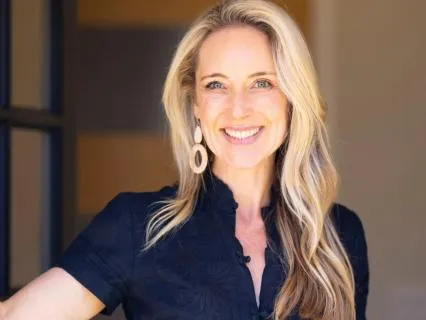
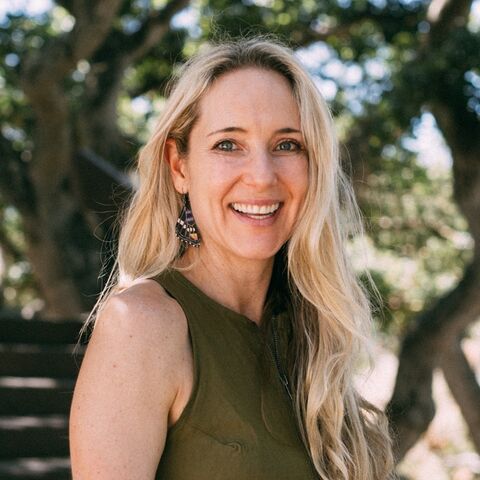
I'm Dr.
Diana Hill,
Clinical psychologist,
Host of The Wise Effort Show.
This show is about energy use,
How to do more of what fuels you,
What brings you vitality,
What makes you feel the depth of being alive.
Do more of what is aligned with your karmic assignment,
What you're here on this planet to do in this moment in time,
And do less of what drains you.
Do less of what's depleting you.
Do less of leads to this kind of dukkha or feeling of dissatisfaction and it's really hard to know how to engage in wise effort unless you take some time to pull out of your life to go on retreat whether it's a mini retreat in your day or 20 minutes in the morning,
Or it's a few days retreat,
Come with me to Esalen.
Weekend in October,
Or it's a week-long retreat.
Hey,
Come with me to Costa Rica in April.
Whatever you do,
When you go on retreat,
You come back to yourself and things become more clear for you about how you want to use your energy,
About where you're off track,
Where you're out of alignment.
And that is why I go to Plum Village every year with my family.
This is no small feat,
Getting two teenagers to Southern France.
Financially,
No small feat.
Work-wise,
No small feat.
It's just hard get into Plum Village,
It's like a lottery now,
It's kind of hard to get a spot.
And it's probably the most important week of our year as a family.
So I've done other episodes on Plum Village,
You can go back and listen to them in the archives,
Some really good ones.
This year,
I want to talk to you about five lessons that I learned that I think you could apply to your life to help you with that shift in energy and energy use and clarity of your energy use.
And the first lesson is let yourself cry.
All right,
So the second day of retreat,
Every year,
The entire community,
So there's these different hamlets at Plum Village,
We're separated out by the language that we speak.
Some of us are staying with the nuns,
Some of us are staying with the monks.
But the second day of the Plum Village retreat,
We all gather together in Lower Hamlet,
Which is the home of the nuns.
It's the best hamlet because the nuns run it.
It's like beautiful with the most beautiful lotus pond and the prettiest of everything,
Of course,
But we all gather,
Probably almost 1,
000 of us in this meditation hall,
And the nuns enter in on one side,
Bald,
Brown-robed,
Beautiful.
The monks enter on the other side,
And they launch into this chant,
Avalokiteshvara.
So Avalokiteshvara is the Bodhisattva of compassion,
And before the chant,
Gave us the instructions of receiving the chant first for yourself,
Receiving compassion for yourself.
When you actually take time to let someone sing to you and receive the energy,
And you can feel the physical force of energy of these monastics,
Their hands are in this beautiful prayer pose where they're offering a lotus.
So it looks like a lotus flower,
Right?
And they are singing from the heart and you receive the energy of compassion.
For you,
For the things that you struggle with,
For the things that are hard in your life right now,
You just get watered.
And as soon as you open your heart to that,
Tears are going to come.
Then you offer compassion to your loved ones,
To your friends and your family,
I can think about the friends and family that I offered compassion to this year,
People that are struggling at home,
People that have are going through just a really hard time,
You cannot help but cry.
And then compassion for our planet And the monastics are doing this like,
This is like foundational to their practice of holding the compassion for all the suffering of the world.
So people that are in wars while we were there,
There was fires,
Which was such a reminder of climate change and the hurt of our planet,
Mother Earth is hurting,
Poverty,
People that are experiencing discrimination,
All of it.
So you offer and open up your heart to compassion for the world.
If you do those three things,
You will be a puddle.
You will be crying.
It is just by our very nature,
Crying is an expression of grief,
But also an expression of love and being touched by the intimacy of life.
So every year,
I just basically cry for 20 minutes while they sing this beautiful chant,
Avalokiteshvara.
And this year,
My son came up to me afterwards,
My 13-year-old,
And he said,
Mom,
The first time,
I understand why you cry.
I always thought it was like,
You know,
This pretty song that I could turn off after a few minutes,
But I really had no sense of what I was supposed to be doing in it.
And when I started doing those three things,
I cried too.
And I get it.
I understand why you cry.
Crying is a way to move energy and emotion through you.
And especially our boys are like socialized so early to stop crying.
And then I think women are also socialized that crying is some form of manipulation or some form of,
You know,
Being hysterical or weak.
I don't know.
I mean,
There's some sex therapists that say you should have an orgasm a day.
Yeah,
That could be beneficial.
I also think crying every day could be beneficial.
Naturally letting yourself be touched by life and open up.
And it is a beautiful thing when you can allow that energy to move through your body,
Express it as a form of love.
So the first lesson is let yourself cry.
The second lesson is recognizing that sometimes things like this happen.
So this comes from the monastic that I was in a family with.
When you go to Plum Village,
You're assigned a family,
Which is 12 to 15 or so people that you will be meeting with every day.
You have a dinner with them.
We do mindful eating.
You do service meditation.
So this year I was on cleanup meditation,
Which means after a meal,
We'd like wash the dishes and clean the table.
And put the leftovers,
Oh my gosh,
The leftover brown rice,
Which is usually a lot,
Into containers.
And you get,
It's kind of a crapshoot who you get for your family,
But also who you get for your monastic.
So a monk or a nun will be the leader of your group.
This year,
We just like got super lucky.
We got brother Tianqi,
Who is from Bulgaria.
Bald as can be,
Of course,
Brown robes,
Big bushy eyebrows,
Great sense of humor,
And just awesome.
Struck,
Like he's awestruck by everything.
And he had these great one liners.
And one of his one liners that he would say all the time is,
Sometimes things like this happen.
He said that almost every day,
The monks shave their heads,
And the conditions at Plum Village are,
Let's just say like,
Camping conditions,
And the the sinks get clogged.
When he was a new monastic,
He would walk by and see these sinks clogged with disgusting hair.
Was so grossed out by it.
And it just happened over and over and over and over again.
And he would get resentful and irritated.
Now this mirrors a lot of like my life as a mom,
Things that gross me out about my teenage boys,
Right?
And you just get irritated,
It gets under your skin,
Things that gross you out about your partner,
And you create this whole story about it.
And rather than actually just tending to it.
So he said that one day he came across the clog sink and just cleaned it up and said,
Sometimes things like this happen.
Later on,
He said that when his nephew fell and skinned his knee and was just sobbing and crying and like whole body kiddo cry.
He swept him up and held him and said to him,
Sometimes things like this happen.
And that his nephew he overheard later on telling his family members saying,
I fell down and uncle said that sometimes things like this happen.
It's kind of reassuring.
It's kind of present moment awareness,
And it's letting go of the story that we add on to things.
And just letting it be what it is.
There's like really beautiful things,
Really hard things,
Really just boring things about being human.
And if you enter into it with this mindset of sometimes things like this happen,
You hold it all a lot more lightly,
You can be more flexible with it,
Which is very much act very much Buddhist,
Very much just being an effective human being.
So think about for your life right now,
Is there something that you could just respond to with that kind of mindset?
Sometimes things like this happen,
And then deal with it without adding the story.
Alright,
So we have let yourself cry and remember that sometimes things like this happen.
The third lesson from Plum Village for me this year had to do with awareness of sort of the role that we play in co-creating reality.
Cave monastics,
Some of them were teachers,
Some of them.
.
.
Were musicians and scholars,
Some of them have PhDs.
I mean,
They're pretty incredible humans from,
Again,
All over the world.
And a lot of them are incredibly creative.
They're beautiful musicians.
They play music.
We do a lot of singing at Plum Village.
And they also play the bass and the guitar and drums and the violin.
And during one of the chanting sessions where they were playing these beautiful instruments,
Afterwards,
Monastic Brother Future said to remember that when you're listening to music,
That you are the missing instrument.
Self in some form,
Interconnection on some form,
How we co-create our reality.
Here's how it works.
As you're listening to music,
Your ear is perceiving vibrations,
But your brain is interpreting that,
Right?
So nothing that we perceive,
Whether it's visually or auditorily,
Is actually the reality of what is,
Right?
Our brain is always filtering and manipulating information.
The same is true of a conversation.
So if I'm in session with a client or I'm having a conversation with my kids or my partner or a friend,
My brain is doing the same thing.
I'm the missing instrument.
You are the missing instrument.
And that instrument is playing a tune.
And that tune is impacting the harmony of the orchestra.
You are the missing instrument.
What happens when you are on retreat and when you meditate is you start to notice your own instrument playing.
You notice your own thinking patterns.
You get to notice patterning in your brain.
You notice the tendency to be judgmental,
To be critical of other people,
Of yourself.
You notice the tendency to compare or the tendency to be grippy and striving and always want things to be better or always want to be ahead of people.
These are ways in which your instrument you.
Is influencing the harmony of your life.
Recognizing that you are the missing instrument means that you can also recognize how you are playing that instrument.
Do you want to play an instrument that is critical?
Or do you want to play an instrument that is compassionate and appreciative and generous?
Do you want to play an instrument that is fun and light?
Or do you want to play an instrument that is doom and gloom?
You are the missing instrument and you are the one that gets to choose how you play it.
This is sort of high level awareness here,
But it happens when you're on retreat.
Happens during meditation.
Actually,
I think that a lot of people have a misconception about meditation that they think that that is that meditation is like,
When you're supposed to like calm yourself or find some kind of inner peace.
That is not what meditation is about.
Sometimes meditation is is super,
Super uncomfortable.
What meditation is about is noticing your own patterning and becoming a space of awareness that sees all of this playing out that sees the instruments being played,
Including yours.
So you're the missing instrument.
Can you be aware of that?
And can you make some choices in how you're contributing to harmony or disharmony within the different orchestras of your life,
Your workplace,
Your home,
Your community?
Okay,
I told you these were going to be kind of high level.
When you come back from a treat,
You are in a different realm for a while.
And then you kind of hopefully don't fall fully back into your patterning,
But you fall a little bit back in.
So I'm in a different realm right now where a carrot is orgasmic.
But that's okay,
I'll stay there for a while.
Okay,
This next one,
Disease can purify your soul.
Disease can purify your soul.
This also comes from Brother Tianqi.
When I got to Plum Village,
I was like,
You know,
When you turn off a fan and the fan's still spinning,
That was happening for me.
It took me a while,
Usually it's about three days for me to settle.
But this time was different in the degree of depletion I was experiencing.
It felt like all the energy had been leeched from my bones and I had nothing left.
I was slower than slow.
All I wanted to do was sleep and cry.
Sleep and cry,
Sleep and cry,
Sleep and cry.
Maybe you relate to this.
You probably need a good sleep and a good cry.
And I had the space to do it.
I was so slow that on the watch,
Walking meditation where people were moving one like snails pace,
It felt just about right.
That's about how fast I wanted to move.
And I was so depleted that every day around two o'clock,
I would take a nap,
Whether it's through the total relaxation where the monks sing to you and you go in the big meditation hall and you lie down and there's little kids crawling around and they lead you through a body scan and sing to you for an hour and I was just like out cold.
So depleted to the bone.
It makes sense.
I wrote two books last year.
We built a whole house raising teenagers.
But when you are in the speeding fan of things,
You don't see the disease,
Maybe you're moving so fast that you don't see how depleted you are.
But you also don't see the disease of it,
The dukkha,
The dissatisfaction,
Which is part of our human existence,
Because you're just skimming the surface of your life,
Or you're running through life,
Or you're so busy,
That you feel it like underneath your skin eating away at you,
But you're not fully,
I guess just in it.
And when you're fully in it,
It's rough.
It was a rough few first days.
So disease can purify your soul.
My body was so heavy and slow.
I asked Brother Tian Qi for a private session.
I know how to work the system at Plum Village.
I've been going long enough that I'm like,
I know you had to get to the meditation early to get up front to absorb all the energy.
I know that you can get a little private session with your monastic.
Look,
I'm only there a week and I want to get as much out of it as possible.
This is my high achiever self.
I'm like,
This is my time to really maximize the experience here.
So I met with Brother Ten Chi,
We sat in these chairs overlooking the Lotus Pond.
And he told me about a teaching that he'd encountered from the Muslim tradition.
Which is the belief that illness comes actually to purify the soul,
And that the tiredness and depletion that I was experiencing were here to purify something.
It made me think about the clients that I work with who are hitting their limit in some form or another,
This disease of living,
And how the symptom is actually here to tell you the truth about something in your life,
Something that may need to change that you've been unwilling to admit.
And disease has this opportunity to purify you.
If you let it,
If you go there,
Our automatic reaction is to contract against this,
Like an unpleasant feeling or experience.
But when we collaborate with reality,
That's when we move towards that disease and transform actually can occur.
So most of the time,
You're so caught up in the,
I guess in Buddhism,
They call it your neuroses or psychology,
Our neuroses,
Our,
Our patterning,
And the chatter in our mind that we don't see things directly.
So instead of rejecting your experience,
But you stay in the middle of it,
You contact the living energy that's showing up for you without all the filters.
It will purify you.
It'll show you what Pama Chodron calls the is-ness quality of life.
The is-ness,
The basic substance,
The emotion of the tiredness of the disease.
And that's what will help you soften that sort of edge feeling,
When energy can actually come back to you,
Because you've met it where it is.
And that's what started to happen to me,
You know,
Day four,
And five,
That disease,
I had allowed it to be there long enough.
And I and I gave myself just permission to be with it to cry to rest to kind of mope around a little bit.
And it moved through me and I came out the other side,
You will come out the other side,
Whatever it is that you're facing,
Disease has the opportunity to purify you if you let it.
All right,
So lessons so far.
Number one,
Let yourself cry.
Number two,
Sometimes things like this happen.
This is your mantra.
I want you to say it like just anything bad that happens,
Anything good that happens.
This is impermanence.
Sometimes things like this happen.
Number three,
I want you to remember that you are the missing instrument.
And then number four,
Whatever disease you're experiencing in your life right now,
Move towards it.
Be with it long enough to recognize that it is here to purify you.
Number five,
Last one.
Every movement has a life.
Every movement has a life.
This one comes from walking meditation at Plum Village,
Which for years I've done different things.
Like sometimes it's like you're walking so slow through kind of nowhere.
And you're in this line of 500 people,
Sometimes 800 people,
Children,
Monks and nuns,
And we're walking silently through aspen trees around lotus ponds.
Sometimes in the heat,
Sometimes you're stopped and you don't know coming next,
Right?
So this is a nice metaphor for life,
Right?
And I've done different things.
Like I've done following my breath,
I've done the mantra saying yes,
Yes,
Thank you,
Thank you with every step.
I love that one.
I've done breathing in for five steps,
Breathing out for six steps.
And all of those were like,
Almost like these little techniques.
There's like meditation techniques that we can get hooked on,
You know,
Helpful,
Yes.
But also,
Different from the experience of being fully absorbed into the experience itself.
And this year I got this instruction again from my son who's like,
I swear,
The best monastics go to the team program.
So he's like,
Here's how you do the walking meditation mom.
First of all,
You go like.
Five inches back behind your eyes and look from there,
Which was kind of interesting to think about.
This is the sort of step back approach of awareness.
If you were looking at the world from five inches back,
Not from the front of your eyes,
But five inches back,
That's like more of a wisdom space,
Right?
And he said,
Second,
Don't look at your feet.
You don't need to look at your feet.
Some people get caught up in looking at their feet.
Look out at the horizon.
And when this goes back to Rick Hansen's,
You know,
We know from some of the neuroscience research that connects you with more of an allocentric kind of perspective,
As opposed to egocentric.
And then he said,
This was the key.
He said,
Mom,
Remember that every movement has a life.
So when you lift your leg,
When you place your heel,
Each and every one of those has its own little life,
A beginning,
A middle,
An ending.
And if you can pay attention to the life of your body moving through the aspen trees or moving through the gravel or wherever it is you're walking on,
You will be present,
You want to be present for that life.
And the more present you are,
The more you get to live that life of that little foot.
Okay,
If every movement has a life,
Many,
Many births and many deaths all day long.
Brother Fapung,
Who is another monastic at Plum Village,
Taught us this idea of no birth,
No death,
A cloud never dies,
And a cloud is never born.
These are all lines and gathas that are part of Thich Nhat Hanh's teachings.
But this idea that we are constantly being born and dying,
Every step,
Every conversation,
Every relationship that we're in,
Every work project that we're taking on has its own little life to it.
Every book has a life,
Every podcast episode has a life.
How are you being,
Experiencing that?
Little life,
Knowing that it will end.
It brings a lot of preciousness to the movements that you make.
And when you watch the monastics,
I mean,
They're doing things like when they erase the whiteboard,
They're just experiencing erasing the whiteboard.
They don't talk while they're erasing the whiteboard because they want to be experiencing that moment of erasing the whiteboard.
When they're eating,
We just experience the energy of the food and the taste of the food and the love that went into the food because that's little life,
This experience of eating has a life,
Every movement has a life.
And when my son said that to me,
I started to also see that our relationship,
My relationship with him,
In that moment had its own little life,
This this little moment with him was Right then,
Only then,
Makes me cry.
You gotta cry.
That is the teaching of impermanence.
And that is part of the teachings that Thich Nhat Hanh described as transformative ways of seeing,
You know,
Sort of the seeing impermanence,
That everything changes,
That nothing stays the same,
Every movement has a life.
And then it also has this component of aimlessness,
Is that there's nowhere else you need to get to.
That's what walking meditation teaches.
There's nowhere else you need to get to.
It doesn't mean that you lack purpose,
It's actually recognizing that your deepest nature is already whole.
And one of the things that I think I struggle with the most is this concept of striving.
I talk about it with Joe Confino and the podcast next week,
We'll have a podcast with Joe Confino,
This,
Like always wanting to get to the next thing,
And not being satisfied with this movement,
This thing I'm in this movement has a life and living out this movement of your life here and now,
Not about the next step that you're going to take,
But this step.
Is what's most important.
We'll bring you what they call the three doors of liberation.
Emptiness,
Signlessness,
And aimlessness.
So there we go.
There are your lessons from Plum Village.
I'll repeat them again and give you just a little tiny assignment with each.
So the first one is let yourself cry.
You can get there,
Put on a sad song,
Sure.
But one way to get there is practicing these three flows of compassion,
Compassion for yourself,
Compassion for a loved one,
Compassion for our planet.
And if you get touched by something,
Move towards compassion and let the tears come.
Number two,
The mantra.
Sometimes things like this happen.
Try repeating it.
Sometimes things like this happen.
Number three,
Remember that you are the missing instrument.
Number four,
Disease can purify your soul.
And number five,
Every movement has a life.
Be in the movement that you're in.
Okay,
Plum Village episode.
I hope you found this helpful.
All right,
Many blessings.
Thank you so much for listening to this episode of the Wise Effort podcast.
Wise Effort is about you taking your energy and putting it in the places that matter most to you.
And when you do so,
You'll get to savor the good of your life along the way.
I would like to thank my team,
My partner in all things,
Including the producer of this podcast,
Craig,
Ashley Hyatt,
The podcast manager,
And thank you to Bangold at Bell and Branch for our music.
This podcast is for informational and entertainment purposes only,
And it's not meant to be a substitute for mental health advice.