Welcome everyone.
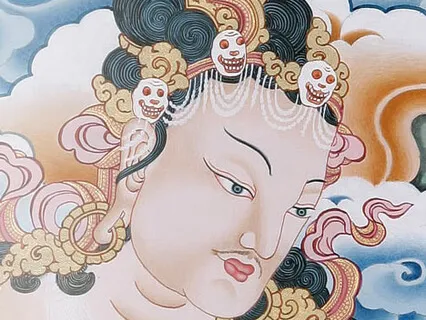
So Tilopa's six words of advice is one of those timeless,
Kind of evergreen meditation instructions that I keep coming back to again and again in my own practice and sharing with students.
And I think you can apply this instruction whether you are a beginning meditator or you're someone who has been meditating for a long time.
This instruction might seem deceptively simple when you first hear it,
But I think that you could explore the depths of an instruction like this for the rest of your life and probably never really be done with it.
So before getting into the practice portion of this session,
I'd like to say a little bit about Tilopa and this verse and where it comes from.
Tilopa lived in India in the 11th century and is regarded as one of the forefathers of the Vajrayana Buddhist tradition,
Which survives today mainly in the form of Tibetan Buddhism.
Tilopa's probably best known student according to tradition was named Naropa.
There's a university in Colorado that's named after him.
Tilopa's best known student was Marpa the translator who translated a lot of the Vajrayana Buddhist teachings from India and brought them to Tibet.
And Marpa's best known student again according to tradition was Milarepa whom you may have heard of.
So even if you haven't heard of Tilopa or Naropa or Marpa,
Perhaps you've heard of Milarepa,
He's one of Tibet's legendary meditation masters and sort of sainted yogis.
So Tilopa's six words of advice were presumably written down in Sanskrit and translated to Tibetan at some point,
But the Sanskrit source text in India was lost and only the Tibetan text has been handed down to us.
And it's been handed down from teacher to student for almost a thousand years now,
So this is a very ancient instruction.
In Tibetan,
The title for this instruction is also Six Nails of Key Points,
Which I think is an apt phrasing when you think about the English expression of hitting the nail on the head with a statement that really is concise and goes right to the point,
Which is what this instruction essentially does.
I'm not a translator myself from Tibetan,
But from what I understand the original text in Tibetan is only six words long,
Which is why it's called Six Words of Advice.
But in English,
Which is a less versatile language for talking about things that relate to the mind and meditation,
It requires a few more words to bring it to life in a way that's really relatable and understandable.
So there are different translations of this text and different versions,
And I'll share a couple of those.
The first one is very concise,
Very literal,
Right to the point.
And then the second one is a little bit more elaborate,
But I think perhaps does a better job of unpacking the meaning that is embedded in those six Tibetan words.
So first,
This is the very concise and literal version.
Don't recall,
Don't imagine,
Don't think,
Don't examine,
Don't control,
Rest.
So I'll say that one more time.
Don't recall,
Don't imagine,
Don't think,
Don't examine,
Don't control,
Rest.
And I think there's something kind of wonderful about the no-nonsense quality of that translation,
That as a meditation instruction,
It feels like a bit of a blunt instrument.
So I like the second translation,
Which is attributed to the translator and teacher Ken McLeod.
And he translates this text this way.
Let go of what has passed.
Let go of what may come.
Let go of what is happening now.
Don't try to figure anything out.
Don't try to make anything happen.
Relax right now and rest.
So the original six words of the Tibetan text have now kind of swollen into a whole verse,
But I think in doing that so they have become more relatable,
More understandable.
And these six lines of this verse sort of deconstruct some of the fundamental patterns in our mind that tend to block our access to clear and open meditation.
So let's,
In our practice,
Sort of unpack the meaning of these lines one by one.
So if you haven't already,
Go ahead and take your meditation seat,
Your meditation posture,
Which could be on a cushion or in a chair.
For this particular meditation,
If you wish,
You could also lie down on your back and begin to bring your attention down into the body and notice the natural rhythm of your breath,
The rising and falling of your belly as you breathe in and breathe out,
And perhaps noticing also the sensations of air at the tip of your nose,
A slightly cooler sensation as you breathe in and a warmer sensation as the air goes out,
Leaving your body.
So the first line of the six words of advice is,
Let go of what has passed.
So when you arrive on your meditation seat,
As a human being you come dragging behind you all sorts of stuff from your past,
A kind of trail of mental debris,
Dirt that kind of hovers around you.
Like if you've ever seen the Peanuts cartoon,
The character Pigpen has this kind of cloud of stink that follows him everywhere he goes.
So that's kind of the way we arrive on our meditation cushions a lot of the time.
And you can see,
If you observe your mind,
You can see in real time how this cloud of stuff from the past kicks up and obscures your view of the present moment.
You come and sit down to meditate and rest your mind on the breath and be in the present moment and before long you find yourself remembering your bedroom in your childhood home or thinking about your ex-lover and what an angel or a jerk he or she was or is or thinking about that meeting that took place at work yesterday and replaying the whole videotape of the meeting in your head,
Thinking perhaps what you should have said to that co-worker instead of what you actually did say.
And it goes on and on.
The past can haunt your mind in a million different ways.
And it can haunt your body as well in the form of restlessness,
Fidgeting,
Various kinds of tension,
Chronic tension that you carry all the time or acute tension that seems to be very prominent in the moment.
And you tend to carry this tension with you wherever you go,
Including into your meditation.
So being truly present requires you to acknowledge your particular ways and patterns of holding on to the past and to practice letting them go over and over,
Letting go of what has passed and arriving again and again into the present moment.
The second line of six words of advice is let go of what may come.
So this is sort of the flip side of the previous line.
When you're not sort of rehashing the past or trying to hold on to something from the past,
You might notice your mind drifting towards the future,
Anticipating things that have not happened yet,
Cooking up hopeful and fearful scenarios about what may or may not come to pass,
Perhaps worrying,
Daydreaming,
Planning,
Scheming about all the things that you could get or say or do in order to secure some kind of desired outcome at some future moment.
Maybe it's not even as sort of exciting as that.
Maybe it's something dull and monotonous,
Like wondering how much time is left in your meditation session,
Anticipating the ring of the bell that will signal when it's time to get up or thinking about what's for lunch.
So again,
When you notice your mind drifting into thoughts of the future and when you notice your body tensing up in anticipation of things that haven't happened yet,
Just gently let that go and come back to being present.
So the third line of the instruction is let go of what is happening now.
So when you let go of the past and the future,
You find yourself very simply abiding in the present.
And that feeling of being present might last only a moment before your mind's habitual patterns take control again and you drift away into the past or the future.
Or perhaps without noticing it,
You start to drift into some kind of commentary in your mind about the present moment.
You might find yourself saying,
Wait,
My arm itches.
Okay,
That's better.
Now I've got it.
Now I'm really present.
I'm calm and relaxed.
My mind is quiet.
Well,
Obviously it's not.
You're sitting there lost in judgments and talking to yourself about the present moment instead of just experiencing it.
So the short translation of this line is just don't think.
But telling someone not to think is a kind of tall order.
Sometimes that leads you to end up thinking about how bad you are at not thinking.
You can't really will the mind to stop thinking or silence it with brute force.
Milarepa said in one of his famous songs of realization,
The mind's impulse to sudden thought cannot be stopped by hundreds with spears.
Meaning that even if you were to be surrounded by warriors holding spears,
Menacing you and threatening to jab you with their spears,
If you allow your mind to think,
You still couldn't stop it.
Everything happens.
So I think as the slightly longer translation of this line from Kim MacLeod suggests,
It's less about stopping thoughts and more about letting go of what's happening now,
Including thoughts.
The mind's tendency is to try to take hold of what's happening now,
To grasp onto it tightly,
To own it and say,
This is what I'm experiencing and sort of make a big deal out of it.
But clutching at the present moment is like clutching at water in your fist.
The more tightly you grasp at it,
The more the water escapes your grasp.
The present moment is always unfolding,
Always flowing,
Always changing.
And it can't be pinned down because it's not an object.
It's this infinitely unfolding process.
So whatever arises within the space of the present moment,
Whether it be sensations in the body,
Sounds in the environment,
Thoughts in the mind,
Perceptions through the senses,
Just notice it all and let it come and let it go.
The present moment is like a wave that's always cresting,
Rising up from the past,
Dissolving into the future.
And right here,
You're balanced right at the edge,
Surfing that wave.
But you can't hold onto a wave or change it in any way.
So ride it while you can.
Let it dissolve.
And then ride the next one.
And the next one.
No big deal.
So the fourth line of Tilapia,
Six words of advice.
Don't try to figure anything out as you sit there in meditation.
Notice if there's a little voice in the back of your head quietly analyzing and murmuring about your experience.
Am I doing this right?
What is my breath supposed to feel like?
Is my posture okay?
When I'm in the present moment,
How is it supposed to feel?
Is this it?
Aha,
I think I had it there for a moment.
The short translation of this line is somewhat telling.
It's don't examine.
So in this present moment,
Look at your mind's tendency to always be examining your experience.
Analyzing it,
Questioning it,
Doubting it.
And see if you can drop that and see what your experience actually feels like right now without the additional responsibility of trying to figure it out.
Is it possible to just be with it and at the same time leave it alone?
The fifth line is don't try to make anything happen.
So if you're like me,
You might sit down to meditate with big ideas and plans about how it's supposed to go.
What sort of blissful and enlightened state you're supposed to attain.
But those beautiful plans always seem to be falling apart.
And you're always scrambling to pick up the pieces and recreate that idea you have in your mind of what's supposed to be happening.
And this is a kind of project management mentality that we often bring to our practice.
But you can't project manage your way through meditation.
You can't force your mind into stillness and silence and presence because those aren't states that can be created through effort.
Those things are the natural qualities of awareness which you settle into when you stop being a control freak and stop agitating yourself with your mind's habitual patterns.
So an example that's often given to explain this is a glass of water that has some dirt in it.
If you keep stirring the water,
Then the dirt always obscures the water's natural clarity.
But if you just leave it alone for a while,
Then the dirt settles to the bottom of the glass and the water's natural clarity is revealed.
But the more you try to make the water clear,
The muddier it becomes.
So you can't actually create clarity,
But you can stop obscuring it,
Stop interfering with it.
It's a matter of getting out of your own way.
Don't try to make anything happen.
Let everything be.
And the final line of Thalapa's instruction is kind of the whole instruction in a nutshell and sums up the other five lines.
Relax right now and rest.
So you're letting go of the past and the future and fully arriving in the present moment again and again.
And in the present moment,
You're letting go of the mind's tendency to think about the present moment,
Comment on it,
Analyze it,
Project manage it,
And letting go of any effort to control your experience or make it conform to some ideal that you might have in your mind of what should be happening.
So now what are you supposed to do?
Well,
That's the thing.
Nothing.
Just let go and relax in a state of non-doing.
A state of just being.
Being aware.
Hovering right here,
Right now,
On the edge of that ever-crusting wave of the present moment and simply allowing your body and your mind to rest.
This idea of resting in a state of non-doing is really one of the simplest things in the world.
Just rest.
And yet,
We human beings are so absurdly complicated that we seem to have a hard time learning to find a natural state of rest and to settle into it because we have such strong habitual patterns of restlessness.
Our minds and our nervous systems are chronically overstimulated,
Perhaps these days more than ever before.
And a lot of us often seem to be riddled with tension and hang-ups and lots of things that we've convinced ourselves we're supposed to be doing.
So most of us actually find it quite challenging to just come into a state of rest and stay there.
So Tilopa's six words of advice help us dismantle,
One by one,
Some of the mind's major patterns of restlessness,
And finally arrive back at the original state of simple,
Clear awareness that became clouded over somewhere along the way.
Let go of what has passed.
Let go of what may come.
Let go of what is happening now.
Don't try to figure anything out.
Don't try to make anything happen.
Relax right now and rest.
Enjoy your practice.
Namaste.