Hey everybody,
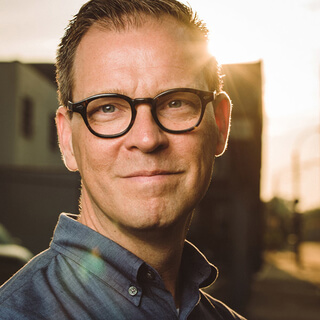
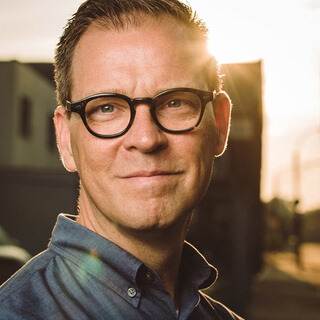
It's Darren.
Welcome to this special edition of The Art of Attention.
One of my previous guests,
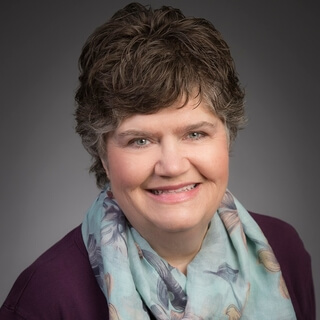
Psychologist Nick Wignall,
Recently launched his own podcast called Minds and Mics.
He's having conversations with people about psychology,
Mental health,
And living more fully.
He invited me on to talk more about mindfulness.
We recorded that conversation several weeks ago,
Before the severity of the COVID-19 outbreak came into clearer focus.
We both help people respond more effectively to challenges and uncertainty.
He comes from a cognitive behavioral therapy approach,
And I share mindfulness exercises that build attentional capacities.
This conversation is our attempt to illustrate how these two approaches can work together to help you feel more equipped for the challenges we all face in coming days,
Weeks,
And maybe even months.
I hope you find it useful.
Hey everyone.
This is a special episode of two podcasts,
Really.
I'm here with my buddy Darren Larson,
Who's a mindfulness coach.
We thought it would be fun to get together and do an episode where we compare notes on strategies and approaches to managing stress and anxiety during this coronavirus outbreak,
Something that's on all of our minds,
Obviously.
We wanted to do this because we have similar but complementary styles.
I'm a cognitive behavioral therapist,
And Darren's a mindfulness coach.
So we thought it'd be fun to just go through some of our best insights or tips or strategies and rip off each other's.
So Darren,
Does that sound all right with you?
Sounds great.
I'm glad to be here,
Nick.
I'm excited to really see.
I'm always telling people,
Mindfulness practice does not replace other supports and strategies,
Things people can explore to take care of themselves.
I'm really curious to see where this goes if we compare notes and really see how some of the strategies that you recommend line up with some of the exercises that I like to share with people.
So I'm excited.
Great.
So let's just jump right in.
The first thing I like to tell people is it's important to validate your fears and anxieties before you rush to do something or think more about what's going on.
And what I mean by validate is all validate means is reminding yourself that what you're feeling,
No matter what you're feeling,
It's valid that you're feeling that way.
So even if what you're feeling is uncomfortable or painful or scary,
You're feeling anxious,
You're feeling worried,
You may not like it,
But it's okay that you're feeling that way.
There's nothing wrong with you because you're feeling that way.
It's not bad.
It doesn't mean you're bad or your brain's broken or anything like that.
Especially during a time like this,
Kind of an unprecedented challenging time like this,
It makes complete sense that all of us are going to be on kind of high alert.
So I think before you do anything,
It's really important to just check in with yourself periodically and notice,
You know,
How am I feeling?
And then just remind yourself,
You know what,
This sucks.
I don't like it,
But it's not surprising that I feel this way.
And it's okay that I feel however I feel.
Yeah.
So yeah,
So one of my favorite things,
Exercises to give people and what I like about mindfulness practice is this works in this high level challenge that we all find ourselves in.
I say I'm excited.
I wish the circumstance were different,
But what's really cool is whatever we do now,
We can kind of set the stage to be doing always or do a little bit more in general.
But so what exercise I give to people is that any given moment you can pause,
Nobody needs to know you're doing this.
You know,
You could be by yourself,
You could actually be around other people,
Pausing and just taking in some sensory detail.
And how I frame this is usually something like what you're saying.
I kind of check in with myself and sort of notice if I were going to narrate this,
How would I describe it?
And that could be something from I'm thirsty to I'm bored to I'm scared.
And what the mindfulness move would be is to just simply say kind of briefly to yourself,
Describe it.
X is like this.
So sadness is like this.
And then here's the,
Here's the,
Where the kind of,
Where the work really goes for the next few seconds,
Explore that kind of on a sensory level.
So if it's sadness,
Like just exploring what's it like to let yourself feel sad for a handful of seconds or maybe a little longer,
But to just play with this idea of what's it like to almost like I'm a scientist observing myself.
I actually had a coaching client one time said,
You're,
It sounds like you're asking me to be both the scientist and the lab rat.
And I love this.
So it's like the lab rat is sad.
The lab rat doesn't have to explain or fix that,
But it's like part of you is,
Is feeling it and part of you is just observing that what's it like to be a human who is afraid right now or sad or scared.
Yeah,
That's great.
And it sort of dovetails into my next point,
The focus on just observing how you're feeling before you kind of rush off to thinking more about it or doing something.
Just taking a little moment to feel what's going on.
My second point is it's important to distinguish worry from problem solving.
So once you kind of check in with yourself and you validate and you acknowledge that it's okay to feel however you're feeling and maybe you kind of tune into what's the physical feeling going out and just kind of observe what's going on with you.
Well,
We're not just going to sit around all day,
You know,
Kind of observing our feelings,
Right?
Some way we got to do something.
But our instinct often is to go into worry.
And worry is a form of thinking that looks a whole lot like problem solving,
Which we're dealing with a lot of problems right now.
It's understandable that our mind is kind of going to go in this direction.
The difference between worry and problem solving is problem solving is productive.
It's helpful.
Whereas worry is not.
It looks the same and it has all the same sort of side effects of stress and anxiety,
But there's no benefit to it.
So for example,
Simple example is obviously the economy is taking a hit right now.
So it would be easy to find yourself sort of worrying about the worst case scenario of what if I lose everything in my retirement and I end up destitute,
I'm going to have to sell my home and all my assets and,
You know,
Just on and on.
And then I'm living under a bridge is where that ends up going.
Yeah,
It's never moderate.
It's always right.
It's an extreme.
Yeah.
So can you catch yourself in that,
Okay,
I'm thinking and it makes sense that I'm concerned about what's going on with the economy,
But is this line of thinking actually helpful?
And if not,
Can you ask yourself,
Well,
What would be a more helpful line of thinking?
So I'll make an appointment to call my financial planner and kind of come up with a plan for something.
Yeah.
So when we,
After we've touched base with ourselves and checked in,
When you do decide to do something,
Including start to think about what's going on,
It's really important that you look at it through this kind of lens of,
Is the way I'm thinking helpful or not?
Am I actually getting any kind of return for all this effort that I'm putting in?
Yeah.
And I think that this kind of lines up with my,
In general,
I'm trying to invite people to start to notice the difference between what I call making sense,
Which is our normal mode and sensing directly,
Which is a mindfulness mode,
Usually a sensory perception of some kind.
And when,
What I noticed is that when I'm making sense,
It's analysis,
It's narrative,
It's a story.
And the story structure itself tends to be like what you're describing.
Here I am,
I'm a person,
I'm a character in a story and I've got this obstacle and I need to solve that obstacle to get on the other side.
And in a scenario like the one we're in,
Which is an extreme example of what we face a lot in life,
Is what do we do when there's not a solution,
There's not an immediate solution?
So I love what you said,
We will take the worry as a kind of substitute,
A kind of a crappy substitute,
Not very satisfying,
But it feels like it's better than doing nothing.
And in fact,
I often ask people to kind of notice,
We feel guilty for not worrying because at least worrying feels like an action,
Even though it's kind of an illusion,
It's a trick,
But it resembles action.
So one of the clues I have people look for is,
You know you're making sense if it's taking more than a few seconds,
Because a story needs to unspool over time.
You know you're sensing directly is when it's just like one repetition of noticing,
So a handful of seconds.
And it helps me also to think about how I'm not,
Just because I'm temporarily foregoing the need for some kind of resolution or solution,
It doesn't mean I'm condoning what's causing the feeling.
It's a really powerful obstacle that's right there in our path where it seems like,
In the same way that worry feels like doing something,
It feels like allowing myself to feel what I feel even for a few seconds.
It almost feels like I'm indulging it or passively approving it,
And it's paradoxically the opposite.
You're actually changing how you relate to emotion by literally just by feeling it for a few seconds at a time in my book.
Yeah,
Yeah.
So another thing I think we,
I love that point about how worry gives us the illusion of control.
You know we all kind of have this action bias where we feel like doing something is usually better than doing nothing.
But obviously there are times when that's just not true.
If you have a problem,
Even if it's a real problem like your retirement savings taking a hit,
If you can't do anything about it right now,
The worry may be giving you all sorts of side effects with no actual benefit.
So I think something similar happens,
And this is my next point,
Which is to be intentional about how we consume the news.
So again,
There's a lot of problems going on right now,
I mean in the real sense of the word,
And it's important to stay informed about what's going on and what the problems are,
And what the challenges are,
And what we should be doing.
Whether it's how we should be managing our money to washing our hands,
Not touching our face,
All these sorts of things we need to be aware of.
But the mistake I think is it's related to worry in that it's easy to get into the thought pattern of the more news I watch the better,
Right?
Because I need to be informed.
So therefore the more information I get the better.
But I think if you stop and think about it,
If you watch six hours of cable news every single day,
Are you really going to be that much better informed than if you read the newspaper for half an hour in the morning and then watch 30 minutes of news in the evening?
I would bet you're going to be getting 98% of the information that you got in that hour per day with a drastically lower side effect profile in terms of the all the anxiety and stress that comes from,
You know,
Watching the news.
So I think it's really that the word intentional,
You know,
Being thoughtful about is this action I take watching the news,
For instance,
You know,
Is it really in my best interest and how much of it is really going to be helpful?
And I think you're describing diminishing returns there,
Which in this,
You know,
Everyone keeps saying that we are,
This is,
It feels like a blizzard to us because it's still relatively new but it's actually not a,
It's not a storm,
It's a season and we're going to have to figure out how to navigate that.
One of the things I would kind of dare people to try,
Because this is really hard because that it resonates as doing something to consume the news.
I think of the news as kind of sort of a form of outsourcing your worry.
It's just a more elaborate,
Actually,
They fill in more details and provoke a lot of the same kind of emotional response.
If I was imagining worst case scenarios,
I don't know how to picture hospital hallways full of extra beds and stuff.
You know,
There's this great idea that someone took inspiration from Michael Pollan in one of his books about eating.
You know that famous thing he summarized really,
You don't need to read all these books about eating,
Just eat food,
Not too much,
Mostly plants,
Right?
It's like,
Oh crap,
That's really it.
The rest of it is just actually trying to do that.
But this guy,
Clay Johnson has a book called The Information Diet and he took that and he says,
I think he just says seek,
But I like to add information because I think that's what he means by that.
He's trying to be really economical,
But he says,
Seek information,
Not too much,
Mostly facts.
So what I would say how I would also spin on what you're saying is a couple of things.
Turn it into a mindful awareness experiment where you're actually testing your,
You've got some days coming,
We've got some weeks coming.
Try it one day where you decide to forego one hour.
You consume one hour less of news.
How do you feel at bedtime?
The next day,
Go ahead and indulge it.
I think we've got room in our lives to experiment with what do you call this,
Like A-B testing.
Time's going to go by anyway.
If we disrupt it as an experiment,
We might be surprised to discover that,
Like actually experience what you just said,
That this is actually going well beyond information and I'm actually just starting to get almost hooked on being stirred up.
You know,
One thing you reminded me of,
And I feel like it's important in this point where we are and we've got this stuff coming that we don't know,
But we're all kind of afraid and rightly so,
Like when you mentioned something about people don't know where their income's going to come from.
It's very disconcerting.
It's real.
But there's something I remember from Dan Gilbert's book,
What is it?
Stumbling into happiness,
I believe,
That really stuck with me.
Something about when we try to imagine the future,
Our current emotion is coloring that future story in ways that we really are not able to be objective about.
We can't really perceive that influence.
So if I'm afraid right now,
Today,
And I try to imagine next week,
Next month,
Next year,
I'm telling a story that's full of fear because I don't even realize how much my emotion is influencing that story I'm telling myself.
I can't imagine a calm future because I'm afraid right now.
Yeah,
No,
That's great.
And I think that gets back to that idea of intentionality,
Like realizing,
Not doing things like watching the news without kind of stepping back and noticing our own,
How we're feeling and how we're going about thinking,
How we're guiding our attention and what we choose to focus on.
If we don't do that,
It's easy to let the emotion of the moment kind of contaminate our decisions,
Our actions,
Our stories about the future.
So there's sort of being mindful of our own psychology,
Of our own thoughts,
Our emotions,
Our decisions.
And it's like we don't even realize we're doing that,
What you said,
What you just said.
We don't know we're doing it.
So all we can do,
I think,
Is bring a little curious awareness into sort of these,
Our habitual responses,
Just observe ourselves.
And I keep thinking of these analogies for spreading and contagious and what's the equivalent of washing my hands when it comes to mindfulness practice or whatever.
So it's like I have a hard time seeing what's on my hands.
I can't see it,
But I know I have to wash it.
And I think there's something with emotions as well.
And one thing I think we can do is when it comes to the news is when we read something and we feel a strong emotion.
We feel some kind of surprise,
Like we've kind of,
It's almost like we're all reporters now and we've scooped a story.
There's this impulse to share it,
Which I find really interesting,
Right?
Going viral,
Sharing something before I've vetted it.
And so I think it's really important as much as washing our hands,
I think it's important.
The WHO is talking about this is also an infodemic that we're experiencing because it's spreading that misinformation is spreading.
So if I can catch myself having a strong emotion and pausing and deciding maybe I need to check my sources or investigate this a little further,
And is it really going to benefit someone else to immediately be disturbed in the way I am disturbed right now?
Or maybe I could just slow down and double check things and explore,
Make sure I'm really passing on,
Make sure I'm spreading useful information intentionally as well.
I think it's part of the game that we're playing right now.
Yeah,
And it seems like a point we're kind of converging on here is that in both of our approaches,
It sort of hinges on making decisions based on our values rather than sort of habit or instinct or how we happen to be feeling in the moment.
And so I think that's another point that's key.
It's easy to let go of in times of kind of stress or challenge,
But nothing could be more essential than reminding yourself of and clarifying what are my values?
And I know that's a big kind of loaded term,
But I mean it in the sense of just what's most important to me.
I was talking to someone recently who was explaining how they caught themselves just fixated on the TV,
Like worrying and worrying about what was going on on the TV.
They knew it wasn't doing any good.
Meanwhile,
Their daughter next to them had been asking for 10,
15 minutes,
Daddy,
Will you play with me?
Daddy,
Will you play with me?
And he was just glued to the TV.
So to step back and say,
What matters most in a time like this?
Is watching and replaying the same old news over and over again and getting more and more anxious,
Is that actually doing any good?
Is that aligning with my values or would shutting off the TV and spending time with people I love,
Would that be more in line with my values?
I think it's hard to do that if you don't have this habit,
This skill of awareness of mindfulness of being able to kind of step back.
Yeah.
And I think,
Right,
Yeah,
I love this.
I'm trying to think it's like,
This is why I feel like it's so important when I'm talking about mindfulness,
I want to go beyond just relaxation and soothing to,
I think part of the way we discover our values is by our emotions.
And so if you think about it as the more I can literally get better at this detecting and feeling,
So observing my emotion and also in a way that's not always just trying to push it and get rid of it,
Because what you're saying there,
What I hear kind of underneath that is a parent who loves his child so much that he's vigilant.
But then we all do this.
We do this in a million different ways.
We forget our value is I want to provide a safe home for my family,
For example.
But I get stuck in the,
What are we going to call that?
The illusion or what we've already been saying about worry,
At the appearance of action.
And then we lose sight of the underlying drive.
I think this all the time with people who get,
I've known some really successful people who made a lot of money and had very thin relationships with their children.
And it always strikes me as kind of poignant and heartbreaking that it's easy to lose sight of our original or our,
I don't even know if I want to say original,
Like you said it best,
Our values.
And what I,
Is what I'm doing right now in this moment representing my values or am I sort of falling back on habits?
And let's add here,
Because I feel like I want to,
It's important when we start talking like this,
It starts to sound like there's a perfect way to go about it.
But I want to be very clear when I'm talking about this is very messy exploration.
It's a longitudinal study the rest of my life to experiment.
And what I would say to people is whatever you're doing right now is enough.
And any little tiny little experiment or question mark or tiny little disruption that we throw into the game is going to be something you probably will not regret.
So it's enough to just watch the news and discover for yourself that it's too much.
But I think it's also maybe worth exploring disrupting that as just something you're falling back on unintentionally.
So the other thing about that,
I think it's hard enough.
How would I say that?
It's hard to just accept that what I'm able to do is enough.
So I feel like another danger we're sort of running into right now is monitoring all the other people who aren't doing what we would consider enough and putting a lot of energy towards the other people's behavior that's outside our control.
I'm kind of aware of that becoming a growing theme.
Are you?
Yeah,
Absolutely.
And this brings up,
You talk about what's outside of our control and the idea of what's enough.
And I think an idea that's underlying all this,
We've been talking a lot about anxiety,
But I think another pretty dominant emotion a lot of us are feeling right now is some version of helplessness.
There's so many things that are wrong and that we want to make right,
But it's just the nature of reality that we can't do everything,
Which means inevitably we are helpless.
In a lot of ways,
Actually.
Like the things we can do are dwarfed by the things we can't do right now.
Of course,
Collectively we can do a lot,
But on an individual basis,
I think it's really important to come to terms with that in a clear-eyed kind of way that you are going to be helpless.
You are going to feel helpless.
And again,
Back to that first point of validation,
It's okay.
It's understandable.
That's very natural.
What we don't want to do is to be kind of blind to that process going on and to start making all sorts of decisions that are really just us trying to mask or alleviate that feeling of helplessness.
And I think that can just lead to a lot of sort of unhelpful,
Unproductive habits,
Whether it's criticizing what other people are doing or getting kind of lost in our own worry storms to the detriment of our values.
But just coming to terms with that helplessness,
I think is really important.
Well I think it points back to the values you were mentioning,
Because when we acknowledge we're helpless,
I think we say,
What's my values?
Well,
My values are,
Let's say I want to be able to treat,
I want to feel safe and I want to be able to keep my family safe.
And if I really don't know how I'm supposed to do that,
The helplessness that I'm feeling is not something,
You know,
If I go to the doctor and say,
I've got this pain and it's making it hard to sleep at night,
Can you give me something to sleep?
They would say,
Well,
We want to diagnose the problem and treat the problem and make sure we don't want to just numb over the symptomology.
And I think something really critically related to knowing your values,
Not just knowing them in an abstract way,
But really finding a way to live in a way that embodies your values is being willing to feel the feelings that are signaling you.
This is a tricky part of,
I think inevitably when we're talking about contemplative insights,
They're always paradoxical,
But I would say there is a surprisingly liberating power in being able to feel the helplessness like you're describing and realize that it means you want to be,
You want to feel safe and you can't.
We're so used to that story problem structure.
I'm a character stuck in a story with a problem that I can't solve and it's miserable.
This is where contemplative exercises give you a place to go when there's no resolution,
I think,
Which is I can actually hold in my body the need to feel safe and have safety not be available.
And something about not fighting with that,
I feel is as a kind of freeing that we don't really appreciate until we get a taste of it.
And which is why I think all of what we're both saying is so important to,
I would say to some degree,
Everything we've talked about even so far,
We could say applies to our ordinary routine and we just have this terrible opportunity to sort of look closer into a dynamic that's always there.
I feel like we're always walking on a tight rope throughout our day.
We're just pretending we're walking along the ground.
We're trying to convince ourselves that we're in control of things.
And like you said,
We're mostly not in control of anything,
I think.
Yeah,
And frankly,
And this is not to be kind of despairing,
There are things we can control,
But all the time and energy we put into things that we are pretending that we can control,
There's opportunity costs there,
Right?
You're investing all this money there,
Which means you can't invest it then in the stuff you actually can control.
I can't control how many hospital beds are available in my local hospital.
I can't.
I can control though,
Whether I lay down on the floor and play a game with my daughter.
I can control that.
It's just a tragic waste to,
Because we're not aware of how our emotions and our internal habits are working,
It's such a waste to dump all this energy into things we can't actually control at the expense of those things that are kind of starving for our attention that we can control.
So true.
I think this is one thing I'm hearing more and more,
And I'm trying to figure out how to respond in a way that's not.
.
.
I'm not judging people.
I'm just trying to get them to.
.
.
Well,
It's just this.
It's something about,
We're so used to,
I think in our society,
We are aware that there's a lot of suffering in the world that goes beyond what we're experiencing.
And I think sometimes it can feel almost like we're invalidating our own suffering by saying,
Well,
At least I don't have it as bad as someone else.
I actually think this is kind of a little trap.
It's a trap that actually gets in the way of everything we're talking about.
It gets in the way of validation and feeling.
And it's like as if we don't even give ourselves permission to consider that we're all vulnerable human beings,
That it's not a competition.
My suffering is as valid as anyone else's.
I really do think this is true,
That the severity is not what matters.
It's that how am I.
.
.
Am I navigating my own discomfort and pain and suffering in a way that allows me to take care of myself and the people I care about?
Or am I doing something that's depleting.
.
.
Am I depleting myself in the long term to never give myself permission to feel the vulnerable side of being alive?
I think it's unsustainable.
And we end up not being able to be effective helpers when we're so driven.
I have a lot of.
.
.
We won't go into that today,
But I have a lot of personal experience with this that it's easy to become so driven trying to make sure everyone else is suffering less that we neglect ourselves.
And then we run into a thing where we have nothing left to give,
Which is not great.
Yeah,
It's almost the emotional equivalent of the mask that pops down on the plane,
Right?
The flight attendants always tell you.
.
.
Exactly.
.
.
.
To make sure you put on your mask first before you.
And it's counterintuitive,
But it really does make sense.
You can't be helpful if you're not being helpful to yourself first.
You can't be helpful to other people.
And it's actually paradoxically not selfish at all,
But it feels selfish,
Right?
And this is a great time to test this out for anyone listening.
We all.
.
.
If you're listening to this,
You probably are the person who is focusing on other people.
Test this out secretly in the laboratory of your own life.
What happens if you give a few minutes a day or most days to making sure you're taking care of yourself in some of the ways we're throwing out?
And I think you agree with me that we're just throwing.
.
.
It's like we're kind of comparing cookbooks.
We're not saying anyone should follow any one thing,
But we're kind of hoping we'll inspire people to try intentionally,
Actively kind of looking at something.
It really is such a great opportunity to look more closely at how we habitually respond and see if we can bring a little more mindfulness and a little more skill since the stakes are so high.
With the idea that,
You know what,
We are going to get through this and there's going to be life on the other side.
It might look different,
But how about coming out the other side with just a little bit more.
.
.
This is why I love doing hair.
It's 10%.
I had 10% more attention that I was paying to some of my tendencies on the other side of this crisis.
Regardless how long that takes,
We don't know how long this is going to take.
Right.
That's a great point.
All right,
Taren.
This has been great.
Yeah,
I feel like we've covered a lot of territory and I do think our approaches are pretty complimentary in a lot of ways.
What do you think?
I think so too.
Yeah,
I think that there's always so much more to say.
I'll say one last thing and maybe you have some little wrap up that you could say,
But there's something that I have always have found really comforting,
Which is we tend to say to each other,
This too shall pass when something's going badly.
I've heard from a really wise person playing with that,
Kind of turning it around and saying,
Whatever it is that you're going through,
It's already passing.
So the updated phrase would be,
This too is passing.
It's an active,
Alive thing.
So I think about,
We can zoom out and look at China.
It's a wave that's happened and we can see the curve from a distance that it built to a peak and then subsided.
And we're maybe going up a really difficult climb up to,
We don't know where the peak is,
But it is passing even as it builds to its peak.
And I also want to throw in,
This applies not just to this kind of unpleasant,
The fear and the loss and the grief and the despair,
But it also,
This too is passing when you're playing on the floor with your daughter.
This is an unrepeatable moment.
To some degree,
I think contemplative exercises and insights and the stuff that the strategies that you're working with and suggesting,
It's all about trying to notice that we're not frozen snapshot robots stuck.
We're alive and it's messy.
And if we can tune into the fact that this day,
This hour,
This moment's unrepeatable.
How am I going to inhabit it?
And is there some tiny little experiment or game or place,
Way to steer my attention so I can ride those moments instead of keeping the brakes on,
Something like that.
To engage in this natural flow of our lives playing out,
Even in these really challenging moments when we really freak out or we're feeling freaked out because we don't know what comes next.
It's still something in there.
There's still something alive about being able to.
.
.
I like to point this out.
We all know this,
We have this idea of someone who's at the end of their life and they're holding on,
They're holding on and someone even tells to them or suggests to them,
It's okay if you let go and then they die.
Everyone has this image in your mind that this is possible.
And I think when that person decides to let go,
It's not that they're causing their death in some way.
It's that they're allowing their life to end.
And I think part of a mindfulness or contemplative practice is why wait until our deathbed to relax our grip and to realize that we're maybe not in control of everything?
What if we can taste.
.
.
I've got my sense of taste and smell in my mind because this is the day that it's broken the news yesterday that there could be something to do with losing your sense of smell or to taste as a symptom of the coronavirus.
And so it's got me thinking about how remarkable it is to taste my lunch today or smell a candle burning.
In that same way,
Every once in a while I can relax my grip and just dive into what's happening right now instead of trying to micromanage everything and just to see what happens.
So anyway,
That's a long riff,
But I think if that rings anybody's bells,
It can be a really interesting thing to play with.
Yeah,
Totally.
And it gets back to the.
.
.
I think my core idea that I would leave people with is if you're feeling helpless or anxious,
Just ask yourself,
How can I be helpful?
Whether it's to myself or to the people around me,
It's a wonderfully clarifying question.
And often when you're willing to give up or let go on a lot of this stuff that isn't actually doing any good,
I think you'll find it's amazing how much more helpful you can be both yourself and other people when you're willing to ease up a little bit on that control.
I love that.
Yeah,
I love that.
I think I'm going to play with that one too,
Actually.
It's easy to lose sight of that,
But I want to be part of those who do step away from the TV and do something to help too.
I agree.
Yeah.
All right,
Darren.
All right.
Thanks so much for your time,
And I'm glad we did this.
Thanks so much for taking the time to listen.
You'll find several related resources in the show notes for this episode at WCBE.
Org under the podcast experience,
Including where you'll find Nick's new podcast and different ways for listening to this one.
Until next time,
Let's not wait for the uncertainty to go away.
Let's look for small ways we can respond to the challenges we face right now.