Welcome back.
You found your space.
You've really helped to align your body.
You've connected with yourself in two very,
Very powerful aspects for the beginning part.
Of meditation.
Now we're going to bring all of that to life with your breath.
We're going to compound one more part with it.
So thank you for being with me.
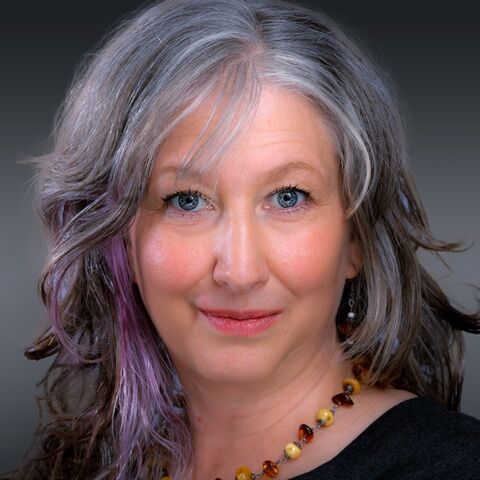
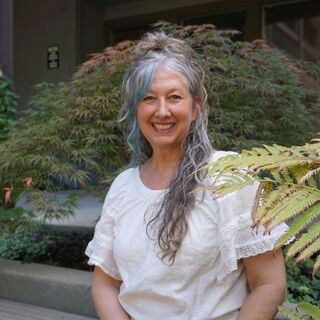
I am Colleen Fletcher.
And in this meditation.
We're really going to,
As I said,
Focus on the breath and compounding that with the other two aspects.
And our breath is an anchor.
You know,
It really helps.
Think of it like a boat.
That drops its anchor down and that tethers it,
And then the boat stays relatively in that same position,
Right?
Depending upon what's going on.
Well,
It's the same idea with this.
Let's say something crazy goes on out here.
But we still want to stay here.
Take a breath in.
And a breath out.
And that's what helps to keep us tethered,
To keep us anchored.
Into our body and into the space of calming our mind.
So that's what we're doing.
And I'm pretty excited about this one.
So before we even try and shift our breath,
Let's find where you feel it most clearly.
For some people,
It's the cool air entering the nostrils.
For others,
It's the rising and falling of the chest.
And for many people,
And I hope you're included with this.
This is something that how I really work with people.
Is it is the expansion and contraction of the belly and the low back.
In session two,
We talked about the posture,
Right?
And wanting to get our sits bones situated.
And have our spine upright and tension releasing from our neck.
So that breath all the way down into our belly and our low back.
Is one of the ways that we can,
It's kind of like a self-massage into that area.
And what that does is help to keep your sits bones in a position instead of rocking forward or slouching into it.
Is part of what helps to.
.
.
Push it there.
Keep it there.
What I'd like to do first.
.
.
Just to take a big breath in.
And notice where you breathe.
Just notice where it is.
So breathe in.
And let it go.
Now,
Where did you feel that the most?
And there's nothing right or wrong or anything with this.
It's just a noticing of your body.
And wherever that sensation is the strongest,
And just to add to this,
Sometimes if you put your hands on a place,
You'll see whether you're breathing here or whether you're breathing into your belly.
That can be a really,
Really powerful way to help.
Learn more about yourself.
And that's what we're doing here.
So wherever you're breathing into it,
For the rest of this session,
I invite you to keep your attention resting there.
Just notice it.
Nothing that has to bring you out of it.
It's just,
Hmm.
Okay,
I'm breathing into my chest.
And I'm.
.
.
I just feel it right here.
It's all that we're doing.
Very,
Very,
Very simple,
Simple way to do that.
I want to give just a couple,
Just a very short moment right now to anchor into that.
So take a breath.
And notice.
Where do you breathe?
What part of your body do you breathe into?
Now while we aren't forcing the breath,
We do want to breathe efficiently.
Many of us breathe high in our chest when we're stressed.
That's that.
That shallow breath.
And as we can tell,
It's.
.
.
Stressful way to breathe.
Like this.
Your lungs go.
They're pretty deep.
They're not just up here.
Your lungs are big.
They travel.
They take up a lot of space here.
So they're also connected with the diaphragm.
And if our diaphragm is always like this,
That,
Well,
Our diaphragm is,
You know,
It moves like this with our breath,
Okay?
So the more that you breathe deep down into your lungs,
Your belly and your low back is how you get that done.
The more you do that,
The more you're going to push your diaphragm down.
And that just helps to open up lung capacity further.
That's what we want,
Right?
Just that deep,
Deep connection.
Next,
I invite you to place your hand on your belly.
And maybe on your low back as well however if you can twist your hand around and get that done so you can feel the connection between the two.
Between your belly and your low back.
And this time,
As you inhale,
Imagine you are filling a balloon in your lower abdomen.
And you'll feel it,
It'll be there.
Your hands will be this way,
But so I can demonstrate,
We're going to feel this expansion happening between your belly and your low back.
Now as you feel this expansion.
And feel the bloom.
Deflate.
And the hands move back and forth.
Toward the spine.
Breathing in.
And breathing out.
Now,
This is a very deep.
Diaphragm.
Breathing deep into your diaphragm.
Breathing.
And that sends a direct signal to your nervous system.
That it is safe.
To find calm,
To relax,
To be at ease,
To be comfortable.
It's like flipping on a switch from alert to calm at peace.
This is something that is so simple.
And easy to do no matter where you are,
Maybe in a meeting,
Maybe.
.
.
Out running errands,
Anything like that,
And you can take this one breath.
Deep into your belly and low back.
And shift into peace and calm and ease.
We're gonna now sit in silence.
Just for a couple minutes and your only task is to watch your breath arrive and watch it leave.
If your mind wanders.
And it does.
Then that's when you take.
Just take another breath.
Simply notice that it has done it,
Take a breath,
And come right back.
It's that breath that continues to help to find that calm.
Closing your eyes,
Lowering your gaze.
Noticing where and how you breathe.
Try a couple times if you're comfortable breathing into your belly and low back.
You now have a tool that you can take with you anywhere.
You can do this anywhere.
This anchor is always with you and so easy to do.
It's a matter of noticing it.
And then implementing it.
And I know you can do this.
In our next session,
We're going to talk about what to do.
Oh,
With brain chatter,
With that monkey mind when it gets so extra loud.
And how to work with distractions because life is all around us.
Join me.
I will see you then.
You