If you've been wired all day.
Unable to fully switch off.
Small things feeling big.
And rest feeling far away.
You're in the right place.
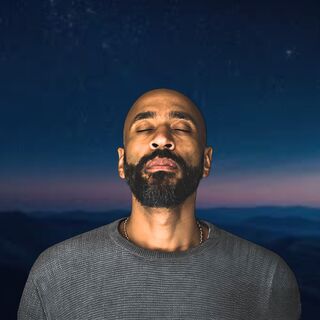
I'm Jibzo Karakay and welcome to today's Vagus Nerve meditation.
Over the next 40 minutes.
We're going to do a simple practice to help the nervous system soften.
And support the body back toward rest and digest.
By the end of this session.
You'll feel more grounded.
And karma.
So you'll come back clear-headed.
And ready for the rest of your day.
If you do drift off along the way.
That's completely fine.
But if you've got somewhere to be afterwards.
You're welcome to set an alarm before we start.
Just in case.
Okay.
Finding a comfortable position.
Sitting or lying down.
Most people feel more relaxed by closing the eyes.
But feel free to leave the eyes open if that feels more relaxing.
For some of us.
Particularly those of us who have had to stay on guard in the past.
The nervous system can go into high alert with closed eyes.
So you're welcome to crack the eyes open slightly.
Letting a little light in if thoughts,
Sensations or emotions start to feel too much.
If we are keeping the eyes open,
Just making sure that we have a soft gaze,
A soft focus.
Remember.
You're always in control here.
You can open your eyes.
Can adjust your position or you can pause this meditation at any time.
Now our starting point and the best and quickest way to stimulate the vagus nerve is to relax the body.
We relax the body,
We often find that the mind calms soon afterwards.
During this meditation.
We'll be working with the parasympathetic rest and digest nervous system.
The main pathway involved here is the vagus nerve.
A kind of communication line between the brain and the body,
Especially the heart,
The lungs and the gut.
The wonderful thing about our body is that we can use our breath to support the vagus nerve and guide our nervous system back toward balance.
So I invite you now to join me.
Becoming aware of the breath.
Noticing the inhale.
And noticing the exhale.
Without trying to change anything about the breath.
Were simply noticing how the body is naturally breathing.
Now we might find that there's an urge to direct the breath.
To control the breath in some way.
So without trying to change anything.
How is the body breathing right now?
Is it a slow breath?
Or a rapid breath.
Is it a deep breath or a shallow breath?
Are we breathing into the chest or are we breathing into the stomach?
We're not so much watching the breath,
We're experiencing the breath,
We're feeling the breath.
So what does it feel like to breathe?
Perhaps we can feel the cool air coming in through the nostrils as we breathe in,
As the lungs and the chest and the stomach expand.
And then we might notice the warm air leaving the nostrils as we breathe out.
As the body softens.
And relaxes.
And sinks deeper into the chair or into the bed if we're lying down.
We breathe in and the body expands.
And we breathe out as the body softens and relaxes and sinks deeper into the chair or into the bed.
Breathing in.
Breathing out.
Now before we move into the gentle breathing exercise I want to introduce a powerful phrase.
I am safe.
By reminding the body and the mind that we're safe.
Can reduce anxiety and bring ourselves into a state of calm.
And if the words,
I am safe,
Don't feel true right now.
That's completely OK.
You're welcome to swap it for something gentler,
Like.
.
.
In this moment,
I'm okay.
I'm here,
Or simply,
This breath is here.
So let's take a moment now.
Either out loud or.
.
.
Silently in our mind.
And say to ourselves,
I am safe.
I am safe.
I am safe.
Really feel the words sinking in.
Notice any changes in how the body feels as we allow that sense of safety to settle.
I am safe.
Okay,
Good.
Bringing our awareness back to the breath.
Feeling the breath moving through the nostrils.
Feeling the body expanding and softening.
And now.
For the next minute or so.
Let's soften and deepen the breath.
And if it feels comfortable.
Lengthening the exhalation.
Allowing the out-breath to be a little longer than the in-breath.
Increasing the length of the out-breath stimulates our vagus nerve.
And this triggers the body's relaxation response.
Now a good way of doing this is to do a little count inside our mind.
And making sure that our exhale counts.
Is about twice as long as our inhale count.
So let's try a few extended exhale breaths together.
Breathing in for a count of three.
And breathing out for a count of six.
You can follow my count for a few breaths and then you can continue doing some more at your own pace.
Let's breathe in,
Two,
Three.
Breathing out,
Two,
Three,
Four,
Five,
Six.
Breathing in,
Two,
Three.
Breathing out,
Two,
Three,
Four,
Five,
Six.
Breathing in,
Two,
Three.
Breathing out,
Two,
Three.
Four,
Five,
Six,
Now it's up to you what you count to.
So you can breathe in for 2 and out for 4 or in for 4 and out for 8.
And there's no need to be precise.
If you like,
You can drop the count completely if counting feels distracting or unnatural.
Just making sure that the out-breath is longer than the in-breath.
So let me be quiet for a few moments.
You can do this at your own pace.
Making sure that we're keeping the body relaxed as we breathe.
Checking to see if the forehead is relaxed.
The jaw.
The neck and shoulders.
The stomach.
And already we might be beginning to notice changes as we engage the vagus nerve through this relaxing practice of lengthening the out-breath.
We support the vagus nerve and continue to breathe slowly and gently.
Maybe we can notice warmth.
Or tingles or gentle pulses moving through the body.
We like,
We can continue to do our long exhalations.
Or we can allow our breathing to return to its natural rhythm.
It's our choice.
And now we're going to move into the progressive relaxation section of the meditation.
Slowly moving our awareness through the body.
Consciously relaxing each part as we go.
And releasing tension wherever we find it.
And remembering.
My words are a gentle guide,
And you're welcome to change them.
Or ignore them completely and allow my words to move into the background.
And if the mind drifts off.
That's okay.
It's perfectly normal.
It's what our minds are designed to do.
Whenever you notice you've drifted off.
Just gently coming back to wherever my voice is in the body.
Let's begin by bringing our awareness to the top of the head.
And let's see if we can soften the top of the head.
If it feels comfortable.
Softening the face now.
Softening the back of the head.
Softening the base of the skull.
Where the brain meets the body.
This is where the Vegas nerd begins.
And as we rest our attention here.
We might notice the whole head settling.
As if the nervous system is getting the message.
It's okay to soften.
And from here,
The vagus nerve branches out into the jaw and the mouth area.
Supporting the muscles of the jaw.
The tongue.
Softening the jaw and the mouth.
And as we rest our attention here.
We might notice the jaw unclenching.
The tongue resting.
The whole face feeling less tense.
Moving our awareness down toward the neck and throat now.
Following that vagus nerve pathway.
The throat is one of the places the vagus nerve does a lot of its work.
Supporting Swallowing.
And helping breathing feel a little easier.
And as we rest our attention here.
As we soften in this area.
We might notice a sense of the throat unclenching.
Maybe breathing,
Feeling a little easier.
And the whole system settling.
Moving our awareness into the right shoulder now.
Softening the right shoulder.
Softening the right arm.
Softening the right hand.
Allowing the hand to rest loosely.
Moving our awareness to the left shoulder now.
Softening the left shoulder.
Softening the arm.
Softening the left hand.
Following that pathway down into the middle of the chest.
The heart.
This is part of the vagus nerve's calming pathway.
Supporting the heart and the rhythm of the breath.
And as we rest our attention here.
As we soften in this area.
We might notice the chest easing.
Heart feeling less rushed.
And the breath finding a steadier flow.
Perhaps we're noticing this relaxation spreading through the body.
Maybe there's warmth.
Vibrations.
Tingles.
Moving our attention now to the ribcage.
Softening the ribs.
And softening the lungs.
This is an area the Vagus Nerve supports.
The lungs and airways.
And as we soften in this area.
We might notice a little more space to breathe.
The breath feeling smoother.
Less tight.
Less effort.
We're keeping the breathing easy.
Moving our awareness to the back of the body now.
Softening the upper back.
The shoulder blades.
Softening the middle of the back.
The spine.
Softening the lower back.
Softening the entire back now.
Bringing our awareness back around to the front of the body.
Softening the belly.
The upper belly.
The lower belly.
This is a place where the vagus nerve does a lot of its work.
Supporting digestion.
And helping the body shift towards rest and digest.
And as we rest our attention here.
We might notice the belly unclenching.
The gut settling.
And a sense of ease spreading through the center of the body.
Keeping the breathing easy as we go.
Moving our awareness into the hips now.
Softening the right hip.
Softening the left hip.
Softening the right upper leg.
Perhaps noticing warmth.
Tingles or gentle pulses in the area that's relaxing.
Softening the left upper leg.
Softening the right knee.
Softening the left knee.
Softening the right lower leg.
Softening the left lower leg.
Softening the right foot.
Softening the left foot.
And now I invite you to expand your awareness.
To include the whole body,
From the top of the head to the tips of the fingers and tips of the toes.
Noticing all those feelings of relaxation that have spread across the body.
The tingles.
The warmth,
The pulses,
The vibrations.
We're resting.
We're letting go.
We're allowing our body to find its calm.
To find its balance.
And we do this while remaining alert.
Awake.
And present.
As our body and mind become increasingly relaxed.
And peaceful.
Enjoying this experience of relaxation and really allowing it to sink in.
Continuing to feel these sensations of relaxation.
Invite you to expand your awareness even further to include the sensations of breathing.
The lungs expanding.
And softening.
The breath is a sensation just like body sensations.
Simply noticing how the body is naturally breathing.
So without trying to change anything.
How is the body breathing?
As the breath slowed.
Is the breath more relaxed?
Remember.
We're not watching the breath from the outside.
We're feeling it from the inside.
We're feeling the cool air coming in through the nostrils as we breathe in.
As the lungs and the chest and the stomach expand.
And then we're feeling the warm air leaving the nostrils as we breathe out.
As the body softens.
And relaxes.
And sinks deeper into the chair or into the bed.
We breathe in and the body expands.
And we breathe out as the body softens.
And relaxes.
And sinks deeper.
Noticing the body becoming increasingly peaceful and tranquil.
A breath slowing down.
Maybe the heart slowing as well.
And as this practice comes to an end.
Knowing you can come back here again.
Back to this place of relaxation.
Noticing what the body feels like.
And noticing what the mind feels like.
And hopefully the mind and body are feeling a little bit more relaxed.
And if we're not feeling more relaxed right now.
That's okay.
It might be one of those heavier days.
And if there are even more thoughts in the mind or.
.
.
More tension in the body.
That's okay too.
Simply noticing what's here can be a way of taking care of ourselves.
This practice is all about meeting the moment with a bit more kindness.
So if you're feeling stressed or sad.
Or overwhelmed.
If it's possible.
Seeing if you can take it a little gently today.
Perhaps doing something relaxing.
Or even treating yourself to something.
And leaving the harder stuff for another day.
Before we end this meditation.
I'd love to share one of my favourite poems.
And if you're having a tough day today.
This is especially for you.
It's called the mountain.
By Laura Ding Edwards.
If the mountain seems too big today.
Then climb a hill instead.
If the morning brings you sadness.
It's okay to stay in bed.
If the day ahead weighs heavy.
And your plans feel like a curse.
There's no shame in rearranging.
Don't make yourself feel worse.
If a shower stings like needles.
And a bath feels like you'll drown.
If you haven't washed your hair for days.
Don't throw away your crown.
A day is not a lifetime.
Arrest is not defeat.
Don't think of it as failure.
Just a quiet,
Kind retreat.
It's okay to take a moment.
From an anxious,
Fractured mind.
The world will not stop turning.
While you get realigned.
The mountain will still be there.
When you want to try again.
You climb it in your own time.
Just love yourself.
Till then.
Beginning to come back.
In a few moments.
I'll count from one to five.
And with each number.
Still come back a little more.
Feeling rested.
And clear.
One.
Noticing the breath.
And allowing the next few breaths to deepen.
Noticing the sounds around you.
Sounds inside the room.
Sounds outside the room.
3 gently wiggling the fingers and the toes.
Small movements returning to the body.
For.
Maybe a stretch.
Maybe reaching the arms overhead and a yawn if a yawn wants to come.
5.
Allowing the eyes to open if they were closed.
And taking in the light Welcome back.
Now let's take a moment before we get up.
Noticing what feels different in the body.
And what feels different in the mind.
Perhaps there's a little more space in the chest.
A little more room in the head.
And perhaps a bit more safety in the body.
Now remember,
We can always return to this place of rest and ease.
The breath is always here for us.
And whenever tension shows up.
We can take a few moments to slow down our exhale.
Giving the vagus nerve a gentle nudge toward calm.
And take a moment to appreciate yourself for showing up,
For looking after your body and your nervous system.
Have a wonderful rest of your day