Hi,
Thanks for tuning into this program,
Getting Started in Buddhist Recovery.
In the next 20 minutes or so,
We'll talk about a number of ideas in Buddhism and how they relate to recovery,
Including the Four Noble Truths,
The Eightfold Path,
The ideas of renunciation and precepts,
And what are called the Four Brahma-vajras,
Loving-kindness,
Compassion,
Shared joy,
And equanimity.
I guess really the first and best thing I can say is welcome.
Since you're here,
I'm assuming that you're either already in recovery and looking for ways to deepen your healing,
Or that you're moving into recovery and you've found your way here.
Either way,
I'm glad you're here.
Buddhism is a spiritual path that dates back 2,
600 years,
So let's get a little history here.
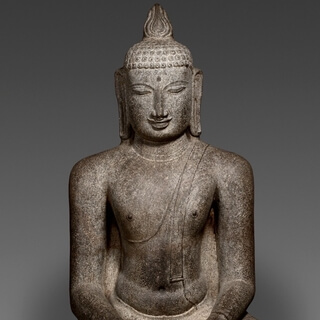
Siddhartha Gautama,
Who came to be called the Buddha or the Awakened One,
Was born 2,
600 years ago in northern India to the royal family of the Shakya clan.
On the day of his birth,
A seer came down from the hills,
And when the king asked the seer about his son's future,
The old man said that the child would either be a great political leader or a great spiritual teacher.
Now Siddhartha's father needed an heir,
And he was determined that his son should grow up to take his place,
So he kept Siddhartha in the palace from that day forward,
Making sure that his every need and want were met.
Siddhartha led a life of wealth and leisure with friends,
Women,
Sumptuous meals,
Music,
Games,
All fulfilling his sensual desires.
Surely,
The king thought,
This would keep his son at home and on the path to power.
And for a time it did.
The boy Siddhartha became a man,
Married a woman named Yashodara,
And had a son,
Rahula.
But as Siddhartha entered adulthood,
He realized that he'd never seen the world beyond the palace walls,
And he told his father that he wanted to visit the nearby city.
And his father planned a great parade,
An event that he was sure would keep his son protected in a cocoon of wealth and pleasure.
But as the parade proceeded,
Siddhartha looked down a side alley and he saw an old man,
Bent with age.
And with his attendant,
Chana,
Siddhartha followed the old man,
Questioning Chana all the while about what it meant to be old,
How it was that someone could come to suffer in this way.
As they left the parade and went further into the city,
Siddhartha came across more people,
Many of whom were clearly suffering from disease,
And at last he saw Death,
A corpse lying near the river,
About to be cremated.
Now all of this stood in very stark contrast to the life that Siddhartha had lived until then.
He wondered that such suffering existed,
And he knew then that he,
His wife,
His child,
His father,
And mother,
They would all grow old,
Become sick,
And die.
These three signs,
Old age,
Sickness,
And death,
Affected Siddhartha deeply,
Bringing a revulsion for suffering,
And also a desperate clinging to the idea of non-suffering.
And as he reflected on this,
Siddhartha suddenly realized that his own clinging and aversion were also themselves a form of suffering,
And he wondered how people could live happily and fulfilling lives in the face of such hardship.
And then as Siddhartha and Chana made their way back to the parade route,
Siddhartha saw someone else,
A monk meditating in the shadow of a doorway.
And this was Siddhartha's fourth sign that day,
That through spiritual practice there might be a way to escape the suffering of life.
He vowed then to find the answer to suffering for himself and to share it with others.
He left home,
Spent years exploring different spiritual paths,
And finally achieved awakening.
And from then on he was known as the Buddha,
The awakened one.
Now the Buddha's first teaching was what are known as the Four Noble Truths,
And it's these ideas that form the foundation of Buddhism and Buddhist recovery.
The first of these truths is that there is suffering in our lives.
Suffering is a strong word,
And some of us have harder things happening than others.
We can use different words.
Discomfort,
Dis-ease,
Even struggle.
Those of us who wrestle with addiction,
We know that this is real.
Feelings of being out of control,
Feelings of letting down those we're close to,
Feelings of loss,
Despair.
We know that life is not always easy,
That this struggle is all too real.
And the Buddha knew that it would be helpful for people to not deny this,
But to acknowledge it and to see if there might not be something that we can do about it.
The second of the four truths is that our suffering,
Our struggle,
Has a source.
Our own efforts to cling to things,
Or to push them away,
Clinging an aversion.
We all have things we want to hold onto.
Relationships,
Memories,
Status,
Friends,
Hopes for the future,
Our favorite substance.
And we all have things we'd rather not have to deal with.
Problems in our jobs,
Difficulties with friends and family members who have hurt us,
Regrets,
Fears.
The third truth is that if our own clinging and aversion,
Our own greed and hatred,
Bind us into suffering,
Then that unbinding,
Or that binding rather,
Can be undone.
If our emotions,
Our habits of mind,
And our actions lead us into suffering states,
It follows that these same feelings,
Thoughts,
And actions can be changed,
And that we can lessen our suffering.
So the third of the four truths tells us that change is possible.
The fourth noble truth is a set of guiding principles that we can use to relieve our suffering.
We call these principles the eightfold path.
And the parts of the path are these.
Right understanding,
Right thought,
Right speech,
Right action,
Right livelihood,
Right effort,
Right mindfulness,
And right concentration.
Now these parts of the eightfold path don't need to be followed in order.
They're not numbered steps.
Rather each has to do with an aspect of our life,
How we speak,
How we act,
How we think,
And they can be considered in any order.
And as we begin to live by these principles,
We find that they can be developed more or less simultaneously,
And that each part of the path begins to support the cultivation of all the other parts.
Now the eight parts of the path can be divided into three groups having to do with ethical conduct,
Mental discipline,
And the idea of wisdom.
So let's start with those that are practices of ethical conduct,
Right speech,
Right action,
And right livelihood.
Really simply a practice of right speech is to not speak in ways which divide us from others or which could break our community.
Telling lies,
Using slanderous speech or words that stir up hatred and disunity,
Using speech which is harsh,
Rude,
Or abusive,
Engaging in gossip.
In practicing right speech,
We speak carefully at the right time and place and in ways which help those around us.
There's an old saying,
If one cannot say something useful,
One should keep noble silence.
Right action is a practice of ethical,
Truthful,
And peaceful behavior,
Not intentionally taking life for instance,
Not stealing or dealing with others dishonestly or hurtfully.
In practicing right action,
We help others to know that they can trust us and believe us at our word and that they have nothing to fear from us physically or emotionally.
Right livelihood means not making our living in a way that brings harm to others such as dealing in weapons,
Drugs,
Fraudulent activity.
In practicing right livelihood,
Our work brings benefit to other people and to our community.
I hear the parts of the Eightfold Path which relate to mental discipline.
The first is right effort,
Which is our work to set ourselves right,
So to speak,
And to keep ourselves there.
Right effort has to do with our own practice as people in recovery.
In Buddhist thought,
We consider four things in right effort.
First,
That we keep unwholesome states of mind from arising,
Thoughts which are harmful to our own well-being and which may lead us to harm others.
Second,
That we let go of unwholesome mind states that have come into being,
So to keep harmful thoughts from arising and to let them go when they do arise.
On the other side of this,
Of course,
Is to allow wholesome states of mind to arise and then to deepen wholesome thoughts when they have arisen.
The second aspect of mental discipline is right mindfulness.
Right mindfulness is simply to be aware of our perceptions,
Our feelings,
And our thoughts and our actions.
In this way,
We can see for ourselves whether we are living ethically and with good effort.
And finally in this section,
Right concentration or meditation.
Now,
There's a lot that can be said about concentration and meditation,
But the short of it is that concentration helps us to train the mind to be focused and undistracted.
The remaining two parts of the path,
Right thought and right understanding,
Are considered to be wisdom factors of the Eightfold Path.
Right thought speaks of avoiding thoughts of harm to ourselves and others and instead extending kindness,
Care,
And non-harm to all beings.
Letting kindness,
Care,
And non-harm shape our thoughts.
Right understanding is to see things as they are,
That there's suffering in our lives,
That we can identify the causes of our suffering,
And that we can actively work to lessen our suffering.
Right understanding is an understanding of these noble truths,
Possible only when the mind is freed from greed,
Hatred,
And spiritual confusion,
Which is a state achieved by following the Eightfold Path.
So the Four Noble Truths and Eightfold Path are important to Buddhist recovery.
Together,
They are a valuable means to an important end,
Which is getting a hold of our addictive tendencies.
And this brings us to the idea of renunciation.
Now,
Not using,
Of course,
Is the most important thing.
But if we're to move from simply being clean to the greater clarity of being sober,
We've got to look for something deeper than simply not picking up.
Something more than just renouncing alcohol,
Drugs,
Or harmful actions.
Practicing renunciation of using is only the start.
What it really comes down to is being able to let go of behaviors and thoughts that we know don't work for us.
Things that we've found through experience to be harmful as we deal with ourselves and others.
Working to understand our perceptions,
Our feelings,
And thoughts is at the heart of renunciation in Buddhist recovery.
Now,
It's natural to have pain in our lives.
But when we begin to see the role that we play in creating our own suffering in reaction to pain,
We can learn to bring patience and compassion to our process of healing.
And this brings us to a mind of renunciation,
To a willingness to let go of our attachments and our need to push things away.
Only then can we actually understand the things that trouble us and learn how to work with them skillfully.
When we learn to practice non-attachment,
Helping ourselves to not be shaped by clinging in aversion,
We learn to be mindfully present with what's happening in each moment.
Presence in the moment is the context of our effort toward renunciation.
Presence brings understanding,
And understanding can bring change.
Now,
The ideas of right speech,
Right action,
And right livelihood help us to understand what a large role ethical conduct plays in our recovery work.
As we deepen our recovery through practices of the Eightfold Path,
Meditation,
And renunciation,
We realize that we can live more uprightly and we begin to consider how living an ethical life can help us to reduce our own suffering and the suffering of others.
And so we form an intention to live ethically.
And this is a really strong moment.
But while living more uprightly may begin as an intention,
For it to really impact our recovery,
Our intention needs to become a commitment.
In Buddhism,
Ideas of living ethically are expressed as precepts,
Which we can use as guides when considering our thoughts,
Words,
And actions.
Precepts were first created by the Buddha as his group of followers,
His original sangha,
Had problems in their social interactions.
And from his own sense of compassion and concern for their well-being,
The Buddha created precepts for his followers as they were needed.
So in that light,
We can consider that to practice Buddhist precepts is to practice the ethical life of the Buddha.
Now there are a number of different lists of precepts in Buddhism.
Buddhist recovery programs tend to focus on five,
Which relate directly to our development in sobriety.
First,
Not intentionally taking the life of another living being,
Or causing harm to ourselves or another living being.
Not taking what is not freely given or stealing.
Not causing harm through our sexual conduct and to be aware of the consequences and impact of our sexual activity and desires.
Not lying or using speech in a harmful way.
Not using intoxicants or engaging in intoxicating behaviors that cloud our awareness.
Early in recovery,
We need to look inside ourselves to find the power of commitment to live by these precepts.
Once we make a commitment,
We practice day by day to keep our commitments strong,
To bring the precepts forward in our lives,
And to live them as best we can.
The renunciation,
The eightfold path,
The practice of precepts.
There's a lot of growth happening here,
A lot of change.
And sometimes this can leave us feeling a little lost.
Okay,
Stop using.
Check.
Change my behaviors.
Check.
But actions which support my own well-being and the well-being of others,
How can we know what those are?
After years,
Sometimes decades in addiction,
How can we know,
How can we remember what's skillful and what's not?
The good news is that we don't need to know what actions are right ahead of time.
Really it's not actions that we need to learn or relearn at all,
But rather just a few simple principles which themselves become the tools we need to guide ourselves into living an upright,
Sober life.
And this is where we come to the four Brahma-viharas.
Now the word derives from the Pali language two words,
Brahma,
Meaning God or divine,
And Vahara,
Meaning abode or dwelling place.
So the four Brahma-viharas are sometimes thought of as divine abodes or immeasurable minds.
And again,
They are loving kindness,
Compassion,
Shared joy,
And equanimity.
Now let's look at these one at a time.
First loving kindness,
Which we might think of as simply a friendly way of being,
And that's certainly a component of what it means.
But more deeply,
The essential nature of loving kindness is a desire that we and others be well and happy.
We see this in the phrases of a loving kindness meditation.
May I be happy.
May I be healthy.
May I be safe and at ease.
May you be happy.
May you be healthy.
May you be safe and at ease.
Loving kindness represents a yearning for happiness.
Happiness which the author Alan Wallace said,
Happiness wanting to realize itself like a seed that springs into the sunlight.
More deeply,
The nature of compassion is a desire that everyone be free of the suffering that they're going through and of the sources of that suffering.
Now this is the difference between loving kindness and compassion.
With loving kindness,
We're talking about potential.
Loving kindness is a vision for the future of the potential for the future happiness.
Even if you or another person aren't happy now.
Everyone on the other hand sees a person suffering while it is happening now in this moment and leads to a hope for that person to be free from that suffering.
Now in this moment.
The practice of shared joy is simply to rejoice in the well-being of others as you witness it.
Wherever you see happiness,
Take a moment to delight in it.
This not only brings you joy but encourages joy in others.
And the practice of equanimity is to value all things,
All beings equally.
But it's not simply a matter of neutrality or indifference.
Rather we can think of equanimity as a practice of impartiality in its best sense.
Bringing the same amount of care and concern to each person we meet.
So getting started in Buddhist recovery,
Let's see if we can boil this down.
First,
Either stopping or beginning to reduce using both substances and harmful behaviors.
Along the way,
Really think about the Four Noble Truths.
That we have struggles in our lives,
Dis-ease suffering.
That much of our suffering is caused by our own greed and hatred,
Our clinging and aversion.
That by getting a hold of our tendency to grasp after things and the need to push things away,
We can lessen our suffering.
And that the Eightfold Path offers patterns of life which help us to get a handle on our patterns of greed and hatred.
Next,
Learn more about these ideas.
There are a number of good books out there,
Two easy choices are the Recovery Dharma book and the book Refuge Recovery,
Both of which develop these ideas in detail.
The book Eight-Step Recovery by Valerie Mason-John is one that people enjoy and if you're approaching this from a 12-step perspective,
You might want to look at the book Buddhism and the Twelve Steps by Kevin Griffin.
Find a Buddhist recovery group to join.
Buddhist meetings are online these days and you can easily find links to all of these groups.
And lastly,
Learn to meditate,
To develop right concentration.
Any of these groups will help you to do that.
So again,
Thank you for taking a few minutes with me.
I wish you luck in your recovery journey.
Take good care.