Welcome to Untangle,
The podcast from Muse,
The brain sensing headband that helps you meditate and five-star app meditation studio.
I'm your host,
Patricia Karpis.
Before we get started,
A reminder that now might be a great time to start or deepen your meditation practice.
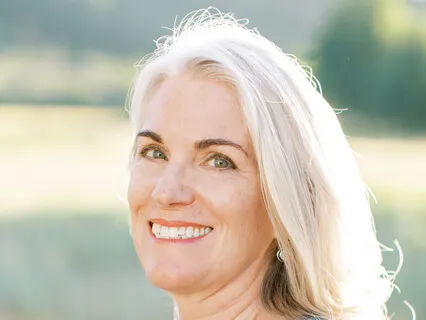
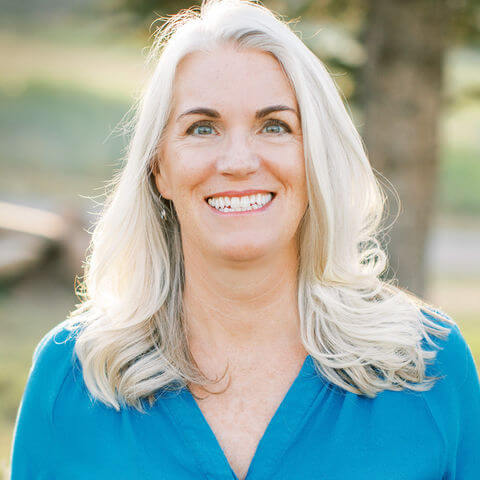
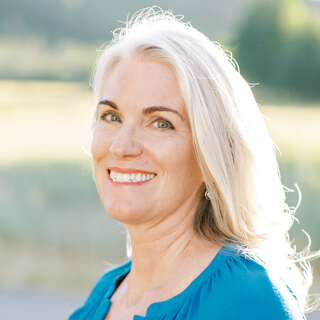
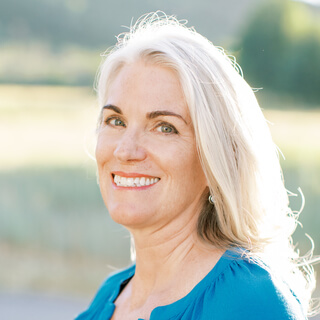
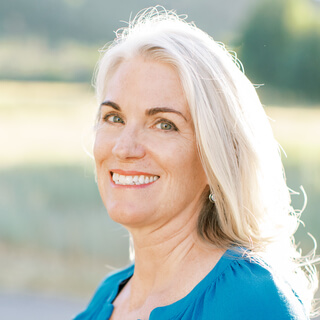
Today's guest is Maureen Pelton.
Maureen is a social scientist with 35 years of professional experience as an integrative psychotherapist,
Executive coach,
Organizational consultant,
Spiritual teacher,
And mystic.
She's the co-founder of the Shift It Institute and a pioneer in the field of embodiment,
Which we'll learn much more about today.
She shares how we can use these practices as a way to do the deep work of developing a stronger sense of self and to become more deeply aware of the body and its intelligence and wisdom.
Words are very limiting when trying to describe many of these practices and experiences,
But Maureen does a great job at describing how we can move beyond our conditioned brain and ego to live more authentically and fully.
I found her to be incredibly fascinating.
Now here's Maureen.
Maureen,
It's really great to have you on Untangle today.
Thanks so much for being here.
Well,
Thank you for having me.
Yeah.
You have a very unique background,
This lovely blend of spiritual,
Contemplative,
Mystical,
Therapeutic,
Intuitive,
Many,
Many different modalities blended together.
Would you tell us a little bit about yourself and the work that you do?
And then we'll get into some of the different layers of this.
It's always difficult to talk about myself,
But I'll do my best.
I am a social scientist and a mystic,
As I would call it.
And my work in the world for the last 35 years has been helping people get from their heads to their hearts.
And I've done that in a variety of settings,
The healthcare world,
The university systems,
Organizations in the corporate world.
I've meandered and wandered through different organizations as needed,
Kind of what has emerged.
So my intention is really to help people develop a strong sense of self and personal relationships so that they can engage in the world in a more authentic way.
A lot of your work is about getting into these deeper places in our body and higher levels of consciousness.
And in some of the work that you've done,
You talk about mindfulness as being a gateway drug to reaching higher levels of consciousness.
And you also talk about how difficult it is to find the language to describe some of these things in a really clear way.
I have some people that I am friends with that are scientists,
And it's really even hard to describe.
What do we mean by higher consciousness?
Can you take a shot at how you would describe that to somebody that's a little more linear and scientific?
Yeah.
And I don't know if I can really describe it.
I want to start by saying that I have a lot of friends who are scientists and in the medical profession.
And what I've discovered is words are very limiting because when we're trying to engage,
There's thought-based knowing,
And then there's awareness-based experience,
And then there's a combination of the two.
And so consciousness is an interesting word,
And you could probably use that or different levels of awareness.
And when I say higher consciousness,
I guess the best way to describe it,
Remembering words are limiting,
Is that it is an intelligence that is not coming from our conditioned brain or ego or based on our filters and perceptions.
It's a much more intrinsic,
Spontaneous way of knowing.
It doesn't always make sense,
And we can't put meaning to it,
But it doesn't negate it just because we can't do that.
In fact,
This whole journey started for me when I had 36 years ago,
A spontaneous mystical experience and then needed to for myself.
It was such a beautiful experience,
But I had no context for it.
So that's even what led me down this path of the work that I do in the world is because I've been exploring and meandering and wandering through human development and human ecology and psychology and spirituality and emotional intelligence and our reality as energetic beings.
And all of that has unfolded because I've been looking for that context to put my experience in.
It's funny because even as you're speaking,
I feel like my understanding of what you're saying is more in my body than in my head.
And even as I was researching a lot of these concepts,
I do feel like often you have to surrender what you know in order to believe what might be true.
And I think the way you just talked about it as an awareness-based experience or an intelligence not coming from the brain,
That makes a lot of sense to me because even in mindfulness we're always looking for deeper levels of self-awareness and ways to emotionally regulate and this seems like we're taking this to another level.
So having meditated now and done yoga for 35 years,
I do say that mindfulness,
Meditation and yoga are the gateway drugs.
And the reason I say that is because so many of us need those practices to even get to the point where we can calm our mind enough to understand that we are conditioned,
That we have beliefs,
That we have stories,
That we have emotional reactions that aren't actually us,
That are actually something we've been entrained to or absorbed.
And we need that ability to be able to calm our minds and become focused.
They talk about the still point and it's when we're in that still point,
That's when we really can pay attention to the body or I call living below the neck,
Where we can actually experience our awareness through the intrinsic wholeness and the wisdom and intuition and sensations and emotions in our body that are communicating with us and paying attention.
What happens all the time,
The question is,
Are we paying attention?
Well,
My question then is how do we know when the information that's coming to us,
You know,
A lot of people feel intuition or a lot of people get into a calm state and there is a sense of knowing.
How do we separate what we know in our brains to be true,
Let's say,
And an intuition or a sense of something that might come to us from a different place?
Do you ever 100% know something is true for you?
That's a really good question.
I spent 20 some years teaching embodiment and how to discern between the two.
I'm going to first start by saying there's no absolute and there's no 100%.
It is what I call developing a muscle.
We exercise to develop our muscles and strengthen them.
Well,
Listening to our body,
Listening to our wisdom,
Listening to our intuition versus all the chatter in the head,
That is like developing a muscle.
It takes practice and I encourage playfulness.
I encourage innocence and joy and curiosity as we explore this because we're way too serious and that is the brain and the ego.
It is this place of the beginner mind,
As they call it,
Or the neutral observer where something comes up,
Something emerges.
We know something,
We feel something and we sit with,
Oh,
Well,
That's interesting.
We don't go into,
Well,
That's absolutely right or that is true.
We stay with that and it is revealed.
The minute we go on our head,
And this is what a lot of us are conditioned to do and we try and make sense of it and put meaning to it and find the mechanism for it,
When that happens,
We have now left the body and we're back up living above the neck.
Then the muscle doesn't get developed.
I talk a lot about and teach a lot about the neutral observer,
The silent witness that is just receiving and full of curiosity on wonder and innocence and joy.
One of my greatest teachers around that,
Because I have had the pleasure of being with His Holiness the Dalai Lama in his place in Dharamsala a couple of times as well as in larger venues,
Is that he's brilliant,
But he sits in that place of joy,
Innocence and wonder and playfulness.
And that's where I feel a lot of fluidity in the emerging and unfolding of what is true.
I love that and I also want to,
A little bit later,
Go back to your original inspiration and your mystical experience because I love how your life has evolved to this place.
But I'd love to get into what we mean by embodiment and then look at the different ways that we can practically integrate or facilitate embodiment.
There are so many modalities out there and one of my favorite for the beginning of it is mindfulness-based stress reduction or MBSR.
But embodiment is really about understanding that we are energetic beings in physical form having a human experience.
And so we very much need our brain.
I love my brain.
It organizes me,
It gets me up in the morning,
It keeps me on schedule,
It collects data,
It organizes sorts,
Disseminates it.
But then if we drop below the neck,
We have this physical form and we have to take care of it.
And you hear a lot about self-care,
But embodiment starts with knowing you have a body,
Knowing that it needs to be cared for,
Not dominated.
We live in a world in which the ego is conditioned to dominate.
And so it's even about dominating the body.
Embodyment is about being in the body,
In the rhythm and the flow of the body and taking care of it.
So the circadian rhythm,
Getting sleep,
Eating nutritious,
Getting out and exercising,
Having mental stimulation,
Having social engagements.
It's engaging the body and listening to the body and taking care of the physical body.
And in our body,
We know that we hold trauma.
We hold adverse childhood experiences.
So there's been a lot of work coming out and modality showing up from Candice Pert's Molecules of Emotion.
And we've got Bessel van der Kolk with his The Body Keeps the Score or Peter Levine's work with somatic experiencing or a lot of modalities,
Somatic modalities,
EMDR,
Which I've been trained in.
There's a lot out there that is actually helping to release the trauma,
Not just from the brain,
But from the body so that in a way we're clearing the physical form of the baggage we're carrying around.
And there's internal family systems that works really well.
I mean,
There's so many,
I can't even name them all.
Not everyone works for every person.
You have to find what works for you.
So that's the first part of embodiment,
And you do have to quiet the mind to be able to go in there and do this messy,
Complicated work.
But the second level to this embodiment is the energetic body.
And this is about the biofield around us and the subtle energy that we are constantly engaging with.
There's a recent report out from Consciousness and Healing Initiative,
CHI,
And I was part of the stakeholders at a meeting mapping this,
But it mapped all the research that's being done,
All the practitioners and modalities out there,
What's happening policy-wise,
What's happening education-wise.
It's kind of like where the mindfulness meditation movement was 20 years ago,
Or maybe 25 years ago.
But we are finding that there is evidence out there that we are energetic beings,
And that we are exchanging energy,
And we are vibrating,
And there are frequencies that impact us and that impact others.
So it's that even deeper awareness,
And that our energy follows our focus,
Our thoughts.
So embodiment isn't going even deeper into that.
We do have the ability to be aware of our energy.
I mean,
We all know when we're tired or not,
Our energy is low,
But really working with that energy.
I know often for me,
I can feel hungry,
But I'm not actually hungry because I just ate.
It's I need to adjust my energy.
I need to do some practices that balance my energy,
For example.
So for me,
Embodiment is both taking care of the body and helping to heal the body,
But it's also engaging the energy body,
Our biofield,
Our subtle energy,
And balancing that and creating a sustainable energy system for ourselves.
Maureen,
Do you know Joe Dispenza's work around the quantum field?
I'm curious if in trying to understand energetic and vibrational fields and how we work with them,
And not that using the term quantum field makes it any clearer for most of us,
But can you define that in any other way that would help us to really understand that energy field?
I'm not sure because I can do my best,
But what's interesting,
And this is what I learned as being part of the stakeholder group,
Is that it's challenging because it's below or above or beyond human consciousness at this point.
There's a lot of debate about exactly what it is.
What the physicists and the scientists and Joe Dispenza and many others can agree upon is that it exists,
This biofield,
This subtle energy,
These vibrations.
What we don't agree upon is what it actually is or looks like because we haven't found the mechanism because science is about what's the mechanism.
I don't know if there is one,
And if there is,
It might be something we need to develop.
But to really find something that everyone agrees to,
I think the best way for me to describe it is I think we all pretty much know that the earth has electromagnetic field.
We have electromagnetic field around our body.
We're impacted by the microwaves,
Electromagnetic field.
So there is a basic knowing that there is energy around us.
And if you go out into nature,
Most of us,
And you take a hike,
You can feel a shift in your energy.
I think there was even a study done looking at nature can shift your energy.
So we know that there are these different vibratory fields,
These different frequencies,
And they can be experienced.
And they're experienced by a lot of us.
I know lots of scientists who experience them.
And I work in integrative health,
Lots of physicians and healthcare providers that are aware of them.
And they just trust.
They don't have all the evidence.
They see the effectiveness.
That makes so much sense to me.
And I have been studying for the last couple of years equine therapy and working with horses.
Yes.
And not sure if you've ever had that experience,
But they do teach congruence.
And when you get into a space with a horse,
If what you're feeling is out of alignment with your appearance,
Like you're smiling,
But you really feel anxious or whatever,
If you're not in congruence,
When you are with a horse,
They feel that.
And it is said,
And I don't know if this is true,
That they just have this huge energetic vibrational field.
I do.
I actually am just starting to work more with horses.
And it's such an incredible experience because you just described it beautifully.
But I want to add that humans have the same capacity.
And I'm sure you've had this experience where if you're standing and talking with someone and you are listening with your ears and they're saying whatever they're saying,
But if you're paying attention to feeling your body,
Something's off.
Like they're smiling,
But they're angry or they're saying something and it's not actually true or they're trying to rationalize or convince you,
But your body is saying,
No,
No,
It doesn't compute.
I mean,
We are capable of that.
And I think horses can teach us that.
I always thought that was a quality of an empath or a highly sensitive person.
Like I feel like I'm very sensitive to some of these things.
So when I walk into a room,
I'd kind of feel my way around different people.
And it is interesting to think about that now in these terms as a way to work with these energies.
Right.
And I do agree.
There are people who are empaths and who have a very strong sensing and feeling,
But I think we're all capable of it to some level if we live below the neck,
If we really become more embodied.
Yeah.
So you talked about in some of your writings,
Facilitating this.
And we've talked about working with the physical form and self-care,
Which is really the gateway that we're talking about.
And then when you started next to talk about grounding and raising the vibratory rate and then intention setting and manifesting,
And I'm really curious about that,
How that works once we get into that,
The proper state.
In my experience,
When we really ground our bodies,
And what I mean by that is our physical form is from the earth.
It is of the earth.
It is the earth.
The earth is in us.
And when we're done with this lifetime,
It goes back to the earth.
So we're not separate from the earth.
And we need the earth's energies to support us and our physical form.
And so grounding is about really connecting into nature and to the earth and to the energies that are available.
And there's names like Chi and Prana and Kundalini,
But we all experience those energies.
At some point,
We really can,
If we pay attention,
Feel those energies coming in and through our body.
And that's what really grounds us because when we're grounded into the earth,
Much like they ground cables into the earth to keep them grounded,
When we're grounded into the earth,
We're able to raise the vibratory rate of the body.
We're able to increase the frequency of our own vibration.
So when we're able to do that,
We're able to bring in more what I would call our soul essence or our divinity and have more connection,
Not just to the earth,
But to the cosmos.
And in doing that,
Again,
We activate more of our intrinsic wholeness,
Our innate goodness,
Our wisdom.
And from that place,
We can set intentions,
Right?
And I said earlier,
Our energy follows our thoughts and our focus.
So we can set intentions for manifesting,
But it's not about the outcome.
I mean,
This is where people get tripped up.
It's about setting an intention and letting go of the outcome and then paying attention to how that intention is being responded to.
What's showing up?
What experiences are we having?
What synchronicities and synergies are showing up?
And it happens all the time.
But again,
We're back to,
Are we paying attention?
And in order to pay attention,
We have to quiet the mind and get in the body.
And it unfolds,
It emerges,
It's revealed.
Maybe not the way we thought,
Maybe not in the time we thought,
But it does.
And the challenge is if we're not in our bodies,
If we're not holding that vibratory rate,
Because we're energy,
Right?
We're putting out,
It's coming back.
We're attracting.
If we're not doing that,
Then there are the unconscious and subconscious programs that are operating that sabotage it,
For lack of a better word.
Can you clarify a little bit about when you're setting an intention and trying to manifest something?
There's a lot of literature that says you need to be crystal clear on what you want that outcome to be.
And so a lot of people write that,
Yeah,
You know this,
Right?
So what happens when you write down an intention that you'd like to manifest,
And then you let go of the outcome and you listen for what,
I guess you have this other phrase and something that you had written,
Collective choice will determine the outcome.
How does that work?
If you write down an intention with an outcome,
Then you're focused on the outcome,
Right?
You're driving that outcome to appear.
And what happens is you're not paying attention to all the beauty and opportunity and potential that's showing up because you're singly focused on an outcome.
And so your brain or your ego or your limited intellect thinks it should be this way.
And there's so much magic and mystery that is bringing all kinds of potential that's beyond what you can even imagine,
But you're not seeing it because you have this focus.
So with intention setting,
How I teach it is you set an intention.
So I'm going to use one that I get a lot because this is important to people.
They want a partner in their life,
Right?
They want a partner.
So you set the intention of wanting a partner in your life,
Being open to having a partner in your life.
If you don't know what that partner looks like.
You don't have any list of qualifications.
You just set the intention that you want to partner.
And then you go into your body,
Okay?
And you feel how you want to feel when you're with that partner.
So you're back in your body going,
If I had a partner,
This is how I would want to feel.
This is how I would want to experience life.
This is how I'd want to experience the partnership.
And so it's really about how you want to be when you are in partnership,
Feeling that in your body and then acting as if they're there.
So you start being that way and experiencing life in that way with gratitude as if it is already happened.
And when people do that,
Partners show up.
When people have this list and this outcome,
They don't so much show up.
Yeah,
It's so interesting to think about that because that deeper feeling is what is bringing it to you.
That's,
As you say,
Where the magic actually happens.
Exactly.
And that's one example.
I mean,
You could do it with what you want your work in the world or a study you want to do or some kind of creative endeavor you want.
You can do it with anything,
But it's really about being intentional.
And that I do think needs to be clear and then acting as if with gratitude and really experiencing it in your body and trusting that it is happening and then paying attention to what shows up because what shows up may be beyond anything you could ever imagine.
And for a lot of people,
They'll say,
Oh my gosh,
My life is so much bigger and greater and more synchronistic and synergistic than I could have ever imagined because it unfolded and emerged.
And I do want to make a comment about this because it's important to me.
These qualities in the body of receptivity,
Emerging,
Unfolding,
Receiving,
Allowing,
Those are unfortunately qualities that we attach to being feminine.
So they're not always valued.
And so this shift into valuing those and understanding those are part of the creation process,
They're part of the process and the human experience.
And it isn't about being driven and making it happen and doing it.
And that's much more of the masculine qualities.
And we need those sometimes.
But it's the sacred union of those things.
I say to people,
You set the intention,
You act as if you be in this way,
But you also have to do the footwork.
I mean,
If you're looking for a partner,
You have to go on dates.
She's not going to come knock at your door,
Right?
So that masculine part of going out and doing it is also important.
But I think it's really important to understand that creating space for the unfolding,
The emerging is valuable.
And we are pretty much conditioned not to have that space.
We're supposed to just go out there and make it happen,
Right?
So I really want to clarify that.
You talk about the brain as the operating system.
So if you're just using your brain and not all of these other energies,
It's only part of the process.
Right.
And I really find when we're embodied and we're operating from there,
Life is much more graceful.
There's more ease.
We can get more work done in less time.
There's synergy and synchronicity.
It's quite awesome to observe.
Maureen,
You've done so much work in this area over the last 37 years and you have integrated all these different modalities into your body and your soul and your heart.
And what would you say to other people who have been on this journey and have a difficult time working with their partners or inspiring their partners to be on this journey with them?
I ask that question because I,
Spoiler alert,
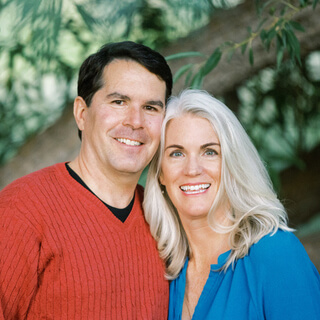
I know your husband and I know that the two of you are so in sync on all of this,
But I do think it's very hard for partners when one person is on this journey and the other isn't.
What are some of your thoughts on that?
That's a really good question.
I have to say that I work with so many people in my coaching and even in my teaching where this is an issue for sure.
And what I say and what I believe to be true is that the only person we're responsible for and that we can change is ourselves.
So we have to do our work if we are called to do our work and we have to follow our path that we are called to follow.
And I applaud people who are willing to do that because it can be messy and hard work.
And if their partner is choosing not to do it,
Then we have to be an acceptance.
And what we all want is to be seen and heard for who we are.
So to make your partner wrong or to think that they need to do this too,
Or to not accept them for who they are,
Where they are at the moment is not kind.
So I encourage people to do their own work and let their partner be who they are.
So then what happens is you take the focus off the partner,
You keep it with yourself and some partners start to show up and go,
Hey,
Wait a minute,
I want what you have.
How did you get there?
They do.
And then you invite them and they have to find their own way on the path,
But you invite them and some partners say you're crazy.
You're wrong.
I'm never going to do that.
And then you say,
Okay,
Well,
Can we still partner them?
Because maybe we can't or maybe we can in a way in which we accept each other for who we are.
And I think that the suffering comes from when the person who's growing,
Let's just say is wanting to change the partner who they believe isn't or wanting the partner to do it their way or trying to get the partner to get it.
And I think that causes suffering for both.
And sometimes the partnership has outlasted its usefulness and it might need to end.
And sometimes the partnership grows because the other partner finds their way.
And sometimes the partnership just becomes manageable by accepting each other for where they're at.
But I appreciate that if you're growing and changing,
You want to share that with your partner.
And what I want to say to people is if you can't,
Then find other people you can because it's important for you,
But to let your partner be who they are,
Because that is our greatest gift.
And I don't mean if their behavior is destructive.
I mean,
In the partnership,
You have to be true to yourself.
And this is the social connection.
If we want deep social connection,
We have to first be deeply connected to ourselves.
And then you find the place where you can connect with others.
It's a challenging obstacle for people.
But I just encourage them to stay true to themselves and let their partner be who they are.
Find ways to be together.
Yeah.
And I like what you were saying before about the importance of playfulness.
When those of us that are in look at these contemplative traditions and work in healthcare and often I speak for myself,
I feel very heavy.
And so I like this idea of always remembering to be playful.
The area where I think people often have conflict is in managing conflict or difficult conversations when you have a hard time finding the language to express yourself because you're now speaking a bit of a different language.
It's how we were beginning this conversation.
How do we talk about consciousness or how do we talk about even our feelings or our alignment?
And so when you are moving in that direction and your partner isn't,
I can see how you really I think have to be patient,
Accepting and let it go sometimes maybe.
Yes.
Okay.
And I think again,
The two things that are really important are appropriate boundary setting with behavior,
Your own and the others,
That I am a very strong advocate for nonviolent communication by Marshall Rosenberg.
I have used it.
I embody it.
I use it.
My husband does.
Our kids were raised in it and they don't even know.
And I've used it with clients and couples and in corporations.
My husband and I have done some trainings with it in corporations years ago.
I find it to be one of the most effective ways and your partner doesn't have to do it.
If you just learn how to do it,
It is a better way of communicating in my opinion,
But it's also a shift.
And this is why I'm such an advocate for it because if you really practice it,
You begin to know that your experience and observation is yours and it could be completely different from everyone else's and you're responsible for that.
And a feeling,
An emotion arises from it,
Which again,
You're responsible for.
And then a need arises from that emotion,
Which is your need,
Which may be different from everyone else's.
And then it is your job to make a request and you're not putting it on the other person.
So you start to realize,
Oh,
I am responsible for my feelings and needs and they're responsible for theirs.
And I can't just go at them and say what's going on.
I actually then need to make a request so that they have some action that they can agree to or not agree to or we can find a compromise for.
And it completely changes the dynamic.
So I don't know if your listeners are familiar with it,
But I know Marshall was,
This is coming out of the mindfulness world,
But nonviolent communication is an excellent approach or modality to improve your own communication with yourself and with others.
And I've seen great results with couples who are using it.
That's such a great recommendation.
And you mentioned that you've done some teaching in organizations and used NBC,
But I think you've also taught a lot of these other concepts.
What is your thought on how the work that you are doing now can help us with social change or with the planet?
I mean,
Not to get too big and lofty,
But I know that a lot of the work that you're doing is intended to have an impact on the world.
And so we've talked about our individual and group understanding of embodiment.
What's your thought on how we can impact the world with some of these teachings?
It's interesting because in my experience,
Both personally and working all these years with so many different people is we get to a point where it isn't about us anymore.
We've done enough of our work.
And I don't know that we're ever done with it,
But we've done enough because initially it's about our own stories and our own clearing of our own baggage and managing our stress.
But eventually if you stay with it,
It becomes about,
Oh,
We are all connected and there is a lot happening in our world.
And I need to get off my mat or my cushion and I need to go out and show up differently in the world and be different.
So I find leaders of organizations and nonprofits who are moving into this embodiment piece and really one of the best examples is Eileen Fisher,
Really moving into this and being it in the world and bringing it into their organizations and showing up in this connected place and being able to make a difference,
Not because our ego wants to do good in the world,
But because we feel called from the embodiment place.
We really feel called to show up differently or to have an impact in a different way.
Just for an example,
When the country shut down eight weeks ago or whatever it was,
I really felt this deep need to be of service.
I really felt called to it and I sat with it for a few days.
And then this is how synchronicity works,
Right?
So I really felt called to it.
And I live part-time in part city Utah and I got an email from the Medical Association in Utah saying,
Would you be willing to volunteer your time to do counseling either via Zoom or over the phone with healthcare professionals?
Because I'm really concerned about the frontline people.
I mean,
I got an email for that.
I'm like,
Yes!
Yeah,
That's exactly right.
And there's the synergy and synchronicity.
And then I thought,
Why just Utah?
So I put it out to people and said,
If you know of any healthcare workers that are needing support because this is a very traumatic time for them,
I'm volunteering my time to do some coaching.
And so it felt really good to be of service in that way.
And that wasn't my brain.
That was my body,
Like just feeling it and then the synchronicity of it.
Other people may feel called to be of service or to be active in a way that supports those less fortunate.
And are you working with and or seeing a lot of leaders in corporations or healthcare or even education that are called to do bigger work?
Yeah.
You mean like embodiment work or bigger work?
Well,
Using this work or any work really that supports this mission of greater social connection and higher levels of being in connection with one another and with the planet.
Yes.
I'm seeing it a lot in the healthcare world and it's challenging.
It's challenging to it's a big institution and system.
But I'm seeing a lot of it happening there.
I am seeing some of it in educational settings and definitely in organizations.
And so that's exciting.
I mean,
I started teaching this 25 years ago,
I think it was,
And it was slow.
I mean,
It was hard.
I feel like something shifted over the last few years and people are ready.
And I think some of it is more people have found meditation and mindfulness and calmed their mind enough and found that still point that they know there's something deeper.
I mean,
Even with Bridge Builders Collaborative,
Which my husband is a part of and you know him,
They just did a whole new strategic plan and they're going deeper.
Like they're interested in moving beyond meditation and mindfulness and they've led that emerging field,
But now they're going deeper.
And so I very much think people are ready and it's very exciting.
Yeah,
It is such an exciting time.
So Maureen,
I'm going to take us back.
I'm rolling back the audio for a moment.
Will you talk to us about your mystical experience,
The one that started you on this whole path?
Yes.
Great.
Thank you.
Yes.
So when I was 21 years old,
Which was 36 years ago,
I needed to have,
I will start by saying this was a spontaneous mystical experience.
There were no drugs.
It wasn't a spiritual emergency.
I was already a deeply spiritual person,
But I had to have back surgery because I had been born with an anomaly and my parents wanted it corrected before I went out into the world.
I was in college at the time and I had been in pain,
Back pain my whole life.
I didn't really know any different.
So before the surgery,
The night before I had the doctor come in and tell me what was going to happen.
And then they left and it was time for me to go to bed.
And they said I might not wake up.
I might be paralyzed.
I mean,
They give you all the deets.
And so I just decided,
You know,
I'm 21 years old and I am sitting in this hospital room and I do believe in a power greater than myself and I feel very connected.
So I just started to pray because I had this realization that I may die or be paralyzed.
And I prepared.
The only word I can use for it is surrender.
And I know people can intellectually understand that,
But I'm talking about I experience surrender.
I literally prepared to die.
I let go.
I was attached to nothing.
I put myself in the hands of something greater than me.
And I knew in that moment that I was utterly powerless,
Utterly powerless.
And yet here's the paradox.
My power was that I had choice every moment.
So I could choose not to have the surgery.
I could choose to have it with a different doctor.
I mean,
There were so many choices.
But my choice was that I would have it.
And I was completely powerless over what would happen.
And when I surrendered to that,
I literally dissolved into the oneness.
And then I went even deeper or farther,
I consider it to be both,
Into this place of unconditional love,
Ecstatic joy.
And I had all these experiences and learnings and downloads.
And I didn't want to come back.
And I then went to sleep,
Woke up the next morning.
They came in to prep me for surgery.
And I was in a static joy.
And they were actually quite concerned that I had taken drugs.
They sent me to the operating room and the anesthesiologist was concerned.
And they're like,
People aren't like this when they have surgery.
And I just couldn't be anything else.
And I had the surgery and it went beautifully and my recovery was faster than planned.
I mean,
It was just it was a magical experience.
But in that spontaneous mystical experience,
I made a commitment to be in service to this unconditional love.
And so coming out of it,
My life completely changed.
And I had no context for this and no one to talk to about it.
And it was so real.
And so I had to I was going back to my senior year in college and then I was going to go to law school and I changed and went into the social sciences because I wanted to find context for this experience.
And now I know,
Having studied so much and having studied with Stanislav Grof,
That it was a spontaneous mystical experience.
And I've had many since.
And when you have this,
You do know that you are an energetic being in physical form having a human experience and then walking this path of integrating that into who I was and how I was in the world is taking me down this path.
And I have since found it's experiential,
Language is limiting.
And what I have found is I didn't share it in the beginning.
I've certainly shared it over the last 20 years.
And you know,
In the beginning,
People thought it was crazy.
Now people are much more open and receptive to it.
But I know a lot of wonderful people,
Mostly men who are like,
Yeah,
I don't believe you.
Or I have to have the experience to believe you or come on.
And then I love all these men.
And then they started doing journeys or ceremony psychedelics.
And they're having experiences and they're coming back to me and they're saying,
Marina,
I had this experience.
And then like,
Yes.
And they're like,
This is what you're talking about.
And I'm like,
Yes.
So I realized that using psychedelics therapeutically,
People are having these experiences.
I just have them spontaneously.
That was kind of my question,
Because as you were talking about it,
I was thinking,
Well,
This sounds like a psychedelic experience or it sounds like even a near death experience.
You've heard people talking about these kinds of moments.
And I was wondering,
Was it your prayer or I guess you can't know what triggered?
No,
No,
I do know.
I really know.
I didn't know that.
And I know not.
What I know is it was surrender.
And it wasn't a near death experience.
I have helped people to die.
And I've been a part of that experience.
And it wasn't like that.
But it was the surrender.
It was the completely letting go of being receptive and willing to die to the physical form.
Right.
It was letting go of everything and not having any attachments.
And I think there are monks and lamas that train and can do this.
But you were 21.
You were 21 with no,
It's so interesting.
I know.
And I've tried to teach it.
And it's very hard to teach because the ego just doesn't want to completely let go.
And I think that's why psychedelics can be so helpful.
But it is that absolute non-attachment,
Surrender,
Letting go.
And I'm not saying I wasn't scared when it happened.
But it is moving through that fear.
There's a great little video.
It's about three minutes by Father Bede Griffiths.
He had a similar experience when he had a stroke.
And he talks about preparing to die.
And he went into this unconditional love.
I just saw it.
A friend of mine from England sent it to me.
And he's totally fine now.
But other people have had this.
And he talks about it as this surrender.
Yeah,
I don't even have the language to say what it sounds like.
Sounds like something so many of us would love to experience.
Maureen,
If people want more information on the embodiment practice or on biofield therapies,
What do you recommend overall?
So first of all,
I have some embodiment practices on Insight Timer.
So they can find me there.
They're free embodiment practices that I've been teaching.
I am redoing my website to include more of that.
You can check out.
And I'm seeing more and more people talking about embodiment over the last couple years.
So I think it's really coming up in our collective consciousness.
And the most important piece to it is that we get below the neck into the experiential awareness.
Thank you so much.
This has been so it's been fascinating.
It's been inspiring.
It's such intriguing stuff.
So thank you so much for being with us today,
Maureen.
Well thank you,
Patricia.
I so enjoy talking about it.
And I really appreciate the opportunity to share my experience,
Personal and professional,
And invite people into this deeper level of awareness through the body.
So thank you.
Thanks so much to Maureen for being with us today.