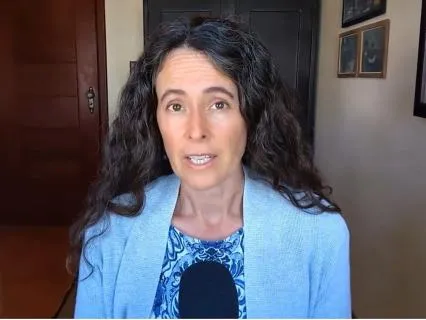
Hi everybody,
Thanks for joining me.
I'm going to tell you today about something that I do with my clients in my coaching sessions that can help you as well if you will practice it at home.
So at the beginning of the coaching session,
I have my clients go through and scan their body.
And tell me how their body is physically feeling.
And a lot of times when people think about how their body is feeling,
They want to just give one word like okay or good or tired.
But I kind of insist on my clients going through and giving me a lot more detail than that.
And the way that I have them do it is by going through individual body parts and scanning each part of their body.
So for example,
They think about how the crown of their head feels,
And then how their forehead feels,
And then how their eyes feel,
And then how their jaw feels and then how their neck feels and then how their shoulder feels.
And we go through the whole body in this way.
And then,
After going through and telling me physical sensations that they can sense in those parts of their body.
I have them go back through their body parts and start over again and now not just tell me a physical sensation that they feel.
But tell me if there's some kind of emotion.
That might be associated with that physical sensation.
So let me give you an example.
Let's say that the client said,
That their crown of their head feels tingly.
And their forehead feels Tense.
And their eyes feel tired.
And their jaw feels tight.
And their neck feels better.
Like kind of a good,
Tingly energy running up and down it,
And their shoulders feel relaxed.
Okay,
So then when we go back through and we try and think if there's an emotion associated,
They might say,
Okay,
Well,
My,
The crown of my head that felt tingly,
It feels anticipation.
And my forehead that feels tense.
Feels worried.
And my eyes that feel tired feel exhaustion.
And my jaw that feels tight.
Feels defensive.
And my neck that feels the tingly energy going up and down it feels confident and my shoulders that feel relaxed feel relaxed.
Accepting.
So why is it that I make my clients go through this exercise?
Sometimes both at the beginning and the end of the coaching session.
Why is it that this is important?
Well,
It's important because it helps them to generate greater emotional awareness.
And why is awareness important?
Labeling emotions can really help us.
2.
Process them.
When we don't have any idea how we feel,
Then there's no way that we can go about regulating our emotions.
There is a lot of evidence in scientific studies that anxiety disorders are associated with Avoiding the way that we feel or trying to escape it or suppress it or not pay attention to it.
When we can label our negative emotions,
Then the intensity of those emotions gets reduced.
We have a part of our brain called the amygdala,
Which is associated with the fight or flight response and studies,
For example,
That show alarming faces to participants.
It shows that their amygdala reacts as soon as they see the face,
But then when they are asked to label how they feel,
That already just that one emotion word brings the reaction down in that fight-or-flight part of their brain,
In that amygdala.
And so,
It reduces our brain's response to the emotion.
It reduces our reactivity.
So it helps to improve our emotional intelligence and it increases our well-being and our resilience.
And as a consequence,
It also will help us to regulate our behavior in response to that emotion.
But why is it that I have my clients go through and label all these different parts of their bodies?
And give each one a different label.
Both physically and emotionally?
Well,
It's because of these studies that I'm going to tell you about now,
Which talk about how it's not just labeling your emotions,
But being able to recognize mixed emotions in yourself.
Why is it that we have mixed emotions?
Well,
It's because we have various different what some researchers call partially independent.
Parts of our brains,
Subsystems in our brains,
That are all evaluating different parts of the situation.
And they may evaluate that one part of it is consistent with certain goals that we have,
And another part of it is.
.
.
Conflicting with other goals that we have.
For example,
In the case of a graduation,
You might feel a sense of accomplishment and pride,
And at the same time,
A sense of loss as you're thinking about having to leave your friends that you've been with for several years.
So this is an example of how mixed emotions,
Why it is that mixed emotions happen.
But studies really show that those who can label both their positive and their negative emotions that are happening in themselves at the same time.
That these people are especially resilient.
And not only that,
That they have fewer negative physical health symptoms and less health decline over time.
So apparently being able to label our mixed emotions also protects us physically,
But Back to the emotional side.
It also helps promote creativity and effective problem-solving and resilience and well-being.
Physical,
Varied sensations,
And mixed emotions helped them to deal with stress.
So the first person that I coach that I'm going to talk about,
I'm going to call him David.
He went on a trip where he was in the wilderness but he didn't want to carry his gear.
And so he had arranged with someone to bring his gear in by horse.
And so all he had to take was a light backpack.
Day pack with just what he needed for the day-long hike.
On the horse was going to meet him at his destination and bring his sleeping bag and his warm clothes and his food and his cooking gear so that he didn't have to carry any of that.
And so he hiked all day long.
And got to his destination and the day was ending and it got dark and he was still waiting and the horse never came.
The person on the horse never came with his gear.
It was summertime but it was high elevation and so it was cold and so here he was in this situation where he was going to be forced to stay the night there because it was already dark.
And it took him all day to get to where he was,
And it wouldn't make sense for him to hike what he had gone through again overnight.
He would need to.
Stay there overnight and wait until daytime to return to the base camp to find out what happened with the horse.
And so he was going to have to overnight in this cold place without gear,
Without food,
And it could have been a situation for a lot of anxiety and panic.
But he lay down and he started this technique of noticing all the different parts of his body.
And he did notice,
Of course,
That there were a lot of the parts of his body that were cold,
But he also noticed at the same time that there was always at least one part of his body that was warm while the other parts were cold.
So,
For example,
He would be aware of his cold toes and feet,
But at the same time be aware of the fact that his Stomach felt warm.
And he said he spent all night long thinking about the different parts of his body that were warm and he wasn't able to sleep because it was quite cold but at least he felt relaxed and he felt peaceful and he felt calm and he didn't feel anxious and panicked and upset and he was able to get up the next morning and he had energy to hike back down to the base camp and figure out what happened with the horse.
So here's an example of how being aware of varied physical sensations in his body at the same time helped him to be resilient in the face of stress and helped him to be less reactive and more tolerant of the negative sensations of cold because it was also aware of some pleasant sensations of warm someplace in his body at the same time.
Okay,
Here's another example.
This one is more emotional rather than physical.
But this is with another person that I coached,
Who we will call Janice.
And she is a mom.
She has grown children.
And her children don't live with her.
And so.
.
.
A lot of the time she actually wishes that she had more time with her children.
She doesn't get to see them very often.
They don't live in the same town as her.
And one particular week.
.
.
Her children came at the same time and stayed with her in her house,
And she coached with me during this week because she was feeling really anxious.
She was surprised that this time when her children were with her,
She was not enjoying it as much as she wanted to.
She was feeling frustrated at the mess and the chaos and all of the clutter of all of their stuff all around the house.
And a little tired from all of the extra work of trying to make sure everybody was fed.
And she was feeling anxious at the fact that she was having these feelings because she recognized that so much of the time she wished that she had more time with her children,
Here she was with a chance to be with her children and she wasn't able to just relax and enjoy it completely.
But we went through and we talked about how mixed emotions happen and why they happen and how we have these different parts of our brains that are tuned into different goals that we have.
And we talked through how part of her was tuned into the goal of having more time with her children,
And that part of her was feeling delighted with the fact that they were there,
But that there were other parts of her that had a goal to keep the house clean so that it would be sanitary,
So that she wouldn't trip over things,
So that she could find things when she needed them.
And that this part of her was feeling frustrated that that goal was being.
.
.
Blocked,
Was being obstructed by all of these people in the house and all of their mess and all of their clutter.
And so,
As we talked through her recognizing that she had many different goals operative at the same time,
And that all of these goals would be associated with an emotion because they were all part of how her brain was evaluating the situation.
She was able to see that it was okay to feel conflicted.
She was able to stop feeling anxious about the fact that there was both delight and frustration in this experience.
And not feel like that needed to change.
But as she talked through her different goals,
She realized that in this moment,
Her goal that had priority was the goal of being close to her children.
And so then she felt that she was better able to tolerate the distress.
Of the other goal being frustrated,
Of keeping the house clean and orderly.
So as you can see from these two examples,
Increasing our awareness of our physical sensations and also of our emotions helps us to have more acceptance of the fact that we have lots of different sensations and emotions going on at the same time.
And it helps us to be more tolerant of the distressing parts.
It helps us to not avoid the emotions that we're having because they're all acknowledged.
And so we don't have anxiety from trying to resist them.
Fight against them.
Instead,
We're able to accept them and so we have greater peace.
And an ability to see what it is that is most important in the situation and go toward that,
Tolerating whatever distress it might entail.
So being more aware of our mixed sensations and emotions helps us to be more adaptive to stressors and more resilient to stressors,
To have greater well-being even in the face of stress,
And to be more creative and effective at problem solving and meaning making in the middle of these stressful situations.
So that's why I want to encourage you to practice this.
Studies show that the more that you practice it,
The easier it gets.
The more automatic it gets and it becomes just part of how you function.
It becomes part of how you see things.
So that is the technique I wanted to talk to you about today.
Thanks for listening and join me next time.