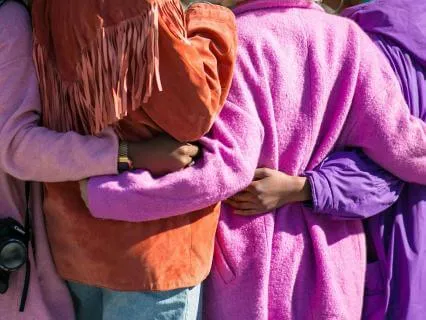
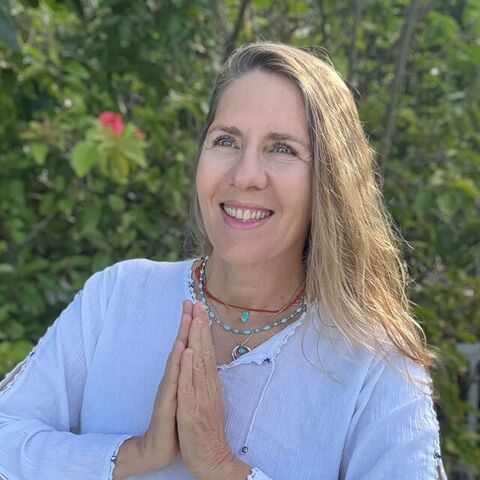
So happy to be here with you.
Our topic today is the spiritual path of relationships and forgiveness.
So I've broken it down into kind of two topics relationships and then forgiveness even though there's really no separating them but just for the sake of the talk I thought it would be a little bit easier to understand and to kind of hone in on the details of relationships and then we'll talk a little bit about forgiveness.
And we're speaking of all sorts of relationships,
Romantic relationships,
Non-romantic relationships,
Relationships of parent to child,
Of siblings,
Of colleagues,
All sorts.
So you can begin to just feel into what you think of when you think of relationships.
How are the relationships going in your life?
Are they very challenging?
Is there a lot of suffering around relationships?
Is there suffering around forgiveness?
Whether you're the one who is holding on and not forgiving or whether you're the one seeking forgiveness from someone else.
Just begin to kind of entertain how all of these thoughts and topics sit with you.
And so my friends,
I welcome you here to our talk today and our topic of the spiritual path of relationships and forgiveness.
And the way this talk came about is because some of you,
A bunch of you,
Asked for this topic in our last love stream.
So I invite you if you have a topic that is kind of heavy on your heart or you're just curious about and you'd like to explore a little bit more deeply,
You can send me a DM or you can put it in the chat and we can further develop it and I can bring and offer a love stream talk here for us and that way we can dive a little bit more deeply and perhaps get more clarity for ourselves.
So that's how this topic came about,
The topic of relationships as spirituality and then forgiveness.
How does forgiveness come into play and how do you hold forgiveness in your life?
So begin to kind of contemplate what the relationships in your life look like.
Are you having mostly joy,
Love,
Connection from your relationships?
Or are you having more so suffering and upset and pain,
Frustration from your relationships?
Think about that for a moment.
And what we'll do in the talk is we're going to separate the relationship talk as a spiritual path and then forgiveness as a spiritual path.
So I'm gonna speak about them in two sections even though we know that everything is connected there.
There really aren't two distinct sections but just for the talk it'll be a little bit clearer I think to separate them.
So let's begin my friends.
Why is it important to talk about relationships?
Well my friends,
Relationships are the core of our lives.
If you think about it,
We're in relationship to everything.
We can't live not being in relationship.
We're in relationship to other people,
Right?
Maybe we live with somebody,
Maybe we don't live with somebody but we go to the supermarket and we pick up food and there are people at the supermarket online and they might annoy us or they might not annoy us.
But we live in relationship to each other.
Father,
Son,
Mother,
Daughter,
Right?
We live in relationship to the environment,
To nature,
To the weather.
The weather dictates a lot of how we live our lives.
So we live in relationship to everything.
We live in relationship to our bodies.
If we have a neck pain,
If we have a toothache,
We're in relationship with our body.
We're in relationship to that discomfort.
If we don't get a good night sleep,
Our bodies feel a certain way,
Our minds are foggy,
Maybe we're crabbier and crankier.
So we live in relationship to everything.
We live in relationship to our thoughts,
The thoughts that are the sticky ones,
The ones that really upset us.
We live in relationship to our emotions,
Those emotions that seem so heavy,
We can't seem to let them go.
Maybe sadness or grief or maybe anger or resentment.
So I invite you to begin to think about how you are in relationship in your life to all of these different aspects and so many more that I haven't even mentioned.
So speaking about relationships and how they support us on the spiritual path is an extremely important topic in my opinion because it affects every single aspect of our lives.
So on the spiritual journey,
The journey of self-discovery,
The journey of that inner sanctum,
That inner world,
Relationships are extremely important because we can use relationships as a mirror.
We can use relationships to reflect back those unhealed parts of ourselves,
Consciously and unconsciously.
And then relationships become a path for awakening.
So when I'm speaking of the spiritual journey,
I'm talking about our inner journey.
Our inner journey of getting to know our truth,
Of getting to know who we are truly and finally,
Beyond our thoughts,
Beyond our emotions,
Beyond our body.
Who am I is the quintessential question in spirituality.
So when I refer to spirituality,
I'm referring to the opposite of the material world,
Right?
The material world is that concretely,
That which we see,
That which we live outwardly.
The things that we have in our lives,
The iPhone and the sneakers with the brand name and the money or the lack of money,
That's the material world.
The spiritual world is that deeper inner sanctum that we can explore and that we can develop more deeply within ourselves.
And it's free from anything that's happening in the external world.
So as we deepen our spiritual path,
We're no longer attached and affected by and suffering because of the things that are happening externally.
And relationships,
Relationships are so vital to helping us to awaken.
So we get to explore how is it that these people,
We're going to talk about people relationships today.
We're not going to talk about relationships with your puppy and your dog and your money and your job and your career.
Those are all different relationships but today we're gonna really specify the dynamics,
Interrelational dynamics between people in your life.
So begin to consider and explore how could it be that the people who trigger us the most are often our greatest teachers.
What if the discomfort that comes from these people that trigger us the most,
What if that discomfort is actually an invitation to grow?
What if these people are not triggering us intentionally?
What if we are simply being triggered because of all the causes and conditions,
Belief systems,
Journey that we've gone through that creates us to be triggered by that person in that moment?
What if the person is not triggering us but we reframe it as we are being triggered?
Can you see the agency?
Can you see the empowerment in that?
Because the moment I say oh my ex-husband,
My child triggers me.
I'm giving all the power to that person rather than I felt triggered by this person.
But they didn't do this to trigger me.
They simply did whatever they did.
They're just being who they are.
I felt triggered.
So this discomfort in this triggering within can actually incite some curiosity.
So interesting that whenever I talk to my ex-husband I feel triggered or whenever my son says this such-and-such I feel triggered.
So we need a curiosity to explore our relationships and just to really start off this Dharma talk in the right way we have to talk about ego.
We have to talk about ego because ego is the killer of all relationships.
Ego is what turns love into a battlefield.
It turns it into a mess.
Ego is that me self that sabotages love and connection.
It's that part of you that gets defensive,
That's keeping score,
That's holding grudges and that's afraid to be vulnerable and tell the truth.
Do you recognize some of this in you?
Do you recognize some of these patterns?
Maybe patterns like defending yourself or needing to be right,
Needing to be right all the time,
Having the last word.
Maybe you recognize a pattern of blame,
Blaming others or needing to be in control or criticizing others.
All of these patterns stem from the ego sense of self and they block intimacy.
They block connection.
So they are an impediment to connecting with ourselves and with others.
So what do we do?
What do we do?
Because we all have a sense of ego.
Some of us have bigger ego,
Some smaller.
The ego is that person that you think you are.
It's who you think you are.
I'm a woman,
A surgeon,
A mother,
A soul surgeon,
A teacher,
A friend,
A perfectionist,
A people pleaser.
All those things that you believe about yourself,
That's your ego.
So the story of you,
The story of who you think you are,
That is your ego simply put.
So how do we address this ego?
Since I just shared with all of you that the ego sabotages love and the ego turns love into a battlefield.
Then what do we do with this ego?
The first step is always awareness.
Those are the ABCs of soul surgery.
Awareness,
Breath and compassionate contemplation.
So the first step is noticing these behaviors that are stemming from the ego.
That's the first step to freedom.
Without awareness,
Without noticing,
There's nowhere else to go.
So you want to notice when you're speaking or behaving from the ego instead of from simply being present.
When we begin to notice these behaviors like,
Oh I'm controlling,
Oh here I am criticizing again,
Here I am blaming the other person.
Those are all ego based behaviors.
When we notice them,
We begin to create a little bit of space for real connection,
For compassion,
For healing.
Those parts of our own selves that keep us separate from ourselves and from others.
Take a moment to think about what is an egoic based behavior that I tend to kind of fall into automatically over and over.
Am I someone who's constantly defending myself?
Am I blaming other people all the time?
It's their fault,
It's the government's fault,
It's the politician's fault,
It's the climate change fault,
It's my husband's fault,
It's my wife's fault,
It's my children's fault,
It's the economy.
What are some of these patterns that you very naturally fall into in your relationships?
Those are behaviors coming from ego.
And in order to soften that ego so that we can be present to life,
Open and vulnerable,
We need to do the next step,
Which is to tell the truth.
Tell the truth to ourselves and tell the truth to others.
Because when we hide our authentic feelings,
It keeps our love very shallow.
It keeps our relational dynamic very superficial.
So we need to learn to be vulnerable and to tell the truth.
And it takes courage my friends,
It does take courage.
It takes courage to say to yourself and then to your partner,
Whoever that is,
Your friend,
Your mother,
Your sister,
Your son.
It takes courage to say,
You know what,
This is really hard for me.
I'm really scared to tell you this thing,
But this is what's going on for me.
That kind of vulnerability and truth telling is what elevates,
Elevates our lives.
It expands us rather than contracts us.
When we hide from our authentic feelings,
When we don't share them with anybody or even deny them from our own selves,
We contract.
When we share with radical honesty,
It begins to build this unshakable trust,
A kind of soul level intimacy.
And it takes courage and it also takes practice.
It takes practice to do this.
So again,
Bring this back to yourself because this talk is not about me.
This is me simply opening spaces for us,
Opening questions,
Opening doorways so that we can dive more deeply into knowing ourselves and ultimately freeing our suffering.
So that when life happens,
And it is going to happen,
And there is going to be pain involved,
It's inevitable.
But when these experiences come,
If we've done this work,
If we're committed and intentional in this spiritual journey of self-discovery,
Self-discovery,
Discovering who is here,
Who am I,
In telling our truth wholly and fully,
In being vulnerable,
In being courageous,
When we walk this walk day in,
Day out,
Over and over again,
And we fall and we trip and we mess up and that's okay.
And we get up and we do it again.
When we do all of this,
Then when life comes at us and something is happening and we just don't like it,
We can approach it from a softer space.
We can suffer less,
My friend.
So yes,
Telling the truth to ourselves,
Telling the truth to others,
Being courageous and vulnerable to say,
This is hard for me.
Our relationship has been challenging.
This is not working for me.
Just being honest.
This is how we can use relationships in our spiritual journey.
This is how we benefit from relationships.
And in order to be able to be vulnerable and truth-telling,
We need to be present.
This is something that most of us are not.
We need to show up fully and completely,
100% in presence.
Because most relationships stay very superficial because we're mentally somewhere else.
We're just not there.
We're here,
Our body is here,
But our minds are traveling somewhere else,
Thinking,
Planning,
Plotting.
So in order to show up fully,
We need to show up without our devices,
Without our phones,
Without an agenda,
Without a plan.
Oh,
This conversation is going to go this way.
I'm going to tell this person to do this and this.
Without mental rehearsals,
Thinking,
Thinking,
Thinking,
Because if we're thinking,
We're not in presence.
So in order to communicate from presence,
We need to speak truthfully.
We need to speak without aggression.
We need to learn to listen deeply without defending,
Because who are we defending?
You got it,
The ego.
This person we think we are,
That's who we're defending.
But in essence,
There's nobody to defend.
The other person is just speaking,
And we're just listening.
This is how we create a conscious dialogue,
Rooted in deep presence.
And this is what creates instant intimacy and spiritual depth.
So something that I love to do is a 60 second eye gazing.
You can sit with your friend,
Your loved one,
Whoever you would like to do this exercise with in your life,
Or you can do it with yourself in the mirror also.
And simply engage in 60 seconds of eye gazing.
Just direct eye gazing.
So we can do that right now,
I'll estimate 60 seconds.
And let's do it right now.
Let's take 60 seconds to connect with our breath,
And to eye gaze in presence.
And watch the narrative,
Watch what's going on up here in the mind.
Just watch if you can be really present,
Or if all sorts of thoughts are coming up.
This is stupid,
What a waste of time,
Why am I doing this?
Just notice,
Notice your mind,
Notice your thoughts.
So here we go,
60 seconds.
Thank you my friends.
Thank you for those of you that engaged.
What did that feel like for you?
Was it comfortable?
Uncomfortable?
Pleasant?
Unpleasant?
Was it boring?
Was it annoying?
Was it restful and enjoyable?
Each one of you had a unique experience of that.
It reminds me that many years ago,
Probably about 8-9 years ago I think it was,
I went to a beautiful retreat.
There were over 100 people in the hall,
It was a day retreat and different practitioners came and gave sound bowl and sound meditation,
All sorts of different meditation.
And at one point,
We just went and sat with a stranger on their yoga mat,
We didn't know anybody there,
And we just did an eye gazing,
Just sitting in front of each other in person,
Which is very powerful,
And can be intimidating,
Yes.
And we just sat there and looked into each other,
Which in essence is a mirror to look into our own selves.
And I remember,
I sat in front of a woman,
A young woman,
And just tears started coming down my eyes,
My face,
I can't tell you exactly why,
Just being present with whatever emotion was coming up for me.
So this 60 second eye gazing exercise,
You can do with anybody in your life,
And I invite you to do it with them,
You can even do it with a tree,
You can do it with a flower,
You can do it with your cat.
So it's a landing into yourself into deep presence.
So it can feel intimidating to just sit in that space of meeting ourselves.
So I invite you to do this in the mirror with yourself.
And another exercise that you can do speaking of presence in relationships,
So that you can cultivate being able to be present in relationships,
Because most of us are just constantly on the phone,
You know,
Somebody's talking and we're on the phone,
And we're chatting,
Or we're checking something,
Or yeah,
Yeah,
I'm listening to you,
I'm listening to you.
My kids do this all the time to me,
My kids are mostly in their 20s,
Young adults,
And we'll be talking,
They pick up the phone,
And they're,
Yeah,
Yeah,
Mom,
I'm listening to you,
I'm listening.
And I say,
Nope,
It's okay,
Do whatever you need to do,
I'll wait until you're done with the phone.
I like eyeball to eyeball contact.
So not everybody's comfortable with that.
So it does take practice.
So let's keep going.
Let's keep moving more deeply into how we use relationships to expand,
To open our hearts,
To dive more deeply into the spiritual journey of our life.
And I think one of the big ones for me was realizing that when there's a disagreement,
When there's a conflict,
Or an argument,
It doesn't mean there's a failure.
It doesn't mean that the relationship is not going well,
There's going to be a tear in the relationship.
I learned to reframe arguments and conflict as the sacred ground in which I'm revealed to myself.
What does that mean?
It means that if I'm having a disagreement with somebody,
An argument,
It feels like a conflict,
Let's say with my son,
And we both walk away,
And I'm just feeling so crappy,
I feel,
You know,
Concerned,
Does he love me?
Is he going to walk away from me now?
Is he not going to talk to me?
What I actually get to see is the woundedness within me.
What's going on within me that I'm so afraid that I'm not lovable?
That I'm so afraid that he won't talk to me again?
Where are my fears?
Where are my unmet needs?
Right?
So it's this reframing of conflict as a gateway to self-awareness,
Rather than as a problem.
Conflict is natural.
Relationships are inevitably going to have arguments,
Conflicts,
Disagreements,
Inevitably.
It's natural.
We're not clones of each other.
We all have our own individual way,
Right?
Some of us are very stuck in our way,
And some of us are a little bit more open and more loose.
But this reframe,
Reframing conflict to be a doorway to get to know your own self has been a game changer for me.
So I'd love you to give that a try.
You can think about a relationship where you've had a conflict recently,
Or maybe you're in one right now where you have an argument,
You don't agree with each other,
And begin to boomerang that back to yourself and dissect and analyze.
You know,
I am a surgeon,
So I do like to dissect.
Dissect what really happened here.
What is this argument revealing to you about you,
About your own fears,
About your own wounds,
About your own unmet needs?
And then notice that when you stay,
When you stay in that discomfort of disagreement,
Instead of shutting down or exploding,
Yelling in anger,
It leads very often to a breakthrough between the two people,
A breakthrough in that relationship,
A vulnerability,
An opening.
It does take courage.
It does take courage and vulnerability to stay,
And that's why we need to practice these things.
We need to make a commitment,
Make a commitment that whenever there's a conflict arising,
I'm not going to run away.
Maybe in that moment it's not the time for me to keep talking to that person because I'm feeling overwhelmed by emotion.
I can't really make sense of what's happening for me because my wound is so deep.
So I've done this before with my kids,
With my daughters,
When something very strong comes up in me and I feel like I cannot express myself in that moment,
I will say to them,
I need a break.
Can we pick this up later?
But then I'll come back and I will take full radical responsibility for myself,
For my actions,
For my projections.
If I was blaming anybody,
I'll turn it around and say,
I'm sorry I blamed you.
I want to take responsibility for this,
Right?
And I'm not going to blame myself.
It's not about self-blame.
It's really about simply witnessing what is going on here.
And when we take that kind of responsibility to say,
Hey,
I can't continue this argument right now.
I'm just feeling horrible.
I can't make sense emotionally of what's going on for me.
Can we pick this up in an hour or can we talk about this tomorrow?
Now I'm taking radical responsibility for myself.
And usually most times the person will say yes.
And if they say no,
I get to practice my boundaries and I get to say,
You know what?
I'm sorry that you don't agree to stop the argument right now,
But I really need to put a hard stop right now.
But I promise you we're going to pick this up in an hour,
Two hours tomorrow.
So taking radical responsibility for ourselves,
Owning our actions,
Our reactions,
Our projections,
And our patterns,
It's empowering.
It's empowering ourselves rather than self-victimizing.
One of my first teachers,
Shelly,
Has this beautiful phrase which I love,
Which I'm going to give to all of you.
And she says,
There are no victims,
Just volunteers.
So what does that mean?
That means that we,
We are the ones volunteering to be the victim.
Because if I refuse to be a victim of you and your actions or your words,
Then there's no victim here.
So remember this phrase,
My friends,
There are no victims,
Just volunteers.
And ask yourself,
Am I volunteering to be a victim in this situation?
In which case,
I'm self-victimizing.
I'm the one creating myself to be the victim.
Does this make sense?
So yeah,
Take a look inside and see,
Is this resonating for you?
Are you someone who tends to self-victimize?
Are you someone who tends to say,
Poor me,
Oh my gosh,
You know,
Every time this person says this thing,
I feel so bad.
Are you volunteering?
So start thinking about the relationships in your life where some of these issues come up so to speak.
So just a couple of more points to finish up on relationships as a spiritual path and then we'll move into forgiveness.
Knowing when to let go and when to hold on tight.
It refers to what I just said in terms of an argument,
A conflict,
Disagreement.
I cannot continue in this moment.
My emotion is just too high.
I don't want to say something I'm going to regret.
So do I know when to let go and when to keep hammering at it?
And I've learned to tell people,
Usually it's my kids,
The more emotional moments are with my kids.
I've learned to tell them,
Hey,
If I'm in this moment where I really feel so emotional that I need a minute,
I need to go breathe,
I need to go cry it out,
I need to whatever,
Wash my face,
But I need to step away from this dynamic.
Whatever it is that we're doing right now,
I need to step away.
And that's where boundaries are a spiritual practice.
And boundaries are very,
Very tied into honesty.
We need to be deeply honest with ourselves and with the other person to be able to create a boundary.
And realizing that saying no as a boundary,
No thank you,
Can be an act of love and alignment,
Not an act of rejection of the other person or of ourselves.
So with boundaries we need to practice and learn discernment.
I love the word discernment.
A discernment around when do I stay,
When do I let go,
And how both staying and letting go can be acts of love rather than a punishment.
I used to have an issue with that by the way.
I used to not like it when somebody else says to me,
We need to stop this right now,
Let's sleep on it,
Let's talk about it tomorrow.
And one of the people that does this the most with me is my son.
My son gets emotionally overwhelmed and if we're having a back and forth,
An argument where,
No because da-da-da-da and I'm trying to prove my point and blah-blah,
I'm deep in my ego,
Oh yes,
Oh yeah,
It happens.
And he will nip it and he will say,
Mom I think we need to sleep on this,
Can we talk about this tomorrow or after the weekend,
Can we just take a little breathing space.
And in the moment,
In the past,
I didn't like that,
No I don't want to take a break,
I want to keep hammering,
I want to keep going at it,
Proving my point,
Right,
That's the ego.
Right,
I need to be right,
I want you to surrender and tell me I'm right.
But he walks out of the rink,
There's no more boxing match,
It's over.
So I've done a lot of deep meditation and contemplation,
Sitting with myself to really realize and notice,
Why do I feel so bad when he walks away?
Do I feel abandoned?
Do I feel unloved?
He doesn't love me enough to stay here and resolve this right now?
These aren't truths,
They're just stories in my head,
They're just narratives that I've built over decades.
So again,
Awareness is the first intervention.
When I realize,
Oh wait a minute,
The little girl in me is feeling alone,
Is feeling abandoned,
He just walked away from this argument,
He must not really care.
But that's not true,
It's just a story I'm telling myself.
And all my selves.
So it's important to re-examine and re-examine our minds,
Our thoughts,
Our beliefs,
Just beginning by awareness.
Noticing when that ego is jumping in and wants to be right or wants to blame the other person.
And then learning to create discernment around when is it time to stay in this dynamic and when is it time to release it.
And then we need to repair it of course,
We don't release it and ignore it,
We don't release it and pretend it never happened,
We're not spiritually bypassing,
We release it so that we can have a little more space,
Literally physical space from the other person,
I'm going to walk to the other room,
And we can take care of ourselves and the suffering that we're having in that moment.
And calm down.
And then come back together,
Whether it's later that day,
Next day,
Agree to,
Okay,
Let's sleep on it over the weekend,
Let's talk about it on Monday.
Discernment my friends,
Boundaries,
These are acts of love and alignment,
Caring and compassion.
When done from that space of wanting connection,
Not pushing the other person away but wanting the connection,
Sometimes we do need to walk away in the moment.
And the last little bit is one of the most important points about relationships in the spiritual path,
Which is to differentiate love from attachment.
Many of us,
This could be its own love story my friends,
This is such a big topic but I'll just touch on it and if you want a whole love stream on it,
Let me know in the chat and I will create one for us.
The difference between love and attachment,
Attachment is more like needy,
So attachment is grasping,
It's clinging,
Attachment says,
I need you to stay so that I can feel okay.
But love,
True love,
Is free.
It's freeing,
It's liberating.
Love says,
I want you to be free too,
Even if that freedom doesn't include me.
It's kind of that phrase,
If you love them,
Let them go and if they come back to you,
Great,
And if not,
Great.
So attachment is contracting whereas love is expanding.
So take a moment to kind of think through some of the relationships that you have in your life or maybe past relationships and think about,
Is this love or is this attachment?
Was this love or was this relationship more of an attachment relationship?
It's very important to look at the difference between the two and then you can have choice.
When you have awareness,
Now you have the freedom to choose.
Without being aware,
Without having these deeper conversations,
You're just functioning on autopilot.
You're just following the way that you've always done things and that's how you keep doing them.
Because you have no space,
You have no ability to reflect.
You don't even know how you feel about love versus attachment.
Some of you might be sitting here saying,
I've never thought about this before,
I just thought love is love.
Most,
Most of our relationships are entanglements,
They're entangled in attachment.
I need this and this and this,
Rather than a love that is freeing and liberating.
So to help you understand the difference,
A love that is love,
Real true love,
Allows truth,
Allows a lot of space for truth.
It can tolerate honesty even when it's uncomfortable,
Even when it's really uncomfortable.
But attachment,
Attachment avoids the truth because it wants to preserve the connection.
So I have a friend whose two kids are estranged from her,
Two adult children,
Very painful.
And with her other two children,
She just wants to keep the peace.
So her love is not free.
There's no room for truth in that love because her need of her kids,
The two that are in contact with her,
Her attachment and her need of them is so strong that she forfeits her ability to tell the truth.
She avoids telling the truth in order to preserve that connection.
Attachment would rather keep the relationship than face the reality.
And she has issues with the other kids too,
Things that she doesn't like that don't really work for her and the dynamic but she zips it up.
She doesn't show up in her truth,
Vulnerable,
Open.
So that's how you know that there's a lot of attachment there.
Now do we live from pure love all the time in every space?
I'm going to gamble a guess and say no.
We do have needs.
We do have needs of course.
Of course.
But the question is,
Are these needs or these attachments to that person or to that dynamic,
That relationship,
Are these needs preventing us from living fully expressed in that relationship?
That's what tells us the difference.
Do we feel contracted like we're hiding or do we feel expanded?
Because you see my friends,
Love is rooted in wholeness in the sense that I am whole.
I am already enough.
You don't need to do anything for me in order for me to be enough.
But attachment is rooted in wholeness.
In lack.
In not enoughness.
In unworthiness.
So attachment comes from the space of you complete me.
I need you to complete me.
So attachment turns that other person into the solution.
So as long as you're in my life,
I'm okay.
That's attachment.
That's not free and open love.
So maybe some of you remember the movie Jerry Maguire when Renee Zellweger,
The lead actress,
Said the famous line that we all were sobbing and crying and pulled our tissues out and she said,
You complete me.
Well she messed it up for the rest of us for decades to come.
She sent us all to therapy I think.
Because you complete me is the opposite of love.
That is just entanglement and attachment.
That is not love my friends.
When two whole beings come together,
They are free to be the fullest expression of themselves.
To bring all of their honesty,
All of their truths and to sit in the discomfort of whatever shows up.
This is love.
But when she said in the movie,
You complete me,
She messed it up for all of us because women everywhere were looking up to her.
Yes,
I want to look for the one who completes me.
No,
No,
No,
No.
I promise you because I love you truly and I want to share the truth with you and to spare you wasted time.
I'm going to tell you that there is nothing out there,
Out there,
Anything,
Not even chocolate that's going to complete you.
There is no perfect man or perfect woman.
There is no perfect my child is going to be the one that makes me feel whole now because I'm a mother.
None of it.
Forget it.
It doesn't exist.
And yet my friends,
Most of us live looking for this thing that's going to complete us,
Looking out there.
It's like the song says,
You're looking for yourself out there.
Remember that song?
There's no there,
There my friends.
There's no that thing is going to complete me when I get the degree,
When I lose 10 pounds,
When I have X dollars in the bank,
When I get the big house and the big car,
When I meet my soulmate,
When I have children.
There's no there,
There.
And yet we live in a society that encourages us to go over there,
To live in our minds,
To project,
To plan,
To not be present with reality,
With the truth of what is.
Right my friends?
So this line of you complete me,
We have to throw that out the window.
And lastly,
As it relates to relationships as a spiritual path and love.
Love is present.
Love exists right here without needing any guarantee.
I don't love you conditionally if you promise to stay with me forever.
But attachment is future based or it's fear based.
So attachment is driven more by abandonment.
What if they leave me?
What if my child will stop talking to me?
These are attachments.
That's not true love.
And now let's dive into forgiveness.
Not the easiest topic for many people but it is a part of relationships,
Right?
Because stuff happens,
Things happen in relationships and there are moments where we hold resentment and we have difficulty forgiving.
We have difficulty forgiving others and we have difficulty forgiving our own selves.
So I thought that forgiveness was a nice little topic to add to this global topic of relationships in the spiritual journey.
So let's start with what is forgiveness actually,
Right?
Because we need to define what we're talking about before we actually dive into it.
So what is forgiveness?
Forgiveness is about setting yourself free.
It's not about condoning,
Right?
Whatever the misbehavior potentially was.
It's not about forgetting.
Forgive and forget.
Forget that phrase.
That goes out the window.
Forgiveness is not about reconciliation because sometimes there is no reconciliation with forgiveness.
What forgiveness is about is about releasing yourself from the burden of holding that resentment because that resentment blocks our own spiritual growth and our own capacity to love.
Everything we just spoke about in relationships is blocked.
It's like a wall comes up when there's resentment and there's a lack of forgiveness.
So forgiveness is freeing ourselves without needing to condone or forget or to reconcile with the other person or their actions.
So let's dive into it a little bit more deeply.
Forgiveness is not always easy.
People do things that we don't agree with.
We're just not happy about it.
But people aren't here to make us happy.
We are here in relationship with other people and with life in order to grow,
In order to transcend our small ego self and to be free.
Free of what?
Free of suffering.
So when it comes to forgiveness,
You don't want to rush it.
You don't want to rush it.
You want to feel the pain before you forgive.
I'm not talking about let's run to it.
Let's go.
Let's go and just forgive.
No,
No,
No.
You need to allow yourself to feel fully hurt.
Feel the fullness of your anger or your sadness,
Whatever it is that's coming up for you.
Maybe you can take a moment and envision a relationship in which you had difficulty forgiving.
Maybe it's something active now or maybe it's from the past.
So I'm asking you to drop your judgments about how much this is hurting you,
Whatever that circumstance is.
Just drop that judgment and allow yourself to feel the hurt,
To feel the anger or the sadness in this relationship,
In how much it hurts you to not forgive.
So you can sit quietly and say to yourself,
This really hurt me.
And then breathe into that feeling of the hurt.
Don't suppress the emotions because my friends,
Suppressing the emotions keeps that resentment alive.
The suppression is the fire that keeps the resentment alive and takes you farther and farther away from forgiveness.
So the very first step,
If there's someone in your life that you're feeling a bump with that you just don't feel,
You can forgive.
Just begin in this step.
And you might be in this step for a long time.
Allow yourself to feel the hurt.
Sit quietly,
Breathe into it.
This is really hurting me.
This is really hurting me.
This dynamic,
This relationship,
Whatever it was that happened,
It's really hurting me.
Feel it.
Feel the pain before even talking about forgiveness.
The next step you can do is you can separate the person from the pain.
So I invite you to see the other person that's involved in this unforgivable dynamic,
Whatever happened between you.
See the other person as a flawed human being because we all are.
Not one of us is perfect,
Like an AI version of yourself.
And the other person is possibly also hurting.
Or maybe they're unconscious,
Just like we are unconscious sometimes.
Maybe they were deeply in their ego state when they said that thing that was so hurtful and feels unforgivable to you.
So a helpful question that you can use is what pain or fear might have caused them to act this way?
Why did they say that unforgivable thing to me?
And when you sit with this question,
It helps you to build compassion without excusing the behavior.
It's not excusable to speak down to somebody,
To curse at somebody,
Inexcusable.
But we're looking to separate the person who did the act from the pain that you're carrying.
And so we're bringing in compassion.
And we're seeing this other person as an imperfect human being just like us.
An unconscious human being who is deep in ego just like we are sometimes.
And we just wonder,
Hmm,
I wonder what kind of pain caused them to act this way or what kind of fear caused them to act this way.
So that's the second thing that we can do.
And we can practice using the beautiful ho'oponopono,
The beautiful prayer that maybe some of you know with the four very direct,
Succinct phrases that say,
I'm sorry,
Forgive me,
Thank you,
I love you.
And some of you might be yelling at your screens right now saying,
Dr.
Tammy,
Do not tell me to say these things.
This person,
It's just unforgivable.
I cannot say these things to them.
And I will say,
Okay,
You don't need to.
Turn it around and say this prayer to yourself.
Direct it to yourself.
If you feel you're not ready to direct it to them yet,
Bring in self-compassion.
I'm sorry to yourself.
Please forgive me.
Forgive yourself for carrying this pain.
Thank you.
Thank yourself for forgiving yourself.
I love you.
Truly love yourself without condition,
Without self-compassion.
Thank you.
Self-blame and self-judgment and self-criticism.
So this is a simple forgiveness practice that you can offer yourself and begin with your own self.
If you feel you're just not there,
You're just not ready to give these words to the other person and give this energy and emotions,
Give it to yourself.
I'm sorry.
Please forgive me.
Thank you.
I love you.
Let's take a few breaths and just say this to our own selves right now.
I'm sorry.
Please forgive me.
Thank you.
I love you.
And breathe.
And I invite you to make this kind of practice.
If you're struggling with forgiveness right now,
Self-forgiveness or forgiveness towards others,
I invite you to make this forgiveness practice a habit.
Not just a one-night stand.
Not just a one-time event.
Because forgiveness often happens in layers,
My friends.
It doesn't happen as a one-shot deal.
The old feelings return.
The resentment returns.
And we need to gently repeat this process.
Without self-criticism,
Just gently repeat the process.
First forgiving ourselves so that we can then forgive the other.
And over time,
You'll see that it becomes easier and it starts to free up huge amounts of energy,
Energy that you can use to express love and presence,
Joy and compassion.
Because what does our world need more of,
My friends?
Do we need more resentment and criticism?
Anger?
Or do we need more love,
Presence,
Compassion,
Patience?
And the only thing we can ever do,
My friends,
Is work right here.
And when I say work,
I actually don't usually call it work.
I call it life play.
This is life play.
There's nothing more important to do in this life than to know our own minds and our own emotional heart.
So we want to release this resentment through self-compassion.
Compassion to ourselves first and then compassion for others.
And remember,
The stories that you're telling yourself keeps that resentment alive.
No,
That person's an idiot and they don't deserve my forgiveness.
Those are all ego-based stories.
And if you're not sure what the stories or the narratives are that you're telling,
Take a look on my page.
You can follow my page and go into my recordings and you'll see that I did a love stream on stories,
The stories that we tell ourselves.
And that can help you identify the stories that you're telling.
Something else you can do is if you're a writer,
Like me,
I love to write,
You can write it down.
That's another beautiful forgiveness tool.
And you can have it as an unsent letter.
You don't have to send off whatever it is that you're writing.
But it's a way to purge the emotions that are there.
So if you were to ask me,
What is your number one secret ingredient for forgiveness?
I would tell you that it is compassion.
It's having a deep understanding that every person acts from their level of consciousness and awareness in that moment.
That's it.
In other words,
You could say they're doing the best they can from that position that they're in.
And this helps to soften the judgment.
It helps to soften the judgment.
Because maybe you are more awake.
Maybe you're more conscious.
Maybe you have more tools in your toolbox.
So you can't blame the other person for not having the tools that you have.
But you have the tools,
So you have the ability to offer yourself self-compassion.
And you have the ability to offer the other person compassion.
And to know that they're doing the best they can,
Even though it may not look like it.
I understand you.
I got it.
Trust me.
I have people in my life where it's not easy.
It's not easy to offer compassion and understanding and see them from their level of awareness.
But these are the practices we offer,
My friends.
We offer to ourselves so that we can free ourselves from suffering.
And when we can meet our own pain with kindness and compassion,
We will naturally extend it to others,
Whether it's our partner,
Our ex-partner,
Our children,
People in the grocery store,
People in traffic that are cutting us off.
This is the Metta meditation that I've done with you several times before.
Offering loving kindness first to yourself.
We always begin here.
As the Dalai Lama says,
If you don't know self-compassion,
You don't truly know compassion.
So for all of you who say,
Oh,
I'm such a compassionate person.
I have compassion for everyone except myself.
My friend,
You don't know compassion because you cannot exclude yourself from it.
So the practice always begins here.
And lastly,
As it relates to forgiveness,
We get to ask ourselves,
Am I on a path to divine love?
Because divine love is who I am.
It's our true nature,
All eight billion of us.
Even those politicians that you think,
No,
Except them.
It's not their nature.
No,
It's their nature too.
Just covered by more veils,
By more veils.
So we need to peel the onion and move beyond our ego,
Beyond conflict and resentment.
And use our relationships as a mirror to find the wounds that live inside of us.
And use our relationships to be the living practice of unconditional love.
Every single relationship.
It doesn't have to be a romantic relationship.
And they will take us on a direct route to remember our true nature.
Deep breath my friends.
Just a little guided meditation and we'll close up our time together.
So I invite you to close your eyes or leave them open or soft gaze downwards,
Whatever is comfortable for you.
Give yourself what you need,
My friends.
Give yourself what you need in this moment.
Bring the light of your attention to your breath.
Landing right here,
Right now.
Letting all the words go.
You don't need to remember anything,
Simply trust that you received exactly what you needed to receive today.
Bringing the body into stillness,
Don't move,
Relaxed stillness.
If you're feeling tight anywhere,
Simply breathe into that part of the body,
Effortless stillness.
Effortless stillness,
Stilling the body helps to still the mind.
Simply allowing whatever wants to arise,
To arise.
Peace is this moment without judgment,
Peace is this moment without judgment,
Deep inhale.
Tiny pause at the top of the inhale,
Followed by a long,
Expansive letting go.
Micro pause at the end of the exhale,
Meeting silence,
Meeting stillness,
And then noticing the body taking another inhale.
The body is breathing you,
Remembering that in this moment,
There is nothing to do,
Nowhere to go,
Just to be here,
Now.
When you're ready,
Begin to move your body,
Perhaps a little stretch,
Arms,
Shoulders,
Neck circles,
Whatever it is that you need in this moment,
Maybe shaking,
Shaking your hands out.
Just checking in with yourself,
With your body,
How are you feeling?
Reading our closing poem from Rumi,
The 13th century spiritual poet.
The poem is titled,
The Breeze at Dawn.
The breeze at dawn has secrets to tell you.
Don't go back to sleep.
You must ask for what you really want.
Don't go back to sleep.
People are going back and forth across the door sill where the two worlds touch.
The door is round and open.
Don't go back to sleep.
And let me share the merit that whatever benefit might have come to us today,
From our listening,
May it benefit not only ourselves,
But be of benefit to everyone we encounter.
And may it aid in the healing and transformation of our world.
Om shanti,
Shanti,
Shanti.
Peace in your hearts.
Peace in your mind.
Peace in our world.
Thank you,
My friends.
Thank you for being here.
Thank you for your donations.
Thank you for your presence.
And I will see you next time.
And in the meanwhile,
Just remember what Rumi said.
Don't go back to sleep.
Bye for now.