Hello,
My fellow fallible human.
Welcome to the harmonious mind,
A space to slow down and gently reset your nervous system.
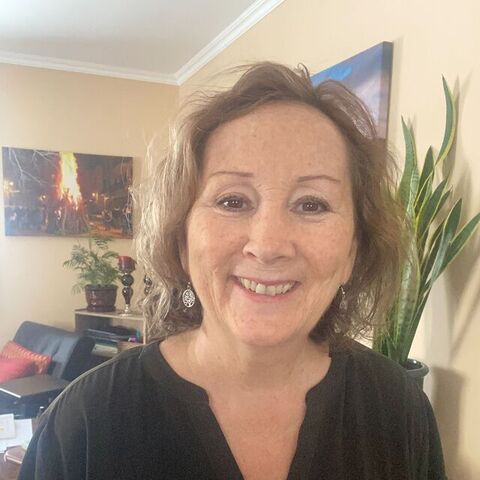
My name is Tanya McIntyre,
Your mindfulness mentor.
These short reflections are crafted to help you build steadiness,
Curiosity,
And have a kinder relationship with your mind.
Let this reach you the way music does,
Without effort,
Without judgment.
Simply allowing yourself to be here in the present moment.
Today we'll explore how the gift of self-compassion can help us maintain better mental health.
We often use the words guilt and shame interchangeably,
Yet they represent entirely different internal landscapes.
And understanding the boundary between them is not merely an intellectual exercise.
It's a vital step in quieting the relentless inner critic.
Cultivating self-compassion.
And initiating true emotional healing.
At its healthiest,
Guilt serves a functional,
Adaptive purpose.
It's a signal that our behavior has misaligned with our core values or the needs of our community.
Guilt says,
I did something bad.
And because it focuses on behavior rather than identity,
Healthy guilt can be a teacher.
It motivates us to apologize,
To repair damaged connections,
Make conscious choices.
Children actually begin to internalize this social feedback around the age of three.
As they navigate the boundaries of right and wrong.
However,
Much of the guilt we carry is unearned and unhealthy.
It arises when we hold ourselves to impossible standards.
Things like feeling guilty for setting boundaries,
Saying no,
Resting,
Or failing to be everything to everyone.
This is especially challenging for parents,
Right?
You're thinking that,
Well,
You're conditioned socially and conditionally to live your life for your children.
And these unrealistic expectations are rarely accidental.
They're rooted in early childhood.
When a child learns that their acceptance depends on perfection or pleasing others,
They suppress their authentic needs in order to maintain attachment.
And instead of fostering growth,
This internalized pressure can actually trap us in a loop of self-criticism.
But if guilt is about doing,
Shame is about being.
If guilt says I did something bad,
Shame whispers I am bad.
Shame does not evaluate our actions.
It attacks our very worth.
It convinces us that we are fundamentally flawed,
Broken,
Or unworthy of love,
Acceptance,
Or belonging.
And because shame develops in our earliest years and is often reinforced by things like criticism,
Neglect,
Or conditional love,
It becomes deeply embedded in our nervous system.
When we feel fundamentally unworthy,
Our natural response is to hide,
Withdraw,
Or erect defensive walls.
And left unaddressed,
Shame isolates us,
Convincing us that we are beyond redemption.
And the antidote to shame is not self-punishment.
It's connection and self-compassion.
We can actually learn to transition from paralyzing shame to something like healthy disappointment.
So instead of concluding,
I'm a terrible person,
We can gently recognize,
I'm disappointed in the choice I made.
It was a bad choice.
And this mistake is a moment in time.
It does not define me.
Since our deepest wounds are relational,
Happening in our earliest attachments,
Our healing must also be relational.
Sharing our struggles with trusted allies,
Counselors,
Or peer support groups dissolves the secrecy that shame requires in order to survive.
In safe spaces,
We discover that struggle is a universal human experience,
And that we all deserve the path to recovery and healing.
Whenever guilt or shame starts to overwhelm you,
You can practice these three gentle steps.
First,
You catch it.
You notice the physical sensations and notice the self-talk,
Those automatic negative thoughts that never seem to shut up.
So once we notice those physical sensations and that negative self-talk,
The automatic negative thoughts,
That awareness is the prerequisite for change.
Next,
We check it.
We're going to ask ourselves whether we've made a mistake that needs repairing or whether we're simply holding ourselves to impossible standards.
And next,
Change it.
You make amends if necessary.
Extend compassion to yourself and commit to making a better choice next time.
You just move forward with more awareness.
We're not meant to be perfect.
We're meant to be whole.
Our mistakes are part of the human curriculum.
Mistakes may shape our journey,
But they can never define our worth.
Thank you so much for spending this time with me.
I hope you'll join me for future reflections of the harmonious mind,
Where mindfulness meets practical mental health skills.
My name is Tanya McIntyre,
Your mindfulness mentor,
And I'm grateful to walk this path with you.
Remember to keep showing up for yourself,
And remember to talk to and treat yourself like you talk to and treat a good friend.
May the force of mindfulness be with you always.
And remember,
You are the force.
Course.