Wonderful.
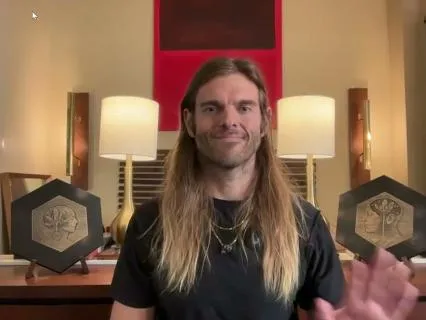
So I'll introduce myself.
My name is Jeremy.
I'm in Atlanta.
And welcome to everybody that's joining from all over the place.
Whether it's evening there or whether it's in the middle of your day.
Thank you for spending time here.
We're going to be together for about 45 minutes.
And we're going to be learning about some signals that our bodies are constantly sending.
And things that we can do to just notice inside of those signals.
That may help us in our day-to-day.
And so during the day,
My day job as a neurophysiologist,
So that's somebody in surgery.
That.
Monitors the nervous system with the surgeon.
And a lot of times the nervous system is at risk.
So usually it's a brain or a spine surgery.
And we're in there giving information about electrical activity that's happening with the body.
Electrical activity in the brain,
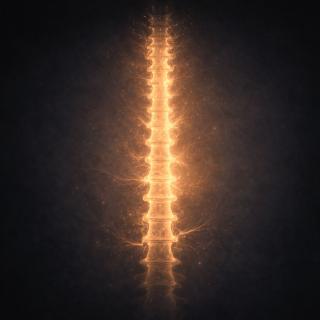
In the spinal cord.
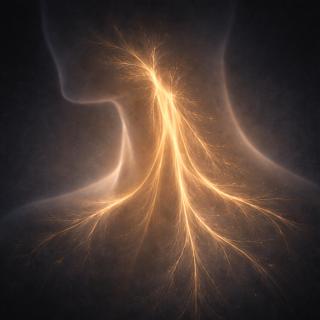
You see our body is constantly sending these electrical signals even while we're asleep.
And definitely while we're moving through our day.
And so if we're able to still ourselves.
We may be able to pick up on some of these signals.
And so for years,
I spent my days inside operating rooms,
And I watched the nervous system communicate in real time.
And so signals are appearing,
Signals are disappearing.
And really,
We're giving the surgeons information if they need to pause.
And sometimes the information in the nervous system changes during the surgery,
And it's a moment to pause.
And A lot of times,
Outside of the OR,
Our bodies are also revealing these types of stories,
So these types of signals.
And so eventually I realized.
.
.
You know,
The nervous system is there and while the patient is asleep,
It's sending these signals and we're able to help by collecting the data.
And it's protecting the patient and we're protecting the nervous system.
And really that's what it's doing for us in our daily lives too.
Is that when we're moving around the world,
A lot of times we're not able to notice.
All the signals that our bodies are sending.
And it's sending quite a few signals at the same time.
Your body and your nervous system communicate in milliseconds.
And when I'm in the surgery,
I monitor the millisecond changes that happen inside.
But outside in our daily life,
The system is definitely moving that quick.
But we may not be able to decipher exactly what's happening that quickly.
So we're going to be doing some breath tonight.
We're going to be doing a little bit of movement.
And it's not gonna be about fixing or doing anything correctly.
And we're not going to try to be calmer.
So this is a really arrive as you are.
Arrive in the breath exactly as it is.
And just be here for a few minutes with us.
And take the opportunity.
To start to notice what's already here.
And so you can be standing,
You can be sitting down.
You can be laying down.
There's no right way to do this.
And you can feel free to.
.
.
Just find a steady position.
Whatever that looks like for you.
Everything here is going to be optional.
And everything's going to be information.
That's going to help us key in on our nervous system.
So we're going to open up and take a few breaths together here.
And you might just take a breath however it arrives.
No correction yet.
No improvement.
Just simply notice it.
What do you notice right now?
Temperature.
Texture.
Any sense where it's moving?
Or if it's still.
Can you sense any effort or ease inside of it?
And so let whatever your answer is be enough.
Don't necessarily need to change anything about how it is.
That's just the first step is just noticing,
Without judgment,
What's already here.
And so together we're going to take three breasts,
And these are going to be your breasts,
But we'll do them all together as a group.
And just to sense in.
Where is the breath in my body?
Where can I sense it?
Where can I feel it?
And so you might feel it.
Inside of your ribs and your front.
And if possible.
.
.
You might even reach around and touch your back.
In your mint bag.
And you might see if you can take an easy breath there while touching your mid-back.
You might envision sending your breath to that spot.
And on your next breath,
You might try to put your hands on your ribs.
And you might see what an easy breath is here.
You're just sensing.
You're noticing.
Movement.
Texture.
Temperature.
What am I sensing?
And so when I'm breathing like this,
I'm breathing into my front.
Breathing into my sides.
Breathing into my back.
And so this is a 3D,
A 360 degree breath.
And breathing like this,
Not necessarily deeply,
But just natural and easy.
In all directions.
It can stimulate a vagus nerve.
Which sends a signal.
And so just as we were talking about earlier how our bodies are sometimes and our nervous systems are under a state of threat and they're feeling diligent and they feel like they need to protect us.
And so our breathing is also impacted by that state.
And so when we notice our breath,
And when we take those 360 breaths,
We're able to come into our breath in a way that stimulates our nervous system.
In a way that we might create a ship.
There may be something different.
Maybe not.
It's just a way that we might be able to set those conditions.
To help the nervous system present what we would like.
And so one of the simplest ways that our nervous system updates itself with these constant signals through the ways that we orient.
So through our eyes,
Through our hands,
Through our ears,
Through all of our senses.
And so wherever you are right now.
You might just sense out.
What's around you?
And you might allow your eyes to slowly explore the room.
Then you might find three colors.
Any colors.
It's only your colors.
No right or wrong answers.
You might look around now.
You'll find three shapes.
Squares circles.
Rectangles.
Maybe your shape?
Not so wide.
And brightness.
Clarity.
And shadows.
And you might notice texture.
And texture of your clothes.
Fabric of something in the room.
There's nothing to accomplish here.
We're just gathering information.
We're using our bodies.
We're using the senses that we have.
And we're just collecting information.
And as you're moving your eyes around.
You might notice your shoulders.
And just see where they're at.
It's another spot in our body.
You can bring awareness too.
You might reach up and touch your shoulders.
If you're available.
You might give them a gentle press.
And release when you're ready.
And we'll do this a few times.
At your space,
At your speed.
See if you can find that 360 degree breath while you're pressing down into your shoulders.
And so we're doing a few things here.
And release when you're ready.
When you press into your shoulders,
When you press into the nervous system,
Or sending a signal.
And we're sending the signal of effort.
Effort in our hands.
Effort underneath our shoulders.
And you might feel,
What does your shoulders feel like underneath your fingers?
Is it hard?
Is it squishy?
Is it soft and supple?
There's no right answers here.
We're just sensing.
You see our hands,
They take up a lot of room inside of the brain.
And so they're really important because they send a lot of nervous system information directly to the brain.
And They have a ton of nerves in them.
And so we can use them as these tools.
To help start to sense into our own nervous system.
And maybe it's just in our shoulders.
And maybe the answer is simple.
Whatever's here.
When you're ready.
You can rest your hands back down where they're comfortable.
And you might bring your attention to another place that maybe gets overlooked,
Your feet.
And so,
Whether they're in shoes,
Or whether they're bare,
You might just sense them with your feet.
Are sensing.
You can sense here temperature.
Are they inside shoes and warm?
Are they on a cold floor?
And you might try to press your toes.
Down.
Into whatever that is.
Beneath it.
Add that pressure.
And get the signals that we just learned in the shoulders and the hands.
Do it this time with your toes.
Apply pressure.
And apply ease.
And then see if you can find your 360 breath there for just a few breaths.
And see the hands and the feet,
They live in a special area of the brain that we monitor for brain surgery.
Because sometimes.
.
.
People have stuff there.
That starts to affect their movement,
Their feeling.
In their feet or their hands.
And so the wiring here.
.
.
Is strong.
And then the signals.
We can send some.
And they may be subtle.
And you might not be able to sense anything.
And that's okay.
Or just noticing.
We're not changing anything.
And allow yourself to feel supported.
And you might.
.
.
Sense into whatever you're sitting in.
And you might sense that.
Support and stability underneath you and share.
Question?
You might just allow it to see.
.
.
If you can rise just a little.
See if you can allow a little ease.
To whatever's supporting you.
And sometimes resilience is not pushing harder.
It is discovering.
What we're already carrying inside of us.
So continue breathing here.
Take a few breaths and sense into one area that we just explored.
Sense into your hands.
Into your shoulders.
To your feet.
We know in neuroscience these are the sum of the strongest wiring in the nervous system.
This motor wiring.
Allows us to give the movement that we want and the time that we want.
And a lot of times our bodies are working hard for us.
And so you might just ask yourself.
What part of me has been working the hardest lately?
We're not going to solve it,
We're just noticing.
And then let's go back to our hands.
You can place them on your lap or on your thighs.
Just find somewhere that's easy,
Natural.
Then you might look at him.
And you might give space to the thought.
That they are attached and wired directly to your brain.
And that there are great sensory maps for us to explore our world.
The nervous system,
It pays attention to the hands.
And the hands,
They usually communicate,
And they can communicate safety.
But they can also communicate a lot of other things.
During surgery,
A lot of times,
Around the room where you look around and somebody will have their hands clenched.
And it may be that they're working or they're thinking through something.
But a lot of times a clenched hand can give us another signal and allow us to see maybe something else that's happening inside of the nervous system.
And so the hands,
They also give us agency in the world.
They allow us to get outside.
That allow us to communicate.
That allow us to connect with others.
And so let's just take a second.
And let's all,
Together,
Rub our palms together.
Rub your palms.
And start to sense in what's here.
Temperature.
Texture.
And just give it a sense.
And when you're ready.
.
.
Pull them apart.
And feel what that feels like.
We felt the friction.
You pull them apart and just notice any difference.
In temperature.
In Texture.
You might try to interlace your fingers now.
You might press down and squeeze your hands gently.
And let them release.
And give them a squeeze No.
Peace.
You might look at them while you're doing this.
And so what happens is that our hands are actually tied.
And wired to the opposite side of our brain.
And so when we bring attention into our hands,
And definitely when we look at the opposite hand and we interact our hands,
We're able to rewire and we're able to engage all that circuitry.
In its functionality.
And so stretch your hands outward now.
And relax.
And stretch out.
And relax.
And stretch out.
And you might find a breath here that's stretched out.
You see if you can find an easy breath or just notice what your breath is.
And relax.
And so this dexterity.
These nerves in our hands.
The movement helps and the clear signal helps the nervous system.
And regulate other areas.
And so when we notice release,
Sometimes the nervous system,
It's not asking for this major intervention.
Sometimes it's just asking to be included in the conversation.
And sometimes we're in our thoughts.
Sometimes we're in our next task.
And the hands,
They're not on top of our mind.
And so just notice now.
Did my hands feel any different?
Than a few minutes ago.
Is the sensation different?
Temperature.
Are they heavier?
Are they warmer?
Maybe they're neutral.
All these answers count.
And so we're just listening.
And listening to our breath.
And letting it arrive as natural as it is.
Breathing is one of the few processes that exists both voluntarily and automatically.
So a lot of times we're not thinking that we need to breathe.
It does remind us that.
.
.
We don't necessarily need to change or influence.
Something by force.
And so just by noticing our breath.
And by noticing our hands.
By shifting our attention to our feet.
We're able to create these small inputs through the body.
And those inputs could end up causing clear shifts.
And so another area of the body that we carry a lot of tension in our day is our jaw.
And so.
You might just see where your jaw is now.
You might feel it with your hands.
And feel what's here.
What's the temperature?
Are your hands still warm from earlier when they were rubbing?
Are they sweating?
What's the texture of your face?
Can you feel your breath?
Coming in and out.
And just noticing.
Maybe not.
And you might see if there's a little ease available,
Just like we did in our hands.
Just like we did in our.
.
.
Our feet.
You might see if there's just a little room for your tongue to drop.
Perhaps not.
Perhaps there's nothing.
And that's information too.
And so one thing I learned through the years inside of the operating room is that the nervous system,
It's always listening.
And the nervous system is different.
On every day.
So when I usually talk to patients,
I'll speak to them in the pre-op and I'll speak with their families.
And we'll talk exactly about how is their nervous system this morning.
Because.
The nervous system not only changes every day,
Everybody has their own nervous system that is completely theirs.
And it's based on the senses that we have.
In the abilities that we have.
And so somebody without hearing or somebody without movement is going to have a completely different nervous system makeup.
So we ask these ideas and these questions so that we can know exactly what this person on this day and their nervous system looks like.
And so.
.
.
We can do that in our own days,
And we can bring that knowledge to say,
This nervous system is different than it was yesterday.
And the nervous system is impacted.
By things in our outside world and internally.
That give us those moments of when we do notice,
Where are we this morning?
Whether it's fatigue,
Whether it is some sort of sensation in our body.
And so we might wake up.
And we just need to do the check just to see where our nervous systems are.
And so one of the reasons why we started monitoring the nervous system during spine or brain surgery is because it was extremely intelligent and sensitive to help protect patients.
And so I've watched these teams.
Use the information.
And usually when the information comes up during surgery,
That something has changed inside of the nervous system.
A few things happen.
So the moment it's stressed that something has changed,
But everybody in the room is under the impression that things can change.
So by knowing that,
We become curious and we say,
What's going on here?
What's happening with the signals that are coming off of the body?
What's going on with this person's hands?
What's going on with their feet?
Are the signals coming as they were?
Has there been a change?
Sometimes.
.
.
There hasn't been a change inside of the system.
And so.
When we're collecting the information,
It's all electrical signals.
I had a case recently.
We had an alert,
So the nervous system changed,
A signal changed from the brain.
And it was a moment of pause.
And so we all pause.
And we assess what is happening during this moment.
What's happening inside of the body.
But we also have to take into account what's happening inside of the room.
And so not only is our nervous system sending off electrical signals,
But we live in a very electrical world.
And so many times,
Electrical outlets,
Lighting,
Anything that's on,
Plugged in.
Can be for providing electrical current into the room,
Which causes interference.
Now during our day-to-day,
It's not enough to pick up on,
But if we're monitoring the milliseconds changes during surgery,
Were able to see.
That this current and this electricity is interfering and sometimes that will happen that We will have a signal change and we will do our curiosity moment.
And we will end up with that everything is actually going according to plan.
What has happened is that something unknown in the environment changed.
And so recently,
A loose electrical outlet across the room was sending the artifact and interference and so it created this moment of intensity.
Of curiosity.
And I'm really kind of keen into the signals and making sure that we have the subtlety in those moments.
To become curious and just to listen and notice.
And so I often wonder.
.
.
What would happen if we treat ourselves in the same way.
So what if our tension wasn't our failure?
Or what if fatigue wasn't weakness?
And so a lot of times.
.
.
What these experiences were.
Where they're just simply signals and messages.
You know,
These attempts to,
For the nervous system to protect.
And for attempts to us to adapt and kind of move through the world.
With a sense of agency.
That even in moments of tension and even in moments of stress,
There's a moment that it takes just a second and just one breath.
To key into our nervous system and to key into ourselves.
And maybe to be able to ride.
Just that moment of clarity between efforts.
And ease.
And so that's kind of what we're looking for in our days,
Is that what signals are we constantly getting in our body and through the environment?
So we have to take into account what our sleep is looking like,
What our nutrition has been looking like.
You know,
Our stress levels overall.
So we take into account what's happening in our environment and we also take into account what's happening inside of our bodies.
And then we might be able to see if we can key in on some of these subtle signals.
So let's go ahead and do a few more moving exercises.
Just think strenuous,
But we're just going to explore some movement.
And so one of the things that we'll do in surgery is that a lot of times.
.
.
After surgery,
People will not have the same ability to twist and to turn or to rotate than they will before surgery.
Pre-surgery.
We always like to introduce that the.
.
.
Can do.
And you can do them every day and they take no very,
You know,
Effort is just sitting here doing exactly what you are.
But to be able to provide that same sense of ease and effort inside of our spine,
And send the signals to our nervous system just like we did with our shoulders.
Just like we did with our hands and our feet.
And so we're just going to do some gentle.
.
.
And just look and take a gentle breath here.
And so you really just raise your chin to the ceiling.
You're not straining your neck at all,
And you're just taking an easy breath.
And you might look down now.
Very gently.
And just take an easy breath.
Now you might do some chicken wings.
Like this.
It allows you to put your hands on your ribs easy if you can.
In either direction,
Take a slight tilt.
Just so you start to have sensation.
On your lengthened side.
And then see if you can find that easy breath here.
You might even get a bit curious.
Hmm.
And by doing a hmm,
We're stimulating another nerve.
The vagus nerve lives right behind our vocal cords.
So just a little vibration.
It's just a small signal.
And come back to neutral when you're ready.
And then on your next breath.
Gently towards the other side.
And see if you can find that 360 breath.
When you're ready,
Come back to neutral.
Next we're going to twist,
Just subtly.
So you can put your hands back down on your thighs.
And just so slightly twist either direction,
Placing both hands on one thigh.
And just take your gentle breath.
And when you're ready,
You come back to neutral.
And go towards the other side.
You take your gentle breath.
We'll come back to neutral when you're ready.
And keep your breathing going.
And then we're going to start bringing ourselves back into our bodies,
Doing the same checks that we did earlier.
And just seeing.
Not checking for differences.
Just being curious that maybe there could be some.
And so check in with your hands.
And just see.
What's the temperature?
What's the texture now?
You might try to rest them palms up.
Or palms down.
And you might see if there's any difference there.
Wherever they're at.
Give that gentle extension.
Of effort.
Release ease If you'd like,
You can move your hands back towards your shoulders.
Giving a gentle press down.
Finding your breath.
And release when you're ready.
Providing that ease.
And you might move towards your feet with your attention.
You might give them a stretch.
Or press.
Providing that effort.
And when you're ready,
Release and give them some ease.
Now start feeling your body as a whole.
And start sensing.
Not scanning.
Just whatever comes up.
Maybe a spot.
Maybe a texture.
Maybe a color.
And just notice.
What's here now?
And take a few breaths there.
We have a few more minutes together.
And I'd like to end.
With a poem.
And so before I read it.
.
.
I'm gonna have you come into your bodies.
Sensing the textures.
Come into your breath.
And this is allow.
By Dana Faulds.
There is no controlling life.
Try corralling a lightning bolt.
Containing a tornado.
Damn the stream!
And it will create a new channel.
Resist.
And the tide will sweep you off your feet.
Allow.
And grace will carry.
You to higher ground.
The only safety lies in letting it all in.
The wild and the weak.
Fear.
Fantasies.
Failures,
Success.
When loss rips the doors off.
When the heart.
.
.
Where the sadness fills your vision with despair.
Practice.
Becomes simply bearing the truth.
And choice to let go of your known way of being.
The whole world.
Is revealed to your new eyes.
And so continue with your breath.
And whether your eyes are open or closed,
You start coming back into the room.
And sensing the space that you're in.
Any sounds near or far?
You might look around,
Letting your eyes take in.
Movie three colors Same or new?
Maybe three shapes.
And start to sense yourself as part of that environment.
And then see if you can extend a little part to all of us here.
Together.
In this session.
Focusing on ourselves.
And focusing on sensing the signals that our nervous system is already sending.
I want to thank each of you for spending time with me.
And I appreciate you all being on and waiting for me for a few minutes.
And I will stick here for any questions.
Take care until next time.