Hi,
I'm Jeremy.
I work in brain and spine surgery,
Monitoring how the nerves respond in real-time.
One thing in that environment becomes clear.
Muscles respond to force.
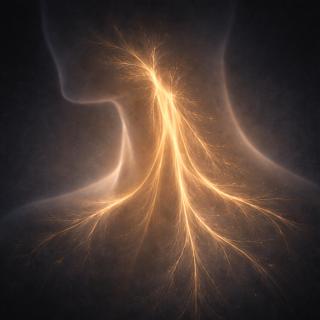
Nerves respond to signal.
And when too much force enters the system,
Signal often becomes harder to read.
It's true in the operating room,
And it's often true in our daily lives.
Many of us are taught to respond to difficulty by tightening,
And trying harder,
And pushing more,
And gripping mentally or emotionally,
Sometimes even physically.
We can see it in our hands.
But nerves,
They don't respond to effort that way.
They don't respond like muscles.
You can't flex a nerve.
So the intention for this practice is simple.
To notice where force has entered the system.
And to see if maybe there's any possible relief or reduction.
Just enough for the signal to become a little clearer.
And the theme we'll explore is this.
Clarity often improves when force decreases.
And if you'd like,
You might begin in a comfortable seat,
Standing,
Lying down.
There's no correct posture.
Just make sure you feel supported.
However you are,
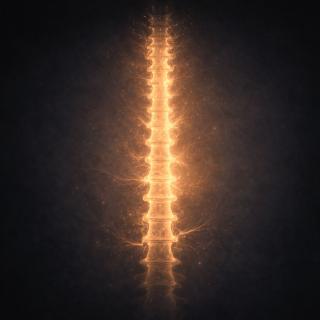
Give a gentle rise to your spine,
Your body.
Just awake,
Not rigid.
And you might let your hands rest somewhere intentionally.
On your legs,
By your sides.
Should feel natural.
Could try palms down if you'd like a sense of grounding.
Maybe try palms up.
A little more openness feels right.
There's no correct choice.
The hands are sending continuous sensory information to the brain.
And that information can help us organize our attention.
So even here,
You might notice whether one position feels slightly less effortful.
Not better.
Just a little cleaner.
Now make a small choice with your eyes.
And they could close.
Could remain softly open.
Soft gaze.
It often reduces visual demand.
And that can make it easier to notice what's happening inside.
There's no right choices.
I'm just noticing what supports you.
And now bring awareness in the body.
Not as an idea.
More of a sensation.
Are you in contact with something?
Is there weight there?
Pressure?
What's the temperature?
And as you notice your body,
You might check and see if there's effort somewhere hiding.
Sometimes the eyes and the jaw.
Sometimes it's in the shoulders.
Sometimes the hands or the belly.
And the forehead.
I'm just sensing in these places maybe the system's trying a little too hard.
We're not fixing anything yet.
We're just settling.
We're still arriving.
Now move towards your breath.
You might notice an inhale arriving gently through your nose.
And the exhale,
Natural,
Easy.
Nothing special required here.
I'm just checking in,
Seeing what feels natural,
Following the rhythm.
And if you'd like,
On your next exhale,
You might allow it to leave even more unhurried.
You might give it a little more space.
We see just a little more time leaving the body on our exhales.
It tends to reduce background noise in the nervous system.
It's not to make you passive.
I'm just noticing maybe reducing unnecessary load just a little.