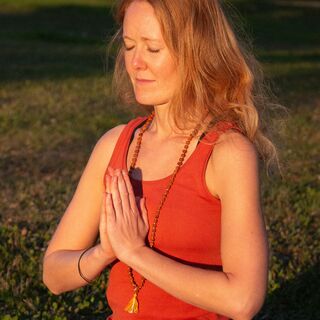
Today I invite you to join me for a little reflection on everyday mindfulness.
Because one of the biggest misconceptions about mindfulness is that it only counts if we have a specific type of setting.
Or maybe sitting in a formal meditation seat.
That's one that comes up frequently with my students.
But I wanted to show you how mindfulness can live inside very ordinary day-to-day moments.
And that's where it.
.
.
Sometimes counts the most.
Those are the small moments that really support us.
So many of us move through the day on autopilot without even realizing it.
We rush from one thing to the next.
The mind already thinks ahead.
We're replaying conversations,
Worrying about tomorrow.
Or if you're like me and you like lists.
Mentally you might be running through endless lists.
But over time,
That constant mental movement can leave us feeling disconnected overstimulated tense even in the body.
And often exhausted.
So everyday mindfulness offers us sometimes micro opportunities to come back to ourselves.
And it's not by adding another long or complicated task to what is already a busy day.
But it's by gently bringing awareness into simple moments that are already happening.
One of the ones I give to my students all the time is about making a cup of tea.
I love tea,
I drink tea a lot,
But I use the whole process from the moment of filling the kettle to the moment where I finally sit and feel that warm cup of tea in my hands.
I use that whole process as a little mindfulness exercise for myself and also for my students.
So think of listening to the sound of water.
Landing in the kettle,
Just connecting with that sound of the trickle of water.
Listening to the click.
If you have an electric kettle,
You might hear that click as you turn it on.
If you've got a gas hob,
You might hear the gas gently whistling through.
You might hear the bubbling of the boiling water.
The connection of the water meeting the cup.
If you've got loose leaves,
Which I have in my cup,
I can see them swirling or in my teapot,
They're swirling around.
Seeing the steam coming out of the cup.
And then feeling that warmth in my hands.
Taking a sip and really connecting with that heat and the taste.
That whole process offered me so many different moments of mindfulness to connect with.
To anchor me to.
And there are other daily things that we do that can be mindfulness practices,
Mindful moments,
Such as washing our hands,
Walking,
Whether it's from one room to the other,
Or walking in a garden.
Taking a breath,
A nice deep breath before we embark upon our next task or we answer a message.
Another favorite of mine is really feeling the warmth of the water on my skin in the shower,
For example.
So these are all small moments.
But they can become so significant,
Really effective anchors throughout the day.
And when we pause to fully notice them even briefly,
The nervous system responds.
It's an opportunity to give the nervous system that space and time no matter how fleeting.
To break away from its pattern of being wired and stressed and on the go.
Constant full speed.
And as your nervous system softens,
Your body softens.
You may find your breathing starts to slow down a little.
You may find your mind becomes a little more anchored and less scattered.
And so when we begin to shift out of the constant mode of doing that we,
Many of us,
Most of us live every single day,
We reconnect to the here and now.
To the present moment.
And the beautiful thing about this type of practice,
This mindfulness practice,
Is that it doesn't need to be perfect.
There's nothing to achieve here.
It's not,
You don't need to start with a completely calm mind.
Another misconception sometimes that I hear frequently You don't need lots of time.
You don't need to feel like you have already switched off to feel the benefits of the mindfulness practice.
Mindfulness is catching yourself when you've switched yourself back on again.
And then returning to your body.
It's the practice of noticing when your attention does drift.
It's the practice of returning again.
And again.
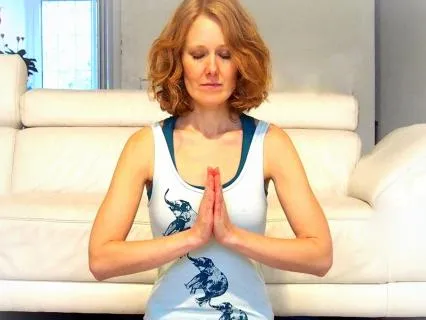
So I thought we could try it together,
Just here,
Just for a few moments.
Let's pause together.
So start by taking a nice gentle breath in.
And feeling the breath leave your body.
And then just notice the feeling of your body where you are right now.
You might tune into any point of contact of your body against the surface beneath it.
Feel the clothes against your skin.
Maybe the temperature of the air on your skin.
And then move your awareness to any sounds that you can hear.
Maybe nearby or even distant.
Without thinking about them or trying to analyze them,
You just notice that they are there.
Nothing to force.
Nothing to change but just being.
With this experience.
Of whatever's happening around you.
And whatever you're feeling a little closer.
To your body and take a final deeper breath.
And then let it go.
So those were just simple,
Small things that we anchored our awareness to.
How did you find that?
So sometimes there are good days,
Others there are more challenging days.
You might find that your mindfulness practice also follows that pattern,
Better days and sometimes difficult days,
But that's okay.
If you can just keep coming back to yourself.
That is mindfulness in action,
If you can just connect.
With what you're doing.
That is mindfulness in action.
And it gives you much deserved and needed breaks.
From what's going on in your head.
The emotions that result from what's going on in your head.
And it just gives you a little stability.
And sometimes more resilience for those moments in life where it's just really difficult and challenging.
These very small moments of awareness can become some of the most supportive moments in our day.
I work a lot with mindfulness meditation.
So you can try some of my meditations here on Insight Time and my collection is growing.
And I hope you found this helpful.
Thank you for listening.
And I'll be back soon.