Passover asks us to remember the journey from constriction to spaciousness,
From narrowness to possibility,
From silence to speech.
It is a festival of survival,
But also of abundance,
Of trust,
Of love,
Of holy courage,
Of liberation,
Beauty,
Power,
Memory,
And becoming.
Our guide for today's meditation comes from Kiddushat Levy's commentary on Parshat Bo.
He notices that in the Torah,
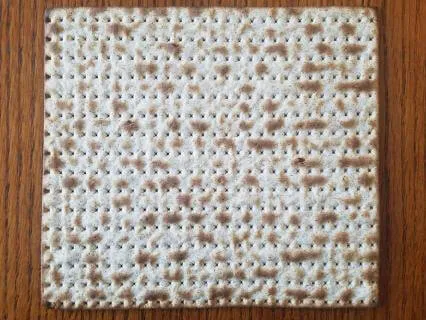
This holiday is usually called Chag Hamatzot,
The festival of matzah,
But we often call it Pesach or Passover.
So why the difference?
Kiddushat Levy offers an interesting answer and in doing so takes us on a journey through the holiday which moves us through the human love story in Song of Songs to its symbolic representation of the love between God and Am Yisrael,
To the wrapping of Tefillin,
Where we literally bind ourselves in love to God's words.
He offers this beautiful image of not just people wrapping Tefillin,
But God wrapping Tefillin too.
And what do you think was on the parchment inside of God's Tefillin?
Well,
God doesn't need to praise God's self,
So inside God's Tefillin are praises of us.
I don't know about you,
But this image was so moving to me that when I read it at first,
It brought tears to my eyes,
Especially in a time when we are on the receiving end of baseless hatred and anti-Semitism.
The image of a God wrapping God's self in words praising us just felt like a gentle embrace.
Through this path,
Kiddushat Levy takes us on a journey in which we understand that the name Chag Hamatzot is the Holy One's name for the festival because by referencing the matzah,
It praises Am Yisrael,
Our trust,
Our readiness,
Our willingness to leave before the bread had time to rise.
God remembers the courage of the people and wraps God's self in attention to remembering goodness about the people.
And Pesach is our name for the festival because it praises the Holy One who passed over the houses of the Israelites and brought them toward freedom.
So Kiddushat Levy sets this holiday up as a sacred exchange of love and of praise.
So the invitation today is to imagine Tefillin,
Not necessarily as an obligation,
But as a symbol asking for our undivided attention.
To what do we bind our awareness?
What do we keep near our minds and our hearts?
And to what do we choose to return again and again?
So take a moment just to settle yourself in.
You can turn off any devices and just make a separation from whatever came before this moment and this moment as you settle in to a moment of meditation,
Of sitting.
And we'll begin with awareness of the body.
Just doing a brief scan without any judgment,
Just noticing what's there as you scan the body from head to toe.
If you come across discomfort,
Just noticing it without the need to fix or change.
Checking in on the different parts of the body and just seeing what happens to be there today.
And sitting silently with body awareness for the next few moments.
And we'll add to that body awareness,
Awareness of the breath.
Again,
No need to change or fix,
Just noticing the breath as it is.
We don't need to tell the body to breathe.
It breathes on its own.
So just allowing that natural breath that happens of its own accord to be your anchor in the next few moments.
And we'll sit with breath awareness,
Returning to the breath if the mind should wander.
And adding to this body awareness and breath awareness,
A loving kindness practice.
If you're called to,
You can take your hand and place it over your heart.
Take a few breaths there.
Calling up a well of loving kindness.
Bring to mind someone for whom it's easy to offer blessings.
And you can offer them blessings of your own.
Or you can offer them,
May you be safe.
May you be happy.
May you be at ease.
May you be safe.
May you be happy.
May you be at ease.
And we'll take a few moments of silence with awareness of body and breath and leaning into this loving kindness,
Blessing practice.
And finally,
With body awareness,
Breath awareness,
And loving kindness as our foundation,
We can even picture that awareness and that practice underneath us like a blanket that we're resting upon.
We'll enter into a little bit of open awareness.
Just noticing whatever happens to pass through the mind.
Allowing it to come and go without judgment.
Just allowing the thoughts to pass as if they were clouds moving through a blue sky.
Forming and dissipating.
And when you're ready,
Just noticing that foundation beneath you once more,
That blanket of loving kindness practice and body and breath awareness.
And the open awareness that hovers above it.
And when you're ready,
Opening the eyes and noticing what's around you.
Coming back to the present moment.
Wishing you a Passover that embodies both Chag HaMatzot and Pesach,
Where we recognize our connection,
Our deep connection to the Holy One of Blessing.
That is reflected also in our connection to others,
Since we are all created in the image of God.
Chag Sameach.