Hello,
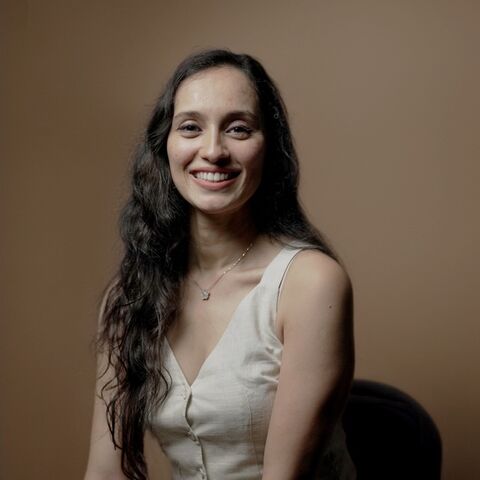
This is Shakti Shilpa and welcome to the guided meditation using the breath to find calm.
Today we will gently explore how the breath can become your anchor point,
A steady place to return to whenever you need calm.
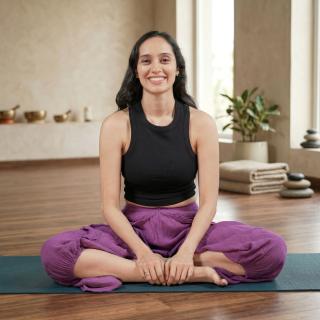
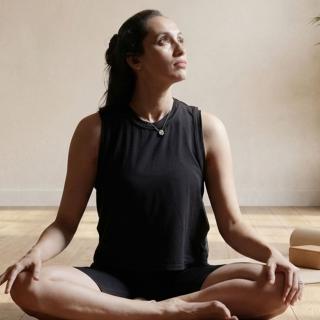
So take a moment to settle into a comfortable position,
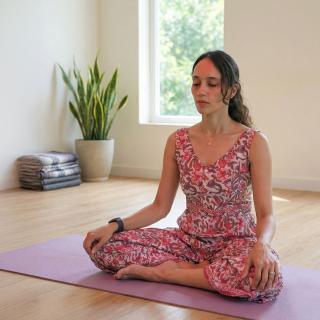
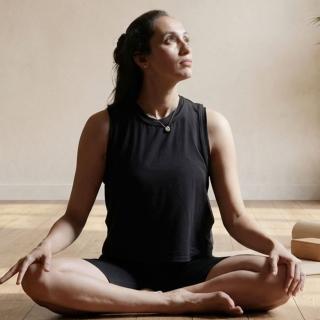
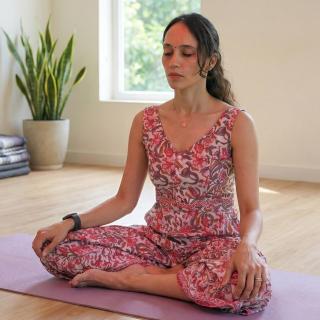
Sit upright with a tall spine or lie down if that feels better for you.
Let your hands rest easily and when you are ready gently close your eyes.
Let's begin with three slow deep breaths together.
With each breath allow your body to soften into the space around you,
Breathing in deeply through the nose and exhaling slowly through the mouth.
Once more inhale deeply and exhale with a lot of ease and one more time breathing in calm and breathing out releasing,
Relaxing and there is nowhere else you need to be right now,
Just resting here.
Now allow your breath to return to its natural rhythm,
Simply notice it,
Notice the gentle rise and fall of the body,
The coolness of the air as it comes in,
The warmth as it leaves and there's nothing you need to change right now,
Just being with the breath as it is.
You may begin to notice that the breath has its own intelligence,
It knows how to move,
It knows how to settle,
There's absolutely nothing you need to do but just be with the breath.
In a moment we will gently guide the breath in a simple pattern,
We'll inhale for a count of four and exhale for a count of six,
Allowing the exhale to be slightly longer than the inhale.
By slightly lengthening the exhale we invite the nervous system to soften and to settle,
There is no need to strain or force the breath,
If at any point it feels uncomfortable simply return to your natural breathing.
So let's begin,
Inhale 2,
3,
4 and exhale 2,
3,
4,
5,
6,
Inhale 2,
3,
4,
Exhale 2,
3,
4,
5,
6,
Inhale 2,
3,
4,
Exhale 2,
3,
4,
5,
6,
Again inhale 2,
3,
4,
Exhale 2,
3,
4,
5,
6,
Continue at your own pace,
Allow the exhale to be a little longer,
A little softer.
Breathing in I invite calm,
Breathing out I let go,
Breathing in I feel ease,
Breathing out I release tension.
Stay with this rhythm for the next few breaths on your own.
Now let go of the counting and return to the natural flow of your breath,
Your natural pace and rhythm,
Just in and out through your nose,
Notice how you feel,
Perhaps the body feels a little softer,
The mind a little quieter,
Just acknowledge how you are feeling in this moment and take a deep breath in and sigh it out,
Wiggle your fingers and toes and maybe roll your shoulders or stretch gently if you like.
When you are ready,
Slowly open your eyes,
Take a moment to thank yourself for being here,
For giving yourself this time,
Carry this gentle rhythm of breath with you as a reminder that calm is always within you,
Thank you.