Hello and welcome,
My name is Vicky from Occella Yoga and today we are going to be doing a yin yoga session called the Still Small Voice of Yin,
A short but sweet yin yoga class.
Before we start,
I'd like to review the main principles of yin yoga for those of you who are new to the practice and as a review for everyone else.
So the first principle of yin is playing your edge,
Coming to a position and playing with it so that a particular area of the body,
What we call the target area,
Is being stressed.
These sensations should be felt over a general area,
The backs of the thighs for example or the spine and be neither too much nor too little.
Don't worry,
I'll always tell you where the target areas are and I'll also make suggestions at the start of each pose so you can adjust it to suit you and your body.
The second principle is to relax the muscles.
Yin yoga is a passive rather than an active practice and we are trying to get into the deep connective tissue of the body.
We'll never be able to completely relax the muscles but the more we can do it,
The more we can basically exercise tissues such as ligaments,
Tendons and joints.
Today we'll be focusing on the third principle which is to stay still for time.
This is a really key element of yin yoga,
Again because we're exercising connective tissue which responds much better to what we call a yin type of exercise,
Pretty much staying still relatively in a particular shape for a number of minutes as opposed to yang forms of exercise which in a very generalised sense are shorter,
More repetitive movements and this works much better on muscles.
The other element of staying still is that we try and settle the mind,
Just being with your experience so ultimately it's a mindful experience.
Of course all forms of yoga can be mindful depending on how you approach them of course but in yin you have the time to do that as we stay in the poses for several minutes.
So today what I'd like to encourage you to do is really try to listen to your body and be with your experience and to aid you in doing that I'm going to keep you in the poses for a bit longer than I usually would,
Setting them for 5 minutes each and what I want you to do is not push yourself to stay in the poses for the full 5 minutes if you feel that's getting too intense,
Then in this case there are 3 things that you can do.
First of all you can back off and go to a lesser edge.
Secondly you can just come out completely or go into a neutral pose so for example child's pose whatever form of that you prefer or you can lie down either on your back or your front.
As a third option you can move into an alternative pose and I'll tell you what those are as we go along.
If you choose to do this then bear in mind that it may move the stress to a different target area and that's completely fine.
The most important thing to remember is to listen to your body and don't just stay in a pose because I've set it for a particular amount of time.
Be mindful,
Be present and heed what your own body is telling you,
That's so much more important.
So let's begin.
The first pose that we're going to do today is dragon.
So start by moving onto your hands and knees and then bring the right foot between the hands.
Push the back leg further back so that you're starting to feel a stretch in the hip flexors of the back leg,
Maybe the quads and you can also play with the front leg so you can keep it between the hands or take it outside the hands so moving the foot to the outside of the right hand.
Our target area here is the hip flexors and perhaps the quads of the back leg.
It can vary in the front leg,
You may feel it on the inside thigh,
The front,
The back or the outside depending on what variation you're in now.
So I'll start the five minutes from here and see if you can relax the muscles,
Listen to the body,
See how it feels and remember that if you're feeling anything that feels like pain then we don't want that.
Make sure you adjust the body so move the legs around,
Move the feet around and then when you're okay,
When you're comfortable,
Close your eyes and really feel that stretch,
Not too much,
Not too little but you can feel it,
You can feel the body working.
Do try and relax the muscles if you can.
Be with your experience here,
Feel free.
As we've been in this pose for around two minutes now,
Perhaps you're finding that the stretch in the back leg is too much so if that's the case,
First try backing off a bit,
Bringing the back leg a bit further towards the centre,
Towards you or perhaps the front leg,
The same,
Bringing it more towards the centre,
No sudden movement.
Now if you find that the sensations are still too intense after doing that then you can come out completely,
Just slowly push back and you can either move into one of those neutral positions,
Child's pose,
Lying on your front or your back or you can try this alternative pose which in this case is called diya.
So for diya you can start in a cross legged position and from here,
Keeping the left leg where it is,
Swing the right foot towards the outside right hip.
You can adjust the front knee if you like so it's a bit more of a right angle with the mat.
Then if you'd like a bit more stretch in the front of that right thigh,
Push that foot more towards the back of the room without pulling on the knee.
From here you can stay seated if you like,
Staying up or you can fold forward rounding the spine.
Play with the legs if you want to,
If you want to increase or diminish the stretch and either leg.
What's really important as I mentioned before is to remember to listen to your body,
We are trying to do things in a yin way and what I mean by that is that we are trying to be with our experience and be gentle with ourselves.
We're not pushing,
We're not striving,
We're listening.
So the five minutes for dragon is up.
If you're in deer just stay where you are for now but if you're in dragon then slowly push back onto your back leg and you can move into a cross legged position if that's ok for you.
Close your eyes and notice any sensations you feel in the target area,
The hips,
The quads,
Maybe even a different part of the body.
Notice the difference between the left side and the right side,
The left leg and the right leg before we move to the other side.
If you're still in deer pose then just bring your body back up to the centre if you're folded forward and you can also cross your legs.
Close your eyes,
Notice your sensations.
Then when you feel any sensations pass in your own time place the feet on the floor with the knees bent and put the hands on the floor behind you.
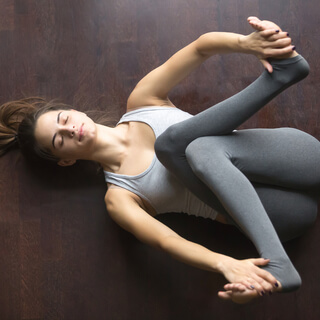
Now you can simply drop the knees on the floor to one side then slowly drop the knees to the other.
Do that a few times,
Perhaps looking over the opposite shoulder if you want to,
Just bringing a twist into it as a counter pose for the legs and the hips.
I'll just leave you to do that for 30 seconds or so.
Now let's move to dragon on the other side.
So again,
Make your way onto hands and knees and this time bring the left foot between the hands.
Release that back leg,
Maybe bringing it closer towards you if there's too much stretch or pushing it further back if you'd like more.
You can keep the front leg in between the hands if you prefer or take it on the outside of the left hand.
You choose what works best for you as long as you can feel a stretch in the front of the back thigh,
That's our target area.
And now we'll start the five minutes.
Four,
Four,
Four.
You you you you And once more now the two minutes is up or at any point during this five minutes if the stretch on that back leg gets Too much first back off So bring that back leg a bit closer towards you or maybe the front foot closer towards you And then if this still isn't really working for you Then you might want to gently move into that neutral position or alternatively transition into D air on the left side So to do this Make your way back into a cross-legged position and this time Keep the right leg where it is and bring the left foot to the outside of the left hip or towards that direction Play with the knees here so that you haven't got any painful sensations You might want to bend them a bit more for example or adjust the position adjust the angle Or if you'd like more stretch in the front of that back leg Then just push that foot towards the back of the room away from you You can stay up if you like or you can fold forward to intensify the sensations in the body Your choice You can stay up if you like or you can fold forward to intensify the sensations in the body Your choice You can stay up if you like or you can fold forward to intensify the sensations in the body If you're in dragon then it's time to come out So just push onto that back leg and make your way very carefully into a cross-legged position This time with the other leg in front of you.
If you're in deer you can stay a little bit longer and then when you're ready please do the same and move into a cross-legged position I'm going to give you a rebound now for about a minute and a half So don't rush if you're still in deer.
Stay a bit longer,
Take your time and then maybe in around 30 seconds or so make your way into the rebound So So So let's do those windscreen wiper movements again Bend the knees,
Place the feet on the floor and drop the knees to the right Then to the left.
Looking over the opposite shoulder if you want to to give a bit of a twist to the spine.
Just loosening up the hips and the legs.
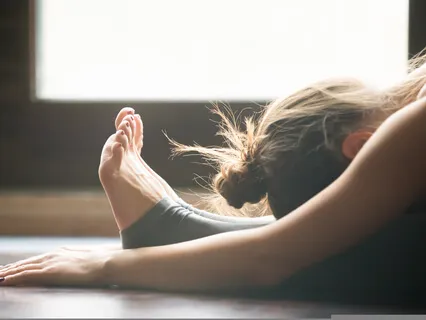
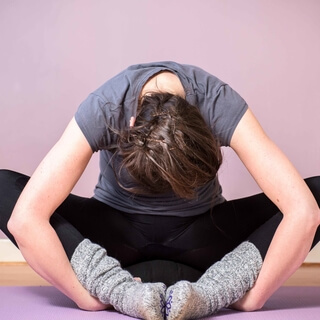
Just do that a few times without rushing Noticing how it feels in the body So the next pose we're going to move into is called cross caterpillar The target area for this one is the backs of the shoulders and the upper back So straighten the legs out in front of you but with a little bit of a bend in the knees Now cross the arms over at the top,
Fold forward and take hold of the outsides of the feet Now you may of course need to move the feet a bit further towards you,
Bending the knees more or move the feet further away.
Choose which one makes you comfortable but you're feeling a stretch in the upper back and the shoulders.
If you're not feeling that stretch so much you might want to try rolling over more or perhaps you could even try separating the feet a bit or changing the position of the hands.
Further down the sides of the feet for example or the tops of the feet or the ankles You choose.
You may even notice a stretch in the backs of the legs as well as the shoulders You may even notice a stretch in the backs of the legs as well in the hamstrings which is great if you're feeling that some will some won't and once you've found your pose we're going to stay for five minutes If you're finding now that the stretch is going too intense in the backs of the shoulders or maybe the backs of the legs then as before first try backing off and going to a lesser edge so perhaps bending your knees or moving your hands to a different part of the foot the ankle or even on the legs themselves Alternatively you can lie down on your back and stay there and your third option again is to move into an alternative pose which potentially moves the stress to a slightly different area but that's completely fine.
If you'd like to do this then let go of the legs,
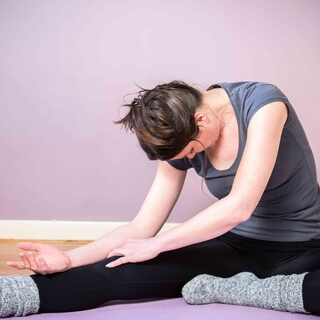
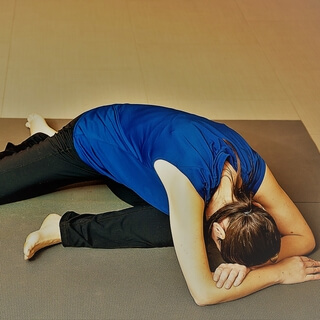
Straighten them out and then just fold over them.
In this pose,
Normal caterpillar we've still got the stretch in the back but it's generally,
Although not always,
Not as much in the upper back and shoulders but more in the lower back although again this varies from body to body Now if you're still feeling too much stretch in the backs of the legs here you can bend the knees but don't take hold of the feet this time then whatever position you're in resolve to stay relatively still relaxing the muscles,
Softening the muscles to get into the connective tissue Listen to your body and if it gets too intense in either pose,
Cross caterpillar or caterpillar don't stay and just move into a neutral position child's pose or lying on your back or your front or even sitting if you want to and if you're still in cross caterpillar then now we're going to move out so let go of the feet or the ankles or whatever you're holding on to gradually straighten out the legs and then just lie down on your back,
Soften the body close the eyes,
Relax the muscles so for anybody in caterpillar whenever you're ready you can do the same thing lying on your back,
Getting as comfortable as possible,
Adjusting the position of the hips if you need to moving the hands,
Moving the shoulders and allowing the body to completely relax relaxing every tissue including the face,
Just noticing,
Noticing,
Noticing the muscles in the face seeing if you can soften them and i'm going to leave you here now with the birds for around five minutes or so so do stay and enjoy,
Relax and really see if you can notice the benefits of the poses in your body your mind,
Maybe your mood if you're interested to learn more about me and my other offerings,
Online classes for example,
Then just visit my ucchale yoga website,
You can find the address on my profile do enjoy your savasana and i hope to see you next time namaste so so so so so so so so so so so so so so so so so so so so so so so so so so so so so so