Hello and welcome,
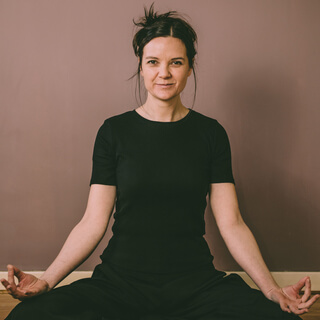
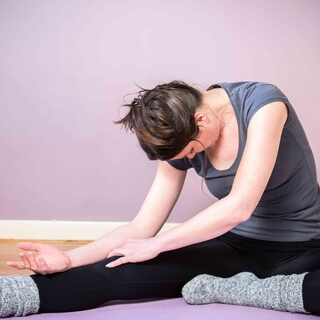
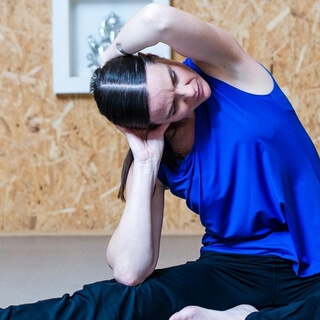
My name is Vicky and I'm a yin yoga teacher here on insight timer.
I provide audio sessions for you to enjoy at home and also regular yin yoga and meditation lives.
So thank you so much for coming and welcome to yin yoga.
If you haven't done yin before then you're in for a treat.
Yin yoga is a form of yoga where we stay in poses for several minutes in relative stillness.
We aim to relax the body,
Relax the muscles so that we can get deep into the connective tissue,
The joints,
The fascia and also stimulate the flow of energy or chi or prana within us.
As these sessions are audio I'll be guiding you into the poses using my voice only and it's really important to remember that you just want to get into a general shape,
Forget about what it looks like and pay attention to how it feels not how you think it should look.
At the start of each pose I'll also give you some suggestions,
Some adjustments that you can make so that the pose suits you and your body.
Pay attention to these suggestions and please do make use of them.
Finally in yin yoga we want to go to a point which is our natural stopping point and then allow the body to relax into the pose.
We do want to feel the body working but we don't want it to be too much and we don't want to be too little.
We want to feel a stimulation in a particular area which I'll point out in each pose.
But we want to be able to stay still in it for a few minutes and it should never hurt.
So if you feel any pinching,
Stabbing,
Tingling anything like that then please adjust or if that doesn't work just come out completely and move into a neutral position on your back,
Child's pose,
Something relaxed.
Finally and just quickly as you know insight time and teachers aren't paid so if you do enjoy this class your donations are more than welcome but not expected.
So let's move on to our session.
So whilst I'm introducing what we're going to do today you might want to start moving into a comfortable seated position whatever that is for you.
Your legs kneeling as long as your back is straight,
Your chest is open but you are still relaxed.
Do sit up on something if you feel like you're falling backwards and feel free to sit on a chair if that works for you.
The breath is extremely important in yoga.
It can help us come into the present in the same way that we would in a mindfulness practice because the breath is always,
Always with us and always in the now.
So you can use it as an anchor to the present moment.
It's also really useful particularly if you slow it down for activating the rest and digest element of the nervous system,
Bringing the blood pressure down for example and calming us.
So what we're going to do today is two different types of basic pranayama.
Pranayama is a breathing technique but with the intention of regulating prana,
Chi or energy in the body.
So the first technique we're going to do today we're going to call young pranayama and the second surprisingly we're going to call a yin pranayama.
So the first one is going to be more making effort,
Active,
Young qualities and the second the yin,
Passive,
Quiet and with a focus on receptivity.
And for both techniques we'll be bringing our attention to the heart space or the heart chakra.
Okay so hopefully you're in your seated position now.
Just spend a few moments doing your final adjustments then close your eyes.
Now for our young pranayama what we're going to do is bring our attention to the area of the heart then we're going to breathe in,
We're going to hold in the heart space then we're going to breathe out.
So let's start by bringing your attention to that area,
The heart and just notice any sensations that you can feel there.
Perhaps you can feel the clothes against the skin,
The chest,
If it's warm there,
If it's cool.
Sensing any tension in the chest and maybe any other sensations like tickling perhaps or tingling and just breathe naturally for a couple of rounds with your attention held in that area.
In and out through the nose for all of these techniques.
Now start to deepen the breath a little.
And we're going to add that hold to the count of two.
So breathe out,
Breathe in,
Two,
Hold in the heart,
Two,
Breathe out,
Two,
Breathe in,
Two,
Hold in the heart,
Two,
Breathe out,
Two,
In,
Two,
Hold,
Two,
Breathe out,
Two,
In,
Two,
Hold,
Two,
Breathe out,
Two.
Just continue by yourself for a few moments.
Keep going with the two and shortly we're going to try with three.
However,
If you feel comfortable with two stay here or if three feels strained in any way go back to two or even one.
So just stop on the two and then breathe in,
Two,
Three,
Hold in the heart,
Two,
Three,
Out,
Two,
Three,
In,
Two,
Three,
Hold in the heart,
Two,
Three,
Out,
Two,
Three,
In,
Two,
Three,
Hold,
Two,
Three,
Out,
Two,
Three.
Continue by yourself to the count of three unless it feels strained.
This is a yang breath and that it's controlled and it's active but that doesn't mean that it's strained.
The breath must be natural,
Easy and if you feel at any point like you're getting out of breath go back down to a lower count or your normal count.
And now if you wish to move to four then let's start together or stay where you are.
Breathe a natural breath then let's start.
Breathe in,
Two,
Three,
Four,
Hold,
Two,
Three,
Four,
Out,
Two,
Three,
Four,
In,
Two,
Three,
Four,
Hold,
Two,
Three,
Four,
Out,
Two,
Three,
Four,
In,
Two,
Three,
Four,
Hold,
Two,
Three,
Four,
Out,
Two,
Three,
Four.
And again continue for around 30 seconds or so using this breath if it's comfortable and if it's not go to a lower count or to your natural breath.
And after your next out breath then everybody go back to your natural breath.
But continuing to keep a light attention on the heart.
Now this time without making any active effort with the breath,
Keeping it passive,
Keeping it yin,
Keeping your attention on the heart and just allowing the breath to be.
Through breathing a calm breath we can also calm the system and therefore calm the mind.
So now in our yin pranayama where we're simply allowing the breath to be just notice being receptive how the quality of the breath in this yin breath is compared to what we were doing before.
Keeping your attention on the heart I'm going to leave you for around 40 seconds just breathing softly,
Naturally,
Calmly.
And after the next out breath.
Let go of your attention and just let it become more general.
Noticing,
Sensing yourself sitting here in this space.
Feeling the body,
Noticing the body,
The weight,
The touch.
So we can move on to our physical practice today combined with this pranayama to get that chi,
That prana,
That energy flowing smoothly,
Easily and freely and helping our bodies and minds to become healthier and happier.
We've been sitting for a while so let's move a little bit actively.
So first open your eyes and make your way onto your hands and knees.
We're just going to do a couple of cat cows combined with our yang breath.
So from your hands and knees as you breathe in through the nose arch the spine head up,
Belly down towards the earth.
Hold and as you breathe out,
Curve the spine,
Head down,
Push into the hands,
Belly up towards the sky.
Breathe in as you slowly arch,
Hold at the top,
Breathe out and curve.
Breathe in as you slowly arch,
Hold gently,
Breathe out as you curve.
Breathe in,
Arch the spine,
Hold at the top,
The breath and the pose.
Then breathing out as you curve the spine.
And then bring the body back to neutral,
Hands and knees.
This time we're going to bring the leg into it.
So start by stretching the right leg out behind you,
Toes tucked and with the foot on the floor.
As you breathe in,
Stretch the leg out and up behind you.
You don't need to go too high,
Just a bit of an arch in the spine.
Then hold.
And as you breathe out,
Bend the knee bringing it towards the nose as you curve the spine.
Continue in your own time,
So breathing in,
Leg goes out and up,
Bit of an arch in the spine,
Hold.
And as you breathe out,
Bringing the knee towards the nose,
Curving the spine.
Do that a few times in your own time,
Keeping the core quite activated,
Particularly the area around the hips,
The lower back,
To protect the lower back.
And remember we're not actually aiming to bring the knee to the nose,
We're just bringing it towards the nose so that we can curve the spine.
Make sure to do it with the breath,
Slowly.
This is yang in that it's movement,
But I don't want you to overdo it.
Then after your last knee towards nose,
Your last curve,
Bring the knee down,
Back into neutral.
Move the hips a bit if you like.
Then we'll go to the other side.
So stretch the left leg out behind you,
Keeping the foot on the floor for now.
Breathe a natural breath.
Then as you breathe in,
That leg is going up,
A bit of an arch in the spine,
Then hold.
And as you breathe out,
Curve the spine,
Bring the knee towards the nose.
And again in your own time,
Breathing in,
Leg goes behind you,
Up.
Keep the core strong,
Activate the muscles in the hip,
The lower back,
And hold when you are up.
And then as you breathe out,
Bringing the knee towards the nose.
And again,
I'll leave you to do this side by yourself,
Slowly,
Actively.
Again.
And after the last curve of the spine,
Bring the knee back down and move into child's pose,
Just to rest for 30 seconds or so before we move into our short yin practice.
Okay,
So move back onto hands and knees and let's start with our yin.
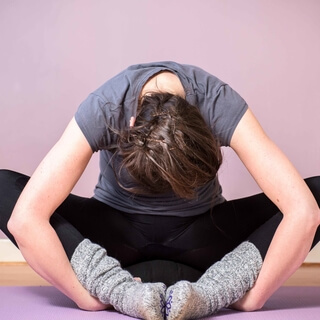
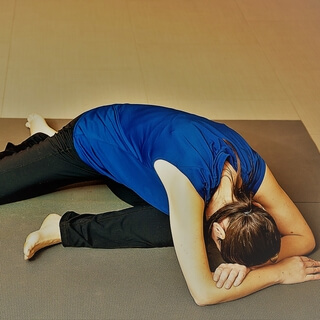
First we'll be moving into frog position.
So similar to child's pose,
But separate the knees to your natural stopping point,
Then fold forward with the arms out in front of you,
Just for now.
Now we want to feel a mild to moderate stretch on the inside thighs here,
But we're also going to add a stretch in the arms as well.
So from here,
Rotate the left arm so the palm is facing up and thread this arm under the right.
You can bend the right arm if you like and put the hand on the floor or keep the right arm out to the front or maybe to the right.
We want to feel a stretch in the back of the left arm,
Going into the shoulder.
As always with yin yoga,
This shouldn't be too much,
But we do want to feel it.
And if that's not the case for you,
Play with the position of the arm to either accentuate or diminish the stretch.
So you can try pushing the arm further under,
Further through for more stretch or bringing it back for less stretch.
Alternatively,
Bend the elbow to diminish the stretch.
As I mentioned already,
The top arm you can have out in front of you,
Out to the side,
Particularly if there's a pinching in the shoulder,
Or you could perhaps bring it behind your back so you've got a bit of a twist.
Choose your option.
Also pay attention to the amount of sensation in the inside thighs.
Playing with the position of the knees to get the stretch that you want,
Opening them for more,
Closing them for less,
And you can also separate the feet if you would like more opening in the inside thighs.
Not too much,
Not too little.
Then allow yourself to relax into the pose.
Trying to aid this energy flow,
This chi flow,
And this calm sense of being.
Let's also allow the in breath to come in again.
This time keeping your attention in the area where you're feeling the sensations.
That might be the inside thighs,
The shoulders,
The arm.
Choose one,
Or maybe even allow your attention to move from these different places.
Breathing this natural soft yin breath.
Noticing the quality of the breath.
Okay let's move to the other side.
So if that right arm is up,
Bring it down,
Let it rest on the floor.
Unthread the left arm,
And also rest this for a few moments.
Check in with the shoulders,
The arms.
Did you over stretch?
Did you under stretch?
Bear this in mind when you go to the other side.
Sometimes you can't tell until you come out of the pose.
So notice now.
So before we do the arms,
Bring your attention to the legs.
How do the inside thighs feel?
Do you need to separate them a bit more for more stretch?
Bring them a bit closer together for less.
Or maybe separate the feet for more.
This time we're going to take the right arm under the left.
So again,
Rotate the arm with the palm up.
And thread the right arm underneath the left.
So we want to get that nice stretch in the back of the arm and the shoulder.
Play with how this feels.
Perhaps pushing it further through for more stretch.
Moving it back for less,
Or bending the arm.
Again playing with the top arm,
Having it out on the floor,
Or maybe more to the side.
Straight arm,
Or bent arm,
Or bringing it behind your back again.
If you're finding there's a pinching in the front of the shoulder,
Of either shoulder,
Then you might want to try rotating the arm to move around this pinching sensation.
Then when you've found your pose,
Check in your legs,
Your arm,
Your shoulder,
And allow yourself to relax.
Moving back to the yin breath,
The natural passive breath,
Passive body,
Relaxed for another two minutes.
Keeping your attention on a part of the body,
You can feel the arm,
The shoulder,
The inside thighs.
Or maybe allowing your attention to move naturally between these different areas.
So two minutes is up on this side.
So now bring the top arm down if it's behind your back.
Unthread the arm on the floor.
Bring the knees closer together,
And then move into child's pose.
With your arms by your sides,
Resting the arms,
Resting the shoulders,
Allowing the body to relax.
Moving your attention to the breath,
To the heart area as we did at the start.
And I'll leave you with the breaths for a minute,
Just to notice the effects.
For the next pose,
I'd like you to start by lying down on your front.
We're going to move into Sphinx or Seal.
So bend the elbows so that they're on the floor under your upper body.
Bring the elbows a bit further in if you feel like you're activating the muscles in the shoulder.
Your shoulders can shrug in yin,
It's fine.
Sphinx and Seal opens up the chest and adds a compression to the lower back.
If you're finding that the compression is too much,
However,
Then by all means move the elbows a bit further forward away from you to decrease the arch in the spine.
If the compression means a pinching in the lower back,
Then play with the position of the legs.
Opening the legs can stop it,
As might perhaps for your body,
Bringing them closer together.
If you're happy here,
If this is working for you,
Not too much,
Not too little opening or compression in the spine,
Then stay here.
However,
If this isn't doing much for you and you want to go up higher,
Then put something underneath the elbows like a block,
Book,
Cushions.
See how that is,
Relax into it,
See how that feels.
If that's still not high enough,
Either increase the support so it's higher or move into Seal.
So straightening the arms and going up onto the hands.
If it's too high,
Then it's too high,
Just come back down.
We don't want it to feel too active,
We don't want it to strain.
We want to go to the place that suits you,
Your body,
But where you can feel the body being activated.
Relax the muscles,
Relax the bum,
The hips,
Soften.
And again,
Let's come back to that Yin Pranayama that we were doing at the start and in the previous pose.
Bringing your attention to where you're feeling the strongest sensations in the body.
Maybe the opening in the chest or another part of the torso,
The front of the shoulders,
The lower back,
Where is it for you?
And you're breathing your normal,
Natural breath but keeping your attention in that target area.
Noticing how it feels there and feel or imagine as if you're breathing from that place,
In that place,
But a normal,
Natural breath.
And if at any point you feel like it's too much,
Then do just come down,
Lie on your front,
Lie on your back.
Okay so now we're going to move into our Shavasana.
Come down from your Sphinx or your seal to lie onto your front.
Just going to give you a minute or so here to release,
Relax the back.
Perhaps you might even want to bring the right knee up on the floor next to you to release the spine.
Do it slowly,
No sudden movements.
Now let's bring that knee down and this time bring the left knee up on the floor besides you and we'll stay for around 20 seconds.
One more time,
Just like that.
Now if you choose to stay here lying on your front that's fine,
Or if you want to move gently onto your back,
Maybe bending the knees,
Putting something underneath.
Perhaps you like to put something under your head,
Or maybe you might want to sit.
You choose,
Make your final adjustments,
Put something over your eyes if you wish,
Put a blanket on,
Socks,
Relaxed,
Warm,
You know what makes you comfortable.
And I'm going to leave you now for your own Shavasana.
The birds will be singing to you for another 10 minutes or so,
So feel free to take all of that time,
But at least a few minutes.
And please don't rush to come out,
Take your time when you do.
Thank you so much for coming today,
Check out my profile for who I am and what I do.
Enjoy your Shavasana,
And until next time,
Namaste.