Hello again,
Welcome back if you've been before and welcome for the first time if you haven't.
If you've done yoga before then you should recognise quite a lot of the poses,
But in yin yoga please bear in mind that we really try to stay still in them.
We also stay in them for a number of minutes,
Approximately three minutes per pose,
So it's very important to spend a bit of time adjusting the pose so that it suits your body.
I'll give you some adjustments,
Some ideas for there,
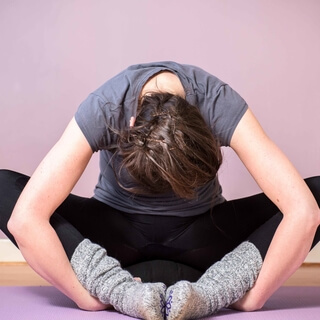
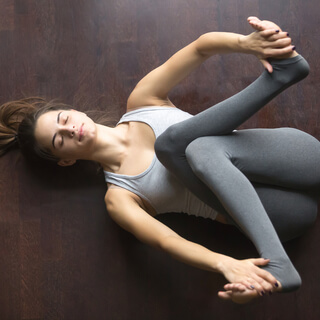
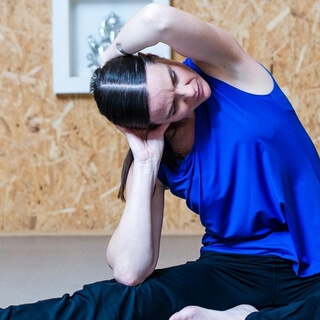
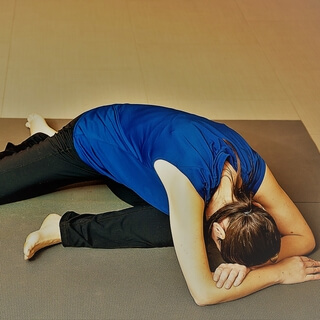
And if you end up looking actually very different to the image of the pose either on YouTube or my blog,
Then that's not a problem whatsoever.
I don't want you to try and look like the teacher,
I want you to focus on what you're feeling in the body.
So today we're going to be doing a class on letting go,
Encouraging this often difficult quality within ourselves from an energetic standpoint.
This class will therefore be focused on the fronts of the arms and shoulders,
And then also the backs of the arms,
The upper back and the back of the shoulders going into the neck.
The reason we're focusing on these areas is because according to traditional Chinese thinking there's a flow of energy in these places related to letting go to your attachments,
Not clinging onto your experience or have certain expectations but allowing it to be.
So as well as the physical benefits of stretching out these areas that can often be tense and tight,
The idea is that we can also encourage these qualities within ourselves by promoting a smooth even flow of energy,
Or chi,
In these particular regions of the body.
Props for this class.
If you've got a blanket then please take that or perhaps a towel.
If you have any blocks then they could be useful as well,
Or books can also work,
Particularly thicker books.
You may also need a sock.
So let's begin.
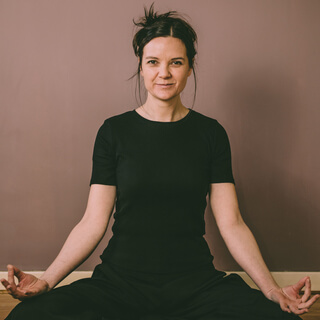
Move into a comfortable seated position,
Kneeling,
Cross legged or whatever suits you,
As long as your back is straight and your chest is open,
That's important.
If you find that you're falling back then sitting up on something can help you tilt your hips forward as well.
And once you've found your position,
Close your eyes,
Bring your shoulders up and back and then relax the shoulders.
Your hands can be on your legs or maybe between the legs,
Palms up,
Palms down,
Or you can have them cut in the middle,
Whatever feels best for the shoulders.
Now bring the head down a little,
Keeping the head straight,
Closing your eyes or softening your gaze,
Not focusing on anything in particular.
Then just breathe your normal breath.
We're going to start with an exercise that's based on a Qigong breathing technique called healing sounds,
Which is actually connected to those energy channels that I was talking about before.
So first,
Breathe out completely.
Then breathe in through the nose and as you breathe out through the mouth make a sssss sound.
Breathe in again.
And out.
In.
And out,
Still using that sound.
In,
Slowing down a little.
And out,
Using ssssss.
In.
And out.
Then continue to do this by yourself and do it eight more times.
Keep the shoulders relaxed and the body upright.
Keep the breath relaxed.
This breath is said to release tension,
To release stagnation.
Notice the body soften and relax as you breathe out.
And after the eighth out breath,
Then stop.
Stop the healing sound breath and go back to your normal breath,
Noticing any difference,
If there is any.
And when you're ready,
Then open your eyes and we're going to stay seated.
So you can stay in the position that you're in or you can change your position,
It's your choice.
And our target area where we want to stretch in this first pose,
Seagull,
Is the front of the wrists.
So then bend the elbows and place the fronts of the hands on the sides of the rib cage,
So the wrists are also bent.
The hands can be under the armpits or they can be further down the sides of the body.
Move them around to find a stretch on the front of the wrist that isn't too much or too little,
But enough that you can stay in for two minutes or so,
Feeling a good stretch but no pain.
If moving them up and down your sides isn't really working,
Try moving your hands more towards the back or forwards onto the front of the torso.
If you feel you want more stretch in your wrists,
Then you can also try moving the elbows or the wings back a little,
Or you can move them forward for less stretch.
Play with that and find where you have a good amount of stretch that you can stay in for a little bit longer.
Then close your eyes and experience.
Notice where you feel the stretch and if it feels different from one side to the other side.
Is there more on one side?
Don't push.
Be gentle.
We're going to do a couple of wrist stretches today,
Which are particularly useful if you use computers a lot,
If you use your hands a lot actually.
Bring your attention to the sensations,
To the feeling in the wrists.
Keep the shoulders relaxed.
Okay,
So on the next out breath,
Gently bring the elbows forward,
Take the hands out,
They could be very fragile,
And let them rest on your thighs,
Palms facing up.
And without moving yet,
See if anything is happening in the areas that we've stretched.
Can you feel any sensations there?
Any warmth?
Cool?
Prickling?
Anything at all?
And then when any sensations pass,
If you're still feeling them quite strongly,
Then stay here for a bit longer.
But if they're starting to pass now,
Then make small movements,
Circling the wrists one way,
And then circling them the other way.
Slow movements,
Noticing the movements.
And you might feel some clicks,
Hear some clicks,
And that's absolutely fine,
In fact that's good.
We're releasing some of those patterns of tension that you might have in the wrists,
Especially if you use your hands a lot.
We're going to stay seated for the next pose,
But you might want to change your seated position again.
So we've done the fronts of the wrists,
Going into the fronts of the arms.
Now we're going to work on the backs of the arms and the backs of the shoulders in Eagle Arms pose.
So first,
Bring both arms straight up in front of you,
Palms facing down.
Now cross the right arm over the left,
As far up the arm as is possible.
Now bend the elbows,
And what you want to do is to bring the hands towards each other.
Here you can hold onto the wrists,
Or bring your palms together.
Another option is to hold two ends of a sock in both hands.
Any of these options is fine,
As long as you feel a moderate stretch in the backs of the arms and shoulders that you can stay in for a couple more minutes.
If you want less stretch,
Then bring the arms down.
If you want more stretch,
Bring the elbows up.
A stretch in the back of the shoulders is what you want to feel,
But if you're feeling a pinching or stabbing sensation in one or both of the shoulders,
Then bring the elbows down,
Or move the shoulder blades towards each other at the back.
Now close your eyes again,
And try to differentiate between stimulation in the body and something that's painful and hurting you.
That's your body's way of saying you shouldn't be doing something,
Challenging yourself,
But not hurting yourself.
Yoga is not just about the physical practice,
About what we do physically in the poses,
But also about taking the ideas off the mat and into your life.
So challenging yourself,
But not hurting yourself could be seen as a skill that's useful for life,
For your everyday life.
In Yin Yoga,
We try to stay still for quite long periods of time,
Which can be quite difficult.
We're not used to staying still and quiet,
But by doing this,
We're again challenging ourselves,
Doing something that isn't easy,
But we know it will benefit us.
And by doing this on the mat,
We're training ourselves to do it off the mat,
Helping us to be more patient in difficult situations,
As well as get the most out of them,
Rather than just avoid them.
So we're going to come out now,
So just uncross the arms gently,
And before we go to the other side,
Then let the hands rest on the legs.
Bring your attention to the areas we stretched and see how they feel.
As we had the right arm on top of the left arm,
Notice if it feels any different from the left and right.
In the left shoulder.
In the right shoulder.
The left arm.
The right arm.
So now we're going to move to the other side.
Again,
You might want to change the seated position.
If you're cross-legged,
Then you can bring the other foot in front,
Which can feel a bit weird,
But we're going for balance here.
Again,
Bring the arms up and cross them as far up as you can without straining.
Now bend the elbows,
Hold onto the sock or the wrists,
Or bring the hands together,
The palms or the backs of the hands.
Bring the elbows up for more stretch in the back of the shoulders and arms,
Or bring them down for less.
This may also help if you're feeling that pinching sensation in the shoulder,
Or you can also try moving the shoulder blades closer together.
Another option is to move the arms to the right or to the left.
And again,
Find a place where you're challenging yourself,
Where you can feel the stretch in the backs of the arms and shoulders,
But can stay in for around two minutes or so.
Now close your eyes and you can bring in that healing breath sound again if you want.
The breath that we did at the beginning.
Try and help you get deeper into the pose.
Experience what's happening in your body.
Letting go of any ideas or anything that you think you are supposed to be doing.
Actually noticing what you're doing.
Using the healing sssss sound,
Or perhaps just your normal out-breath if you prefer,
To relax into the pose more.
Notice if you're clenching,
If you're holding any tension anywhere,
And if you are,
Breathe into that area.
Are you tensing anything?
What?
Breathe into that area.
As I mentioned before,
What we're trying to do here is challenge ourselves,
But not overdo it,
Not to force.
So do listen to your body,
And if you find at any point that it becomes too much,
Then adjust the pose.
Perhaps in this case bringing the arms down a bit,
Or simply just come out completely.
Always remember that with yin yoga poses.
It's so important.
And we're going to come out.
So let go of the hands,
Or the wrists,
Or the sock,
And uncross the arms gently.
Again,
Let the hands rest on the legs,
Close the eyes,
And notice the effect physically,
But also energetically.
What I mean by that is perhaps you might feel something that feels like energy moving through the body.
So maybe a tingling sensation for example.
It could be anything.
It's different for different people.
It can also come up as an emotional response when we're doing yoga,
Particularly in yin yoga,
Because it's slow,
And we're in the poses for quite a long time.
Irritation at me for keeping you in the poses for so long for example,
Or anger.
Perhaps it yourself,
Because you feel in your own mind that you're not doing it quite right.
Or it could also be boredom.
Many emotions can come up,
And if that happens then just remember that that's a normal reaction.
And instead of attaching yourself and clinging onto these emotions,
It can be useful to simply note them.
Anger,
Frustration,
Boredom.
And then just let them be.
Not allowing them to take over,
But just letting them be there.
And then to come out,
Just shake out the arms,
Using the whole arm,
Shaking the shoulders as much as you need to.
Do that on both sides,
Before we move into the next pose.
Now we're going to move into a squat position,
And stretch the insides of the wrists this time.
So from here,
Move into a squat position,
With your legs reasonably wide.
Some people can put their heels on the floor,
But other people,
Like me for example,
May not be able to do that,
For a number of different reasons.
So this is where blocks or books come in handy.
You can put them underneath the heels,
If you're a bit wobbly too.
Okay,
So now put the hands on the floor,
In front of you,
With the fingers pointing towards you.
Separate the fingers,
And what we want is to feel a stretch on the inside of the wrists.
So you might need to put a bit of weight on your hands,
By bringing your body forwards a bit.
Or if you want less,
Of course,
Bring the weight back a bit.
You can also move the hands,
So you can walk them a bit further forwards for more stretch,
Further back for less.
And then again,
Move the position of the body,
Depending on any weight you want to add.
And where that stretch on the wrists is not too much,
Not too little,
Your natural stopping point.
And again,
We're going to stay in this pose for approximately two minutes.
So when you've found your pose,
Then resolve to stay still.
These wrist stretches are really good if you're using your hands a lot.
And this pose is in fact moving them in the opposite direction from when you're using a computer.
Drop your head,
And if your mind wanders,
If you start thinking about things,
Or again,
If emotions come up,
Just note them.
Thought,
Irritation,
Sound.
Then bring your attention back to where you are,
Feeling that stretch.
Okay?
So then we're going to come out gently now.
Your wrists may well be feeling fragile,
So be careful.
As we push back onto the heels,
We fold the body forwards towards the floor into Child's Pose.
Palms facing up,
Hands on the floor.
Don't move yet.
Okay?
And then when you feel any sensations pass,
You can start making small movements.
Flexing and extending the wrists.
Circling them one way.
Small to start,
And then getting bigger and bigger.
And then circling the opposite direction.
And now we move into Shavasana.
So if you like,
You can do this lying on your front this time.
Bending your elbows and resting your head on your hands if it's comfortable for you.
If it isn't comfortable and you want to lie on your back,
That's fine.
Now take a deep breath in through the nose,
Then breathe out of the mouth,
Letting the body soften,
Letting the body relax.
Deep breath in,
Then out through the mouth.
One more.
Deep breath in,
And out through the mouth.
And then allow your body to relax,
Taking in the effects of this short practice,
This slow,
Passive practice.
Noticing your normal breath just moving in and out of the body.
So please stay here for as long as you want to.
And when you do get up,
Then try not to do it too suddenly.
Try to take this,
Hopefully,
Sense of ease and calm into the rest of your day.
Thank you again for joining me.
Have a wonderful day,
And Namaste.