Hello,
Welcome to another What Is Now?
Experience.
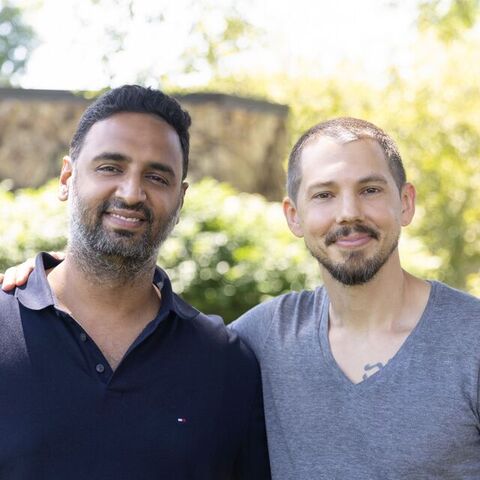
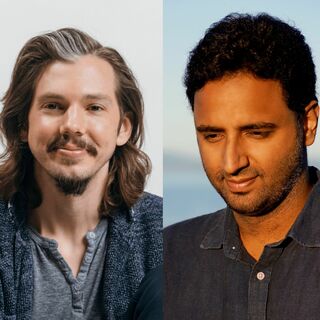
I'm Charles Freely and I'm here with my good friend Sakib Rizvi.
If we had to be categorized,
We're both investigators of consciousness with training backgrounds and professional experience in the world of psychological and spiritual healing.
Each of these sessions is an adventure of the present moment.
Sakib and I begin each session by sitting in silence for one minute and then simply see what arises now.
We have no plan,
No prepared material or concepts to cover,
But are placing our trust in the wisdom of this right now experience.
This is an expression of our shared philosophy of healing.
If we can only let go of our desire for the present moment to be a certain way other than it is,
Then we can find the unexpected answers of what is actually now.
So if you will join us,
We will begin with one minute of silence and you can use this minute in whatever way you like.
With your eyes closed,
Sitting,
Eyes open,
Standing or walking or driving in your car.
We only ask that you return to what is actually happening right now in this moment to reset the momentum of the day and open up to just this.
After this minute,
Sakib and I will explore whatever arises between us.
We identify themes of our exploration as we go and then Sakib finishes with a short guided meditation based on the themes that arise in the session.
And now let's enter one minute of silence together as we explore what is now really.
I'll hear a bell to start and end this one minute of your day.
I was just noticing the relief of returning to,
You could call it time,
The I was just noticing the relief of returning to,
You could call it stillness or just returning to nothing.
Just noticing the feeling like there's a kind of a rush of a day of stuff that is maybe on the surface of something and get like caught up in that rush of stuff that goes throughout to the end of the day.
And the possibility of at any point being able to drop beneath the all the that movement down to something that is exactly the same as earlier in the day or maybe at any point in time that is just totally still and is unmoved by any of that rush.
But it takes remembering to like slow down and come back to it and it's always there.
And to me,
It was,
I was noticing how much of a relief it felt like to remember and just be in that space.
And I noticed the desire to stay there even longer.
And is that like a choice for you,
In which you are going through the day?
Do you find time to make that choice and just come to the moment?
Or is it when your day is over,
When your work is over,
Then it happens?
Or do you do that regularly during the day as well?
It seems like that's,
That's probably what I would call,
Quote unquote,
The practice of maybe all of this stuff that we're talking about.
To me,
It's just making that more and more of a of an automatic reflex that I feel to remember to come back to that throughout the day.
Like that's the life changing practice for me.
I see like maybe a meditation practice in the morning is like is bathing in that in some way and making it sort of developing your intimacy with it for that day.
And then the real practice is throughout the day to continually,
As many times as you can,
Remember that thing and come back with it and sort of maintain that that line at the bottom throughout the day.
So I would say yeah,
That probably just makes up the essence of it's like the main thing that I'm trying to do in life,
I would say is just remember that as much as I possibly can.
It makes me think of the,
We might have talked about this before,
It's at least my understanding of the most direct translation of that word sati,
Which has been translated as mindfulness.
But that may be a kind of more basic or pure translation would be something like to remember or to keep in mind.
And that's how I've interpreted it anyways.
It's just like,
Just the effort it takes to remember something that's always there.
And it's so easy to lose sight of with all of the movement of life,
And all of the constant like development of the individual personality,
The continual effort to remember that thing that always was beneath all of that stuff and still totally is there and it's in its most pure form,
If I can only remember to keep slowing down and coming back to it.
That's funny.
Hold on one second.
Just for anyone that is listening,
Something that just happened to me is I got a phone call and came in to the space with us together.
And it moved Sakib off my screen and into a call,
Which interrupted the momentum of wherever I was a few moments ago,
And now we're here.
And so in this moment,
There's the possibility to allow that potentially to disrupt me in any way,
Or to just see that as another,
Essentially the same manifestation of this and there's nothing wrong with it.
And it is equally the same as everything else.
And my opportunity is to practice on that and not see that as a distraction or movement away from what we're really doing here.
And maybe even as a teacher,
Like that phone call just came in to teach me to remember to not react to my experience,
To not interpret it in some sort of way that is negative,
But just to be open to it.
And that even can be a reminder to me to get out of the way right now and stop and just like experience what's happening.
Also it's just kind of nice.
I just noticed that phone call was from my wife's brother,
Chad,
Who is a really awesome person and I haven't talked to him in a while and I look forward to talking with him later.
I've gone in a bunch of different ways and have just shared a lot.
What are you hearing?
No,
I,
As this phone call came for you,
I just,
A thought popped in my mind and I was thinking that how to experience the now when there is a disruption.
Usually we experience the now and you know,
There is this,
A good feeling about the now when someone says,
Okay,
Let's get into the now let's be mindful.
It's like a beautiful feeling in which we start observing the beautiful aspects of existence,
Maybe nature,
Maybe birds,
Mountains,
Trees,
Our own presence.
But now let's say if there is a disruption in that and something comes in,
Which is like something like a surprise or rather a shock and how do we,
How do we experience that now?
So that's like all together a new exploration.
And I'm sure that,
You know,
We are so fortunate to live in parts of the world where we live in peace,
But there are so many parts of the world where there is a lot of disruption.
There is violence,
There is everyday something or the other happening.
So now also the question comes that how do they experience the now and how is their experience different from our experience who are not experiencing that disruption on a day to day basis?
Yeah,
It's a very interesting question.
And usually what happens is that what I see and what happens to me as well is whenever there is a disruption like that,
Then the awareness goes away from the now to a thought that why is this happening?
You know,
Something like why is this happening or this shouldn't be happening because we kind of are fixed to an idea of the present moment that the now should be like this.
But that actually takes us away.
So maybe our practice can evolve if we can,
If that happens and still we are able to be with it and totally experience it in the moment.
What do you think about that?
Yeah,
So maybe a really valuable opportunity to notice the automatic thinking mind is in that situation.
Maybe if you're in a place of stillness and relaxation and openness and silence,
It's easier to maybe notice the thinking mind and to step back from it.
You provided a visual some time ago,
It might have just been with you and me,
I don't know on the podcast or not,
Of this maybe meditative experience of kind of dropping back.
I'm holding my hands together and gradually moving them apart.
And there's this experience of dropping back maybe from your thoughts or sensations and just kind of feeling yourself as this pure witness of everything.
And maybe in silence or even in conversation here together when we feel in the flow of things that might be easier to kind of drop back into that together.
But I wonder if something like that,
Something that is felt as a disruption or is not related to this thing that's happening right now,
Which certainly that call could have felt that way and did in the moment feel that way.
I wonder if that triggers,
Especially like the entrenched thinking mind to see that because I noticed immediately it was like,
I always put my phone on airplane mode before this and I even remember doing it.
So what's happening here?
And I go through the steps of what could possibly be different about this time and like,
Oh shit,
Now this thing is interrupted and hasn't happened before here.
How am I going to respond to this in the moment?
And that's all me thinking about it and interpreting.
And it feels to me like we've created this really sort of beautiful situation for each other where there's talking about like a reflex of returning to now.
Like,
Oh,
Well,
We're here.
There is no real plan here.
There's nothing that we're supposed to be talking about.
There's nothing that anything is really distracting us away from.
So this is just as importantly something that we can talk about as anything else.
And I can just use this as an opportunity to explore together.
What's it like to receive a phone call in the middle of something that feels really important to you and that you have people listening and you're worried maybe about what they are going to think about this experience.
And so we can kind of peel back the layers and look at that together.
Like,
I'm wondering what it's like for the listener right now hearing that initial thing happening if there was any pause they might have been interpreting in their mind like what's going on here.
And then what it's been like for us to explore this openly together.
It's making me even think of other things like a dog barking or other sounds or things like that.
I know that my dog has barked in the past during your guided portion of the sessions.
And I've wondered what that experience might be like for the listener.
They're like,
Can't you edit this out or something.
And which you could.
But I guess and so it's maybe a valuable time to address this now.
That to me feels like it's maybe equally as important as the words that you're speaking there in the moment because it's no different.
Ultimately,
It's just what's happening now.
And the dog barking might even be a teacher again,
That is helping you to notice your resistance and your desire for this moment to be a particular way.
And then it can be a teacher to help you return to Oh,
That's also equally just this.
No,
I'm so I'm so thankful to this teacher today,
You know,
The phone call that came for you because it gave us a totally new experience of how to experience the now.
And previously,
We would not have such kind of interaction.
And it would be like,
Experiencing it in a certain way.
And that has been beautiful.
But this is even more exciting that something new has come up for us today.
And see that how we experience the now.
Because it reminds me of a question that someone asked me because I was doing a session on on the present moment and now and awareness.
And that person asked,
I don't remember the name of that person,
That person asked that,
Okay,
Let's say you're saying that now is beautiful.
But what if my now is not beautiful?
What if I'm not liking the now then why should I stay in the now?
And that was an interesting question.
And then I remember answering to him something like I was like,
Kind of taken aback from that question.
I was thinking,
You know,
It made me think that,
Okay,
You know,
That is a very valid question.
And how,
How do how do we look at such a situation where someone is experiencing pain in the now?
And then it made me realize,
And I answered to him and made me realize that maybe the pain is there.
However when we start thinking about it,
Then it turns into suffering.
You know,
It's maybe our idea,
The label or judgment that we give to that pain that,
Okay,
This now,
In this now I'm experiencing pain in my knee.
But what do I,
Like what do I label it as?
If I label it as something terrible,
That will make me suffer in this moment.
Oh,
This is something terrible happening to me or,
You know,
But maybe we can label it as something as a teacher or,
You know,
Something that can help us work on ourselves and maybe as an opportunity to start looking at our own health and start taking care of our body.
So in that case,
It becomes something wonderful,
Which is a teacher giving us the opportunity to work on ourselves.
So I think the suffering doesn't come,
The suffering is not there,
The pain is there,
But it turns into suffering when we start giving labels to it.
This is not fully formed yet,
But I was just wondering as you were describing it,
How the suffering might be related to how much we don't really want to listen to the teacher.
Like there,
For example,
You were talking about how this might be a teacher that's reminding you,
Telling you to take care of yourself,
Maybe in a different way.
And that's maybe something that you know,
And deeply you want to,
But there's another part of you that doesn't want to,
For whatever reason.
Or maybe it could have to do with diet or something or sleep or prioritizing sleep or meditating even,
Or remembering to pause yourself when you feel yourself in conflict,
Because you're going to end up saying something that you regret and that doesn't really reflect how you feel in this moment.
But there's the part of you that wants to do those things and that doesn't want to listen to these teachers.
I'm just thinking now it might be really valuable to look at who that is,
Who is that I that is resisting the lesson that is being provided right now.
And what the conflict is like between that observer and the lesson that's being provided from this moment versus what would be a potential total openness and connection with the teacher in any given moment.
It could be a dog bark or a phone call or pain or whatever it might be.
There's maybe a stance or an attitude of the teach me,
I'm here in this moment and you are what is here.
So I'm going to listen to you versus I don't want this lesson.
I don't,
I,
There's some resistance in me to this thing that is here and is happening.
I'm just wondering how much that is related to what you might call suffering.
No,
I totally,
I think that resonates with me because I also feel that it is the resistance that causes more suffering.
I have,
I think you said that,
Or,
You know,
I've heard this from so many people,
Although I am yet to experience that,
That when there is,
You know,
For example,
When we are sitting in meditation,
There is pain,
You know,
Somewhere.
And when you keep observing that pain,
That pain tends to go away.
I don't know how true that is because I haven't,
I did not develop the courage yet to do that because what happens is whenever I would observe the pain,
It will increase.
But one of my teachers told me that,
Keep on doing that,
Keep on observing,
It will increase at a certain point and then it will start declining and then it will go away.
You know,
There is this impermanence to that pain.
So maybe observing it and not having that resistance,
Just observing it as it is,
Can lead to it going away the way,
You know,
We say like,
Like a ghost,
Wherein we are,
We don't want to look at the ghost and the ghost keeps scaring us.
But when we turn our face towards the ghost,
The ghost,
You know,
Loses its power and goes away something like that maybe.
Have you had that experience?
I have had that with,
With physical pain.
I have had that experience,
But I can,
I can also totally understand someone not wanting to continue to sit with it.
Yeah.
Because it's like,
Well,
No,
I don't want to do this.
And if you have the option to move or to make it feel better momentarily,
I understand deciding to do that,
To take care of yourself.
But I can say just from my own experience that that is something that I've,
I've gone through on several occasions,
But most,
Most specifically and intensely at the monastery.
I'm not sure if I've talked about that before here with you of,
Because when I go there and for anyone that hasn't heard me mention that before I go to this monastery or have been going every year up until the pandemic to this,
It's a Rinzai Zen monastery.
And I don't identify as,
As Buddhist,
But it's just this place that I've found that is a really awesome opportunity to dive into self-awareness practice and just meditation practice.
So when you're there,
You,
You you're doing sitting practice for several hours a day.
It could be up to like eight to 10 hours of,
Of sitting in our,
Our chunks or so.
And I inevitably will be in incredibly excruciating physical pain when I'm there.
And,
And as I've been there,
I've been encouraged,
Like kind of like what you just said to sit with that pain and use it as an object of awareness.
Also to listen to your body,
If it feels like you're injuring yourself and to,
To pull back or to use a chair,
You,
You have the option to use a chair when you're there.
And that's certainly something I've considered.
But for whatever reason,
I decided to keep going and using it as an object of interest.
There have been several,
Several times where this has happened,
But one in particular where it was just so incredibly excruciating.
And my strategy was to just keep focusing on the sensation of the breath as like,
As the thing that was going to keep me together,
Get me through it.
But it reached a point where it just,
I just gave up.
I just,
It wasn't so much like I transcended through like stillness or through the ability to stay with the breath or to just to keep noticing with objectivity.
It was more like,
I just have nothing left to give against this,
This pain that is like killing me right now.
And,
And that led to a moment of kind of complete giving up of any resistance to the pain and just letting it sort of,
I don't know what this even means internally,
Letting it just take over me and in that experience,
There was a shift where it all just became sensation.
Like it was just this buzzing and pulsing through all of my body that was no longer bad or good,
Although it did sort of feel kind of amazing.
It just became this like overpowering sensation that wasn't located in any one particular spot where previously it would just be all located in,
Oh my God,
My back hurts so much right now,
Or it's my knees,
They're going to fall apart or my ankles.
It's just,
It's like so hot.
Like it feels like they're going to fall apart or snap off.
And,
But it was like through this total giving up of any resistance,
Something shifted where it was just all sensation.
And there was no longer quote unquote pain because in that moment,
Pain would be a concept.
It would be an abstraction from simply what I'm experiencing right now,
Which inherently doesn't have any evaluation of good or bad until I assign it with my separate self that is not,
That is separate from this experience.
So something shifted there.
And then I was able to sit for like another half an hour and in that space without any resistance whatsoever.
And in that space so much,
I remember just being kind of overwhelmed with what you could call joy or I was thinking of all of the kind of different people in my life that I really care about and just felt a lot of positivity towards them and just gratefulness for their roles in my life and wishes for them to be happy.
And also it was interesting,
Like letting go of any attachment to them being happy.
I didn't feel like it was my responsibility for them to be happy,
But I just felt very much a wishing without attachment for their happiness.
So in a long winded form of responding to your question,
I would say,
Yes,
I have had that experience.
And kind of,
I think the big takeaway for me is the way that has impacted my experience of like anxiety or fear in life.
It was almost like a reprogramming of my internal hardware that on a deep level,
I know that I can withstand and get through anything,
Any possible experience.
I feel as though I've been through and sort of subjected myself to the most intense physical pain I could possibly feel.
And so there's a way in which anything that I have a resistance to,
There's zero fear in my mind that I won't be able to handle it.
Even if there's a lot of internal like thought-based resistance that I don't want this,
There's not the accompanying,
I don't know if I will be able to do it.
I know that I can.
And I think a lot of that comes from that experience of internally giving up all resistance to something that feels almost like death and then just continuing to stay with it.
So yeah.
I'm curious to know like,
How,
Where is your awareness at this point of time?
Like there is,
You mentioned the awareness on the breath and then you were also discussing the awareness on that particular part of the body where the pain is,
But that letting go,
What happens to the awareness?
Where does it go?
Or is it not there?
How is that awareness experience?
That's a good question.
My best guess at describing it in that moment is that the,
Any sort of notion of a distinction between me and my experience had dissolved.
So there was just feeling really.
So basically what you're saying is the way,
You know,
When we put awareness to that particular thing,
It's like there is an awareness and there is an object.
But when you let go of any like idea or resistance,
Then it's like the object and the awareness becomes one.
Is it like that?
Am I getting it correctly?
I would say it's a great description of what I'm attempting to describe.
It makes me think of what,
I keep thinking of this book I'm currently reading.
It always,
I love reading books because it always infects like whatever I'm going through or talking about,
It will always come up in my mind and reinforce whatever that thing is that I'm reading.
But it's the,
This book,
Be As You Are by Sri Ramana Maharshi.
And he references this notion of the I thought and that the I thought is the root thought before anything else.
And that there is this basic implied assumption of I before you add anything,
I feel pain,
I'm looking at Sakya,
I dot dot dot.
And that there's the,
We have the ability to notice not only that second part,
But more importantly the first part to turn attention on that basic I thought and that the I that would feel in pain or whatever it might be.
And then through looking directly at that,
According to him,
And I kind of believe this,
If you really stop and look,
You will not find that I,
That implied assumption I is there.
Going through that,
There's the maybe just momentary dissolving of any distinction between the quote unquote I thought and my experience.
It just is whatever is right now.
And that's all of you.
So it's it then becomes impossible for there to be any resistance against this because there's no separate you to be resisting something that's happening right now.
It's just this present moment is being filled up with whatever is happening right now.
That's wonderful.
And I think maybe then that is the ego that is causing the pain,
The suffering.
Wherein,
As you said that this idea that this is I who is suffering here,
But when we let go of that ego,
Then even the suffering dissolves because then there is nobody to suffer.
And yeah,
This brings me again to,
I'm always curious about children,
Babies who are just born that do they have the sense of I or they just had,
They don't have this ego or they are this open awareness.
How does that function in them?
So amazing to know that because when the way you said Ramana Maharshi said that this thought of I,
It is the root of it,
This ego,
Then the child is not given,
When the child is born,
A baby is born is not given that thought of I.
So maybe how is the experience for a child?
Is there suffering or not?
Or it's just an open experience of oneness?
What is that?
So yeah,
This is a very interesting topic to delve into.
And I would love to read that book that you're reading and explore this further.
Yeah,
It's a really,
It's a cool experience.
It's so repetitive.
And that's because I think the message is really so simple,
But it makes a lot of sense for us to continue to refuse the message because that the I or the quote unquote ego or whatever it is,
Is so deeply,
It's my basic assumption of my existence,
Which makes me think back to the notion of totally giving up of like,
Because,
You know,
Coming back to my breath,
It's like,
That's still the I thought that is coming back to the breath to stay with this any longer.
But maybe it's only through just this total letting go like surrender,
Kind of like we talked about in a couple of sessions ago with Ghana,
When we had the guest episode.
Maybe only through letting go,
Can that seeing through the this implicit assumption I thought happened because it's like another thing that was mentioned in this book,
The notion of attempting to exert effort to to transcend the ego,
Or the I thought,
Which is what all of his students are so badly wanting to do.
And he's just like,
You can't do that.
I'm sorry,
You know,
You have to just look at it and see that it doesn't exist.
But they want something to hold on to some set of practices to do in order to transcend it.
And,
And he's something he said was,
That's like,
Dressing up.
That's like dressing up the thief,
Like the policeman.
And and then having the police that policeman try to catch the thief.
So obviously,
He's going to keep,
You know,
Looking,
But he can't find it because it's really the thief is inside the police person's clothes.
Yeah.
But maybe we're sort of doomed to that effort,
As long as we're trying to exert effort to try to do something to get to that place.
Yeah,
Yeah.
Okay.
Hmm.
It also,
Like,
Reminds me of,
I think it was Nagarjuna,
Who was meditating with,
With monks and these monks are,
One of the monks asked the question that,
How can I reach enlightenment?
I really want to reach enlightenment and have this deep desire.
And he said that you will,
You never will because,
You know,
Unless and until there is this desire,
Or there is this effort to reach enlightenment,
This effort is the attachment that is holding,
That is not making you go there.
It's simply the idea of turning your awareness to it and,
You know,
Realizing that you are enlightened already.
It's just about experiencing that.
I was just thinking of an additional way of saying that answer,
Which is just no.
Because it's impossible for you to,
To do that,
Because that's implying you as someone that is separate from this that is going to receive enlightenment.
So your hands are tied through that very effort.
So no,
You cannot gain enlightenment.
It's only through this noticing of the illusion of the you that is separate from enlightenment that is already here all the time.
That is below the surface of all of that,
Maybe like those,
That rush of stuff I was kind of talking about earlier in our call today.
But I can understand that,
Because that's quite a sacrifice.
It's very scary,
Actually,
Like,
Even if I think about it,
Then if I let go of this idea of I,
Then my awareness is like,
Then again,
This thought of my awareness,
You know,
It's see the attachment that I'm saying my awareness,
But the awareness is like,
Everywhere or you know,
It's,
I so because we aren't,
We aren't used to that,
And we are conditioned so much.
It's so strange to think about it,
Because we don't know how that experiences,
You know,
To just not have this I or Yeah,
Because as soon as you wait till the time we have these physical body and the physical senses,
The eyes,
You know,
The nose,
There is this strong sense of I because it is,
It is knowing that it is experiencing with these senses that we get this idea,
Okay,
I am in this body and you know,
I have my eyes,
I'm looking through these eyes.
But to kind of let go of that would be kind of letting go of even this separate body.
Yeah.
Yeah,
That's a very scary and interesting at the same time.
Yeah.
To me,
It feels like there are just those two different ways to see it.
One is incredibly liberating,
Freeing.
And the other is maybe terrifying.
Because it means the letting go of something that has been kind of the very bottom framework of you for your whole life and your whole life has been built up on this notion of me.
Me that does things and experiences things and gets things and has people accept or not me and does all these things that maybe you might see so much of the suffering that is caused by your attachment to this,
But also,
That could be potentially the lesser of two evils of no longer having it.
I wonder if that maybe keeps so many of us away from this experience that is that maybe is called enlightenment.
Yeah.
And that could be incredibly liberating and in some way,
Get you everything you wanted.
But then the crux is that there's no you to.
.
.
You can't carry along that you to get those things,
Even though maybe you'll have them.
This is where language fails because you have to still call you you in a way,
But maybe you turn into the uppercase you and you're no longer the lowercase you that wanted all these things.
Or maybe the transition happens and you realize that you actually don't want all of these things because you see that there's no you to get them in the first place.
And that's the relief that you feel.
There's no longer a desire to pursue these things.
I'm again curious about something and I think this would also be in the mind of the listener maybe that what does that experience feel like?
Like I would ask you that have you then again this language is limitation because I have to say you here and for you to tell me that experience,
You will have to conceptualize it.
But the question is,
Have you experienced that those moments of not being the I or not having that evil and how does it feel like if to just give an idea to the listener?
And it's so hard to say if that is the case or not.
I wonder if it's if it is just something that can't ever be said and for and for one to say it it's maybe communicates a lack of the actual experience.
I don't know.
I mean,
It makes me think of something that I in my mind and with my friends I refer to as holy shitness with exclamation point and it's just a feeling of awe that will kind of dawn on me from time to time when I zoom out of maybe it's like we're dropping down out so it's maybe a dropping down and zooming out from that rush of the day like at any moment it could happen.
It could happen right now where I let go of the momentum of this conversation and just like take a second to open my eyes up but maybe literally and figuratively and really see what is actually happening right now in this moment.
It is bizarre and I don't know how these words are being made and coming out of me and I don't know how you're in Vancouver and hearing them at the same time and it's just like a short circuiting of the thinking mind's ability to grasp the immensity of what is actually happening right now in this moment.
So big and so ungraspable and and then it's like a holy shit just looking around and feeling and that's the best way that I could describe what my guess is and that thing and anything could trigger that experience.
I think of a line from Jean Klein which is all objects point to the ultimate.
I think if you if you look at anything in with that stance and for long enough it can be a transporter into this feeling of just wow and there's nothing else to be said and there's no really and I don't see there being an evaluation of good or bad there.
It's just a unspeakable this and maybe that's it just this really seeing and feeling and being a part of this without you as the separate sort of person to observe it and then of course you rush right back into the I thought that is like oh wow that was cool and I want to share with my friends about this thing.
I had the experience right right yeah it also reminds me of what Lao Tzu said that the doubt that can be described is not the eternal doubt.
So yeah I can totally understand that how difficult it becomes to then tell that experience so even if I had those glimpses then again I'm using this word I but if I had those experiences I cannot describe them because there is no language for it in fact the language kind of becomes the thing that is limiting the experience and you know that is taking us away from that experience so it's like a paradox here.
Yeah another another how do you pronounce it Lao Tzu?
Lao Tzu yeah Lao Tzu.
Another line from him I believe is that all truth is paradoxical in nature and so anytime you're using words you know you're you're having to abide by the rules of grammar but truth doesn't have to abide by those rules and so it inherently breaks it and so anything that is is a real expression of truth maybe is paradoxical in nature but that to me is that's a main part of why I love this so much here with you it's like of course we can't actually and we've said this before like of course we can't actually say the answer to what is now in words if that the the real answer would probably just be sitting here for an hour and maybe that would be even better but it's so fun for me at least to to try you know and yeah the pressure is is relieved because I don't have any illusion that we're going to come to some sort of answer here but it's just fun to try and to try to get as close as possible yeah something that feels like a real expression of of this yeah yeah totally totally love this experience and I think now maybe let's experience a meditation sounds great let's see what comes up I have no idea in my mind what we will do today awesome let's see what comes up okay so this is the last segment of the session in which we go through a guided meditation so the listener can get into their meditative posture and then if you want you can close your eyes and then as you close your eyes you can relax your body relaxing your head from your neck your shoulders relaxing your chest your abdomen your arms your hands your back your pelvis relaxing your thighs your knees within your calves and your feet and as you relax your body let's contemplate on this question what is the I what is this thing that I call I me or myself notice if it is anything solid what is its texture if there is any does it have a location what is this I can just notice what is your experience when I say to you there is no I there is no separate self what is the experience then and then after having this experience having this body again and just check if check how this experience of body is now does this body still feel as something separate and I a self or is the experience different and then in your own time you can gradually open your eyes and come out of the meditation I'll just say before we finish that when you said there is no I for whatever reason your presence became really big in my experience I don't know if there's anything necessarily to make of that but it was it was just kind of striking how when you said that there was a shift to my awareness of you becoming like very large that's interesting my experience was that I had this sense of expansion wherein initially I was feeling that okay this is my location where I'm sitting in this body here but then there was this sense of expansion where I experience the traffic outside I experience like the birds I experienced in you and there was this kind of it was as if that as soon as I asked this question the awareness started expanding in all directions and I thought that maybe if I keep letting it go if I just don't hold on to that I then maybe it will expand to infinity so yeah interesting experience very interesting and how that sort of interacts it with my experience of you expanding via saying that because I really know it was a noticeable shift of feeling you becoming larger well well that's wonderful like me experiencing that and you experiencing that knowing that at the same time it's it's wonderful there's some yeah it's kind of maybe interesting to think outside of time too when the listener experiences this and to feel you sort of still expanding in in that moment outside of that being any different than now because it is now yeah well thanks as always for being willing to do that impromptu it's really a cool thing and a privilege for me to be a recipient of it at the end of each time no it is it's totally my pleasure and loved the time with you today in this session me too I'll see you and be with you all soon see you take care thank you for joining us in the what is now experience we hope that you liked the episode if there were any insights or ideas arising for you as you were listening to our conversation then you can share those ideas through your comments we would love to know stay tuned for the next episode namaste