What is Zazen and how do we practice it?
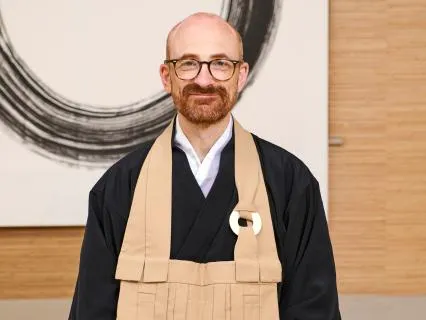
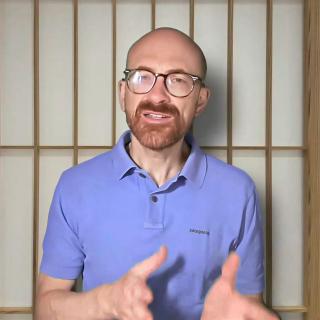
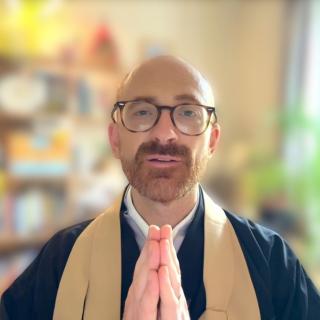
My name is Mark Kureno-Esmeket and I'm a Zen teacher within the Zenway Sangha based in London in the UK.
Now Zazen Za is a Japanese word that means sitting.
Zen Well,
So Zen is a Japanese word,
Which is a transliteration of the Chinese word Chan,
And that was a transliteration of the Sanskrit word jnana.
So jhāna would have been the word the Buddha used for meditation.
And it's got transliterated and transcribed across to zin but it's come to mean Not just meditation,
But what we find when we deeply meditate,
When we contemplate the nature of ourself and our relationship to the world around us.
So Zazen,
Sitting meditation,
Is the practice of looking deeply at ourselves holding our attention for long enough to look at the reality of our experience and to look deeper and deeper and deeper in these layers of experience to see what is really going on here who am i really what is this really what is what is this self you know what is this experience So how do we practice zazen?
So basically you can come to sit.
And just look at your experience.
That's how it goes.
Traditionally there's been a few meditation postures which are developed which are conducive to sitting and being comfortable.
So one of them would be sitting on a chair,
Sitting with your feet flat on the floor,
Sitting upright,
Maybe with a cushion tucked under your tail to lift your bum a little bit higher than your knees.
So comfortably upright.
You can lean back or you can be a bit forwards.
Or sitting on the floor some people prefer to sit kneeling and then you can sit on a cushion or you can sit on a kneeling bench so something to hold your your tail up away from your ankles or sitting cross-legged now cross-legged has been the thing that people have held up for centuries being the best posture for long periods of sitting but of course if it's uncomfortable in your legs or your hips or your knees then it's not going to be comfortable for long periods of sitting so we want to avoid doing it.
Choose sitting on a chair or sitting kneeling.
But if you are comfortable to sit cross-legged,
Usually it works to sit on a cushion,
Though not straight on the floor.
Sit on a cushion,
Have your knees coming down or close to the floor,
Have your knees out wide,
And if you want to tuck up into any deeper cross leg postures then go ahead if that's good for you but cross leg the reason why it's held up as such an important thing is because once we are comfortable and open into it actually you can sit very comfortably and effortlessly for longer periods of time.
So we come into a sitting position and we allow the spine to lift and grow so imagine a thread attached to the top of your head pulling upwards and that'll lift you up and align your body.
So the sitting posture becomes an embodiment of Zazen.
So it's not just something that we do,
But it's actually a very integral and important part of Zazen.
We are embodying in our physical posture,
The kind of direction that our meditation is taking.
We're sitting comfortably,
We're sitting upright,
Which means awake,
Alert.
We're being mindful but we're also softening and relaxing around the face and the shoulders and the hands the hands resting in the lap maybe allows us the best opportunity.
For the minimum distractions.
So we might be sitting in a place which is reasonably quiet,
It doesn't have to be totally quiet,
But somewhere where there's a minimum of distractions,
Our body is comfortable in a place which has got the minimum distractions,
So that we can then focus our attention on our experience.
So where you put your awareness depends a lot on the kind of practice you might be doing,
But basically it's just inquiring into the nature of your experience.
Some people find bringing your attention onto the breath is a good place to be.
So just watching the breath.
Particularly if you can focus on the feelings lower down in the body,
Helps us to feel grounded and more within the body,
Feeling the belly moving,
Feeling the breath moving in and out down the belly.
Some people it's a sense it's a different sensation it might be the feeling of their body resting on the floor It might be.
Any number of other different objects of meditation.
But we can also focus on thoughts and ideas but the problem with that is it tends to get us a bit pulled away you know kind of we get a bit caught up in the thoughts and we end up thinking and we end up remembering and daydreaming things.
So focusing on the physical sensations of here and now is actually just simpler.
It keeps us more present.
And then we start to ask,
Well,
Who am I to look at my body?
What is this body?
What is this experience of breathing?
Who am I?
Breathe it.
Who am I?
What is this around me?
Or is this world that I sit in,
That I am part of?
So we ask,
This in Zen is called a koan,
A question,
Or a point of contemplation.
We notice and we.
.
.
Enquire now this sometimes may be a very active enquiry who am I who am I with each breath or it could be a much broader and softer enquiry like we're just here present with things as they are And we're just noticing,
Allowing,
Not judging,
Not criticizing,
Not directing anything.
Not trying to make anything happen.
Just being.
And seeing.
What this reality is for you right now.
This is the direction towards what Zen is pointing at,
Where we step into the world of awakening.
We realise who and what we really are.
That's what Zazen is all about.