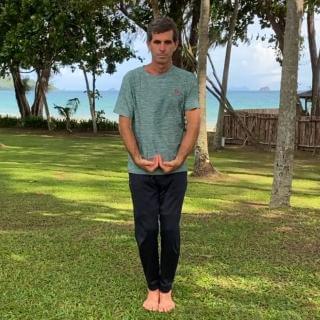
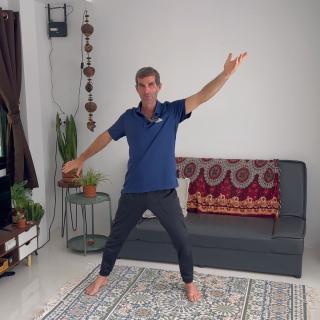
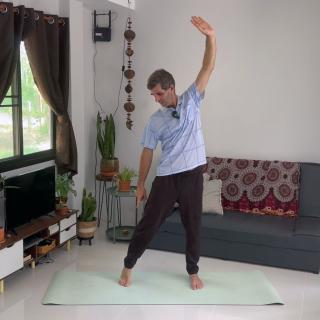
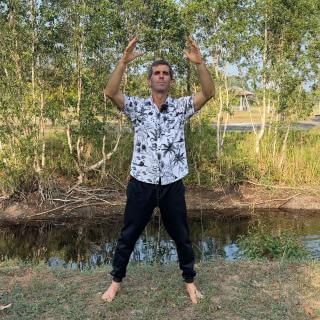
Welcome to this great morning movement-based practice.
This is a Qigong practice set that I call the S Series because it engages three types of movement.
Swings,
Where we're swinging the body,
Spiraling,
These kind of snake-like movements,
And stretches.
It's four movements of each,
So it's a dozen moves.
It's 12 movements.
It's an excellent practice to do early morning or before doing any type of exercise or sports.
So first one we do is we start off with some swinging.
The first one is what we call the horizontal swing.
So we're swinging the body sideways.
Okay,
So when I swing to my right,
I come off the left heel.
My left hand will tap the obliques above the hip,
Below the rib cage.
My right hand taps the lower back on the opposite side.
So now my right hand on the left side,
Left hand is going to tap the right lower back.
Exhale every tap.
The other thing is come off the opposite heel.
So when I come to my left,
I come off the right heel.
Come to my right,
I come off the left heel.
So see,
It's like this.
So as we do this practice,
Key principle in this whole qigong set is the 70 principle you want to move fast enough or deep enough.
That you feel the benefits of the movements without ever feeling like you're straining.
Always be comfortable.
With this one,
You can do it nice and relaxed.
Stay nice and upright.
Gentle swings.
You want more of a workout?
Come lower in the stance.
Swing a little faster,
Tap a little harder.
So listen to your body.
See what you want.
Let me just do a few more.
And slow it up.
It's a nice.
.
.
Opening practice right just loosening up through the arms Getting this nice movement through the whole torso and the core moving sideways.
Next,
We're going to do vertical swing.
So as we come up,
We're going to make fists and you're going to come off the heels.
And then you're going to come down with the exhale.
It's like you're flicking water off.
The fingers.
Exhale.
Rise.
Then cross the arms so it's like you're making an x Off the heels.
Once again,
Know your limits.
Always be comfortable.
As they say,
You come to your edge.
And you take a gentle step back.
Three more.
And relax Next one,
We're opening up this whole region around the groin,
Hip flexors,
Pelvic region.
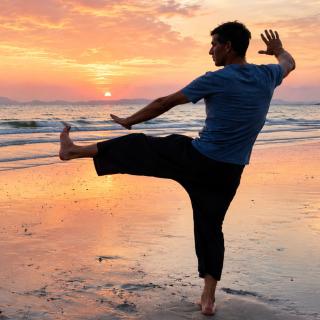
So what you're gonna do here is you're just gonna bring the leg up.
You could just bring the leg up straight,
Try to get the thigh parallel to the ground.
Once again,
If that's too high,
Keep it a little lower.
I like to bring my leg a little bit across my center,
And I just open it up.
Swinging the legs to the side.
Once again,
Don't overdo it.
Just listen to your body Go to your edge.
And a gentle step back,
Always be comfortable.
Just here to open up and loosen up.
That's why it's such a great morning practice series.
A couple more each side.
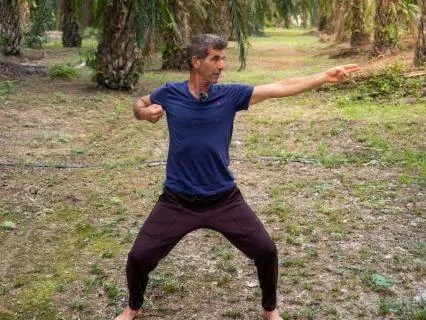
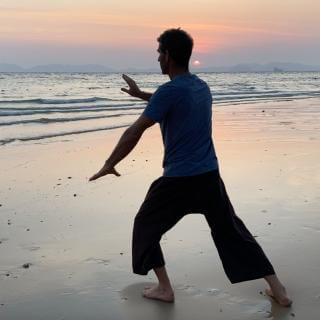
And relax The last swing movement is what they call the warrior swings.
So if you're used to doing yoga,
It's like warrior two,
And then we're going to be doing these kind of huge circles with the arms,
Almost like a helicopter.
We're going to do.
I'm going to do left.
So my left foot is facing forward.
I got about 80% of my weight.
On this forward leg,
About 20% of the weight is pushing out and back.
So you don't want to collapse the arch and collapse the knee.
You want to be pushing back.
You want to line up.
This front big toe.
With the back heel.
And you come into it making sure the shin bone,
The bottom of the leg should just be.
Perpendicular to the ground.
You don't wanna bring the knee too far.
You wanna come deep enough that you feel a nice groin stretch.
Bring the hand,
So this is my left,
This is the front leg.
My left hand goes just above my knee.
I make a gentle fist.
I'm gonna do 20 swings.
Start off slow,
Gently pick up the pace.
So start off slow so you figure out like where's.
.
.
How high you want to bring this swing.
Once again,
If this is causing you strain,
You don't need to do a perfect circle.
Bring it more out in front of you.
So listen to the body.
Always be comfortable.
Five more,
Five.
And let's do five moving backwards,
But really slow.
So really just feeling into that.
Mobility of the shoulder joint.
We're just loosening up.
Really complex joint.
The shoulders want to really work with mobility here.
Move to the other side.
Once again,
Take your time.
We're not rushing.
This isn't a flow practice where we move really quickly between movements.
Okay,
So I wanna line up.
Come down.
Do a nice groin stretch,
Make a loose fist.
Start off slow.
See how your shoulder feels.
Don't force it.
Five more?
And then five,
Once again,
Moving backwards really slow.
Just really loosening up through the shoulders.
All right,
So there's four.
Swings Now we're moving into the spiraling aspect.
This is the snake.
Like movements.
First one is what we call snake creeping up the spine.
So you want to visualize almost like your fingers are like a snake's head.
So what I mean by that is I'm going to start with my left hand.
If you want to mirror me,
You do your right.
It's fine.
It's at the navel.
So my left hand,
The palm is facing left.
As it comes up the center of my body,
Palm faces me.
Palm faces right,
Faces forward.
Then it's as if you're pushing something up.
Then you push out.
As you push out the palms out,
It comes to the shoulder,
Palm goes backwards.
Comes to the hip it faces in and then it's like scooping up it comes in You want to link it with the breath.
Inhale as you rise.
Feel the stretch,
A nice torso stretch come off the opposite heel.
And then you push out.
Have this feeling?
When you inhale,
The focus is on opening,
Stretching,
Loosening through the torso.
On the exhale it's a feeling of releasing.
Releasing what?
Releasing physical tension,
Psychological stress.
So inhale.
Open and stretch.
Exhale,
Release and let go.
Spiraling up like a snake.
And then release.
Let's do a couple more each side And last one.
Relax.
Next one we call teacup spirals.
The visualization is that you have a cup of tea in your hand.
The cup will have about,
It's like,
Let's say it's half full with tea.
Okay,
So what you're trying to do as you make these big spirals is if you ever get lost,
The movement's feeling too complex,
Just imagine,
Okay,
Am I keeping the tea from spilling or have I spilled the cup?
The key with this,
Remember,
Is this feeling of always being comfortable and never straining when we're bringing the arm above the head.
If you're feeling pain in the shoulder,
I want you to let go of the teacup image and keep the motion.
Do the same motion that I'm doing,
But let the palm come down and forget the teacup.
Make your stance wide.
Very important principle with this is everything's in movement.
This isn't just an arm movement like this.
The knees are circling.
I'm doing big arch of the back,
Which I'll show you sideways as well.
Let everything move everything is loose they have this key principle through qigong one part of the body moves everything is in motion So you start off.
Hand by the hip.
Fingers face you,
Fingers behind,
Fingers away.
You whip in front,
And then big exhale,
You bring it over the head,
Trying to keep the palm up,
But once again,
Don't force it.
Then it's like you have a waiter or a waitress,
Tray of food at the shoulder,
Bring it back down.
Big exhale as you come back.
So if you notice,
I'm gonna show you sideways.
I'll do my right,
Is I'm here.
As I come over the head,
I am leaning back,
Loosening up the whole torso.
Exhale,
Exhale,
Exhale.
Now,
Once again,
Imagine I'm feeling a lot of pain in my shoulder.
You have shoulder issues.
Let the palm come down.
Do the same motion.
Do it here,
And then just let the palm be down.
So we're going to do seven on each side.
I'm going to start with my left,
So if you want to mirror me,
You could start at the right,
But that's up to you.
Keep the stance a little wider than hips or shoulders.
And once again,
Exhale over the top of the head.
Three more.
And seven And relax.
And now I'll do seven with the opposite.
Remember,
One part of the body moves.
Everything is in motion.
If you're feeling pain at the shoulder bring the palm down.
But continue the movement.
Big exhales as you lean back and bring the arm over the head.
Everything loose circling the waist circling the knees Arch in the back.
The next movement we have is called flying dragon.
If you're used to yoga,
It's almost like doing two cat cows.
So it's amazing movement for the whole torso because we move in between expanding the chest arch in the back and rounding out the back.
It's a two breath practice.
So you start off,
You push behind you,
You arch the back,
Expand the chest.
You take your inhale.
It's like you're going to sit down on a bar stool or a high chair and the arms round out.
You exhale.
Now both arms go behind the head,
Arch in the back.
And then both arms are here at shoulders.
You inhale,
Tuck in the tailbone,
Round in the chin,
Round out the back.
Bring the hands underneath the armpits.
Exhale.
So I'm going to show you sideways so you can get a feel.
Of the movement.
The torso.
Once again,
It's really working on this feeling of just looseness.
Remember,
The opposite of being tight is not stretched.
The opposite of tight is loose.
So really just big open rolling motion.
So sit.
Swing above.
Round out.
Okay,
So once again,
We'll do seven of these together.
Push behind,
Arch the back,
Expand the chest.
First inhale.
Tuck in the tailbone,
Tuck in the chin,
Round out the back.
Exhale,
Arch the back,
Hands above the head.
Inhale.
Exhale.
Big exhales through this.
Let's do three more.
And one last one,
You should feel the back loosening up,
The shoulders nice and loose.
Just such excellent movements for the shoulders,
The upper back,
The whole torso.
The last one we call Snake Charmer.
Okay,
This might feel a little complicated as we first go,
But I really want you to work with this one because this is one of the most enjoyable Qigong movements I think of hundreds if not thousands of movements I've done.
So the feeling here is,
Once again,
Just like the first movement,
The visualization was the fingers are like a snake's head.
Same thing here,
But now we're coming at it from the side.
So the visualization is almost like the snake.
Coming at your face.
And then you exhale,
You move away from the snake,
You turn your head away,
And the snake dives down.
Then Just very simply,
The palm is up and the arm's kind of backwards as if someone's like turning your elbow and your arm.
And then you coil the arm up so the palm is down,
Palm faces forward,
Faces up,
Then it comes back at you.
Exhale.
Goes down,
Turn the other way,
Turning the head.
Exhale.
So it's inhale as you bring the arm up.
Comes towards you,
Exhales,
It goes down.
In a way with the palm out.
Out,
Nice and loose.
Shifting the body weight.
Loosening up through the shoulders and the arms.
The whole feeling here with Qigong is these spiraling and coiling motions kind of loosen up through the tissues and the fascia.
Allowing good energy flow.
The meridians.
We'll go to the other side.
So once again,
Snake's head looking at you.
You exhale,
Dives down.
In a way,
You turn your head the opposite and lean the opposite way.
So exhale,
Arm dives down and the palm is up and arm moves away.
Then inhale,
Arm starts coiling up and then at you.
Exhale turn away shift the weight spiral the arm Just a very nice natural spiraling motion.
Three more.
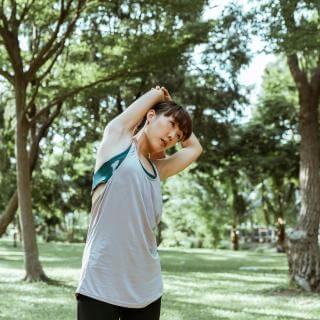
And relax The final part of this S-Series now is just some stretching.
The first one is this classic,
What they call the bow and arrow.
Why?
Because it looks like you're shooting a bow and arrow.
So I want you to make the stance really wide here.
We're going to go three each direction.
I'll start going left.
So if you want to mirror me,
You go right or up to you.
Make a wide stance,
Two breath practice.
Sink down.
Rise.
Opening and stretching,
Cross at the wrists.
Exhale.
Hands come down to the chest.
Inhale.
You're going to act like these two fingers,
First finger and second finger are like an arrow.
You pull the bow.
And exhale release shoot the arrow Rise.
And relax Inhale,
Pull the bow.
First two fingers.
Act like you're shooting out at a target in the distance.
Release.
Shoot the arrow.
Sink.
Inhale rise Exhale,
Relax.
Inhale,
Pull the bow.
Find your target.
Exhale,
Shoot the arrow.
And one more each side.
Sync.
Rise and stretch.
Exhale relax.
Inhale,
Pull the bow.
Exhale release shoot the arrow.
One more.
And release.
The next one we're doing is a forward fold.
Now,
Most people are used to doing this as a stretch for the hamstrings,
But this is dual purpose.
Actually,
The first primary thing we're gonna be doing is releasing tension in the lower back.
So I'm going to actually show this to you sideways.
So the feeling here is you're not just stretching and going down as quick as you can.
I want you to take five or six breaths to come down.
So you start off,
And you're only moving on exhale.
So take your first exhale.
You're just folding at the hips.
At the end of the exhale,
Stop with the inhale.
Exhale.
Come down a bit more.
End of the exhale stop take an inhale Exhale.
At some point you're going to come down until you feel resistance in the lower back.
Now,
When you find that you're not pushing past there through effort,
What you do is inhale.
Breathing in,
Feeling the lower back.
And as you exhale,
It's a feeling of softening and releasing tension.
So the thought is you go deeper.
Through relaxing.
Not through effort.
It's like every exhale now.
You go just a teeny bit deeper.
Releasing the lower back.
You should feel the lower back release and stretching the hamstrings at the same time.
Stay here for about two more breaths.
And on the way up,
This is very important,
Protecting the lower back.
You're going to put your hands on your knees.
Engage the core,
Tighten up your buttocks,
And you're going to roll up.
Once again,
Taking at least five or six breaths.
And it's like a little kid stacking building blocks on top of each other.
It's like you're stacking the vertebra on top of each other.
So roll up.
Once again,
Keep the core engaged.
Tighten the buttocks.
Roll up.
Don't rush.
Don't rush the neck and head.
And as you come up and finish,
Just roll the shoulders back three times.
Okay,
Now to do a bit of a counter pose.
We're gonna be bringing the toes together.
Sync.
And I'll come up.
Interlace the fingers.
Three fingers,
But the index fingers are touching,
The thumb is touching.
You stretch up in a slight back bend.
So if you see me right,
You want to counter pose the forward fold.
So you're stretching up,
But also a little back.
Have the feeling.
Inhale.
It's like someone's pulling you by the wrist.
You're stretching up and back.
Exhale relax.
Inhale,
We stretch.
Up and a slight back bend.
Exhale relax.
One more.
And this time as you exhale,
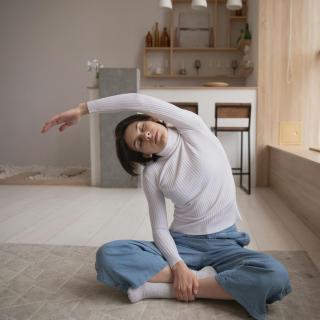
Come down to the side.
Once again,
Slowly and mindfully come down to your edge and relax.
Take a couple breaths.
Exhale,
Come back up to center.
Inhale,
Stretch up and back.
Exhale,
Come down to the other side.
Once again,
Slowly and mindfully don't overstretch to the side.
And come on back.
Inhale,
Stretch.
Exhale,
Let's bring it out.
Now on the final movement,
We sink down.
We come up.
Inhale.
Now instead of bringing the hands together,
The palms will face the head.
And now on the exhale,
Slow as possible with the exhale and you just bring the hands down as the hands come to the forehead just keep your mind with the hands and relax layer by layer So you want to connect to the feeling.
We're going to do three of these.
This is how you always want to finish up the set.
As you rise,
Come up,
You're feeling very tall.
Rising through the spine so i have this feeling the spine rises And in the body,
As you come through,
You're softening the body as if the body feels like cotton.
So you could say spine rising,
Body like cotton.
In a Western sense,
It's this feeling you want to connect to that you feel as tall as possible.
While the body feels as soft and relaxed as possible,
No tightness,
No tension,
But feeling very tall.
Very aligned.
Very up with the.
.
.
And the bones and very soft through the muscles,
The tendons,
The tissues.
And then you're ready to move on through the day.
So thanks for joining me and enjoy that morning practice.