Being in the moment of enjoying that piece of food is going to make you feel better.
The moment that is no longer logical is that we cannot eat 24 hours a day,
Seven days a week.
The point where you can no longer stuff your face is the point where the true problem is going to come back.
That true feeling is going to come back.
Hello and welcome to episode nine of the Voice of Calm podcast.
If you're anything like me,
Then you have lots of great intentions to eat really healthily and to avoid bread and to avoid chocolate and all of the things that we know aren't good for us.
But you still find it really difficult to say no.
And sometimes you're even eating when you don't even feel like eating,
You're not even hungry.
So they're hanging in the fridge,
Hoping that the answer to your problems is in there.
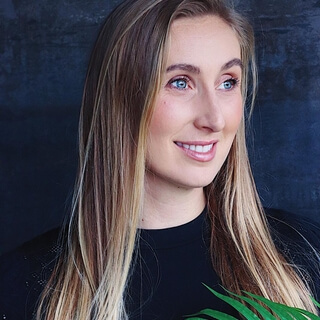
So I invited Victoria Adams on this episode of the podcast because she is a food therapist and a yoga instructor.
But she started out life as a commodities broker in the city.
So she really gets how tricky it can be when you've got a really busy life and a lot of stresses,
How tricky it can be to stick to your resolutions and the plans that you made for yourself to be healthy.
And instead of eating a tub of ice cream,
What we actually need to be doing is looking at the areas in our life that might need fixing.
Explain to us what crowding in means.
Crowding in,
First of all,
Can be applied to food.
Very often when we go on these,
You know,
Strict diets or we think,
Oh,
I want to change the way I'm eating.
I want to fit into the bikini before the summer comes.
We try to cut out,
You know,
You think,
Right,
No more chocolate.
That's it.
Chocolate goes,
Sugar goes,
Bread.
No bread,
No cakes.
The evil bread has to go.
Now that's all well and good.
And it does work for a while,
Especially if you're strong willed.
If you've got a strong will power,
You know,
Yeah,
Right,
Cut it out.
That's it.
Sometimes I find the stronger will you have actually,
The harder it is to abstain from things.
Because if you're strong willed,
Then if you want something that you can't have,
You're going to want to have it.
I think so.
And that's what,
That's what I boss one of the retreats that I work on.
So it's Jason Vale.
If you really,
Really want something,
You're going to have it.
If you can just let it go and say,
I don't,
I don't need it.
I could have it if I wanted to,
But I don't even want it.
So it can just sit there and that's fine.
And the bread can sit right next to you on the focaccia in the Italian restaurant and you won't find that craving for it.
With crowding in rather than focusing on the foods you don't want to have,
Because you know,
They're not going to serve the goal,
Whether the goal might be fat loss or something else.
Crowding the good stuff.
Right.
When you put your plate together,
If you start with load up on the green veggies,
Which I don't think there is any diet that suggests that you don't have plenty of vegetables.
If you fill most of your plate with the green vegetables,
And actually there's going to be less room for the X,
Y,
Z,
The crisps,
The chocolate,
The ice cream,
Et cetera.
You know,
People that want to,
Lots of people are going vegan or plant-based now.
For me,
I don't think you necessarily have to say,
Right,
That's it.
No meat ever again.
And when I say meat,
I'm talking about fish and eggs and dairy also,
Meat products,
Animal products.
You know,
If you can do it,
Great.
But if you think you failed by having a little bit,
Don't beat yourself up because you couldn't cut it out 100%.
Yeah.
Just focus on crowding in the good stuff.
Yeah.
And then naturally there's less room.
So if you think to yourself,
I'm not going to have any bread and then you have a bagel,
Which,
You know,
These are dumb thinking about myself.
So these are the kinds of conversations I would just have with loads of butter anyway,
Toasted.
But if you,
So if I've done that,
Then I think,
Oh,
Damn it,
I've had a bagel.
I then tend to go,
Well,
Sod it.
I may as well have a cake.
I may as well have a chocolate,
You know.
So I think a lot of people do that,
Don't they?
It's,
Well,
I've done it now.
I've done it now.
So yeah,
Right.
This is when I'm working with,
When I'm working one-on-one or when I'm working with groups,
This is how I approach eating.
First of all,
You need to know the goal you're working towards.
Most of the people I work with,
They want to address fat loss,
Improving athletic performance or their sleep.
Most of them is that,
It is that tie around the middle,
Is the too much bread thing that is common for all of us.
The whole gluten free thing for me is a separate issue.
I actually think that everybody is gluten intolerant and we all just have different thresholds.
I think you might be right.
And we all just eat different amounts.
But when you look at your week,
There is no need to say,
I'm not going to touch bread or I'm not going to touch the chocolate cake.
If you actually plan to have it and plan exactly when,
Exactly where it's going to be,
Exactly who it's going to be with you with,
I definitely say,
You know,
If you're going to have a lot of people like to call them cheat meals.
I call them off piste meals.
Okay.
Plan to have it socially.
Cause if you're at home alone,
It's never as fun and you're going to be going out with someone.
If you think I'm going out for dinner on Friday night and we're going to a restaurant,
I'm going to allow myself to have the bread side on,
You know,
With,
Because like I said,
Lovely Italian restaurant and we're having,
Or I'm going to,
Am I going to allow myself to have the pizza or whatever?
Yeah.
Not only are you going to allow yourself to have it,
You're going to allow yourself to enjoy every single bite without guilt.
Yeah.
So you plan when it's going to be,
So let's say Sunday night,
You look,
You go,
Right.
I know Friday night is coming.
I'm going to have the,
Um,
The steak and chips with the Burney sauce.
And I'm going to have a lemon cheesecake to follow it.
Oh,
And bread will be served.
And I'm going to have the bread.
It's now Monday morning.
Knowing you've got that coming up on Friday night,
Start Monday morning,
You know,
The best way you can,
Green juice is a fantastic thing to have because it just sets your taste buds.
It does.
You know,
You feel great when you start out with something like that,
As opposed to having a fry up by the,
It's all over.
If you start your day with a fry up.
Exactly.
If you have a fry up,
You'll probably be craving another fry up for a lot of something along those lines.
Well I used to have fry ups with hangovers.
So it was just kind of,
You know,
It was,
It was a downhill slope that would snowball.
Yeah.
Um,
So you know what's coming and like you said,
When I have the bread,
I think,
Well,
That's it now.
I've done it now.
Let's just go for it.
Listen,
You know,
You don't know how many days it's going to be before you get back on the wagon,
Whatever that means.
Um,
Now if you know,
You've got Friday coming,
That meal,
Not a whole day,
By the way,
That meal of whatever you want.
I don't want to spend the whole day just eating bread.
That sounds,
What a great day Friday would be.
I just can picture it now sitting on the sofa surrounded by all different types,
Tiger bread,
Bagels,
Focaccia,
Ciabatta,
I'd have it all.
I think a lot of people would be able to get behind that actually.
I think so.
I,
For me,
It would have to be bread and butter day.
Yes,
Definitely.
Yeah,
Yeah,
Definitely with that and maybe and cheese on toast anyway.
Yeah.
Oh,
All right.
No,
No,
Sorry.
No,
No,
No.
I need to talk to you now.
Fantasizing about bread.
Anyway.
Okay.
So it's one meal,
Not a full day.
It's one meal,
Not a full day.
So that Friday evening is coming,
Bread meal,
Whatever it is.
And you've already,
You've been very specific about what it is.
So every other meal choice throughout the week,
You know,
You have that look to look forward to.
So hopefully it means you're going to make better choices.
Yeah.
I'm not saying you're going to be an angel until that moment comes,
But it certainly helps stop you from doing this Monday.
Oh yeah.
I'll just have that little bit,
That biscuit on the side because of,
You know,
Yeah,
Yeah,
I'll make the right choice for dinner.
Oh yeah.
I'll have the dessert off dinner on Monday night.
Things just creep in.
It's putting off that good choice into manana into the long grass,
Isn't it?
Yes.
It's saying,
I'll just have this biscuit now.
I'll have this cake now because I'm going to fix it down the line rather than the reverse,
Which is I'm going to be healthy now because I know I've got a treat coming.
Exactly.
Which is much more durable.
It's much more durable.
And also that,
You know,
Down the line or sort it later,
We forget what happened the day before,
Which was you treated yourself yesterday and the day before that and the day before that,
You know,
These moments where we treat ourselves,
They go in the mouth and straight out the ear.
We forget that it ever happened.
So you know that's coming.
Yes,
You might have another little treat,
An off-piste meal.
The keys with planning these off-piste meals is that you also plan how you're going to get back on piste at the next meal.
Right.
Okay.
Yes.
And that is key because then if,
You know,
You think,
Oh God,
I've done this,
I might as well just stay on it.
No,
You've already planned to have the salad or the soup or,
You know,
The crowded in plant-based greens with a little bit of something else,
Whether it's the next day at breakfast or that evening at dinnertime because you had the birthday office cake at lunchtime.
Yeah.
And then also look at it from this perspective.
Let's say you have two,
Maybe three off-piste meals that week.
Let's say you also had the accidental snack that you really didn't want to have that maybe there was a little bit of guilt around or not.
So that's four things.
Now people eat differently.
Some people have two meals a day,
Three meals a day,
Four meals a day.
Let's say you just have three meals a day.
So three meals in a week,
Three meals a day in a week,
21 meals.
Those three or four slip up meals that you had,
You've still got 17 other opportunities,
17 other meals to get it right that week.
Yeah.
And that is the difference between being in the changing rooms,
Trying on the bikini for the summer,
Feeling like,
Oh God,
Or actually,
Yeah,
This is my body.
Yes.
And I can still have a treat and I still love my body.
I think that's a great way to look at it.
And it's so much more manageable.
I was going to say you're in control,
But I'm a big proponent of saying,
Let's not try to control anything because we're not really in control of anything apart from our own reaction to things.
So as much as we need to be,
We can say we're choosing,
We're making choices.
And that's the key,
Isn't it?
Rather than feeling that I'm out of,
I have no choice.
I want my body desires sugar.
And so I had sugar.
I've done it again and feeling like it was running you,
Your taste buds were in charge.
Well,
Actually there is research to say that that is the case.
Sugar is my taste buds are in charge.
Now there's research to say,
There's research to say that sugar is more addictive,
Even than cocaine.
Really?
Yeah.
And there is so much money in the food industry.
I mean,
Recreational drugs,
They are not regulated.
They're illegal.
Food is very necessary item for living.
There is so much money in the food industry and it's regulated.
All you got to do is a bit of advertising and find the bliss point of taste.
Even though this food feeds you in terms of the amount of energy you need to function.
If they've got the bliss point,
Right,
Which is the right amount of salt or sugar,
Then even though you're satiated,
You will keep picking at that food.
Yeah.
Chocolate.
I hadn't realized this.
Have you read the Clever Guts diet?
No,
I haven't.
It's Michael Mosley is his name.
A lot of people have been talking about.
Very good.
It's very good book.
But he pointed out in that,
That I hadn't realized before that milk chocolate was such an incredible invention because it combines,
It's exactly the same combination of fat to sugar that breast milk has.
Really?
Yeah.
So 50% fat,
50% sugar.
I think that's the combination,
The magic ratio.
And breast milk has the same,
Which is why we,
Why chocolate is such a,
It's so comforting.
It's so addictive.
And as you say,
You've had enough,
But you're still going in for more.
Yes.
And really also we shouldn't be having breast milks after the age of infancy,
Whatever the age may be.
Yeah.
Yeah.
That's really interesting.
Yeah,
It is,
Isn't it?
So you've got that sort of,
The taste buds are such a powerful,
Powerful thing,
Aren't they?
So crowding in and changing your taste,
You know,
Because you can do that,
Can't you?
I met a lady who'd given up sugar and she was saying that to the point where a banana felt too sweet for her.
So,
You know,
She'd really changed what she wanted to have.
Whereas I can't imagine a banana tasting too sweet at all,
Because I love eating chocolate and cakes.
But if I didn't eat any chocolate and cakes after a while,
They would be too much,
Wouldn't they?
Yeah.
When your physiological environment changes or how you receive and perceive food changes,
It's amazing how you change.
When I was a kid,
I grew up on McDonald's,
Bird's Eye Chicken,
And the only fruits and vegetables I would eat,
I wouldn't eat any fruits,
Was a jacket potato and sweet corn.
Right,
Yeah.
I lost about three stone in three months,
I was 16 or 17.
Amazing.
And because my taste buds totally changed,
I wouldn't touch a banana.
For a banana to have been on my plate,
I wouldn't eat anything else that was on the plate at the same time.
Right,
Really?
One day I just thought,
I'm going to try that.
And that was it.
I couldn't get enough of the good foods.
Once my taste buds had tasted it,
All my body wanted to do was just crowd in more and more of the good stuff.
Yeah,
That's it.
That is it.
It's retraining your mind,
Isn't it?
But it's so easy to get out of those good habits as well.
I think it's easier,
Isn't it,
To get into a bad habit than a good habit?
Because it goes back to that sort of the brain says,
Oh,
That felt really good.
Let's just do that.
It's interesting when you say retraining your mind,
Because actually,
I think it's,
It's putting the mind down.
There is a lot of money in the food industry,
There is a lot of money that goes into researching how can they make food moreish.
I remember reading and I wish I could remember the name of the book,
They were talking about the corn industry and the race.
The men that made you fat?
No,
It's not that.
But are you talking about corn syrup?
I'm talking about yeah,
Corn that went into every,
Every possible food stuff,
Because they wanted to make as much money from it that they could.
And they were looking into the economy,
The economics of it.
And I think it was something like,
Well,
This business can only increase by 10% every year,
Because that's the rate of inflation,
That's the rate at which we're going to have a bigger population.
And that wasn't enough for the industry.
So they looked at right,
We can't,
How can we increase people's appetites?
Yeah,
That,
You know,
People only,
We only need so much food.
So how can we make people want more food?
Yeah.
And it's the mind that gets in the way of truly listening to what our bodies actually need.
So true.
So yeah,
I suppose when I just started eating fruits and vegetables,
Nothing was processed.
It put down that little gremlin voice that was saying have more,
Have more,
Have the stuff that you think you want,
But actually,
You don't really want to.
I don't know why they have a lid on Pringles,
Because once you open it,
Yeah,
Absolutely.
Same with Maltesers.
It's just the boxes of Maltesers,
They're gone.
And they're so light.
Yes,
They are.
So light and fluffy.
But okay,
So so this sort of like idea of self care isn't just a sort of meditating every day,
You know,
You obviously feel and I think you're absolutely right.
It's very much a part of what we put into our bodies as well.
And it's giving ourselves that message,
I suppose that it's worth me taking the time to give myself something healthy to do something good for myself.
Even if we're only fitting in in small little pockets,
Like you said,
Sometimes you don't have a choice.
Yeah.
And very often we don't have a choice.
There are things beyond our control.
But in that moment,
We do still have the power to make little choices.
And it can't always be well,
If there's nothing healthy,
Then I'm not going to eat anything at all with my arms folded.
It's okay,
The next time this happens,
How do I get around that?
You know,
Does it mean I become the queen of Tupperware and always bring a pack lunch with me and become that person?
Yeah.
Or is it simply right?
I know that that's now going to be an unavoidable obstacle that I cannot get around.
So that meal is that meal.
What are the meal times that week?
Can I make the right decision?
Yeah,
Yeah.
You know,
In the mornings,
If you're not eating with anybody else,
Right,
The mornings can be my opportunity to crowd in as much of the goodness,
The greenness that I can,
Because I know in the evenings,
I'm going to be having chips and gravy.
And doing things like walking up the escalator and,
You know,
Walking instead of taking the bus,
Doing those sort of healthy things that you can do.
When I gave up alcohol,
The main thing that I implemented to overcome my initial cravings in the first few weeks was that at six o'clock,
Which would be my,
Or maybe five o'clock,
Which would be my sort of key time for really wanting to pour a glass of wine,
I would go for a run.
So that I replaced that craving,
That moment of all I want right now is a glass of wine with something so opposite it that there was no space for wine in my mind,
Having returned from a run,
Those two things were incompatible.
So it's sort of putting something in that doesn't belong alongside the thing that is probably quite unhealthy.
And how long did it take for you to set in a new habit for the old habit to be lost?
With alcohol,
It was probably about six weeks before I really felt that I was on top of that.
And then it was just down to any trigger that would come along where,
You know,
Certain people being in a certain situation,
You think I'd like a drink,
But that actual daily routine of having a glass of wine each evening,
It was about six weeks to really be comfortable that I don't need that now.
I actually find that people,
It is down to the support of our peers,
Very much.
Yeah,
Very much.
Unless you sit in a room on your own for the rest of your life,
In which case you would need them all teasers probably and the wine and the bread.
Have you heard of the circle of seven?
No.
Circle of seven.
I've heard it recently,
Someone said a different number actually,
But I'll stick with what I've used in the past.
They say you are the average of the seven people you spend the most time with.
Okay,
Yes.
I've heard this concept.
I didn't know it was the circle of seven.
I heard about this about three years ago.
I was just leaving my London job.
And so what I did was I would write at the bottom of a page every week or every month,
Who were my circle of seven,
The people that I'd worked with the most,
The clients that I dealt with the most,
The people I was WhatsApping the most on the phone to.
It's funny,
It would be people I work with more than your friends and your family.
But from the first time I wrote this list to the next week,
To the next month,
My circle of seven changed dramatically.
Really?
Yeah.
Because you choose.
Because you were aware,
Because you became more sort of,
You were actually analysing it.
Yeah.
I think when you have awareness,
Even when you think you've not got the option to choose,
You certainly have a,
You make more effort to make the right choices.
And again,
How awful is that?
Well,
I want to be the average of Heidi Klum.
You'll have to go.
Yeah.
So you're going to be cut out.
It wasn't a case of cutting anyone or anything out.
Same with food.
You just think,
Right,
Okay,
If I want to be the best I possibly can be and be better,
Then what do I want to be?
Who do I want to become?
What do I want to crowd into my life?
Who do I want to crowd into my life?
You know,
More broccoli.
Yes.
More people who work hard,
More caring,
Kind people and more people who are aligned with each other.
Who are aligned with your sort of ethos,
With your approach to life.
I think that's really,
Really important.
And it's also quite,
It can feel very difficult to change.
I think that can feel one of the hardest things to change because we feel that we're sort of almost stuck with our group,
Especially I think as you get older,
It becomes more difficult to make new friends.
But as you say,
It's not about getting rid of anybody.
It's about meeting new people and expanding your social circle.
It's expanding your social circle.
One of the things I've recently done and it's been brilliant is to go on meetups.
Do you know meetups?
I have been meaning to go on a meetup for a long,
Long time.
That's one of mine that I never put on the whiteboard.
You're going to some point.
So meetups is a website where loads and loads of people are registered on it with all different interests.
I know you obviously know this,
But I'll explain it for anyone who doesn't.
And so I went on there,
For example,
It's kind of like a dating website,
Isn't it?
But for not for dating.
So for meeting people.
So I went on there and I said that my interests were mindfulness,
Meditation,
Sobriety,
Those sorts of things.
And then other people who are also interested in that,
They'll get messages about any groups that have been set up in the area.
So for example,
Tomorrow I'm going to Oxford to meet up with a group of people who are interested in mindfulness,
Who had something to do with the university there.
There's a spiritual group in Milton Keynes that I can go to,
I think on Thursday evening where they meet and talk about,
I think it's not sure exactly a meditation group.
So these are things that,
And I'm going to meet new people and I'm so excited because being a part of a group where you all know each other really well and you all have the same interests,
But then what if one of you changes your interests or just starts to look slightly out of that group of interests,
You then don't have anyone within that group who gets it.
So to be able to go out and meet with people who are saying,
Oh,
We're really interested in exploring this.
It's fantastic.
And I think we need to feed ourselves our souls with that.
We need to feed our interests with other people's curiosity that you don't get necessarily.
And it gives you an opportunity to meet new people and give them a bit of what you've got because you've come from a completely different background to the meetup circles.
It's a brilliant concept.
Really,
Really good.
So I'm really pleased that that exists.
It's great.
Going back to the cutting people out and we're not cutting people out.
I try to use the example of,
I find that a lot of people struggle with their in-laws,
For example,
You've got someone on the phone for an hour every Thursday night.
If you have filled your life with the people that you want to bounce off of,
You want to exchange energy with,
You want to learn more from and give to the meetup groups,
Your friends,
If you crowd in more of those good people,
You naturally run out of space for the ones that maybe take a little bit more than you'd like.
So you get the old Thursday night phone call,
You have a really pleasant conversation with your mother-in-law and then you look at the time,
You're like,
Oh God,
Look,
I've got to go.
Really lovely to speak to you.
And then that phone goes down and that time has been shortened.
So she's still been fed,
You've not been drained per se.
There's no avoidance,
There's no awkward sort of like,
Well,
We just can't see you anymore,
Sort of anything weird like that.
You're just crowding in those positive things,
Those positive people.
Exactly.
And I find that very often we end up crowding ourselves,
Crowding in all of this food because there is an imbalance in our lives.
There's nothing to do with food actually.
I know a lot of people emotionally eat.
I will emotionally eat sometimes.
It makes sense actually if you don't feel good for whatever reason.
If there's something that tastes nice,
Then that flavor,
Being in the moment of enjoying that piece of food is going to make you feel better.
The moment that is no longer logical is that we cannot eat 24 hours a day,
Seven days a week.
The point where you can no longer stuff your face is the point where the true problem is going to come back.
That true feeling is going to come back.
And there's a man called Joshua Rosenthal.
He speaks about the primary foods.
So secondary foods are what you can,
Any food actually,
Whether it's chocolate,
Whether it's bread,
Whether it's a salad,
Whether it's water,
They are the secondary foods.
They are the foods that we tend to feed us.
But in the cases where we are emotionally eating and it's not energy we need from food,
We just need it to meet us at where we're at,
To fill a gap,
We should be looking at the primary foods.
And the primary foods are these four things.
Number one is relationships.
That could be relationships with your family,
With friends,
With career in your job.
Number two is career itself.
Very often,
I mean,
I guess I'm a classic example of that going every day knowing that this job wasn't,
I was good at it.
I was getting a great salary from it,
But it wasn't me.
Wasn't really fulfilling.
It wasn't fulfilling.
And there was a real imbalance there.
And that was actually moving into my relationships as well.
That was giving me this huge imbalance in my relationships.
Number three is exercise.
Maybe nowadays I actually find that people are exercising way too much.
Overexercise is what seems to be contributing to stress,
In my opinion,
On a physical level and a mental level.
And number four is spirituality.
That could be yoga,
Could be meditation.
It doesn't have to be that spiritual.
It could be going in the forest for a walk.
It could be reading a book,
Doing whatever it is that you love.
Could just be self care.
Self care.
Yeah.
Whatever it is that helps you feel back to you.
Now,
If any of those things are off,
These four primary foods,
And all four things could be off at the same time quite easily,
That's where we turn to secondary foods.
And we will forever turn to secondary foods until we've dealt with the primary issue.
Interesting.
So how do you identify that that's something that you're lacking?
If I find myself in the fridge staring going,
I don't even know why I'm here,
But here I am again,
Which I often do.
How would you check yourself and say,
Well,
Wait a minute,
I'm not even hungry,
But lead yourself to that primary food that you actually need?
Well,
First of all,
There's the question of,
Do you eat something out of the fridge anyway?
And then look at the primary foods or you just go straight,
Oh,
Right,
Catch yourself before you've done it.
That can be different for everyone.
But once you've caught yourself and you think,
Right,
I'm going to sit down and address the real,
You know,
What's really at the heart of this.
I get my whiteboard or I get a notebook and I just draw,
I make a line,
Divide,
Thank you,
Divide.
I just draw the segments and I will put the four categories there.
So again,
That is relationships,
Career,
Spirituality and exercise.
And then you've got two choices.
It depends how much time you've got.
First thing I'll do is I'll rate each category out of 10.
If it's lacking,
It's a one.
If it's the best it could possibly be,
It's 10.
As a whole.
So you'd say career as a whole out of 10.
Career out of 10.
You know,
It's big,
Broad macro overview here.
Yeah.
So for the macro,
We just rate each category out of 10.
You know,
Career,
Am I happy in it?
Love my job,
Maybe 10 out of 10.
Hate my job,
Need to get out of here.
Been in it for 10 years.
Still asking the same thing,
Needs looking at.
Yeah.
Once you've rated them out of 10,
I really,
Really recommend doing the next thing.
Some people can just go,
Okay,
Yeah,
I know that I'm not happy there.
So I now need to address it.
But really,
If you can then get pen to paper on a micro level and actually put pen to paper words down,
Where is it lacking in my relationships?
Am I spending too much time with my colleagues?
Not enough time with my partner,
Which actually I think most of us spend more time at work than at home.
Yeah.
The quality of those relationships,
Then go into,
Right,
Okay,
What can I do about it?
Sometimes things might overlap.
Relationships can often overlap into career.
With exercise,
Am I exercising at all?
Am I exercising too much?
That can very much overlap into relationships.
Yes,
Of course,
Because you're away.
I'm an awful lot of cycling widows and running widowers.
Cycling widows or weirdos.
Weirdos and widows.
I love cyclists.
Let me just make that clear.
But no,
Yes,
I know a lot of couples where one is cycling every weekend and other couples where one is running every weekend or whatever.
It's just tweaking it.
I mean,
You know,
I've seen people,
They loved running and then feel great about their body,
Feel great in themselves,
Finally meet the partner that they've been looking for for a long time.
Five years down the line,
They've not been running for the last four years.
Not quite happy in their relationship.
Go back to running again,
They start feeling good about themselves again,
The relationship falls back into place.
Yeah,
It's just having all of those things,
Those areas.
And again,
It's the balance,
Isn't it?
So you're dividing those into four equal parts that each of them takes,
You know,
Your career,
I think,
For a lot of people takes up way too much of that square.
Huge amount of that square,
You know,
You get home from work at five,
Six,
Seven o'clock or seven o'clock at night.
And many,
Many people will go,
Right,
Okay,
Let's cram in the spin class,
Let's sweat again.
Let's create even more stress.
Of course,
You've been sat at a desk all day.
So that's you want to move your body.
Yeah.
But maybe the body needs something different.
You know,
Some people get home,
They just cram in a load of food,
You've been so stressed at work,
They haven't had time to sit.
And wine,
I mean,
Wine comes that that's where wine arrives.
Because it is if I always used to call it power relaxing,
It's wine in in sort of 10 minutes,
I'm there,
I'm like,
Ah,
My day is done.
Now I'm relaxed.
And I can start my evening and it was like a marker.
It was a sort of full stop on the day.
Alcohol particularly can create that imbalance,
Because you're not actually giving yourself something of value.
As you say,
Maybe it's that you haven't had a good day at work,
Maybe that needs to be addressed rather than drowned out by an intoxicant.
It is one of those things where there is nothing wrong with a glass of wine for many people.
But then knowing that difference between where one glass does become too many,
And you have become reliant upon it.
Yeah,
That's really difficult to call.
I think it's actually really difficult to call when you've become too reliant on going to the gym constantly.
Definitely.
Or actually to call when it's now time to,
You know,
Try something new,
Go for a run or try meditating.
It's really difficult to know when you need a turning point to start something or to actually put something away.
We all have our little addictions,
Don't we?
Oh yeah.
What the hell?
Victoria has a much sexier recording voice than I do.
I might just not have her back.
Anyway,
That was awesome.
I really like the idea of crowding in good stuff.
And I'm really going to try and do that myself.
I don't know how well it will go,
But I shall try.
If you've enjoyed the podcast today,
And it's the longest one that I've done,
Then go over to iTunes and give me five stars and a review because it helps other people find the podcast and I would just really appreciate it.
Next time will be episode 10.
Oh my God,
So excited.
So yeah,
Thank you very much for listening and I'll see you again.