This is the body scan meditation.
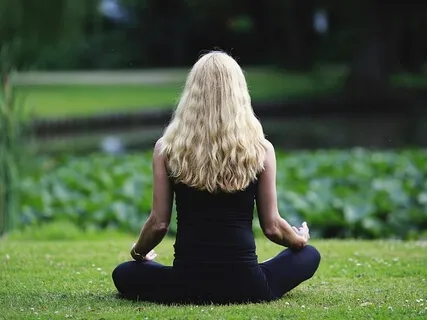
Finding a time and a place that's convenient for you to sit a while.
Perhaps finding a place in nature,
On a beach or in a park,
A garden or in a forest.
So that you can take in the sounds,
The sights and the smells all around you.
Or perhaps if you're indoors,
Just using this particular practice right now to both listen to my words but also be bathed in the sounds that are around us.
Whether those be the sounds from this particular meditation practice,
Guidance.
Indeed any sounds in your own environment.
So beginning by taking a seat,
Finding a sitting posture that is both comfortable for you but also one that embodies a sense of dignity,
A sense of wakefulness.
Maybe a sense of intention to spend this time practicing.
To spend this time being aware.
Just bringing your attention into your posture,
Into how your body is right now.
Feeling a sense of where your body is in space.
Maybe feeling the contact with the chair,
The tree stump,
Whatever it is that you happen to be sitting on.
Maybe a sense of contact between your feet and the ground.
Any other physical sensations that seem to be arising on account of your sitting.
Just noticing how these are,
What they're like.
Then allowing your eyes to close if that feels okay or just resting them on a point on the floor just a few feet in front of you.
Softening your gaze as we're about to take our attention a little more inward so it can be helpful to restrict what we can see in order to restrict or distract us a little bit.
Bringing your attention now to your breath,
Just to whichever in breath or out breath you become aware of in this moment.
Not trying to change it,
We're not trying to relax or soften or deepen the breath.
Just allowing it to breathe itself.
Allowing the breath to be exactly as it is right now,
Exactly as it needs to be.
Even if you find it's particularly shallow,
Lacking in rhythm,
Just acknowledging that that's how your breath is at this moment.
Seeing if you can become aware of particular sensations in your body that accompany the breath,
What it's like to breathe.
You might notice the movement of air in your nostrils or in the back of your throat,
Perhaps noticing a difference between the air as it comes into the body and the air as it leaves.
Maybe becoming aware of the rising and falling of your chest,
Maybe movement in your rib cage or down into your belly.
The place that you notice sensations isn't important,
Not as much as simply noticing what is there to be noticed by you right now.
Trying to keep your attention on your breath but in quite a gentle way because at times the mind will wander.
Our minds will be distracted by thoughts and move away from the part of the body that we're trying to focus on in this practice.
When this happens,
Simply bringing it back,
Simply returning our mind,
Our attention,
Our focus to the part of the body,
In this case to the breath and the physical sensations of the breath.
Recognising that the breath is always there as an anchor to the present moment and always something that we can return to.
So now letting go of the focus on the breath and shifting your awareness down,
Down your left leg,
All the way down,
All the way to the big toe of your left foot.
Seeing if you can get a sense of how the big toe feels right now.
Sensations are here.
What does it feel like?
Then having a sense of the other toes,
So all the toes of the left foot.
Noticing if you easily become distracted by sounds and then bringing your attention back again to the toes of the left foot,
The spaces between the toes.
Seeing if you can get a sense of all of the toes and yet the individuality of each toe.
And then perhaps on an out breath letting go of the toes as you shift your awareness to the bottom,
To the sole of the left foot.
The ball of the foot,
The instep and the heel.
Sensations are here,
What sense of maybe weight or pressure,
How does it feel?
And then letting go of the sole of the left foot on an out breath as our attention moves to the top of the left foot,
To all of the muscles,
Many different bones that make up the left foot.
Is there any tightness here,
Any resistance?
Any different temperature,
Warmth or coolness?
Sensation of the air or sock or shoe?
Just how is it?
How does it feel?
Now on an out breath let's let go of the left foot as our attention shifts to the left ankle.
Without moving the ankle,
What does the ankle feel like from the inside,
This joint that allows us to take a step to flex the foot?
Sensations are here,
Maybe noticing the urge,
The drive to flex the ankle somehow.
And recognising that if you do move it,
It's not a mistake,
You're not doing anything wrong by moving,
Perhaps just noticing first that urge to move.
And then on the next out breath,
Letting go of the left ankle as we shift our attention into the left lower leg.
So the shin on the front,
The calf on the back,
Sensing deep into the bone and out to the surface of the skin.
And again you may notice your mind is wandering,
You may notice that you're getting caught up in a reverie of thoughts,
Memories,
Plans.
If that's the case,
Just recognising that it's so and then seeing if you can gently bring your attention back to the left lower leg,
To any sensations here in this moment.
And on an out breath,
Letting go of the left lower leg and focusing our attention on the left knee.
Another joint where right now it's not moving,
It's not being flexed,
So how is it to have a knee that is static?
Can you feel the structure of the knee,
Maybe the sides of the knee,
The top of the knee,
The kneecap,
The soft back of the knee,
Maybe the different muscles that attach and wrap around the knee,
Or any sensations,
Anything that's there to be felt.
Or indeed if you're feeling nothing,
If for you the experience is as if you didn't have a knee,
Then that also is just your experience,
It's not that you're doing anything wrong.
So rather than going searching for particular sensations or maybe chiding yourself that somehow you're failing by not having a strong experience.
Just is how it is right now.
This again it might be different.
So on our out breath letting go of the left knee,
Turning our attention then to the left upper leg.
Large muscle groups of the thigh,
The front,
The sides and the back,
Maybe any sensations of contact with what you're sitting on,
What's holding you up.
Maybe there's some tightness here.
Maybe some fatigue from sitting for this time.
As best you can just noticing this.
Not needing to change it,
Not needing to shift our position,
Just acknowledging that it is how it is.
Moving all the way up into the left hip,
The place where the leg connects into the torso.
Having a sense of what this area is like,
How it's holding on,
How it's letting go.
Then on our next out breath we'll let go of the whole of the left leg.
From the toes,
The foot,
Lower knee and upper leg.
Letting go of the whole left leg and shifting our focus of attention down to the big toe on the right foot.
Having a sense of what this feels like to shift our attention altogether from one area to another,
Areas that aren't directly connected.
We still have a strong sense of the left leg even though we're really trying to focus on the right big toe.
Without moving the big toe how does it feel?
What are the sensations that are present?
Including the other toes of the right foot.
Something if you can have a sense of each one,
Spaces between them.
How they are a set of toes and how they are individuals.
Then on the next out breath letting go of the toes as you shift your focus to the sole of the right foot,
The ball,
The instep,
The heel.
Sense of pressure or weight moving down.
Whether this area feels compressed or feels in contact with the floor.
Then on the next out breath letting go of the sole of the right foot as we move into the top of the right foot.
Having a sense of how much is top,
Of where that is,
The muscles,
The bones.
What it feels like to be a foot and any sensations or temperatures,
Anything at all that you're aware of right now.
Then as you breath out letting go of the right foot and focusing on the right ankle.
Again seeing what it's like to feel the ankle without that flexion,
That movement.
Noticing the urge to move it,
Whether it's stronger as I talk about it.
Just seeing if you can allow that urge to be there without necessarily needing to take the urge.
And then as we breath out letting go of the right ankle and turning our attention to the right lower leg,
Shin in front,
Calf behind.
Breathing deeply into the bone of the lower leg and all the way out to the skin.
Whether that's feeling the movement of the air or perhaps a trouser leg,
Your clothes.
Just recognising,
Just allowing to be any sensations that there are in this present moment.
And again if you find your mind has wandered,
Just gently bringing it back to your right lower leg as best you can.
And out breath we'll let go of the right lower leg and focus now on the right knee.
What it's like to have a right knee right now without shifting or moving it.
Feeling the structure,
Sides of the knee,
The front of the knee,
The kneecap,
The soft rear of the knee.
Perhaps having a sense of what the knee allows us.
Sense of the joint movement,
Range of movement,
But doing so in stillness.
And letting go of the right knee as we breathe out and moving our focus now to the right upper leg.
Large muscle groups here of the thigh,
Sides,
The back of the thigh.
Feeling any tightness or tension,
Any bracing,
Any frustration.
Just allowing whatever is your experience to be your experience right now.
And including the right upper leg all the way to the hip on the right side.
Having a sense of where the right leg attaches to the torso.
And then on an out breath letting go of the whole of the right leg,
From the toes,
The foot,
The lower and upper leg.
As we turn our attention now to our pelvis,
To our base.
Perhaps starting with the buttocks on the chair or tree stump,
Whatever you happen to be sitting on.
Feeling any pain,
Tightness or just feelings of contact,
Compression.
Feeling if you can get a sense of the whole pelvis area,
The muscles and the bones,
The very structures that make up this area.
And any organs that are cradled within it.
Just noticing whatever's here.
As best you can,
Accepting any and all sensations.
If you find that a particular sensation at any point is particularly difficult,
Being kind to yourself,
Not feeling like you have to stay with it.
Feeling free to bring your attention back to your breath or to a part of your body that feels secure and grounded.
And then as best you can,
Seeing if you can follow my instructions to bring your attention to the next part of your body.
So now on an out breath let's let go of our pelvis.
Take in the sacrum,
Lower back,
The very bottom of your spine.
An area that's particularly prone to tightness and tension,
To pain.
Knowing how it is for you right now.
The purpose of this practice isn't to release pain,
Or to minimize or to prevent the pain,
But just to sit with whatever's here.
To acknowledge it,
To hold it in our awareness.
Perhaps to be more clear about precisely where it is,
Or precisely how it is,
And whether it changes at all.
If it moves,
Shifts,
Ebbs and flows,
Or perhaps not,
Perhaps it stays the same.
And on an out breath,
Moving slowly up the spine,
As best we can having a sense of each vertebra,
Each connecting joint.
Maybe the different muscles or the different nerves that come out of the spine.
Having a sense of the stability,
The postural straightness,
Or maybe the curves,
The natural curves that exist in your spine.
It gives us a structure that we can hang the rest of the body on.
The rest of the body allows us to keep a generally relaxed and upright spine.
And on an out breath,
Letting go of the spine and the back,
And shifting your attention now to the belly,
To the lower part of your abdomen.
Perhaps being keenly aware now of any movement of the breath.
Any sensations more deeply into your internal organs.
Maybe a sense of fullness,
A sense of emptiness.
Maybe other sensations,
Just recognizing whatever those are,
That they are your experience right now.
Not necessarily a sign of anything being wrong,
Or anything to worry about.
Maybe becoming a little bit more intimately aware of how you feel on the inside.
On the next out breath,
Feeling the movement of the belly as the air moves out of the body.
Then shifting the attention slightly higher up into the chest,
The rib cage,
Pectoral region.
Really noticing if sensations of the breath are more vivid here for you right now.
Feeling the softness of the front of the body.
Maybe a sense of it being receptive.
Any other sensations that are here.
Maybe feeling your heart beating in your chest.
But if you feel this and it feels uncomfortable at all,
Again feeling free just to shift the focus away and back to the breath.
Just doing whatever feels good for you.
And then on an out breath,
Letting the whole of your chest,
Your belly,
Your spine,
The whole of your torso dissolving in your mind's eyes,
You turn your attention now to the fingertips of both hands.
All the fingertips and the thumbs right at their very edges,
At their extremities.
Seeing if you can pick up on any sensations that are here right now.
What it's like to shift your awareness away from your torso to the ends of your fingers.
Then including the fingers and the thumbs themselves.
The tops,
The bottoms,
The sides,
The joints.
Seeing if you can do this without moving them,
Without shifting or flexing your fingers.
Or if you feel the need to do so,
Just noticing that,
Noticing the urge,
The drive to move your fingers in this moment.
What does that feel like?
And let's include your knuckles,
The places where the fingers attach into the hands.
The hands of the hands,
The backs of the hands.
So having a sense of the whole hand including the fingers.
Maybe feeling a sense of blood flow,
A sense of movement or rhythm in your hands.
And then on an out breath letting go of your hands as you focus on your wrists.
Even without flexing or extending your wrists,
Just seeing what it's like to have a wrist not moving in this moment.
Place where the hands connect to the arms.
And then as you breathe out shifting up into the forearms.
Depending on where you're sitting you might find that your forearms are in contact with your legs or your lap or your chair.
There might be a sense of contact or texture or warmth.
Just feeling how this is.
What are your forearms like right now?
Then as you breathe out letting go of your forearms and shifting your attention into your elbows.
Both elbows at the same time.
Noticing how it is to focus in two places at once,
Two joints.
Just as they rest here.
Just as you may notice at times that your mind wanders to particular thoughts,
You may also notice that you have particular emotional reactions.
There's a frustration,
Boredom,
Urgency,
Maybe a sense of not wanting a particular reaction or particular sensation or maybe of wanting more of something else.
We all have this sense of wanting things to be different from how we find them.
As best you can just acknowledging any emotional reactions that you're having.
Not trying to change these because even the emotions themselves are just part of the experience,
Just something else to be observed,
To be experienced.
And as we breathe out let's shift now to the upper arms.
Both of the upper arms.
Feeling the difference between the front and the back of the upper arms.
The weight of them,
How they hang from the shoulders.
Any sensations,
Any temperature,
Tingling,
Bracing,
Numbness.
All of us there to be felt.
Then on the next out breath let's let go of the upper arms as we move our focus into our shoulders just as they are not trying to relax or make the shoulders be different from how we find them.
Feeling the fronts of the shoulders,
Sides of the shoulders,
Backs of the shoulders.
Having a sense of where they are in space.
Any tightness that's here.
Any tension perhaps that we're holding.
Perhaps that we feel is holding us.
And then as we breathe out letting go of our shoulders,
Moving our attention into our neck.
Another region that's particularly prone to tightness and tension.
Just noticing how this is.
Really noticing a sense of the weight of your head,
The work that the neck has to do to keep the head aloft,
Keep it straight.
Structure of the neck,
Right into the spine.
And then on an out breath letting go of the neck and moving into the throat.
Similar region but on the front now having a sense of where our vocal cords are kept.
Where the air moves through,
Where what we eat moves through.
Really having a sense both of the body and of the space.
And then let's let go of the throat with our next out breath.
Perhaps now on the chin,
The jaw.
Maybe the teeth and the mouth,
Tongue.
Seeing if we can pick out these individual parts.
But without spending too long on each of them.
Still noticing any sensations that there are,
Any experiences there to be felt.
Now focus on the nose,
The movement of air that we might pick up on at the nostrils.
The cheeks.
Up to the eyes and the muscles around the eyes.
Whether your eyes are closed or open,
Having a sense of how the eyes feel.
Not what they can see but how they feel.
The eyebrows and the space between the eyebrows,
Forehead,
Up to the hairline.
Your ears,
Any sounds being processed through the ears.
And then through the hair all the way up to the crown of the head.
Just sensing how the whole head feels right now.
Any sensations,
Any pain,
Any discomfort.
Just whatever you're recognising and noticing.
Now on the next out breath let's let go of the head and we'll just sweep up from the toes,
The feet,
The lower,
The knees,
The upper legs,
Pelvis,
Torso,
Fingertips,
Fingers,
Wrists,
Forearms,
Upper arms,
Shoulders,
Neck and head.
Having a sense of the whole body now.
The whole body complete in this moment,
Whole in this moment and indeed in this moment.
Just noticing how your whole body feels.
If you notice anything different from before,
Maybe different from when we were focusing on a particular part of the body.
Maybe having a sense of a greater awareness of the whole body,
A sense of spaciousness,
Sense of awareness,
A sense of groundedness.
Now seeing if you can bring this greater sense of awareness to the next moments of your day.
As this practice comes to an end with the sound of bells.