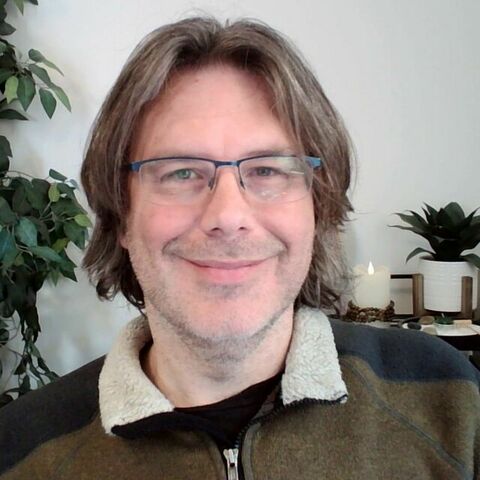
I'm Tim Fortescue,
A life coach coming alongside of folks in their personal and spiritual development.
And today I'm going to talk to you about the eight C's of self-leadership in the IFS model.
And then I'll lead you in a meditation to help you check in with your parts.
And feel free to let me know what questions you have and I'll do my best to engage with them.
And find my other meditations if you're interested in some of the other videos and meditations that I've done like this.
But before we jump into the eight C's of self-leadership,
Let me talk and recap the basic goals of the IFS model.
And based on the model's basic assumptions,
IFS concepts and methods support the following goals to transform and reorganize the internal system of self and parts.
And if you're unfamiliar with the basic assumptions of IFS,
You can check out my recorded talk on the basic assumptions.
But the first goal of the model is to liberate or unburden parts from their extreme roles.
Parts are forced into roles that they didn't choose and that they don't want to do.
And for me,
It's a lot of younger parts like seven-year-olds that are carrying a lot of burdens that they didn't choose.
So deliberate or unburden parts from their extreme roles.
The second goal is to restore trust in self-leadership.
And I'll be talking about that today and what self-leadership is.
Number three,
To achieve balance,
Harmony,
And wholeness in ourself,
In our inner system,
But also with the world.
Because number four,
To bring more self-energy can be healing for others and the world.
And so that wholeness is within,
But also without.
And so one of the assumptions that is paramount in the IFS model is everyone has a self.
And self describes the essence of you,
How you came into the world and who you are when you're feeling calm,
Curious,
Compassionate,
Confident,
Courageous,
Clear,
Creative,
And connected.
There are other words that don't have to begin with C,
But the model refers to those that I just listed as the eight Cs of self-leadership.
And I like to say too that from a Christian perspective,
I know some people can get hung up on that capital word,
Capital S,
Self.
And I like to think of self as my beloved self,
The beloved child of God that I was created to be.
So whatever your context is,
Look at that word and know that we all have a self with a capital S.
So let's look at these eight Cs of self-leadership a little more.
Number one,
Calmness,
Being centered and able to maintain a physical groundedness in the face of stressful situations or parts,
Having a common presence with other people,
Experiencing spacious,
Peaceful,
Quiet inside.
Curiosity,
Being genuinely open and curious about why other parts or other people are reacting as they do instead of becoming upset with them.
Having some curiosity with an absence of agenda to change another's behavior,
Wanting instead to genuinely understand it.
Then compassion,
Seeing beyond others' angry or reactive parts and recognizing the fear or pain behind them.
Feeling caring for another who is suffering and a desire to help without being overwhelmed by their pain.
And confidence,
Trusting that even if you've made mistakes,
There's an abiding knowledge that your truest self holds goodness and worth.
Honestly,
Self trusts its competence even when parts are angry or distrustful.
Self-confidence involves relating to parts and people in ways that are healing and effective.
Courage,
Approaching formerly feared parts or situations and respond more consciously.
Standing up to injustice while also speaking for your own extreme parts and apologizing for any negative impact on others.
And it's a challenge to weigh that,
But it requires courage on all sides.
And so courage is one of those aspects of self-energy.
And then clarity,
Maintaining a clear,
Undistorted view of situations and parts with an absence of projections.
And then two more parts or Cs to these eight Cs of self-leadership and connectedness.
Feeling a sense of connection with all parts and other people or a desire to reconnect.
Recognizing that all life is connected and that the sense of separateness is an illusion.
And then finally,
Creativity.
Feeling free to realize creative potential and to enjoy novelty,
New things.
Encouraging protectors to relax and allow parts to express themselves unencumbered by burdens of fear,
Worthlessness,
Or shame.
And like I said,
There are many other ways to describe the resonant qualities of self-energy and what it looks like when self is in the lead.
And these are offered as a way to recognize its presence in yourself and with others.
And any one quality can lead to the rest.
And we can get a critical mass of self so that we can offer it to ourself and our parts and with the world.
And I've taken this directly by the book and my own level one training.
And so I hope that this is helpful for you.
But with that,
Let me close with a guided meditation to help you check in with your parts.
And again,
If you have questions or comments,
Feel free to let me know.
And additionally,
You may specifically want to check out the path meditation.
It's a meditation that is designed specifically to guide you into helping your parts unblend so that yourself can lead more.
I have a meditation that you can find that I lead,
But also there are meditations by Dick Schwartz who discovered and founded IFS if you want to check out one of his.
And it's also in his book,
No Bad Parts.
Just pause and let yourself settle and take a couple deep breaths and close your eyes.
Or if you prefer,
You can just let your gaze rest softly in front of you.
Turn your attention inward and begin to notice what's coming up.
What are those parts?
Thoughts,
Feelings,
Impulses,
Beliefs,
Sensations,
Many other things.
But just notice what's coming up.
I know for me in these instances,
I have to get those performative parts to see if they can give me a little space that I want to get it right or don't want to mess up.
What's your trigger or trailhead?
Maybe it's a person,
Something you've got coming up.
Maybe it's something that has already happened that you're still thinking about.
Maybe beliefs that go with that.
But just notice for just a minute what's coming up inside.
As your parts come up,
Just notice them,
Welcome them,
Let them know there's no pressure or agenda.
You're just glad they're here.
You want to get to know them and you want to allow them to get to know you.
Just kind of scan your parts that are there,
Whether they're coming into a room or they're coming to a table or around a campfire.
Just kind of notice again who's there.
Check to see if there's one part that you notice the most that's standing out,
Really wants some attention today.
Maybe it's a part that wants to get it right or a part that says,
I'm not enough.
All of these parts,
If you can,
Just let them know that they're welcome.
Let them know that there are no bad parts.
And if there are parts that struggle with that,
Let them know that they're welcome too.
And then the part that you notice the most,
Kind of check in and see where you notice it in or around your body.
Often for me,
There's tightness in the chest.
Sometimes there's an image,
Some of my seven-year-old parts,
Just sitting on a park bench and wanting someone to speak with.
Maybe it's a color.
Just kind of see where you notice that part that is most prevalent,
That is in or around your body.
And don't feel like you need to force anything.
It may make sense just to sit with your parts and just give them space.
But if you can notice one part,
Just kind of settle into where you notice it.
Check in and see how you're feeling toward it.
This is where if we can get enough critical mass of self-energy to move forward,
We'll do that.
See if you have some curiosity or some compassion,
A desire to be creative,
To understand.
And if you've got a critical mass of self-energy,
You can move forward with me.
If not,
Just kind of check in and notice those parts that may have some resistance and check in with your other parts that maybe weren't the most prevalent.
See if they have any fears or questions about you moving forward with this part.
Maybe one part says,
What about me?
Let that part know that you want to spend time with it too,
But for now,
If it could just step back and give you some space.
If there's a part that won't step back,
Maybe that part needs your attention right now.
Or maybe you just need to be with one or two parts and just give them some space.
But if you can move forward,
If you're feeling some compassion and curiosity,
Go back to the part that is most prevalent and that you notice the most and check in again and see where you're sensing it,
Just kind of check in again,
See how you're feeling toward it.
And if there's enough curiosity,
Just a sense of wanting to understand and to know it more.
Go ahead and move forward and ask the part that you notice the most,
What gifts it brings to you,
What it may want to share,
What it needs,
What it wants,
And just listen.
Maybe there's something you want to share with the part.
Go ahead and share that and know that you can pause this recording anytime if you need more time.
Check in with that part you notice the most and see,
Is there anything else?
Ask it if it would like to spend more time with you.
Let it know you want to know more of its story.
You want to share more of your story.
Ask if it would like that.
And if it would,
Let it know that you would like that too.
And make a commitment or contract to go back and spend some time with that part later today or tomorrow,
Whatever works for you and for the part.
Thank it for its courage.
And as we close,
Just notice all your other parts that came up and thank them for their courage,
For their vulnerability in coming forward.
Let them know if it feels right that you want to spend time with them too.
Then you can bring your attention back to where you are and you can open your eyes if they were closed and continue about your day.
But thanks to you and to all your parts for your courage in joining me.
If you have questions,
Again,
Let me know and I would be glad to help if I can.
But thanks again and take good care of yourself.