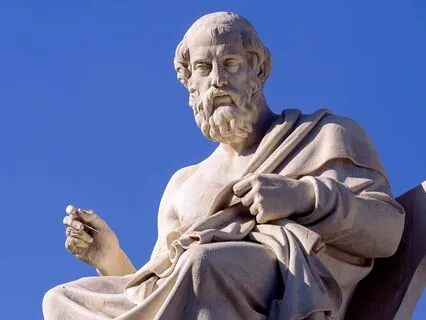
Ancient wisdom,
The Greek concept of love.
You can tell the importance that a culture places on something by the number of words they use for the concept.
The exact number of words that the Inuit have for snow is often disputed but undeniably they have a more precise and nuanced way of describing different types of snow and ice than we do in more temperate climates.
Similarly,
When it comes to automobiles,
The number of words used to describe various makes,
Models and styles can be quite extensive.
In English,
For instance,
There are many words to describe cars,
Including common terms like sedan,
Coupe,
SUV,
Hatchback,
And then more specific terms for various makes and models,
For example Ford Mustang,
Toyota Camry,
Jeep Wrangler.
The total number of words or terms could easily run into the thousands or more.
Which brings us to the concept of love.
For sure,
English has many more words and phrases for physical intimacy than for emotional intimacy.
And I'll leave the synonyms for physical intimacy up to you.
Have fun with that one.
But today I'm going to focus on emotional intimacy and I want to share with you 14 words from classical Greek,
Starting off with agape.
Agape means love,
Especially brotherly love,
Charity,
The love of God,
For a person,
And of a person for God.
Agape is used in ancient texts to denote feelings for one's children and feelings for a spouse.
And it was also used to refer to a love feast.
Agape is used by Christians to express the unconditional love of God for his children.
This type of love was further explained by Thomas Aquinas as to will the good of another.
The second term is eros,
Meaning love,
Mostly of the sexual passion kind.
The modern Greek word erotos means intimate love.
Plato refined his own definition.
Although eros is initially felt for a person,
With contemplation it becomes an appreciation of the beauty within that person,
Or even becomes appreciation of beauty itself.
Plato does not talk of physical attraction as a necessary part of love,
Hence the use of the word platonic to mean without physical attraction.
In the work Symposium,
Plato has Socrates argue that eros helps the soul recall knowledge of beauty and corporal,
Spiritual plane of existence.
That is,
Finding its truth,
Just like finding any truth,
Leads to transcendence.
Lovers and philosophers are all inspired to seek truth through the means of eros.
3.
Philia,
Meaning affectionate regard,
Friendship,
Usually between equals.
It's a dispassionate virtuous love,
A concept developed by Aristotle.
In his best-known work on Essex,
Philia is expressed variously as loyalty to friends,
Specifically brotherly love,
Family,
And community,
And requires virtue,
Equality,
And familiarity.
Furthermore,
In the same text,
Philos is also the root of the word denoting self-love,
And arising from it,
A general type of love used for love between family,
Between friends,
A desire,
Or enjoyment of an activity,
As well as between lovers.
4.
Philoprogenitive,
Pertains to the love and desire for one's offspring,
Or the act of producing and raising children.
It expresses the natural affection and care that parents have for their children.
5.
Storge,
Means love,
Affection,
And especially of parents and children.
It is the common or natural empathy like that felt by parents for offspring,
Rarely used in ancient works and then almost exclusively as a descriptor of relationships within the family.
It also is known to express mere acceptance or putting up with situations,
As in loving the tyrant.
It is also used when referencing the love of one's country,
Or for a favourite sports team.
6.
Philoutia,
Means self-love,
To love oneself or regard for one's own happiness or advantage.
This has been conceptualized both as a basic human necessity and as a moral flaw akin to vanity and selfishness,
Synonymous with egotism.
The Greeks further divided this love into positive and negative.
One,
The unhealthy version,
Is the self-obsessed love,
And the other is the concept of self-compassion.
7.
Seneia,
This is the ancient Greek concept of hospitality.
It is sometimes translated as guest friendship or ritualized friendship.
It is an institutionalized relationship rooted in generosity,
Gift exchange,
And reciprocity.
Historically,
Hospitality towards foreigners and guests was understood as a moral obligation.
Hospitality towards foreign Hellenes,
Honored Zeus,
And Athenae,
Patrons of foreigners.
8.
Prama,
The Greek word prama,
Is a type of love that has matured over time.
It refers to the deep understanding,
Compromise,
And tolerance that develops between couples in long-term relationships,
Particularly in marriages.
It is often associated with enduring love and practicality,
Hence the English word pragmatic.
9.
The concept of charis.
It is often translated as grace or kindness.
It is associated with the idea of giving,
Gratitude,
And a sense of favor or goodwill.
Acts of kindness and grace can be expressions of love.
10.
Elios.
Elios is often translated as mercy or compassion.
It represents a form that involves showing pity or compassion towards others who are suffering or who are in need.
11.
Eunoyu.
Eunoyu means goodwill or beautiful thinking.
It is often associated with having a kind and generous disposition towards others,
Which can be a form of love expressed through positive intentions and goodwill.
12.
Mania.
Mania refers to obsessive or possessive love.
It is the origin of our word mania.
It involves an intense and often irrational passion for someone,
Which can lead to an overwhelming desire to possess or control the object of one's affection.
Mania can be characterized by jealousy,
Possessiveness,
Or extreme emotional fluctuations.
13.
Lethos.
Lethos translates as playful love or game-playing love,
Representing the kind of love that is light-hearted and fun,
Often associated with flirtation and playful interactions.
It is characterized by a lack of deep commitment and a more casual approach to romantic or affectionate relationships.
14.
Pahraki.
Pahraki refers to the love and passion invested in creative endeavors or artistic pursuits.
It involves putting one's heart and soul into a creative project or activity,
Often the sheer joy of creating rather than for external rewards or recognition.
Pahraki conveys a deep and genuine enthusiasm for one's craft or art.
It's a good term for my love of empath coaching,
Helping other empaths to have a shorter,
Easier learning curve than I had to go through myself.
And it also covers how I feel about sharing my knowledge here on Inside Timer.
If you've enjoyed this talk,
You may also enjoy the track 108 Affirmations for Love.
Thank you for listening.
Many blessings to you.