Meditation number three.
Stillness,
Trust,
Compassion,
And patience.
Or as I like to call it,
Inescapable permission.
So now what?
Well,
The good news is that's up to you.
What this is about is up to you.
Not up for you to decide,
But up to you to discover.
So while we sit here in our body,
I'd like to encourage you to have trust in your practice and intention.
To be patient in your unfolding discovery.
To have compassion for yourself.
And also to know that your act of sitting down to meditate is always and already expressions of your trust and of your compassion.
So,
Finding a place to sit that you can be still for the next 20 minutes.
Somewhere where you won't be bothered.
And somewhere relatively quiet.
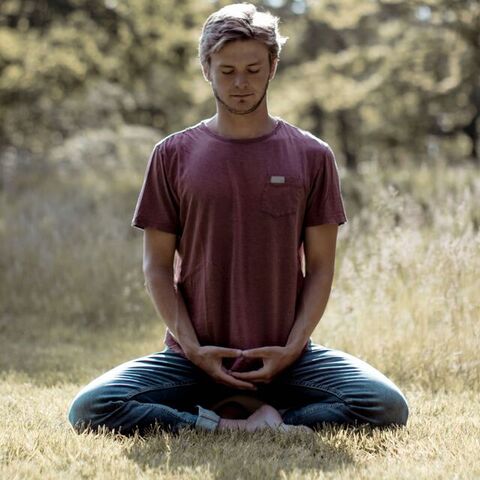
Sitting with a somewhat intentional posture.
Upright spine.
Just so that you're not slouching over.
The upright spine can help us stay alert and awake.
Allowing the eyes to close.
Letting the face relax completely.
Letting the shoulders drop.
Letting go of any tension in the shoulders.
Now down into the abdomen.
Letting the abdomen be soft,
Relaxed.
And letting the breath come down into the abdomen.
Almost as if the abdomen were receiving the breath.
Expanding and contracting with each breath.
Letting the legs be soft and relaxed.
And letting go of any unnecessary tension in the body.
Let tension be free of your grasp.
Allowing your attention to come either to the breath in the belly,
As the belly expands and contracts.
Or to your connection with the floor.
Your own sense of pressure and weight.
And your contact with your seat.
And this is where your awareness,
Your attention can settle.
Again,
Relaxing the face,
Shoulders,
Breath,
Belly.
And letting your attention arrive here in the body.
Hearing any sounds that you hear.
And if at any point throughout the meditation you've noticed that you've garnered attention,
Just simply releasing it.
So we're being awake to the body,
Present in the body,
And present to our experience.
We're not focused somewhere to the exclusion of any other part of our experience.
But we are continuously offering our attention to our self and our life as it's unfolding.
Whether we're paying attention to the breath,
To our connection with the floor or our seat.
Or whether we are simply resting in a quiet,
Awake stillness.
We are encountering our self.
From the depth of our self and our experience to the superficial.
And don't think that any part of you gets excluded from this.
Because it's about you in your entirety.
And as long as we're busy avoiding a part of our self that we think maybe isn't deep or isn't meditative,
Then we're not actually opening up to the potential of meditation.
We're just trying to create our experience of what we think it is.
Or what we want it to be.
But what I'm telling you is that it is the way that you are.
Unavoidably.
And you are the way that you are in every given moment.
And you're sitting down to meditate is an expression of being willing to witness that.
To witness yourself and your life as it unfolds in front of you.
And as you.
And so whether you feel very focused and connected to the stillness.
Connected to the relaxed,
Still body.
Or whether you feel completely restless and bored.
Or anything in between.
It's you that you're witnessing.
And it's so compassionate that you sat down to witness yourself.
Because when we take a confinement like this,
We don't move,
Our eyes are closed,
There's no distraction.
We unavoidably encounter ourself.
In all of the beauty,
Depth,
And stillness.
And in all of the superficiality and craziness.
And we cannot help but to be the way we are.
And when we meditate,
We can't help but to notice that very intimately.
And I like to call this inescapable permission.
Because you're engaging with the part of you which we could call your awareness,
But that's just a name for it.
You're ultimately engaging with the part of you that is willing to be the way that you are.
It is willing to experience you as you are.
And it's actually wanting to do that.
So it's inescapable in that we can't turn it off.
This awake awareness is always ready for what arises.
This awareness,
This awakeness which is hearing my voice right now and experiencing your experience,
This awareness is always willing.
It is willing to experience your experience completely.
It's willing to be you.
This part of you is willing to be you.
In a sense,
It's inescapable.
We always are the way that we are.
And that's why it's permission.
Even if we're resisting the way that we are,
Our resistance has permission.
It has permission in that it's there.
Relaxing the face,
The shoulders,
The belly,
The breath,
The legs.
So to me,
Fundamentally,
Meditation,
Put one way,
Is we are engaging with our fundamental capacity to be awake to our awareness.
In your experience.
In your experience being you.
Whatever you are,
Whatever you feel yourself to be,
It's that.
It's not exclusively that,
But it's that too.
So by taking this confinement,
What has to arise,
What does arise,
And what we join with,
Is our capacity to be awake.
Is our capacity to be ourself.
It's the capacity that we are unconsciously so often trying to avoid.
But here you are,
Right now,
Being yourself.
Can you feel the compassion of being yourself consciously and willingly?
Can you feel that it's meaningful to sit down quietly and be yourself?
It's certainly not always comfortable or enjoyable.
But that's why it's compassionate.
Because you have the capacity and the love to show up for those experiences too.
To be awake to them and to say,
Yes,
This is my experience.
Perhaps even to say,
Yes,
This is my experience and I don't know what to do about it.
Perhaps we sit in meditation and we just feel such a restlessness or a confinement.
Can we even come to that?
And of course you can.
Again,
Relaxing the face,
The shoulders,
The belly,
The breath.
When we don't know how to let go,
When we don't know how to be at peace,
How to be still,
We let the body guide us.
We let our intuition guide us.
And we trust how it unfolds for us.
And we always return.
So you can stay here in the body for as long as you'd like.
Or you can gently open the eyes.
And that ends this meditation.
And thank you for joining me.