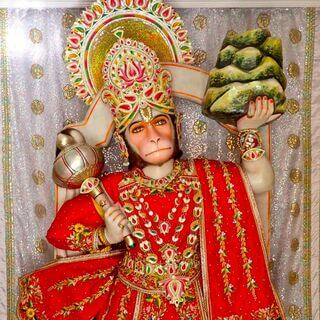
The world’s largest free audio library for everyday wellbeing
Devotional & Prayer
Bhakti Meditation is a Hindu devotional practice of cultivating love, longing, and surrender toward one's chosen form of the divine, known as the Ishta Devata.
Last Updated
3 Jul 2026
We are still reviewing this page. Our research team checks every technique page for accuracy and evidence quality before final release. Details may change as that review completes. The evidence badge shows our current reading of the published research.
RECOMMENDED DOSE
A short daily start mirrors the closest studied devotional practice: a randomised study of Kirtan Kriya (a devotional yogic chanting meditation) had participants practise 12 minutes per day. This close-modality dose is extrapolated here as an achievable introductory range for Bhakti Meditation.
Daily practice reflects the schedule used in the related Kirtan Kriya study. The step up to 15–20 minutes extends beyond the specific 12-minute dose that was tested, so the session length here is an editorial estimate rather than a directly measured figure.
No direct dose evidence supports an extended maintenance dose for Bhakti Meditation; this is an editorial synthesis based on common longer-form devotional and mantra practice conventions. Increase only if the shorter doses feel comfortable and sustainable.
Session length
Session length: 10–12 minutes
10
MIN
How long each individual practice session should last from start to finish.
Frequency
Frequency: 7 days
7
DAYS
The number of days per week to fit a session into your routine.
Session length
Session length: 15–20 minutes
15
MIN
How long each individual practice session should last from start to finish.
Frequency
Frequency: 7 days
7
DAYS
The number of days per week to fit a session into your routine.
Session length
Session length: 20–30 minutes
20
MIN
How long each individual practice session should last from start to finish.
Frequency
Frequency: 7–14 days
7
DAYS
The number of days per week to fit a session into your routine.
About this card. These recommendations draw partly on evidence from a closely related devotional chanting practice and partly on general practice conventions, and they are not a substitute for personalised guidance from a qualified practitioner.
Quick answers to what people most often ask. Each card links to the deeper section below.
evidence
Meta-analyses of meditation broadly find small-to-moderate reductions in anxiety, stress, and low mood, the closest available evidence for Bhakti Meditation. No trial has tested devotional Bhakti practice directly, so benefits are expected by extension rather than proven. Effects are modest, study quality varies, and the picture is promising rather than settled.
Read moregood for
Adults carrying anxiety, stress, or restlessness that will not settle may benefit from Bhakti Meditation, especially those with a devotional orientation who find a beloved focus easier to sustain than silent meditation. It offers steadier calm and room for emotional release, not a substitute for care when anxiety, depression, trauma, or dissociation are severe.
Read moresafety
Most healthy adults find Bhakti Meditation low-risk and settling. Intense or prolonged devotional absorption can occasionally surface difficult emotions or a disconnected, unreal feeling rather than calm. People prone to dissociation, those with a psychiatric condition, or anyone moving through recent grief or trauma should keep sessions short and work alongside a teacher or clinician.
Read morehow it works
Giving restless attention a single, beloved focus builds decentering, the capacity to watch thoughts and feelings pass rather than obey them, so their emotional charge softens. Allowing devotional love, longing, and gratitude to rise lets bottled emotion move through, while the nervous system shifts toward recovery: breath slows and the brain's threat centre reacts less sharply.
Read moreBhakti Meditation is a Hindu devotional practice of cultivating love, longing, and surrender toward one's chosen form of the divine, the Ishta Devata, through sustained contemplation of its qualities, stories, and presence.
The practitioner sits quietly and turns attention toward a chosen form of God, dwelling on divine qualities and stories, such as Krishna's compassion, Shiva's transcendence, or the Divine Mother's protection, until devotional emotions (bhava) like love, longing, gratitude, awe, and surrender arise on their own. The contemplation can follow the Narada Bhakti Sutras' nine progressive stages, from listening to complete self-offering, and sits within the Bhagavad Gita's four paths of yoga.
Bhakti Meditation is devotional surrender, an active offering of trust toward a higher power, rather than the passive resignation the word surrender can suggest. It differs from silent or breath-focused meditation in that attention rests on a beloved divine form and emotion is deliberately cultivated rather than quieted. It is also distinct from decentering practices that simply observe thoughts from a distance, because here the practitioner leans toward the divine with longing and self-offering.
Not to be confused with
Passive resignation or giving up
Devotional surrender is an active choice to trust and offer oneself to a higher power, not a resigned collapse or fatalism. It is engaged and receptive rather than defeated, which is why it can feel like relief rather than defeat.
Kirtan (congregational devotional singing)
Kirtan is call-and-response devotional singing done aloud, often in a group. Bhakti Meditation as practised here is silent, inward contemplation of the divine, though both express the same devotional love.
Puja (ritual worship)
Puja centres on outward ritual acts such as offerings and ceremony directed at an image of the deity. Bhakti Meditation is the inward cultivation of devotional emotion and contemplation, which can accompany ritual but is not the ritual itself.
The other three yogic paths (jnana, karma, raja)
Bhakti is the path of devotion, one of four paths in the Bhagavad Gita. It is distinct from jnana (the path of knowledge and inquiry), karma (selfless action), and raja (disciplined meditation), which pursue the same goal through different means.
Bhakti Meditation appears to work by giving restless attention a single, beloved focus, which over time builds decentering, the capacity to watch thoughts and feelings pass as transient mental events rather than commands you must obey, so their emotional charge softens (Lebois et al., 2015). As devotional feelings of love, longing, and gratitude are allowed to rise rather than be held back, the practice may also draw on affective release, letting emotion be felt and move through instead of staying bottled up (Chambers et al., 2009). Both mechanisms come from meditation research broadly, not Bhakti specifically, so they describe plausible pathways rather than effects measured in devotional practitioners.
Sticky, looping thoughts lose some of their grip once you start watching them as passing mental events rather than facts you have to obey. In Bhakti Meditation, resting attention on a beloved focus can build this kind of observing distance, which tends to soften the emotional charge of whatever surfaces (Lebois et al., 2015).
During Bhakti practice, devotional feelings like love, longing, gratitude, and grief tend to rise to the surface, and letting them be felt instead of held back is what many people describe as something finally moving through, leaving a lighter, more open feeling afterward. This is affective release, where emotions become easier to access and express; contemplative practices may work partly by changing how we relate to emotions, not just what we feel (Chambers et al., 2009).
Breathing slows, the chest and shoulders loosen, and a keyed-up feeling starts to fade as loving contemplation engages the parasympathetic nervous system, the body's rest-and-recovery branch that lowers heart rate and eases tension. Experienced meditators tend to recover from stress faster, and brief practice has been linked to small drops in blood pressure (Liudmila et al., 2019), (Chen et al., 2012).
Reactions feel less urgent as a steady devotional focus draws attention away from self-referential worry. Watching thoughts and feelings pass as mental events, rather than commands to act on, can lower the body's overall state of arousal, so tension eases and responses feel less automatic (Lebois et al., 2015), (Chambers et al., 2009).
In the body, Bhakti Meditation is associated with the physical signs of a nervous system tipping toward recovery. In a randomized trial of brief meditation in nursing students, systolic blood pressure, the force in the arteries with each heartbeat, dropped by roughly 2 mmHg more than in people who did not practice (Chen et al., 2012), and in long-term meditators both heart rate and cortisol recover toward resting levels faster after a stressful task, clearing the body's main stress hormone more quickly (Liudmila et al., 2019). Brain-imaging reviews of meditation broadly also report calmer activity in the amygdala, which drives the brain's threat response, meaning it reacts less sharply (Calderone et al., 2024). These changes come from meditation studied in general rather than Bhakti specifically, and in the body they may feel like the breath slowing, the chest and shoulders loosening, and a keyed-up feeling fading sooner.
The steadying you may feel during quiet devotional practice has a physical side. In a trial of brief meditation, systolic blood pressure, the force in your arteries each time the heart beats, dropped by a small amount, roughly 2 mmHg more than in people who did not practice (Chen et al., 2012), and a lower reading tends to accompany the body easing out of a stress-ready state and feeling less braced.

After something stressful, that pounding, keyed-up feeling can linger long after the moment has passed. In studies comparing seasoned meditators with people new to practice, the experienced group's heart rate, the pace at which the heart beats, settled back toward its resting baseline faster once the stress was over (Liudmila et al., 2019).
After a stressful moment rattles you, the body can take a while to come back down. In experienced meditators, cortisol, the body's main stress hormone, drops back toward its resting level faster than in non-meditators (Liudmila et al., 2019). That quicker recovery can feel like tension letting go sooner, so a jarring event stops echoing through the rest of the day.
You won't feel this one during a session, it's a slow, cellular change rather than a shift you notice in the moment. In a small trial of a related devotional chanting meditation, telomerase activity, an enzyme that helps maintain and repair the protective caps on the ends of your chromosomes, rose over eight weeks (Lavretsky et al., 2012). It tends to track with the lower day-to-day stress that regular practice can bring.
During devotional practice, self-focused thought often loosens its grip, so the boundary around "me" feels softer as attention rests on something larger than the self. That felt shift tracks with reduced self-referential processing, the mind's running commentary that filters every experience through "me" and "my story," which brain-imaging reviews report easing during sustained meditation (Calderone et al., 2024).
Moderate but indirect evidence supports Bhakti Meditation for anxiety and stress, with limited and emerging support for low mood (Goyal et al., 2014), (Pranata et al., 2024). The clearest signal comes from meditation studied broadly rather than Bhakti specifically, where a large meta-analysis of adult programs found a standardized mean difference near 0.38 for anxiety (95% CI 0.12-0.64) at eight weeks, a small effect meaning the average practitioner ends up calmer than about 65 percent of people who did not practice (Goyal et al., 2014), and a student-focused meta-analysis found a larger reduction (Pranata et al., 2024). A small pilot of a related devotional chant hinted at mood gains in stressed caregivers (Lavretsky et al., 2012). What is not yet supported: any trial of Bhakti Meditation itself, long-term follow-up, or a claim that it replaces care for a diagnosed condition.
Racing, anxious thoughts can settle when devotional focus gives restless attention something steady to rest on. Broader meditation research shows small-to-moderate reductions in anxiety (Goyal et al., 2014), (Pranata et al., 2024), though these findings come from meditation studied in general rather than Bhakti practice specifically.
Stress can leave the body braced and the mind unable to switch off. Bhakti Meditation gives that restlessness a devotional focus, resting attention on a beloved image of the divine while feelings of love, gratitude, and surrender are allowed to rise; meditation practices broadly show small-to-moderate easing of stress, anxiety, and low mood (Goyal et al., 2014).
Low mood can make everything feel heavier and slower to reach. Across meditation programs studied so far, regular practice is linked to small improvements in depression symptoms, and Bhakti's devotional focus gives attention a warm, steady object to return to when your own thoughts feel bleak (Goyal et al., 2014).
Meta-analyses of meditation broadly find small-to-moderate reductions in anxiety and depression, which is the closest evidence we have for Bhakti Meditation (Goyal et al., 2014), (Pranata et al., 2024). The main areas studied are anxiety, stress, low mood, and stress-recovery physiology such as heart rate and blood pressure, but almost none of this work tests devotional Bhakti practice itself. Two limits matter for a reader: the evidence is indirect, borrowed from general meditation rather than measured in devotional practitioners, and some reported statistics are significance-only rather than full effect-size estimates, so the picture is best read as promising rather than settled.
2
Meta-analyses
1
RCTs
1
Systematic reviews
1
Observational
5
Pilot
Studied populations
A shift in perspective: Decentering through mindful attention to imagined stressful events
2015
Finding: In this brain-imaging study, people who were guided to view imagined stressful events as passing mental states, rather than diving into them, showed calmer activity in regions tied to self-focus and gut-level reaction, while areas involved in stepping back and shifting perspective became more active. In everyday terms, watching a difficult thought or feeling as something that moves through you seems to take some of the emotional charge out of it, which mirrors how devotional focus can loosen the grip of "this is happening to me." Worth noting: the study was done with non-meditators reacting to imagined scenarios, and it looked at this general observing stance rather than Bhakti Meditation itself, so it points to a plausible mechanism rather than direct proof of the practice.
See full citation in referencesAdverse effects of meditation: A review of observational, experimental and case studies
2021
Finding: Reviewing 39 studies of everyday meditators, this analysis found that a minority of people experienced unsettling effects, including low or difficult moods, a distorted sense of self, feelings of unreality, and, more rarely, hallucinations or delusions. It also noted that these experiences can become more intense when practice is framed in strongly spiritual rather than secular terms, which is worth keeping in mind for the deeply devotional focus of Bhakti Meditation. For most people the practice is well tolerated, but if absorption starts to feel destabilizing or brings up hard emotions, it's wise to ease off and seek support. Because this drew on observations across varied studies rather than a controlled trial, it points to possibilities to watch for rather than firm rates of risk.
See full citation in referencesBhakti Meditation grows from a classical Hindu devotional path described in the Bhagavad Gita, which places it among four yogas alongside the paths of knowledge, action, and meditation, and in the Narada Bhakti Sutras, which map nine progressive stages from simple listening (shravana) to complete self-offering (atmanivedana). These roots help explain the practice's form, its staged cultivation of love and surrender toward a chosen form of the divine, not its clinical effects. The tradition is also carried within Sikh devotion, where a personal, loving relationship with the divine organizes the whole practice.
For most healthy adults, Bhakti Meditation is a low-risk practice that tends to feel settling rather than stirring, so you can take it up gently at home without special preparation. A smaller set of situations calls for care: intense or prolonged devotional absorption can occasionally surface difficult emotions, or a disconnected, unreal feeling instead of calm, a moderate caution drawn from a review of adverse effects reported across meditation practices (Lambert et al., 2021). This appears in only a minority of practitioners, so if a session leaves you flooded or shaken rather than steadied, ease off and reach out to a teacher or clinician.
People prone to dissociation or destabilizing emotional states, and those living with an existing psychiatric condition, should approach intense or prolonged devotional absorption carefully and, where possible, alongside a teacher or clinician. This caution is grounded in observational and case reports rather than trials of Bhakti Meditation itself (Lambert et al., 2021). Anyone moving through recent grief or trauma may also find that devotional longing brings strong feeling quickly to the surface, so shorter, gentler sessions and ready access to support are a sensible, practice-informed safeguard.
Deep, sustained inward absorption can occasionally surface difficult emotions, or a disconnected, unreal feeling instead of calm, in a minority of practitioners. Keep early sessions short, and if a sitting leaves you flooded or shaken rather than steadied, ease off, ground yourself, and reach out to a teacher or clinician.
People prone to dissociation or destabilizing emotional states, and those living with an existing psychiatric condition, should approach intense or prolonged devotional absorption carefully and, where possible, practise alongside a teacher or clinician. This caution rests on observational and case reports across meditation practices rather than trials of Bhakti Meditation itself.
| Technique | Best for | Use with care | Evidence strength | Distinction |
|---|---|---|---|---|
| Mindfulness meditation | Readers wanting a secular, well-studied practice for anxiety and stress without a devotional or theistic framework. | If a felt relationship with the sacred is what makes practice meaningful for you, neutral present-moment attention may feel dry by comparison. | strong EVIDENCE | Mindfulness rests attention on present-moment experience observed without judgement, letting thoughts and sensations pass as they are. Bhakti rests attention instead on a loving relationship with a chosen form of the divine, cultivating devotional feelings such as longing and surrender. The observing distance and settling of the nervous system can feel similar, but one leans on neutral awareness while the other leans on warm devotion. |
| Loving-kindness and compassion meditation (metta) | Cultivating warmth, connection, and openness toward people without organising the practice around a specific deity. |
Bhakti Meditation is a Hindu and Sikh devotional practice where you sit quietly and turn your attention toward a chosen form of the divine, dwelling on its qualities and stories until feelings of love, longing, gratitude, and surrender arise on their own. Rather than emptying the mind, you give it a beloved focus to rest on.
+
Bhakti Meditation is the devotional path of turning your attention toward a chosen form of the divine, the Ishta Devata, and contemplating its qualities, stories, and presence until feelings such as love, longing, and surrender rise on their own, rather than emptying the mind. It is a classical practice described in texts like the Bhagavad Gita, where it sits among four paths of yoga, and the Narada Bhakti Sutras, which map nine progressive stages from simple listening to complete self-offering. This describes the practice's form and lineage, not a claim about clinical effects.
No. Bhakti Meditation grows from a Hindu and Sikh devotional path, but you do not need to be Hindu or religious to practice it. The devotional framing simply helps people with a devotional orientation keep their attention steady, so it supports engagement rather than adding a separate clinical benefit.
+
No. Bhakti Meditation comes from a classical Hindu and Sikh devotional path centred on cultivating love and surrender toward a chosen form of the divine, but the theistic framing is the practice's carrier and meaning context, not a requirement. For someone with a devotional orientation, a belief-aligned focus can make attention easier to sustain and the practice more worth returning to, which aids engagement rather than adding a separate clinical benefit. People without that orientation can reach the same underlying processes, sustained focus, decentering, and emotional release, through more secular contemplative framings.
A classical Hindu devotional path built on cultivating love, longing, and surrender toward one's chosen form of the divine. It is one of the four paths of yoga described in the Bhagavad Gita.
The chosen or beloved form of God that a practitioner focuses on, such as Krishna, Shiva, or the Divine Mother. Contemplating this form's qualities and stories is the heart of the practice.
The devotional emotions cultivated during practice, such as love, gratitude, longing, awe, and surrender. Letting these feelings arise and be fully felt is central to what gives Bhakti its emotional depth.
The deliberate releasing of self-directed control and the offering of oneself to a higher power, held as active trust rather than passive resignation. Atmanivedana, complete self-offering, is the final stage of devotion in the Narada Bhakti Sutras.
The shift from being caught inside your thoughts and feelings to watching them as passing mental events. It creates a little distance that tends to lower the emotional charge of whatever surfaces.
The cognitive shift from being immersed in thoughts and emotions to observing them as transient mental events, creating psychological distance that reduces automatic reactivity and identification with passing states.
The process by which held-back emotions become easier to feel and express instead of being suppressed, so feelings can move through and settle, often leaving a lighter, more open feeling afterward.
Emotional catharsis and affect expression in which increased arousal and body-signal intensity make emotions more accessible, reducing avoidance and suppression so they can be experienced and discharged.
Increased activity in the body's rest-and-recovery branch of the nervous system, which slows the heart, eases tension, and shifts you out of fight-or-flight. It is often felt as breathing slowing and the chest and shoulders loosening.
Lauren A. M. Lebois, Esther K. Papies, Kaundinya Gopinath, Romeo Cabanban, Karen S. Quigley, Venkatagiri Krishnamurthy (2015). A shift in perspective: Decentering through mindful attention to imagined stressful events. https://doi.org/10.1016/j.neuropsychologia.2015.05.030
Cited in: How it works
Danika Lambert, Nicholas van den Berg, Adrianna Mendrek (2021). Adverse effects of meditation: A review of observational, experimental and case studies. https://doi.org/10.1007/s12144-021-01503-2
Explore guided sessions to deepen your Bhakti Meditation technique.
Outcomes measured
| Outcome | Effect size | 95% CI | N | Comparator | Source |
|---|---|---|---|---|---|
| anxiety | SMD = 0.38 | 95% CI 0.12-0.64 | 3,515 | — | Goyal et al., 2014 |
| depression | SMD = 0.30 | 95% CI 0.00-0.59 | — | — | Goyal et al., 2014 |
| anxiety | SMD = -0.71 | 95% CI -1.02 to -0.39 | — | — | Pranata et al., 2024 |
| depression | SMD = -0.53 | 95% CI -0.81 to -0.25 | — | — | Pranata et al., 2024 |
| depression response (50% improvement on Hamilton scale) | reported significant; p<0.05 | — | 39 | relaxation music | Lavretsky et al., 2012 |
| telomerase activity | reported significant; p=0.05 | — | — | relaxation music | Lavretsky et al., 2012 |
The research is useful for setting expectations, but study methods and participant groups vary. Treat the findings as general guidance rather than a promise about any single session, and not a replacement for clinical care.
Meditation Programs for Psychological Stress and Well-being
n = 3,515
Finding: Pooling data from thousands of adults across many meditation trials, this review found small-to-moderate improvements in anxiety and depression after about eight weeks of practice, with weaker evidence for easing general stress and distress. In everyday terms, a regular meditation habit may take the edge off anxious or low moods for many people, though the gains were modest and meditation was no more effective than active alternatives like medication, exercise, or other talk-based therapies. Two important limits: the studies looked at meditation in general rather than Bhakti Meditation specifically, so these results describe the broader practice family, not devotional surrender practice on its own.
SMD = 0.38
Mindful emotion regulation: An integrative review
2009
Finding: This integrative review pulled together how mindfulness-based practices help, and argued that they work less by changing what you feel and more by changing your relationship to those thoughts and feelings, so difficult emotions can be noticed and processed rather than pushed away. For someone drawn to Bhakti Meditation, with its sustained emotional and devotional engagement, this offers a plausible way to understand how leaning into feeling, rather than suppressing it, might support emotional processing and release. Keep in mind this is a conceptual review of the wider contemplative field, not a direct test of Bhakti Meditation itself, so it explains a possible mechanism rather than proving a specific benefit.
See full citation in referencesNeurobiological Changes Induced by Mindfulness and Meditation: A Systematic Review
2024
Finding: This systematic review gathered brain-imaging research on meditation and mindfulness and found that regular practice is linked to measurable shifts in the brain: a thicker cortex, calmer activity in the amygdala (the region that drives fear and stress responses), and stronger connections between brain areas, changes tied to steadier emotions and better stress resilience. For someone starting a contemplative practice, this points to the brain being adaptable enough to reshape how it handles pressure over time. One important limit: these findings describe meditation in general, not Bhakti Meditation specifically, so they show the broader potential of the practice family rather than proof for this particular technique.
See full citation in referencesExploration of psychological mechanisms of the reduced stress response in long-term meditation practitioners.
n = 55
Finding: Comparing 29 long-term meditation practitioners with 26 similar people who had never meditated, this study found that the experienced meditators recovered faster after a stressful social task, with their stress-hormone (cortisol) levels returning to baseline more quickly. The practitioners also leaned more on acceptance-based ways of handling difficult moments, and that acceptance appeared to explain much of their quicker recovery, hinting that how you relate to stress may matter as much as the practice itself. Because this was an observational snapshot rather than a controlled trial, it can't prove meditation caused the difference, and it looked at long-term meditators in general rather than Bhakti practitioners specifically, so treat it as a plausible pathway rather than a guaranteed outcome.
reported narratively
A pilot study of yogic meditation for family dementia caregivers with depressive symptoms: effects on mental health, cognition, and telomerase activity
n = 39
Finding: In this small 8-week trial, 39 family members caring for a relative with dementia, all carrying mild depression, either chanted a brief devotional meditation called Kirtan Kriya for 12 minutes a day or listened to relaxing music instead. Roughly two-thirds of the chanting group saw their depression scores cut in half, compared with about a third of the music group, and they also showed clearer thinking and a larger rise in telomerase, an enzyme tied to cellular resilience. For someone drawn to a short daily chanting practice, this hints that even 12 focused minutes may lift a heavy mood, though the study was small and tested a related devotional technique rather than Bhakti Meditation itself, so treat it as an early signal rather than proof.
reported significant; p<0.05
Effectiveness of Mindfulness on Student Anxiety and Depression During the <scp>COVID</scp>‐19 Pandemic: A Systematic Review and Meta‐Analysis
2024
Finding: This review pooled experimental studies of mindfulness practice, the broader family this technique belongs to, among students during the COVID-19 pandemic and found moderate drops in both anxiety and low mood. In practical terms, students who took up a regular mindfulness routine reported feeling noticeably less anxious and less down than those who did not. Keep in mind the analysis looked at mindfulness in general rather than Bhakti Meditation specifically, and the researchers themselves flagged that stronger, higher-quality trials are still needed to firm up how large and lasting these benefits are.
SMD = -0.71
Mindfulness-Based Stress Reduction for Stress Management in Healthy People: A Review and Meta-Analysis
2009
Finding: This review pooled trials of mindfulness-based stress reduction in healthy people and found that regular practice modestly lowered everyday stress, which points to meditation being a reasonable tool for people who aren't dealing with a diagnosed condition. It's worth being clear about the fit, though: this research looked at standardized mindfulness programs, not Bhakti Meditation's devotional surrender practice, so it speaks to meditation broadly rather than to this specific technique. The measured effects were on the smaller side and drawn from studies of uneven quality, and the practice wasn't shown to outperform other active approaches, so it's fair to expect a gentle benefit rather than a dramatic one.
See full citation in referencesA randomized controlled trial of the effects of brief mindfulness meditation on anxiety symptoms and systolic blood pressure in Chinese nursing students
n = 60
Finding: In a controlled trial with 60 nursing students, a brief meditation practice lowered anxiety and nudged systolic blood pressure down by about 2.2 mmHg more than a group that did nothing, with the clearest gains among students who started out moderately anxious. For someone drawn to Bhakti Meditation, this points to a plausible calming effect on both mind and body, though it's worth knowing the study tested a related mindfulness practice rather than Bhakti itself. The blood-pressure shift was small and the group was narrow, so treat it as an encouraging sign of stress relief rather than a promised heart-health benefit.
reported narratively
Devotional longing can draw strong feeling to the surface quickly, so anyone moving through recent grief or trauma may find emotion rising fast. Shorter, gentler sessions, grounding if you feel flooded, and ready access to support are sensible, practice-informed safeguards.
Bhakti Meditation is best approached gently at home, in a quiet, familiar spot where you can sit undisturbed and let devotional feeling unfold in a safe container. For most people a low-key beginner format works well: brief sessions that you extend only as the practice feels genuinely steadying rather than stirring. Keep support within reach too, since love, longing, or grief can rise quickly, and a teacher or clinician is worth having close if you carry recent grief, trauma, or an existing condition.
Begin with brief sessions of about 5 to 10 minutes and lengthen them only as the practice feels steadying, since intense or prolonged absorption is the situation most linked to difficult reactions.
Practise somewhere quiet and familiar where you can sit comfortably and won't be interrupted, so that rising devotional emotion has a safe container to unfold in.
Allow love, longing, gratitude, or grief to arise naturally and be felt rather than pushed away or deliberately intensified. Emotional release is welcome, but it does not need to be chased.
Pause and ground yourself if you feel flooded, detached from yourself or your surroundings, or shaken rather than calmer. These are the adverse reactions reported in a minority of practitioners.
If practice repeatedly feels destabilizing, or if you have a history of dissociation, trauma, or a psychiatric condition, work with a teacher or clinician and treat their guidance as part of the practice rather than optional.
This information is educational and is not medical advice. This practice is not a substitute for professional care and should not replace prescribed medication or treatment for any medical or mental-health condition. If you are managing a health condition or taking medication, talk with a qualified health professional before changing your practice. If you are in distress or crisis, seek professional support.
| Both practices deliberately cultivate warm, positive emotion rather than neutral observation, and both may work partly through affect and motivation. Loving-kindness directs goodwill outward toward oneself and other beings, while Bhakti directs love, longing, and self-offering toward a chosen form of the divine. The felt warmth overlaps; the object of that warmth is what differs. |
| Kirtan Kriya and devotional chanting meditation | People who find a structured, vocal, rhythmic practice easier to sustain than silent contemplation. | Its outcome evidence rests on a single small pilot, so treat any specific mood claims as early rather than established. | emerging EVIDENCE | Kirtan Kriya uses repeated vocal mantra paired with finger movements, giving devotion an audible, structured rhythm; Bhakti Meditation is usually silent inner contemplation of the divine's qualities and stories. Both are devotional and can bring emotional release, but one moves through voice and gesture while the other unfolds in quiet reflection. |
Probably, but the evidence is indirect. Meditation studied broadly shows small-to-moderate easing of anxiety and stress, which is the closest signal for Bhakti. No trial has tested Bhakti itself, so treat this as suggestive (Goyal et al., 2014), (Pranata et al., 2024).
+
Probably, though the support is borrowed rather than direct. A large meta-analysis of adult meditation programs found a small effect for anxiety (SMD about 0.38 at eight weeks), and a student-focused review found larger reductions in anxiety and low mood (Goyal et al., 2014), (Pranata et al., 2024). No randomized trial has tested Bhakti Meditation specifically, so these findings are indirect and best read as promising rather than settled, and not a replacement for care for a diagnosed condition (Chiesa & Serretti, 2009).
Indirect. No clinical trial has tested Bhakti Meditation itself, so its evidence is borrowed from general meditation research, which shows small-to-moderate easing of anxiety and low mood (Goyal et al., 2014), (Pranata et al., 2024). That makes the case early rather than established.
+
Indirect. The findings that apply to Bhakti Meditation come from meditation studied broadly, not from devotional Bhakti practice, where a large meta-analysis found small effects for anxiety and depression and a student-focused review found somewhat larger reductions (Goyal et al., 2014), (Pranata et al., 2024). The closest devotional signal is a single small pilot of a related chanting practice in stressed caregivers (Lavretsky et al., 2012). Because study quality and populations vary and some results report significance only rather than full effect-size estimates, the case is suggestive, not yet confirmed for Bhakti specifically.
Likely because a single, beloved focus supports decentering, watching thoughts and feelings pass as transient mental events rather than commands, which can soften their emotional charge (Lebois et al., 2015). This describes a plausible pathway from general meditation research, not an effect measured in Bhakti itself.
+
The calming likely comes from giving restless attention somewhere steady to rest, which over time supports decentering, the capacity to observe thoughts and feelings as passing mental events instead of obeying them, so their emotional charge eases (Lebois et al., 2015). Letting devotional feelings of love, longing, and gratitude rise rather than be held back may also draw on affective release, which changes how you relate to emotion rather than only what you feel (Chambers et al., 2009). These pathways come from meditation studied broadly rather than measured in devotional practice, so treat them as plausible mechanisms, not proven effects.
Yes. Tears, longing, or waves of gratitude are a commonly reported feature of devotional practice, as held-back emotion becomes easier to feel and move through (Chambers et al., 2009). If a session leaves you flooded, shaken, or oddly detached rather than settled, ease off and reach out to a teacher or clinician (Lambert et al., 2021).
+
Yes. Strong feeling during Bhakti Meditation is expected rather than a sign something is wrong. Cultivating devotional emotion often surfaces tears, longing, or gratitude, and letting those feelings be felt instead of suppressed can leave a lighter, more open feeling afterward, a pattern described as affective release in broader contemplative research (Chambers et al., 2009). That comes from meditation studied in general, not Bhakti specifically, so treat it as a plausible experiential pathway rather than a proven effect. One boundary matters: if intense or prolonged absorption leaves you flooded, shaken, or detached from yourself rather than steadied, shorten the session, ground yourself, and seek qualified support (Lambert et al., 2021).
Use care. Bhakti Meditation is low-risk for most healthy adults, but during grief or trauma its devotional longing can surface strong feeling quickly. Keep sessions short and gentle, ground yourself if you feel flooded, and lean on a teacher or clinician for support (Lambert et al., 2021).
+
Use care. For most healthy adults Bhakti Meditation tends to feel settling rather than stirring, but a review of adverse effects across meditation practices notes that intense or prolonged inward absorption can occasionally bring up difficult emotions or a disconnected, unreal feeling in a minority of practitioners (Lambert et al., 2021). During recent grief or trauma, devotional longing can draw strong feeling to the surface quickly, so shorter, gentler sittings, grounding if you feel flooded, and access to a teacher or clinician are sensible safeguards. This is a scoped caution, not a claim that the practice treats grief or trauma or replaces professional care.
Occasionally, yes. In a minority of people, intense or prolonged devotional absorption can bring up a disconnected or unreal feeling rather than calm. If a session leaves you detached or shaken, ease off, ground yourself, and reach out to a teacher or clinician (Lambert et al., 2021).
+
Occasionally, yes. A review of adverse effects reported across meditation practices notes that intense or prolonged inward absorption can sometimes surface difficult emotions or a disconnected, unreal feeling instead of settling. This is an evidence-based caution drawn from meditation broadly, not from Bhakti Meditation specifically (Lambert et al., 2021). It shows up in only a minority of practitioners. The practical safeguard is to keep sessions short, stop and ground yourself if you feel flooded or detached, and work with a teacher or clinician if practice repeatedly feels destabilizing, which matters more for people prone to dissociation or living with a psychiatric condition.
Start with about 5 to 10 minutes and lengthen sessions only as the practice feels steadying. This is practical guidance, not a fixed dose, and easing off is wise if a session leaves you flooded rather than calmer (Lambert et al., 2021).
+
Start short, around 5 to 10 minutes, and build up gradually as the practice feels settling rather than stirring. No Bhakti-specific study sets an optimal length, so treat this as a practical safeguard rather than a clinical dose. Intense or prolonged devotional absorption is the situation most linked to difficult reactions, such as feeling flooded or detached, in a minority of practitioners (Lambert et al., 2021). If a session leaves you shaken instead of calmer, ease off, ground yourself, and reach out to a teacher or clinician if it recurs.
The main difference is where attention rests. Mindfulness observes present-moment experience non-judgmentally, while Bhakti rests attention on a loving relationship with a chosen form of the divine, cultivating devotional feeling. Both may share calming mechanisms, but mindfulness has stronger, more direct evidence (Goyal et al., 2014).
+
The main difference is the object of attention, not the goal. Mindfulness trains neutral, present-moment awareness held without judgement, whereas Bhakti cultivates love, longing, and surrender toward a chosen form of the divine, the Ishta Devata, so warmth rather than neutral watching carries the practice. Both may work partly through decentering, watching thoughts pass as transient mental events, and both can settle the nervous system (Lebois et al., 2015). One evidence caveat matters when choosing: mindfulness is studied directly and shows small-to-moderate benefits for anxiety and low mood, while Bhakti's support is borrowed from general meditation research rather than measured in devotional practitioners, so it is best read as suggestive rather than established (Goyal et al., 2014), (Pranata et al., 2024).
Increased activity in the parasympathetic branch of the autonomic nervous system, largely via vagal pathways, shifting physiology away from sympathetic fight-or-flight toward recovery and restorative states.
A classical Hindu text on the path of devotion that describes nine progressive stages of bhakti, from listening (shravana) to complete self-offering (atmanivedana).
Cited in: How to practice safely, Use with care, Who should use care
Madhav Goyal, Sonal Singh, Erica Sibinga, Neda F Gould, Anastasia Rowland-Seymour, Ritu Sharma (2014). Meditation Programs for Psychological Stress and Well-being. https://doi.org/10.1001/jamainternmed.2013.13018
Richard Chambers, Eleonora Gullone, Nicholas B. Allen (2009). Mindful emotion regulation: An integrative review. https://doi.org/10.1016/j.cpr.2009.06.005
Cited in: How it works
Andrea Calderone, Dèsiréè Latella, Federica Impellizzeri, Paolo De Pasquale, Fausto Famà, Angelo Quartarone (2024). Neurobiological Changes Induced by Mindfulness and Meditation: A Systematic Review. https://doi.org/10.3390/biomedicines12112613
Cited in: What happens in the body
Gamaiunova Liudmila, Brandt Pierre-Yves, Bondolfi Guido, Kliegel Matthias (2019). Exploration of psychological mechanisms of the reduced stress response in long-term meditation practitioners.. https://doi.org/10.1016/j.psyneuen.2019.02.026
Cited in: What happens in the body
Helen Lavretsky, Elissa Epel, Prabha Siddarth, Nora Nazarian, Natalie St. Cyr, Dharma Singh Khalsa (2012). A pilot study of yogic meditation for family dementia caregivers with depressive symptoms: effects on mental health, cognition, and telomerase activity. https://doi.org/10.1002/gps.3790
Cited in: Benefits
Gst. Kade Adi Widyas Pranata, Apryadno Jose Al Freadman Koa, Ying‐Ju Chang (2024). Effectiveness of Mindfulness on Student Anxiety and Depression During the <scp>COVID</scp>‐19 Pandemic: A Systematic Review and Meta‐Analysis. https://doi.org/10.1111/nhs.70003
Alberto Chiesa, Alessandro Serretti (2009). Mindfulness-Based Stress Reduction for Stress Management in Healthy People: A Review and Meta-Analysis. https://doi.org/10.1089/acm.2008.0495
Cited in: Research
Yu Chen, Xueling Yang, Liyuan Wang, Xiaoyuan Zhang (2012). A randomized controlled trial of the effects of brief mindfulness meditation on anxiety symptoms and systolic blood pressure in Chinese nursing students. https://doi.org/10.1016/j.nedt.2012.11.014
Cited in: What happens in the body
Editorially curated. Tracks are not themselves clinically studied; evidence on the page applies to Bhakti Meditation as a technique.
Beginner content for Bhakti Meditation

★ 4.7
·
Music
·
5 min
Mike Cohen
How hard is Bhakti Meditation?
Bhakti Meditation stays at 3 because the inner devotional feeling is the real work of the row.
3
Mental Effort
2 / 4
▾Emotional Depth
3 / 4
▾Physical Intensity
1 / 4
▾Prior Knowledge
2 / 4
▾