The world’s largest free audio library for everyday wellbeing
Devotional & Prayer
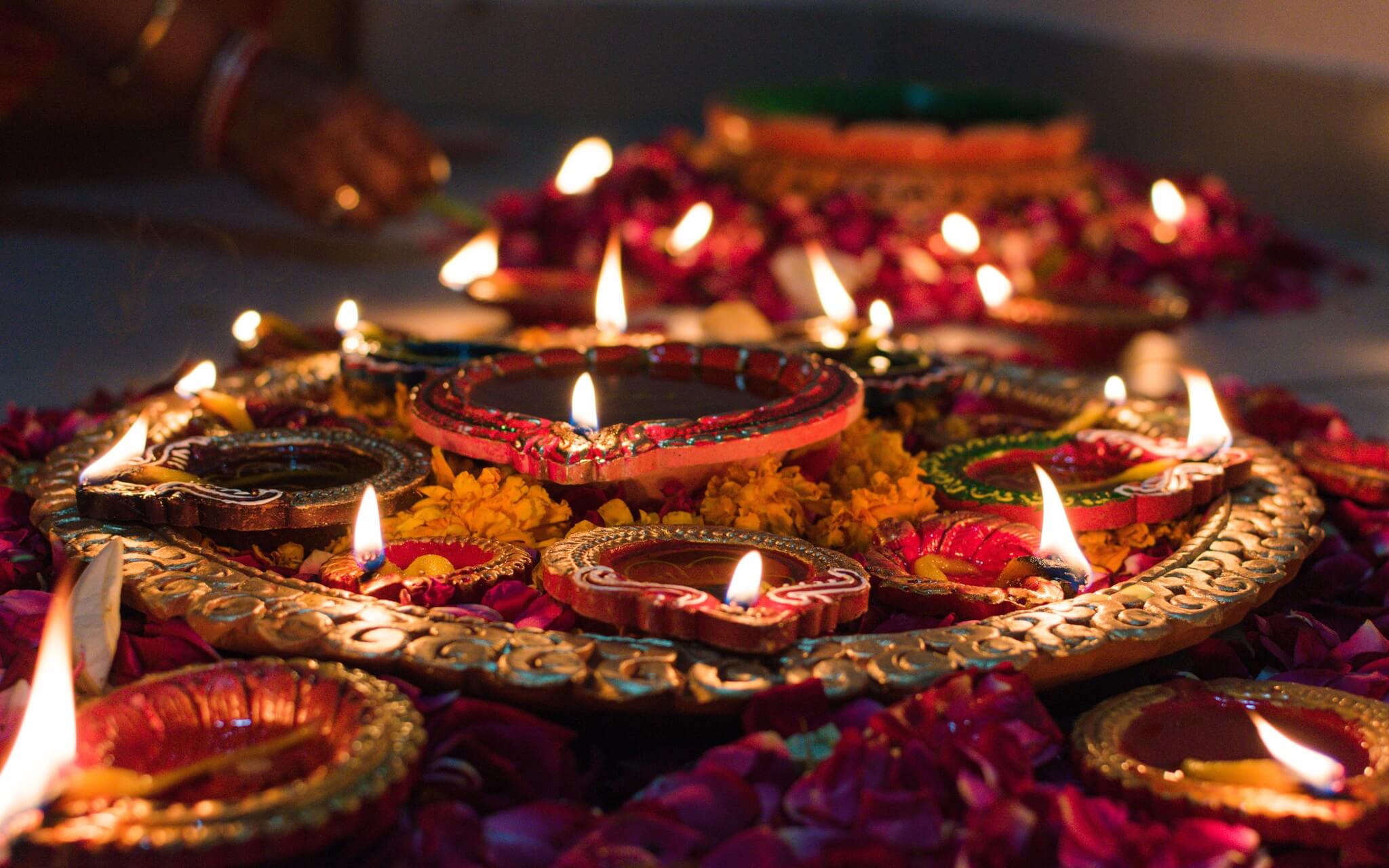
Puja is a Hindu and Sikh devotional practice of making a sequence of offerings to a sacred image, or murti, and it can be engaged as a sustained contemplative meditation by resting concentrated attention on each offering and its meaning (Jordan, 2020), (Pujita et al., 2021).
Last Updated
3 Jul 2026
We are still reviewing this page. Our research team checks every technique page for accuracy and evidence quality before final release. Details may change as that review completes. The evidence badge shows our current reading of the published research.
RECOMMENDED DOSE
No direct dose-response literature exists for this technique. These recommendations are based on general practice conventions for devotional ritual and contemplative practice and should be treated as starting points only. No direct dose evidence; editorial synthesis. A short, simple offering a few times per week helps build a sustainable routine without overwhelm.
No direct dose-response literature exists for this technique. These recommendations are based on general practice conventions for devotional ritual and contemplative practice and should be treated as starting points only. No direct dose evidence; editorial synthesis. A fuller ritual sequence on most days reflects an established, regular practice.
No direct dose-response literature exists for this technique. These recommendations are based on general practice conventions for devotional ritual and contemplative practice and should be treated as starting points only. No direct dose evidence; editorial synthesis. A daily, more elaborate observance reflects committed practice within a devotional tradition.
Session length
Session length: 10–15 minutes
10
MIN
How long each individual practice session should last from start to finish.
Frequency
Frequency: 3–4 days
3
DAYS
The number of days per week to fit a session into your routine.
Session length
Session length: 20–30 minutes
20
MIN
How long each individual practice session should last from start to finish.
Frequency
Frequency: 5–6 days
5
DAYS
The number of days per week to fit a session into your routine.
Session length
Session length: 40–60 minutes
40
MIN
How long each individual practice session should last from start to finish.
Frequency
Frequency: 7 days
7
DAYS
The number of days per week to fit a session into your routine.
About this card. These recommendations are not a substitute for personalised guidance from a qualified practitioner. No direct dose-response literature exists for this technique, so the durations and frequencies shown are editorial starting points only and should be adjusted to your own tradition and circumstances.
Quick answers to what people most often ask. Each card links to the deeper section below.
evidence
Small self-report studies link regular devotional worship to higher spiritual intelligence and a stronger sense of spiritual value, while accounts of communal festivals describe strengthened belonging. There are no randomized trials, controlled comparisons, or physiological measurements of Puja, so the research suggests where benefit may lie without proving cause, and it is not a replacement for care.
Read moregood for
Puja suits people who want a structured, hands-on devotional practice, especially those within Hindu and Sikh traditions for whom the offerings and imagery already hold meaning. Its concrete offerings give attention a clear path when purely mental practice feels hard to settle into. Puja is not a treatment for any diagnosed condition.
Read moresafety
Most healthy adults can practise Puja safely, whether with physical offerings or inwardly as Manasika Puja. Two cautions apply: if you live with diabetes, the fasting tied to festivals can destabilise blood sugar, so consult your clinician first. Where idols are immersed, choose clay figures and natural colours to avoid releasing lead into water.
Read morehow it works
Puja works by turning a devotional ritual into a focus for attention: each offering placed before the sacred image gives the mind a concrete, repeatable task to rest on. The layered meanings, flowers for devotion, light for knowledge, incense for purification, engage symbolic processing, the mind's way of linking abstract ideas to felt experience. These pathways are plausible, not proven.
Read morePuja is a Hindu and Sikh devotional practice of offering flowers, incense, light, food, and water to a sacred image, which can be engaged as a sustained contemplative meditation (Jordan, 2020).
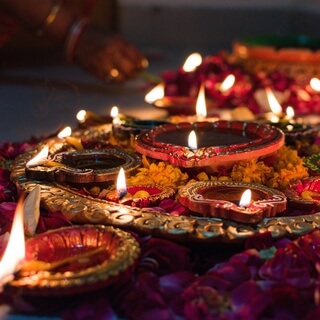
The practitioner offers flowers, incense, light, food, and water in a prescribed order to a deity image, or murti, while reciting mantras and holding the symbolic meaning of each item. A contemplative variant, Manasika Puja, runs the same sequence internally through visualization, so the practice can be enacted externally or entirely in the mind.
Practised as contemplative meditation, puja means devotional worship, not the large public festivals such as Durga Puja that are studied mainly for tourism or community impact. It differs from silent seated meditation in being active, ritual, and multi-sensory, and its devotional surrender means offering control toward a sacred presence, which is distinct from simply observing thoughts at a distance.
Not to be confused with
Buddhist puja bakti
The small studies linking devotional worship to self-rated spiritual intelligence were conducted on Buddhist puja bakti, a related devotional service, not on Hindu puja specifically. The two share a name root but differ in tradition, form, and objects of devotion.
Petitionary prayer
Petitionary prayer centres on addressing or asking a higher power in words, while puja is an embodied ritual of making offerings. Puja can include prayer, but it is organised around sensory acts and their symbolism rather than around requests.
Aarti
Aarti is the specific offering of light, waving a lit lamp before the sacred image, and it usually forms one step within a fuller puja rather than a standalone practice. Puja encompasses the whole sequence of offerings, of which the flame is only one.
Puja turns a devotional ritual into a sustained focus for attention, because each offering placed before the sacred image gives the mind a concrete, repeatable task to rest on (Jordan, 2020). Placing each item can become an act of devotional surrender, a deliberate handing over of control rather than gritted effort, which practitioners describe as a kind of relief that they no longer have to hold everything alone. The layered meaning of the offerings, flowers for devotion, light for knowledge, incense for purification, engages symbolic processing, the mind's way of linking abstract ideas to felt experience, so reflection has something real to work with. These pathways rest on a single qualitative account of puja rather than measured studies, so they are best read as plausible rather than proven.
Each offering placed before the sacred image can become an act of letting go, a deliberate handing over of control rather than gritted effort. Practitioners describe this devotional surrender as a kind of relief, the sense that they no longer have to hold everything alone (Jordan, 2020).
Each offering in puja carries a layered meaning, flowers for the beauty of devotion, light for knowledge, incense for purification. Holding those symbols in mind while you place each offering gives reflection something concrete to work with, and practitioners often describe abstract ideas about the self and the sacred starting to feel real rather than merely thought (Jordan, 2020).
The smell of incense, the touch of flower petals, the sight of a flame, the sound of a bell: puja's sensory offerings keep drawing attention back to what devotion feels like inside the body. This may build interoceptive awareness, the capacity to notice internal signals like breath, warmth, and tension, which practitioners often describe as feeling more present and grounded in the body (Jordan, 2020).
Puja has not been directly measured for physiological change, so its effects on the body are described through what practitioners report rather than through instruments (Jordan, 2020). Its multi-sensory offerings, the smell of incense, the touch of petals, the sight of a flame, keep drawing attention back to the body, which may build interoceptive awareness, the capacity to sense internal signals like breath, warmth, and tension. Some people notice the breath slowing and tension softening as attention rests on each offering, though no study has yet tested these changes in puja specifically.
Limited–Emerging evidence to date, drawn from small self-report studies, links regular devotional worship to higher self-reported spiritual intelligence (Bawono et al., 2023) and a stronger sense of spiritual value (Pujita et al., 2021), and communal puja festivals are widely described as strengthening community connection and belonging (Kureel et al., 2026), (Kumar & Datta, 2025), (Yadav & Chandra, 2024). What is not yet supported: there are no randomized trials, no controlled comparisons, and no physiological measurement, so these findings can point toward benefit without establishing that puja causes it, and the practice is not a replacement for care.
Small studies of devotional worship report links to higher self-reported spiritual intelligence and a stronger sense of spiritual value (Bawono et al., 2023), (Pujita et al., 2021), and accounts of communal festivals describe a strengthened sense of belonging (Kureel et al., 2026). Qualitative work describes puja's sequence of multi-sensory offerings as a genuine focus for contemplative attention (Jordan, 2020). The research is early, mostly small and observational, so it can suggest but not prove that puja causes these effects, and it is not a replacement for clinical care (Badikilaya, 2021).
0
Meta-analyses
0
RCTs
0
Systematic reviews
0
Observational
11
Pilot
Studied populations
Pengaruh Puja Bakti Terhadap Kecerdasan Spiritual Siswa Agama Buddha
2023
Finding: Among Buddhist high-school students in Indonesia in 2023, those who regularly performed puja bakti (devotional worship) scored higher on a measure of spiritual intelligence, with a strong link between the two that accounted for roughly half of the differences in students' scores. For someone drawn to puja, this hints that a steady devotional routine may go hand in hand with a richer sense of meaning and inner awareness. That said, this was a single observational study that simply compared students at one school, so it can show the practice and higher spiritual intelligence tend to appear together but cannot prove that puja is what causes the difference.
correlation coefficient (r) = 0.712
The effect of Mahāyāna Puja Bakti and emotional intelligence on the spiritual intelligence of Buddhists at the Padmasari Temple in Lahat, South Sumatra
n = 60
Finding: In a survey of 60 Buddhist practitioners and young people at a temple in South Sumatra, those who regularly performed Mahayana puja bakti, the devotional ritual of making offerings and paying respect, reported a stronger sense of spiritual awareness and meaning, an effect that went hand in hand with their emotional intelligence. For someone drawn to puja, this hints that keeping a steady devotional routine may deepen your sense of spiritual value over time. Keep in mind this was a small, one-time survey with no comparison group, so it points to an association rather than proof; the effect on spiritual life can't be cleanly separated from the emotional skills participants already brought with them.
reported narratively
Puja comes from the devotional traditions of Hinduism, with sun-directed worship traced to Vedic scripture such as the Rigveda (Kumari et al., 2026). It bridges external temple ritual and internal contemplative practice, and a mental form, Manasika Puja, is performed entirely through visualization. These roots help explain the practice's form, its ordered and symbolic placement of offerings, not its clinical effects.
For most healthy adults, puja is a gentle, low-risk contemplative practice, whether you perform it with physical offerings or run it entirely in the mind as Manasika Puja, the mental form of the worship. Two situations call for care, and both rest on measured safety findings rather than general caution. If you live with diabetes, the ritual fasting tied to festivals such as Navratri and Durga Puja can swing your blood sugar between the low of a fast and the high of celebratory eating, and that instability can leave you shaky, faint, or unwell. Speak with your clinician before observing a fast; this is a moderate, evidence-backed caution (Dutta et al., 2015). Where the practice involves immersing an idol, choose eco-friendly clay figures and natural colours. Doing so avoids the heavy-metal contamination, including lead, documented in water at festival immersion sites; this too is a moderate, evidence-backed caution (Das, 2023), (Sanders et al., 2009).
People living with diabetes should get medical advice before taking part in the ritual fasting linked to puja festivals, especially anyone whose blood sugar is poorly controlled or who has other health conditions. Alternating between fasting and feasting can push blood glucose too high or too low and raise the risk of feeling faint, shaky, or seriously unwell (Dutta et al., 2015). Communities and families near idol immersion sites, and children in particular, are most affected by heavy-metal runoff, the toxic residue that leaches into water from Plaster-of-Paris idols painted with chemical colours (Sanders et al., 2009).
The ritual fasting tied to puja festivals such as Navratri and Durga Puja alternates going without food and celebratory eating, and that swing can destabilise blood glucose, leaving you shaky, faint, or unwell. If you live with diabetes, especially if your blood sugar is poorly controlled or you have other health conditions, speak with your clinician before observing a fast, review the timing of meals and medication in advance, and keep a quick source of sugar to hand (Dutta et al., 2015).
| Technique | Best for | Use with care | Evidence strength | Distinction |
|---|---|---|---|---|
| Focused-attention (concentration) meditation | Building sustained concentration when you want a secular anchor without a religious or devotional frame. | EVIDENCE | Both stabilise attention on a chosen object, but concentration meditation typically uses a neutral anchor such as the breath or a count, while puja anchors attention across a structured sequence of sensory offerings that each carry devotional and symbolic meaning. Puja adds a relational, meaning-rich layer that a bare concentration anchor does not. | |
| Manasika Puja (mental worship) | Practising devotional contemplation when physical items, an altar, or a murti are unavailable. | EVIDENCE | Manasika Puja runs the same offering sequence entirely in the imagination, visualising each flower, flame, or portion of food rather than handling physical items. It can be practised anywhere and needs no altar, but it loses the tactile, multi-sensory engagement that gives external puja much of its grounding in the body. |
Puja meditation is a Hindu and Sikh devotional practice of making a set sequence of offerings, such as flowers, incense, light, food, and water, to a sacred image while reciting mantras, engaged as a sustained meditation by resting attention on each offering and its meaning (Jordan, 2020), (Pujita et al., 2021).
+
Puja meditation turns a devotional ritual into contemplation. The worshipper offers flowers, incense, light, food, and water in a set order to a sacred image, or murti, while reciting mantras, and rests concentrated attention on each offering and its symbolic meaning rather than performing it by rote (Jordan, 2020), (Pujita et al., 2021). A mental form, Manasika Puja, runs the whole sequence inwardly through visualisation. This description comes from ethnographic and traditional accounts, not from evidence of a clinical effect.
Not necessarily. External puja is directed toward a murti, a sacred image or statue, but a physical altar isn't strictly required, because the tradition also describes a fully internal form, Manasika Puja, performed through visualisation and devotional imagination (Jordan, 2020).
+
Not necessarily. In its outward form, puja involves offering flowers, incense, light, food, and water to a murti, a consecrated image believed within the tradition to host a sacred presence, so an image and a space to make offerings are typical. But the tradition also documents Manasika Puja, or mental worship, in which the whole sequence is run inwardly through visualisation and devotional imagination, needing no objects or shrine (Jordan, 2020), (Pujita et al., 2021). This describes how the practice is traditionally engaged, not a claim that either form produces measured effects.
A Hindu and Sikh devotional ritual of presenting offerings such as flowers, incense, light, food, and water to a sacred image while reciting mantras. It can be engaged as a sustained contemplative practice rather than a purely formal observance.
The consecrated image or statue of a deity that receives the offerings in puja, understood within the tradition to host a sacred presence toward which devotion is directed.
The internal form of puja, in which the whole ritual of offerings is performed through visualisation and devotional imagination rather than with physical objects.
The devotional orientation of loving relationship with and self-offering toward the divine that underlies puja and related Hindu and Sikh practices.
The deliberate release of self-directed control toward a sacred presence through active trust and self-offering. It tends to feel like relief and quiet peace rather than passive resignation.
Proposed mechanism describing the release of self-referential agency toward a perceived higher power; distinct from decentering (observational distance from thoughts) and arousal downregulation (physiological calming).
The ability to sense and interpret internal body signals such as breath movement, warmth, and tension. It often feels like being more embodied and noticing early stress signals sooner.
Interoception, or visceral afferent processing: the detection, interpretation, and tolerance of internal bodily states.
The mind's engagement with symbols, images, and metaphors to link abstract ideas to felt experience, which can make concepts like devotion or purity feel personally real rather than merely thought.
Symbolic cognition and metaphorical reasoning: engagement with metaphor, symbol, and narrative through associative networks to reorganise meaning and support insight and emotional integration.
Budhi Bawono, Partono Nyanasuryanadi, Eko Prasetyo (2023). Pengaruh Puja Bakti Terhadap Kecerdasan Spiritual Siswa Agama Buddha. https://doi.org/10.37364/jireh.v5i2.163
Widhi Nyanna Pujita, Supartono, Tjhia Khie Khiong (2021). The effect of Mahāyāna Puja Bakti and emotional intelligence on the spiritual intelligence of Buddhists at the Padmasari Temple in Lahat, South Sumatra. https://doi.org/10.53417/sjebs.v1i2.61
Explore guided sessions to deepen your Puja technique.
Outcomes measured
| Outcome | Effect size | 95% CI | N | Comparator | Source |
|---|---|---|---|---|---|
| spiritual intelligence | correlation coefficient (r) = 0.712 | — | — | — | Bawono et al., 2023 |
The research is useful for setting expectations, but study methods and participant groups vary. Treat the findings as general guidance rather than a promise about any single session, and not a replacement for clinical care.
Goddess Puja in California: Embodying Contemplation Through Women’s Spirituality Education
2020
Finding: This first-person account follows three women through a Goddess puja within a Women's Spirituality graduate program, describing it as an embodied, relational ritual rather than a seated meditation. The author found that the step-by-step offering of flowers, light, and other substances to a sacred image drew participants into sustained devotional attention, and that this ritual focus opened into further reflection, learning, and inquiry. For someone curious about puja, this suggests the practice can be engaged contemplatively through its multi-sensory structure, not only as formal worship. Keep in mind this is a single reflective narrative with no measurement of attention, mood, or physiology, so it illustrates how puja can be experienced rather than proving any specific benefit.
See full citation in referencesCultural festivals and urban transformation: a case of Durga Puja in Kolkata
2026
Finding: This case study of Kolkata's Durga Puja describes how the festival temporarily transforms the city, turning streets and public spaces into shared sites of collective worship and celebration that draw communities together and reinforce a shared regional identity. For someone drawn to communal puja, it points to something the ritual offers beyond private devotion: a strong sense of belonging and connection that comes from worshipping alongside others. Keep in mind this is a cultural and sociological account of a large public event, not a measure of individual health, so it speaks to community experience rather than any personal clinical benefit.
See full citation in referencesChhath Puja - A Study in Religious and Cultural Tourism
2021
Finding: This piece is a commentary rather than a controlled experiment, so it discusses puja rather than measuring its effects. Like most of the research on puja, it approaches the practice through its devotional, community, and cultural roles rather than testing it as a contemplative meditation, and there are no randomized trials to draw firm conclusions from. If you are considering puja, treat any claims about specific mental or physical benefits as unproven for now, and approach the practice for its own meaning rather than for a measured outcome.
See full citation in referencesImpact of Durga Puja on River Ganga
2023
Finding: This environmental study looked at what happens when Plaster-of-Paris idols coated in chemical paints are immersed in rivers at the close of Durga Puja, and found that the practice releases toxic heavy metals, including neurotoxic lead, into the water, disrupting river life and creating health risks for people downstream. The researchers point to a practical fix: returning to idols made from natural clay and organic dyes, which break down harmlessly. Worth knowing that this is a caution about festival materials and the immersion ritual, not about the act of worship or contemplation itself, so choosing eco-friendly idols and natural colours lets you keep the tradition while avoiding the pollution.
See full citation in referencesHuman-Nature Connections: The Chhath Sun Festival as a Lens for Ontological Perspectives in Hinduism
2025
Finding: This paper examines Chhath Puja through the lens of Hindu Vedantic thought, describing how the festival ties communities together around shared devotion, family ritual, and a common relationship to the natural world. For someone drawn to puja, it points to the practice as a way of deepening a sense of belonging and connection to community and place, rather than a solo exercise. This is a cultural and philosophical account of collective worship in North India, not a clinical study, so it speaks to shared meaning and social bonds rather than any measured effect on individual health.
See full citation in referencesManaging diabetes during Navratris with special focus on Durga pujas
2015
Finding: This clinical review looked at what happens to blood sugar when people with diabetes take part in the fasting and feasting cycles common during Durga Puja and Navratri, and it warns that swinging between ritual fasting and celebratory binge eating can trigger dangerous drops in blood sugar and other serious metabolic problems. For anyone managing diabetes, that means fasting during these festivals is not automatically safe, especially if your blood sugar is hard to control or you have other health conditions. The authors advise talking with a doctor about whether to fast at all and how to time medications around it. Because this is a review of existing clinical knowledge rather than a controlled trial, it flags a real risk rather than measuring how often harm occurs.
See full citation in referencesChathi Mai in Popular Imagination: Exploring Narratives, Worship, and Rituals in North India
2024
Finding: This fieldwork study in Varanasi, Patna, Munger, and Sahibganj gathered the stories that worshippers tell about the goddess of Chhath Puja, portraying her as a healer, protector, and feminine energy linked to the Sun. It found that these local narratives, which sit outside the formal religious texts, weave regional tradition together with devotion and give the festival much of its shared meaning and sense of belonging. For someone drawn to Chhath Puja, this suggests the practice is as much about participating in a living community story as about the ritual steps themselves. This is a cultural and sociological account of how communities in North India experience the festival, not a measure of individual health or mental-health outcomes.
See full citation in referencesNeurotoxic Effects and Biomarkers of Lead Exposure: A Review
2009
Finding: This study documents how lead, a heavy metal that can pass into the brain and disrupt the developing nervous system, poses a particular danger to children because no exposure level is considered safe. That matters for Durga Puja practice because Plaster-of-Paris idols painted with chemical colours release lead and other toxic metals into rivers when they are immersed, contaminating water that communities and aquatic life downstream depend on. This is a caution about the physical materials of the festival, not about the contemplative act itself, and choosing clay idols with natural dyes avoids this pollution entirely.
See full citation in referencesWhere the practice involves immersing an idol, choose eco-friendly clay figures and natural colours rather than Plaster-of-Paris painted with chemical dyes. Doing so keeps heavy metals such as lead out of local water, avoiding the contamination documented at festival immersion sites that most affects nearby communities, families, and children (Das, 2023), (Sanders et al., 2009).
Puja rests easily alongside daily life for most healthy adults, and you can offer it with physical items before a sacred image or hold the whole rite in the mind, choosing whichever leaves you comfortable and unhurried. A gentle, unhurried approach suits it best, so treat the framing below as a starting point to adjust to your own tradition and circumstances rather than a fixed routine. The two things worth attention are ritual fasting if you live with diabetes and the materials you use when an idol is immersed.
Decide whether to perform puja with physical offerings before a sacred image, or murti, or entirely in the mind as Manasika Puja. Pick whichever setting lets you stay comfortable and unhurried; both carry the same low risk for healthy adults.
If you have diabetes or another condition affected by food timing, talk with your doctor before observing a festival fast. Alternating fasting and celebratory eating can destabilise blood glucose and leave you feeling shaky or faint {{cite:TECH_284_REF_016}}.
If your clinician clears you to fast, review the timing of your meals and any medication with them in advance, and keep a quick source of sugar to hand in case your blood sugar drops {{cite:TECH_284_REF_016}}.
When the practice includes immersing an idol, use clay figures and natural colours rather than Plaster-of-Paris painted with chemical dyes, which keeps heavy metals such as lead out of local water {{cite:TECH_284_REF_009}} {{cite:TECH_284_REF_019}}.
Move through the offerings slowly, resting attention on each one and the meaning it holds. If any part of the ritual feels overwhelming rather than grounding, ease off and return to a slower, simpler version, or shorten the sequence.
This information is educational and is not medical advice. This practice is not a substitute for professional care and should not replace prescribed medication or treatment for any medical or mental-health condition. If you are managing a health condition or taking medication, talk with a qualified health professional before changing your practice. If you are in distress or crisis, seek professional support.
| Mantra japa (repetition of a sacred name or phrase) | A portable, sound-and-rhythm-based devotional focus that needs no objects or setup. | EVIDENCE | Japa anchors attention through the rhythmic repetition of a mantra or divine name, whereas puja anchors it through a sequence of physical offerings. The two often overlap, since mantras are recited during the offerings, but japa relies on sound and rhythm rather than the visual and tactile acts that structure puja. |
| Communal festival puja (e.g., Durga Puja) | Cultivating community connection and a sense of belonging through shared devotional celebration. | Festival observance can involve ritual fasting; people with diabetes should seek medical advice before fasting. | EVIDENCE | Festival puja is a large, communal celebration organised around shared worship and belonging, while contemplative puja is an individual, sustained meditation on each offering. The festival form emphasises collective participation and celebration over the inward, moment-to-moment attention of the contemplative form. |
The evidence is genuinely weak. A few small self-report studies (on Buddhist puja bakti, not Hindu puja) link devotional worship to higher spiritual intelligence, and one qualitative account describes puja as a focus for contemplative attention, but there are no controlled trials, so research can suggest rather than prove it works (Bawono et al., 2023), (Pujita et al., 2021), (Jordan, 2020).
+
The evidence is genuinely weak. What exists is a small number of self-report studies tying devotional worship to higher spiritual intelligence and a stronger sense of spiritual value, plus one qualitative account describing puja's sequence of offerings as a real focus for contemplative attention (Bawono et al., 2023), (Pujita et al., 2021), (Jordan, 2020). Those studies looked at Buddhist puja bakti and temple communities rather than Hindu puja specifically, and there are no randomised trials, no controlled comparisons, and no physiological measurement. So the practice's mechanisms remain plausible rather than established, and puja is not a replacement for clinical care.
Not proven. No study has directly tested puja for stress or anxiety, so it can't be said to reduce either. The small, self-report research that exists links regular devotional worship only to spiritual intelligence and belonging, not to measured stress or anxiety (Bawono et al., 2023).
+
Not proven. No randomised trials, controlled comparisons, or physiological measures have tested whether puja lowers stress or anxiety, so any such effect is suggestive at best rather than established (Bawono et al., 2023), (Pujita et al., 2021), (Jordan, 2020), (Badikilaya, 2021). The available studies are small and based on self-report, and they point only to spiritual intelligence and a sense of belonging, not to stress or anxiety outcomes. Some people may find the structured offerings settling, but puja is not a treatment for anxiety and is not a replacement for clinical care.
Plausibly, because each offering gives attention a concrete, repeatable target to rest on. Placing flowers, incense, light, and food in sequence acts as an attentional anchor, stabilising attention on a clear task, which may steady focus and reduce mind-wandering (Jordan, 2020).
+
Because each offering gives the mind something tangible to return to, rather than asking it to hold attention on a purely mental object. Each item placed before the sacred image becomes a fresh point of focus, so attention has a clear, repeatable path to follow through the ritual (Jordan, 2020). This is best read as a plausible mechanism rather than a measured effect. It rests on a single qualitative account of puja plus general reasoning about focused attention, and no controlled or brain-imaging studies have confirmed it in puja specifically.
Possibly, but this hasn't been measured. Puja's multi-sensory offerings keep drawing attention back to the body, so some practitioners report their breath slowing and tension softening, yet no study has tracked breathing, heart rate, or muscle tension during puja specifically (Jordan, 2020).
+
Possibly, though this stays suggestive rather than confirmed. Because puja engages sight, smell, touch, and sound, it may build interoceptive awareness, the capacity to sense internal signals like breath and tension, which some practitioners describe as the body settling while attention rests on each offering (Jordan, 2020). No instrumented studies have measured respiration, heart rate, or muscle tension during puja, so any calming is best read as a self-reported experience rather than a proven physiological effect, and not a treatment for any condition (Bawono et al., 2023), (Badikilaya, 2021).
Check with your clinician first. Ritual fasting during festivals like Navratri and Durga Puja alternates fasting with celebratory eating, which can push blood sugar too high or too low, so people with diabetes should get medical advice before fasting (Dutta et al., 2015).
+
Check with your clinician first. The fasting tied to puja festivals such as Navratri and Durga Puja swings between going without food and celebratory eating, and that alternation can destabilise blood glucose, leaving you shaky, faint, or unwell (Dutta et al., 2015). This is a moderate, evidence-backed caution, not a personal all-clear. Speak with your doctor before observing a fast, plan meal and medication timing in advance, and keep a quick source of sugar to hand. Puja is not a treatment for diabetes or any condition.
Ease off. If puja starts to feel overwhelming rather than settling, slow down, simplify the sequence, or switch to the gentler mental form, Manasika Puja, and pause if you need to. This is comfort-oriented practical guidance, not a treatment, so seek professional support if distress persists.
+
Ease off and return to a slower, simpler version. If moving through the offerings stirs difficult feelings, you can shorten the sequence, rest attention on just one offering, or run the ritual inwardly as Manasika Puja, where the whole practice is imagined rather than performed with objects. This is practice-informed guidance for keeping the experience comfortable, not an evidence-backed treatment, and puja is not a replacement for professional care if distress continues or feels hard to manage.
Start simply: choose a form, either physical offerings before a sacred image or mental Manasika Puja done in the imagination, then move slowly through each offering, resting your attention on it and the meaning it holds. Keep it gentle and ease off if anything feels overwhelming (Jordan, 2020). If you have diabetes and any festival fasting is involved, check with your clinician first (Dutta et al., 2015).
+
Start simply and unhurried. Pick whichever form fits you, physical offerings before a murti or the internal Manasika Puja, and move through each offering slowly, letting your attention rest on it and its symbolic meaning; qualitative accounts describe this sequence as a genuine focus for contemplative attention rather than a rote routine (Jordan, 2020). Expect absorbed, settling attention rather than a treatment effect, and the sense of depth often grows with repetition. Two practical cautions: if you have diabetes, clear any festival fasting with your clinician first, since alternating fasting and feasting can destabilise blood glucose (Dutta et al., 2015); and where an idol is immersed, choose eco-friendly clay and natural colours to avoid heavy-metal pollution (Das, 2023), (Sanders et al., 2009).
The difference is the anchor. Puja rests attention on a sequence of physical or visualised offerings, flowers, incense, light, food, water, while mantra japa rests it on the rhythmic repetition of a sacred name or phrase. They often overlap, since mantras are recited during puja (Jordan, 2020).
+
The core difference is the vehicle for attention. Puja is an embodied ritual of making a sequence of symbolic offerings to a sacred image, which can be engaged as a sustained contemplation, whereas mantra japa anchors attention through the repeated sounding of a sacred name or phrase (Jordan, 2020), (Pujita et al., 2021). Both stabilise focus on a clear target, but puja uses visual and tactile acts while japa relies on sound and rhythm, and the two frequently overlap because mantras are recited during the offerings. Evidence on puja as a contemplative practice is sparse and mostly observational, so neither has been shown superior to the other (Bawono et al., 2023), (Badikilaya, 2021).
Stabilising attention on a clear target to reduce mind-wandering; in puja the target is the sequence of offerings and the meaning each one holds. It tends to feel like steadier focus and fewer spiralling thoughts.
Focused attention and attentional selection: sustaining attention on a chosen object to limit distractibility.
Cited in: Benefits, Research, What it is
Nané Jordan (2020). Goddess Puja in California: Embodying Contemplation Through Women’s Spirituality Education. https://doi.org/10.7202/1071571ar
Cited in: How it works, Research, What happens in the body, What it is
Priyanka Kureel, Joy Sen, Arkopal Kishore Goswami (2026). Cultural festivals and urban transformation: a case of Durga Puja in Kolkata. https://doi.org/10.1080/1743873x.2026.2670501
Bandana Kumari, Santosh Vishvakarma, Arunesh Parashar, Prachi Agarwal (2026). Relevance and Ethical Guidance for Sun-related Daily Practices as an Indigenous Spiritual Technique: In the Context of Nature-based Health Tourism. https://doi.org/10.1108/978-1-80686-013-520261004
Cited in: Roots and tradition
Githa Badikilaya (2021). Chhath Puja - A Study in Religious and Cultural Tourism. https://doi.org/10.12727/ajts.22.5
Cited in: Research
Jitavati Das (2023). Impact of Durga Puja on River Ganga. https://doi.org/10.14445/23942568/ijaes-v10i3p102
Cited in: How to practice safely, Use with care
Payal Kumar, Sreejit Datta (2025). Human-Nature Connections: The Chhath Sun Festival as a Lens for Ontological Perspectives in Hinduism. https://doi.org/10.51327/qzay9220
Cited in: Benefits
Deep Dutta, Krishna Biswas, Meha Sharma, Robin Maskey, Manash Baruah, Mohammod Amin (2015). Managing diabetes during Navratris with special focus on Durga pujas. https://doi.org/10.4103/2321-0656.152804
Cited in: How to practice safely, Use with care, Who should use care
Akanksha Yadav, Vinita Chandra (2024). Chathi Mai in Popular Imagination: Exploring Narratives, Worship, and Rituals in North India. https://doi.org/10.21659/rupkatha.v16n2.02g
Cited in: Benefits
T. A. B. Sanders, Ying Liu, Virginia Buchner, Paul B. Tchounwou (2009). Neurotoxic Effects and Biomarkers of Lead Exposure: A Review. https://doi.org/10.1515/reveh.2009.24.1.15
Cited in: How to practice safely, Use with care, Who should use care
Editorially curated. Tracks are not themselves clinically studied; evidence on the page applies to Puja as a technique.
Beginner content for Puja

★ 4.8
·
Music
·
14 min
Ludvig Cimbrelius
How hard is Puja?
Puja stays at 3 because the ritual structure and symbolic offering sequence carry real baseline load.
3
Mental Effort
3 / 4
▾Emotional Depth
2 / 4
▾Physical Intensity
2 / 4
▾Prior Knowledge
3 / 4
▾