The world’s largest free audio library for everyday wellbeing
Movement-Integrated
Embodied Celebration is a joyful, expressive dance practice that uses pleasure, gratitude, and communal energy to cultivate aliveness through movement, rather than working through difficult emotion.
Last Updated
4 Jul 2026
We are still reviewing this page. Our research team checks every technique page for accuracy and evidence quality before final release. Details may change as that review completes. The evidence badge shows our current reading of the published research.
RECOMMENDED DOSE
A closely related postural study had participants hold expansive and other postures for roughly one minute each, suggesting a short introductory session of a few celebratory postures is a reasonable starting point. This is extrapolated from related posture research, not a tested dose for Embodied Celebration itself. No direct evidence supports the frequency; that guidance is editorial synthesis based on general practice conventions.
The related posture study sequenced roughly eight postures at about one minute each, totalling close to this range; we extrapolate a fuller session of several celebratory postures from that overlap. Frequency is not addressed by any cited source and reflects editorial synthesis of typical daily-practice conventions.
No direct dose evidence; editorial synthesis. Longer maintenance sessions of 15–20 minutes extend beyond anything reported in the cited literature and are offered as a first-principles suggestion for established practitioners who wish to deepen the practice.
Session length
Session length: 2–5 minutes
2
MIN
How long each individual practice session should last from start to finish.
Frequency
Frequency: 5–7 days
5
DAYS
The number of days per week to fit a session into your routine.
Session length
Session length: 8–10 minutes
8
MIN
How long each individual practice session should last from start to finish.
Frequency
Frequency: 7 days
7
DAYS
The number of days per week to fit a session into your routine.
Session length
Session length: 15–20 minutes
15
MIN
How long each individual practice session should last from start to finish.
Frequency
Frequency: 7 days
7
DAYS
The number of days per week to fit a session into your routine.
About this card. Dose-response literature specific to Embodied Celebration is limited; session-length guidance is extrapolated from a related posture study and all frequency guidance is editorial synthesis, so treat these figures as starting points only. These recommendations are not a substitute for personalised guidance from a qualified practitioner.
Quick answers to what people most often ask. Each card links to the deeper section below.
evidence
No study has tested Embodied Celebration directly; supporting findings are borrowed from posture and embodiment research. Upright, open postures produced moderately brighter mood than slumped ones, and an embodied public-speaking program lowered self-reported anxiety by about a third. Effects are small, mostly single-session, and measured in healthy students rather than dancers.
Read moregood for
Embodied Celebration suits people who want more energy, aliveness, and physical activation, or who feel flat and want to feel charged and present in the body. It supports brighter mood in the moment through joyful movement. It is a poor fit for winding down and is not a treatment for any diagnosed condition.
Read moresafety
Most healthy adults can practise Embodied Celebration safely, with no documented adverse effects. Because it deliberately raises heart rate and switches on the body's alertness-and-energy system, it can feel over-activating when you are already wired or winding down for sleep. People with cardiovascular conditions should treat it like any energetic aerobic exercise and check with a clinician.
Read morehow it works
Embodied Celebration works mainly by driving up arousal: sustained, vigorous dancing engages the sympathetic nervous system, the branch that readies the body for action, so heart rate climbs and energy is mobilised. A second proposed pathway is motor-sensory integration, the loop between intended movements and their feedback, which can make movement feel more fluent and shape emotional state.
Read moreEmbodied Celebration is a joyful, expressive dance practice that cultivates pleasure, aliveness, and communal energy through movement, favouring positive feeling over catharsis or emotional processing.
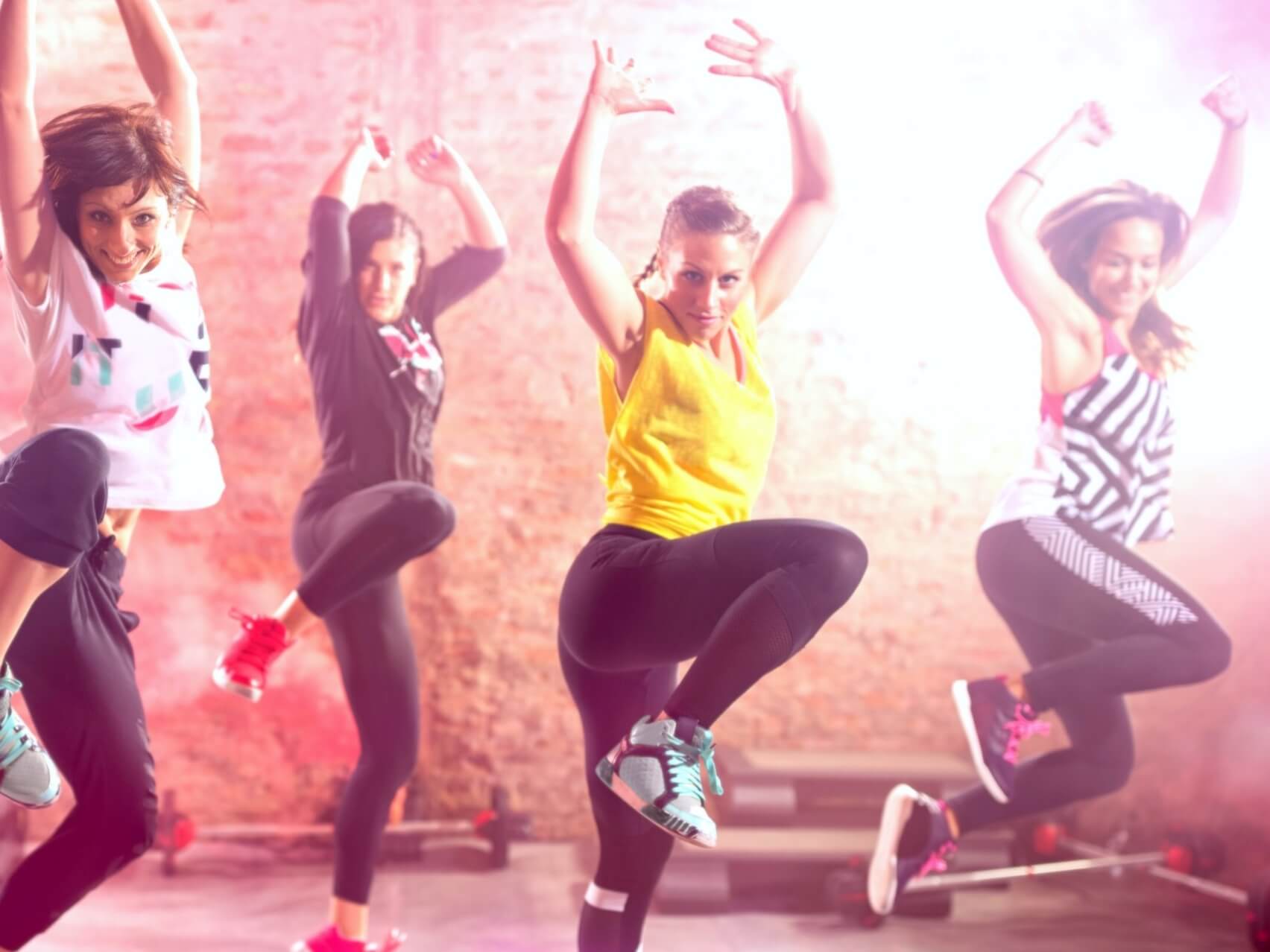
In a session, you move to uplifting music in a way that favours pleasure and celebration, often smiling as you dance, letting driving rhythm and the energy of a shared space carry sustained, expansive, full-body movement. The emphasis falls on cultivating sensations of aliveness and joy rather than processing or releasing difficult feeling.
Embodied Celebration is one strand within the wider ecstatic-dance repertoire, distinguished by its focus on positive affect. It is not cathartic or emotion-processing dance, which deliberately moves toward and works through difficult feeling, and it is not a choreographed dance class or a clinical treatment. Its goal is to generate joy and shared vitality, not to teach steps or resolve a diagnosed condition.
Not to be confused with
Cathartic or release-oriented ecstatic dance
Release-focused dance uses movement to discharge and process difficult emotion. Embodied Celebration deliberately cultivates pleasure, gratitude, and positive affect instead, favouring joy over catharsis.
Dance Movement Therapy
Dance Movement Therapy is a clinical treatment delivered by a trained therapist. Embodied Celebration is a self-directed, community practice for joy and aliveness, not a clinical intervention.
Power posing
Power posing holds a single expansive posture briefly. Embodied Celebration carries that open, upright quality into continuous, rhythmic, full-body dancing rather than a static pose.
Embodied Celebration works mainly by driving up arousal. Sustained, vigorous dancing engages the sympathetic nervous system, the branch that readies the body for action, so heart rate climbs and energy is mobilised for movement. This physiology is inferred from general reviews of the body's stress and arousal systems rather than measured in celebratory dance itself, so treat it as a reasonable mechanism rather than a proven one (Chrousos, 2009), (McEwen et al., 2015). A second proposed pathway is motor-sensory integration, the tightening loop between the movements you intend and the sensory feedback they produce, which embodied-cognition research suggests can also shape emotional state and tends to show up as movement feeling more fluent and a growing ease in the body (Pietrzak et al., 2018), (Hawk et al., 2012).
Fast, expansive celebratory dancing floods the body with a rush of alert energy, spreading warmth, and quicker breathing. That surge comes from sympathetic activation, the fight-or-flight branch of the nervous system that raises heart rate and releases adrenaline to ready the body for action (Chrousos, 2009), (McEwen et al., 2015).
As you move with the music, each intentional movement links to a steady stream of sensory feedback, and when that loop tightens the body responds more accurately and fluidly. Embodied-cognition research suggests this coupling of movement and sensation can also shape how you feel, which practitioners often notice as a growing sense of physical competence and easy presence (Pietrzak et al., 2018), (Hawk et al., 2012).
Your heart rate rises and your body shifts toward alertness during vigorous celebratory dancing, an expected effect of sympathetic activation, though this direction is inferred from general stress-physiology reviews rather than measured in the practice itself (Chrousos, 2009), (McEwen et al., 2015). Early EEG work on a related embodiment program, not dance, measured an increase in frontal alpha asymmetry, a shift in the balance of electrical activity across the front of the brain that is linked to more approach-oriented, better-regulated emotion, with no significant change in the theta/beta ratio (Monge et al., 2023). In the body, this may feel like a quickening pulse, spreading warmth, quicker breath, and a bright sense of aliveness rather than distress.
When movement starts to feel more fluent and present, with the body responding easily to the rhythm, that is sensorimotor integration at work, the ongoing loop between the moves you intend and the sensory feedback you get back. Early EEG research on embodiment practices, though not on dance itself, measured heightened activation across the brain's sensorimotor and emotion-regulation regions (Monge et al., 2023).
Moving with pleasure and expression can leave you feeling steadier with strong emotion, able to stay with it rather than be swept up by it. In an early embodiment study, this coincided with a rise in frontal alpha asymmetry, an EEG pattern reflecting the balance of electrical activity across the front of the brain that is linked to approach-oriented, better-regulated emotion (Monge et al., 2023). Read it as a promising early signal, not a settled finding.
Vigorous, joyful dancing often brings a rising surge of energy, a quicker heartbeat, and a bright sense of aliveness. That felt lift is the signature of catecholamines, the activating messengers adrenaline and noradrenaline that ready the body for effort, which energetic movement is expected to raise based on how the body mobilises for sustained activity (Chrousos, 2009), (McEwen et al., 2015), though the rise hasn't been measured in this practice itself.
Your pulse quickens as the dancing builds, with spreading warmth and a rush of aliveness rather than distress. This is sympathetic activation, the body's fight-or-flight branch speeding the heart to mobilise energy for sustained movement (Chrousos, 2009), (McEwen et al., 2015).
Limited–Emerging evidence, all of it indirect, points to a few plausible benefits. Studies of body posture link open, upright positions with more positive mood, and one experiment found upright posture produced better general mood than a stooped one at a Cohen's d of about 0.50, a moderate difference meaning the average person sitting upright reported brighter mood than roughly two-thirds of those who slumped (Nair et al., 2014), (Awad et al., 2021). Pairing body awareness with an open posture has been associated with sharper interoception, your felt sense of internal signals like heartbeat and breath, and lower in-the-moment anxiety in a single-session study of 57 university students (Weineck et al., 2020). The same embodied public-speaking program that recorded those EEG shifts also reported self-reported anxiety falling by about a third (Monge et al., 2023). What is not yet supported: any direct trial of celebratory dance, any large or long-term study, or any claim that it treats a diagnosed condition. Every finding here is borrowed from posture and embodiment research rather than the practice itself.
Moving with an open, upright body can leave you feeling lighter and brighter, and Embodied Celebration builds that expansive posture into joyful dance. Research on postural embodiment, meaning how the way you hold your body feeds back into how you feel, links open, upright positions with more positive mood (Nair et al., 2014), (Awad et al., 2021), though this comes from studies of static posture rather than dance itself, so treat it as an early, indirect signal.
Feeling your own heartbeat, breath, and the settle of your muscles is called interoception, and pairing that body awareness with an open, upright posture has been linked with a sharper felt sense of those signals and less in-the-moment anxiety (Weineck et al., 2020). The evidence is early and indirect, drawn from a posture study rather than from celebratory dance itself.
No study has tested Embodied Celebration directly, so what we know is borrowed from adjacent research on posture and body-based practice. An embodied public-speaking program with university students lowered self-reported anxiety by about 33% and shifted EEG markers toward better-regulated emotion (Monge et al., 2023), and upright, open postures have been linked with more positive mood (Nair et al., 2014), (Awad et al., 2021). The main limits are directness and size: these are small, mostly single-session studies in healthy students, and the emotional effects of expansive postures are mixed and depend on context (Lin & Broadbent, 2023).
0
Meta-analyses
0
RCTs
0
Systematic reviews
0
Observational
9
Pilot
Studied populations
Outcomes measured
Embodied strategies for public speaking anxiety: evaluation of the Corp-Oral program
2023
Finding: In a randomized study of university students learning to manage public-speaking anxiety, an embodiment-based program built on body awareness, embodied visualization, gesture, and body-transformation techniques cut self-reported anxiety by about a third, with a smaller drop in heart rate of roughly 5 percent. While speaking, participants also showed brain-activity patterns linked to emotional regulation and body-movement control, including a shift in frontal brain balance that tends to accompany a calmer, more approach-oriented state. For someone drawn to moving the body as a way to steady nerves, this hints that working through the body, rather than only the mind, may ease the physical grip of anxiety. Keep in mind the program tested here was a structured embodiment course rather than Embodied Celebration or ecstatic dance specifically, so it supports the practice only indirectly.
percent change = -33.217
Using bodily postures to reduce anxiety and improve interoception: A comparison between powerful and neutral poses
n = 57
Finding: In this single-session trial, 57 university students held either an expansive "powerful" posture or a neutral one, and both groups ended up feeling less anxious in the moment while getting better at reading their own internal body signals, such as noticing their heartbeat. Notably, the powerful posture was no better than the neutral one, so the gains seem to come from the act of tuning into the body rather than from any particular pose. For someone drawn to Embodied Celebration, this hints that bringing attention to physical sensation and posture can steady the nervous system and sharpen body awareness. Keep in mind, though, that this study tested static postures in a brief lab session, not celebratory movement or dance, so it points in a supportive direction rather than confirming the practice itself.
Embodied Celebration grows out of the ecstatic-dance tradition and the broader human practice of communal, celebratory dance found across many cultures. Where much ecstatic dance leans toward catharsis, this strand deliberately cultivates joy, gratitude, and shared aliveness through expansive movement. These roots help explain the practice's form, its rhythm-led, communal, positive-affect focus, rather than proving any clinical effect.
For most healthy adults, Embodied Celebration is a low-risk practice: joyful, self-paced movement with no documented adverse effects. A couple of situations still call for care. The practice is built to raise heart rate and engage the sympathetic nervous system, the alertness-and-energy branch that quickens the pulse and mobilises a burst of physical charge, so on days when you already feel wired or are trying to wind down before sleep it can leave you more revved up than settled. That caution comes from the energising design of the practice itself, not from any recorded harm. Its sustained, vigorous movement also asks for genuine cardiovascular effort, so if physical exertion is a concern for you, approach it as you would any energetic exercise.
If your goal is to calm down, ease anxiety in the moment, or settle before sleep, this practice may over-activate rather than soothe you, because it is designed to energise the body rather than quiet it. When winding down is what you need, a gentler, slower form is usually the better fit. This caution is drawn from how the practice works rather than from any recorded harm. People with cardiovascular conditions, or anyone advised to limit vigorous exertion, should treat Embodied Celebration as they would any energetic aerobic activity and check with a clinician if unsure, given the sustained raised heart rate the movement involves.
Embodied Celebration is built to raise heart rate and switch on the sympathetic nervous system, the alertness-and-energy branch that quickens the pulse and mobilises a burst of physical charge. On days when you already feel wired, keyed up, or are trying to settle before sleep, it can leave you more revved up than calm. When downregulation is the goal, choose a gentler, slower movement practice instead. This caution comes from the energising design of the practice, not from any recorded harm.
| Technique | Best for | Use with care | Evidence strength | Distinction |
|---|---|---|---|---|
| Ecstatic Dance (broader repertoire) | Wanting the fuller emotional spectrum of free-form dance, including intense release, not only joy and celebration. | emerging EVIDENCE | Ecstatic Dance is the wider free-movement tradition Embodied Celebration belongs to, and it spans the full emotional range from catharsis and release to grief and intensity. Embodied Celebration is the strand that deliberately favours positive affect, dancing with gratitude and pleasure rather than using movement to process or discharge difficult feeling. | |
| Dance Movement Therapy | Structured clinical work on emotional or relational difficulties with a qualified movement therapist. | moderate EVIDENCE | Dance Movement Therapy is a clinical, therapist-led practice in which movement is used to assess and treat emotional, cognitive, and social difficulties within a structured therapeutic relationship. Embodied Celebration is a self-directed, community-oriented practice for cultivating joy and aliveness, not a treatment delivered by a trained clinician. |
Embodied Celebration is a joyful, expressive dance practice that uses pleasure, gratitude, and shared energy to cultivate a sense of aliveness through movement, rather than working through difficult emotion.
+
Embodied Celebration is a joyful, expressive dance practice in which you move to uplifting music with pleasure and gratitude, often smiling as you go, deliberately cultivating sensations of aliveness rather than working through difficult emotion. It sits within the wider ecstatic-dance repertoire but favours positive, celebratory, communal energy over catharsis or release. This describes what the practice is and where it comes from, not a claim that it treats any condition.
Not quite. Embodied Celebration belongs to the broader ecstatic-dance tradition, but it is the strand that deliberately favours joy, gratitude, and positive feeling rather than catharsis or working through difficult emotion.
+
Not quite. Ecstatic dance is the wider free-movement tradition that spans the full emotional range, from release and catharsis to grief and intensity, and Embodied Celebration sits inside that family. What sets it apart is intention: it is the strand that cultivates pleasure, aliveness, and communal energy through movement rather than using dance to process or discharge hard feeling. This is a distinction of form and emphasis, not a claim that one produces different measured outcomes than the other.
The switching-on of the body's fight-or-flight branch, which raises heart rate and energy so you feel more alert and physically charged. In Embodied Celebration this shows up as a rush of aliveness and readiness rather than distress.
Increased sympathetic-adrenal-medullary activity that mobilises cardiovascular and metabolic resources for effort and arousal.
The body's activating chemical messengers, adrenaline and noradrenaline, released to ready you for effort. Rising levels feel like a surge of energy and a quicker heartbeat.
Your sense of your own internal signals, such as heartbeat, breath, and the settle of your muscles. Sharper interoception feels like a clearer, more immediate read on what your body is doing.
The perception and integration of internal bodily signals; interoceptive accuracy refers to how precisely those signals are detected.
The brain's coupling of the movements you intend with the sensory feedback they produce, which tightens with practice so movement becomes more accurate and fluent. It feels like a growing sense of physical competence and ease.
The way body and mind fall into sync with an external beat such as music or drumming. It often feels like being carried by the rhythm, moving with less effort and more flow.
An EEG pattern reflecting the balance of electrical activity between the left and right front of the brain, linked to approach-oriented, better-regulated emotion. It can correspond to feeling steadier with intense feeling rather than overwhelmed.
The idea that how you hold your body, open and upright versus slumped and closed, feeds back into how you feel emotionally. Moving with an open chest and upright carriage can leave you feeling lighter and more capable.
Alfonso García Monge, Santiago Guijarro-Romero, Eduardo Santamaría-Vázquez, Lucio Martínez Álvarez, Nicolás Julio Bores-Calle (2023). Embodied strategies for public speaking anxiety: evaluation of the Corp-Oral program. https://doi.org/10.3389/fnhum.2023.1268798
Cited in: Benefits, Faq, Research, What happens in the body
Felicitas Weineck, Dana Schultchen, Gernot Hauke, Matthias Messner, Olga Pollatos (2020). Using bodily postures to reduce anxiety and improve interoception: A comparison between powerful and neutral poses. https://doi.org/10.1371/journal.pone.0242578
| Outcome | Effect size | 95% CI | N | Comparator | Source |
|---|---|---|---|---|---|
| self-reported anxiety | percent change = -33.217 | — | — | — | Monge et al., 2023 |
| general mood | Cohen's d = 0.5 | — | — | stooped posture | Awad et al., 2021 |
The research is useful for setting expectations, but study methods and participant groups vary. Treat the findings as general guidance rather than a promise about any single session, and not a replacement for clinical care.
reported narratively
Stress and disorders of the stress system
2009
Finding: This paper maps how the body's arousal systems work, tracing the way the sympathetic (fight-or-flight) branch and stress-hormone pathways ramp up heart rate and physical activation during demanding effort. It helps explain why vigorous, energetic dancing naturally leaves you with a pounding heart and a charged, activated feeling. Worth knowing, though, that this research looked at these systems in general and did not measure anyone actually doing celebratory or ecstatic dance, so the link to this specific practice is inferred rather than directly tested.
See full citation in referencesMechanisms of stress in the brain
2015
Finding: This paper maps how the body's stress and arousal systems work, describing how sustained physical effort ramps up the fight-or-flight response and mobilizes the body's activating chemistry to raise heart rate and energy. It helps explain why vigorous, energetic dancing naturally leaves you feeling physically charged up rather than sedated. The important caveat is that this work looked at the general machinery of arousal, not celebratory movement itself, so the link to this practice is a reasonable inference rather than something measured during dance. If you are curious about the physical buzz that high-energy celebration can bring, this offers the biological backdrop, but not proof of exactly what happens in your body when you move this way.
See full citation in referencesEmbodied Cognition and the Direct Induction of Affect as a Compliment to Cognitive Behavioural Therapy
2018
Finding: This theoretical paper argues that body and emotion work in both directions, that how we hold and move our bodies can shape and deepen what we feel, and it proposes weaving these embodiment techniques into talk-based therapy to strengthen emotional healing. For someone drawn to expressive, celebratory movement, it offers a plausible reason why engaging the body might help cultivate positive feeling rather than just express it. It is worth knowing this is a conceptual argument built on broader embodiment research, not a test of celebratory dance itself, so treat it as a promising rationale rather than proof that the practice works.
See full citation in referencesFace the noise: embodied responses to nonverbal vocalizations of discrete emotions.
2012
Finding: This study looked at how we react when we see someone express emotion, and found that observing another person's emotional expression prompts a matching response in the observer, not just in the same channel but across different ones, so that seeing joy can register in your own body and felt experience. The takeaway for practice is that body and emotion appear closely linked, which helps explain why moving expressively might shape how you feel. It is worth being clear about scope: this research tests the general link between bodily expression and emotion, not Embodied Celebration itself, so it offers a plausible rationale rather than direct proof that the practice works.
See full citation in referencesUnderstanding Embodied Effects of Posture: A Qualitative Study
2023
Finding: In this small qualitative study, 15 adults (average age 43) held a series of expansive, constrictive, and neutral body postures for a minute each and then described how each one felt. Expansive, "open" poses did bring up feelings of confidence for some people, but they also stirred less welcome reactions like aggression and arrogance, and several participants felt these postures were out of place depending on the situation. For someone drawn to celebratory or expansive body positions, the takeaway is that they don't reliably produce a single positive state; how an open posture lands seems to depend a lot on the person and the moment. Because the group was small and the findings rest on personal descriptions rather than measured outcomes, treat this as an early, exploratory look rather than proof of a dependable effect.
See full citation in referencesDo slumped and upright postures affect stress responses? A randomized trial.
2014
Finding: In this experiment, 74 people faced a stressful task while sitting either upright or slumped, and those who held an upright posture came through with more positive mood and steadier self-esteem than those who slouched, a moderate difference. For anyone drawn to celebratory movement, it hints that how you carry your body can shape how you feel under pressure, favouring open and upright positions over collapsed ones. Keep in mind this study manipulated seated posture in healthy adults rather than testing celebratory dance itself, so it points to a general link between body position and mood rather than proving what this specific practice does.
See full citation in referencesEmbodiment: I sat, I felt, I performed – Posture effects on mood and cognitive performance
2021
Finding: In this experiment, people who held an upright posture reported more positive mood than those who sat slumped, a moderate difference, and they also worked a little faster on mental tasks. The same upright posture made no difference to how accurately people worked, so a more open body position seems to lift mood without sharpening every kind of thinking. For someone drawn to Embodied Celebration, this hints that how you hold and carry your body can shape how you feel, though it is worth knowing the study tested fixed postures rather than celebratory movement or dance, so it speaks to the general idea more than to the practice itself.
Cohen's d = 0.5
The practice asks for genuine, sustained physical exertion, raising heart rate and body temperature as the movement builds. If you have a cardiovascular condition, or have been advised to limit vigorous activity, treat Embodied Celebration as you would any energetic aerobic exercise: ease in gradually, and check with a clinician if you are unsure. Stop if you feel lightheaded, genuinely breathless, or notice any chest discomfort.
Embodied Celebration is best met on a day when you actually want to lift your energy, in a clear space with uplifting music and water close by. A sensible way in is to let the movement start gently and build over a few minutes rather than throwing yourself straight into vigorous dancing, letting your body decide how far to go and how bright the effort feels. Because it leaves the nervous system activated, give yourself a little room at the end to slow down before returning to the rest of your day.
Before you begin, notice what your body needs. If you feel wired, anxious, or are heading toward sleep, choose a slower, calming practice instead, and save Embodied Celebration for when you want to lift your energy and feel more alive.
Start with gentle, unforced movement to uplifting music and let the rhythm carry you into fuller effort over a few minutes rather than launching straight into vigorous dancing. This gives your heart rate and breathing time to climb steadily.
Keep water within reach and clear enough space to move expansively without bumping into furniture or other people, since sustained energetic movement raises body temperature and physical demand.
Treat quickening breath, warmth, and a faster pulse as welcome signs of aliveness, but ease off if you feel lightheaded, genuinely breathless, or notice any chest discomfort. Effort should feel energising, not distressing.
Because the practice leaves the nervous system activated, close with a few minutes of slower movement or stillness so your heart rate and energy can settle before you return to the rest of your day.
This information is educational and is not medical advice. This practice is not a substitute for professional care and should not replace prescribed medication or treatment for any medical or mental-health condition. If you are managing a health condition or taking medication, talk with a qualified health professional before changing your practice. If you are in distress or crisis, seek professional support.
| Power posing / postural embodiment | A quick, low-effort way to adopt an open posture before a stressful moment such as a presentation. | The emotional effects of expansive postures are mixed and context-dependent, so treat a single quick pose as an unreliable fix. | emerging EVIDENCE | Power posing holds a single expansive, static posture for a short time to shift mood and confidence, and much of the indirect evidence cited for Embodied Celebration actually comes from this posture research. Embodied Celebration takes the same open, upright quality but carries it into sustained, rhythmic, full-body dance rather than a held pose. |
| Gentle, calming movement (e.g. slow somatic or restorative movement) | Winding down, settling an activated body, or preparing for rest rather than raising energy. | EVIDENCE | Gentle, slow movement practices aim to settle the nervous system and downshift arousal, so they suit winding down before sleep or calming an already-heightened state. Embodied Celebration does the opposite by design, using vigorous, energetic dance to raise heart rate and physical activation. |

Partly, and the honest read is that any benefit is suggestive rather than confirmed. No study has tested Embodied Celebration itself, so the supporting evidence is borrowed from small posture and embodiment studies, not from celebratory dance (Monge et al., 2023), (Awad et al., 2021).
+
Partly. The direct evidence is thin. No trial has studied celebratory dance itself, so support is drawn from adjacent research on posture and body-based practice. In those studies, open, upright postures were linked with more positive mood (Nair et al., 2014), (Awad et al., 2021); pairing body awareness with an open posture was associated with sharper interoception, your felt sense of internal signals like heartbeat and breath, and lower in-the-moment anxiety (Weineck et al., 2020); and an embodied program lowered self-reported anxiety (Monge et al., 2023). These are small, mostly single-session studies in healthy adults, and posture effects on emotion are mixed and context-dependent (Lin & Broadbent, 2023), so treat any benefit as an early, hopeful signal rather than proof, and not a treatment for any diagnosed condition.
Possibly, but the direct evidence is thin. No study has tested joyful dance on mood; the support is borrowed from posture research, where an open, upright body produced better mood than a slumped one (Cohen's d about 0.50, a moderate difference) (Nair et al., 2014), (Awad et al., 2021). Treat it as a plausible in-the-moment lift, not a proven effect of this practice.
+
Possibly, though the honest scope is modest and the evidence indirect. No trial has measured celebratory dance on mood directly; the mood signal is carried over from posture and embodiment studies in healthy adults and students, where moving with an open, upright body has been linked to more positive mood (Nair et al., 2014), (Awad et al., 2021). Those posture-and-mood effects are mixed and depend on context, so read the finding as suggestive rather than settled (Weineck et al., 2020), (Lin & Broadbent, 2023). Every claim here is borrowed from adjacent research, not from joyful dance itself, and none of it means the practice treats a diagnosed mood condition (Monge et al., 2023).
Because it drives up arousal. Sustained, vigorous dancing switches on the sympathetic nervous system, the body's fight-or-flight branch, so heart rate climbs and energy is mobilised for movement, which feels energising rather than settling (Chrousos, 2009), (McEwen et al., 2015).
+
Because the practice is built to raise arousal, not lower it. Sustained, vigorous celebratory dance engages the sympathetic nervous system, the branch that readies the body for action, so your pulse quickens and energy is mobilised, and this feels like aliveness rather than calm. That pathway is inferred from general stress-physiology reviews rather than measured in dance itself, so treat it as a plausible mechanism rather than a proven one (Chrousos, 2009), (McEwen et al., 2015). A second proposed route is motor-sensory integration, the tightening loop between the movements you intend and the sensory feedback they produce, which embodied-cognition research suggests can also shape emotional state (Pietrzak et al., 2018), (Hawk et al., 2012).
Probably not. Embodied Celebration is built to raise energy, deliberately switching on the sympathetic nervous system, the body's alertness-and-energy branch, so heart rate climbs (Chrousos, 2009), (McEwen et al., 2015). It is likely to leave you more revved up than settled, so choose gentler, slower movement when you want to wind down or sleep.
+
Probably not. This practice is designed to energise rather than calm. Vigorous, expansive dancing drives sympathetic arousal, the fight-or-flight branch of the nervous system that quickens the pulse and mobilises physical charge (Chrousos, 2009), (McEwen et al., 2015). Because of that energising design, it is a poor fit for winding down before sleep or settling an already-heightened state, and you are more likely to finish feeling charged and awake than relaxed. If downregulation is the goal, a slower, calming movement practice usually suits better. This is a practice-informed caution about fit, not evidence that the practice harms sleep.
Use care. For most healthy adults it is low-risk, self-paced movement, but Embodied Celebration is built to raise your heart rate and switch on the body's fight-or-flight branch, the surge that quickens your pulse and can leave you feeling charged, so it may leave you more revved up than settled if you already feel anxious or wired (Chrousos, 2009).
+
Use care. On days when you already feel keyed up, or when you are trying to wind down before sleep, a gentler, slower practice is usually the better fit, because this one deliberately drives up arousal rather than quieting it (Chrousos, 2009), (McEwen et al., 2015). You may notice a quicker heartbeat, spreading warmth, and a bright sense of aliveness, welcome when you want energy but over-activating when what you need is to settle. It is not a replacement for care if anxiety feels severe.
Match the practice to your state first, choosing a time you want more energy rather than one when you're wired or near sleep. Clear some space and keep water handy, ease in with gentle movement to uplifting music, let the intensity build, and finish with a short wind-down.
+
Begin by checking what you need. Embodied Celebration is joyful, expressive dance that deliberately lifts energy, so save it for when you want to feel more alive rather than to settle down. Because the movement raises heart rate and switches on the body's alertness system, ease in gradually, keep water and clear space, and treat quickening breath and warmth as welcome signs while stopping if you feel lightheaded, breathless, or any chest discomfort (Chrousos, 2009), (McEwen et al., 2015). Close with a few minutes of slower movement so your energy can settle. This is a practice-informed setup, not a clinical protocol; if vigorous exertion is a concern, approach it as you would any energetic exercise.
You can dance alone. Embodied Celebration is a self-directed practice, so a group is not required. The communal element can make it more engaging and easier to keep returning to, but it is a matter of fit rather than a proven ingredient of any benefit.
+
You can dance alone. Embodied Celebration is a self-directed, joyful dance practice, so no group is needed to do it. The communal, celebratory framing can lower the threshold to take part and help people keep returning, and shared energy is one of the qualities the practice is often valued for. That said, this is an engagement-and-fit rationale, not evidence that dancing in a group produces better outcomes than practising solo, so choose whichever setting you are more likely to enjoy and sustain.
The anxiety you feel in a particular moment, as opposed to a lasting trait. A drop in state anxiety feels like the in-the-moment tension easing.
George P. Chrousos (2009). Stress and disorders of the stress system. https://doi.org/10.1038/nrendo.2009.106
Cited in: Faq, How it works, Research, Use with care, What happens in the body
Bruce S. McEwen, Nicole Bowles, Jason D. Gray, Matthew N. Hill, Richard Hunter, Ilia N. Karatsoreos (2015). Mechanisms of stress in the brain. https://doi.org/10.1038/nn.4086
Cited in: Faq, How it works, Research, Use with care, What happens in the body
Tania Pietrzak, Christina Lohr, Beverly Jahn, Gernot Hauke (2018). Embodied Cognition and the Direct Induction of Affect as a Compliment to Cognitive Behavioural Therapy. https://doi.org/10.3390/bs8030029
Cited in: Faq, How it works, Research
Hawk Skyler T, Fischer Agneta H, Van Kleef Gerben A (2012). Face the noise: embodied responses to nonverbal vocalizations of discrete emotions.. https://doi.org/10.1037/a0026234
Cited in: Faq, How it works, Research
Karen Lin, Elizabeth Broadbent (2023). Understanding Embodied Effects of Posture: A Qualitative Study. https://doi.org/10.3390/psych5020030
Shwetha Nair, Mark Sagar, John J. Sollers, Nathan S. Consedine, Elizabeth Broadbent (2014). Do slumped and upright postures affect stress responses? A randomized trial.. https://doi.org/10.1037/hea0000146
Sarah Awad, Tobias Debatin, Albert Ziegler (2021). Embodiment: I sat, I felt, I performed – Posture effects on mood and cognitive performance. https://doi.org/10.1016/j.actpsy.2021.103353
Editorially curated. Tracks are not themselves clinically studied; evidence on the page applies to Embodied Celebration as a technique.
Explore guided sessions to deepen your Embodied Celebration technique.
Beginner content for Embodied Celebration

★ 4.8
·
Music
·
7 min
Bob Baker
How hard is Embodied Celebration?
Embodied Celebration should sit near the low end of ecstatic dance because the row is built to feel uplifting rather than challenging.
2
Mental Effort
1 / 4
▾Emotional Depth
2 / 4
▾Physical Intensity
2 / 4
▾Prior Knowledge
1 / 4
▾