The world’s largest free audio library for everyday wellbeing
Movement-Integrated
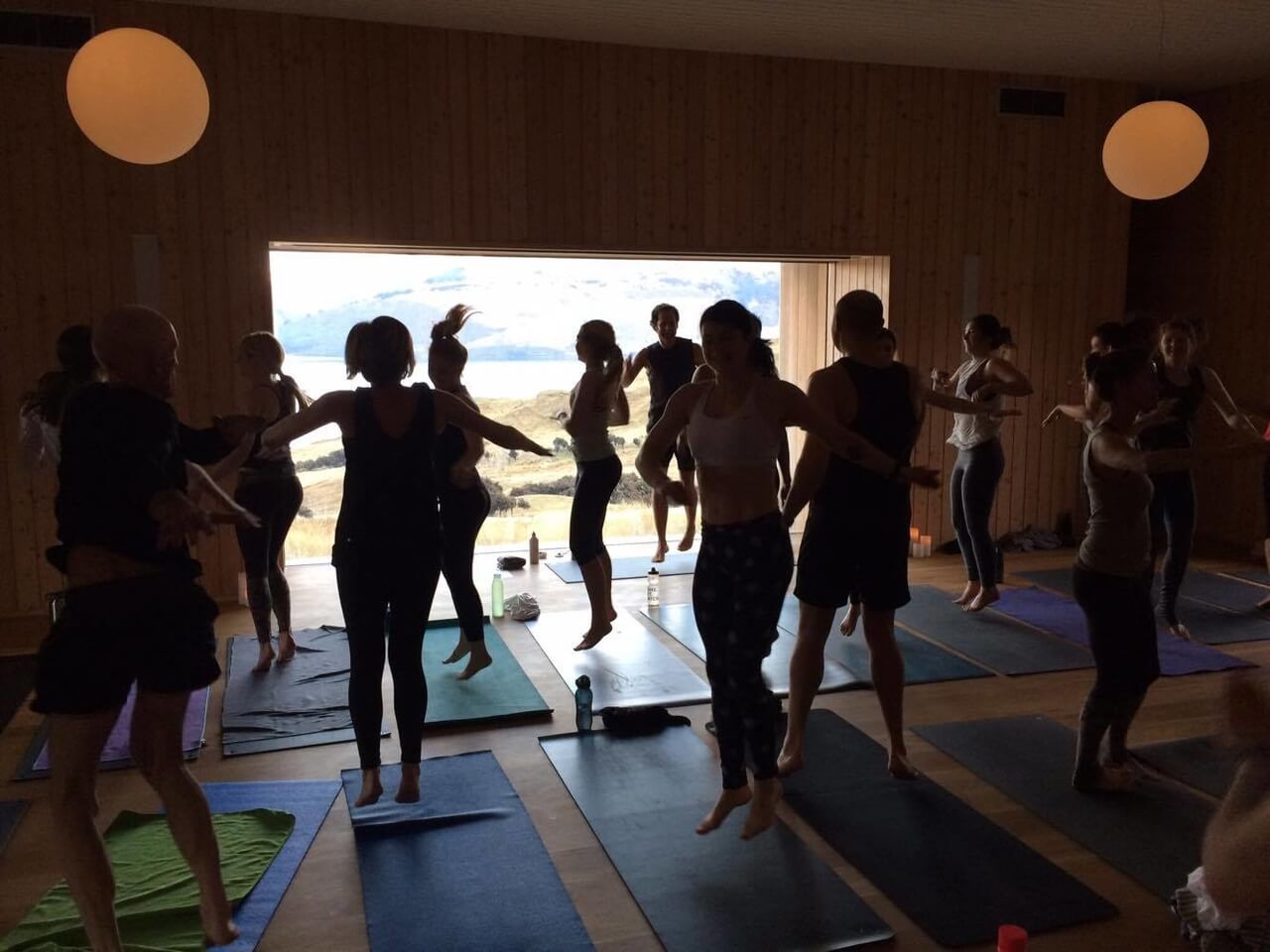
Peak-and-Release Dance is an ecstatic-dance practice that builds free, expressive movement to a high-intensity peak, then surrenders into stillness, an arc that mirrors the body's cycle of activation and recovery.
Last Updated
4 Jul 2026
We are still reviewing this page. Our research team checks every technique page for accuracy and evidence quality before final release. Details may change as that review completes. The evidence badge shows our current reading of the published research.
RECOMMENDED DOSE
No direct dose evidence; editorial synthesis. A short, low-commitment introduction lets newcomers learn the peak-and-release rhythm without fatigue or drop-out. The available references cover unrelated exercise-physiology and immunology topics and do not report a dose for this dance technique.
No direct dose evidence; editorial synthesis. Once the basic movement pattern is comfortable, a moderate session length and more regular practice support building stamina and familiarity. This range reflects general conventions for expressive-movement practice rather than any cited study.
No direct dose evidence; editorial synthesis. Longer, more frequent sessions suit established practitioners seeking a fuller peak-and-release arc, and should be scaled to comfort and recovery. No cited source supports a specific maintenance dose for this technique.
Session length
Session length: 10–15 minutes
10
MIN
How long each individual practice session should last from start to finish.
Frequency
Frequency: 2–3 days
2
DAYS
The number of days per week to fit a session into your routine.
Session length
Session length: 20–30 minutes
20
MIN
How long each individual practice session should last from start to finish.
Frequency
Frequency: 3–4 days
3
DAYS
The number of days per week to fit a session into your routine.
Session length
Session length: 40–60 minutes
40
MIN
How long each individual practice session should last from start to finish.
Frequency
Frequency: 4–5 days
4
DAYS
The number of days per week to fit a session into your routine.
About this card. No direct dose-response literature exists for Peak-and-Release Dance; these are conservative starting points based on general movement-practice conventions. These recommendations are not a substitute for personalised guidance from a qualified practitioner.
Quick answers to what people most often ask. Each card links to the deeper section below.
evidence
No study has tested Peak-and-Release Dance directly, so the rationale borrows from general exercise research in athletes and healthy adults. That research shows vigorous effort shifts the body's balance between activation and recovery and raises interleukin-6, a blood marker that climbs with intensity. Effects on the dance itself remain inferred, not measured.
good for
Adults who feel wired, restless, or stuck in high gear and want a physical way to build energy and then let it fall may find Peak-and-Release Dance useful. It offers general movement well-being, not targeted care, and is not a proven treatment for anxiety, depression, trauma, or addiction.
Read moresafety
Most healthy adults can practise Peak-and-Release Dance safely by setting their own pace. People with heart or blood-pressure conditions, or who are pregnant, should keep the peak gentle and consult a clinician first. The release phase can surface strong emotion, so those working through active trauma or grief may need a trained facilitator.
Read morehow it works
Faster, bigger movement drives the sympathetic branch, the fight-or-flight system that quickens the heart and mobilises energy, felt as rising heat and quick breath. Surrendering into stillness hands the lead to the rest-and-recovery branch, so heart rate falls and breathing slows. Exercise research supports this activation-to-recovery swing, though not for this dance specifically.
Read morePeak-and-Release Dance is an ecstatic-dance practice that builds free, expressive movement to a high-intensity peak, then surrenders into stillness, an arc that mirrors the body's cycle of activation and recovery.
A session follows one deliberate arc. Movement builds in speed, size, and intensity toward a peak of full effort, then surrenders into stillness or slow, gentle motion for recovery. The form is usually free and expressive rather than choreographed, and music typically tracks the same rise and fall. During the release, the body lets go of built-up activation, and whatever surfaces is welcome, including tears or spontaneous trembling.
This is not a fitness class aimed at technique or calorie targets, and not a choreographed routine. The point is the arc from intense activation to deliberate release, not performance. It differs from purely calming movement practices because it drives high energy first, and from structured somatic-therapy protocols because it is a communal, expressive form rather than a clinical treatment. It is not a substitute for care when heart, pregnancy, or trauma concerns are present.
Not to be confused with
Ecstatic Dance (generic)
Peak-and-Release Dance is one structured form within ecstatic dance, defined by its deliberate build-to-peak then surrender arc, not the whole open-ended free-dance category.
TRE (Tension & Trauma Releasing Exercises)
Both aim at nervous-system discharge, but TRE provokes tremor through fatiguing muscle holds, while Peak-and-Release reaches release through a full-effort dance peak followed by stillness.
Somatic Experiencing
Somatic Experiencing is a clinician-led trauma therapy that tracks bodily sensation in small, titrated steps. Peak-and-Release Dance is a self-directed movement practice, not a trauma treatment, even though its release phase can surface strong emotion.
HIIT workout
A high-intensity interval workout targets fitness through repeated exertion; Peak-and-Release Dance uses one expressive peak to open into an emotional and physical release, so its intent is regulation and catharsis rather than conditioning.
Peak-and-Release Dance works by deliberately swinging the nervous system into high activation and then letting it recover. As the peak builds, faster and bigger movement drives the sympathetic branch, the fight-or-flight system that speeds the heart and mobilises energy, into high gear, felt as rising heat, quicker breath, and a rush of aliveness. When you surrender into stillness, the release phase hands the lead to the parasympathetic branch, which governs rest and recovery, and the body responds the way it does at the end of hard effort: heart rate falling, breath slowing, a spreading heaviness. Exercise research shows vigorous effort does shift this balance between activation and recovery, though that finding comes from studies of general exercise rather than this dance specifically (Daniela et al., 2022).
As the movement peaks, faster and bigger motion drives your fight-or-flight branch into high gear: heart rate climbs, breath quickens, and energy mobilises, which many people feel as alertness, rising heat, and a rush of aliveness. This rationale comes from exercise physiology rather than direct dance studies, where vigorous effort reliably shifts autonomic balance toward sympathetic arousal (Daniela et al., 2022).
When you feel stuck in one gear, wired and unable to settle, or flat and unable to lift, this practice's build-and-release arc is meant to move the nervous system between full activation and deep recovery, shifting the balance between its stress-response and rest-and-recovery branches. Exercise research shows vigorous effort does drive that shift (Daniela et al., 2022), so over time the back-and-forth may feel less like being locked in place and more like being able to travel between energised and calm as needed.
As you surrender from the peak into stillness, the body settles, heart rate falls, breathing slows, and a spreading heaviness moves through. This is the parasympathetic branch, the part of the nervous system that handles rest and recovery, taking the lead (Daniela et al., 2022).
During the peak, the body raises sympathetic tone, the fight-or-flight activity that quickens heart rate and mobilises energy, then lets it fall during the release toward rest-and-recovery. Exercise studies also show that intense effort raises circulating interleukin-6, a blood marker that climbs with how hard and how long you work, which tracks the exertion of a full-effort peak (Vassilakopoulos et al., 2003), (Ostrowski et al., 2000). You may feel this as a pounding chest and rising heat at the peak, then a downshift as breathing slows and a wave of settling moves through. These directions are inferred from general exercise research, not measured during the dance itself, so read them as what the body likely does rather than what has been recorded for this practice (Daniela et al., 2022).
The rush of a full-effort peak, then the drop into stillness, tracks a change in sympathetic tone, the fight-or-flight activity that speeds heart rate and mobilises energy for action. Exercise research shows vigorous movement raises this activity, and regular training shifts autonomic balance back toward recovery afterwards (Daniela et al., 2022); in the release phase people often feel the body downshift, heart rate slowing and a wave of settling moving through.
At the peak of the dance the chest pounds, breathing quickens, and a rush of alertness moves through the body, the signature of rising sympathetic activation, the fight-or-flight branch of the nervous system that speeds heart rate and mobilizes energy for action. General exercise research shows vigorous movement shifts this branch and its recovery (Daniela et al., 2022), and the drop into stillness is where that arousal is meant to settle back down; this specific dance has not been measured directly.
As the peak passes and you surrender into stillness, your heart rate settles, breathing slows and deepens, and a spreading calm and heaviness move through the body. This is parasympathetic tone rising, the rest-and-recovery branch of the nervous system taking stronger control, a shift exercise research links to slowing down after effort, though it has not been measured in this dance specifically (Daniela et al., 2022).

If you feel wired at night and drained in the morning, as though your stress never settles into a rhythm, regular vigorous movement is linked in exercise research to a steadier daily cycle of cortisol, the hormone that rises to wake you and falls to let you rest (Daniela et al., 2022). A steadier pattern is expected to feel like calmer mornings and an easier wind-down at night, though cortisol has not been measured during the dance itself.
Emerging, indirect evidence stands behind Peak-and-Release Dance: no study has tested the practice itself, so its rationale borrows from exercise research. That research links regular vigorous movement to broad health benefits and to shifts in the body's balance between alertness and calm, while noting that very intense effort places short-term demands on the body (Romeo et al., 2010), (Daniela et al., 2022). This can reasonably support a route to feeling more energised and then more settled, and possibly steadier arousal over time. What is not yet supported: any claim that the dance treats anxiety, depression, trauma, or addiction, or that its emotional-release and nervous-system-training effects have been measured. Large trials, comparison groups, and direct outcome data for this practice do not exist.
No study has tested Peak-and-Release Dance directly, so what we know comes from the wider science of vigorous movement. That research shows intense effort shifts the body's stress-and-recovery balance, its swing between revved-up and calm, and raises circulating interleukin-6, a blood marker that rises with the intensity and duration of exercise; in marathon runners peak levels climbed with running intensity, and 45 minutes of hard cycling raised it several-fold in untrained adults (Daniela et al., 2022), (Ostrowski et al., 2000), (Vassilakopoulos et al., 2003). The main limit is scope: all of this was measured in athletes and healthy adults during ordinary exercise, not during the peak-and-release arc, its emotional-release phase, or its claimed nervous-system training (Romeo et al., 2010).
0
Meta-analyses
0
RCTs
0
Systematic reviews
0
Observational
6
Pilot
Studied populations
Outcomes measured
Antioxidants attenuate the plasma cytokine response to exercise in humans
n = 6
Finding: In a small study of six untrained adults who cycled hard for 45 minutes, levels of immune-signalling molecules released by working muscles climbed sharply, with one key marker (IL-6) rising about sixfold. That tells us vigorous physical effort produces real, measurable changes throughout the body, the kind of demand an intense movement "peak" would also place on you. Keep in mind this was cycling, not dance, and the group was tiny, so it speaks to how the body responds to hard exertion in general rather than to Peak-and-Release Dance specifically; these are markers of physical effort, not a measure of emotional release.
reported significant; P<0.05
Interleukin‐6 release from the human brain during prolonged exercise
2002
Finding: In studies of runners and cyclists, hard physical effort sharply raised a signalling chemical called interleukin-6 (a molecule released by working muscles that helps the body manage fuel and recovery), with bigger, longer efforts producing bigger rises; after 45 minutes of vigorous cycling, levels climbed several-fold. In plain terms, this confirms that pushing your body hard sets off real, measurable changes throughout it, the kind of whole-body response you'd expect during the intense "peak" phase of this practice. Keep in mind, though, that these studies looked at running and cycling in healthy adults, not dance, and none examined Peak-and-Release Dance itself, so this is background on what strenuous movement does to the body rather than direct evidence about the technique or about emotional "release."
See full citation in referencesPeak-and-Release Dance grows out of ecstatic-dance culture, a communal, free-form movement tradition in which building intense embodiment and then surrendering is understood as a path to emotional release and shared aliveness. Its signature arc, energy built to a peak and then let go into stillness, is framed as mirroring the body's own cycle of activation and recovery, often carried by music that rises and falls with the movement. These roots help explain the practice's form and why it feels coherent to practitioners, not that the tradition proves any clinical effect.
For most healthy adults, Peak-and-Release Dance is a low-risk practice, and you stay in charge of it by setting your own pace and how far you push the peak. A few situations call for more care. The peak phase drives the body into high-effort exertion that speeds the heart and works the muscles hard, so people with cardiovascular or blood-pressure conditions are wise to keep that peak moderate. This is a physiology-inferred caution drawn from general exercise research, which shows that very vigorous effort places short-term demands on the body (Romeo et al., 2010), it has not been measured in this dance specifically. The release phase can surface strong emotion or spontaneous trembling as the nervous system lets go of stored activation. That is a practice-informed caution based on how the release tends to unfold, not an evidence-based safety risk, and it may feel destabilising for anyone actively working through trauma.
A few groups should approach the high-intensity peak with extra care. People with heart conditions, high or low blood pressure, or who are pregnant are best speaking with a clinician before attempting the peak, and keeping exertion gentle in the meantime, since the demands of vigorous effort have not been studied in this specific practice; this is a physiology-inferred precaution. People actively processing trauma, acute grief, or a current mental-health crisis may find the release phase brings up more emotion than expected, and are best supported by a trained facilitator or therapist, a practice-informed caution based on how the release is observed to unfold, rather than a measured risk. These cautions are precautionary, drawn from adjacent exercise physiology and practice observation rather than direct safety research on this dance (Daniela et al., 2022).
The peak phase drives the body into high-effort exertion that speeds the heart and works the muscles hard, so people with cardiovascular or blood-pressure conditions are wise to keep the peak moderate and speak with a clinician before attempting the high-intensity build. This is a physiology-inferred caution drawn from general exercise research, which shows very vigorous effort places short-term demands on the body; it has not been measured in this dance specifically (Romeo et al., 2010).
| Technique | Best for | Use with care | Evidence strength | Distinction |
|---|---|---|---|---|
| Ecstatic Dance (free-form) | Open-ended expressive movement in a communal setting when you want freedom rather than a structured intensity curve. | emerging EVIDENCE | Ecstatic dance is the wider free-form, expressive movement culture Peak-and-Release Dance belongs to. The distinguishing feature here is the deliberate arc: intensity built to a peak, then a surrender into stillness or slow motion, rather than open-ended improvisation with no set climb-and-release shape. | |
| 5Rhythms | A guided map of distinct movement moods when you want more structure than a single peak-and-release arc. | emerging EVIDENCE | 5Rhythms guides dancers through a fixed sequence of five movement qualities (flowing, staccato, chaos, lyrical, stillness) as a repeating wave. Peak-and-Release Dance keeps a simpler two-part arc, a single build to peak effort followed by intentional recovery, rather than cycling through named rhythmic stages. |
Peak-and-Release Dance is a movement practice built on one deliberate arc: you raise the intensity of free, expressive movement toward a full-effort peak, then surrender into stillness or slow, gentle motion. The arc mirrors the body's cycle of activation and recovery, and the drop into stillness can bring a strong wave of settling, sometimes emotion.
+
Peak-and-Release Dance is an ecstatic-dance practice in which you build movement to a high-intensity peak, then let go into stillness so the body can recover, often carried by music that rises and falls with you. Because it belongs to ecstatic-dance culture, the movement is usually free and expressive rather than choreographed, and the release phase can surface emotion or spontaneous trembling as the body lets go. This describes the form and felt experience of the practice, not a proven treatment for any condition.
Honestly, the evidence is indirect. No study has tested Peak-and-Release Dance itself, so its rationale is borrowed from general exercise-physiology research rather than measured in this practice (Daniela et al., 2022). Read it as a plausible route to feeling energised and then settled, not a proven treatment.
+
The evidence is suggestive, not confirmed. No trial has studied Peak-and-Release Dance directly, so the case for it rests on broader exercise research showing that vigorous movement engages the body's autonomic systems, which govern stress and recovery, and that regular activity is linked to health benefits (Daniela et al., 2022), (Romeo et al., 2010). That research was measured during ordinary exercise, not during this dance, its emotional-release phase, or its claimed nervous-system training, so the fair conclusion is that it can support movement and rest well-being rather than treat any condition (Daniela et al., 2022).
The two-part structure of the practice: movement built up to a high-intensity peak, then a deliberate surrender into stillness or slow motion so the body can recover.
Heightened activity in the body's fight-or-flight branch, felt as a faster heart rate, quicker breath, rising heat, and a charged sense of readiness during the peak phase.
Increased sympathetic nervous system output, raising heart rate, catecholamine release, and energy mobilisation.
The settling that follows peak effort, when the rest-and-recovery branch of the nervous system takes the lead and the heart rate slows, breathing lengthens, and the body grows heavy.
The capacity to shift smoothly between activation and rest rather than getting stuck in high arousal or shutdown, experienced as feeling less stuck and more resilient.
Sympathovagal balance: the dynamic ratio of sympathetic to parasympathetic influence on the body, often indexed by heart-rate variability.
The release of stored activation through shaking, trembling, or involuntary movement, often felt as spontaneous trembling followed by a deep settling as tension lets go.
Neurogenic discharge: involuntary muscular activity thought to help complete an interrupted stress-response cycle.
The emotional release, sometimes tears or a sudden wave of feeling, that the surrender phase can bring up as the body lets go of held tension.
The daily pattern of cortisol, the hormone that rises to wake you and dips to let you rest; a steadier rhythm can feel like calmer mornings and an easier wind-down at night.
Theodoros Vassilakopoulos, Maria-Helena Karatza, Paraskevi Κatsaounou, Androniki Kollintza, Spyros Zakynthinos, Charis Roussos (2003). Antioxidants attenuate the plasma cytokine response to exercise in humans. https://doi.org/10.1152/japplphysiol.00735.2002
Cited in: Research, What happens in the body
Lars Nybo, Bodil Nielsen, Bente Klarlund Pedersen, Kirsten Møller, Niels H. Secher (2002). Interleukin‐6 release from the human brain during prolonged exercise. https://doi.org/10.1113/jphysiol.2002.022285
Explore guided sessions to deepen your Peak-and-Release Dance technique.
| Outcome | Effect size | 95% CI | N | Comparator | Source |
|---|---|---|---|---|---|
| peak plasma IL-6 vs running intensity | Pearson r = 0.32 | — | 53 | — | Ostrowski et al., 2000 |
| cytokine response to exercise | reported significant; P<0.05 | — | 6 | — | Vassilakopoulos et al., 2003 |
The biggest limitation is simple: no research has studied Peak-and-Release Dance itself, so every claim here leans on general exercise studies in healthy adults and athletes rather than on people doing this practice. Its expected effects, a nervous system that swings more freely between feeling revved-up and feeling calm, along with the emotional release of the surrender phase, are inferred rather than measured. Some of the supporting findings also report only that a result reached statistical significance, which shows it was probably not chance but not how large or how lasting it was. Some people may notice genuine shifts in energy and settling, yet the fair conclusion is that this can support movement and rest well-being, not that it is a proven treatment or a replacement for care when symptoms are serious.
Effects of Exercise Training on the Autonomic Nervous System with a Focus on Anti-Inflammatory and Antioxidants Effects
2022
Finding: This review looks at how physical exercise affects the body's automatic stress-and-recovery system, describing how movement ramps up the "fight-or-flight" side during effort and, depending on how hard and how long you go, can strengthen the "rest-and-recover" side and calm inflammation afterward. That pattern loosely mirrors the effort-then-release arc that Peak-and-Release Dance aims for, so it offers a plausible physiological rationale for why active movement might leave you feeling settled. Keep in mind this is a broad review of exercise in general, not a study of this dance practice, so it can inform the idea but cannot show that Peak-and-Release Dance itself produces these effects.
See full citation in referencesInterleukins and exercise
2000
Finding: This exercise-physiology study measured how the body responds to hard physical effort, and found that vigorous exertion sharply raises circulating signalling molecules called cytokines (such as IL-6), released mainly by the working muscles, with bigger rises after harder and longer effort. For someone drawn to the high-intensity "peak" phase of Peak-and-Release Dance, it's a useful reminder that pushing your body physically produces real, measurable changes throughout it. That said, this research looked at runners and cyclists rather than dancers, so it doesn't tell us anything specific about this practice, and these muscle-driven chemical responses are markers of physical effort, not evidence of an emotional or nervous-system "release."
See full citation in referencesPhysical activity, immunity and infection
2010
Finding: This review of how exercise affects the body's defences found that regular moderate movement appears to support some parts of the immune system, while bouts of very intense exertion can briefly dampen immune activity, with the size of the effect depending on a person's fitness and how hard they push. For someone drawn to Peak-and-Release Dance, it's a reminder that steady, moderate movement is broadly good for the body, whereas repeatedly going all-out may ask more of it in the short term. This is general exercise research, though, not a study of this dance practice itself, and the authors note the immune effects are still debated rather than settled, so it can't tell you what this specific technique does for you.
See full citation in referencesPhysical activity and plasma interleukin-6 in humans - effect of intensity of exercise
n = 53
Finding: In 53 marathon runners, the harder and longer they pushed, the more their blood levels of interleukin-6 rose, a signalling molecule that contracting muscles pour out during intense effort. This is useful background for the high-intensity "peak" phase of Peak-and-Release Dance: it confirms that vigorous physical exertion sets off real, measurable changes throughout the body. But the study looked at runners, not dancers, and it tells us nothing about dance itself; higher IL-6 also reflects physical strain and inflammation, not any kind of emotional release. Treat it as a reminder that intense movement genuinely works your system, not as proof of what this specific practice does.
Pearson r = 0.32
Because the peak is genuinely strenuous and its demands have not been studied in this specific practice, people who are pregnant are best speaking with a clinician before attempting the peak and keeping exertion gentle in the meantime. This is a precautionary, physiology-inferred caution rather than a measured safety finding (Romeo et al., 2010).
As you surrender into stillness, the release can bring up strong emotion or spontaneous trembling as the nervous system lets go of stored activation, which may feel destabilising for anyone actively working through trauma or grief. Keep sessions short and work alongside a trained facilitator or therapist if strong feelings surface. This is a practice-informed caution based on how the release is observed to unfold, not an evidence-based safety risk (Daniela et al., 2022).
Peak-and-Release Dance sits best in a space where you feel free to move fully and to fall still afterward without needing to rush on. You stay in charge of it throughout, setting your own pace and choosing how far to take the peak, so a gentle starting session with plenty of room to warm up and settle is far kinder than diving straight into full intensity. If you carry any heart, blood-pressure, or pregnancy considerations, or you are working through something tender emotionally, keeping the effort moderate and having support nearby lets the practice unfold at a pace your body and nervous system can meet.
Before you begin, notice any heart, blood-pressure, pregnancy, or recent-injury concerns. If any apply, keep the peak gentle and clear the intensity with a clinician first. This precaution is inferred from general exercise physiology, not from studies of this dance.
Start with easy, loose movement for several minutes so the body eases into effort rather than being thrown into it, letting the heart rate rise gradually instead of all at once.
Increase speed and size only as far as feels strong and sustainable. A pounding heart and hard-working muscles are expected, but sharp chest pain, dizziness, or breathlessness that will not settle are signals to stop.
As you drop into stillness, allow whatever surfaces, including tears or spontaneous trembling as stored activation discharges, without pushing it away or chasing it. Let the breath slow and the body grow heavy.
After a long or intense session, return to sitting or standing gradually rather than abruptly, and take a moment before moving on. This matters especially if your blood pressure runs low.
If the emotional release feels overwhelming or hard to settle, pause the practice and consider working alongside a trained facilitator or therapist, particularly if you are processing trauma or grief.
This information is educational and is not medical advice. This practice is not a substitute for professional care and should not replace prescribed medication or treatment for any medical or mental-health condition. If you are managing a health condition or taking medication, talk with a qualified health professional before changing your practice. If you are in distress or crisis, seek professional support.
| TRE (Tension & Trauma Releasing Exercises) | Eliciting tremor-based discharge quietly and gradually, without the cardiovascular load of a dance peak. | If you prefer a low-intensity, contained approach; TRE's tremoring can still surface strong emotion and is best paced with support. | emerging EVIDENCE | TRE shares the nervous-system-discharge mechanism, the involuntary trembling that lets stored activation complete and settle, but reaches it through fatiguing muscle exercises that provoke tremor, not through a dance peak. Peak-and-Release Dance uses full-effort expressive movement as its vehicle instead. |
| Vigorous aerobic exercise (e.g. HIIT) | Building cardiovascular fitness and autonomic conditioning with well-studied, measurable training protocols. | If the goal is emotional release or free expression rather than measured fitness gains. | moderate EVIDENCE | High-intensity interval training drives the same sympathetic-activation-then-recovery cycle that underlies the peak-and-release arc, and it carries a much larger direct research base. What it lacks is the expressive, emotional-release and communal dimension that Peak-and-Release Dance is built around. |
Likely because of the shift from high activation to rest. As you drop from a full-effort peak into stillness, the parasympathetic branch that handles rest and recovery takes the lead, and the practice frames the tears that can surface as stored activation letting go. This is a proposed, practice-based explanation, not a measured effect for this dance (Daniela et al., 2022).
+
The most likely reason is the rapid swing from activation to recovery. During the peak, the body's fight-or-flight branch, the sympathetic nervous system, runs high; when you surrender into stillness, the parasympathetic branch that governs rest and recovery takes the lead, and ecstatic-dance practice describes tears or trembling in this window as the nervous system discharging held tension. That activation-then-recovery swing is inferred from general exercise physiology rather than measured during this dance, and the tearfulness itself is a practice observation rather than a studied outcome, so read it as a plausible explanation, not proof, and not an emotional-processing or trauma treatment (Daniela et al., 2022), (Romeo et al., 2010).
Possibly. Building movement to a peak and then surrendering into stillness gives a wired, over-activated body a physical way to discharge energy and then settle, but this rests on general exercise research rather than trials of the dance itself, so treat it as a plausible way to feel less stuck, not established treatment (Daniela et al., 2022).
+
Possibly. The practice deliberately swings the nervous system into high activation during the peak and then hands the lead to the parasympathetic branch, which governs rest and recovery, as you drop into stillness, an arc that exercise physiology suggests vigorous effort can drive through the balance between feeling revved-up and feeling calm (Daniela et al., 2022). That said, no study has tested this dance directly; the rationale borrows from broader movement research in healthy adults, so it is best read as a plausible path to discharging energy and coming down, not as established care for anxiety, stress, or any condition (Romeo et al., 2010).
Use care, and check with your clinician first. No study has tested this dance's cardiovascular safety, so it can't be called safe or unsafe for heart or blood-pressure conditions; because the peak is genuinely strenuous, keep it gentle and get personalised clearance (Romeo et al., 2010).
+
Use care. There is no direct research on Peak-and-Release Dance for people with heart or blood-pressure conditions, so this is a physiology-inferred precaution rather than proven safety (Daniela et al., 2022). General exercise research shows that very vigorous exertion places short-term demands on the body, and the peak phase pushes the heart and muscles hard (Romeo et al., 2010). If you have a cardiovascular or blood-pressure concern, keep the peak moderate and speak with a clinician before attempting the high-intensity build.
Use care. The release phase can surface strong emotion or spontaneous trembling and may feel destabilising during active trauma, so it is best done with a trained facilitator or therapist. This is a practice-informed caution, not proof it is safe or unsafe.
+
Use care. No study has tested this dance in people working through trauma, so there is no direct safety data either way; the caution here comes from how the practice is observed to unfold, not from measured research (Daniela et al., 2022). As you surrender into stillness, the release can bring up intense emotion, tears, or involuntary trembling as the body lets go of held activation, which can feel destabilising during active trauma. Treat it as self-directed movement rather than trauma treatment, keep sessions short, and work alongside a qualified facilitator or therapist if strong feelings surface.
Start simply: check your readiness (clear it with a clinician first if you have heart, blood-pressure, pregnancy, or injury concerns), warm up with easy movement, then build speed and size only to your own edge before surrendering into stillness. Let whatever surfaces settle on its own, and come down slowly (Romeo et al., 2010).
+
Begin with a readiness check, then a few minutes of loose, easy movement so your heart rate rises gradually rather than all at once. Build the peak only as far as feels strong and sustainable; a pounding heart and working muscles are expected, but sharp chest pain, dizziness, or breathlessness that won't settle mean stop. As you drop into stillness, let any wave of emotion or spontaneous trembling pass without forcing it, then return to sitting or standing slowly. This is practice-informed guidance rather than a proven treatment: no study has tested this dance directly, so the readiness cautions are drawn from general exercise physiology rather than research on the practice itself (Romeo et al., 2010), (Daniela et al., 2022).
Mainly in intent, not mechanism. Both drive the same sympathetic-activation-then-recovery cycle, but HIIT aims at measurable fitness and conditioning, while Peak-and-Release Dance centres free expressive movement, emotional release, and a communal setting for regulation and catharsis. No study has compared the two directly (Daniela et al., 2022).
+
The difference is one of form and purpose rather than proven superiority. HIIT and Peak-and-Release Dance share the same underlying arc, effortful activation of the fight-or-flight system followed by recovery, and regular vigorous movement of either kind is broadly linked to health benefits (Romeo et al., 2010). What sets the dance apart is its expressive, free-form movement, the emotional release the surrender phase can bring, and the communal context, all aimed at settling and catharsis rather than fitness gains. This is a form-and-intent distinction only: no direct head-to-head research exists, so neither can be called better or clinically proven for the other's goals (Daniela et al., 2022).

The vehicle. Both aim at nervous-system discharge, the release of stored activation, but TRE provokes involuntary tremor through fatiguing muscle holds with no cardio load, while Peak-and-Release Dance reaches release through a full-effort dance peak followed by stillness. Neither is a proven trauma treatment.
+
The main difference is how each one gets there. TRE (Tension & Trauma Releasing Exercises) uses fatiguing muscle positions to trigger spontaneous trembling quietly and gradually, without the cardiovascular demand of a dance; Peak-and-Release Dance instead builds expressive movement to a strenuous peak, then surrenders into stillness so the body can settle. Both share the same proposed mechanism, but that mechanism is inferred from broader movement and exercise physiology rather than measured in either practice, and no head-to-head trials exist (Daniela et al., 2022), (Romeo et al., 2010).
A free-form, expressive movement practice, usually done to music in a communal setting, where letting the body move without choreography is the point.
Cited in: What happens in the body
Matei Daniela, Cătălina Luca, Ilie Onu, Matei Paula, Daniel Andrei Iordan, Ioana Buculei (2022). Effects of Exercise Training on the Autonomic Nervous System with a Focus on Anti-Inflammatory and Antioxidants Effects. https://doi.org/10.3390/antiox11020350
Cited in: Benefits, How it works, Research, What happens in the body, Who should use care
Michael Gleeson (2000). Interleukins and exercise. https://doi.org/10.1111/j.1469-7793.2000.00001.x
Cited in: What happens in the body
Javier Romeo, Julia Wärnberǵ, T. Pozo, A. Marcos (2010). Physical activity, immunity and infection. https://doi.org/10.1017/s0029665110001795
Cited in: Benefits, Research, Use with care
Kenneth Ostrowski, Peter Schjerling, Bente Klarlund Pedersen (2000). Physical activity and plasma interleukin-6 in humans - effect of intensity of exercise. https://doi.org/10.1007/s004210000312
Cited in: Research, What happens in the body
Editorially curated. Tracks are not themselves clinically studied; evidence on the page applies to Peak-and-Release Dance as a technique.
Beginner content for Peak-and-Release Dance

★ 4.7
·
Music
·
62 min
Damian Chaparro
How hard is Peak-and-Release Dance?
Peak-and-Release Dance should sit below the top ecstatic rows because the method is deliberately bounded around one activation-and-release cycle.
3
Mental Effort
2 / 4
▾Emotional Depth
3 / 4
▾Physical Intensity
3 / 4
▾Prior Knowledge
2 / 4
▾