Today,
We're going to be talking about bravery and clarity,
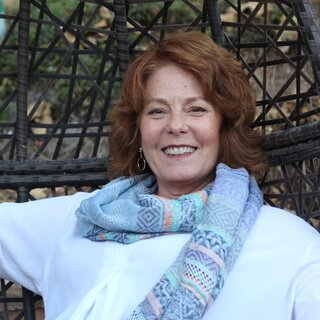
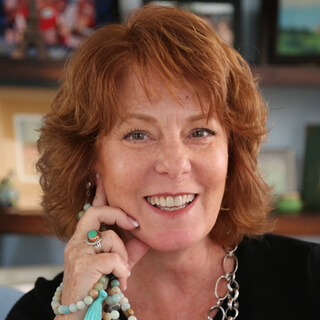
And my guest is Clara Chorleke.
Clara,
Thank you so much for joining me.
You're so welcome.
I'm excited to have this.
I got chills.
I got chills.
Yeah,
I'm excited.
So everybody,
Clara came to my attention because she did a short YouTube pop,
Which I just thought was amazing.
And actually,
We'll have the link in the show notes,
So you can all view it.
But Clara,
In that,
You were talking about bravery,
True bravery,
And that true bravery isn't what society used to tell us,
That true bravery is a very deep personal experience,
If you will.
So let's tease that out,
Because there's there's old-fashioned bravery with people going to war,
And in olden,
Olden days,
They were putting on armor,
And now,
God knows,
God help us all what they do now.
But is that bravery?
So there's the,
You remember the movie with,
Like,
Leap and the bridge will appear,
The Indiana Jones.
Yeah,
Yeah.
That sort of,
Like,
Or like,
Yeah,
The battle zone,
Jump on your horse and pull out your sword,
And just off you go.
Just do it.
And which is terrifying,
I think,
For most of us.
And it's,
My focus is often on people in their later stage careers.
And at that point,
We got a lot to lose,
You know,
And not just in terms of what we're earning and what we own,
But also in terms of the people that we love and care about.
So it's more complicated than just take this huge risk.
Yes.
And also,
One thing I think is so important is it's very,
Very,
Very personal.
And we can go more into this,
And we probably will probably be beneficial.
For example,
I have upped and moved twice,
Three times in my life,
Massive,
Massive continental moves,
Right?
And the last one,
I took myself to Africa.
And a lot of people were like,
That's so incredibly brave.
And I was sort of,
Well,
I'm compelled.
I've spent my life preparing for this.
So for me,
Yes,
Okay,
It's brave.
And this year,
Since February,
I've been taking myself onto LinkedIn and trying to clarify my brand and my messaging and actually make a difference in other people's lives.
And that kind of visibility is terrible.
But people don't look at that and go,
It's brave.
But for me,
It's because they just look at what my output is.
But for me,
It has required so much bravery.
And this is the personal place because when we're being brave in the ways that we know we need to be brave,
That's what shifts and changes our lives.
Not being brave in the way that society values bravery.
You know,
I've been talking about this a lot,
That,
Because what I'm hearing you say,
Clara,
Is it requires allowing yourself to be vulnerable.
You know,
True bravery is being vulnerable enough to step out fully you,
Fully,
This is who I am,
This is what I do.
Or,
You know,
Wow,
I am,
I'm going to step out and do this,
Whether it's business,
Or moving or leaving a marriage or a job.
It makes us feel vulnerable,
You know,
Doing something we maybe haven't ever done before.
And then it takes that personal amount of bravery to step up.
And I totally get feeling that it's excruciating to put yourself out in,
In ways that maybe are more allowing yourself to be more personal,
Or be more seen in the world.
It's,
I think it's the it's the intersection with whatever is true for you.
Whatever matters to you.
Because if it doesn't,
If it isn't true,
And it doesn't matter,
It's not,
It's not really as vulnerable.
So,
So my work,
My impact,
It really,
Really matters to me.
It's a purposeful fulfillment like yours is for you.
It matters that I don't get to 70,
80 years old and look back and go,
I wish I had like that really matters.
So there's an enormous amount of vulnerability there,
Especially when it's sort of dependent on a collective response or not.
But it's,
It's the bravery is the going for the things that,
That we really want.
Yes.
And separating those from the things that we think we should be doing,
Or the things that are going to please other people,
Or the things that feel safer.
And that's where a lot of sort of,
That's why I say it's so personal,
Because someone could be looking at me and going,
You're so brave,
And you live such a big life.
And inside me at 2am in the morning,
I'm waking up and going,
You have no idea,
There was this thing that I've wanted my entire life,
And I can't get myself to go for it.
Or I'm really successful in this profession,
This job.
And people are,
You know,
Looking up to me and following me,
And I can't stand it.
There's this other thing I feel called to do,
And I can't get myself to go do it.
Right,
Right.
So personal,
In that way,
We're the only ones that can really have the layers of honesty with ourselves.
With ourselves being honest with ourselves.
Yes.
And facing maybe some of the other pockets of unexplored,
Or dark parts of ourselves,
To face them so that we can be even more honest.
In my experience,
I've had to look at those things in order for me to take one more step further out in the world,
You know,
Become more okay.
But looking at some of those hidden spots within me,
That were keeping me stuck,
Because you're talking about being stuck.
Yeah.
I love that you said that.
I love that you said that.
Because one of the things that I had another conversation about this today,
Is I feel deeply that we need more spaces,
Where we can speak into the parts of ourselves where we feel most shame,
Most fear.
You know,
I'm afraid if I go and do that thing,
I'm gonna like get really angry,
Or I'm gonna react,
Or I'm gonna hurt somebody.
Or that's a big thing for women as well,
Just that societal psyche thing.
But,
Or so those spaces,
Yeah,
Where we can sort of go.
Right.
You know,
I want to speak up in these really important meetings.
And I want to show like everybody else is saying all the things that I already know about.
And so I don't know anything.
So I want to speak up more.
But there was this thing that happened to me when I was fill in the blank.
And it's really deeply impacted me.
And I can't sort of get around,
I don't know how to get around that.
And I'm really afraid this is going to happen.
And everybody's like,
Just do what it says in this article.
And I try that,
But I can't get it to come out of my mouth.
Or it's like,
Oh,
My God.
Okay.
Yeah.
We need spaces where we can come in and go,
You know,
I,
I work with executives who sit in calls with me and go,
Can you tell me how to word that email?
Because my brain is offline.
Because when it's harder,
It's so much harder.
But when there are places where we can say and be those softer,
Darker sides of ourselves,
We integrate,
We integrate more into our wholeness.
You can say to somebody who gets it,
You can't say it.
Can I keep going for a second?
Yeah,
Absolutely.
You can't say it to somebody who hasn't uncovered it inside themselves.
If I sit to somebody sit with somebody who is saying and I'm going like,
Oh,
My God,
I'm so afraid of my violent side.
I'm so afraid of my compulsive side.
I'm afraid of these aspects of myself.
If they haven't addressed that in themselves,
And they haven't sat with that and transmuted that,
I love that word,
Transmute.
I love that word.
Transformation of energy,
Because it's all energy.
If they haven't done that,
One or two things are going to happen.
A,
Whatever you say is going to flat line against them.
It's not going to go anywhere.
Or you're going to get a cerebral response,
Which often sounds like,
Are you ready for this?
This is,
Which often sounds like,
Just believe in yourself.
Let me give you three steps to handle this.
Don't feel that way.
It's normal to feel that way.
It's like,
There's no space for the empathy of what it's like to feel that way.
And when we can be with each other deeply in those spaces and feel like who I am is normal and held,
And I'm not being shamed for it because I'm already shaming myself enough for it.
And,
Oh,
I'm still light.
And I'm still all these other wonderful things alongside my darkness and my struggles.
I somehow come together in a more whole way.
And now I'm less afraid of myself.
And I trust myself more.
And now I can start to maybe speak up in that meeting.
It is profoundly important how we are with one another and having space for this.
Well,
I'm so grateful that you said all that because it's true.
And in,
I've often found in my personal life that,
You know,
We,
I think we tend to put ourselves in a box and my shoulders are moving up and down because it's so uncomfortable now.
But,
You know,
We tend to put ourselves in this smaller space.
And as we become more aware of who we are and we grow,
That space becomes really uncomfortable.
And so I often talk about holding a larger container for ourselves.
And you're just talking,
What you just described,
Clara,
Is being able in that container to invite people in.
So you can state,
And like you said,
Be held with empathy and compassion and not be directed,
Not be told what to do,
Not be fixed,
Not be shushed,
But be held in a safe environment.
You know,
I often talk about circles,
You know,
Circles that hold individuals or hold groups so that each person can be seen,
Heard and not fixed because it's in the speaking out of our greatest fear,
Guilt,
Shame,
Blah,
Blah,
Blah.
We then can see it,
You know,
It's almost like it comes out of our mouths and then sits across from us and you go,
Oh,
Oh,
That's what it was.
That's what I've been afraid of.
Oh,
That's not as bad as I thought.
But just to be able to have someone witness that is huge.
So Clara,
I want to talk about,
Because what you just described is a brilliant way,
A brilliant way to be brave.
It's a brilliant way to begin to sort what's yours and what's not,
But it's also leads you into a higher sense of clarity.
Yes,
Absolutely.
Absolutely.
I just want to say,
I'm really enjoying this conversation.
I love it.
Yes.
A higher sense of clarity,
For sure.
Because look,
In its ideal form,
And I often talk about having enough clarity because I think we aspire too much to like,
I've got to be a hundred percent sure.
I've got to be a hundred percent ready.
I've got to be a hundred percent clear.
I've got to be the perfect parent.
I've all this stuff.
So let's lower the bar on that.
But let's say the optimal clarity is when the committee is in agreement and the committee is the head,
The heart,
The gut,
And then the body.
Oh,
I love that.
Because our bodies are often like I'm moving towards it or I'm moving away from it.
So we're having a gut response,
But there is often a sort of physical energetic component to it.
That's the optimal clarity,
Right?
That the moment I knew I was going to take that one-way flight to Senegal,
I was living in San Francisco.
I'd been there for over a decade.
I had a 30-year love affair with the African continent.
I've been back and forth multiple times.
But in that moment,
Lying on my friend's couch,
She wasn't even at home.
I was just spending the afternoon in her place,
I think.
The moment I was clear,
My entire committee was like,
It's time.
And then things flowed from there.
I would say that is a wonderful,
Optimal level of clarity and not always the case.
But there was a 30-year run-up to that,
Going back and forth,
Working there,
Bringing it up.
I mean,
I drove my friends and my therapist bananas because I talked about Africa so much.
They were like,
Can you just go already?
But I couldn't until.
So the more we are brave and we look and we pull out these dark parts of us and we put all of our whole selves in a room,
Yes,
Clarity is birthed from that.
And it doesn't have to be perfect clarity.
It can be just enough for the next step,
Just enough for the next step.
That's all we really need.
It's like,
What is the next step?
Right.
And I so appreciate that you say it doesn't have to be perfect because I have clients and I'm one that,
Okay,
I'm not going to do anything until I'm absolutely certain.
And what happens is then the clock is still ticking,
Everybody.
When is enough?
When are you absolutely certain enough?
So I love this idea of the committee agreement of the head,
Heart,
Gut,
And body.
I love that because that in my,
In my personal experience,
When those things line up,
I get an energy jet.
I get an energy jolt.
You know,
These,
This energy just shoots in and down me and it starts vibrating and that,
And that's when I am like,
Okay,
I have to pay attention to this.
Yes.
This is what I'm supposed to say or do.
My next step is due or,
You know,
Whatever it is.
Yeah.
Yeah.
To that.
So my visual for that is imagine a pipe and it's got,
You know,
When it's all like super clogged up,
So there's water trying to flow through it,
But it can't because there's this clogged up piece.
So great bravery is I'm going to go look at the clog.
I'm going to go look at all that stuff that's clogging up the pipes and that happens at various stages of life.
Right?
So we'll look at the clog and each time we look at the clog,
A little bit goes away and maybe a tiny bit of water starts to go through.
And this is happening through our core,
Right?
I'm going to look at a clog.
I'm going to look at a clog.
And then all of a sudden there's that last bit there and it gets moved because enough of the clog has now out of the way.
And then you get the flow and that is clarity.
So that flow is our natural state that,
And all we're really doing is moving the clogs out of the way so that we can actually experience how we naturally are.
We're naturally in the flow of energy.
Yes.
Or should be.
Right.
Unless you're all clogged up.
Yeah.
Yeah.
It's the clog.
I'm wearing it out of clogs our entire lives,
Right?
And I don't mean the Dutch shoes.
But for some of us,
For me,
I had a clog that lasted pretty much my whole life because it was,
It was,
It was,
It got into place very,
Very early on,
But I went at it for probably 40 odd years and I'm not exaggerating.
Like I really had to like keep coming back to this clog and keep coming back to this clog.
And then there was this moment about three years ago where it just sort of like,
And the way I've operated since then has been very different.
It's not like I'm not still getting clogged up,
But that longer term one isn't so much there.
So the clarity comes a little more easily.
The water flows a little more easily.
Right.
Because the energy's flowing.
Exactly.
You're allowing,
You're allowing the receptivity to remain open now,
As opposed,
You know,
As opposed to clogging it up.
And then,
You know,
Because sometimes when,
Okay,
So I got,
I got a couple of things to say,
Clara.
I love what you just said,
Shared because it does in my experience,
And I'm a ripe old age now,
It does take persistent focus or going back to whatever that thing that's keeping you stuck is and facing it and dealing with it and moving it,
Moving it through.
And it does take years sometimes for,
It's not a magical one-off,
You know,
You don't get the magic mantra that it creates the miracle.
And that doesn't mean I don't believe in miracles,
Everybody,
Because I know shift,
Change,
Transmutation can happen in a heartbeat.
I know that I've experienced it.
But there's also this idea of moving more fully into our potential,
Not just the possibility of what I'm going to be when I grow up,
But our potential.
And for me,
I really think all of our potentials is to be more who we were meant to be when we were first born,
You know,
To really fulfill our soul contracts and fill out all that,
You know,
You talked about integrated,
Integrating into wholeness,
Feeling that,
I got chills again,
Feeling that wholeness,
Becoming that wholeness,
That full potential in this lifetime.
And it requires persistence and going back to the clog.
And it may take 30,
40 years,
It took me 50,
You know,
But once you move all that crap,
Once you get the flow going,
And,
And,
And have figured out what works for you to help you maintain or move into that flow more frequently.
For me,
It's aligning with the highest frequency of love keeps me in the flow.
But the more you do that individually,
Then the more your life becomes more rich,
More opulent,
If you will,
More brilliant.
And,
And it does take bravery to move that garbage.
Right?
Yeah,
It takes it.
Remember that that well known Marianne Williamson quote,
Our greatest fear is not that we're inadequate,
Our greatest fear is that we're powerful beyond measure.
I often for me personally,
I often feel like the bravery is more around.
If I move the clogs,
I know I'm going to become somebody,
I'll be more me,
But it'll be a different version of me.
I'll tolerate less of that crap.
I'll probably won't resonate with these people as much.
I'm probably going to have more boundaries there.
I may not even will I pre clog movement?
Will I still want to do what I've been doing for 30 years?
So then we get to like,
I there's an identity shift that happens that I think at a very,
Very deep,
Deep level,
We all are aware of this,
Whether we're conscious of it or not.
But there's a coming back to what you mentioned earlier about this sort of like,
Our personal relationship with the unknown is going to play a role in how brave we can be,
How messy we can let our lives get,
How much we feel brave enough to see what happens,
To let go of the clogs,
To move the clogs,
To do the thing.
And can we trust that where we're going is going to be better than where we've been?
And do we have the ability to really be in the mess?
And it's a little,
It's chaotic.
It's a chaotic stage.
And this,
We may or may not go deeper into this piece of the conversation,
But we're,
We have a majority,
I think,
I believe a majority population of humans who are carrying trauma.
Trauma,
Big time.
And then traumatizing more.
Right.
Well,
For sure.
I mean,
My goodness,
Things have,
I mean,
There's always something going on in the world.
And certainly we've had this exacerbated in recent years.
But when you've got trauma in your system,
Whether it's like from childhood or it's from events that have happened,
Or what's happening with the wars and everything going on right now,
Trauma,
The deeper the trauma,
The harder the unknown.
The deeper the trauma,
The harder it is to be in action.
Because it doesn't feel safe.
Trauma doesn't want you to move.
Trauma wants you to stay still.
So bravery is like,
You know,
In my LinkedIn profile,
It says I'm trauma informed.
Because for anybody that's been through that,
We understand that we need to be in a space where the nature of our trauma and how it shows up in our lives and our bodies and our brains is taken into account.
Because otherwise,
And this takes us right back to the beginning of this call.
Otherwise,
I'm trying to just do it.
I'm trying to implement the three steps that were written in that Harvard article,
The Forbes article.
I'm trying to be my best self.
But none of it works for me,
Because I need a more nuanced approach.
It takes into account my vulnerabilities,
That maybe it may or may not be connected to my trauma.
So it is,
I just,
Yes,
It's so important.
It's very important.
So Claire,
Let's talk specifically about the work that you do,
Because you work with people that are making shifts and changes in their career,
And you're helping them find more clarity and,
And,
And move with their trauma or through their trauma,
It sounds like.
Yes,
I'm not a therapist.
So the difference between coaching and therapy in this situation would be I would work with people that are able to make take steps and make movement.
Yes.
And if they're not,
Or if I work with people,
And they get to a point where they can't go any further than I often will refer out,
Or there's a trifecta approach going on.
Because trauma can be it's so personal,
Right?
It shows up in so many different ways.
But yes,
I look,
I think we need more good people in positions of power.
I think we have a lot of seasoned,
High integrity,
Impact driven,
Upper level and executive level leaders who are in environments where there's just stifled or they're burning out or they're like,
They want to make a change,
But how can they and they've got kids or they've my whole mission is how do we sort of pluck these people out of places where they know in their hearts,
They don't belong,
And support them in the journey towards a place where they do belong,
They can do their best work and right.
And if and like you said earlier,
If you've been if we've been in a job situation,
Let's say a career for 10 2030 years,
The the seeming risk factor of leaving that position,
Or that company,
It feels huge.
And when you've got family or debt or whatever,
It that's your clog,
Right?
That becomes your clog that gets you kind of stuck.
And you're and so you're not in the flow because in,
In the flow being in the flow of Okay,
I'm going to say this,
Being in the flow to me is about being fully aligned with source energy within you and listening to that wisdom,
That divine wisdom.
And when we're clogged up,
We can't hear it.
And we can't hear that voice saying it's time to move.
Go,
You got to go.
They're killing you.
Go.
You can't hear it.
Right?
Right.
And think about career coaching.
The majority of career coaching,
You get on the call with a career coach,
And they talk about your career.
But I can't make this move because I'm worried my wife's gonna leave me.
Right?
I can't make this move because I booked this thing for later.
I can't make this move because I have these sort of health issues with physical.
I can't make this move.
But I can't,
I'm really,
Really scared.
And I got nobody to talk to about that.
Right?
So my whole,
My approach is whole of life.
We want to be having those conversations because it's a,
It's a puzzle.
You know,
If you've got the pieces all mixed up,
Then like you just said,
You can't line up with that flow inside of you.
And the flow ideally with your you know,
Your,
Your partner ideally.
But feeling sort of the highest good,
The calling of the highest good for yourself and those around you.
Because usually that's not in conflict.
The highest good is not usually in conflict.
No.
But the moving of those,
The re,
Yeah,
The revamping of the,
The jigsaw pieces of the whole of your life.
That can be,
That can be a game changer.
And I wish there were a little bit more support like that instead of just go update your resume.
Right.
Which doesn't really help.
It doesn't help people to,
To,
To,
In order to make a transition or a move.
As you were speaking,
Claire,
I remember years ago,
Those pie charts,
You know,
That you would have to make a pie chart and 30% of this is my career and 10% is my happiness.
And 1% is my finances or whatever it was for people,
You know,
And I remember those things were,
Were traumatized me because I look at it and I,
I was,
I felt separated,
You know,
There,
They were compartmentalized.
My career is over here.
My spiritual practice is here.
My money's here.
You know,
When,
What,
What you just said,
It's all,
It's all part of it.
It's all the wholeness of it.
And all,
All those pieces have to be addressed.
And like you said,
Re-sorted and re put into,
Maybe it looks like a different kind of puzzle when you're done,
Right?
You said,
You mentioned that earlier,
When you move through that clogged pipe and the,
And you're in the flow,
You become even more yourself,
But it looks and feels different than who you were.
Yes.
And that takes bravery too.
Are you ready to be,
Are you ready to be different?
Which is,
Is really more who you were,
Who you're used to,
You know,
It's like the old behaviors or are you ready to build new,
More healthy,
Supportive behaviors to have a life that's full.
Yeah.
Cause it's always better.
It's always better.
I don't know anybody that like unclogs and they're like,
I really wish I hadn't done that.
Right.
I mean,
Most people are like this.
Oh my gosh.
I can see more clearly instead of this.
I'm like this.
Um,
I feel more me.
I feel less,
I feel more relaxed.
I feel more at ease.
I feel more confident.
I feel less scared.
I feel less anxious.
You know,
These are,
Yeah,
These are big things,
Big things.
And therefore then the health improves,
Relationships improve,
Um,
Your,
Your self-talk improves all of those things.
So can we do science for a second?
Cause I wanted to read you this thing.
I love it.
So in,
In psychology,
So I found this in psychology today and they said that bravery is our capacity to exercise more control in our lives so that we can pursue a full life.
That's what bravery is.
And then the Harvard study,
You can tell I'm reading a little bit right now,
But I don't want to mess it up.
The Harvard study of adult development,
Which by the way,
Is one of the longest running studies of physical and mental health and had no women in its studies when it's,
But they fixed it now they fixed it.
But that study says we can control 40% of our joy.
Oh,
So bravery is our capacity to exercise more control for a fuller life.
And we have 40% control of our joy.
So if we use bravery to control our joy,
We've got a wonderful intersection there.
Yes.
And bravery has been connected to more resilience.
And right now we have an epidemic of loneliness.
The U S surgeon general announced that we have,
We're in an epidemic of work stress.
The world health organization has been talking about that.
So resilience is really key right now.
You know,
A lot of people are like,
I used to back in the day,
I just apply for a job or somebody would offer me one.
And now I'm,
You know,
I'm a year in and it hasn't happened.
So how do you keep going through that?
And then you've got,
You know,
All these articles that are like,
It'll take you what's the average three to six months to get a job.
And I'm like,
I just want to,
Can I just,
Can we have,
Please stop putting that pressure on job seekers.
But anyway.
Exactly.
Because it creates a limitation.
It creates an expectation that,
And when that expectation isn't met,
You feel limited.
You feel small and you feel like,
Okay,
Nobody wants me.
Yes.
That nobody wants me.
It's awful.
It's awful.
And it's so normal,
But there's so much shame and not getting hired.
People don't want to have these conversations.
And so then there's isolation,
Which also,
So we're back in this cycle.
So resilience,
Bravery,
More resilience,
Better health.
It's also been connected in clinical psychology as a healing element.
So people that do more brave things,
They heal faster and the braver you are,
The longer your lifespan.
And some people are going to hear that and go,
Thank you very much.
I don't really want to live longer.
But what I would like to say,
What I'd like to say then,
If imagine you felt more resilient,
Your health was good and you were generally like functioning well in your life,
You might want to live a little bit longer.
Yeah.
And that sounds like reaching potential.
Yes,
It is.
And I love that you said that because it is all about,
We don't arrive at our potential.
We reach for it.
That's what fulfillment lives.
That's where satisfaction lives.
So bravely moving towards the things that we really want.
And who we want to be.
And who we want to be,
The expression of ourselves.
Right.
Yes.
And being honest about that,
Which is scary.
It is scary.
I've been out of a corporate job for a nine to five or a corporate job for maybe 25 years.
And doing what I do gives me so much pleasure,
Fulfillment.
I feel like I'm making a difference.
I feel like I'm serving people,
Humanity,
My clients.
And breaking out of that mold where I was on a trajectory,
And thought that's where I'm supposed to be.
Leaving that gave me,
It was scary.
It was very scary.
But it has given me permission to really explore who I am and then why I'm here and how do I serve.
And I mean,
When we're in a job,
We can serve humanity while we're in that job or that career.
Like you're talking about plucking out those amazing leaders that have the experience that need to be just sourced into,
Put into a job,
A career that really is in alignment with who they are and how they have wanted to serve probably most of their life.
Right.
Yes.
Well said.
So everybody,
Clara has a book.
It's called Turn,
Four Steps to Clarity in Your Career.
And it sounds like we've talked about a couple of the steps already.
Well,
So Turn is sort of an,
It's like an inner exploration.
It's an exercise book.
It's not a read it.
It's a do it.
Oh,
I love that.
I love exercise books.
I love sport books.
Thank you.
Oh my gosh.
And you can't do it in your head.
Because if you don't do the exercise,
How are you going to learn?
Exactly.
So many,
This difference between like,
I know it.
We're all smart and savvy,
But until we do it,
Until we're actually,
Our feet are moving,
We cannot know it.
We can only cerebrally know it.
So that's the kind of book that is.
It's a personal exploration towards clarity.
There's four stages of that.
And there's some,
There's some really powerful exercises in there.
You got to do them though.
If you sit and think about them,
You'll be like,
Well,
I don't get it.
It's not that powerful,
But good to do them.
And also,
I also want to just say,
Shout out to people that are like,
I can't do this kind of exercises alone.
I get it.
Sometimes we can't confront the hardest parts inside of ourselves alone.
Those young,
Young parts of us,
Or those vulnerable parts of us need to be with a witness or with somebody who feels like they've got them.
So I just want to say that,
You know,
It's not like it's easy to do these kinds of exercises.
But I did want to mention that over the last,
You know,
Around 14,
15 years of doing this,
I have a framework for change.
And I feel like this has been so important.
It's not in the book.
It'll be in the next book.
I know.
I'm working on it.
One book every 15 years is my goal,
Apparently.
Well,
That's good.
You know,
I might be on that trajectory too,
But yes.
So you have a framework for change.
A framework for change.
Now I think about it through career change,
But probably you could apply it,
But I'll stick with my lane.
But it's a five-stage framework.
And I think it can be very,
Very useful for people to think about change in this way,
Because otherwise it's like,
I'm here in my job.
I want to go over there.
And so I got to do all the things to get me there.
And that's how people think about it.
And all the things are,
You know,
I got to network.
Oh God,
That's terrifying.
Terrifying.
Awful.
I mean,
What even does that mean?
It's just,
Yeah.
And I've got to get my resume and then I've got to apply.
And then I got rejected.
And then I got to get ghosted.
And then I got to do all.
And I'm working full-time and I've got a relationship and I'm probably working on the weekends and I'm trying to go for a run every now and then and eat healthy.
And it's too much.
It's too much.
Yeah.
So if we can just slow it down and start with clarity.
Let's start with clarity.
Give yourself enough time.
Don't wait till your back goes completely out or you can't handle where you work anymore.
So you quit in a flurry of rage or you've become so apathetic that you have no energy to do anything outside of your job or whatever the breaking point things are.
Let's not wait that long.
Let's start when it's,
The pain has become bigger than the benefit of staying.
And let's start with clarity.
What do I want?
What do I want next?
And I have a framework called,
I'm just a framework girl,
But I have a framework called the matrix,
Which is breaks down what people want into in a job into four different categories.
Rather than just thinking about the job itself,
Think also about the organization,
The culture,
Think also about the people,
And then think about the,
What I call the sort of admin side,
Which is like your,
You know,
Your salary,
Your benefits.
This is where the negotiable stuff lies.
But we want to be doing a must have list that includes the culture,
The organization and the people,
Because guess why people leave jobs?
Yeah.
I mean,
Sometimes it's scope creep of the work that they're doing,
But often it's like,
We had a real org.
Yeah.
I can't get my job done.
I got another boss.
I can't stand working for them.
This team member keeps throwing me under the bus.
Everyone's stealing my ideas.
I'm not respected.
It's people are mostly where people leave.
So clarity around,
And then rising up within that,
The second stage is bravery.
I want something better.
Can I be brave enough to allow myself to say yes to the better thing that I want?
Can I be brave enough to go for the better thing that I know that I'm capable of?
There are three ways we're qualified.
Our education,
Our experience and our ability to wing it.
Yes.
Those are all valid skills.
I had to wing it a lot.
I bet you did.
I bet you did.
I mean,
Especially there's the move that you've made from corporate into what you've become.
That's like one wing,
Two wing going all the time.
So glad you did because your contribution is really,
I mean,
Just listening to some of your interviews and the scope that you carry,
Because all our lives are,
Especially as women,
I think our lives are much broader than our work and our trauma.
They are our pets.
They are our spirit lives.
There is all of it.
And I love that you cover all of that.
I think it's really matters.
Thank you,
Clara.
I appreciate that.
So when,
So I'm not going to push you for this next book.
Good.
And it comes out,
I'm really interested in seeing it and,
And talking to you about it.
Yeah.
Thank you.
Yeah.
Because just in this conversation,
You,
You've given me,
I've written down,
I mean,
My,
My note page is just full.
I don't even have any empty space anymore.
You've given us so many nuggets of,
Of a little something,
You know,
Little soundbite to hold on to.
As we,
As we clarify who we are,
As we move into this,
This 2024 year,
Who knows what is going to happen.
And,
And at least we can begin to treat ourselves kindly and clarify who we are,
What we want,
How we want to show up in the world,
Where we can contribute.
You know,
It's just vastly important right now.
And it does take bravery.
Lots and lots of bravery.
So much bravery,
But it's not like you've got to live in a state of bravery,
Right?
Just go be brave for a couple of minutes and then go under,
Back under the covers and then come out and go be brave for a couple of minutes and then go back under the covers.
Like we need to break things down for me to put a post on LinkedIn.
It's like,
I don't just put a post on LinkedIn.
I have to decide.
I,
It's not even,
Writing isn't even the first stage.
The first stage is think about the post.
That's all I'm going to do.
That's my brave move today.
Think about the post.
Now,
Sometimes that moves me forwards,
But sometimes it doesn't,
You know?
So we,
We got to stop this.
The whole idea of bravery as being big steps and,
You know,
Measurable and quantifiable and all those,
It's not fair.
It's not fair on our nervous systems.
It's not fair on the realities.
And you know what?
A lot of these people that we see the stories like,
Yeah,
So-and-so created this tech company and blew it through the roof and never had a,
Never even went to school.
Right.
And,
Oh,
Like,
Well,
So-and-so just got promoted to be the lead person at USAID.
Anyway,
It's a,
Whatever,
United States humanitarian funding health programs,
Initiatives around the world.
So big,
Big organization.
But we see these promotions or we see these moves and we're like,
How did they do it?
Well,
Sure.
Some of them got a leg up.
There's no question.
They went to the right school.
They got the right inroads.
They look at the right way.
They sound the right way.
They dress the right way.
There's a privilege component to a lot of these.
And there are a lot of people that just have a long runway before they got there,
But you don't get to hear that story.
Because we don't relish the story there.
We relish the arrival.
But in reality,
For most of us,
When we arrive,
We're like,
Okay,
What's next?
Yeah.
I got here.
Now what's next?
Yes.
Right.
So it's really important to just,
Okay,
What's the little,
What's the little,
What's the little,
What's the little,
There's no shame in small steps.
There's none.
And it doesn't have to be big to be brave and like,
Just let's put this down.
It can be brave to pick up a pen and write your name some mornings.
I mean,
It can be brave to take a shower.
I did.
I did a bunch of mind mapping stuff.
I'll just show you for what I want to do.
Uh,
Things that I think are to do's that feel daunting,
You know,
And I,
And,
And I just,
I did that.
I did that yesterday and I just put it down on my desk.
I haven't looked at it.
It's there.
I'll look at it and I'll,
And I'll find one piece to do.
And I'll just do that one.
I love the little steps because we,
We never learn how to walk by running.
Do we Children don't learn how to walk by running.
They learn how to walk by crawling first and then standing up and falling down and standing up and falling down and then taking one.
And that's why they're called baby steps.
One baby step,
Two baby steps.
And,
And if we can just get back into that,
Um,
Well,
Is it a mindset now?
Is it a practice?
Huh?
But give ourselves permission to do it.
Like you just said,
A little bit at a time and a little bit at a time.
I don't see how we can't become more spectacular and more fulfilled and more happy and more loving and more money and just the full,
The full McGilla,
The whole potential.
Let's just get the whole potential.
Yes.
It's a competence issue.
Competence.
The competence issue,
Because when we get into our forties and our fifties and our sixties,
We used to feel competent.
Oh yeah.
In our work,
In our aspects of our lives.
So to make a change means we have to be willing to feel incompetent.
Yes.
And part of what comes up for people is like,
I should be able to do this.
I'm running a gazillion dollar company.
I'm leading a department of 400.
I'm earning or whatever your version is.
I should be able to do this,
But this is not comparable.
It's not comparable.
Making a change in your life is not the same as being a great leader.
There are other leadership qualities that blow over.
Yes.
Yes.
It's got to be willing to step down and be,
Feel,
At least feel incompetent in order to move forwards.
It's,
It's,
It's,
That I think is where most of the bravery is.
It's like,
Can I let,
Get myself a little bit off balance knowing that I've got a history of 40,
50,
60 years behind me and I'm probably going to be okay.
Okay.
Can I let myself get off balance here?
That's really big.
I love that you said that.
Well,
I love that you said that about feeling it.
Can you be okay feeling incompetent for a little while?
Because that's where people stop.
You know,
A lot of people that that's where they stop.
I,
That's where they stop.
And I'm laughing,
I'm laughing at myself,
Clara,
Because I have a book that I've outlined that,
You know,
And it's been sitting for almost a year and a half.
And this morning it hit me,
You're the only one that's supposed to write that book.
You're the only one that can write that book,
Susan.
So just sit down and write the book.
I was like,
Oh,
Oh,
Oh,
Okay.
Yeah.
Yeah.
It's like,
It's like the clog left.
And all of a sudden I'm like,
Oh yes,
Now it's time to,
To complete the book and write it.
But there was,
But I was stuck because I was feeling incompetent,
Right?
Because it was,
Okay,
Can I do this kind of one?
Can I write this kind of book?
Because I already wrote a book that was,
That was easy peasy.
Can I write this kind of book?
And I was feeling incompetent.
So thank you.
Thank you.
Thank you,
Clara,
For your clarity today and all that you've given me to think about.
So people can get to you on clarityunlimited.
Com.
They can,
A good place to find me.
They can,
They can.
And you can sign up for a newsletter if you want to hear from me occasionally,
But that's another brave area for me.
But here's something really exciting.
Through the month of December,
And I don't know when this is airing.
This is airing in January.
Okay.
So through part of January,
I'm actually offering a limited number of clarity coaching sessions as a gift for the holidays.
Oh my gosh,
You guys.
For upper level executive,
More seasoned,
15 plus years,
This sort of realm impact driven leaders who want to talk about some of this stuff.
They want to resolve something.
They understand that a conversation about their resume is not going to do it for them.
Oh,
I love that you're doing that.
So the best way to,
To,
To,
To apply for that would be probably,
I don't know what you'll put on your page,
But you find me on LinkedIn and send me a message and I'll also leave an email and just put clarity coaching session gift.
And then I'll send over the application link.
Um,
I'm writing this down.
Clarity coaching gift.
Okay.
That'll all be in the show notes,
Everybody.
And,
Um,
It,
This is going out the beginning of January.
So if you D should we have that anybody that's heard it through this show,
Like add a little,
Um,
Empowering chats hurt her through empowering chance.
Okay.
So,
You know,
Um,
Thank you.
Thank you.
Thank you.
Thank you.
Thank you.
I,
I can't even say it enough.
Thank you for your brilliance.
Thank you for your bravery.
Seriously,
Clara,
Thank you for your bravery.
And thank you for really developing a niche that is much needed in order for humanity to move forward where,
Where high level leaders can become more clear about who they are,
What they want and how they want to show up in the world.
And to me,
That's a light leader.
So thank you for doing this work for us with us.
And for me,
I appreciate it.
You're so welcome.
I'm really,
Really receiving that.
I'm so glad I had this opportunity to have this,
This exploration and connection with you.
Me too.
So I'm just going to end with,
And so it is.