If you are here for the very first time,
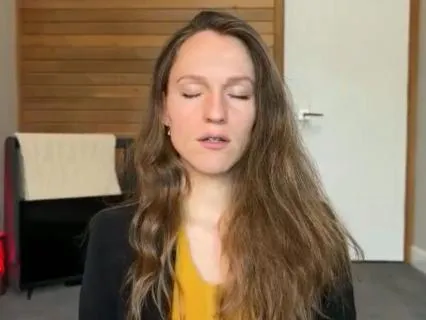
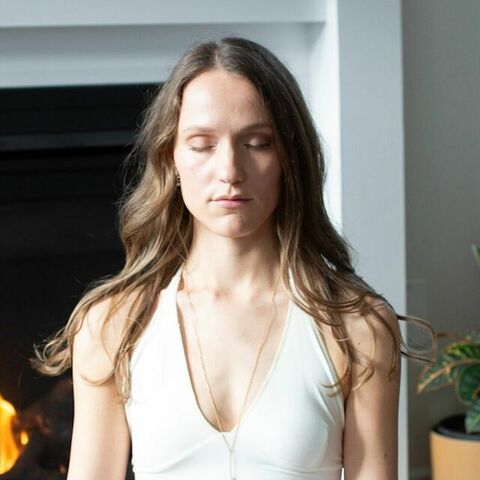
My name is Sasha Nova and I am a holistic healer and guide for people to essentially reconnect with their own inherent beauty and wholeness.
And this topic of healing,
Empowerment and awakening is something that I'm really passionate about.
Especially at this time of the great change where,
You know,
Humanity is going through.
So much clearing and just looking at the past and looking at what is not working.
And a big part of what I teach is emotional healing.
My very first modality is energy healing.
And after working with people for a little while,
What I realized about energy healing that was just one of the ways to connect with people and to inspire and empower them.
But what would happen in all these sessions is that the energy would touch them in such a way that emotions would come up.
I later realized that actually emotional healing is a big part of what most of us,
Me included.
Essentially need.
And I say this a lot,
I say this story a lot,
That my chronic gut issues were a result of not knowing how to feel emotions.
And so there was all these emotional energy stuck in my belly.
And it was creating all these chronic pain,
Chronic bloating.
And it took many years and many teachers,
Both in physical form and in spirit form and in plant form.
To essentially guide me through this process of how do we do emotional healing.
In a way that is truly effective and truly productive and truly sticks.
And so today we are going to explore this topic in much greater detail.
And then I'm going to guide us through a very quick.
.
.
Emotional healing process.
At the end of the theory component.
So if this topic is something that interests you and you do find yourself struggling with emotions,
Or maybe you.
.
.
Have an emotional experience that you haven't quite processed,
This is going to be really,
Really great for you.
So emotional healing 101.
You know,
Why do I call it Emotional Healing 101?
I personally believe and what I have observed in society is that we are still pretty green.
When it comes to understanding what emotions are and how to.
.
.
Be with emotions and i come i actually come from culture and lineage and i come from russia And my lineage,
It has such a history that people had to essentially repress emotion.
They had to repress many things about themselves.
In the past and it wasn't safe for them to feel.
And so on my own healing journey,
There was a point in time.
.
.
When I basically was like,
Why me?
Why?
Why?
Why do I feel so deeply?
And my ancestors in spirit form were like,
Because you're safe.
And because you can.
This is the first time that you are truly safe to look into these aspects of yourselves that your ancestors didn't have the time,
The space,
The safety and the awareness and the information to essentially deal with.
So.
.
.
Yeah,
I really believe that this is the time and just the whole collective history where We actually do have the tools.
We do have the awareness and we do have the space and the safety.
To do this work.
And.
What emotional healing 101 can also be called is emotional integration.
So why emotional integration?
Integration basically just means bringing parts back into the whole.
Integration can also be said,
Integration of energy,
Right?
So if something has happened to us and we haven't had the space,
To process that experience based on what we know about the nervous system and how the human body works is that we store that experience for later processing.
And so.
Part of one of my modalities,
I actually call it emotional integration,
Because when I work with people,
What ends up happening is emotions that haven't been processed come up in the sessions.
And then we are able to move through them through specific processes.
And.
.
.
One really important component of this work that I later learned is called cultivating the witness.
And this is so key and so important when we are approaching any healing modality,
But especially emotions.
Because what often happens and why human beings run away from emotions for so long,
And I used to do this,
It's because we essentially identify with our emotions and with our pain.
And so we think that we are our emotions.
And so.
.
.
If there was some experience that happened that made us feel really bad about ourselves.
Or,
You know,
Touch those cords of unworthiness that so many of us carry because of developmental trauma.
What will happen is we will essentially internalize that feeling of unworthiness,
We will internalize that pain and we will make it be a part of our identity.
And so cultivating the witness is the ability of us to essentially call forth a part of ourselves which is what can be called a witness or an adult self which is able to Distinguish between hey this is an emotion this is just a part of my human experience and this is the part of me that is able to observe the emotion.
Is able to be disidentified and essentially hold space for my emotions.
And so until we know this,
Until we realize that actually we need to be able to cultivate the witness.
In order to do emotional healing in an effective way.
We can.
.
.
Essentially wallow in their emotions,
Not necessarily process them.
You know we kind of like get There isn't that proper separation that is required and that is very healthy and very necessary.
So,
Yeah,
This is a big point for all of you to remember that whenever you are learning to be with your emotions,
There's got to be a part of you that is observing the process.
That is observing the pain,
That is observing the emotional experience and is kind of like detached.
A little bit detached and is able to hold space for that experience.
And then another part of this process that is extremely important is what I call breathing with discomfort.
So,
A big part of emotional healing is learning how to breathe with discomfort.
Right?
Because again.
.
.
Some emotions like sadness or grief or anger are really uncomfortable.
Right.
Like we.
Really like feeling them.
Unless we were brought up in a household that taught us that emotions are normal emotions are healthy and essentially them you know unless our parents demonstrated to us how to be with discomfort how to be with uncomfortable emotions most likely than not we are just like This is horrible.
Like,
I hate feeling this specific flavor of my humanity.
So,
Breathing with discomfort.
Comes with the technique that i'm going to introduce at the end of this lecture which is called the rain technique and it's a super simple way to essentially begin to practice cultivating this muscle of being with our emotions and allowing discomfort and letting them move through as we learn to essentially cultivate the witness and hold space for ourselves.
And a part of this technique is learning to nurture ourselves and this is the fourth part this emotional healing process that is very important.
Which is self-compassion.
And in self-compassion,
We learn to essentially give compassion.
To all the parts of ourselves that are hurting.
And we recognize that there are all these parts that make up.
Our whole being so to say and we treat them as such.
So if You know,
Sadness comes up.
We recognize this is a part of our human experience and we cultivate compassion for that part.
So yeah,
Self-compassion is a really big part of emotional healing.
And through this RAIN technique,
We are able to easily cultivate it.
And then the fifth part of this Emotional Healing 101 process is the ability to Balance discomfort with pleasure.
So essentially,
Integrating the experience of Showing up.
Like choosing to show up and do this work.
And then rewarding ourselves for it.
Right.
So the big part of like,
I'm a really big proponent of.
Rewarding ourselves for the inner work that we do.
And essentially giving ourself and our brain and our body this reinforcement that anytime we show up and do something that is kind of challenging,
Kind of difficult.
Kind of edgy.
Than we you know training ourselves so we're actually going to reward ourselves so there is going to be pleasure that is gonna come.
After we sit with pain.
So that's a really big part.
And I am going to encourage us all.
That after this session after the guided healing short guided healing emotional healing experience that i'm going to lead shortly that we do reward ourselves.
So whether it's rewarding ourselves with food,
Like I love.
Giving myself ice cream.
I have a favorite ice cream that I just love to eat.
So it could be like a dessert.
Or it could be like buying yourself something that you've really wanted for some time and actually like.
.
.
Kind of like rewarding yourself like hey I showed up I did this work so now I have the full right to give myself.
Whatever it is that I want.
Alright,
So we're going to move into.
.
.
The guided healing experience.
So,
I'm going to ask you to sit up with your back straight for this experience.
Maybe place a cushion under your bum.
Straightening your spine.
Really?
Getting yourself in a comfortable position and if you need to place like more clothing then do that like maybe already bringing like a blanket around you And if it feels comfortable,
Close down your eyes.
And imagine that you're fully arriving into this.
Space,
This experience?
And are you taking all of your awareness from the outside world?
You bringing it inside of your body So just listening to my voice.
As maybe you bring your awareness to where your body is touching the floor And really feeling that support of the floor.
The floor is holding you.
This space is holding you.
As we Go into exploring the rain technique.
Very simple,
Very beautiful rain technique.
And so here maybe it feels good to.
.
.
Stretch,
Maybe bringing your arms together.
So essentially we are first dropping in and arriving into our body so that we are in our physical bodies So inviting you to stretch in any way that feels right for you.
So maybe your arms.
Come to the side and your heart opens.
Maybe it feels good to stretch your neck and rotate your head Ah.
So.
.
.
Stretching a little bit,
Following the joy of stretching,
Awakening our body Sigh.
As we ask ourselves our first question.
That is connected to the R Just how do I feel right now?
How do I really feel right now?
And when we ask this question we bring in the first letter r which stands for recognize So you could be asking,
How do I really feel?
Right now and you're recognizing what is here right now in my body.
So maybe there's a physical sensation that you can recognize in your physical body.
Or maybe there is an emotional experience that is present.
Maybe feeling agitation or excitement.
Or joy,
Or.
.
.
Sadness,
Whatever it is.
Or maybe your mind is racing,
So recognizing that my mind is racing.
And when we have located That experience of what we are feeling right in this moment.
We begin to allow.
So the first two letters of the RAIN technique stand for recognize and allow.
So I have located the physical sensation in my body when I ask myself,
How am I feeling?
So I'm going to personally keep my awareness on that sensation,
But for you it could be,
Again,
An emotional experience.
A physical sensation in your body or a mental story that's happening.
So keeping your awareness on whatever it is that you located.
Recognize that it's here.
And begin to simply allow.
Allow the experience to be as it is.
And allow is that You could think of it as an attitude.
Where you're simply giving a row and you're breathing around.
Whatever it is that you recognized.
So essentially,
It's kind of like holding space so part of you that's the adult part of you that is able to recognize the witness in you that is able to recognize the experience is allowing the experience to simply be here as it is.
And another part of allow is that When we're sitting here,
Whatever it is that we recognized.
We're breathing with it,
We're giving it space,
We're not trying to fix it.
This is a really important component of this training technique.
We are not trying to fix it.
And if you can every time you exhale you're using your sound and you're sighing out tension,
The discomfort,
The agitation.
Ah,
Beautiful.
Now we're going to move to the I portion of this ring technique which stands for investigate.
So we are going to investigate.
This sensation,
This emotion,
This feeling.
This discomfort.
And we're going to ask it simple questions like What do you need?
Or maybe why are you here?
What are you trying to communicate to me?
So you can even take your hand and say you recognize that there is a sensation in your belly or in your shoulder or in your face or on your knee.
You can place your hand there and you can just imagine that.
From the perspective of the witness.
Using your mind from that perspective,
You're also attuning to the perspective of the discomfort and you are investigating.
What do you need?
Why?
Why are you here?
What are you trying to communicate to me?
I'm here and I'm listening.
And then you simply give space.
For the part of you to communicate that.
So what do you really need?
Ah.
Continuing to breathe,
Remembering to breathe.
As you may hear about simple words,
Like,
I need rest.
Or I need you to do this thing that you've been avoiding to do for so long.
Like what the.
.
.
Or.
.
.
Need you to talk to this person i need you to call this person i need you to express your needs to this other person.
Or maybe I need you to just hold me.
I need you to listen to me.
So when you have given the space.
To listen and investigate like what are you really all about Then we move to N,
Part of the strain technique which stands for nurture.
And this is when we can practice that self-compassion.
To ourselves which Could be something like.
.
.
I am so sorry.
Are you feeling this right now?
So this actually comes from a compassion key modality that I recently learned.
So again,
Imagining that The witness,
The part of you that is witnessing this experience.
Which could be considered a heart that you are sending compassion to this part of you that's hurting,
This part of you that feels discomfort.
And you can simply nurture that part with words.
So,
For example,
I'm so sorry that.
.
.
You're feeling agitation.
I'm so sorry that you feel unsafe.
Or sad.
I'm so sorry that you're feeling this sensation that's uncomfortable in your physical body.
I'm so sorry that.
.
.
You have these racing thoughts and this.
Found clarity in your mind.
So I'm going to give space to you to do your own statements,
Starting with I'm so sorry.
And then you can speak out whatever your own body,
Your own.
.
.
Discomfort needs to hear.
And as you're doing that you can also introduce other ways of nurturing yourself so for example you can Hug yourself as you're speaking.
Ah and also notice how every time that we are nurturing ourselves You will notice this like Like your body actually like sighs out like truly.
And you.
.
.
Want to cultivate this this ability to notice oh my body just really sighed out this experience.
So going back to continuing this nurture of yourselves.
And a part of nurture could be you imagining that you have all your favorite people that are you know,
That truly love you,
Whether they are here with us in physical form or maybe they are in spirit form,
Maybe they passed away.
You can imagine that they are also nurturing you and sending you loving energy.
Beautiful.
So essentially we have moved through recognizing what is uncomfortable in our system and allowing that to be.
Holding space for it as the witness cell.
Then we investigated it further.
So asking questions like,
Why are you here?
What do you really need?
And then we nurtured ourselves.
Cultivating self-compassion.
End.
Yeah,
Just kind of like allowing the integration of that experience to happen more deeply in its own timing.
So.
.
.
There is no right or wrong way to come out of this process.
Right,
Once you've nurtured.
You can go back to recognizing again,
Okay,
What is here right now?
Is there anything else?
And you can notice that maybe the sensation was in the beginning,
Like down below in your belly,
But now it moved into your neck.
So you can do the process again with yourself,
Like recognizing,
Oh hi,
I recognize something here.
Then you allow it.
Listen to it then you ask like why are you here you investigate what do you need then you nurture it again right so you can run through multiple cycles of the same process And every time likely you're going to notice that the sensations move around your body and what the discomfort needs is going to be a little bit different,
Likely.
And then you can just continue to nurture.
And when you're ready,
You can just come out of this process,
Take a deep breath.
Ah exhale can open up your eyes,
Take a look around,
Noticing where you are.
Taking a sip of water And then it always helps to have like a journal nearby where you can write out.
What you learned about your body or the discomfort that you know you just essentially looked into.
Hand.
What can happen a lot is that when we are first starting this process,
On the part of allow you can really experience a lot of emotional release.
So you could cry a lot,
You could grieve.
You could maybe.
.
.
Really get angry like feel the anger that's already inside of you and you can like express the anger So yeah,
You ideally allow yourself to really feel the emotion.
And allow yourself to fully express it to fully experience it and once you do You'll notice that you feel much lighter.
You'll get the clarity that the emotion is kind of like pointing you towards.
And yeah it's super simple process that you can repeat anytime you know you could even give yourself like literally 10 minutes to do it daily and yeah you're gonna really do yourself a really really great service and I would be able to move through whatever.
.
.
You need to move through.
All right,
So.
.
.
Going to close this up.
Whoever you are.
Exhale completely.
Connecting back to your body,
Inhaling.
And exhaling with a sigh.
We ask that the energies that were shared in the session integrate in the most optimal way for all of us.
Thank you,
Life.
And thank you,
Inside Timer.
Thank you,
All of you.
And thank you,
Myself,
For showing up.
To the session.
Thank you thank you thank you.
The space is now closed.
Sending you lots of love and until I see you next time.
Bye for now.