Welcome to the Mindfulness Meditation Podcast presented by the Rubin Museum of Art.
We are a museum in Chelsea,
New York City that connects visitors to the art and ideas of the Himalayas and serves as a space for reflection and personal transformation.
I'm your host,
Tashi Chodron.
Every Thursday we present a meditation session inspired by a different artwork from the Rubin Museum's collection and led by a prominent meditation teacher from the New York area.
This podcast is a recording of our weekly in-person practice.
In the description for each episode,
You will find information about the theme for that week's session,
Including an image of the related artwork.
Our Mindfulness Meditation Podcast is presented in partnership with Sharon Salzberg and teachers from the New York Inside Meditation Center,
The Interdependence Project and Parabola magazine and supported by the Frederic P.
Lenz Foundation for American Buddhism.
And now,
Please enjoy your practice.
Hello,
Everybody.
Good afternoon and Tashi Delek.
Welcome.
Welcome to the Return of Mindfulness Meditation with Rubin Museum of Art.
I'm Tashi Chodron,
Himalayan Programs and Communities Ambassador.
I'm so happy to be your host today.
So we are a museum of Himalayan art and ideas in New York City and we're so glad to have All of you join us for this weekly program where we combine art and meditation.
Inspired from our collection,
We will first take a look at work of art from our collection.
We will hear a brief talk from our teacher and as you all know,
We are so thrilled and happy to have Sharon Salzberg back.
And then we will have a short set,
15 to 20 minutes for the meditation guided by her.
And let's take a look at today's theme and artwork.
We've been exploring on the theme of impermanence and the theme we selected from the most recent exhibit,
The Death is Not the End,
As the title itself says.
And so from that is where we picked the theme impermanence.
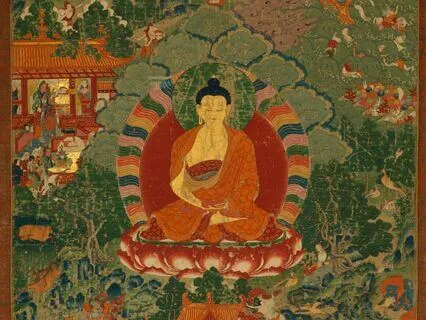
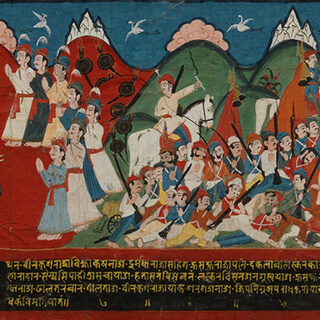
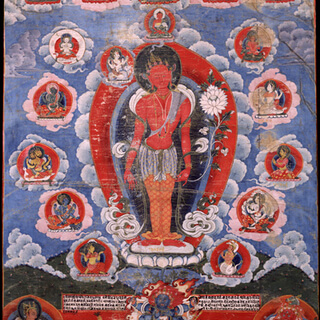
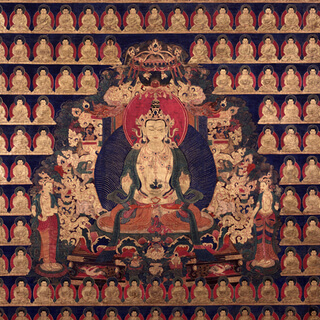
And the art connection for today's session is this beautiful thangka painting.
Thangka in Tibetan word,
It's a mineral pigment on cloth depicting the previous lives of the Buddha,
Which is called Jataka Tales in Sanskrit.
And this is origin from Tibet,
Dated 18th century,
Mineral pigment on cloth,
A beautiful scroll painting from Tibet.
So as we all know,
Buddha,
Who came as a human,
So often he's addressed as historical Buddha,
Also left this world,
Left this body.
And so this previous lives of Buddha is really amazing.
And as you see here in the painting,
The tales of Buddha Shakyamuni's past lives are some of the most well-known narratives in Tibetan Buddhism and Himalayan culture.
They are often presented across a series of paintings,
With each painting illustrating several narratives from the whole collection of stories.
The narrative scenes are usually arranged around a central image of the Buddha and visually separated by landscape elements.
And then the traditional set of tales includes the stories of the Buddha's previous lives as a bodhisattva,
Which is a compassionate one.
Bodhisattvas aspire to achieve enlightenment,
But they keep coming back to help all sentient beings reach enlightenment.
And the previous lives of Buddha also appeared or came as a king,
Merchant,
And in animal form as well.
So one of the story of Buddha's previous life came as a great being.
There is a story where he was witnessing a tigress starving and about to eat her own cubs.
And the compassionate being felt so much compassion seeing that,
That he himself gave his body to the tigress in order to save the cub's life.
And so that particular scene happened in Nepal.
And even to this day,
Practitioners go for pilgrimage and the place is called Tagmo Lujin.
So Tagmo means tigress in Tibetan word.
Lujin is,
You know,
Giving the body.
And it's also called Namo Buddha in Nepal.
And so with these paintings that are,
You know,
Hundreds of years old,
We also share a living tradition so that,
You know,
We all know that it is practiced even to this day.
Now let's bring on our teacher for today.
I am so excited and so happy that Sharon is joining us virtually.
Sharon Salzberg,
Co-founder of the Insight Meditation Society in Barry,
Massachusetts,
Has guided meditation retreats worldwide since 1974.
Sharon is also the author of several publications,
Including the New York Times bestseller,
Real Happiness,
The Power of Meditation Faith,
Trusting Your Own Deepest Experience,
And her most recent book,
Real Life,
The Journey from Isolation to Openness and Freedom.
While running her own podcast,
The Metta Hour,
And interviewing 100 plus influential voices in meditation and mindfulness movements,
Sharon has regularly contributed to many onstage conversations at the Rubin.
And this is her most newest book.
And so,
Sharon,
Thank you so much for being here.
And please help me in welcoming Sharon Salzberg.
Thank you so much.
It's such an enormous delight to be back,
So to speak,
At the Rubin,
Kind of at the Rubin with you all.
I'm so,
So happy.
And I wish I could be there physically.
I'm in Massachusetts at the moment.
But someday I was just looking over thinking,
What if I could sign some book plates or something and send them to the museum so at least they could be virtually signed copies in a way of the book.
So I want to talk about impermanence briefly.
We're going to sit together and then just see if you have any questions.
So really,
In some ways,
Impermanence is the key to so much.
It's like looking at that work of art and thinking about the Buddha's previous lives,
Whether you believe literally in previous lives or not.
I think at my age,
I've had many lives and I've only done one thing.
If you count writing,
Then two things.
I teach meditation and I write about it.
Other people have had big career changes or started families,
You know,
Like,
But even with without children and without a big career change,
I look back and it's like so many lifetimes in this lifetime.
And when we kind of congeal that and condense it,
Then that's where we get contraction.
The theme of the book I wrote,
Most recent book,
Is really moving from contraction and constriction and a sense of isolation to openness and connection.
So many lives in one life is the truth of things.
And we look to understand impermanence in many things.
If you were sitting,
If I were,
Say,
A Burmese meditation teacher,
As my own often were,
Burmese,
You know,
And you described something happening in your meditation,
Something delightful,
Something blissful,
Something sorrowful,
Something difficult or challenging,
They would be looking not so much toward what was happening.
But toward how you were relating to what was happening,
Because if you had a kind of curious attitude,
Which is good,
You know,
A spirit of inquiry,
Like,
What is this?
Not like,
Why am I angry and what am I going to do about it?
I need a new therapist.
It's been too long that I've been angry.
What is anger?
What is the feeling of anger and what's within it?
Because it's complex.
It's not just one thing,
Right?
Is it moving in any way?
Is it shifting?
Is it like seated in me and there forever?
Well,
That's not the case.
It is moving and shifting always,
Whatever it is.
And so we look toward change to open up the world for us,
To see beginnings as well as endings,
A sense of possibility,
Not being stuck,
Movement,
Flow.
We look toward change to remind us that holding on is not going to work.
The futility of grasping,
Of clinging,
Trying to be in control of someone else,
Insist they never change or in control of the unfolding of events,
Insist that when something good happens,
It never,
Ever,
Ever changes.
And difficulties,
They're just being defeated right away,
Feeling overcome because that too in our minds will not change.
But if we can see change itself,
If we can see impermanence,
Really we see so many things.
We see all that possibility.
We see movement.
We see flow.
We see contingency because when we say things are moving or changing,
They're not falling apart either,
Right?
They're in relationship to one another.
So one of the prominent mindfulness techniques you may know about is say I hold up this glass,
This is a glass,
And you asked me what I was feeling,
I'd say I'm holding the glass.
I'm holding a glass of water.
And everyone's pretty happy about that,
Right?
Because that's what we've agreed to call it.
If I held this up and you asked me and I said,
I'm holding the lamp,
Everyone would worry about me.
But this is conventional,
Consensual reality.
And yet there's a kind of stagnation here too.
I'd call it a glass yesterday,
I'd call it a glass today,
Call it a glass tomorrow.
But on another level,
If you asked me and I responded with feeling coldness,
Hardness,
Pulsing,
That's also true.
And that brings me directly in contact with change.
So that's an alive system.
We use that kind of understanding,
That perspective,
Looking at our emotional world,
Looking at our thought patterns,
Looking at physical sensation,
Both pleasurable and painful.
And we find the space within,
We find how one thing relates to another,
So the world's not falling apart.
And we find this sense of opening,
Which brings us to a much more sense of connection to a greater whole.
So what happens in the meditation practice doesn't have to change at all.
How we are with it is going to determine everything in terms of whether we can tune into this truth of constant change.
So let's sit together.
Can sit comfortably,
Close your eyes or not,
However you feel most at ease.
Can start by listening to sound,
Whether the sound of my voice or other sounds.
It's a way of relaxing deep inside,
Allowing our experience to come and go.
Of course,
We like certain sounds and we don't like others.
We don't have to chase after them to hold on or push away.
Just let it come,
Let it go.
And bring your attention to the feeling of your body sitting,
Whatever sensations you discover.
See if you can feel the earth supporting you and space touching you.
Space is always touching you,
Touching us.
We just need to receive it.
And bring your attention to the feeling of your breath,
Just the normal natural breath,
Wherever it's strongest for you.
The nostrils,
The chest or the abdomen.
Find that place,
Bring your attention there and just rest.
See if you can feel one breath.
Without looking back to what's already gone by,
Without leaning forward for even the very next breath.
Just this one.
If you like,
You can use a quiet mental notation in out to help support the awareness of the breath,
But very quiet.
So your attention is really going to feeling the breath,
One breath at a time.
There's images or sounds or sensations or emotions may arise,
But not be very strong.
If you can stay connected to the feeling of the breath,
Just let them flow on by your breathing.
It's just one breath.
If they are strong,
If they pull you away,
You can notice what's happening in that moment.
There's thinking,
There's joy,
There's sorrow,
Whatever it is.
It too is passing through.
It will come and go.
You can recognize it,
Not judge it as good or bad to be feeling.
See if you can let go of it,
Come back to the feeling of the breath.
And for all those many times perhaps that you're just gone,
Spun out in a fantasy,
Lost in thought,
You fall asleep.
Truly don't worry about it.
And recognize that's happened.
In effect,
Forgive yourself and gently return to the feeling of the breath.
You're too is a new beginning.
I've always found it just amazing that no matter where my attention might go,
No matter for how long,
I can always actually begin again.
When you feel ready,
You can open your eyes or lift your gaze and we'll end the meditation.
Thank you.
Thank you so much,
Sharon,
For that beautiful session.
That concludes this week's practice.
To support the Rubin and this meditation series,
We invite you to become a member at rubinmuseum.
Org slash membership.
If you are looking for more inspiring content,
Please check out our other podcast,
Awaken,
Which uses art to explore the dynamic paths to enlightenment and what it means to wake up.
Season two,
Hosted by Raveena Arora,
Is out now and explores the transformative power of emotions using a mandala as a guide.
Available wherever you listen to podcasts.
And to stay up to date with the Rubin Museum's virtual and in-person offerings,
Sign up for a monthly newsletter at rubinmuseum.
Org slash e-news.
I am Tashi Chodron.
Thank you so much for listening.
Have a mindful day.