Welcome to the mindfulness meditation podcast.
I'm your host Dawn Eshelman.
Every Wednesday at the Rubin Museum of Art in Chelsea,
We present a meditation session led by a prominent meditation teacher in the New York area.
This podcast is a recording of our weekly practice.
If you would like to join us in person,
Please visit our website at rubinmuseum.
Org slash meditation.
We are proud to be partnering with Sharon Salzberg and teachers from the Interdependence Project.
The series is supported in part by the Hemera Foundation.
In the description for each episode,
You will find information about the theme for that week's session,
Including an image of a related artwork chosen from the Rubin Museum's permanent collection.
And now,
Please enjoy your practice.
Good afternoon.
Focus.
So we have been talking about this seemingly simple idea this month,
This concept of focus,
And what it has to do with our lives and our meditation practice.
And so far this month,
We have heard about this idea of focus from the perspective of a scientist,
From the neurobiological perspective,
Through stories from the canon of kind of Grimm's fairy tale,
Western stories.
And we have also experienced,
Of course,
Kind of our wheelhouse here,
The lens of Tibetan Buddhism,
And some different experiences of focus.
So with Shanté Paradigm Smalls last week,
Many of us,
I think,
For if not the first time,
At least one of our first times,
Meditated with our eyes open.
And experienced a different kind of focus.
And we have been talking throughout these sessions about different ways of thinking about this idea and reframing it,
Talking about it as mindfulness or attention,
And the different kind of qualities of attention that we can bring to this idea.
So today we're going to take it another step and hear from our fabulous teacher,
Kate Johnson,
Who we're delighted to have back here with us.
And also,
Of course,
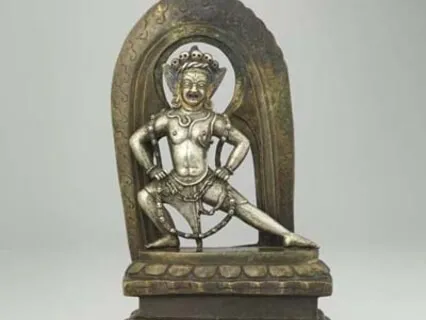
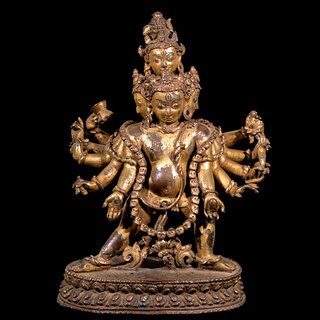
Through the frame of this object up here from our collection.
This is an 11th or 12th century sculpture from Kashmir in Western Tibet.
And it depicts this wrathful deity,
Vajrafota,
Who is standing in a warrior's pose here,
Which means he's ready to be a warrior,
Basically.
He's ready to jump out and do what needs to be done.
He has a crown of skulls on top of his head.
He's got kind of a grimace on his face and certainly some fangs in there,
If we look closely enough.
And this kind of long necklace of skulls as well and a serpent around his neck.
And looking pretty fierce there,
Looking like the wrathful protector that he is.
And one might not guess right away that,
In fact,
His purpose is to protect the meditation practitioner.
This creature,
This deity,
Is found inside of a mandala.
And a mandala is often seen as and painted as a series of concentric circles and squares.
It actually represents the bird's eye view of a palace,
So like a floor plan of a palace.
And the most center circle or square is often a shrine and often a place where meditation takes place or where the practitioner would go.
And this gatekeeper's job is to stand outside the entrance of that room and to fend off any distractions from the outside world.
But interestingly,
Also to keep that practitioner inside until they're done.
So the symbolism of that,
I think,
Is really interesting,
Just that there are these distractions that are outside of us and distractions that are inside of us as well.
And what's our relationship to those?
Great to have Kate Johnson back with us.
She teaches mindful yoga in New York City public schools with Bent on Learning and teaches Buddhist meditation at the Interdependence Project.
She holds a BFA in dance from the Alvin Ailey School,
Fordham University,
And an MA in performance studies from NYU.
She has trained at Spirit Rock Meditation Center,
The Interdependence Project,
Laughing Lotus Yoga,
And the Presencing Institute.
And she's working on a book about waking up to power and oppression as a spiritual practice published by Parallax Press this fall.
Please welcome her back,
Kate Johnson.
Thank you,
Dawn,
For the lovely introduction.
Hi,
Everybody.
It's nice to be back here.
I haven't been here since February,
And I missed you.
So we're here today to talk about,
Well,
To meditate,
But also through this lens of focus,
Which is our theme for this month.
And I was excited to work with this image because the Buddha was Indian and used this image as a metaphor for what happens in meditation in the suttas.
So there was this beautiful extended metaphor,
I mean,
Many metaphors,
For what mindfulness is,
What that faculty is,
Often drawn from life experience or nature.
We talked once here,
I think,
About the image of mindfulness as a shepherd,
Kind of like collecting the flock,
Right?
This is one image for this gathering and unifying action of mindfulness.
And this is another,
That mindfulness can also act as a gatekeeper to a walled city or an inner castle.
And I love this metaphor because it's a little more active than what we typically teach with mindfulness.
Both are correct,
You know,
That there is certainly like a gentleness to the way that we approach our thoughts and emotions and sensations as they're arising,
Even when our intention is to focus on our breath or a sound or an image.
And then there can also be this kind of fierce protector or defender quality that mindfulness can help us to embody.
And that's what will bring a little bit of focus to today.
So yeah,
Exercising this faculty of mindfulness as the gatekeeper of a city,
One that doesn't just,
You know,
Let the floodgates open and anyone who wants to can come and go whenever they want to,
But to have some kind of discipline around the mind is really critical to our capacity to develop focus with one object over time.
And today we'll have an option of working with three different objects of meditation.
So these are ones that you might be familiar with if you're a meditator.
You'd be invited to work with the sensation of breathing in the nostrils or the sensations of the hands resting,
You know,
Wherever they're resting,
Or work with sound,
Which,
You know,
You would think that there's not so much sound in this downstairs room until you start paying attention to the ambient sounds of the electricity buzzing or the,
You know,
Loud neighbor who's helping you meditate with their loud breathing or something like that.
So you can pick one of those and that'll be your object for today,
The breath,
The feeling of the hands or sound.
And we'll practice just bringing our attention back to that spot.
So it's like,
You know,
Oftentimes we'll be with that object and then the mind will start to wander and we'll be exercising with the equity of mind that comes back,
You know,
That wanders and comes back,
Back to the point.
And if we are able to do this over time,
You know,
Little by little,
Moment by moment,
It's said that a quality of concentration starts to develop in the mind.
And what we mean by concentration in this,
It's not so much the kind of concentration,
Like,
You know,
When I was younger,
I wasn't really great at math.
And there was this teacher that said,
Well,
If you just concentrate,
You know,
I thought like,
So my eyebrows would go like this and my forehead and grip my pencil really hard.
So the kind of mind,
The kind of concentration that the Buddha described that arises out of this applied focus,
Kind of moment to moment to moment is one that is much more gentle and relaxed and really spacious.
And it's the kind of spaciousness of it that makes it so stable.
So it's a soft mind,
But it's a powerful mind.
And it's not itself like a path to liberating insight,
But it allows us for a period of time to actually have a sense of being protected inside our own mind.
And I think we need that.
I know I need that in a world where I'm often,
You know,
Trying to address injustice in small and large ways and when or just,
You know,
Care for my family in difficult times to have a period of time where we can actually feel protected from the distractions and the hindrances of every day can be deeply restful.
And then when we turn back out into the world,
May find that we have a capacity for kind of greater clarity and an ability to,
You know,
Respond swiftly but with compassion.
So that's really,
I think,
The why for me of why we'd want to practice this meditation in the first place.
You know,
It's not that,
You know,
The feeling at our nose is so special or something,
But it's like what it allows us into,
The state of mind that it leads to,
Is incredibly beneficial for us and for all the people that we'll be in contact with.
So just to give a brief outline of the practice and then we'll do it.
I'll start by just helping us,
Giving a couple of instructions about posture,
And then you'll have an opportunity to kind of choose where you'd like to place your attention.
And you'll let it rest there,
Like really kind of today,
Foregrounding this quality of the attention being able to kind of make contact and rest with this object of awareness.
And from time to time,
The mind will do its thing.
When you notice that,
You'll have a chance to come back and to think of it in those moments of noticing that the mind has gotten wrapped up in a thought or a sensation or a plan to embody that gatekeeper kind of internally and to notice what quality of gatekeeper might be appropriate for whatever distracted you.
So it might be just a gentle like,
Oh honey,
You know,
You wandering through the city,
You know,
Let's usher you back outside.
Or with some thoughts,
You know,
We actually do have to be this kind of fierce protector and say no,
Not now.
So just inviting you to also see what kind of tone internally that gatekeeper might take today.
Does that sound okay for now?
So great.
So many of you already started to find your meditation seat.
It can be any position that's comfortable.
It's great if your feet can feel like they can both rest on the floor.
Hands can be face down in the lap or they can be clasped.
As a nod to Dr.
Smalls,
You can have your eyes open if you like and just softly focus at the space in front of you or closed.
But either way,
Just softening the eyes.
So the eyes aren't searching,
They're resting inside the head.
And feeling that the kind of full length of the body,
The dignity of the back,
The strong back,
Soft open front of the body.
Feeling into the full width of our body,
Allowing ourselves to be spacious from side to side,
Feeling the connection with our neighbors to the left and right.
And feeling into the full depth of our body from the front to the back,
Letting the belly soften.
Just taking a moment to receive the sensations of the entire body just as it is right now.
And then within this frame of the body and all of the different senses and locations and sense gates that it has,
Go ahead and choose the one that you'd like to work with today.
So it could be the sensation of the breath coming and going at the nostrils.
It could be the feeling of the hands resting,
The solidity or temperature,
The either pulsing or tingling at the hands.
Or it could be the sense gate of sound.
And either any one is fine,
You pick one that feels good,
Feels doable,
Sustainable.
And allow your awareness to hover around that point of focus like a benevolent or perhaps fierce gatekeeper.
Supporting you to stay and keeping the distractions out.
And so every few minutes just refining your focus into the sensory experience that you chose.
The breath or the hands or the hearing.
Noticing if you've gone out or if some distraction has come in.
And allowing that gatekeeper of your mind to restore this protected space.
Thank you.
Thank you.
Thank you.
Thank you.
Thank you.
Thank you.
Thank you.
Finding your focus.
Restoring the integrity of your gate,
Awareness gate.
Finding that protected space inside.
Thank you.
Thank you.
Thank you.
Thank you.
Thank you.
Thank you.
Thank you.
Thank you.
Just being curious,
Curious and relaxed.
Returning to the object of our choice.
And then when we go out or when something else has come in and.
.
.
We're just resting in the gate of our attention.
And then resting.
Restoring the integrity of your choice.
Thank you.
Thank you.
Thank you.
Thank you.
Almost like if the body was a house you opened up all the doors and windows.
And then continuing to widen that data focus to include all of the other beings that are sitting in this room with you at this moment.
Expanding the dot to include the rest of the folks in the city.
Incrementally as you can widening this dot to include a wider and wider geographic area.
All of this hemisphere,
Even the entire globe.
Seeing how wide you can stretch this point of focus.
And then just go ahead and relax all effort to do that and coming really back to the sensations of your body right now.
Feet on the ground,
Seat on the chair,
Strong back,
Open heart,
Soft belly,
Soft face.
A quiet acknowledgement of yourself for coming to practice meditation today.
Feeling free to open your eyes stretch your body if you'd like.
Thank you so much.
That concludes this week's practice.
If you'd like to attend in person,
Please check out our website rubinmuseum.
Org slash meditation to learn more sessions are free to ribbon museum members,
Just one of the many benefits of membership.
Thank you for listening.
Have a mindful day.