Hello and welcome.
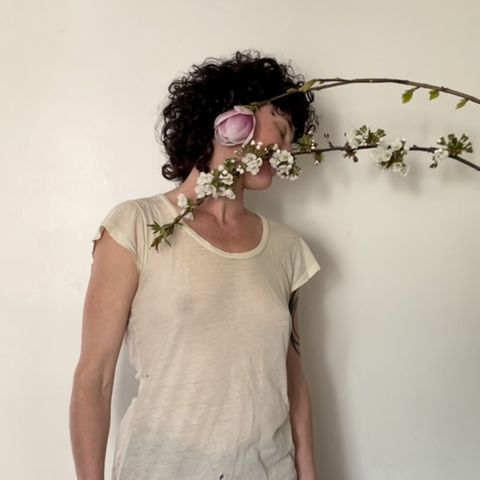
The following is a guided meditation by Renee Seals,
A somatic movement educator,
Energy worker,
And astrologer.
This meditation is intended to help support your embodied meditation practice.
If in the recording you are prompted to do something that doesn't feel good for your body,
Please adapt and modify to make it work for you.
Please also note that the content of this meditation sometimes explores deep and subtle states and memories,
And sometimes guided visualizations.
You are encouraged to work with discernment as you practice with them.
If any of the guidance Renee offers feels too activating or uncomfortable,
Please listen to your body's knowing and pause the recording until a later time if you wish to return to it.
These guided meditations range anywhere from 20 to 40 minutes and do not require any supplementary equipment to participate.
We hope you enjoy.
So to do this meditation you can be anywhere.
You don't need to be seated.
I am as I record this for you,
But it's totally fine to do this lying down or anywhere.
When we practice meditation,
It can be at any time.
So to meditate we can be present with ourselves even in the midst of a whole lot of stuff going on.
That said,
It's helpful to take time out of our lives to practice.
And I was talking with a friend the other day about how meditation can help with anxiety and with fear.
And one of the things that seems important with this is that when we're in an acute situation,
When we're in a situation that is going to trigger us or bring up things that are stressful or would produce anxiety,
Meditating at that moment is not always helpful.
It's really helpful to know the tools at that moment to have some things that you can fall back on.
But if you haven't had a previous experience of actually feeling those tools work,
When you're using them in an acute situation it can be kind of futile or not as helpful,
As if you had a kind of previous practice of looking for those spaces of calm and abiding and openness and you knew what it felt like already.
And then you have tools and a pathway to get back to those places that you already know.
So with that I'm just going to offer that when practicing meditation,
If you can,
Do it in a calm space.
Do it somewhere where you're not going to get interrupted and where you can be comfortable in your body and where you can really bring your focus inwards.
And then do it all the time everywhere else also.
Start by relaxing your eyes and feel that you're holding your breath.
Relax in your eyes and feel that your whole face can soften.
That the external forward thinking mind and the parts of ourselves that are kind of waiting for something to happen can calm and pause so the future hasn't been made yet.
We don't know what's going to happen and this constant kind of projecting forwards that we all do,
Just thinking about what we have to do,
Shifts us forwards in our bodies,
In our brains especially.
And then as the head comes forwards,
And you can feel this when you're thinking a lot,
Your head will actually kind of shift forwards and people often get this kind of furrowed brow or concentrated look and it has an effect on the entire spine.
So see if you can let the forward moving energy that happens in your brain,
In your sense organs,
Eyes,
Ears,
Mouth,
Nose,
Rest internally,
Come back and feel that your spine isn't being pulled forwards by your head.
So in our bodies Libra rules the kidneys and your kidneys are,
They're kind of at the height of your waist or around your bottom ribs.
So if you were to bring your hands to your back and find your lowest ribs,
Which is just about navel height,
And the kidneys are kidney shaped,
They're on either side of the spine,
And the adrenal glands rest over the kidneys and the adrenals and the kidneys are a place where many of us hold the stress of being in our heads.
So it's this part of the body that kind of deals with the impact of stress,
Of all the things that we're thinking about and all the ways that we're triggered.
This part of the body is also very much about discernment and siphoning out what is helpful and what is not.
And of course our kidneys help filter the fluids in our body and it's really important that we have good filtration because we don't want to get clogged up with a bunch of crap in any level,
Not in our thoughts,
Not in our feelings,
Not in our bodies.
So feel that your brain,
Your head,
And then this midsection of your body are balanced with each other and you might want to bring one hand to the place that's just above your navel,
Kind of the soft part of your upper belly.
And then you're going to feel that your body is just above your upper belly.
And then bring one hand to your back at the corresponding space.
And as you breathe,
Let the space between your two hands spread out.
And breathe into the volume of your body.
So there's the front and the back and the sides.
And feel that this place in your body is also where the upper body and the lower body unite.
And see if you can imagine just an easeful flow between them.
The earth energy rising up from your feet or wherever you're in contact with the floor from your lower body.
And sky energy and space energy coming into your upper body through your head and through your heart.
Feel that in this midsection area there is not a tightness or pushing forwards from the back body to the front body.
And there is almost a sense of releasing the kidneys down.
So there's a habit that not everyone but many people have of kind of thrusting forwards and up through this back part where the kidneys are.
It's kind of a hinge,
It's the upper part of your lumbar spine.
And when our heads are moving forwards fast,
Faster than our hearts and faster than our lower bodies,
Then it creates a kind of imbalance weight distribution between the like spherical shapes of your body.
So your head and your chest area and your pelvis.
So often we'll use this hinge at the back body where the kidneys are to then lift and push forwards the torso and the rib basket.
Now if we relax this part down it can often feel like we're going to slump.
And so I'd really encourage you to connect with your root.
And the root is,
The idea of this place is the pelvic floor center.
So just about an inch or so in front of your tailbone.
So the perineum which is the space between the anus and the genitals.
And that place in your body is actually where your first sense of midline came from.
So as a developing embryo,
The first couple days of life once an egg is fertilized there is no delineation around caudal and head,
Tail and head.
It's just a whole bunch of cells and then there's front and back.
And then at some point there's an arising of midline and it happens where you're kind of basically where your perineum is now.
You didn't have a perineum then but that event decided where your perineum would be.
So we can think of it as the connecting stalk,
As the anchor for the central channel which is an esoteric idea.
It's the divine or sacred space right at the center of our bodies that unites heaven and earth.
And that space you can think of as in front of your spine going all the way down into the deepest core of the earth and all the way up into the you know the mystery of the heavens.
So feel that there are different ways that we can be in ourselves.
And one way to be in ourselves is by being in our bodies.
And the last few minutes I was guiding attention into your body and I'd like you just to feel your body as a whole right now.
And starting from this central channel or this central space.
So again you know from the center of your pelvic floor you're going to feel the center of your body.
And then you're going to feel the center of your pelvic floor.
And then this waist and lower ribs area you can think of where your diaphragm is.
So that the fulcrum of weight in your upper torso is balanced over the center of the pelvic floor.
And that the spherical shape of your head is balanced over the spherical shape or kind of more oval oblong is that the right word shape of your torso and the center of the pelvic floor.
So if you're standing or sitting this feels like letting the head balance over the heart letting it both balance over the pelvic floor.
If you're lying down there's an easier flow you can just let your body rest into gravity.
From the center point imagine expanding outwards into the unnamed tissues.
So all of them all the stuff that is inside your body.
Some stuff is soft,
Some stuff is fluid,
Some stuff is harder,
Some stuff is empty.
There's a lot of empty space and cells.
So can you feel all the stuff of your body and feel how it's contained in your skin?
Notice the difference in sensation between skin and other stuff.
So on the surface of the skin we feel a lot of different things.
Feel temperature,
We feel texture,
We feel a lot of different kinds of sensations like scratching or stroking or squeezing.
And notice how the sensation of the skin is different but also influenced by and influencing on the inner body sensations.
So you might have a sensation in your tummy and organ sensations are often hard to differentiate unless they're acute.
But sometimes there's just a like global feeling that's there.
Or you might have feeling in some joints,
In your perception of gravity through your inner structure,
The muscles,
Lots of ability to perceive and sense in the muscles.
Bring your attention now to your head and notice the sensations that are in your head.
So we have the outer layer of skin over your face and your scalp,
Ears.
Directly underneath the skin there are a number of muscles and you might want to squeeze your face,
Scrunch it up,
Make a balloon in your mouth,
Open your eyes and your jaw as wide as you can get,
Squeeze them as tight as you can and just stretch the muscles of your face.
And there's also muscles underneath your scalp that kind of it like holds your scalp on.
So as you if you like lift your eyebrows up really high you might feel those muscles also moving if you smile really wide.
And then underneath the muscles of your face you have your your face bones and your cranial bones.
So holding the dome of the skull or the cranial bones they're really strong.
They have fibrous joints which allows for a very little movement.
And then the bones of your face they have a lot of different joints,
Lots of different possibilities for movement especially around your mouth and your nose,
The jaw.
But then again strong plate-like bones over your upper face.
So from the upper nose holding your eye sockets,
Your forehead.
And then inside your skull from your forehead to the back of your skull is where your brain is floating.
And your brain tissue is soft and squishy and it is surrounded in a kind of fluid that's clear and light.
It's got a somewhat viscous quality but it's it's a very light fluid.
So notice the sensations that are inside your brain just by bringing your attention to them.
Noticing the sensation of the brain is very different than noticing the sensation of thoughts.
So can you feel the difference between thinking and just being present with your brain with this space that the brain occupies.
Now let your awareness kind of drip down from your brain through the back of your throat.
Imagine the space behind your throat and the brain stem meets the spinal cord here at the upper portion and behind the bridge of your nose.
And then travel down through your central channel,
Center point.
Into your heart area.
And you're always welcome to bring your hands to palpate these spaces.
It can really help to have touch and then to travel in from the touch.
So feel your heart space.
And feel how your breath encompasses and wraps around the space.
The way that your lungs are shaped around your heart is like big pillows on all sides.
And then the heart at its backside is held with your spine.
So there's a kind of firmness and structural support.
And then there is these big pillows of your lungs surrounding the sides in the front of your heart.
And all you need to do is just bring your attention to this space and feel again the three dimensionality.
So as you breathe feeling all the way around the circumference of your chest,
Center of the heart space out into the body lining.
That inner inner wall of your back and your chest around your heart.
And as you breathe into your heart notice that there's a difference between feeling the heart space and emotional sensations.
And they can really work together.
Their boundaries are unclear.
They kind of bleed into each other.
But as you feel your heart,
If emotional qualities come up,
Just be curious about how the emotions feel and how the actual physicality of this space feels from an inner sensing.
And curiosity is a key word here.
So you're not trying to push anything out of your awareness.
You're just noticing.
And then you can let your awareness travel down into your belly and your pelvis area.
And the belly and pelvis are different.
But for now let's kind of just bring our attention more grossly,
Kind of more undifferentiated in the lower belly and feel how the weight of your belly and your internal organs rests in your pelvic bowl.
And they're really big,
Really strong muscles all the way around the soft part of your belly and in your lower back.
And those muscles do a fantastic job of holding us upright.
And it can also be kind of mysterious as to how to relax them sometimes.
And this is where lying down can be really helpful.
But you can also do it seated or standing by finding the structure of your skeleton,
Legs,
Hip joints,
The way your hips and sacrum hold your spine,
The way your spine supports the weight of your ribs and head.
And again,
Just looking for balance so that the upper body is in accordance to the stability that the lower body can offer,
Which is always shifting of course.
But let the lower body kind of set the tone right now for where the upper body will be.
And then in your lower body try and relax and soften the outer muscular walls.
And feel again all the stuff,
All the space from the outer container in.
You don't have to know what it is or what it looks like.
There's just stuff in there.
And in this part of our bodies there's a lot of soft squishy stuff and a lot of fluids in different forms.
And the way that your breath can move through this part of your body is different than in your lungs.
So there's not an inflation feeling.
But I think of water seeping through sand.
That as your lungs fill with air you can soften all the surrounding cells,
All the surrounding tissues,
And just let that breath kind of seep into them.
Let your breath seep all the way down into the base of your pelvic floor,
All the way around your belly.
And this part of the body is often where we register reflexive feeling.
So feeling that will result in emotion but that is kind of at its root more,
It's initiated by reflex.
So like the reflex to run,
The reflex to defend,
The reflex to soften,
To relax.
And it's important that reflexes get here first because if we are in danger we need to be able to get up and move.
If we have to move fast it's important that our energy goes into our muscles and into our lungs and heart and isn't being spent on digesting.
Okay,
That said,
We live in a culture that is always experiencing low-grade trauma and many of us are experiencing acute trauma.
If you live in a body that is part of a collection of traumatic memories,
If you live in a black or brown body,
If you live in a female body,
If you live in a queer body,
If you live in a body at all,
You know we live in a world that does not honor the sacredness of our bodies.
We are constantly facing that and we are safe.
If you're listening to this recording right now,
Again you're safe.
So what is it,
How does it feel to be present in the feelings of this space,
Kind of the ineffable,
Inarticulating,
Inarticulated feelings and just to feel the physicality of it.
It's different.
Feel your body and then feel what else is there.
So with Libra,
With this concept of balance and relationship,
We are constantly seeking balance between the forces that move us and the ways that we identify.
There are many ways that we identify but three primary ones are through our thoughts,
Our emotional feelings,
And our more animal feelings and in that I consider the body,
The physical body,
But also the reflexive feelings,
The things our body does without thinking about it.
So feelings like temperature and shivering and you know stuff that can be initiated and can result in sensation in the heart and head but it's often just it's the body doing its thing.
So when we find ourselves in a relationship with others,
We have to navigate between these three spaces.
Sometimes our relationships are really thinky so we're thinking,
Thinking,
Thinking about how we're relating but we're not really feeling it in our hearts.
How can we be present with our hearts?
Just knowing where it is,
Just being able to bring your attention to the space in your body is a doorway into the feelings that are there.
Sometimes the feelings in our hearts are so overwhelming and they're so big and we can get lost in them and in those moments how do we find the support and the realness of our bodies?
Noticing your skin,
Feeling your skeletal stability,
Feeling your alignment,
Feeling how your body is grounded,
Literally how you are connected to the earth.
It can be a container for the bigness of our feelings as well as for the dispersion of our thoughts.
We can really trip out on some thoughts,
Really get going on our ideas about who's right,
Who's wrong and what they said and how we're going to respond.
Can you feel your body?
It's important to feel our bodies as well to notice when reflexes happen.
We are all reactive,
Every single one of us and we may react to very similar things and we may react to very different things that have to do with our unique biography and family lineage.
It's very helpful if we become savvy and attuned and aware to what our reflexes feel like because a good percentage of the time they happen unconsciously and they're giving us information that maybe isn't correct.
So if we associate a certain type of person with a past experience,
If we have an association to a certain kind of experience and anytime the potential threat of that experience comes up,
Our bodies might go into a reflexive pattern and that pattern then stimulates emotional sensation or potentially shut down and that pattern will stimulate thought,
Thinking habits.
So can we be present in our bodies and feel their responses and can we be present in our minds so that we can discern?
When my body goes into fight mode because I see someone who reminds me of that other person who hurt me or when I am in the presence of someone who has hurt me but they're not actively hurting me now,
My body goes into a reflexive space.
Heart rate might go up,
I get all tight in my belly and pelvic floor,
Stop breathing,
Hands get cold,
Neck hurts.
You notice for you what happens when you are confronted with the things that are traumatic for you.
What does your body do?
And then what choices do you have in those moments?
If it's a moment where you need to defend yourself,
Thank you body for being there.
If it's a moment where you don't need to be defensive,
How do you feel your heart?
How do you feel what your head does?
So we have to put the mind in service to the heart and both the heart and mind need to be connected and united with our bodies and our bodies must be honored as the vehicle for the heart and the mind,
Not as something to ignore.
So this is the meditation for Libra.
Balance and awareness,
Diplomacy,
How do we act in ways that we feel aligned with that are fair to ourselves and to those around us?
So to close today I'm going to offer a gesture and if this gesture doesn't feel right to you,
You don't need to do it.
Bring your hands together to touch.
Feel that the meeting of the two hands is symbolic.
Two sides of polarity of left and right coming together and in the meeting of opposites we find midline,
We find center.
Let the space between your hands remember the center channel in your body.
Be in your center and then bring your hands to your forehead and just ask,
May I have right thoughts,
May my thoughts be clear,
May they be discerning,
May I be in balance with my thinking and then bring your hand to your mouth,
Hands to your mouth and ask,
May I have right speech,
May the manifestation of my thoughts into words create relationships and situations around me that serve the continuation of my integration.
Then bring your hands to your heart and ask,
May I have right intention,
May my heart be clear,
May its messages be clear,
May the power of my heart which is love be the space in which I abide and then bow the energy of your head,
Bow your head to your heart and ask me the service of the mind be given to the heart and then allow your heart to bow forwards and you can release your hands either onto your lap or your belly or the floor and ask for connection to the space and the materials that unite us all.
May our hearts and our heads be in service to the shared space and the home of our bodies in our land.
Blessings to all of you.
Until next time,
I'm signing off.
Take care.
You you