Hello,
Gentle dreamers.
Welcome to this long,
Relaxing audiobook for sleep.
I'm your host Joanne and tonight we'll step into the heartwarming world of Maida's Little House by Enos Haynes Irwin,
Where friendship,
Simplicity,
And kindness fill every corner.
This full-length audiobook is perfect for bedtime,
As it takes you on a gentle journey through the charming world of Maida and her friends.
My soothing,
Sleepy narration will help you unwind and drift off peacefully,
Making it the ideal bedtime story for sleep.
This entire audiobook from the escape is perfect for those looking for a full audiobook experience that will help them relax and fall asleep.
Whether you're a fan of heartwarming stories or simply need a little help with insomnia,
This long,
Relaxing audiobook will create the perfect atmosphere for restful sleep.
Now,
Before we begin,
Let's take a moment to relax and prepare ourselves for this gentle journey.
Close your eyes and take a slow,
Deep breath in,
And let it out softly.
Imagine it's a calm,
Quiet night,
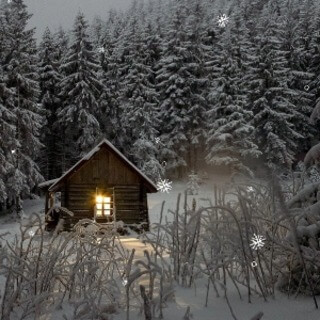
And you're standing just outside Maida's Little House.
The soft light from the inside spills out onto the path,
Guiding your way.
Above,
The stars shimmer like tiny lanterns in the deep blue sky,
And a gentle breeze carries the scent of the night air.
As you continue to breathe slowly and deeply,
With each breath,
Feel your body relaxing,
The weight of the day falling away.
Now visualize taking a few slow steps forward,
Moving toward the Little House.
As you approach,
You notice the warmth radiating from within,
And with each step,
You feel more and more at peace.
The wooden door stands slightly ajar,
Inviting you to enter,
And slowly,
You step inside.
Inside the house,
Everything feels cozy and welcoming.
The gentle flicker of a lantern casts a soft glow on the walls,
And the quiet hum of the night surrounds you.
Take a deep breath,
And feel the warmth of this space.
This is your quiet retreat,
Just like Maida's,
Where the worries of the world fade away.
Now find a comfortable place to settle down inside the house.
A cozy chair,
Or a soft bed,
And as you sink into the softness around you,
Let your body relax completely.
With each breath,
You feel more and more relaxed and calm,
And ready to drift off into the story ahead.
As we begin,
Allow your mind to rest as you follow my voice,
And let yourself be carried far,
Far away into Maida's little world.
Chapter 1 The Homecoming I wonder when Maida's coming back,
Said Rosie Brine,
As she approached the trio of children who sat on the lathrop lawn.
The three were Laura Lathrop,
Her brother,
Harold Lathrop,
Their friend,
Arthur Duncan.
Rosie did not join them on the grass.
She seated herself in the hammock behind them,
And began to swing,
First slowly,
Then so violently that her black curls swept back and forth with her swift progress,
And her speech came in jerks.
I wouldn't mind how long I had to wait,
If I only knew when she was coming.
Nobody answered.
Rosie had only asked a question that they all asked at intervals,
Hoping against hope that somebody would make a comforting guess.
I don't believe she's ever coming back,
Rosie answered herself,
Recklessly,
Swinging almost over their heads.
Arthur Duncan,
A big,
Broad-shouldered boy,
With tussled thick brown hair,
Beating down over his forehead,
And almost bailing his eyes as steady as they were black,
Answered this.
Oh,
Made us come in home some time.
She promised,
And she always keeps her promises.
When we were going to school,
Put in Laura Lathrop,
It was bad enough.
But we didn't have time to miss her so much then.
But now that school's over,
And there's nothing to do.
Oh,
How I wish she were here.
Well,
What good would it do,
Harold Lathrop asked.
Harold and Laura looked much alike,
Although Laura was slim and brown-haired,
And Harold flaxen and a little stout.
But both had blue eyes and small,
Regular features.
We wouldn't see anything of her,
Harold continued.
She'd be going away somewhere for the summer,
And we wouldn't have a chance to get to know her until fall.
Maida would never do that,
Rosie Brine declared emphatically.
She'd manage some way to be with us for a while.
She brought the hammock to a stop for a moment,
With the swift kick of a determined foot against a tuft of grass.
There is one thing I am sure of,
And that is that Maida would never forget us or want to be away from us.
She says that in every letter I've got from her.
Well,
What are we going to do today,
Harold demanded.
I should think from the way we sit here that we had not been counting up the days to vacation for a month.
Why,
Laura's even had the hours all numbered out on her calendar,
So she could draw a line through them every night.
I wanted to have the minutes marked out too,
Laura admitted,
But it took too much time.
What are we going to do,
Harold persisted.
Here it is,
The first day of vacation,
And we sit here saying nothing.
You think of something,
Arthur,
You always can.
Arthur Duncan rolled over face downwards on the grass.
I can't think of anything to do this morning,
He admitted.
It's so hot,
And I feel so lazy.
Seems to me I'd just like to lie here all day.
It was hot that late June day in Charleston.
Not a breeze stirred the shrubs of the lathrop lawn.
The June roses drooped,
The leaves seemed wilting.
Even the blue sky looked thick and sultry.
Huge white clouds moved across it so lazily that it was as though they too felt general anger.
The children look as children generally look at the close of school,
Pale and a little tired.
Their movements were listless.
Just outside the gate of the lathrop place was Primrose Court,
A little court lined with maples and horse chestnuts,
With shady little wooden houses set behind tiny gardens.
In their turn,
Set within white wooden fences.
At one corner of Primrose Court and Warrington Street,
Set directly opposite a schoolhouse,
Was a little shop,
And over the shop,
Printed in gold letters against a background of sky blue,
Hung a sign which read,
Mada's Little Shop.
In Primrose Court,
The smaller children were playing as briskly as though there was no such thing as weather.
Brown-eyed,
Brown-haired,
Motherly Molly Doyle,
Quick,
Efficient,
But quiet,
Was apparently acting as the wife and mother of an imaginary house.
Smaller and younger,
Timmy Doyle,
Her brother,
A little pop-eyed,
Brownie little boy,
Slow-moving and awkward,
Was husband and father.
There were four children in this make-believe household.
Quite frequently,
Little Betsy Hale,
Slim,
Black-eyed and rosy-cheeked,
And a little Delia Dorr,
Chubby and blonde with thick red curls,
Attempted to run away,
Were caught and punished with great thoroughness.
Apparently,
Dorothy and Mabel Clark,
Twin sisters,
One the exact duplicate of the other,
With big,
Round blue eyes and long,
Round golden curls,
Were the grown-up daughters of this make-believe family.
They were intent on household tasks,
Thrusting into an imaginary stove absolutely real mud pies,
And sweeping an imaginary room with an absolutely real mud pie.
Absolutely real dustpan and brush.
Aside from this active scene,
Everything was quiet.
Farther down the court,
Doves had settled,
Were pink-toeing about,
Feeding busily,
Preening and cooing.
Sometimes,
Laura said thoughtfully,
I feel as though I had dreamed Mada.
If the little shop were not here with her name over the door and all of you talk about her with me,
I should believe I had just waked up.
She stopped a moment.
If it had been a dream,
How mad I should be to think I had waked up.
Do you remember how exciting it was when Mada first came to live over the little shop?
Rosie exclaimed.
I should say I did.
It was Laura who answered her.
Wasn't it wonderful when all that pretty furniture came for their rooms?
Yes,
And the canaries,
And the great geraniums for the windows,
Rosie added eagerly.
The most wonderful thing,
Though,
Arthur went on,
Was when the sign went up.
It was such a pretty sign.
Mada's little shop,
In gold painted on blue,
And gee,
How wild we all were to see Mada,
Harold said.
I don't know what I expected,
But I certainly was surprised when Mada appeared.
Lame,
Arthur concluded for her,
Like Dickie.
But they're both all right now.
Dickie certainly is,
And Mada was when she left for Europe.
I often think,
Harold began again after a little pause,
Of when we first met her,
And she used to talk of the things her father gave her.
We thought she was telling lies.
I never thought she was telling lies,
Rosie expostulated.
I loved her too much for that.
I knew Mada wouldn't tell lies.
I thought she just dreamed those things.
I remember them all.
Her mother's mirror and brush and comb of gold with her initials and diamonds,
And the long string of pearls that she used to wear that came to her knees,
And a dress of cloth of gold trimmed with roses and a diamond,
Like a drop of dew in the heart of every rose.
Yes,
And the peacocks at her father's place,
Some of them white,
Arthur interrupted.
And don't you remember,
Harold went on,
We all thought she was crazy,
When she said that once he gave her for a birthday present,
Her weight in $20 gold pieces.
And a wonderful birthday party,
Laura added eagerly,
With a maypole and a doll baby house big enough to go into and live.
I don't wonder why we didn't believe it at all,
Rosie declared with conviction.
It sounds like a fairy tale.
And then it turned out that she was the daughter of a great millionaire,
And every word of it was true.
Do you remember how we asked Mr.
Westerbrook at Mada's Christmas tree if it was all true,
And he said that it was?
I'd like to see those white peacocks,
Dickie said dreamily.
I'd like to see that doll baby house,
Laura added wistfully.
I'd like to see the gold comb and brush and mirror with the diamonds,
Rosie declared,
And that dress with the roses and the diamond dew drops.
I like to look at precious stones.
I like things that sparkle.
At this thought,
She herself sparkled,
Until her eyes were like great black diamonds in her vivid,
Brilliant face.
I'd like to see that pile of twenty-dollar gold pieces,
Harold said.
Oh,
I wish she'd come back,
Rosie sighed.
The sparkle all went out of her face,
And she stopped swinging.
A door leading into Primrose Court opened with a suddenness that made them all jump.
A boy with big eyes,
Very brown and lustrous,
Lighting his peaked face and straight hair,
Very brown and lustrous,
Framing it,
Came bounding out.
He ran in the direction of the group on the lawn,
And as he ran,
He waved something white in his hand.
The doves flew away before him in a glittering V.
Hurrah,
He yelled.
Gee,
How Dickie can run,
Arthur Duncan exclaimed.
Who'd ever believe that one year ago,
He was wearing an iron on his leg?
Oh,
What is it,
Dickie?
Rosie Bryan called impatiently.
Dickie had by this time reached the Lathrop Gate.
A postcard,
From Maida,
He shouted.
Does she say when she's coming home?
Laura asked quickly.
No,
Dickie answered.
He threw himself down among them,
Handed the postcard to Rosie,
Who had leaped from the hammock.
It passed from hand to hand.
Harold,
The last one to receive it,
Read it aloud.
Love to everybody,
And how I wish I could see you all,
Was all it said.
Nothing about coming home,
Exclaimed Rosie.
Oh dear,
How disappointed I am.
Where is it from?
Arthur asked,
As though suddenly remembering something.
London,
Dickie answered.
She told me that when she came home,
She'd sail from England.
Did she?
Rosie asked listlessly.
She never told me that.
But you see,
She says nothing of sailing.
She's probably going to spend the summer there.
I remember that she told me of a beautiful place they lived in one summer in England.
She said that there was a forest not far from the house where Robin Hood and his men used to meet.
Probably she'll go there.
Rosie stopped for a minute,
And then the listlessness in her voice changed to a kind of despair.
I don't believe she'll ever come back.
I know she will,
Dickie announced with decision.
The last thing Meda said was,
I'll come back,
And she always keeps her promises.
I wouldn't be surprised if she came back this summer sometime,
Arthur said.
Anyway,
I know she said they'd sail from England.
Yes,
But by that time we'll all be away,
Laura's voice held a disappointed note.
We're going to Marblehead in a week or two for the whole summer,
And you're going to Weymouth,
Rosie,
Aren't you?
Rosie nodded.
Only for two weeks,
Though.
Where are you going,
Laura?
Asked Arthur.
I don't know.
When my father gets his two weeks vacation,
Maybe we'll take a tramp somewhere.
That is,
If it doesn't come after school has begun.
And where are you going,
Dickie?
Laura went on.
Nowhere.
We're going to stay here in Charleston.
Primrose Court will be my vacation.
Mother says she'll try to take us to City Point or Revere or Nantasket every Sunday.
Now what are we going to do today?
We might go upstairs in the cupola.
And play games,
Harold suggested.
No,
I don't want to stay in the house the first day of vacation,
Rosie announced discontentedly.
Let's play stunts,
Suggested Dickie,
Who,
Since his lame leg had recovered,
Could never seem to get enough of athletic exercise.
Too hot,
Decided Laura.
Hide and go seek,
Suggested Arthur.
Too hot,
Decided Harold.
Follow my leader,
Suggested Dickie.
Too hot,
Decided Rosie.
Hoist the sail,
Suggested Arthur.
Too hot,
Decided Laura.
Prisoner's base,
Suggested Harold.
Too hot,
Decided Rosie.
Tag,
Suggested Arthur.
Too hot,
Decided Harold.
Laura burst out laughing.
Every game anybody proposes is too hot for somebody else.
I say let's all face downwards and think and think and think until somebody gets an idea of something new that we can do.
Everybody adopted her suggestion.
The four on the grass turned over,
Lay like stone images carved there.
Rosie turned over in the hammock.
I wish Maid had come home,
Came from her muffled accents before she,
Too,
Subsided.
A whole minute passed.
Nobody moved.
Even Rosie kept rigid.
Into the silence floated the note of a faraway automobile horn.
It was not as much a call or warning as a gay caroling.
A long level ribbon of sound,
Which unwound itself continuously and,
Drifting on the soft spring air,
Came nearer and nearer.
It stopped for a moment,
Started again,
Continued more and more gaily,
Ran up and down a trilled scale once more.
The stone images stirred uneasily.
The horn grew louder.
In a moment it would pass Primrose Court.
The horn ended in a high,
Swift call.
The car stopped.
The stone images lifted their heads.
A girl,
Lithe but strong-looking,
With wide-apart big gray eyes gleaming in a little fat face,
Just touched in the cheek with pink,
With masses of feathery golden hair hanging over her blue coat,
Was stepping out of the car.
The images flashed upright,
Leaped to their feet.
It's Meda!
Rosie Brine called,
As she sped like an arrow shot from a bow towards the automobile.
Oh,
Meda!
Meda!
It's Meda!
The others took it up and raced into the court.
Chapter Two The Plan When did you land?
Why didn't you let us know?
How long are you going to stay?
Did your father come too?
Where's Billy Potter?
Meda tried to answer them all,
To hug each of the girls who were hugging her all together,
To hold out a hand to each of the three boys,
Who seemed all to shake both her hands at once,
To manage to kiss Betsy Hale,
Who,
Hearing the name Meda shouted,
Vaguely recalled that there had once been a Meda whom she loved,
And who thereupon hung tight to one of her legs,
To manage to kiss Delia Dorr,
Who had no remembrance of Meda,
Whatever but an imitation of Betsy,
Hung tight to the other leg,
And in addition,
To call to Molly and Timmy and Dorothy and Mabel,
Who remembered her perfectly,
Who danced like little wild Indians on the outskirts of the crowd,
Yelling,
Meda's come back!
Meda's come back!
At the top of their lungs.
All this took much less time to happen than it has taken to describe,
And it was suddenly interrupted by the rapid opening of the door to the dooryard.
A little old Irish woman,
With silvery hair and with a face as wrinkled as a nut,
Came rushing out,
Her arms extended,
Calling,
My lamb's come back!
My lamb's come back!
Meda ran to her and hugged her ecstatically.
Oh,
Dear Granny Flynn!
She said.
Dear,
Dear Granny Flynn!
Then there appeared back of Granny Flynn,
Mrs.
Dorr,
Granny Flynn's daughter,
Delia and Dickie Dorr's mother,
Who had to be met in the same affectionate way.
Mrs.
Dorr was a tall,
Brown,
Fresh-complexioned woman.
It was from her that Dickie inherited his brown coloring,
And Delia her sparkling expression.
I'd never know you for the same child,
Mrs.
Dorr said.
Of course,
The grown people claimed Meda's attention first.
They showered her with questions,
And she answered them every one with her all old-time courtesy and consideration.
Was she well?
Well!
But look at her!
When did she land?
She had landed the day before New York had come on the midnight to Boston.
Where was she living?
At their home,
On Beacon Street.
Would she stay to lunch?
Yes!
Yes!
Yes!
Her father had said that if she were invited,
She could spend the whole rest of the day in Primrose Court.
He would send the car for her late in the afternoon.
Where was she going after that?
Her father would tell them all this afternoon.
He had some plans,
But they weren't worked out yet.
Would she be in Boston for a few days?
Probably.
Then,
During that time,
Wouldn't she like to come back to her own rooms over Meda's little shop?
Would she?
Oh,
Goodie!
She could call her father to bring her some clothes.
It went on and on until the older children stood first on one foot and then on the other with impatience,
And the younger ones went back to their housekeeping game and their frequent punishments.
But finally,
The curiosity of this group of grown-ups was satisfied,
And the children claimed their prey.
A clamorous group,
Every one of them telling her some bit of news and all at once.
They made the tour of the court.
They called on Mrs.
Lathrop,
Who,
Mercifully,
Forbore to ask more than five minutes of questions,
And on the Mrs.
Allison,
A pair of middle-aged maiden ladies.
Here,
The confusion doubled itself because of the noisy screams of Tony the Parrot.
Tony kept calling at the top of his croaking voice,
What's this all about?
Each of the children tried to tell him,
But he was apparently dissatisfied with their explanations,
For he only called the louder and with greater emphasis.
I say,
What is this all about?
Finally,
In despair,
He exclaimed,
Good night,
Sweet dreams,
And subsided.
At length,
The six of them,
Mada,
Rosie,
Laura,
Arthur,
Dickie,
And Harold,
Retired to the Lathrop lawn and plumped down on the grass.
They talked and talked and talked.
How you have grown,
Mada,
Rosie said first.
How tall you are and strong-looking,
She would have added,
And how pretty,
If the boys had not been there.
But shyness kept her from making so personal a comment in their presence.
That's exactly what I was thinking about you,
Mada laughed.
But then you have all grown,
Arthur particularly.
In her candid,
Friendly way,
She surveyed them,
One after another.
You are taller too,
Laura,
And I believe even your hair has grown.
It certainly has,
Laura admitted.
Laura's hair was extraordinarily long and thick.
It hung in two light brown braids,
Very glossy,
Not a hair out of place to below Laura's waist.
At the tip of each braid was a big,
Pale blue bow.
As for you,
Rosie,
You are still taller than I,
I'm afraid.
Let's measure,
Rosie answered,
Springing to her feet.
The two girls stood shoulder to shoulder.
Rosie,
It proved,
Was a little the taller.
Mada continued to look at her after they had resumed their places on the grass.
What a beauty she is,
She thought,
And she too was withheld by shyness and a sense of delicacy from making this comment before the others.
Rosie was certainly handsome.
Tall,
Active,
Proud looking,
Great black eyes lighted by stars,
A massive black hair breaking into high waves and half curls.
Cheeks as smooth as satin and stained a deep crimson,
Ivory white,
Jet black,
Coral crimson,
That was Rosie.
Mada had always called her Rose Red.
But the greatest change has come in Dickie and me,
Mada ended,
We have both lost our lameness.
You don't limp,
Dickie,
And I don't.
Let's race to the gate and back.
Dickie was on his feet in a minute.
Arthur called,
One to make ready,
Two for show,
At the word go,
They were off.
Dickie was more active,
But Mada was taller.
The race finished a tie.
The blood which Mada's running brought to her cheeks painted roses there,
Not the deep crimson roses which bloomed perpetually in Rosie's face,
But transient blossoms,
Delicately pink.
And under that flush,
Her face,
A healthy ivory,
Looked well.
Her big gray eyes were filled with happiness,
And the torrent of her pale,
Gold,
Feathery hair seemed to dance.
Mada could gush from her head like living light.
They sat and talked until luncheon,
And immediately after luncheon,
Gathered on the lawn and talked again.
Mada still had questions to ask and comments to make.
You have all grown,
She said once,
But somehow,
I think the little children have grown the most,
And Dorothy and Mabel more than anybody.
Their eyes still look like great blue marbles,
And their hair as though it had been curled over a candlestick.
Isn't it marvelous how they keep exactly the same height?
Twins are magical creatures,
Aren't they?
As for Betsy and Delia,
They're great big girls.
I suppose Betsy still runs away every chance she gets.
On the whole,
I think Molly and Timmy have changed the least.
Does Timmy still fall into all the pudd-muddles?
Molly still looks like a darling brown robin,
And Timmy like a brown bogel.
Don't you remember I used to call them Robin and Bogel?
The children answered all her questions.
Yes,
Betsy still ran away.
No,
Bogel had quieted down.
He didn't fall into pudd-muddles anymore.
Of course,
They had their questions to ask Meda about her year in Europe.
And she told them of her experiences in Italy,
Switzerland,
France,
And England.
But though she answered them instantly,
And with the fullness of detail which had always been her characteristic,
It seemed at moments as though her mind were not all on what she was saying.
Once or twice,
She even interrupted herself to start something which had nothing to do with her subject.
But apparently,
Both times,
She thought better of it,
And checked a tongue which obviously was yearning to speed on in the interest of that unknown subject.
There's something you want to tell us,
Meda,
Dickie guessed,
But you won't let yourself.
Meda blushed furiously,
But her eyes danced.
She did not answer.
Rosie,
Thereupon,
Continued to watch her closely.
Meda Westerbrook,
You're almost bursting over something,
She said once.
You've got a plan of some kind,
And I know it.
Again,
Meda blushed,
And this time she laughed outright.
Wait and see,
Was all she said,
However.
After they had talked themselves out,
They showed Meda the accumulated treasures of the last year.
The wood carving,
Which was Arthur's accomplishment,
And the paperwork,
Which was Dickie's,
Had improved enormously.
The beautiful box of tools that Mr.
Westerbrook had presented to the one,
And the big box of paints that he had given the other,
Were of course important factors in the improvement.
Laura still danced beautifully,
And she danced her latest dance for Meda,
A Spanish Fandango.
Harold was raising rabbits,
And he showed his entire family to Meda.
At the urge of all this work,
Rosie,
Who hated the sight of a needle,
Had taken in despair to knitting.
She could endure knitting,
She told Meda,
Because the work grew so fast.
She herself said,
Though,
That the less said about the results of her labor,
The better,
And Meda frankly agreed with her when she examined some of it.
After this,
The group returned to the yard for more talk.
Somehow,
They didn't feel like playing games.
Late in the afternoon,
They sprinkled the flower beds,
And hosed the lawn for Mrs.
Lathrop.
Then,
As this made further sitting on the grass impossible,
They retired to the tiny door yard with its amusing little flower bed and its one patch of grass.
There was just about room for their group there.
They sat down.
Again,
They asked Meda about her travels,
But now Meda was truly absent-minded.
Suddenly,
In the midst of a description of Pompeii,
There sounded a long,
Faint,
Far-away call of an automobile horn.
It broke,
Like a fire rocket,
Into a flurry of star notes,
Then dropped a long,
Liquid jet of sound which,
Again,
Like a fire rocket,
Dropped another shower of notes.
The effect on Meda was electric.
She came upright,
Quivering.
That's father,
She said.
Now,
I can tell you what I've been biting my lips all morning to keep back.
I didn't want to tell you until he was here to talk to your fathers and mothers.
But,
Oh,
We've got such a beautiful plan for the summer.
Oh,
It's so wonderful that it seems like a fairy tale.
The long jet of sound lengthened,
Came nearer.
Father wants you all to come to spend the summer with us at Situut.
He's going to do the most beautiful thing you've ever heard of in your life.
Just as he gave me Meda's little shop,
He's going to give me Meda's little house.
He is going to live in the big house,
Where he can have all the grown-up company he wants.
And we are going to live in the little house.
The little house is so far away from the big house,
That nobody would ever guess we were there.
Oh,
But it's all so beautiful,
And there are so many things to tell about it,
That I don't know where to begin.
For one thing,
He's going to let us all help in.
We girls are to do our part in the,
And the boys are to take care of the,
Oh,
It's such a duck of a house.
Built very near a big pond,
And not so very far off the ocean.
And there's a wood,
And house rock,
And the bosky dingle,
And,
Oh,
I don't know how to tell you all about it.
She stopped for breath.
The horn came nearer and nearer.
The five faces stared at her.
For one astounded instant,
Nobody could speak.
Oh,
Meda,
At last,
Rosie breathed.
The two girls threw themselves upon her.
Arthur rose,
And then suddenly sat down again.
But Dickie kept quite still,
His eyes full of stars.
I knew you'd have some plan,
Meda,
He said.
Harold,
Unexpectedly,
Turned a somersault.
I know I'm dreaming,
Laura almost whispered.
The horn stopped.
A gray car turned into Primrose Court.
A man,
Middle-aged,
Tall,
Massive,
And with a pronounced stoop to his shoulders,
Stepped out.
He turned ahead,
Big and shaggy as a buffalo,
In the direction of Meda's little shop.
The piercing eyes,
Fierce and keen as an eagle's,
Seemed to point and penetrate its very walls.
This was Jerome Westerbrook,
Whom the world called Buffalo Westerbrook.
Meda dashed out of the yard,
The children trailing her.
Oh,
Father,
Father,
I've told them,
I've told them,
I couldn't keep it any longer after I heard the horn.
CHAPTER THREE THE JOURNEY As the train drew into the situate station,
It seemed to spill children from every door.
Counting them carefully,
Granny Flynn and Mrs.
Dorr found to their great relief that the twelve,
With whom they started,
Were still all with them.
But,
Big and little,
They were all so full of excitement of the trip that it looked as though at any moment they might vanish in the strange country which surrounded them.
Arthur,
Leading the two boys,
Started an investigation of the station.
The three big girls followed.
Only the little children,
Tired by the trip and awed to quiet by the unfamiliar surroundings,
Stayed close to the women's skirts.
Timmy's big full eyes surveyed in wonder the strange new world.
Delia,
Who had fallen comfortably asleep in her mother's arms,
Suddenly waked up,
Rubbing her eyes and looked about her.
Oh,
Take me back,
She wailed in a sudden attack of homesickness and fortunately fell asleep again.
Oh,
Here's the car,
Meda called.
A big,
Comfortable limousine came round the bend of the road.
The driver alighted and came forward.
Here I am at last,
Miss Meda,
He said,
His hand to his cap.
Oh,
Good afternoon,
Botkins,
Meda greeted him.
She introduced him to Granny Flynn and Mrs.
Dorr,
Then to the children.
I'm sorry I was late,
Ma'am,
Botkins said to Granny Flynn,
But I nearly ran over a dog in the road.
I stopped to see if it was all right.
And was it?
Rosie Brine,
Who had a passion for animals,
Asked eagerly.
Right as a trivet,
Botkins answered.
What is a trivet,
Meda?
Rosie asked in a mystified aside.
I'll show you in a few minutes,
Goose,
Meda rejoined.
It's an English word.
Botkins,
Who was English also,
Began stowing the party away in the automobile.
Granny Flynn and Mrs.
Dorr on the back seats,
Betsy and Delia between them,
And Molly and Timmy at their feet.
Meda and Laura,
Each holding a very active Clark twin,
Occupied the little seats.
Rosie,
To her great delight,
Was permitted to sit with the driver.
The three boys hung on to the running board.
We look like an orphan asylum,
Arthur commented,
And with a long call of warning from the horn,
They started off.
The road stretched straight before them,
Wide and yellow,
Firred with trees on both sides,
Then vanished under an arch of green as it turned to the left.
Aren't there any houses in Setchewit,
Meda?
Laura asked.
Plenty,
Meda answered.
We'll come to some in a minute,
Then to more.
In a little while,
We'll go right through the town.
For a few moments,
Nobody spoke,
Just watched for the first house.
Presently,
A little white farmhouse,
Gambrel-roofed and old,
Popped into view at one side.
Oh,
Did you see that lovely old well with the long pole,
Rosie exclaimed from the front seat?
That's a well-sweep,
Meda explained.
It has a bucket at one end.
Oh,
See the ponies!
One,
Two,
Three,
Four,
Five.
But the car shot Laura past before she had all the ponies counted.
Gee,
Look at all those hens,
Came from Arthur.
Must be a hundred.
And then followed a chorus of,
Oh,
Seas!
The beautiful big barn with its wide doors.
The lovely little pond covered with lily pads.
The trim little vine-covered summer house perched on the hill.
Beehives!
The old graveyard!
And,
See the moo-cow piped up Betsy Hale?
And,
Tea-da-moo-tow Delia has usually mimicked her.
Timmy did not speak,
But his big eyes,
Made bigger by wonder,
Mirrored everything.
There's the town,
Meda said finally,
And again for a few moments there was silence.
The town manifested itself as first only by scattered farmhouses,
But these began to draw closer and closer together until,
Finally,
They seemed almost to huddle about the beautiful little white church standing amidst rows of old lichen-covered slate gravestones and pointing with a slender,
Delicately cut and carved,
White spire at the blue sky.
Stores were here too,
A moving picture house,
A small inn,
A post office,
A garage.
Then the road turned suddenly,
And for an instant it was almost as though their speed would take them across the broad stretch of a velvety green lawn into the blue harbor which expanded beyond.
This harbor bore here and there white-sailed boats.
Not far away,
A boy was fishing from the side of a dory.
There was a chorus of delighted ohs and ahs from the car,
But their speed did not abate for a moment.
On they went and on,
And soon the village was behind,
Far behind.
Houses were drawing apart from each other.
The forest was closing about the farms,
Separating them.
Now the car was on the smooth,
Hard road again,
Thick tree growths on both sides.
With a contented sigh,
Betsy closed her eyes and fell fast asleep.
Delia had long ago surrendered to the Sandman.
Molly was trying her best to keep awake,
But it was obvious that she could not hold out long.
Timmy's eyes were beginning to fill him with fatigue,
But he fought it manfully.
Even the Clark twins had become silent,
But the other children were as wide awake as when they started.
More yellow road and more yellow road,
More green trees and more green trees.
In the front seat,
Rosie bounced.
Oh,
Maida,
She called.
It seems to me I can't wait.
Will we ever get there?
Maida's eyes danced.
Oh,
In an hour or so,
She said airily.
An hour,
Laura groaned.
We've gone a long way.
A thousand miles already.
Even as she spoke,
The motor turned smoothly,
The horn emitting a long silvery gurgle.
They entered between two massive stone posts,
A long avenue which curved away in the distance like a wide gray tape thrown amidst the trees.
Maida Westerbrook,
You fibber,
Rosie exclaimed.
We're here now.
Maida only twinkled.
On they went.
On both sides grew great trees,
But unlike the forests that stretched away from the public roads which they had just traversed,
These roads had been freed of their underbrush.
The grass beneath them was like velvet,
And lying on it as though liquid gold had oozed or poured through the branches,
Shone tiny splashes and great pools of sunlight.
It looked as though the whole green earth were caught in a golden net.
On and on,
To the impatient children,
It seemed that they went miles.
Oh,
Arthur Duncan exclaimed suddenly,
And then,
Oh,
Oh!
The car had turned so that it looked straight down into a cleared glade.
At the end of the vista,
A group of deer dappled in white all over their lovely brown bodies,
Lifted their heads,
And with their great soft eyes surveyed the car.
But they stared for such a tiny fraction of a second that it scarcely seemed that the thing had happened at all,
For in a flash there was a glimpse of white as they turned tail.
They vanished as instantly,
As completely,
As miraculously as though they were ghosts.
Oh,
Meda,
Rosie exclaimed.
Dear,
How wonderful!
Do they belong to your father,
Or are they wild?
Those that you saw are dappled,
Dear.
Father had them brought here from England,
Meda answered.
But once in a while we do see wild deer in this country.
Oh,
I'd like to see some wild deer,
Arthur said.
Dickie didn't speak,
But his eyes were luminous.
As for Harold,
He was still gasping with the surprise of it.
On they went.
The road curved and rippled like a ribbon being constantly thrown ahead of them.
Suddenly,
They came to a great cleared space,
Smoother than any plush.
Botkin stopped the car.
At the end,
Towered a huge house of white marble with terraces.
On the lawn,
Which stretched between the children and the house,
Grew wide separated a few stately trees,
Wineglass elms,
Oaks,
Copper beeches,
And powdered spruces.
It was very still now and unimpeded.
The setting sun was sending gray golden shafts across the stretch of plushy grass.
They struck a pool of water in a marble basin in the middle of that emerald velvet,
And through the fountain,
Which played about it,
Here,
There,
Yonder,
Motionless in that liquid golden light,
Were white objects.
What are those white things?
Dickey asked curiously.
And then,
One of the white objects arose,
Opened like a fan,
Spread to a wonderful size,
Its snow-white tail,
Moved in stately fashion along the velvety green lawn.
Maida,
Dickey gasped,
Not,
Yes,
They are,
White peacocks.
Yes,
Maida answered,
White peacocks.
I'm so glad they were there.
Everything has happened just as I wanted it.
Sometimes,
It will be days before you see deer,
Although there are so many here.
And sometimes,
The peacocks wander to the back of the house.
I knew you wanted to see them,
Dickey,
And I've been hoping all along that they would be here for you.
There are seven,
We have a dozen.
Dickey was listening with all his ears,
But at the same time he was looking with all his eyes,
For out of the trees to the left,
Suddenly appeared another pair of peacocks in full sail,
Not white ones this time,
Great,
Prismatic,
Blue and green creatures.
The sun struck bronze lights out of them as they floated on.
It's like a fairy tale Dickey breathed.
Are we gonna live here?
Rosie asked in an odd tone.
Oh,
Mercy,
No,
Maida answered.
That's father's house,
The big house.
Our house is ever so much nicer.
I hope it isn't any bigger,
Laura said,
Her voice a little odd too.
Maida laughed a little.
No,
It's not quite as big as that,
She admitted.
Shall I go on,
Miss Maida?
Botkins asked.
Yes,
Please,
Botkins,
Maida answered.
And they continued to go on through more winding,
Geometrically perfect,
Beautifully kept gray roads,
Past armies and armies of trees,
High,
Plumy-tipped,
Feathery-trunked,
Aristocratic elms,
Vigorous,
Irregular-shaped,
Peasant-like oaks,
Clumps,
Gracefully slender,
Fluttering a veil of green leaves,
Of white birch,
Occasional pine,
Resinous and shining,
Beeches,
Firs.
Suddenly,
Everybody exclaimed at once,
Oh,
See the pond!
What pond is it?
Harold asked.
It's called by some people Spy Pond,
Maida answered,
But I call it the Magic Mirror.
It's our pond,
And I think I ought to be allowed to call it what I want.
I think so too,
Agreed Laura.
What do you mean by our pond?
Arthur asked.
Just what I say,
Maida replied promptly.
It's our pond.
It belongs to my father,
And it's part of the grounds of Maida's little house.
We can go swimming in it every day,
That is if we don't prefer.
She broke off in a little embarrassed laugh.
Oh,
Maida,
You are so full of secrets,
I could kill you,
Rosie threatened.
Maida only laughed.
They passed the pond,
Which stretched for a considerable distance,
Long and crescent-shaped between its tree-hung banks,
And now they were in the real forest.
The road was smooth as always and beautifully kept,
But on both sides the forest had been left to grow as it pleased.
It was filled with underbrush.
The tree trunks were obscured by great bushes.
Here and there through openings,
The children could see gigantic rocks thrusting great heads and shoulders out of the masses of rusty-colored leaves.
Oh,
Isn't it lovely,
Rosie said in a perfect ecstasy.
Lovely,
Lovely,
Lovely,
She went on repeating dreamily,
As though caught in a trance of delight.
She ended with a scream.
Did you see that?
What was it,
Maida?
A woodchuck,
Maida answered smilingly.
Timmy,
Awakened by Rosie's scream,
Asked if there were any lions and tigers about.
Much disappointed at Maida's no,
He fell asleep again.
And now they seemed to be going uphill,
Slowly but steadily up,
Up,
Up,
Up.
The car had begun to speed a little.
Ahead was another rounding curve.
Bodkins took it with a flash.
The car came out in front of,
It was one of the little colonial farmhouses,
A story and a half in height.
Weather-colored,
Slant-roofed,
To which addition after addition has been added by succeeding generations.
It was set in an expanse of lawn cut cleanly in two by a path of irregularly shaped,
Sunken stones,
Dominated,
One on either side,
By twin elms of enormous girth and amplitude.
The house faced the east.
The additions,
Which now merged into one long structure,
Had gone off to the right and the north where they joined a big barn.
This barn was the same velvety,
Gray-weathered color as the house,
But with great doors painted a strange deep old blue,
Which had faded to an even stranger deeper blue.
The sun struck into the open door and shot over the shiner sides of a half a dozen brilliantly covered canoes lying face downwards on the floor,
Glittered in the bright work of a half a dozen bicycles drawn up in a line.
The front door of the house opened and a colored man and woman,
Young and smiling,
Came out to meet them.
The automobile seemed to explode children who started over the lawn of the house.
What a house it was!
The pointed-topped pillared vestibule entrance was covered with roses,
Which smothered it in a pink bloom.
Hollyhocks,
Not blooming yet,
Marched in files along the front of the house.
Lilacs and heavy blossom bunched in hedges at the ends.
At one side,
A trumpet vine with a trunk as thick as iron cable had crept to the very top spine of the house,
Was crawling towards the single ample chimney which protruded from the middle of the roof.
At the other side,
A graceful elm thrust close to the shingles.
A syringa bush and a smoke bush grew in front.
But charming as was the house,
Interesting as was the barn,
The children's eyes did not linger long on either of them,
Because inevitably their gaze fixed on the annex,
Which made an intermediate house between them.
For in the middle of it,
Yes,
In it and through it,
Grew an enormous gnarled oak.
Its trunk emerged from the roof,
And its long level branches spread over it in every direction.
More than that,
Above that roof,
Securely caught in those flatly growing,
Wildly spread branches,
Was a little treehouse.
The colored pair were almost on them now.
Good afternoon,
Floribel.
Meda greeted them.
Good afternoon,
Zeke.
Let me introduce you to Mrs.
Flynn and Mrs.
Dorr.
Then she turned to the rest of the group.
Children,
She commanded in a tone of happy pride.
Behold,
Meda's little house.
Chapter 4 THE LITTLE HOUSE Do you want to see the place now or wait until after supper?
Meda asked.
After the last admiring exclamation had died,
The last pair of cramped legs had stretched themselves out.
I am starved,
Rosie answered instantly,
But I must see everything first.
The others echoed Rosie's decision with a fury of enthusiasm.
We can't see the back of the house from here,
Arthur said,
As though that clinched the matter.
And so,
While Granny Flynn and Mrs.
Dorr,
The little children tagging them in a daze of fatigue,
Shot with excitement,
Were being taken care of by Florabelle and Zeke,
Meda led the older children on a voyage of exploration.
Now first,
She said,
In a practical voice,
Let's go off a little distance so that I can show you the whole lay of the land.
The six of them returned almost to the spot where they had first caught sight of the little house.
I'm going to start by telling you a little of the history of the house Meda began importantly.
This is the old Westabrook farmhouse,
And my father was born here,
And his father,
And his father.
It was built in 1645,
And Westabrooks have lived in it from that day to this.
Oh Meda,
Rosie said,
In an odd tone,
Isn't that wonderful?
Is it just the same as it was then?
No,
Indeed,
Meda answered.
Almost every generation of Westabrooks added something to the original house.
The barn was built later,
And also all those little additions,
We call them the annex,
Which connect the house with the barn,
But it was my father who made the sides of them all windows.
Who put the little house in the tree?
Dickie asked.
My grandfather.
Wasn't it wonderful that they left the tree?
Laura commented.
Yes,
You see,
My grandmother loved that big old tree dearly,
And so they saved it for her.
Now,
Where shall we go first?
Up the tree,
Everybody answered.
All right,
I might have known you would have said that,
Meda declared,
When I'm just dying to show you the house.
The tree grew out of the middle of the annex.
The floor had been fitted neatly about the tree trunk.
Stairs led up to the roof,
And from the roof,
A short flight of steps led to the treehouse.
One after another,
The children mounted them.
It took them into a little square room with windows looking in all four directions.
Oh,
I can see Spy Pond.
I mean the magic mirror,
Rosie exclaimed.
And from here,
You can see the big house,
Laura exclaimed.
Not very much,
Just a sort of shining.
Oh,
But look,
See,
Dickie stuttered in his excitement.
From here,
You can see the ocean.
The children deserted the other windows and rushed to Dickie's side.
In the west appeared all a sparkle,
What looked like a great heaving mass of melted glass.
On and on it stretched and on,
Until it cut through the vapoury sky and disappeared forever.
A few sailboats,
Like great gulls,
Were beating their wings on its glittering surface.
Isn't it wonderful,
Rosie said in a solemn voice.
It makes me feel almost like not speaking.
Wait until you see it in a nor'easter,
Maeda promised,
Or a great thunderstorm.
Just think,
Arthur said.
All my life I've wanted to learn to sail a boat.
You will sometime,
Maeda interrupted.
But father says we've all got to learn to swim before we can get into a sailboat.
I know how to swim,
Arthur stated in an offhand voice.
All boys do.
I don't,
Dickie said.
Well,
You will in a week,
Maeda promised.
Harold had all this time been keenly examining the ocean,
The curving line of shore.
What's that island off there,
Maeda,
He asked.
Everybody calls it Spectacles Island,
Because it's shaped like a pair of spectacles.
But I call it Tom Tiddler's Ground,
Because nobody lives there.
I don't see why I shouldn't call it what I want.
It's my island.
Your island,
Rosie repeated.
Oh,
Maeda,
You lucky girl.
Maeda flushed and looked ashamed.
I mean,
Our island,
She corrected herself.
Well,
Rosie said in a meditative tone,
With a farmhouse in the country,
The ocean with an island in it in front of it,
A forest with deer in back of it,
And a pond.
Maeda,
Can you think of anything else that we could possibly have?
Well,
There might be a volcano on the island,
Maeda suggested.
A grotto,
Somewhere like the Blue Grotto of Capri.
And then,
Of course,
We have no glaciers,
Geysers,
Hot springs,
Deserts,
Or bogs.
Oh,
You goose,
Rosie interrupted.
You know we couldn't have any of those things.
We might have a cave,
Arthur said.
Are there any caves around here,
Maeda?
Not that I know of,
Maeda answered.
Now let me show you the rest of the place.
You've been so busy looking at the ocean that you haven't noticed there's a tennis court and a croquet ground just below.
The five excited faces peered out of the open window down through the tree branches,
And there was,
Indeed,
A great,
Cleared,
Velvety lawn with wickets and stakes at one end,
And a tennis court marked in white chalcimine at the other.
Now,
Maeda said,
Come into the house.
Oh,
I forgot to tell you that I call this tree Father Time because it's the oldest one on the place.
It's too bad that I named all these things years ago because you could have had the fun of naming them too.
But I like your names,
Maeda,
Dickie declared.
Climbing down the narrow stairs,
Maeda conducted them through the two rooms of the annex,
Which lay between the tree room and the little house.
The tiny procession marched first into the kitchen,
Which was the second of these rooms,
A big,
Sunny room.
The walls painted a deep blue,
And hanging against them,
Great pins and platters of brass and copper.
From the kitchen,
They entered the dining room,
A big room also,
Which ran the entire width of the house,
All doors and windows on the western side.
A long,
Wide table in the center,
Chairs along the walls,
And a pair of mahogany sideboards facing each other from the ends.
These were its furnishings.
They passed through a door on the eastern wall.
Now,
Maeda said,
We're in the original house.
This used to be the old kitchen.
Now it's the living room.
Look at the great fireplace with the oven at one side.
This big,
Wooden shovel was used to put the pans of bread in and take them out.
See how sweet all the old paneling is?
That's been here from the beginning,
And all the H-hinges,
And the old butterfly hinges,
And these darling little closets,
And those big,
Old beams with the spatter work on them.
Father had this great fender built around the fireplace,
So that the little children couldn't fall into it when there's a fire.
Are we going to have fires in that enormous place?
Rosie asked.
I wish the temperature would fall to below zero,
Laura declared recklessly.
I should think it would take four-foot logs.
Arthur had been examining the fireplace.
Crouching down,
He had even walked into it,
Stared up into the chimney.
It does,
Meda informed him proudly.
Oh,
There,
Rosie,
She pointed to a little triangular brass object on the hearth,
Is a trivet.
Rosie pounced on it.
It looks like a brass cricket.
What's it for?
To put the teapot on close to the fire so it will keep hot.
Out of the living room through the northern door,
They came into one of the two smaller front rooms.
The walls were lined with books,
And here was a big table with a reading lamp,
A desk,
A few comfortable chairs.
This is the library,
Meda announced proudly.
I'd like to shut myself up here for a month,
Dickie,
Who was a great reader,
Said wistfully.
It looks as if all the books were interesting.
Oh,
They are,
Meda assured him.
The Lang fairy books,
And Grimm,
And Anderson,
George MacDonald,
And Louisa May Alcott,
And Howard Pyle,
And Stevenson,
And Kipling,
And all the nicest books that Father and Billy Potter and Dr.
Pearson I could think of,
And lots more that they selected that I never heard of.
From the library,
They went outdoors through the little vine-covered vestibule.
From upstairs came the voice of Granny Flynn and Mrs.
Dorr,
Putting the younger children to bed.
We three girls,
Meda explained,
Have rooms at the front of the house on the second floor.
The nursery is back over the dining room.
Where do we sleep?
Harold asked.
You boys,
Meda replied,
Are going to sleep in the barn.
Gee willikins!
Dickie exclaimed.
What fun that'll be!
I'd rather sleep in a barn than any place I know,
Arthur said.
It's pretty good fun sleeping in a tent,
Harold threw in.
I was going to say,
Arthur went on,
Except out of doors in the woods.
Now,
Which shall I show you first?
Meda asked.
The boys' room or the girls' room?
She did not wait for an answer.
Come on,
Girls,
She continued in a tone of resignation.
We've got to show the boys their place first.
They won't look at anything until they've seen them.
The procession moved toward the barn.
The lower floor,
Roomy,
Raftered,
Sweet-smelling,
Was empty except for the canoes,
A small runabout,
The bicycles,
A phonograph,
A big chest,
Garden tools.
Meda led the way to the second floor.
The railed stairway ran close to the side of the barn,
Brought them through a square opening in the ceiling into another big room,
The second story.
Here,
In each of three corners,
Were army cots.
Beside each cot,
A tall chiffonier.
On top of each chiffonier were toilet articles in a simple style.
Beside each chiffonier,
A chair.
That's your bathroom over there.
Meda pointed to the fourth corner,
Which was partitioned off.
It has a shower.
I don't expect you'll use it much,
Because we'll be bathing every day in the magic mirror.
You hang your clothes on hooks behind these curtains.
You see,
You each have a closet of your own.
The boys were,
Of course,
Opening chiffonier drawers,
Pulling aside curtain-draped closets,
Examining the shower.
Their curiosity appeased.
They made for downstairs and the canoes.
Now,
While you boys are examining the barn,
Would you girls like to explore upstairs in the house?
Meda asked.
I'm just dying to see my own room,
Laura declared firmly.
The two girls pelted across the lawn in the wake of Meda's eager footsteps.
They ran up the tiny steep flight of stairs,
Exactly opposite the little vestibule entrance.
It brought them into a small hall from which opened four small slant-roofed chambers.
This is my room,
Meda said,
Pointing to one of the south chambers,
The back room on the right of the stairs.
I have always slept there when we have been in the house.
I love it,
Because of the great tree outside my window.
I have always called this tree Mother Nature,
To go with father time.
So you see,
I have a father tree and a mother tree.
When there's a storm,
The boughs make such a sweet sound rubbing against my walls,
And often little twigs tap on my window,
And sometimes it sounds exactly as though the leaves were whispering to me.
Oh,
Meda,
Rosie exclaimed.
I never saw anything so lovely in all my life.
How I love that bed and that sweet little cricket!
The room was simple.
It held but a big double old-fashioned canopied bed,
An old-fashioned maple bureau,
And an old-fashioned maple desk,
A little straight slap-backed chair in front of the desk,
And a little slap-backed rocker by one of the windows,
But it was quaint.
In front of the rocker was a cricket,
As though just ready for little feet.
The flowered wallpaper matched the chintz curtains and the chintz ruffles on the little cricket.
Under the window,
In a little old-fashioned child's chair,
Sat a great rag doll,
And beside her was a little haircloth trunk.
Yes,
It is perfectly lovely,
Laura agreed,
But oh,
Meda,
Do show me my room.
What a selfish goop I am,
Meda exclaimed in contrition.
Your room,
Rosie,
Is in front of mine,
And Laura's across the hall.
The three little girls tumbled pell-mell into the front room.
It did not differ much from Meda's or Laura's across the way,
Except where the key note of Meda's wallpaper and chintz's were yellow.
That of Rosie's was crimson and Laura's blue.
In each there was a double canopied bed,
A little old-fashioned bureau,
A little old-fashioned cricket,
Two quaint little old-fashioned chairs.
But all these things differed in detail,
And although the rooms showed a similarity,
They all showed an individuality.
Rosie and Laura went wild with excitement.
Oh,
Look at my sweet,
Sweet closet,
Laura called from her room.
What a strange shape with the roof slanting like that,
And a baby window in it.
And the windows,
Rosie took it up from her room.
Four,
Eight,
Twelve,
Sixteen,
Twenty-four panes,
And such strange glass,
All full of bubbles and crinkles and wiggle-waggles.
And the beaming Meda ran frantically from the one room to the other.
And from the other to the one,
Was saying,
Yes,
Aren't they lovely little closets,
Running under the eaves like that?
I'm so glad you like them.
I was afraid you would think they were strange.
Yes,
That's old,
Old glass.
All of the window glass in the house is old,
And some of it is such a lovely color.
After a while,
The frantic shutting and opening of desk drawers,
Bureau drawers,
And closet drawers ceased.
The ohs and ahs died down from the lack of breath.
Meda led the way into the south room at the left.
This is the guest chamber.
And now,
She added,
Heading the file through a door at the back of the small hall,
Which led into a big,
Long room,
Were out of the main house and in the annex.
This is the nursery.
It is over the dining room.
The nursery was a big room with a little bed in each corner,
Miniature tables,
And chiffonniers all painted white.
Molly,
Timmy,
Dorothy,
Mabel,
Meda pointed to the four beds.
Delia will sleep in that room at the left with her mother,
And Betsy in this room at the right with Granny Flynn.
You see,
Both these rooms open into the nursery,
And Granny and Mrs.
Dora can keep an eye on what's going on here.
They'll have to keep two eyes on it if Betsy's here,
Rosie prophesied.
Now,
Except for the laundry and some empty rooms in the annex,
I think you've seen everything.
Everything,
That is,
Except Flora Bell's and Zeke's room.
I don't suppose you want to see them.
And besides,
I'd have to ask their permission.
If I see another thing this day,
Rosie declared desperately,
I shall die of happiness this minute.
Fortunately,
However,
She was not called upon to gaze on any object which would have resulted in so speedy a demise.
For just at that moment,
The cowbell rang.
That's supper,
Meda explained.
Reinforcing the cowbell's call came Mrs.
Dora's voice.
You must come down now,
Children.
Your supper's on the table.
All nice and hot.
Chapter Five Morning The sun poured through the windows on Meda's bed.
She stirred.
Was it a bird calling her?
No,
It was the phonogram.
She peeped out the window.
Arthur had brought the phonogram to the opening of the barn door.
It was plain,
Bugle calls of the American Army.
It was Revali that she was listening to.
The door to her bedchamber flew open,
And Rosie,
Her heavy curls flying,
Her black eyes sparkling,
Precipitated herself across the room.
Oh,
Meda,
She exclaimed.
Isn't it wonderful?
I am not dreaming,
Am I?
Ow!
As Meda pinched her.
I've been awake for I don't know how long,
Listening to the birds and everything.
I have been waiting ever so long for you to wake up.
I thought you would never stir.
Well,
Now that I am awake,
I'll dress as soon as possible,
Meda promised.
We've got a long day before us.
Let's go in and get Laura up.
Laura was still in a deep slumber.
Indeed,
She showed a marked disinclination to awaken.
Rosie charitably assisted her efforts by the application to her face of a very wet and very cold sponge.
For some reason,
This action precipitated a pillow fight.
In the midst of it,
The breakfast bell sounded,
But they paid no attention to it.
Finally,
Granny Flynn had to call.
Stop that running about,
Children,
And get dressed.
Breakfast will be on the table in a minute.
When the second bell rang,
The boys came in from the barn and the twelve children.
Granny Flynn at one end of the table and Mrs.
Dora at the other sat down to a breakfast of fruit,
Oatmeal,
Eggs,
And all the milk they wanted.
After breakfast,
Meda said,
Now,
First I want to show the six little children where is the nicest place for them to play.
Do the rest of you want to come?
The rest did want to come.
Perhaps Laura voiced their sentiments when she said,
That's a great idea,
Meda.
Get the little children interested so they won't be forever tagging us.
Meda led the way to the side of the house,
The north.
They crossed an expanse of a lawn,
Came to an opening in the stone wall.
Beyond looked like unbroken forest,
But from the break in the wall threading its way through the trees appeared a well-worn path.
They followed it for a few rods.
It ended flush against a big sloping rock.
This,
Meda said triumphantly,
Is house rock.
The children swarmed over it.
Isn't it a beauty,
Rosie exclaimed.
It was a beauty,
And especially for play purposes.
It was big,
Cut up by stratification into all levels,
But low.
At its highest end,
It was not three feet from the ground.
Trees shaded it,
Bushes hedged it,
Mosses padded it.
No wonder it had been named house rock,
For it was a perfect setting for those housekeeping games in which little children so delight.
Now,
Listen to me,
Little six,
Meda began.
But Arthur interrupted.
Why,
That's a great name for them,
The little six.
And we,
He added triumphantly,
Are the big six.
Molly and Mabel,
And Dorothy and Betsy and Delia and Timmy,
Meda started again.
All of you listen.
You are the little six.
This is your playground.
There are some toys in the house,
Dolls and dolls' dishes and dolls' furniture,
Which you can bring here to play house with.
But you are not to go far from the rock.
And when you hear the cowbell,
You must always return to the little house.
Is that all?
Laura asked eagerly.
And now can we leave the little six and go exploring?
The little six waited,
Dancing with excitement,
Impatient for the first time in their lives to have the big children go.
Not yet,
Meda responded.
Just one more thing for the little six.
She led the way around House Rock to its high end.
From there,
Another well-worn path started off.
The children followed her down its curving way.
Not far from House Rock,
It came into a big circular enclosure,
Grassy and surrounded by trees.
What's this,
Meda?
Arthur asked.
It's a fairy ring,
Meda answered solemnly.
A fairy ring,
Dickie repeated in an odd tone.
Is it really a fairy ring?
That's what I've always called it,
Meda replied.
I don't know what it is,
If it isn't a fairy ring.
I have never seen anything like it,
Except in England,
And there they always call them fairy rings,
And besides,
Nobody knows what it's used for.
Arthur strolled around the entire circumference of the ring,
Keenly examining the ground and the surrounding trees.
It looks like a wood clearing to me,
He said in a low tone to Meda when he rejoined the group.
Betsy,
Silenced for the first time in her five years of experience,
Suddenly exploded.
Oh,
Goodie,
Goodie,
Goodie,
She exclaimed.
Now the fairies will come and play with us.
I've always wanted to see a fairy.
Now I'm going to see one.
I don't believe these any such things as fairies,
Timmy declared sturdily.
Oh,
Timmy,
Dorothy Clark remonstrated.
I should think you'd be ashamed of yourself.
Of course,
These fairies.
Well,
Anyway,
Timmy still sturdily stood his ground.
If they are,
I don't believe they'll come and play with us.
Well,
I believe they will,
Mabel Clark reinforced her sister.
But Betsy was capering up and down the length and breadth of the fairies.
I know the fairies will come,
She sang aloud.
I know the fairies will come.
I know the fairies will come.
When the older children left the fairy ring,
All six of the little children were capering too.
The last thing they heard was Delia's mimicking words.
I know the fairies,
Tom.
I know the fairies,
Tom.
That's over,
Mada said.
I told Granny Flynn,
She explained,
That I'd show the little children a nice place to play.
Now let's go into the living room and talk.
There are a whole lot of things I've got to tell you that I haven't had time to tell you yet.
Although it was a June day and as warm and sunny as June knows how to be,
They gathered about the big fireplace where already logs were piled and ready to burn.
The boys sat on the fender.
The girls drew up chairs.
After they were all comfortable,
Mada began.
Father says that this first week we can all rest.
It's to be our vacation.
But after that,
We've got to work.
Father says that there are some things that every girl ought to know how to do and some things every boy ought to know.
And we're going to learn those things living in the little house.
Rosie's eyes danced.
Hurry,
She urged Mada.
Mada drew a long breath.
There's so much of it.
You see,
There's a good deal of work about the house,
Although it seems small.
Florabelle,
She's the maid,
Is going to do the cooking.
And Zeke,
Her husband,
Will attend to most of the outside work.
Of course,
Granny Flynn and Mrs.
Dorr will run everything.
But we girls are to take care of our own rooms and the flower garden.
Oh,
Goody,
Goody,
Rosie exclaimed.
I love flowers.
We are to keep the house decorated with flowers.
And once every week,
We are to do the housekeeping for the entire day.
That's Florabelle's and Zeke's day off.
That day,
We have to plan the meals,
Do the marketing,
Cook the food,
Wash and wipe the dishes.
Gee,
I'm glad I'm not a girl,
Harold said jubilantly.
Oh,
Your turn comes now,
Mada declared.
You boys have got to weed and water the vegetable garden.
Gather vegetables whenever they are needed.
Run errands,
Take care of the tennis court.
For my part,
Laura declared,
I wish we did all the cooking.
I love it.
You wouldn't love it if you did it for 16 people,
Mada commented in a scandalized tone.
It's just as though we were all alone by ourselves,
Rosie declared jubilantly.
We are,
Mada stated.
We're three miles from the big house.
We shan't see any of Father's company.
Father has closed one of the roads that leads to the little house,
And the other is a secret one that nobody but he and Botkins and I know.
Your parents are invited to visit you whenever they wish.
Of course,
Father will come to see us occasionally.
And let me tell you,
He will come when we least expect it.
And if anything isn't an apple pie order.
Of course,
There's the telephone if we should need help or anything happened.
But otherwise,
We're almost all alone in the world.
It's like a storybook,
Dickie commented.
Mada,
Rosie said.
You speak of a flower garden and a vegetable garden,
But I don't remember that you showed them to us last night.
No,
I didn't,
Mada explained.
We were all getting so tired,
But I'll show them to you now.
Come.
She led the way through the living room,
Through the dining room to the back door of the house.
Then she turned north.
This room is the laundry,
She said.
And here,
Pointing to an enclosure,
Set off by a high vine-grown lattice,
Is the drying yard.
They were now walking on a path which ran between the house and a file of cypresses,
Standing trim and tall and so close that they made a hatch.
Mada led the way to the corner where there was an opening.
There,
A great rectangle surrounded by cypresses,
Was a garden,
All roses.
The bushes were already in rich bloom,
Gray,
Creamy white ones and great pinky white ones.
Others were deep pink,
Golden yellow and a rich dark crimson.
This is the rose garden,
Mada explained.
Beyond,
She led the way into still another cypress-garded square,
Is the old-fashioned garden.
There are nasturtiums here and phlox and pansies and peonies and lots of other things I can't remember.
And in the fall,
There'll be dahlias and asters.
Rosie shook herself with joy.
I shall love working in this garden,
She declared.
This afternoon,
Let's fill all the vases in the house with roses.
All right,
Mada agreed absently.
Now I'm going to show you the vegetable garden.
I know where that is,
Arthur boasted.
I got up early and explored.
Mada led the way past the croquet ground,
Past the tennis court to another cypress-bordered square.
Here,
In parallel lines,
Were rows of green sprouts.
The earth must have turned over in the spring.
Indeed,
It might have been turned over in the previous fall.
Rich loam and cultivator added,
It looked like freshly grated chocolate.
Gracious,
I thought.
I think I could make fudge of that earth,
Rosie exclaimed.
How tidy it looks,
Laura commented.
Yes,
Mada agreed.
That's because the gardener has put it in perfect condition for you boys.
But after this,
You've got to take care of it yourselves.
And weeds grow like.
.
.
Like.
.
.
She paused for a comparison.
Like sixty,
Arthur finished it for her.
I know.
I've weeded my aunt's garden in Maine.
Believe me,
It's hot work.
The thing to do is to work a little every day.
That's the only way you can keep ahead of the weeds.
Sure,
Early in the morning,
Dickie remarked.
How did you know that,
Dickie?
Mada asked curiously.
I just happened to read it in a book,
Dickie explained.
Now,
When I tell you,
Mada went on,
As one suddenly remembering the rest of her instructions,
That we shall have to go to bed at nine and get up at seven.
I have told you all I have to tell you.
Father's very strict about our sleep.
He says we must have ten hours.
There's one exception,
Saturday night,
When we can sit up until ten,
And Sunday morning,
When we can sleep until eight.
Now,
How would you like to go to the magic mirror?
Oh,
I've been on pins and needles every moment since we got up,
Wanting to go to that pond,
Rosie declared.
But then I want to see everything at once.
Arthur,
Do you know how to row a canoe?
Dickie asked.
No,
I don't,
Arthur admitted.
I do,
Said Harold,
With a slight accent of superiority.
But you don't row a canoe.
You row a boat.
And you paddle a canoe.
Does it take long to learn?
Dickie asked,
With great interest.
No,
And it's as easy as pie when you get the hang of it.
But you fall overboard a hundred times before you do that.
I can't swim,
Dickie said,
Disconsolately.
Never mind,
Dickie,
Meda comforted him.
You'll soon learn.
Can you swim,
Rosie?
Yes,
I'll teach you,
Dickie.
You begin first with water wings,
And then.
.
.
In the meantime,
Following Meda's lead,
They were going north.
Hey,
Arthur remonstrated.
The way to the pond,
I mean the magic mirror,
Is over in that direction.
This is another way to it,
Meda explained.
Once you've taken it,
You'll never take any other.
A little path disengaged itself from the trees,
Which fringed the lawn,
Began to wind away,
Almost hidden among the trees.
The children followed Meda and Indian file.
For a few moments,
They could hear Granny Flynn calling to the younger children.
Then the voices gradually died away.
Bird voices took their places.
The calm and the hush of the deep forest.
Fell upon them.
Oh,
Isn't it wonderful?
Rosie said in an odd tone.
It makes me feel like.
.
.
It makes me feel like.
.
.
Well,
It's like being in church.
On both sides of the fresh green of the trees,
Made an intricate screen through which the sunlight poured and splashed.
The birds kept up their calls and many insects called too.
A bee buzzed through a tiny interval of silence.
Then a crow cod.
The road turned,
Dipped,
Sank.
Isn't it pretty?
Meda exclaimed as they descended into a hollow with high thick blossoming wild rose bushes on both sides.
Involuntarily,
The big six stopped and looked about them.
They stood in a little dimple in the earth,
Bushes growing thick and high on its sides.
How hot it is down here,
Laura commented,
And how sweet it smells.
I call it the Bosque Dingle,
Meda explained.
What does Bosque Dingle mean?
Dickie inquired.
It's a poetry phrase,
Meda told him.
It means a kind of woody hollow.
There's the pond,
Called the practical herald.
The children broke into a run.
They came out on a cleared space with a boathouse and a long jetty leading from a newly shingled shed into the water.
This is for the canoes,
Meda explained.
She unlocked the door and showed a single wide empty room.
Oh,
Let's go home and get the canoes and bring them down here,
Arthur explained.
I'm wild to try them.
It will take two to carry each canoe,
Harold explained,
And we need bathing suits.
There are bathing suits at home for all of us,
Meda explained.
Shall we turn back?
She asked this question politely,
But she said it a little reluctantly.
Rosie seemed to see her reluctance.
Did you have another plan,
Meda?
Rosie demanded.
Well,
You see,
Meda answered slowly.
There's a gypsy camp halfway around the magic mirror and I thought you might like to visit it.
Chapter Six Afternoon A gypsy camp?
Arthur repeated.
Sure,
I'd love to go.
Gypsies!
Laura shrank a little.
I think I'd be scared of gypsies.
You wouldn't be scared of these gypsies,
Meda promised.
I've known them ever since I was a little girl.
I'm very fond of them.
Well,
Let's go,
Arthur said,
Shifting from one foot to another in impatient excitement.
The procession started again.
Tell us more about the gypsies,
Meda,
Arthur demanded at once.
There isn't very much to tell,
Except that they've come here every summer ever since I can remember and,
Indeed,
Long before I was born.
Father has always permitted them to camp on this ground rent-free.
I don't seem to remember much about them when I was very little.
Except that I used to go and buy baskets with Granny Flynn,
And they always told Granny's fortune.
Cross my palm with silver,
They say.
That means put some money in my hand.
How many are there?
Dickie inquired.
Not many,
Perhaps a dozen.
Let me see.
There's Aunt Save and Uncle Save,
The father and mother,
And Aunt Vashti,
The old,
Old grandmother.
She would frighten even you,
Rosie.
She looks like a witch,
But she's very kind and I'm very fond of her.
And there's Esther and Miriam,
Their daughters,
And Hector and Tom,
Their husbands and their children.
And then there are always three or four relatives,
Different ones every year,
Who come up from the south with them.
They go south then every winter,
Arthur continued.
Yes,
Meda answered.
She continued to give them her memories of the gypsies through the rest of the long,
Shaded,
Greenly winding walk,
And the children asked many questions.
Presently,
The trail expanded ahead into a clearing.
There they are,
Arthur called.
The clearing was surrounded by pines.
Against this background,
A group of tents pointed their weather-stained pyramids up from the brown pine needles.
In the middle,
A fire was burning.
A black pot,
Hanging from a triangle of stout sticks,
Emitted a cloud of steam and a busy bubbling.
A wagon stood off among the trees,
And tethered by a long rope,
Two horses were feeding.
A trio of hounds,
Two old and one young,
Rose as the children approached,
Made slowly in their direction.
An old woman,
So wrinkled that her face looked as though it could never have been smooth,
With great hoops of gold in her ears,
A red kerchief on her head,
And a black one around her neck,
Stood watching the pot.
A little distance off,
A younger woman,
Buxom and brown,
Mended.
Three men,
One middle-aged,
Two younger,
Sat smoking.
Those dogs won't bite us,
Maida,
Laura said in a panic.
Will they?
Oh no,
Maida said.
They know me.
Hi,
Lise.
Hi,
Teague,
She called.
The hounds burst into a run,
Came bounding to her side,
Leaped up and licked her face.
Maida staggered under the onslaught,
But Arthur expertly seized their collars,
Held them.
The excitement in the gypsy camp was immediate.
It's Maida,
Ran a murmur from mouth to mouth.
The young woman leaped to her feet.
The old woman,
Less alert,
But still nimble,
Sprang from the grass also.
They all,
Even the men,
Came forward,
Smiling eagerly.
Maida shook hands with them and introduced her friends.
When did you get here?
Maida asked.
I've had Zeke come down here every day for a week looking for you.
Every day until yesterday,
When in the excitement of our arrival,
He neglected to come.
We came yesterday,
They explained.
They were most of them dark with longish hair and flashing dark eyes,
But their look was very friendly.
They asked Maida a multitude of questions about her father and Granny Flynn,
Her trip abroad.
Finally,
Maida asked them if they had any baskets ready for sale.
A few,
Mrs.
Savory said,
Looking pleased.
Oh,
Silva,
Bring the baskets out.
Maida,
You've never seen Silva and Tima,
Have you?
They're my sister's children.
My sister died last summer,
And now they're living with us.
A voice answered.
In a moment.
.
.
It was a child's voice,
And yet it had a curious grown-up accent,
As of an unusual decision of character.
The doors of one of the tents parted,
And a girl's head appeared in the opening.
The children stared at her.
For an instant,
Nobody spoke.
The head disappeared.
When the girl emerged,
Her hands were full of baskets.
Behind her came a lad very like her,
But older.
Silva Burl was a slender brown girl.
She did not look any older than Rosie,
But she was much taller,
And she was as tawny as Rosie was dark.
Her hair,
A strange amber color,
Hung straight to her shoulders,
Where the ends turned upwards,
Not in a curl,
But in a big soft wave.
Her eyes were not big,
But they were long.
They were like bits of shining amber set under her thin straight brows.
Her skin was a tanned amber,
Too.
She wore a much-patched rusty dark skirt with a white midi blouse and a tattered yellow ribbon tie.
Tima,
Her brother,
Was slim,
Too,
But strong-looking,
Active.
He had a dark skin and hair so black that there was a purple steeliness about it.
In all this swarthy coloring,
His eyes,
A clear blue,
Seemed strange and unexpected.
His brows were thick,
And they lowered as the eyes under them contemplated the group of children.
Silva's lips curled disdainfully upwards.
Silva nodded briefly when her aunt performed the simple introduction.
This is Meda and her friend Silva,
But Tima merely stared.
Then,
Turning his back,
He strolled away to where the horses were feeding,
Untethered one of them.
With a single leap of his athletic body,
He was on its back.
In another instant,
The green leaves of the forest closed around him as he disappeared,
Riding bareback into it.
What beautiful baskets you have,
Silva,
Meda said politely.
Silva did not deign to answer.
She spread her handy work out on the table,
Which stood not far from the fire,
And then,
Leaving her prospective customers to their choice,
Went over to the fire,
Sat down before it,
Her back to the children.
Aunt Save seemed to feel dimly that something was wrong.
She moved over to the table and began displaying the baskets.
Meda made an effort to relieve her embarrassment.
Oh,
Aunt Save,
She said,
What do you suppose is the first thing I'm going to do when I get time?
Without waiting for an answer,
She went swiftly on.
I'm going to wash and iron all Lucy's clothes and pack them nicely away in a little old hair cloth trunk,
Which I found in the attic.
Lucy,
She explained to her friends,
Is a great big rag baby doll that Aunt Save made for me when I was little.
It's as big as a baby two years old.
I was fonder of it than any doll I have ever had,
And so Granny Flynn made it a whole outfit of clothes,
All the things a baby should have.
I'm going to pack them away and keep them for my daughter.
Do you mean that rag baby doll that's sitting in the little chair in your room,
Rosie asked,
And that little queer brown trunk under the window where the tree is?
This slant of the conversation seemed to interest Sylva,
For she turned a little,
Listened intently to what followed.
Yes,
That's Lucy,
Meda answered.
All her clothes are in the trunk.
Well,
I made that doll for you,
Aunt Save said.
I didn't think you'd play with it long.
None of us thought you were going to live.
That was before my illness,
Meda explained to the other children,
When I was so lame.
I told your father,
Aunt Save went on,
That there was only one thing that could save you,
And that was to go south and live with us in the Piney Woods and be a little Romani for a year.
But he couldn't seem to let you go for so long.
Oh,
Aunt Save,
Meda exclaimed,
How I would have loved that.
However,
It all came out right,
Because father gave me a little shop,
And I made all these new friends.
Chapter Seven,
Twilight I think that Sylva Burl was just horrid,
Rosie burst out suddenly.
Just horrid,
She repeated.
I never took such a dislike to a girl in my life.
I just simply despise her.
The three little girls were in the rose garden.
It was just after luncheon,
And Granny Flynn had said they must do something in the way of quiet exercise before they went to swim in the water.
They had decided to decorate the house with flowers.
She was rather horrid,
Wasn't she?
Meda agreed absently.
So was her brother.
You expect boys to have bad manners,
Laura commented scathingly,
But a girl ought to behave herself better than that.
She made me so mad,
I wanted to stick my tongue out at her.
I wanted to box her ears,
Announced Rosie fiercely.
She seemed to take such a dislike to us.
Just on sight,
Meda went on.
I don't understand it.
We didn't do anything to her.
We.
.
.
Why,
We'd never even seen her before,
Rosie interrupted in a crescendo of irritation.
She acted as though,
Meda went straight on,
She was afraid of us for some reason.
As though she thought we were going to do.
.
.
She paused.
Well,
I don't know what,
She concluded.
I hope we never see the disagreeable thing again,
Laura said.
We probably will,
Meda declared.
We'll be going to the gypsy camp all the time.
But of course,
She won't come to the little house.
If she does,
Rosie threatened,
I'll tell her to go home.
Rosie looked cross,
And cross she was.
Ever since the return from the gypsy camp,
Her tempestuous brows had not smoothed out their knots.
Her eyes alternately burned and flashed,
And her cheeks were like red roses on fire.
Characteristically,
Because she wore red whenever she could,
Rosie had gathered only the crimson roses.
She held a great bunch of them now,
And she stood stripping them of their thorns.
Laura's roses were pink,
Meda's yellow.
I should think this would be enough,
Meda suggested in a moment.
Let's put them in vases.
Shall we mix them all together?
Rosie asked.
One color to each room is really prettier.
Just think how lovely the living room will be with these great red roses everywhere.
Rosie,
You shall decide where the flowers go today,
And the next time Laura,
And the next time me.
That's the only fair way,
Meda declared.
Indoors,
Meda took them to the long closet lined with shelves,
Lighted by one window,
And furnished with a small sink,
A table,
And three chairs,
Which she called the flower closet.
On the shelves were vases and bowls of all colors and sizes,
Some high and slender,
Some squatty and low of glass and china.
For a few minutes,
Conversation languished.
The three little girls were all busy making their selection from these receptacles,
Cutting away two long stems and two heavy foliage,
Removing thorns.
Rosie,
As usual,
Her movements were always as swift as lightning.
Finished her work first.
She came into the living room,
Where Meda and Laura,
The result of Laura's idea,
Were trying bunches of yellow roses in low jars against the bunches of pink ones and high ones.
I wish I could get that silver pearl out of my mind,
Rosie burst out with a sudden return of her irritation.
I keep thinking of her,
And I get so mad I'd just like to.
.
.
Granny says we can go down to the pond now,
Arthur called suddenly,
Popping in the door.
We boys have been lugging the three canoes down to the magic mirror,
And believe me,
It's some hot work.
Granny says that we must put on our bathing suits here today.
Boys and girls raced to their rooms.
In a surprisingly brief time,
They were back again in bathing suits and bathing shoes,
The girls with rubber caps in brilliant colors.
Granny says,
As Dickie's the only one that can't swim,
We must all promise to look after him,
Arthur added warningly,
On the way to the pond.
I can look after myself,
Dickie remarked huffily.
I'm only telling you what Granny said,
Arthur stated.
Apparently,
Granny had put other responsibilities on him,
Because he went on.
I know you swim in deep water,
Rosie,
Because I've seen you,
And you too,
Harold.
But how about you,
Laura?
Well,
I'll show you,
Laura promised.
You'll have to,
Arthur told her,
Before I'll let you go over your head.
He turned to Maeda.
How about you?
I'm not a fast swimmer,
Nor a strong one,
Maeda declared.
But I am quite accustomed to deep water.
I used to go over the side of the yacht with Father every morning in the Mediterranean,
And I can swim forever without getting tired out.
All right,
Arthur said,
And then,
All in that's going in,
He shouted suddenly as the jetty came in sight.
He burst into a run,
And the file of children raced after him.
Over into the water they went in five tempestuous dives.
Only Dickie remained watching them.
They came up almost simultaneously.
Arthur and Harold,
As a matter of natutorial compliment,
Threw into each other's faces the mud and weeds they had brought up in their hands.
Then they all struck for the middle of the pond.
They swam with me varying degrees of speed.
Arthur first,
As became his superior size and strength,
His superior skill at all things.
Curiously enough,
Laura,
Who cut through the water like a thrown knife,
Kept a close second to him.
The others struggled behind,
Meda always in the rear.
They turned over and stared into the shining sky.
Now tell us a story,
Meda,
Rosie said.
Meda began obediently.
Once upon a time,
She said to the accompaniment of five pairs of hands beating the water,
There lived a little girl by the name of Rosie.
She was probably the naughtiest little girl in the world.
How about Sylva Burl?
Rosie interrupted quickly.
You forget her.
I'll tell you what you do forget,
Laura took it up.
Poor Dickie,
Standing there all alone on the pier.
Gee,
Was all Arthur said,
But he turned and swam back,
The rest following him.
I'm going to give you your first swimming lesson now,
Arthur called to the disconsolate figure watching them.
Arthur swam ashore.
He commanded Dickie to wade into the pond up to his waist.
Now,
He said,
Putting one hand under Dickie's chin,
Drop down slowly until you're lying flat on the water.
I'll hold you by the chin and by your bathing suit in the back.
Now,
Listen,
You're to do exactly what I tell you.
You'll think I'm going to drop you,
But I cross my throat.
I won't.
But you see that you follow my directions.
In a few minutes,
Dickie was paddling frantically,
His eyes almost bulging out of his head,
His lips pursed together,
His waving arms and kicking feet beating the water almost to a lather.
Breathe the way you always do,
Arthur was shouting.
You poor fish,
Open your mouth.
Suppose you do swallow some water,
It won't hurt you.
Haven't you ever drunk any water in your life?
Don't kick up and down.
Make your legs go the way a frog's does.
Don't go so fast.
Now I'll count for you.
One,
Two,
Three,
Four.
Breathe,
You poor prune.
How do you expect you're going to swim without any breath in your body?
The others paddled about,
Adding their jeers or suggestions,
But at times they frequently deserted for a longer swim.
Laura displayed a number of water tricks.
She was as graceful in her swimming as in her dancing,
And for a short dash she could go fast.
She dove forward,
Sidewards and backwards.
She sat upright in the water.
She turned over and over in a somersault.
Her strength was nothing to that of Rosie's,
However,
Who seemed never to tire of any physical exercise.
That will be enough for today,
Dickie,
Arthur decided finally.
Now put on these water wings and practice the way I've been telling you.
Breathe the way you always do and don't go too fast.
Don't go into the deep water yet.
If the wings should fall off or bust,
Burst,
Corrected Rosie promptly.
Collapse,
Arthur substituted with unexpected elegance.
You'll sink like a stone.
I'll stay near the shore,
Dickie promised docilely.
You bet,
He added.
I don't want to make a hole in the water.
Shaking off his pedagogical duties,
Arthur set off alone for the middle of the pond.
Swimming with the long,
Powerful strokes which characterized him,
His head only moved almost underwater.
What a stroke he has,
Meda commented admiringly.
I'd give anything if I could cut through the water like that.
Why,
Why,
Who is that?
Two heads appeared bobbing on the water at the other side of the lake.
No one of the children had seen anybody emerge from the woods.
The strangers must have come around the curve.
The heads came forward straight towards the middle of the lake.
Arthur had reached his goal,
Was floating placidly,
His arms folded at the back of his neck.
The other children stood silent and watched.
Nearer,
The two heads came to Arthur,
Nearer and nearer.
One of them had thick tossed black hair,
The other lighter hair,
Satiny as the inside of a nut where the sun caught it on the top of the head,
Wet and dark as strings of seaweed in the neck.
It's Silva and Tima,
Rosie exclaimed suddenly.
Oh,
How they can swim!
The two young gypsies had drawn near enough to Arthur for the children to measure their progress.
I never saw a girl swim like that,
Laura said with a touch of envy.
She swims just like a boy.
Arthur,
His ear sunk below the level of the water,
Had apparently heard nothing.
But now,
Suddenly,
He threw himself on his side and paddling just enough to keep afloat,
Watching the approaching pair in amazement.
On the girls came,
Their eyes fixed on Arthur,
Their expressions quite noncommittal.
Arthur waited.
Suddenly,
A terrible thing happened.
Silva threw up her hands and screamed.
Tima,
A little in advance,
Turned and swam to her rescue.
But once he had reached his sister's side,
She caught him about the neck.
It was all over in a second.
The two sank together.
The children on the jetty shrieked.
Meda burst into tears.
Harold started out at once for the fatal spot.
Rosie made as though to follow him.
Don't,
Rosie,
Laura said with sudden coolness.
You'll only be in the way.
In the meantime,
Arthur swam instantly for the spot where brother and sister had disappeared.
He dived at once.
Staying under the water for what,
To the frightened group on shore,
Seemed an incredible time.
But he came up,
Filled his lungs with air,
Dived again.
For the third time,
He appeared on the surface.
For the third time,
He dived.
Suddenly,
Many rods away on the top of the water appeared two heads,
Silva's and Tima's.
Simultaneously,
Arthur came up gasping for air.
The burls managed to wave a hand,
Broke into high jeering laughter,
Then swam rapidly towards the other shore.
By this time,
Harold had reached Arthur's side.
Together,
They started after the practical jokers,
But both the boys were spent with their first long swim of the year.
After a while,
They turned and rejoined their friends on the shore.
Can you beat that?
Arthur demanded.
His face had taken on the black look that rage with him always developed.
Rosie's eyes darted lightnings.
Meda had stopped crying and her eyes had changed too,
Not glowering like Rosie's.
They had grown suddenly dark.
Laura looked stupefied.
Dickie had turned white.
Great shadows jumped out under his eyes.
That was the most dreadful thing I ever saw in my life,
Meda asserted in a voice,
Almost a whisper.
You might have drowned,
Arthur.
I'll get even with them for that,
Arthur said in a quiet voice.
You ain't.
I don't blame you,
Rosie declared.
I'm so mad,
I don't know what I wouldn't do.
I don't believe they're worth taking any notice of,
Laura decided contemptuously.
Gypsies like that.
Why don't you tell their aunt,
Meda?
I'd like to,
Meda answered.
But I guess I won't.
I like Aunt Save too much.
Anyway,
Harold pointed out,
It isn't anything that concerns them.
It's all between us children.
No,
I wouldn't want any grown people to get mixed up in this at all,
Arthur said.
I wouldn't say anything about it to Granny Flynn or Mrs.
Dorr.
It'll only worry them,
And nobody's the worst for it.
We didn't do anything to be ashamed of anyway.
Ashamed of?
Rosie echoed stormily.
You're only trying to save their lives.
No,
Meda agreed.
I won't say anything about it.
I think you're right,
Arthur.
The Burles had reached the opposite shore by this time.
Before they disappeared into the woods,
They raised their voices in a long derisive shout.
As Arthur listened,
His face grew blacker and blacker.
Do all the yelling you want,
He called.
I'll get even with you,
My fine young gypsies.
Chapter 8 Night The women were too busy to take any notice of the children when they returned,
Except to ask them if they had a good swim.
I feel like reading,
Meda said with a determined air.
She marched into the library.
There's a book here I haven't read for a long time,
At the back of the North Wind.
She went on as though talking to herself.
It's one of the loveliest stories I've ever read.
I feel like reading it now.
It's so cool.
There's a great beautiful woman in it,
The North Wind.
Her voice melted into silence as her hand seized a worn brown book.
She dropped into one of the big chairs,
Seemed to forget entirely about her companions.
The others,
Partly because there seemed nothing else to do,
Followed her example.
Oh,
Here's a journey to the center of the earth,
Dickie announced joyously.
I haven't seen it since Meda took it to Europe.
He absorbed himself in the big thick volume.
Rosie and Laura contented themselves respectively with little men and little women,
And Harold began,
For the third time,
Kidnapped.
But Arthur found a newly published book describing the exploration of Africa in a flying machine.
He poured over it,
Gradually became absorbed.
It had been late afternoon when they returned.
Nearly an hour drifted by.
That coolness,
Which announces the approach of dusk,
Set in.
Well,
Meda said at last,
Breathing a long relieved sigh.
I got rid of my temper.
If I hadn't took a book when I did,
I'm sure I'd have burst into pieces.
If everybody has read all he wants to,
Let's try the tennis court.
They tried the tennis court,
Although only Meda and the two Lathrops played tennis,
But to such good effect,
And with so great a fascination,
That they returned to it after supper.
Arthur,
As was to be expected with his coolness and game sense,
Progressed rapidly under Harold's instructions.
The others found it the most difficult thing they had ever attempted.
They were hot and tired when finally approaching dark made it impossible for them to see the balls.
They adjourned to the tree room where,
In hammock and chairs,
They talked and talked.
Gradually,
The talk grew desultory,
Sank to an occasional silence.
I was rummaging about in the barn early this morning,
Arthur said,
Out of the reflective quiet in which he had long been immersed,
And I found all kinds of things in a big chest.
Baseballs and bats,
Football stuff,
And boxing gloves.
Do you know how to box,
Harold?
No,
Harold replied.
Never tried it.
Want to learn,
Arthur inquired.
I'll teach you.
I'd like the practice.
Sure,
Harold said.
When will we begin?
Tomorrow,
Arthur responded.
What do you want to practice boxing for,
Arthur?
Rosie asked curiously.
Oh,
I thought I might need it sometime,
Arthur answered evasively.
He smiled into the dark.
Say,
Rosie burst out suddenly,
Did anybody besides me get sunburned today?
Well,
I didn't mention it,
Laura answered sleepily,
But I feel as if my face were on fire.
Oh,
Oh,
Maeda exclaimed contritely.
I forgot to warn you to be sure to wear hats this first day or two.
Are you burned,
Arthur?
To a cinder,
Arthur declared.
But I've been burnt before.
I don't mind it so very much.
And you,
Dickie,
Maeda went on.
Dickie's answer was a grimace.
And Harold,
Maeda continued in a despairing voice.
As shall be one big blister tomorrow,
Harold prophesied grimly.
Oh,
My goodness,
Wailed Maeda futilely.
It's all my fault.
Well,
It's half past eight,
She added after a pause.
According to rules,
We can sit up until nine,
But I'm going to bed now.
I never was so tired in all my life.
I'm falling asleep where I am,
Rosie admitted.
And as for Laura,
She is asleep.
This was the first day at the little house.
Chapter Nine,
Plans Now,
Maeda announced at breakfast a week later,
We've had all the vacation we're going to get,
At least all that the big six get.
Tomorrow begins our work.
Father said we could plan it ourselves how it was to be done.
And unless our plans were bad ones,
We could keep right on with them.
Now,
I propose that right after breakfast,
You boys go to the barn and make a program of your work.
We girls will stay here and make a program for ourselves.
You remember what it is you're expected to do.
Notwithstanding protests that they remembered everything,
She recited briefly again to the boys the list of their duties.
After breakfast,
As directed,
The big six divided.
The boys proceeded to the barn.
The girls settled themselves in the big,
Comfortable living room,
Began to discuss the work that they were to do.
Rosie,
In some inexplicable way,
Soon took control,
Was handling the situation in the practical,
Efficient way that was typical of her.
Do you know how to make a bed,
Maida?
She asked.
No,
Maida answered dolefully.
I never made one in my life.
It looks easy,
Though.
It's easy to make a bed badly,
Rosie said with emphasis.
How about you,
Laura?
Well,
Laura replied slowly.
I have made one.
Rosie groaned.
I know what it will look like,
She commented.
Now I can make a bed,
She boasted.
Right after we finish this,
I'll take you upstairs and show you both.
Now,
How about cooking?
Maida looked aghast.
I never cooked anything in my life.
That's what I thought,
Rosie remarked grimly.
How about cooking,
Laura?
I can make popovers.
One,
Two,
Three,
Four cake and cup custard,
Laura stated proudly.
And,
Oh,
Yes,
Fudge.
Is that all,
Rosie asked scornfully.
Yes,
Laura admitted.
Can either of you make a fire,
Rosie went on.
Two meek no's were the answer.
Well,
As far as I can see,
Rosie decided we've got to begin at the very beginning.
Now,
I've been thinking this matter over,
And it seems to me there's only one fair way of doing it,
And that is for us to weed the flower garden all together every morning,
Each one of us to take care of their own room.
Her own room,
Maida corrected.
She added roguishly,
I thought you were beginning to feel too important,
Rosie.
All right,
Smarty cat,
Her own room.
Then,
When it comes to Florabelle's day out,
We'll take turns in planning the three meals.
But every Thursday,
One of us must have the day in charge.
On that day,
The other two are only assistants.
Rosie,
Maida exclaimed,
I think you're perfectly wonderful.
That seems to me to be absolutely all right.
Don't you think so,
Laura?
Yes,
Laura answered,
Equally enthusiastic.
I think it's marvelous.
Well,
Then,
Rosie began again.
Let's begin to plan meals for this Thursday.
They were deep in this interesting task when the boys returned from the barn.
They compared plans.
The boys' plan did not differ so very much from the girls' except that when it came to the work in the vegetable garden,
They had decided to weed in rotation.
Also in rotation,
They were to sprinkle garden and tennis court nightly,
To roll the tennis court daily.
Each boy was to make his own bed.
There was a typewriter in the library,
And they spent the next half hour typing out these plans and making as many copies as there were children.
Then they'd pin them up in their rooms.
Say,
Arthur declared suddenly,
You girls have got to show us how to make a bed.
I suppose I could make one after a fashion,
But I never have.
I don't know how to begin.
I do,
Said Harold unexpectedly.
I learned how to make beds last summer at camp.
I'll show you.
Show us now,
Arthur demanded.
The three boys started in the direction of the barn.
Let's go too,
Rosie whispered.
Isn't it a joke to think of boys trying to make beds?
I'd like to see the bed after Harold has finished with it.
The girls tagged the boys,
Followed them upstairs into the barn.
At once,
Harold began in the most business-like way to strip the bed.
It was apparent that on a rising,
He had pulled the covers back to air.
Then,
With swift,
Efficient movements,
He began to remake it.
Goodness,
Rosie exclaimed humbly in a moment.
I can't make a bed as well as that.
I'm going to learn too.
Indeed,
The bed looked like a mathematical problem which had just been solved.
And as Harold proceeded to clean up the room in the way he had learned at camp,
The others followed him with respectful glances.
Harold tidied the three chiffonniers and the three closets.
When he finished,
The room had a look of military perfection.
Now,
He commanded,
Arthur began to make the bed.
Arthur,
You make your bed,
And Dickie,
You make yours.
I'll supervise the job.
I'm going right back to my room and remake my bed,
Harold,
Meta declared.
It looks as though somebody had driven an automobile over it.
I will too,
Admitted the humbled Rosie.
Think of having a boy teach you how to make a bed.
The boys rejoined the girls after a while,
And again they went over their plans.
In the midst of it all,
Granny Flynn came in to see what was keeping them so quiet.
They showed her the typewritten schedules,
And she approved them highly.
They ought to work like a charm,
She averred.
And indeed,
It seemed as though her prophecy were a true one.
About the same hour the next morning,
Twin alarm clocks rang out.
One in the barn,
Another in Meta's room.
Very soon after,
A sleepy boy,
Arthur had volunteered for the first day in the garden,
Emerged from the barn.
Three sleepy girls from the house.
They weeded busily for half an hour.
In the meantime,
Another sleepy boy was rolling the tennis court,
Which had been hosed the night before.
Then came breakfast.
Immediately after breakfast,
Rooms were made speckless.
With the girls,
This continued to be a kind of game.
They not only prided themselves on keeping their chambers clean,
But they actually tried to match the flowers they placed there to the chinches and wallpapers.
It's fun to take care of these darling rooms,
Rosie declared,
Again and again.
They're so little,
I feel as though we ought to buy a doll's broom and a doll's carpet sweeper and a doll's dustpan and brush.
I never saw such sweet furniture in all my life,
And how I love the roof slanting down like that.
I feel that way too.
Exactly as though I were putting a doll's house in order,
Laura coincided happily.
As for the boys,
They bothered with no flowers.
Indeed,
A military plainness prevailed in the barn.
This,
Of course,
Meant also a military neatness to which no one of them was accustomed but Harold.
Harold constituted himself critic in chief,
And he proved a stern critic indeed.
He would not permit the sheets on the bed to deviate one hair's breadth from perfect horizontality or absolute verticality.
A bit of paper on the floor elicited an immediate rebuke.
He even stipulated the exact spots on the chiffonier tops where brush,
Comb,
And mirror were to be kept,
And he saw that the other boys kept them there.
The victims of his passion for military order had to roll their pajamas in a certain way and put them in a certain place.
A similar neatness characterized the closets.
Coats and trousers had to be hung on special hangers,
Ties on special hooks.
As for bureau drawers,
Harold maintained that there was a place for everything and woe to Dickie or Arthur when everything was not in its place.
Immediately after the rooms were done in the morning came errands.
The first morning,
Granny let the Big Six do all the marketing,
Even what could have been done over the telephone,
So that they could get to know where the shops were.
They proceeded on their bicycles with Maida for a guide.
Maida took them to the post office,
To the butcher,
The grocer,
The coalman,
The woodman,
The hardware shop,
The ice cream establishment.
Even to the little dry goods shop and to the cobbler.
She introduced them to all the village authorities.
After today,
Maida explained,
We'll have to do only part of Granny's marketing for her and only one of us need attend to it.
Oh,
Let's do it every day and all together,
Dickie burst out impulsively.
You think you'll enjoy that because it's new to you,
Maida laughed,
But you'll soon get tired of it.
No,
We'd better take turns.
Monday,
Tuesday,
Wednesday went by.
More and more certainly,
Granny Flynn's prophecy seemed on the way to be proved true.
The twin sets of plans worked perfectly.
It looked as though the summer were going by without a hitch.
Then came Thursday.
Florabelle's and Zeke's day out.
Chapter 10 Responsibility Really,
As Rosie pointed out,
The work for Florabelle's and Zeke's day out began the morning before.
You had to make sure then that there was enough raw material in the house for three meals of the next day.
Therefore,
Early Wednesday morning,
Before they went to market,
The three girls sat down at the typewriter and worked out the program of their three meals.
Rosie,
You take charge of the first day,
Maida urged.
You've had so much more experience than Laura or me.
Don't you think she ought Laura?
I certainly do,
Laura agreed with conviction.
Thank goodness,
Breakfast is always easy.
It's fruit and breakfast food and eggs.
Thank goodness,
Too,
That fruit grows already made.
Just think how much work it would be if we had to cook oranges and peaches,
Or if we had to shell berries.
And what a blessing milk is.
How nice of the cow to deliver it all cooked.
Well then,
Rosie began,
Taking the situation in hand at once.
Let's start with fruit.
Let's have oranges.
Oh,
Let's,
Interrupted Maida excitedly.
I know a perfectly beautiful way to prepare oranges.
You cut the skins into quarters and then into eights while they're still on the orange.
You don't pull them off,
But you turn them back so that the orange stands in the midst of petals of its own peel,
Just like a gold pond lily.
All except Delia's orange,
Laura put in.
I noticed that Mrs.
Dorr gives her orange juice,
And after she has squeezed it,
She strains it very carefully.
All right,
Laura,
Rosie agreed again at once.
You can attend to the oranges.
I think we'd better have prepared breakfast food this first breakfast,
Maida suggested.
We're bound to make a lot of mistakes in cooking,
But we can't hurt anything that just comes out of a box.
Yes,
You're right,
Maida,
Rosie agreed.
Now,
Shall we have an omelet?
I know how to cook omelets.
No,
I guess we'd better have boiled eggs.
They're the easiest.
And I don't want to make any mistakes the first day if possible.
Well,
That settles breakfast,
Maida declared with satisfaction.
Now,
What are we going to have for dinner?
I'd like to have a fish chowder,
Rosie suggested.
We haven't had one this summer.
Most everybody likes chowder.
And then,
She added with a smile,
It's the only thing I know how to cook.
Then we'll have it,
Rosie,
Maida decided.
I'll teach you how to make chowder if you like,
Rosie offered.
Oh,
Will you,
Rosie?
Maida asked ecstatically.
I love fish chowder.
I've never in all my life had enough.
How I would enjoy making it.
And then,
Rosie continued,
For dessert,
We'll have bread pudding.
It's the only pudding I know how to make.
Laura drew a long breath.
What'll we eat next Thursday?
She asked in a serious tone.
I don't know how to cook anything but popovers and custards and cake.
Maida doesn't know how to cook anything at all.
And you are cooking,
This first Thursday,
Everything you know.
Rosie sighed,
Too.
Well,
We'll consider next Thursday when it comes,
She decided wisely.
And besides,
Granny and Mrs.
Dorr or Florabelle will teach us how to cook anything.
They said they would.
And now we have to come to supper.
Supper was not so easy for Laura as for the other two,
Because Rosie immediately decided that Laura should make some of her 1-2-3-4 cake.
The rest of the meal was to be bread and butter.
Some of the preserves left over from the year before,
With which the house was richly provided.
And great pitchers of milk.
We've got to do the cooking for this whole day ourselves,
Maida sighed.
There isn't a thing in which the boys can help us.
No,
Rosie admitted regretfully.
And I wanted to make them work,
Too.
Next week,
She added,
They'll be busy enough,
Because we'll have ice cream and they'll have to turn the freezer.
The girls pinned up their schedule of meals on the kitchen wall,
Set the alarm clock for an incredibly early hour,
Went to bed at eight instead of nine,
Very serene in their minds.
The record of their first day was probably as good and as bad as that of most amateur cooks.
In the early morning,
The little girls moved so noiselessly about the big kitchen and talked in such low tones that Mrs.
Dorr said she had not heard a sound until the breakfast bell rang.
The first two courses of breakfast went off beautifully.
Then they discovered they had boiled the eggs twelve minutes.
Granny declared that they must eat them because eggs were expensive.
Perhaps it was to take away the sting from this mistake that Mrs.
Dorr remarked that she had never seen oranges look so beautiful as these in their curled golden calyxes.
When it came to luncheon,
There were mistakes again,
But not such serious ones.
Rosie's chowder was hot and perfectly delicious,
Only there wasn't enough of it.
Rosie herself nobly went without,
But the children clamored for more.
On the other hand,
She had made enough bread pudding for a family twice their size.
Here,
The boys eagerly came to the rescue and demanded three helpings each.
Supper was very successful.
Granny Flynn and Mrs.
Dorr congratulated Rosie warmly upon it.
Well,
I didn't make any mistakes for this meal,
Rosie said dryly,
Because there wasn't anything that I cooked.
However,
Granny continued to praise the three tired little girls.
"'It's fine little cooks you'll make,
' she prophesied.
In the glow that this praise developed,
They washed and wiped the dishes,
Chattering like magpies,
And then,
Following the impulse which emerged from that happy glow,
They cleaned up Florabelle's kitchen.
They rearranged and redecorated to such good purpose that,
The next day,
Florabelle said privately to Mrs.
Dorr,
"'It sure does look beautiful,
And I've never seen a kitchen like it,
But ah,
I can't find a single thing.
'" CHAPTER 11 VISITORS After the second Thursday,
Which was Florabelle's and Zeke's day out,
Came the second Saturday of the children's day in the little house.
And on that Saturday,
All the parents came to Situate from Charleston to see how their children were getting on.
Mr.
And Mrs.
Brine,
Mr.
And Mrs.
Lathrop,
Mr.
And Mrs.
Clark,
Mr.
And Mrs.
Doyle,
Mr.
And Mrs.
Hale.
Arthur had no mother,
But Mr.
Duncan appeared with the rest.
Mr.
Westerbrook appeared at odd moments and helped entertain the guests.
The children of these parents were so excited that Meta and Dickie lamented loudly that they had no relatives to show the little house.
This was before the train,
Which brought all these guests,
Arrived.
Afterwards,
They had no time to regret anything.
The hospitality of the little house was stretched to its furthest expansion.
The boys,
Bunking in tents,
Hastily erected on the lawn,
Gave up their beds to their fathers.
The girls,
Sleeping on extra cots in the nursery,
Gave up their beds to their mothers.
This did not take care of the entire company.
All the rooms in the annex were filled.
It was a two days,
Equally busy for hosts and guests.
The children were determined to show their parents everything,
And the parents were equally determined to see everything.
One instant,
Mr.
And Mrs.
Doyle could be seen dragged off by Molly and Timmy to view House Rock.
The next,
Mr.
And Mrs.
Clark,
Herded by the twins,
Were being pulled in the direction of the fairy ring.
Laura and Rosie displayed every detail of the house and barn to their parents.
Arthur took his father on two long explorations through the woods.
Betsy celebrated the arrival of Mr.
And Mrs.
Hale by her first attempt to run House in the magic mirror and brought back away.
She was caught halfway between them in triumph,
Her big eyes sparkling with the mischief which always filled them when she was successful in accomplishing her purpose.
Perhaps,
Though,
Granny Flynn and Mrs.
Dorr enjoyed more than anybody this break in their country life,
For a happy smile never left Granny's wrinkled face,
And Mrs.
Dorr talked to the visitors all day long.
The company left on a late Sunday afternoon train with an invitation to come every future weekend,
And it looked as though life in the little house would go on as usual.
However,
Monday proved to be an equally exciting day as the two which had preceded it,
For when the children,
Big Six and Little Six,
Came back from their swim in the afternoon,
They saw,
Lying placidly on the lawn,
The figure of a strange man,
At sleep or awake they could not at first make out.
The figure decided that for them by leaping to its feet in what seemed one athletic jerk.
It's Billy Potter!
Shrieked Maeda.
Billy!
Billy!
The others made chorus,
And they raced over to his side,
Threw themselves in one scrambled heap upon him.
Being of athletic build,
Billy Potter sustained that shock splendidly.
Billy Potter was one of the oldest friends the little shop had had,
He was a reporter on a Boston paper,
A great favorite with Mr.
Westerbrook,
Whom he had many times interviewed,
And a devoted friend of Maeda's whom he called Petronella.
It was the first time the children had seen him since Maeda left for Europe.
He was rather short,
Billy Potter,
Blue-eyed and golden-haired,
The eyes very blue and very observant,
His hair closely woven into thick curly thatch.
The children alternately hugged and thumped him.
Why haven't you been here before,
Billy?
Maeda said.
I've been home two weeks now.
Only because I wasn't in Boston,
Billy declared.
I've been away on my vacation.
I had to take it early this year.
I couldn't have come over here at this moment,
But that I'm on a story.
When Billy Potter spoke of a story,
He meant the account which he wrote of events for his paper.
I'm on a kidnapping case,
He explained over their heads to Mr.
Westerbrook.
I may be here in Sichewet on and off for a few days,
And if invited,
I might become a guest of this noble establishment.
Oh,
Do come.
Oh,
Do,
The children entreated.
All right,
Billy agreed.
I'm only waiting for an invitation,
Petranilla.
Well,
Here it is,
Said Maeda.
I accept,
Billy Potter laughed.
The children had to take him the rounds,
Too.
He wondered at and exclaimed over the vegetable garden.
He exclaimed over and wondered at the flower garden.
He went in swimming in the magic mirror and showed them many new water tricks.
He inspected House Rock with the little six.
He climbed to the tree room with the big six.
He declared that the tree room was where he must sleep,
And he did sleep there,
Although it took all the ingenuity that he possessed,
Plus the assistance of three boys,
To pull a cot up into it.
And while Billy Potter was still a guest,
As though,
As Maeda said,
Wonders would never cease,
Dr.
Pierce suddenly appeared on scene.
Dr.
Pierce was the Westerbrook family physician.
He had known Maeda all her life and called her Pink Wink.
He,
Too,
Had often visited the little shop,
Had been one of its advisors.
The children deserted Billy for a moment and threw themselves pal-mel on the old physician.
He stood braced for the shock which made every one of the tight gray curls on his head quiver and brought the twinkliest of twinkles to his happy old eyes.
Well,
Pink Wink exclaimed,
Is this the little girl who used to have cheeks as white as paper and eyes like a burnt hole in a blanket?
And are these those pale,
Washed-out,
Colorless,
Slim Jim-looking city children I used to know?
He hugged all the girls impartially,
Shook hands with the boys.
Then he,
Too,
Made the rounds of the place.
He played all his old games on them,
Drawing Betsy out to tell her exploits,
Listening with great enjoyment to Molly and Timmy,
And never ceasing to pretend that Dorothy and Mabel were one girl with a magic power of being in two places at once.
You must come more often,
Dr.
Pierce,
Maeda said,
When at last they found themselves seated in the living room.
Oh,
I'm coming often enough,
Dr.
Pierce said.
You'll get good and tired of me before I have finished with you.
I'm coming at regular intervals to see that you don't drown yourselves or get poison ivy or sunstroke or lockjaw or any of those things that children are so fond of.
I shall make regular inspections.
In fact,
I'm going to make one this visit.
Now that I speak of it,
This strikes me as a good time.
Line up over there against the wall,
All of you,
And stick out your tongues.
Life fell into regular habits after a while.
For work,
Two hours every morning,
Except on Thursdays,
Took care of that.
On Thursdays,
However,
It was a matter of several hours.
For play,
It seemed as though the rest of the long golden days was all play.
After the household tasks came bathing,
Which had become a habit as regular as eating.
Bathing was almost the best fun they had,
Especially for Dickie.
Dickie soon rejected the water wings.
He was swimming now.
Not,
Of course,
As fast or as well as the others,
But swimming with that fresh joy which only the amateur knows.
The others were perfecting strokes of various kinds and practicing fancy diving of various sorts.
Arthur was,
Of course,
The best and strongest performer among them.
Meda would never be more than a fair swimmer,
Nor Harold,
But Rosie had soon outdistanced Laura,
Was beginning to work into Arthur's class.
However,
Laura was still,
Would probably always be,
The most graceful of them all.
The afternoons were spent in walking and playing tennis.
The evenings were given up to reading and games.
It looked at first as if their program would never vary.
The beautiful weather kept up,
And the beautiful country seemed full of diversion.
Occasionally came a dark day,
And then the boys devoted themselves to boxing in the barn.
Their shouts and laughter would reach even the little house.
On those occasions,
Mrs.
Dorr and Granny would gather the girls about them,
Set the older ones to mending,
Or to teach Molly and the Clark twins how to sew.
The Big Six kept running into the burls,
Although the appearance of any of the little house children on the path leading to the gypsy camp was a signal for Silva and Timma to disappear instantly into the bushes.
The children frequently came across the young gypsies peddling their baskets in the village at the pleasant Wampum Arms,
Which was the Sachewood Hotel,
Or at the quiet farmhouses along the road.
In the long walks that they occasionally took into the woods,
Maida and her friends were likely to happen upon the outlaw pair.
If the burls saw the girls coming,
They quickly looked and walked the other way.
The two gypsies were not however much bothered with attentions from the little house children,
For since the experience at the Magic Mirror,
The latter never voluntarily glanced in their direction.
Once,
Rosie came home almost breathless with rage.
—What do you think has just happened,
Maida?
She asked indignantly.
—I was coming along the path when I saw a little opening in the bushes.
It looked so pretty that I thought I'd cut into it.
Just then,
I saw Silva Burl running.
Oh,
Running like sixty,
Although she had a bottle of milk under her arm.
She heard me coming,
And suddenly she disappeared through the bushes.
But before she got away,
She made,
Oh,
The horridest face at me.
I was so mad.
—She certainly is a strange girl,
Maida remarked in a perplexed tone.
I don't understand why she acts so.
We've never done anything to her.
Why should she treat us like this?
—Arthur also reported that once,
Early in the morning,
He caught sight of Silva Burl flying along the path ahead of him,
A bundle of,
He could not tell what,
Under her arms.
At the sound of his footsteps,
Arthur said it was exactly as though she were afraid of something he might do,
Though,
He added,
What she expected him to do,
He couldn't guess.
She flew to cover like a rabbit,
Actually vanished from his sight.
But the most disagreeable of all was Laura's experience.
Rosie pointed out to her the little opening among the trees which had so interested her.
The next day,
Passing it alone,
It occurred to Laura that she would find out where it led.
Like Rosie,
She walked through the underbrush,
But she got farther than Rosie did.
Suddenly,
She came against a trailing tree branch.
She started to climb over it.
Splash!
A pail of water,
Hung on over a hanging branch,
Fell on her,
Drenching her from head to foot.
It spoiled the gloss of her freshly ironed muslin frock,
Of course,
But it spoiled her temper more.
Maeda pondered all this evidence,
Utterly perplexed.
Why the Burl should have taken such a dislike to them all,
She could not guess.
She did not speak of it to her father,
Because she was afraid he might complain to Aunt Save.
And Maeda did not want to make trouble for her friend.
But,
Under promise of secrecy,
She discussed the situation with Billy Potter.
For once,
That astute young gentleman had no explanation of a curious social phenomenon.
Billy Potter was coming to see them regularly now.
So was Mr.
Westerbrook.
They both had long talks with the children,
Collectively and separately.
One afternoon,
As they were sitting in the living room,
A curious revelation occurred.
Arthur was talking about the forest.
It was plain to be seen that it fascinated him beyond measure.
Often,
He would wake up in the early morning,
Slip down to the magic mirror,
Canoe himself across its dawn-swept,
Glossy surface to the other side,
Wander for an hour or more in the woods.
I guess I'll have to make you a forester out of you,
Mr.
Westerbrook said that afternoon.
I hope you don't stay up late at night.
His remark was not a question,
Only a comment.
Arthur flushed,
Remained silent.
Mr.
Westerbrook continued to look at him,
And now his look was a question.
Twice,
Arthur faltered finally,
When the moon was full.
I wanted to see if I could come up to some of your deer.
Well,
Did you manage?
Mr.
Westerbrook asked.
Only once,
Arthur answered.
If they get the smell of you,
Good night.
But I read in a book here in the library how to work around so the wind wouldn't carry it.
And one night,
I watched a group feeding and tossing their horns nearly five minutes.
It is a pretty sight,
Mr.
Westerbrook remarked.
I guess if I were a boy,
I couldn't resist that myself.
But I want you to promise me that you'll make these explorations only the three nights that the moon is full.
Arthur promised readily.
Oh,
Father,
Maeda begged,
Couldn't I do it too?
Her father shook his head.
No,
I guess you little girls must stay in your beds.
Yes,
You too,
Dickie,
As Dickie's lips opened automatically,
And you,
Harold.
Sometime,
Perhaps,
But not now.
Arthur is older and bigger.
He can take care of himself.
Now,
He concluded quickly,
As if determined to give Envy no time to develop,
Come out into the barn.
I hear there's some good boxing going on here.
Besides,
I want you to show me how your tennis is improving.
The little six continued to play near or in the house directly under Granny Flynn's or Mrs.
Dorr's watchful eye.
Occasionally,
They were permitted to wade in the lake,
But only when one of the grown-ups accompanied them.
For most of their time,
They were contented to frequent Home Rock.
Maeda had told the little six that there were toys awaiting them in the little house.
These included dolls of all sizes,
Doll furniture,
Little sets of dishes,
China and pewter,
Granny eked these out with the store of the saucerless cups and the cupless saucers,
The cracked bowls and plates,
Which linger on the outskirts of all respectable china closets.
The children were permitted to carry pails of water over to House Rock,
And there,
In its shade,
Miniature housekeeping began.
From every level,
Glassy-eyed dolls sitting placidly in little chairs or lying placidly in little beds surveyed the landscape.
Every morning,
The small mothers burst into an orgy of housecleaning,
Sweeping rock rooms,
Dusting doll furniture,
Washing doll dishes.
Every afternoon,
There broke out a fury of baking.
Hundreds of delicious mud pies were mixed,
Baked,
And then abandoned to that limbo to which all mud pies are sooner or later consigned.
When this play gave out,
The ingenious Mrs.
Dorr set them to cut out paper dolls,
And to making,
In scrapbooks hastily improvised from brown paper,
Innumerable rooms furnished with advertisement furniture.
Cut from magazines.
This involved endless hours of cutting in which scissors disappeared as though by witchcraft and reappeared as though by magic.
Endless hours of pasting from which the small interior decorators returned splashed with flour paste from head to foot.
When in turn this game lost its savor,
The resourceful Mrs.
Dorr designed paper houses.
These architectural wonders made from the endless piles of rejected paper boxes which the under-the-eaves closets of the little house contained.
The little six were as much delighted with the little house and its neighborhood as the big six,
But unlike the big six,
With the exception of Betsy,
They were content with nearby joys.
But Betsy had never recovered from her tendency to run away.
Once or twice,
She slipped off the house rock and started to make through the green forests in any direction that occurred to her.
But she was always caught.
Caught because after her first string,
Mrs.
Dorr put on the efficient little Molly the burden of keeping a watch on her.
And Molly watched Betsy,
Watched her with the same quiet,
Supervising care which she had always brought to her guardianship of the self-willed,
Stubborn Timmy.
After a while,
Astute Betsy came to realize that a guard was always near and for the time being ceased to stray.
She'll do it sometime,
Dickie prophesied again and again.
She always has,
And she always will.
The children recovered from their first attack of sunburn,
But they succumbed to another and another.
The second attack was not so painful,
And the third was scarcely noticed.
The red in their faces deepened to a brown,
Which was like the protection of armor against the sun.
The blue-eyed and fair-haired ones,
Maida and the two Lathrops,
Freckled,
But Rosie turned a deeper rose bronze every day.
Dickie was fast changing to the color of a coffee bean,
And Arthur threatened to become pitch black.
As for the little six,
Maida said they were just colonies of freckles and colonies in which lair had grown on lair.
I can't believe you're the same children I saw in the city a little over two weeks ago,
Buffalo Westerbrook remarked on the second visit.
First,
I was afraid you were working too hard.
When Maida sent me the program of your work,
It looked to me as if you were undertaking altogether too much,
But you certainly thrive on it.
Well,
We play more than we work,
Rosie explained.
I never was so hungry in all my life,
Laura declared,
And I fall asleep the moment my head touches the pillow.
All right,
Buffalo Westerbrook laughed.
You're doing so well,
I'll leave it all in your hands.
He always surveyed both the flower garden and the vegetable garden when he came,
Surveyed them with much interest.
He always went into the barn and made an examination of the boys' quarters,
And so,
With work and play,
July wore itself away.
Chapter 12.
Betsy's Find The Big Six,
As the older children were now called,
Were returning from their swim.
A shower,
Early in the morning,
Had delayed the bathing hour until afternoon,
And their pent-up spirits had exploded in prolonged skylarking in the water.
It was late afternoon when they came in sight of the little house.
They threw themselves under one of the twin elms on the front lawn,
A little warm from their walk home.
And as the Big Six languidly talked,
The Little Six came,
In single file,
Along the trail which led from House Rock.
Where's Betsy?
The sharp-eyed Rosie called.
I sent her back for her dolly,
Molly exclaimed gravely.
She forgot and left Hildegard on House Rock.
Hildegard was all dressed up in her best clothes,
And I didn't think she ought to stay out all night long.
That's right,
Molly,
Maeda applauded the little girl.
Take just as good care of your dollies as you do of yourselves,
And then when you grow up,
They'll still be with you,
Like Lucy.
Molly,
Heading the file,
Turned suddenly and walked soberly over to Maeda's side.
She knelt down on the grass beside her.
Maeda,
She said,
When we first came down here,
You said if we were very,
Very good,
We could play with Lucy some rainy day.
Maeda laughed up into the earnest little face.
The keynote of Molly's coloring was brown,
Just as Delia's was red,
Betsy's black,
And the Clark twin's pink and white.
Molly's serious little face,
From which hung two tight,
Thick little braids,
Had,
Even in her wee childhood,
A touch of motherliness,
And indeed,
She rooted like a warm little mother bird over the entire rest of the group.
So I did,
Maeda said.
But we've only had three rainy days,
Molly complained.
The big six laughed.
Molly could not pronounce T,
And her failure in this respect always entertained the big six.
They all reached out and knocked the elm trunk.
Knock wood,
They called to Molly,
And Molly,
Not at all understanding what it was all about,
Obediently tapped the tree with her dimpled knuckles.
And you didn't let us have Lucy those three days,
Molly said reproachfully.
But if you wait long enough,
Molly,
Maeda excused herself.
You are sure to have a big three's day storm,
And I promise you shall have Lucy on all three days.
And the little hair frunk,
Molly questioned eagerly.
Yes,
Maeda agreed.
The little hair frunk.
Cross your throat,
Molly demanded.
Yes,
Cross my throat,
Maeda agreed and crossed it.
Oh,
Goody.
Molly skipped away on the wings of ecstasy.
Did Betsy come back?
Dickie asked carelessly.
I didn't notice,
Maeda answered absently.
I wasn't looking.
But after a while,
The supper bell rang.
The children filed into the dining room and took their places.
One chair was vacant.
Where's Betsy?
Mrs.
Dorr immediately asked.
Everybody looked puzzled,
And nobody answered.
I told her to go and get her dolly,
Molly asserted.
Nobody paid any attention to her.
She's probably upstairs in the nursery,
Mrs.
Dorr decided.
Once or twice,
She's fallen asleep up there.
She's got so tired playing.
She left the room,
And the children heard her running over the stairs.
In a moment or two,
They heard her footsteps coming back at a swifter pace.
She isn't there,
Mrs.
Dorr said in a quiet voice.
Nor in any one of the upstairs rooms.
Now,
Before you eat,
Children,
Scatter about the place and see if you can find her.
She's run away,
Dickie asserted.
I told you she would.
I told her to go back for her dolly,
Molly reiterated gravely.
As Mrs.
Dorr had ordered,
The children scattered.
They searched the house,
The annex,
The barn,
The treehouse,
The two gardens,
And the adjacent trails.
No Betsy.
By this time,
Floribel and Zeke,
Looking very serious,
Had joined in the search.
Granny Flynn,
Obviously frightened,
Was wringing her hands.
Mrs.
Dorr's face had turned serious,
Too.
But she was quite mistress of herself.
We'll wait a few minutes,
She ordered slowly.
And then,
If we haven't found her,
We'll telephone the big house.
In the meantime,
Granny,
You see that the children have their supper.
The rest of you,
She addressed the big six,
Must go without your supper for a while.
I want your help.
The big six wanted to help,
Of course.
For a moment or two,
They wandered about aimlessly,
A haphazard group,
With Mrs.
Dorr and Floribel and Zeke trying to direct all at once.
Suddenly,
Arthur Duncan took command of the situation.
He ran into the house and emerged with his arms full of things.
The cowbell,
With which Floribel called the children to meals,
And four electric flashlights.
Laura,
He commanded,
Handing her the cowbell.
I want you to stand here at the door and ring this bell at regular intervals.
I'm going to divide the rest of you into pairs and send you off in different directions.
We're losing time all bunched together like this.
Now,
Mrs.
Dorr,
If you and Dickie will go to the magic mirror and hunt the woods there.
And Floribel,
You and Rosie take the house rock direction.
Zeke,
You and Harold search in front,
Across the road.
Maida and I will beat the woods back of the house.
Remember,
Don't any one of you go out of hearing of the bell.
And if any of you find Betsy,
Come back and ring the bell hard without stopping.
In the meantime,
They searched every bit of ground thoroughly.
At the foot of tree trunks,
Besides rocks,
Under bushes.
Arthur thrust the rays of his electric flashlight.
At intervals,
He called to Maida,
And at intervals,
Maida called to him.
It grew darker and darker.
There,
There's the moon,
Arthur said in a relieved tone.
It's going to help a good deal having a full moon.
Following his pointing finger,
Maida caught a faint red glow through the trees.
They searched a little longer.
Arthur,
I can barely hear the bell,
Maida exclaimed suddenly.
Arthur sighed.
I was just thinking that,
He said.
I guess we'll have to go back to the little house and telephone the big house.
They turned and walked in the direction of the cowbell.
They were too preoccupied with the sense of their unhappiness to talk.
Once only,
Maida said,
She's one of the darlingest little girls I ever knew.
If anything happened to Betsy,
And then how could we tell her mother?
When they came out onto the lawn of the little house,
They found Floribel and Rosie sitting there.
A minute later,
Zeke and Harold appeared from one direction,
And after an interval,
Mrs.
Dorr and Dickie from another.
They all had the same anxious,
Slightly terrified look.
I'll call up the big house now,
Mrs.
Dorr said quietly.
We can't handle this alone any longer.
She started towards the door,
And automatically the others followed in a silent downcast file.
And then suddenly,
Rosie screamed,
There's Betsy now.
The whole group turned,
Stood petrified.
Maida followed Rosie's scream with,
And what is she carrying in her arms?
And then the whole group broke and ran in the direction of House Rock.
Betsy was coming down the trail toward the little house.
The moon was fairly high now,
And it shone full on the erect little figure and the excited,
Sparkling little face.
Her dress was soiled and torn.
Her hair ribbon had gone,
And her curls hung helter-skelter about her rosy cheeks.
Her great eyes shone like baby moons as her gaze fell on the group running towards her.
A trusting smile parted her red lips,
Showed all her little white mice teeth.
She's carrying a fawn,
Arthur exclaimed as he neared her.
Why,
It can't be a day old.
Betsy was carrying a fawn.
As they surrounded her,
She handed it trustfully over into Arthur's extended hands.
I find it myself,
She announced proudly.
I ran and I ran and I ran,
And it runned and it runned and it runned.
But I ran faster than it runned,
And pretty soon,
It was all tired out and I catched it.
This was all of her adventure that they ever got out of Betsy.
Conjecture later filled in these meager outlines that Betsy had been coming home with her doll,
Hildegard,
When this stray from the Westerbrook Preserves crossed her path.
Dropping Hildegard,
They found her a few minutes later not far from House Rock.
She chased the poor little creature over trails,
Through bushes,
Across rocks until she ran him down.
Then picking him up in her arms,
She found the path by some lucky accident and came home.
Mother of God,
Mrs.
Dorst said,
Hugging Betsy again and again.
The child looked like the young St.
John coming down the path.
Florabelle lifted Betsy in her arms and carried her the rest of the way,
A very excited little girl proudly telling her story again and again.
I ran and I ran and I ran,
She kept repeating,
And he runned and he runned and he runned.
The other children tried to help in the process by holding onto dangling legs and arms,
By patting the little thickly curly head and by reaching up to kiss the round rosy cheeks,
All except Arthur who carried the exhausted little fawn.
Once home,
Betsy was the center of attention for only a moment.
She was given her supper,
A warm soothing bath and put immediately to bed.
Then the fawn took the center of the stage.
The capable Arthur found a big basket which he filled with soft cloths,
Placed the exhausted little creature in it.
He was exhausted,
For when Arthur first put him on the floor,
His legs gave out under him.
He spraddled all four legs flat on the rug in front of the fireplace,
As Rosie said,
Exactly like a wet mosquito.
Then Arthur heated some milk,
Dipped a corner of a handkerchief into it,
Gave it to the fawn to suck.
It was a slow process,
For the fawn did not seem to understand this strange method of being fed.
At length,
Arthur thought of a better scheme.
Procuring an eyedropper from the medicine chest,
He poured the warm fluid drop by drop into the little creature's mouth.
All the time,
The children knelt around the basket in a circle.
How sweet it is,
Rosie,
Who adored animals,
Kept saying.
Look at its big eyes and its beautiful head.
I'd love to take him in my arms,
Mena exclaimed again and again,
Only I know I would frighten it to death.
See how it trembles if we get too near?
The little children,
Who had been allowed one glimpse of the deer,
Went upstairs chattering like little magpies.
Betsy,
Tired with her long hunting,
Had fallen asleep the instant she struck the pillow,
But the rest were in such a state of high excitement that it was almost an hour before the last of them calmed down.
It was not easy that night to drive the big six to bed.
When the denizens of the little house waked the next morning,
Their tiny forest guest was lying in his basket,
Bright-eyed as usual.
For an hour after his breakfast and theirs,
They hovered about him,
Making all kinds of plans in regards to his future.
But these dreams were rudely shattered when Mrs.
Dorr informed them that she had told Mr.
Westerbrook,
Over the phone,
The whole episode,
And that he was sending a man that day to bring the deer back to the big house.
Oh,
I don't see why we have to give him up,
Meda declared in heartbroken accents.
What fun it would be to have a deer all our own and watch him grow.
Just think when his horns came.
Oh,
Meda,
Rosie begged,
Do call your father up and tease him to let us keep him.
Just think of having a baby fawn running about the house.
Added their entreaties to Rosie's.
I don't think it would be any use,
Meda,
Mrs.
Dorr quietly interrupted.
Your father said if by chance any stranger brought a dog here,
He would kill the little fawn the moment he caught him.
And then,
When the fawn himself grew bigger and developed horns,
He might even be dangerous.
Besides,
Betsy,
As Bestie burst into loud wails,
Mr.
Westerbrook said he would send you something nice to take the fawn's place.
But the fawn's alive,
Rosie said in a grieved tone,
And nothing can be as nice as a live creature.
He said this would be alive too,
Mrs.
Dorr comforted her.
Oh,
What?
Rosie asked.
Mrs.
Dorr's eyes danced.
It's a surprise,
I'm not to tell it.
Only half appeased,
The children hung around the house,
Waiting to see what the live thing was.
In the middle of the morning,
A runabout drew up in front of the little house,
And one of Mr.
Westerbrook's men alighted from it.
He was wearing a long loose coat,
But he had nothing in his arms.
He took the little fawn,
Basket and all,
And placed it in the runabout.
The children tagged his every movement,
Followed with their eyes his every motion.
After the fawn was safely installed on the seat beside him,
He turned on the engine.
Betsy burst into tears.
Oh,
That's the little girl,
The man exclaimed,
As though suddenly remembering something.
Who found the fawn,
Isn't it?
Through her sobs,
Betsy began.
I ran,
And I ran,
And I.
.
.
Well then,
The man said,
I guess I've got something for you.
He reached into one of the pockets of his big coat,
And brought out a tiny,
Nondescript bundle of loose white fur,
Of helpless waving black paws,
Big bulging winking black eyes,
A curly cue of a tail,
An impertinent sniffing nose,
A baby bulldog.
He handed it to Betsy.
Betsy's tears dried in a flash.
She hugged the puppy close to her warm neck,
Ran with him to the house.
The children raced after her,
And the runabout,
Utterly forgotten,
Disappeared down the road.
Let's call it Fawn,
Rosie said.
And Fawn it was.
Fawn adopted the little house as her home at once.
She was a very affectionate person,
And she soon grew to love devotedly every member of the household.
They all loved her devotedly in return,
But none loved her more than Betsy,
And Betsy's dog,
She always remained.
Chapter 13,
Discovery Do you know,
I think it would be fine if we went off some day this week on a picnic,
Laura said unexpectedly one morning.
I just love to go on picnics,
And we haven't had one yet.
Oh Laura,
Meta agreed ecstatically.
What a wonderful idea.
I love picnics too.
I adore picnic food,
And I never yet have had all the hard-boiled eggs I want.
How did you come to think of it?
I thought of it last night,
Just before I fell asleep,
Laura's voice sparkled with pride.
It was all I could do to keep from going in your rooms and waking you and Rosie up to tell you about it.
I was so excited that I couldn't fall asleep,
And so I made a perfectly beautiful plan.
I thought we might put up lunches,
Then get into our bathing suits,
Paddle across the magic mirror to the other side,
And spend the day there.
We have never really explored the other side.
I'm sure it's perfectly lovely there,
And we'll have a wonderful time.
Let's do it tomorrow,
Rosie took up with Laura's plan immediately.
We can get up early,
Cook the eggs,
And make the sandwiches.
There'll be enough cake left over,
And don't let's.
.
.
Oh listen everybody,
Remember not to forget the salt.
People always forget the salt on picnics.
It's ice cream day tomorrow,
Harold said sadly.
We'll miss it if we're not home to freeze it.
No,
If you boys will get up early and make it,
We can take it along in the freezer with us,
Rosie suggested daringly.
Sure,
Arthur was highly enthusiastic.
I don't care how early I have to get up to make ice cream.
I'd rather do that than go without it.
All other conversation was banished for the day.
They kept thinking of the things they would like to take with them,
And stopped only short of the bicycles.
I should think,
Meda said once,
That we're going to Africa for six months at least.
Remember one thing though,
Don't forget the salt.
They were so afraid that they wouldn't wake in time,
That they wound their alarm clocks to the very last notch.
They did wake in time,
However.
In fact,
They had to put the alarm clocks under the bed clothes,
And pile pillows on top of them to keep them from waking the rest of the household.
With much whispering,
And much half-suppressed giggles,
The girls managed to get up into bathing suits,
Went downstairs,
And began their work in the kitchen.
Although the exact number of eggs and sandwiches had been decided on the day before,
They held many low-toned conversations on the subject.
Remember,
Laura said,
You can always eat twice as much at a picnic as anywhere else.
I don't know why it is,
She concluded thoughtfully.
But even things you don't like taste good.
Be sure not to forget the salt.
By the time Florabelle appeared to get their breakfasts,
They were nearly famished,
But nevertheless they ate hurriedly.
So great was their longing to get off.
Arthur shouldered the ice cream freezer.
Between them,
The girls carried the luncheon.
The little children had to be led to the side of the house,
So as not to witness their elaborate,
Burden-laden departure.
As it was acute,
Little Betsy apparently guessed that something was going on which did not include her.
As the big six disappeared down the trail,
They could hear Granny Flynn soothing her whimperings.
It was a beautiful day.
The sun was not yet high enough in the heavens for it to be hot.
Indeed,
Dew still lay over everything.
But there was a languor in the atmosphere,
Which warned them that it would be hot enough later.
The pond was indeed a magic mirror.
It was like glass.
Not a ripple roughed its surface,
And everything on the shore was so perfectly reflected that it looked painted on the water.
The children wasted no time on the view.
They pulled the four canoes out of the boathouse and began loading them.
Arthur paddled alone in one with the ice cream freezer and the lunch.
Harold paddled alone in the second with the rugs and the hammock.
The others went,
Two to a canoe.
The little fleet kept close.
Isn't it a beautiful place?
Rosie asked joyously,
Trailing her hand in the water.
It's like fairyland today.
How I wish I could see some fairies or goblins or something strange.
I'd be content to see some white peacocks,
Dickie said soberly.
Oh,
Dickie,
Mina exclaimed.
I've never taken you to see the white peacocks as I promised.
I'll do that as soon as I can.
I'd rather see some deer,
Harold remarked.
Well,
All I ask,
Laura was very empathetic,
Is not to see two people,
Sylva and Timma Burrell.
I don't think we'll run into them,
Meda declared thoughtfully.
It's a long time since any of us have seen them,
Over two weeks,
I should say.
Perhaps they've gone away.
No,
Arthur called from his canoe.
I saw them in the village yesterday.
The landing was affected with no difficulty.
Although here,
Of course,
There was no pier.
They followed the trail through the woods for a long way,
Trying to find a place to camp.
One spot attracted some,
A second attracted others.
But for a long time,
No place attracted them all.
There are too many stones here,
Rosie would say.
It won't be comfortable to sit down.
And it's too sunny here,
Meda commented.
It'll melt the ice cream and the butter and everything.
That place slants,
Laura made the third objection.
We want a nice flat spot.
I think I hear water,
Dickie cried suddenly.
Water?
Meda repeated.
Water?
How can you hear it?
There's no water here.
I never saw any brook around here.
I can't hear any water.
Neither could anybody else.
Yet Dickie persisted that he heard the sound of running water.
You wait here,
He exclaimed suddenly.
Let me see if I can find it.
He disappeared through the trees.
He came running back in a few minutes,
Obviously excited.
I haven't found it yet,
He explained.
But I certainly hear it plainer and plainer the farther I go.
The others swarmed into the bushes.
Dickie led the way.
I hear water,
Rosie announced electrically.
Hark!
They all stopped and listened.
One by one,
They got the soft tinkle.
Encouraged,
They kept on rounding bushes and leaping rocks.
The noise grew louder and louder.
A rough trail suddenly appeared.
They raced over it as fast as their burdens would permit.
The sound was now a lovely musical splash.
They came out on an open space surrounded by pines and thickly carpeted with pine needles.
At one side,
A great rock thrust out of the earth.
Close beside it ran a tiny brook,
And just beyond the lee of the rock,
The brook fell into a waterfall,
Not more than a foot high.
The children went wild with delight.
Do you mean to tell me,
Meda Westerbrook,
That you never knew this was here?
Rosie demanded.
I never did,
Meda declared solemnly.
I've never seen it.
I've never heard anybody mention it.
Isn't it,
Darling?
What shall we call it?
We must give it a name.
Nobody had any names ready,
And everybody was too excited to think.
In fact,
At once they began wading up and down the little brook.
They explored the neighborhood.
Not far off,
They came upon a curious patch of country.
A cleared circle,
Surrounded by pine trees and carpeted with pines,
Was filled with irregular lines of great rocks that lost themselves in the bushes on either side.
I believe this is a moraine,
Meda exclaimed suddenly.
I've seen moraines in Europe.
What's a moraine?
The others asked.
Meda explained how once the earth had been covered with great ice caps called glaciers,
And how in melting these glaciers had often left,
Streaking the earth's surface,
Great vials and lines of rock.
We'll ask father to come here someday,
She ended.
He'll know all about it.
Millie Potter too.
He knows everything.
After a while,
They came back to the waterfall.
They swept aside the pine needles,
Spread the tablecloth on the ground,
Took food from the baskets,
Set it about in an inviting pile.
The ice cream had not melted an atom in the freezer.
The sandwiches done up in wet napkins were quite fresh.
The eggs looked as inviting as hard-boiled eggs are bound to look.
Everything was all right,
Except that,
And this produced first consternation,
Then laughter.
There was no salt.
We all reminded everybody else to remember the salt,
Meda said and discussed.
And so nobody put it in the basket.
Everybody but Rosie was busy,
And Rosie,
As though bewitched,
Was wandering about,
Gazing up this vista and down that one,
Examining clumps of bushes.
Come,
Rosie,
Lunch is most ready,
Made a call to her.
And as Rosie didn't answer,
What are you doing?
I'm looking for.
.
.
Rosie's voice was muffled.
I thought I saw something.
Oh,
Come,
See what I found.
Now her voice was sharp and high with excitement.
The children rushed pal-mel in the direction of the voice.
Rosie had gone farther than they thought.
Indeed,
She had disappeared entirely.
She had to keep calling to guide them.
And when they came to her at last,
She was standing with her back against a tree.
The look on her face very mystified,
Holding in her arms.
A doll,
Meda exclaimed.
Who could have dropped it?
Nobody ever comes here but us.
It was a cheap little doll of rag,
Perfectly clean and dry.
How did you come to find it?
Laura inquired.
Well,
It's the strangest thing,
Rosie answered in a queer,
Quiet voice.
I was just poking around here,
Not thinking of anything particularly.
And then I thought I saw something moving,
A white figure.
I started towards it and then,
And then it seemed to me that something was thrown through the air.
Now,
When I try to remember,
I can't be sure I really did see something thrown through the air.
And yet I sort of feel that I did.
Anyway,
I ran to see what it was.
When I got there,
This doll was lying in the path.
How curious,
Meda commented.
You must have imagined the figure,
Rosie.
See,
There's nobody here.
A little odd.
The children stared through the trees,
This way and that,
But they stood stock still.
Yeah,
I must have imagined it,
Rosie admitted.
Still,
When I try to make myself believe I didn't see anything,
Something inside of me tells me I did.
Let's look about,
Arthur suggested.
They scattered exploring,
Diving into bush clumps and peering behind rocks.
Fifteen minutes went by.
Well,
We found nothing.
Arthur ended the search as he had begun it.
Let's go back and eat lunch.
Oh,
Let's,
Begged Harold.
I never was so hungry in all my life.
Nor I came from the others.
Meda alone remained thoughtful.
She led the file,
However,
Back to the waterfall.
And it was she who suddenly stopped and called.
Look,
Look what's happened.
She stopped as though her breath had given out.
Chapter 14 The Terror In the midst of the clearing,
The paper tablecloth still lay on the ground,
A great shining rectangle of white scattered about,
Crumpled,
Soiled,
Or torn with paper napkins.
Everything else,
Even the ice cream from the freezer,
Had disappeared.
Why,
Who took it?
Arthur demanded in a dazed voice.
Who could have taken it?
He went on in a puzzled one.
Is any one of you playing a joke?
He asked suddenly of the others.
Everybody protested his innocence.
We haven't been gone more than 15 minutes,
Arthur went on.
Let's look about.
It doesn't seem to me anybody could have carried all that stuff far,
And we not get a glimpse of it.
It might be tramps.
One thing is certain,
Meda protested.
Tramps didn't do it.
There are never any tramps in Situut.
The children started their search.
They talked the matter over but instinctively their voices lowered.
They kept glancing over their shoulders.
They found nothing.
It's like magic,
Meda commented in a still voice.
You were saying,
Rosie,
That you wished you could see some fairies or goblins.
It looks to me as though the goblins have stolen our lunch.
Arthur alone did not leave the clearing.
He stood in the center,
Pivoting about,
Watching every vista and gnawing his under lip.
His face was more perplexed than any of them had ever seen it.
Well,
If we don't find our lunch pretty soon,
He said after a while,
We've got to go back home to get something to eat.
Perhaps somebody's playing a joke on us,
Rosie suggested.
And if we wait for a while,
They'll bring the lunch back.
There seemed nothing else to do.
So,
Rather sobered by this mysterious event,
The children seated themselves in a group by the brook.
I can't wait very much longer,
Laura admitted dolefully.
I'm nearly starved.
I was so excited about the picnic that I hardly ate any breakfast.
Just a few minutes more,
Arthur begged.
Meda,
Please tell us a story.
Once upon a time,
Meda began obligingly.
Six boys and girls were cast away on a great forest with nothing to eat.
It was a forest filled with gob.
Hark!
She interrupted herself.
What's that?
From somewhere,
Not the forest about them,
Nor the sky above it,
It seemed actually to issue from the earth under them,
Came a strange moaning cry.
The children jumped to their feet.
The boys started apart.
The girls clung together.
The cry grew louder and louder.
It was joined by a second voice,
Even more strange.
And then a third entered the chorus.
It was too much.
The little group,
White-faced and trembling,
Broke and made for the trail.
The girls started first.
The boys stood still.
But as the uncanny sound grew louder and louder,
Soared higher and higher,
They became panic-stricken too.
They ran.
Arthur,
Ending the file,
Walked at first.
But finally,
Even his walk grew into a run.
The others leaped forward.
They bounded over the trail,
Gaining in terror as they went.
In some way,
They got into the canoes,
But half a dozen times their trembling and fumbling nearly spilled them out.
It was not until they were well into the middle of the magic mirror that their composure came back.
What do you suppose it was?
Maeda asked,
White-faced.
It couldn't have been a ghost,
Could it?
Dropped from Laura's shaking lips.
No,
Arthur dismissed this theory with complete contempt.
I should think it was a crazy person,
Harold declared.
Is there a lunatic asylum around here,
Maeda?
No,
Maeda replied.
Is there any crazy person about here?
Maeda shook her head.
I think it was a tramp who first stole our lunch,
Arthur gasped shrewdly,
And then decided to frighten us away.
I think the wood is haunted,
Rosie shivered.
Nonsense,
Maeda exclaimed.
Well,
I wish I hadn't run away,
Arthur burst out impatiently.
I wish I'd stayed.
So do I,
Arthur,
Maeda agreed vigorously.
That's the first time I ever ran away from anything in my life.
Let's go back,
Arthur suggested.
Laura burst into tears.
Oh,
Please don't,
She begged.
I'm frightened to death.
We won't go,
Laura,
Maeda reassured her.
Don't worry.
She continued after an interval of thought.
And don't let's tell Granny Flynn and Mrs.
Doerr about that screaming.
Let's say that our lunch was stolen while we were away.
If I tell them all of it,
They won't let us go on another picnic.
Well,
Believe me,
I don't want to go on another picnic,
Laura said,
Her eyes streaming still.
However,
By the time they had reached the jetty and had tethered the canoes,
They were more composed.
When they reached the little house,
Even Laura had begun to smile to admit that the tramp theory was probably the correct one.
Granny Flynn and Mrs.
Doerr looked very much concerned when they heard the story.
They asked many questions.
Finally,
They decided with Arthur that tramps were the answer to the strange happening.
Meda persisted,
Though,
That tramps were never permitted in Sachewood.
The next morning,
Arthur strolled down to the lake alone.
In a little while,
He came running back white with rage.
What do you suppose has happened,
He called while still running up the trail.
We didn't lock the canoes in the boathouse last night,
And somebody has made a great hole in all four of them.
The big six rushed down to the magic mirror.
It was only too true.
Four of the canoes were ruined.
The children stood staring at them,
Horrified.
I don't think tramps would do this,
Arthur said slowly.
They'd steal them,
But there'd be no sense in destroying them.
No,
Meda said slowly.
This looks as though we had an enemy who was determined to make us as unhappy as possible.
Chapter Fifteen Arthur's Adventure It was after eleven on a cloudless night.
The great white moon filled the sky with light,
Covering the earth with a thin film of silver.
The barn door opened slowly and noiselessly.
Arthur emerged,
Patting the grass as quickly as possible,
Moving in the direction of the trail.
For a while,
He proceeded swiftly,
But once out of hearing of the little house,
He moved more slowly without trying to deaden his footsteps.
It was clear that his excursion had a purpose from the way he moved steadily forward.
The magic mirror was his objective.
He dipped into the Bosque Dingle and there,
Perhaps because the air was so densely laden with flower perfumes,
He stopped.
Only for an instant,
Though.
After sniffing the air like a wild creature,
He continued on.
Presently,
He came out on the shore of the lake.
Taking a key from his pocket,
He opened the little boathouse where the canoes were locked each night since the accident.
He pulled one out and shoved it into the water.
He seated himself and started to paddle across the pond.
Curiously enough,
He did not paddle straight across the magic mirror.
He kept close to the edge,
As though afraid of being seen.
Slipping under overhanging boughs and taking advantage of every bit of low drooping bush.
His progress was so stealthy and silent that he might not have been observed at all from the middle of the lake.
However,
This was a slow method.
It was nearly midnight when he reached the point opposite the boathouse,
His apparent destination.
He stopped short of it,
Tied the canoe to a tree trunk where a half-broken bough concealed it completely and stepped lightly ashore.
Apparently,
He had landed here before.
A little side trail revealed under the moonlight led in the direction of the main trail.
He took it.
Now,
His movements were attended by much greater caution.
He went slowly,
Pacing his feet with the utmost care even in the cleared portions of the trail.
Wherever underbrush intervened,
He took great care to skirt it or with a quiet leap or a long straddle to surmount it so that no sound came from his movement.
It was surprising in a boy so lumbering and with large hands and feet how delicately he picked his way.
He moved with extraordinary speed and surprising quiet.
A little distance up the trail,
He turned again.
This time,
He took a path so faint that only a full moon would reveal its existence.
Arthur followed it with perfect confidence.
At times,
It merged with underbrush and low trees.
But he must have previously blazed a path through those obstacles as he made his way without hesitation for the only spot which offered egress,
Emerging on the other side with the same quiet and dispatch.
He went on,
Proceeding with greatly increased speed but with no diminution of his caution.
After a while,
He came into cleared land that surrounded the big house for many acres.
Now he moved like a shadow but at a brisk pace.
He had the confident air of one familiar with the lay of the land.
After a while,
He reached a wide avenue of trees.
Mr.
Westerbrook had taught him its French name,
An Allée.
This was one of five,
All beginning at the big house and ending with a fountain or a statue.
Arthur proceeded under the shade of the trees until he came out near the big house.
He swung himself up among the branches of a tree,
Found a comfortable crotch and seated himself with his back against the trunk.
With a forked stick,
He parted the branches and watched.
The moon was high and as the night was still cloudless,
It poured white fire over the earth.
The great lawn in front of the big house looked like silvered velvet.
Halfway down its length,
The fountain still played into its white marble basin.
Four swans,
Grayed,
Feathery heaps of snow,
Slept with their heads under their wings,
Moored against the marble sides of the basin.
As Arthur stared,
A faint perturbation stirred the air.
As though a motor had come to rest unseen by him.
Presently,
A high,
Slim dog,
A Russian boar hound,
Came sauntering across the lawn.
He poked his nose into the basin of the fountain.
One of the swans made a low,
Sleepy cry,
Moved aimlessly about for an instant,
Then came to rest in sleep apart from his companions.
The hound moved into the shrubbery,
Then returned to the lawn.
As if the swan's call or the dog's nosing had evoked it,
One of the white peacocks emerged from the woods,
Spreading his tail with a superb gesture of pride and triumph.
The long,
White hound considered the display gravely.
The peacock,
Proudly strutting,
Sauntered over the velvet surface of the lawn alone.
Then a companion joined him,
Followed by another.
Finally,
Three great snowy sails floated with majestic movement across the grass.
The display ended as suddenly as it began.
One of the trio suddenly returned to the trees.
The other two followed immediately.
The lawn was deserted except for the fountain.
Which kept up its exquisite plate.
The boar hound sped noiselessly towards the house.
Arthur waited for a moment,
Then slipped down from the tree and made his way back.
But he did not follow the same trail.
He made a detour that would take him further around the lake.
And if he seemed cautious before,
Now he was caution itself.
He moved so slowly and carefully that no human could have known of his approach unless they had eyes,
Ears,
Or a nose superhumanly acute.
And Arthur had his reward.
Suddenly,
He came to an opening that gave past a little covert onto a glade.
At the end of the glade,
A group of deer were feeding in the moonlight.
Arthur did not move after discovering them.
He seemed scarcely to breathe.
There were nearly a dozen.
The bucks and does pulled delicately at the brush foliage.
The fawns grazed on the grass.
Despite Arthur's caution,
Instinct told them something was wrong.
The largest buck was the first to sense it.
He stopped feeding,
Lifted his head,
And sniffed the air suspiciously.
Then one of the does caught the sense of danger.
She too lifted her head and for what seemed a long time tested the atmosphere with her dilated nostrils.
Then the others,
One by one,
Showed signs of restlessness.
Only the little fawns continued to feed placidly at their mother's sides.
But apparently,
The consensus of the adults was too strongly in favor of retreat.
For an instant,
The adults moved anxiously.
Then suddenly,
As though the word of alarm had been whispered into every velvety ear,
Dash,
Flash.
A series of white gleams from their tails,
And the glade was empty as if there were no deer within a hundred miles.
Arthur went on,
And now,
As though hoping for another reward of his patience,
He moved with even greater care.
But for a long time,
Nothing happened.
In the meantime,
Clouds came up,
Occasionally covering the moon.
Then,
With the light gone,
The great harbors and white straits between the clouds seemed to fill with stars.
The moon would start to emerge,
Her light silvery everything.
The smaller stars would retreat,
Leaving only a few big ones to flare.
Such an obscuration had come.
While the moon struggled to pull herself free,
A second cloud interposed itself.
The world turned dark,
Almost black.
The effect on Arthur was to make him pick his way with even greater care.
The trail here was not a blind one.
It ran into the path that led from the gypsy camp to the moraine.
Ahead,
Arthur could just make out the point where the trails crossed.
Suddenly,
The moon came out with a great vivid flare,
As though an enormous searchlight had been turned on the earth.
Something,
Just a ghost of a sound,
Arrested Arthur's footsteps.
He stopped,
Stood stock still,
Listened,
Watched.
Something or someone was coming up the trail from the direction of the gypsy camp.
In a moment,
They would pass the opening.
It sounded human,
For the sound was of human footsteps.
They came nearer and nearer.
A straight light figure,
With hair that gleamed as though burnished,
Passed into the moonlight.
It was Sylvia Burrell.
Chapter 16 Mystery Arthur's first inclination was to call,
But something within him warned him not to do that.
Something just as imperative advised him to another course of action.
He waited a moment or two to let Sylvia get far enough ahead,
So that she could not possibly hear his footsteps.
Then,
He followed her.
She walked with extraordinary swiftness,
So swiftly indeed,
That Arthur was put to it to keep up with her.
However,
She had the advantage over him,
In that she knew the trail perfectly.
Her feet stumbled over no obstacles,
Her arms hit no protruding branches,
Her face brushed against no scratchy twigs.
She moved indeed as though it were day.
Arthur was in a difficult situation.
He must walk quickly to keep up with her,
But if he walked too quickly,
She would certainly hear him.
Presently,
She came to the place in the trail where it turned at right angles on itself.
Arthur,
Anticipating this,
Stopped in the shadow of a tree in the far side of the bath.
Sylvia turned swiftly.
It happened that she did glance indifferently backwards over the way in which she had come,
But she could not have seen Arthur,
For she went on at the same composed high pace,
But Arthur saw that she was carrying under her arm a bottle of milk.
Arthur quickened his cautious footsteps,
Came in his turn to the fork in the trail.
There was Sylvia ahead,
Her white skirt fluttering on both sides of her vigorous walking,
Much as the white foam of the sea flutters away from the prow of the ship.
She kept straight on,
And Arthur followed.
The moon dipped behind clouds and re-emerged,
Casting alternating light and shadow over the path.
On and on they went,
The stalker and the stalked.
They were approaching the moraine.
Big stones began to lift out of the underbrush on either side.
Some were like great tables,
Flat and smooth,
Others were protruding like huge monsters resting on their front paws or haunches.
Layers of rust-colored leaves accumulated over many years lay between them.
The moonlight caught on the rocks with a black glisten,
And on the leaves with a red gleam as the dew was falling.
Arthur began to wonder what he should do next.
He assumed Sylvia was heading to the moraine,
Mainly because there seemed no other place for her to go,
Though he couldn't guess her purpose.
If she stopped there,
He would soon become visible to her.
He could either retreat by the path he had come or disappear into the woods on either side.
He couldn't bring himself to turn back.
If he chose the second option,
He would undoubtedly get lost and would have to wait for daylight to find his way home,
Stretching the generous liberty Mr.
Westerbrook had given him.
He might call out to Sylvia,
But something inside warned him not to make his presence known.
He continued to follow the vigorous figure ahead.
Sylvia hurried faster and faster,
As if approaching her destination.
Arthur hurried too.
Sylvia broke into what was almost a run holding the bottle of milk carefully.
Arthur was perplexed.
Why was she speeding?
What could she possibly need to do at this spot and at this hour?
What required such urgent haste?
Perhaps he would find out in another moment.
Then,
Suddenly,
Strange things happened all at once.
Sylvia's rapid progress,
As it neared its objective,
Became less careful.
An overhanging briar caught her hair,
Pulling her up sharply.
In her first effort to extricate herself,
She turned completely around and caught sight of Arthur a little way down the trail.
She started so convulsively that even Arthur could see it.
Then,
With a swift wrench of her splendor hand,
She tore her hair free and ran like a deer towards the moraine.
Arthur ran too.
As he ran,
He called,
Don't be afraid,
Sylvia.
It's Arthur Duncan from the little house.
Don't mind me.
I won't hurt you.
But Sylvia only increased her speed.
Arthur did the same.
He was gaining on her quickly.
He entered the moraine just as Sylvia was disappearing from it on the other side.
I tell you,
He called.
I'm not going to hurt you.
Stop.
I want to speak to you.
Sylvia did not answer.
He heard her frantic floundering among the underbrush.
For the noise she made,
She might have been an elephant.
Then suddenly,
There was silence,
Utter and complete.
Had she fainted?
What could be the matter?
What a silly girl to act like that.
Arthur rushed across the moraine and into the woods on the other side.
Sylvia had disappeared as completely as if she'd vanished into thin air.
Arthur stared around like one waking from a dream.
Then he began to search for her.
He peered around rocks and into clumps of bushes.
Nobody.
Nothing.
Sylva Burrell,
He called.
Sylva.
Sylva.
Where are you?
And then,
Because he was genuinely worried,
Please answer.
Please.
I'm afraid you're hurt.
He expanded his search over a wider area.
He climbed rocks,
Remembering how Sylva could climb,
And looked up into trees.
He crawled on hands and knees through every little thicket he found.
All the time he kept calling.
Still nobody.
Still nothing.
As far as he could see,
He was absolutely alone in that part of the wood.
After half an hour,
He gave up.
He was a little alarmed and very humiliated.
He walked back over the trail to the magic mirror.
His head bent in deep thought.
He found the canoe,
Slid into it absently,
And mechanically paddled himself across the water.
All the while,
He continued to think hard.
It's like a dream,
He thought.
I'd think anyone else was dreaming who told me this.
When he reached the barn,
The whole mysterious episode seemed to float out of his mind in a great wave of drowsiness.
He fell immediately into slumber,
But his sleep was full of strange dreams.
When he awoke in the morning,
His experience of the night before threatened to blend with them.
But I didn't dream the peacocks or the deer,
He reassured himself.
And I know I didn't dream Sylva.
He said nothing of his experience to any of the other children,
Though he found himself tempted to tell Maeda,
But a kind of shyness held him back.
At times,
He wondered if Sylva might be lying injured somewhere in the woods.
But always,
Something instinctively made him believe this was not true.
Halfway through the morning,
Granny Flynn sent him on an errand to the village.
As he came out of the post office,
He ran into Sylva Burl,
Just about to enter it.
He tumbled off the wheel he had just mounted.
Say,
He said,
Without any other greeting,
Where did you disappear to last night?
Last night?
Sylva repeated in a tone of mere curiosity.
What do you mean by last night?
You know very well what I mean,
Arthur.
Arthur persisted.
Last night,
In the moraine,
In the woods.
In the moraine,
In the woods,
Sylva repeated.
I don't know what you're talking about.
I didn't sleep in the woods last night.
I slept in my tent as usual.
Arthur looked at her hard.
Well,
He said after a moment,
Either you're telling the biggest whopper I've ever heard,
Or you were walking in your sleep.
Walking in my sleep,
Sylva said scornfully,
You're crazy.
And she passed on.
Chapter 17 Crescent Moon Beach It was drawing near the middle of August,
And now with each sunrise,
The fun at the little house seemed to double itself.
I never saw such a place as this,
Rosie wailed once.
There aren't hours enough to do all the things you want to do every day,
And not days enough to do all you want to do every week.
There was some justice in Rosie's complaint.
The day's program of swimming,
Tennis,
Croquet,
Bicycling,
Reading,
And games had been broken into by the coming of the berry season.
Blueberries and blackberries were thick in the vicinity,
And the children enjoyed enormously eating the fruit they had gathered.
Florabelle taught the little girls how to make blueberry cake and blackberry grunt,
And on their teacher's day out,
The little house was sure to have one of these delicacies for luncheon and another for dinner.
The big six tried to do everything,
Of course,
And as Laura complained,
They succeeded in doing everything badly and no one thing very well.
One day,
Meda appeared at the table with a radiant look of one who had spawned an idea.
Granny,
She said,
We haven't had a picnic on the beach yet.
Every summer,
We go to the beach once at least.
Can't we go this week on Florabelle's day out?
We girls will cook the luncheon and pack it all up nicely.
But the beach is pretty far away,
Mrs.
Dorr said warily.
How far is it?
Could you walk to it?
It's between four and five miles,
Meda answered hazily.
You see,
The little children could go in the motor,
And the rest of us,
The big six,
Could go on our bicycles.
But I don't think,
Mrs.
Dorr said,
That I'd like you children to go so far away without a grown person with you.
Yes,
Of course,
Meda said.
You and Granny come too.
But with Zeke and Florabelle away,
Mrs.
Dorr protested,
Who would drive the automobile?
Meda's face fell.
Oh,
She exclaimed,
I never thought of that.
All the faces about the table,
They had grown bright in anticipation of this new excursion,
Grew dark.
Zeke had already taught Arthur and Harold to run the machine,
But Mr.
Westerbrook's orders against unlicensed persons driving it were strict.
For a moment,
It looked as though the ocean picnic must be given up.
I think,
Meda faltered,
If I asked my father to lend us bodkins and the big car,
He'd do it.
Mrs.
Dorr shook her head.
I wouldn't like you to have to do that,
Meda,
She said.
Your father has given us everything that he thinks necessary for this household,
She added gratefully,
And more than any of us had ever had in our lives before.
I should certainly not like you to ask a single thing more of him.
Again,
Gloom descended on the big six,
And then hope showed her bright face again.
I'll tell you what I'll do,
Florabelle,
Who was waiting on table,
Broke in.
Zeke and I have wanted for a long time to see the big ocean.
Now,
If you let the little children go do a picnic,
Mrs.
Dorr,
Zeke and I will go with them and take the best care of them.
Oh,
Would you,
Florabelle?
Rosie asked.
Well,
In that case,
Mrs.
Dorr decided thoughtfully,
I don't see why you shouldn't all go.
Madness at once broke out in both sixes,
Little and big.
Laura,
Maida and Rosie leaped to their feet and danced about the room.
The little children beat on the table with their spoons,
And the three boys indulged in ear-splitting whistles.
The next Thursday,
Florabelle,
Zeke,
The little six and the lunch packed somehow into the machine.
The big six on their bicycles,
Streaming ahead like couriers,
Started off for the beach.
Thank goodness we've remembered the salt this time,
Rosie said to Arthur as they mounted their wheels.
I took care of that myself.
It was a beautiful day,
Cool as it was sunny,
Brisk as it was warm.
The winding road led through South Sittuat and then over a long stretch of scrub pine country straight to the beach.
Just as they emerged from the Westerbrook Estate into South Sittuat,
Maida's bicycle made a sudden swerve.
Why,
I just saw Sylvia Burrell,
She called in a whisper to Rosie.
She was walking along the trail towards the little house.
I wonder what she's doing there.
Well,
You may be very sure she isn't calling on us,
Rosie declared.
And if she is,
I'm delighted to think that Granny will say,
Not at home.
Still,
Maida said thoughtfully,
That trail leads directly to the little house.
She must be going there for some reason.
Probably,
Laura remarked scornfully.
She's hoping she'll meet some of us so she can make faces at us.
The automobile arrived at the beach first and the cyclist came straggling in one after another.
Crescent Moon Beach was like a deeply cut silver crescent,
Furred at each tip of the crescent with a tight growth of scrub pines,
Which grew down to the very water's edge.
Beyond it,
Except for a single island,
Stretched unbroken the vast heaving blue of the Atlantic.
Under the lee of the southern tip of the crescent was a line of half a dozen bathhouses.
What a wonderful,
Wonderful beach,
Laura commented.
And there's that island,
Dickie said.
How I wish I could swim out to it.
I have never been on an island in my life.
Could you swim as far as that,
Arthur?
Arthur laughed.
I should say not.
Nobody but a professional could do that.
And perhaps he'd find it simple.
It's much longer than it looks,
Dickie.
Distances on the water are very deceiving.
What's on the island,
Meta?
Dickie went on curiously.
Have you ever been there?
Oh,
Yes,
Meta answered.
Once.
I went on father's yacht,
But I was such a little girl that I have only one impression of great trees and enormous rocks and thick underbrush.
Dickie sighed.
I wish we could go on a picnic there.
What's that over there?
Harold demanded,
Pointing to a spot far out where a series of poles connected by webs of fishnet rose above the water's surface.
Oh,
That's a fish weir,
Meta declared electrically.
I'd forgotten all about that.
You see,
The tide's going out.
It goes out almost two miles here.
And if we follow it up,
We can get into the weir and come back before the tide overtakes us.
Meta explained the situation to Florabelle.
Florabelle turned to Zeke for advice.
Zeke corroborated Meta's story.
He had,
He said,
Been in the weir several times himself.
Florabelle said she would stay on the beach with the little six while Zeke accompanied the big six.
When they came back,
She added lunch would be all spread out on the beach.
The last bathhouse,
Meta informed them,
Is ours.
Now let's get into our bathing suits at once because we have no time to lose.
It was only partially low tide when they arrived,
But it almost seemed to the children that they could see the water slipping away towards the horizon.
When they emerged from the bathhouse,
A patch of eelgrass,
Not far off,
Made a brilliant green spot in the midst of the golden sand.
As the big six started towards the fishweir,
The little six were splashing about in the warm shallows near shore.
Oh,
What fun this is,
Rosie said.
I love saltwater bathing more than freshwater.
I don't know why,
But somehow I always feel so much gayer.
The saltwater seemed to have an effect of gayety on all of them.
They chattered incessantly when they were not laughing or singing.
At times they came to hollows between the sandbars where the water was waist high.
But in the main,
The water came no farther than their knees,
And it continued to recede steadily before them.
Sandbar after sandbar bared itself to the light of the sun,
Stretched before them in ridges of solid gold.
Eelgrass,
Patch after patch,
Lifted above the water,
Spread around them areas of brilliant green.
Above,
White clouds and blue ether wove a radiant sky ceiling,
And between,
The gulls swooped and soared,
Circled and dashed,
Emitting their strange creaking cries.
It seemed an hour at least to the Big Six before they reached the weir,
But in fact,
It had taken little more than half that time.
Zeke found the entrance to the weir,
And they followed him in.
Here the water was waist deep.
Zeke explained the plan of the weir.
It was,
He pointed out,
Nothing but a deep-sea trap for fish.
The fish entered through the narrow opening into a channel,
Which led into the big inner maze.
Although it was very easy for them to float in,
It was a very difficult matter finding the way out.
Caught there,
As the tide retreated,
They stayed until the fisherman arrived with his cart and shoveled them shamefully into it.
Oh,
Oh,
Laura shrieked suddenly.
This place is full of fish.
One just passed me.
Oh,
There's another,
And another.
But by this time,
Both the girls were jumping and screaming with their excitement,
For fish were darting about them everywhere.
The boys,
Not at all nervous,
Of course,
And very much excited,
Were trying to drive the fish into corners to find out what they were.
Zeke identified them easily enough.
Cod,
Sculpins,
Flounders,
And perch.
What's that big thing?
Arthur exclaimed suddenly.
Jiminy crickets,
He called excitedly.
It's the biggest turtle I ever laid my eyes on.
The girls shrieked and stayed exactly where they were,
Clinging together,
But the males all ran in Arthur's direction.
That's some turtle,
Commented Zeke.
I'm going to take it home,
Arthur declared,
And put it in the magic mirror.
The magic mirror,
Laura echoed.
Why,
I would never dare go in swimming if I knew that huge thing was there.
We'll keep it tied up with a rope,
Arthur went on excitedly.
He can't get where we're going swimming,
Because the rope won't be long enough.
Come on,
Fellows,
Help me get it.
How are you going to catch it,
Harold?
Demanded.
Lasso it,
Arthur declared,
On tying a stout rope,
Which hung from one end of their weir posts.
The prospect of catching such big game was too tempting for the males of the party.
And so while the girls dashed madly about,
Trying to get out of their reach,
Screaming with excitement,
And holding on to each other for protection,
But really enjoying the situation very much,
The boys chased the turtle from corner to corner,
Until finally Arthur managed to lasso a leathery paw and tie it captive to a weir post.
How he did this,
He himself found it hard to say,
Because the water was lashed to a miniature fury by the flounderings of both the turtle and its captors.
It was probably a pure accident,
He was humble enough to assert.
But having caught the creature,
They were not content until they had brought him ashore,
And so the procession started beachwards,
Arthur pulling the turtle at the end of the rope.
It was a huge turtle,
At least two feet in diameter.
It had wide leathery flappers,
A wicked-looking head as big,
Rosie said,
As her alarm clock,
But its shell was beautifully marked.
As they approached the beach,
They could see the great square of the tablecloth laid out on the sand,
And Florabelle busy piling up sandwiches and hard-boiled eggs,
Fruit and cake.
The little six came running to meet them,
And then it became a problem to keep them out of the way of the turtle's snapping jaws.
They had no difficulty,
However,
With Florabelle,
Who screamed with terror at the sight of the strange creature,
And would not allow them to bring it on to the beach.
They ended by mooring it by means of a large rock in one of the pools near the shore.
Then,
Forgetting their prey for a while,
They sat down to lunch.
They were ready to do full justice to it.
"'Lordy!
' Florabelle exclaimed once.
"'You're sure enough here for an army.
Who put all that salt in the basket?
' The three girls burst into giggles.
"'I was sure we'd forget the salt,
' Meta said.
"'That I put in a pair of salt cellars.
' "'I put in three,
' declared Rosie.
"'And I put in four,
' confessed Laura.
" After lunch,
Following the orders which Mrs.
Dorr had given them,
They sat on the beach for an hour before they went in bathing again.
This prolonged itself much more than an hour,
Because they began making the inevitable collections of shells and stones to take home.
Florabelle said the moonstones were sometimes found on this beach,
And there instantly began a frantic search for the small,
Translucent white stones.
Of course,
Everybody found several of what he supposed were invaluable gems.
By this time,
The tide,
Which had turned just as they left the fishwear,
Was now galloping up on the beach in great waves.
They had to pull the turtle farther and farther inshore.
At length,
They all went in bathing again,
The big six driving through the waves and occasionally getting boiled,
Which was a local term for being whirled about for their pains.
Florabelle permitted the little six to play only in the rush of the waves after they broke.
After five o'clock,
Blissfully tired,
Excitedly happy,
They piled the little children into the machine packed the turtle in the big lunch hamper,
Tied the cover securely over him and started home.
Wild with excitement and the news of their find,
They dashed into the little house.
Oh,
Granny,
You'll never guess what we brought home with us,
Mina exclaimed.
And oh,
What a wonderful day we've had,
Rosie added.
And how tired we are and how hungry,
Laura concluded.
The little children were all chattering with excitement.
The boys were attending to the turtle in the barn.
I'm glad you've had a good time,
Children,
Granny said gravely.
Your father is here,
Meda,
And he wants to see you all in the living room.
Something seemed to have gone out of the gaiety of the day.
What it was or what made it go or where it went,
Meda could not guess.
Perhaps it was a quality in Granny's air and words.
At any rate,
She said instantly,
I'm going right in there,
Granny.
And Rosie,
Will you please tell the boys to come at once?
Rosie,
Too,
Had caught an infection of the seriousness.
She sped to the barn.
In three minutes,
The big six had gathered in the living room.
Mr.
Westerbrook was sitting on the couch in front of the fire.
Good afternoon,
Children,
He said quietly.
I told Granny to ask you to come here the instant you came home,
Because I had something to say to you.
It occurred to me today that I would come over to the little house when you didn't expect me and make an inspection.
Hitherto,
I have come regularly every Sunday.
This is Thursday.
I'm glad I did,
Because I found that neither the flower garden nor the vegetables garden had been weeded for the last three days.
The barn was in very disorderly confusion.
I asked Granny how the girls had left their rooms,
And although she didn't want to tell me,
She had to say that beds were not made,
And apparently nothing had been done.
But the worst thing of all that I have to say is that I find that the tennis court is all kicked up,
As though it had been played on after a shower without having first been rolled.
There was an instant of silence in the room,
A silence so great that everybody could hear quite plainly the ticking of the grandfather's clock.
Arthur spoke first.
Mr.
Westerbrook,
He said in a low voice,
We ought to be ashamed of ourselves,
And I certainly am.
After all your kindness to us,
I won't try to make any excuses,
Because there are no excuses we can make.
It's all my fault,
Harold admitted.
I'm supposed to run the boys' end of the work,
And I have not held them up to keeping everything right.
It isn't your fault,
Dickie declared hotly.
No more than mine or Arthur's.
We're all to blame.
I'm awfully ashamed of myself,
Mr.
Westerbrook,
Rosie confessed almost in a whisper.
I wouldn't blame you if you never forgave us,
But I hope you will.
I don't know how we got this way,
Laura said in perplexity.
We began right.
We've been having such a good time,
Meda explained in a grave tone,
That we've just let ourselves get careless.
Then Mr.
Westerbrook advised them,
Rising,
Try not to let yourselves get careless again.
He shook hands all around and kissed his daughter.
Fair warning,
He said.
I don't know when I'm coming again,
But it won't be when you expect me.
It was a very subdued and a very tired little trio of girls who went upstairs and attended to their rooms.
It was an even more subdued,
Though a less tired,
Trio of boys who put the barn in order and then,
Trailing the turtle at the end of his rope,
Walked down to the magic mirror and tied him to a tree and deposited him in the water there for the night.
Chapter Eighteen Expiation A very quiet group of children gathered at breakfast the next morning.
Conversation was intermittent and devoted mainly to piling offers of assistance in the housework on Granny and Mrs.
Dorr.
When you have finished your own work,
We'll see.
Mrs.
Dorr steadily answered all these suggestions.
The children finished their work and went to bed.
They slept in record time and with the utmost care.
The girls swept and dusted their chambers.
They washed their furniture,
The paint and the windows.
Everything was taken out of closets and bureau drawers,
Shaken and carefully put back.
They shook rugs.
The boys,
In a frenzy of emulation,
Followed a program equally detailed.
Having accomplished all this,
The big six again begged for more work,
And Granny and Mrs.
Dorr,
Taking pity on the penitent little sinners,
Thought up all kinds of odd jobs for them to perform.
At length,
Mada said,
Now we've done all the work we can do.
There's one other thing I'd like to see attended to.
I woke up in the middle of the night.
I don't know what woke me,
But I began at once to think of that turtle,
That poor,
Horrid turtle,
And it suddenly came into my head that it was a very cruel thing to put a creature in fresh water who was accustomed to salt water.
I suppose it'll kill him in time,
Won't it?
She appealed to Arthur.
Gee,
Willikens,
Arthur answered.
I never thought of that.
Of course he'll die.
But what are we going to do about it?
I thought,
Mada began very falteringly,
If you let us,
Granny,
We'd ask Zeke to drive us over to the beach,
And we'd take the turtle and put him back in the water where he came from.
We won't stay there but a moment.
I don't see why you shouldn't do that,
Mrs.
Dorr accorded them thoughtfully.
And as for me,
I'll be glad to be well rid of that creature,
Granny said shudderingly.
So it was settled.
After luncheon,
The three boys went down to the magic mirror,
Hauled the poor awkward beast out of the water,
Pulled it along the trail to the barn.
They loaded it into the lunch hamper again,
Stowed it in the automobile,
And then Zeke drove them to the beach.
Once there,
They lifted the hamper out of the machine,
Removed the cover,
And dumped its living contents onto the sand.
There was no question as to the turtle's wishes in this matter.
Without an instant's hesitation,
He turned in the direction of the ocean and lumbered toward it over the sand.
Lumbered awkwardly,
But with a surprising swiftness.
The waves were piling in like great ridges of melted glass,
Green edged with shining opalescent filigree.
The turtle struck the bridge with a broken wave,
Swam into it,
Dove through the next wave,
And the next,
And the next.
Suddenly,
They lost sight of him.
When they returned,
Still unnaturally quiet,
To the little house,
To their great surprise,
Billy Potter came forward to meet them.
Their subdued spirits took an involuntary jump.
Nevertheless,
They greeted their guest in an unusually quiet way.
Billy's perceptions,
Always keen,
Apparently leaped in an instant of calculation to the truth.
After a while,
In which he devoted himself to the little six,
He suggested that the big six take a walk with him.
They accepted the invitation and plunged into the woods.
When they were out of sight of the little house,
Now,
What's the matter?
Billy Potter suddenly demanded.
They told him,
All at once,
Each interrupting the other,
Piling on excuses and explanations,
Interrupted with confessions and self-accusals.
We feel that we've treated Mr.
Westerbrook rottenly,
Arthur concluded.
And we don't know what to do to show him we're sorry,
Rosie,
After a pause,
Added.
That's pretty bad,
Billy commented.
Now,
Let's think of some way out of this.
He himself meditated for an interval,
Falling into a study so deep that no one of the children dared interrupt it.
I'll tell you,
He burst out after a while.
Why not invite Mr.
Westerbrook down for an afternoon to make an inspection of the house and to stay for supper?
You probably haven't shown him for a long time how well you can cook.
No,
We haven't,
Amita said.
I think father has eaten only one meal that we girls cooked.
I think that would be lovely,
Rosie agreed.
Let's do it as quickly as possible,
Arthur suggested.
This is Friday morning.
Why don't you invite him for Monday night?
The children caught the suggestion at once.
That night,
Working together,
For Billy Potter stayed over only one train,
They painfully drafted a formal invitation to Mr.
Westerbrook to spend Monday afternoon with them and stay to supper.
They posted it the next morning and almost by return mail,
They received a formal acceptance.
Monday was a day of the most frantic work that the little house had ever seen.
Everything was swept that could be swept,
Dusted that could be dusted,
Washed that could be washed,
Polished that could be polished.
Rosie even washed off the stepping stones that led to the little house and made it not to be outdone,
Shined the brass knocker on the door and the knob.
Laura was only stopped in time from pinning fly paper,
Which she had bought with her own pocket money on the outside of the screen door.
There are no flies in the house,
Mrs.
Dorr protested,
And we can't catch all the flies in the outside world.
The boys cleaned the barn,
The little cellar to the house,
Its tiny garret.
They rolled and re-rolled the tennis court.
They begged for other work,
And Mrs.
Dorr gave them all the table silver to polish and some pots,
Obstinately black to scrape.
When Mr.
Westerbrook came,
The place looked,
As he said,
As though they had cleaned the outside with manicure tools and the inside with the aid of a microscope.
The supper,
Which,
In deference to Mr.
Westerbrook,
Included a single hot dish,
Consisted of one of Rosie's delicious chowders,
One of Maida's delicious blueberry cakes,
One of Laura's delicious salads,
And a freezer full of the boys' delicious ice cream.
Mr.
Westerbrook said that he had eaten meals all over the United States,
And in nearly every country in Europe,
And he could not recall any one that he enjoyed more than this.
That night,
The big six went to bed with clear consciences.
Chapter Nineteen Maida's Mood What are you so quiet about,
Maida?
Dickie asked at breakfast a few mornings later.
I don't think you've said a word since you've got up.
Haven't I?
Maida replied,
But she added nothing.
At first,
Because of the noise which prevailed at breakfast in the little house,
Nobody noticed Maida's continued silence.
Then finally,
Rosie Brine made comment on it.
Sleepyhead,
Sleepyhead,
She teased.
Wake up and talk.
You're not in bed asleep.
You're sitting at the table.
Maida opened her lips to speak,
But closed them quickly on something which it was apparent she even repented thinking.
She shut her lips firmly and maintained her silence.
Sleepyhead,
Sleepyhead,
The little mimic Delia prattled.
Wake up and talk.
Not in bed asleep.
Sitting at table.
Everybody laughed.
Everybody always laughed at Delia's strenuous efforts to produce as copious a stream of conversation as the grownups,
But Maida only bitter lips.
The talk drifted among the older children to plans for the day.
Perhaps you will give us your views,
Miss Westerbrook,
Laura said after some discussion with a touch of purely friendly sarcasm.
That is,
If you will condescend to talk with us.
Oh,
Can't I be quiet once in a while?
Maida exclaimed,
Pettishly,
Without everybody speaking of it.
She rose from the table.
I'm tired of talking.
She walked quickly out of the dining room and ran upstairs to her own chamber.
The children stared for a moment,
Petrified.
Why,
I never saw Maida cross before,
Rosie said in almost an odd tone.
I wonder what can be the matter?
I hope I didn't say anything.
No,
Of course you didn't,
Arthur answered.
Maida got out of the wrong side of her bed this morning,
That's all.
Well,
Laura concluded generously.
If anybody's got a right to be crossed once in a while,
It's Maida.
She's always so sweet.
After breakfast,
The children separated,
As was the custom of the little house,
To the early morning tasks.
But Rosie and Laura lingered about,
Talking in low tones,
Before one went to the library and the other into the living room to do her daily stint of dusting.
After this work was finished,
They proceeded to the garden and plucked flowers together.
It was phlox season,
And Laura cut great bunches of blossoms that ran all the shades from white to a deep magenta through pink.
Vermilion,
Lavender,
And purple blue.
Oh,
How lovely they look,
Laura exclaimed,
Bearing her face in the delicately perfumed mass of phlox.
She put her harvest on a rock and helped Rosie with the more difficult work of gathering nasturtiums.
The vines and plants were now full of blossoms.
It was impossible to keep ahead of them.
They picked all they could.
I hope Maida isn't sick,
Laura said after a while.
I don't believe she is,
Rosie reassured her.
I wonder if we ought not to go up to her room,
Laura mused.
Let's.
Rosie reflected.
No,
I think we better wait until after we've come back from the errands.
Maida wants to be alone so seldom,
That I guess we'd better not interrupt her.
Besides,
I heard her slam her door hard and then lock it.
I guess that means she doesn't want anybody around for a time.
I guess it does too,
Laura agreed.
It isn't my turn to go to market,
But I'm going with you this morning,
Rosie.
It'll give Maida a chance to be alone for a while.
The little girls trundled their bicycles out of the barn,
Mounted them,
And speeded down the long trail,
Which led to the road.
In the meantime,
Maida still remained in her room.
She made her bed with fierce determined motions,
As though it were work of destruction rather than construction.
She dusted her bureau with swift slapping strokes.
Then she sat down by the window.
Why was she cross?
She didn't know.
But undoubtedly,
She was cross.
She didn't want to go anywhere.
She didn't want to play games,
To see anybody,
Least of all to talk.
Why,
When ordinarily she was so sociable,
She should have this feeling she had no idea.
Nevertheless,
It was there.
From various directions,
Sound of voices came to her.
Rosies and Laura's from the garden,
The boys from the barn,
The little children from House Rock.
Rosie and Laura were nearer,
But she could not hear what they were saying.
And of course,
She made no attempt to listen.
Later,
She heard them go around to the barn.
She knew they were off on the morning marketing.
Still,
Maida continued to sit listlessly,
Looking out of the window.
A long time seemed to go by.
Presently,
She heard in the distance the sound of Laura and Rosie returning.
They were evidently in a great state of excitement.
She could hear them chattering about something as they came up the trail to the house.
She did not feel like talking,
But she knew it was her duty to meet them,
To apologize for her rudeness,
To go on with the usual games of the day.
She caught the rattle with which the two girls put their bicycles in place,
Then their swift rush to the kitchen.
At the door,
She got in Rosie's high,
Excited tones.
Where's Maida,
Granny?
Still upstairs,
Granny answered.
I haven't heard her stir.
We've got something to tell her,
Rosie went on swiftly.
And the most dreadful thing has happened,
Laura put in simultaneously.
Then,
Talking together in phrases that broke one against the other or overlapped.
A dreadful accident.
Silva Burrell.
This morning.
She was on her bicycle.
Man just learning to run an automobile.
Knocked her off.
Picked up senseless.
It happened in front of Faw's dick house.
Took her in.
There now.
How is the poor child?
Maida heard Granny ask compassionately.
Nothing broken,
Laura answered eagerly.
But it was a long time before she came to.
She's not unconscious any longer,
Rosie concluded the story.
She's asleep.
But she moans and mutters all the time.
Maida listened horrified.
She felt that she ought to go downstairs and talk with the girls.
She felt that she ought to get on her bicycle.
Go at once to see Silva.
Apparently,
Mrs.
Doris said something to that effect.
For Rosie answered promptly.
Oh,
No.
Nobody's allowed to see her yet.
Somehow,
If she could not go to Silva,
Maida did not feel like talking.
Not yet at any rate.
Why not get away from the house until her strange mood passed?
Chapter 20 Maida's Find.
Maida crept slowly out of her room,
Stole softly down the stairs,
Ran quietly to a side entrance,
Opened the screen door gently,
Closed it inaudibly,
Dashed down the trail to the magic mirror.
She arrived at the boathouse panting,
But she did not wait to recover her breath.
Quickly,
She unlocked the door and pulled out one of the canoes.
Leaped into it so swiftly as she almost upset it,
Paddled as rapidly as she could towards the center of the lake.
It was an unusually hot day,
And paddling was hot work.
The water looked tempting.
Maida battled with temptation,
Which she had never known before,
To jump overboard just as she was in her fresh clean dress and take a long swim.
But she knew that Granny Flynn would disapprove of this,
And she relinquished her project with a tired sigh.
She did not stop paddling until she reached the other side of the lake.
Then she drew the canoe in close to the shore,
Under an overhanging tree,
Lay down in it,
And stared vacantly up at the sky.
I know what's the matter with me,
She thought suddenly.
I'm tired.
I didn't sleep well last night.
I had a dreadful dream.
Now what was that dream?
It was a nightmare,
Really,
And it seemed to last so long.
What was it?
Oh,
What was it?
She groped in her memory in the way one does to remember a haunting but elusive dream.
It was like trying in pitch darkness to pick out one rag from scores of others in a rag bag.
Then suddenly a ray of light seemed to pierce that darkness,
And she put her hand on the right rag.
Very late,
Long after midnight indeed,
It seemed to her that somebody came into her room,
That she half-waked,
Spoke,
That somebody did not answer,
And she fell asleep again.
Yes,
She remembered now that that somebody seemed to come in through the window.
She fell asleep,
And yet not entirely asleep.
That somebody moved about the room,
Looked at everything.
That somebody stopped near the little hair cloth trunk which contained Lucy's clothes.
After a while,
That somebody went away through the window.
But all night long,
A sense of trouble and disturbance kept bringing Mada out of deep sleep to ruffled wakefulness.
Then sent her back into a heavy and fatiguing slumber.
Thinking this over and staring up at the blue sky,
Mada drifted off to sleep.
She woke.
It must have been nearly two hours later,
Perfectly refreshed.
But she did not go back immediately to the little house.
Instead,
The sight of a columbine in the woods made her determined to land.
She knew that Rosie particularly loved the columbines,
And pursuing half-absently the trail which went to the moraine,
She soon gathered a great armful.
Mada became so absorbed in this pleasant duty of reparation that she went further than she intended.
In fact,
It was with a real sense of surprise and a slight tingle of terror that suddenly she found herself at the approach to the moraine itself.
She had not been there since the extraordinary day of the picnic,
And although she had not let her mind dwell on the curious experience of that occasion,
She had by no means forgotten it.
For a moment,
She hesitated about going further,
And then she caught a glimpse across the rust-brown pine-needle-covered expanse of a great clump of columbines faintly nodding their delicate heads.
Involuntarily,
Mada dashed across the moraine and picked them.
More appeared beyond.
She picked all these,
And then,
Just beyond,
She caught sight of a tiny field of columbines.
Mada moved in their direction,
Plumped herself down in the midst of their beautiful living carpet.
It was cool there and quiet.
The pines held the sun out,
Although their needles were all filmed with iridescence,
But they let little glimpses of the sky through their branches.
Some strange wood insect burst into a long,
Strident buzz.
Suddenly,
There came,
As though from the very ground under her feet,
A long,
Wailing cry.
Mada turned white.
Her heart leaped so high that she felt with another such impulse it would break through her chest.
She jumped to her feet,
Still clutching her flowers,
Raced across the moraine into the path.
She had not gone very far before something stopped her.
Not an obstacle,
But a thought.
She had expected,
Remembering the day of the picnic,
That the voice would be joined by two others.
This did not happen.
That first voice maintained its eerie call.
The thought was,
That cry is not the cry of anything frightening,
Like a goblin,
Or a wild animal,
Or a tramp.
It is the wail of a baby.
Mada stood for a moment just where she had stopped.
The cry began again.
Terror surged through Mada,
But she clenched her hands and made herself listen.
Yes,
That was what it was.
The wail of a baby.
Could it be some little baby animal crying for its mother?
A fawn like Betsy's?
Or,
And here,
Mada's hair rose on her head again,
A baby bear?
Her common sense immediately rejected this theory.
There were no bears in the woods,
And if it were a baby deer,
She would be ashamed of being afraid of a baby deer when Betsy showed no fear.
For another interval,
She stood still fighting her cowardice.
Then suddenly,
She took her resolution in hand.
I'm going to find out what it is,
She said aloud.
Perhaps she was assisted in this by the cessation of the mysterious wail.
Only for a moment,
However.
Her resolution received another weakening blow by the sudden resumption of the uncanny noise.
But she did not actually stop.
She only faltered.
For the farther she walked across the moraine,
The more it sounded like the crying of,
Not a baby animal,
But a regular baby.
Suddenly,
All made-as-fear vanished forever.
I'm not afraid anymore,
She said to herself,
And she wasn't.
The hard thing was to discover where the cry came from.
It seemed under her feet.
She plunged here,
There,
Beyond,
Everywhere,
Looking up and down,
But finding nothing.
Then she began a more systematic search.
Starting with the very edge of the moraine,
She took every rock as it came along,
Searching around and over it.
Each clump of bushes parted them and walked through them.
Still,
The cry kept up.
Occasionally,
She stopped to listen.
That baby's sick,
She said once,
And later,
I do believe it's hungry.
Ahead,
A big rock thrust out of the earth like an elephant sitting on its haunches.
At one side,
Two bushes grew at so acute an angle and with branches so thickly leaved that the great surface of the rock was concealed,
Made apart at them.
Underneath,
There was no rocky surface.
The bushes concealed a small,
Low opening to what looked like a cave.
Was it a cave?
Where did it lead?
How far?
Would,
And again,
Made his heart spun with terror.
Would she confront an enraged mother bear if she entered it?
But these questions all died and made his mind.
For emerging undisputedly from the cave came the fretful cry of a baby.
Without further question,
Meda dropped her hands and knees and crawled into the opening.
Crawled down,
Rather,
For the entrance sloped at first.
Then,
It began to grow level.
The crying grew louder.
It was a big cave.
The end was lost in shadow,
But in the light from the entrance,
Meda could see something lying not far off on a heap of bedclothes.
As she looked,
A tiny hand came up and waved in the air.
Meda could not stand upright yet,
But she hurried over to that tiny hand.
She was beginning to get the glimmer of a little white face.
It was a baby.
The baby put up its hands to her.
Meda lifted it from the ground and made rapidly backwards to the cave opening.
It was a lovely baby,
Meda decided that at once.
A girl,
Getting towards a year old,
Brown complexioned,
With a thick shock of dark hair and big brown eyes.
For a moment,
It looked at Meda in surprise and even in baby distrust.
Then,
It began to cry.
Its open mouth displayed four little white teeth.
Meda put the baby down on the soft grass in the shade of some bushes.
She returned to the cave.
She found a candle there,
Some matches in an iron box.
She lighted the candle.
There was one pile of baby clothes,
Unironed,
Though perfectly clean,
But in tatters.
Beside them was another pile.
Somehow,
These seemed familiar.
Meda looked closely.
They were Lucy's clothes.
Then,
Lightnings poured through Meda's mind.
It was not a dream.
Somebody had come into her room,
Robbed her,
Robbed little Lucy.
But she must not think of that now,
With a crying,
Perhaps a starving,
Baby on her hands.
Further back was a bundle of hay,
Pressed down as though somebody older slept there.
There was a little alcohol lamp and the materials for warming milk,
Milk bottles,
But no milk.
Meda returned to the baby,
Who had resumed its crying,
Took it into her lap,
Rocked it.
What should she do?
The baby must belong to somebody.
But where was that somebody?
It was hungry now.
She felt sure of that.
It seemed to her that she ought to take the baby home.
And yet,
Suppose the parent should come back.
Then,
She would be in the position of stealing a baby.
What should she do?
She could not go off and leave it,
Nor could she stay indefinitely.
She had not even told them at the little house where she was going.
They would be worried about her.
They would think that,
Like Betsy,
She was lost.
Pretty soon,
They might send out searching parties.
How she regretted her pettishness of the morning.
And still,
If it had not been for that,
She would not have come here,
Would not have found the baby.
What should she do?
She put her hands over her eyes,
As though shutting out the sight of things made it easier to think.
Perhaps it did.
For suddenly,
It came to her that the first thing to consider was the baby.
Babies must not be neglected.
Babies must be fed.
It was a serious matter for them to go too long without their milk.
Suddenly,
She pulled her little red Morocco diary from her pocket,
Tore out a page.
With the little pencil that lay in the loop of the diary,
She wrote,
I have taken your baby to my home,
The little house.
It is at the end of the trail across the lake.
I was afraid you had deserted her,
And she would get sick and die.
I am sorry if you are worried,
But you can have your baby at once by claiming her.
A phrase slipped from she knew not where into her mind.
She concluded with it,
And proving property.
She signed her own name,
And under it wrote,
Daughter of Jerome Westenbrook.
Her mind made up.
Meda worked quickly.
Holding the baby in her arms,
She walked swiftly down the trail to the canoe.
Here a problem presented itself.
She could not hold the baby in her arms,
Nor could she let the hot sun of that hot August day pour on the little head.
After a great deal of difficulty,
And some maneuvering,
She managed to stand up some thickly-leaved branches so that they made a shade.
She placed the baby on one of the canoe cushions in its shadow,
Stepped into the canoe.
Never had Meda paddled so carefully or so well.
On the other side,
She tethered the canoe,
Lifted the baby out.
She had cried all the way across the lake,
And was still crying fitfully.
Somebody may come and break the canoe,
Meda surmised swiftly,
But I can't wait to put it away.
She hurried in the direction of the little house.
What a surprise I've got for them,
Her thoughts ran.
She was toiling along slowly now,
For by this time,
The baby had grown heavy as lead.
Meda had to stop many times to rest her arms.
Her back ached as though it would break.
They'll all want to keep this baby forever,
And I wish we could.
But the surprise was not all for the others,
Nor indeed much as compared with their surprise for Meda.
For as Meda neared the house,
Rosie came flying down the path.
Meda saw that her face was white,
And that great tears were pouring down her cheeks.
Oh,
Meda,
She sobbed.
Where have you been?
We've been looking for you everywhere.
A most terrible thing has happened.
Poor Mrs.
Dorr.
She burst for an instant into uncontrollable sobbing,
Then composed herself.
Fell down the cellar stairs and broke her leg.
We've had a dreadful time.
Where did you get that baby?
In a cave,
Meda answered faintly.
Will you carry her,
Rosie?
I'm so tired.
Go on,
Quickly.
Tell me all about it.
Rosie took the baby into her expert arms,
Continued.
Well,
Arthur called up the Situate doctor,
And he came with an ambulance,
And they've taken her to the Situate Center Hospital.
Granny Flynn had to go with her,
And we're all alone.
We'll have to run the house ourselves until Granny can get back.
Poor Dickie feels dreadful,
And now we've got this baby on our hands.
Everything happens at once,
Doesn't it?
Gracious,
I'll have to give this poor little thing something to eat right off.
That's a hungry cry.
Chapter 21,
Tragedy Inside the house,
Everything was chaotic.
Delia,
Sensing the panic in the air,
Was crying loudly for her mother.
The other children,
Left unsupervised,
Were running around the house playing a wild game of tag mixed with hide-and-seek.
Their excited shouts echoed from upstairs.
Arthur was at the telephone,
Trying to get through to the operator.
Beside him,
Looking pale and worried,
Dickie held a pencil,
Ready to write down anything important.
From the dining room,
The noise of plates clattering could be heard as Harold and Laura tried to set the table.
When Arthur saw Meda and Rosie enter with their strange bundle,
He paused his phone call to ask,
Where did you get that baby?
Meda replied wearily,
But we need to act quickly.
I'm so tired.
Oh,
Dickie,
I feel so sorry for you.
Poor Mrs.
Doran,
Poor Granny.
But it was Rosie who took charge of the situation.
Rosie,
Who loved babies and knew exactly what to do from helping taking care of her little brother.
Arthur,
Tell Laura to get some milk from the icebox,
She instructed briskly.
Warm it up on the stove quickly and then bring it upstairs.
Meda,
You come with me.
Rosie led the way to the bathroom and Meda followed.
On the way,
Rosie told Meda to grab Mrs.
Doran's sewing board.
In the bathroom,
Rosie placed the sewing board across the tub,
Close to the sink,
And began to undress the baby.
The baby's clothes were few,
Loose,
Somewhat clean,
But tattered.
Soon,
The little one lay on soft towels Rosie had spread out,
Feebly kicking.
Taking off the clothes seemed to bring some relief and the baby's cries quieted down a bit,
Though a small sob escaped now and then.
Rosie filled the sink with warm water and gently,
Using the softest sponge she could find,
Began to bathe the baby.
The baby's cry stopped completely and she responded with a little soft coo.
Oh,
The little darling!
Don't you love her already,
Rosie?
Meda asked.
I love all babies,
Rosie replied matter-of-factly while washing the baby's hair.
She dried the baby carefully,
Gently patting her dry with the softest towel she could find.
Go to Mrs.
Doran's room and get Delia's powder,
Rosie directed.
When Meda returned,
Rosie sprinkled the baby with cool powder and the baby's eyelids began to droop.
See how sleepy she is,
Rosie said with satisfaction.
Ah,
Here comes Laura.
I hope she had the sense to put the milk in one of Delia's old bottles.
Laura had indeed done so and was proud of her foresight.
Rosie tested the milk on the back of her hand to make sure it wasn't too hot,
Then put the bottle's nipple into the baby's mouth.
The baby drank eagerly,
So much so that Rosie had to take the bottle away a few times to prevent her from choking.
The baby's tiny hands reached for the bottle and Rosie gave it back each time.
Meanwhile,
Meda and Laura exchanged questions about the baby.
After a long while,
The baby finished the bottle,
Her eyes growing heavier until they finally closed.
She was fast asleep.
I don't know what her feeding schedule is,
Rosie said thoughtfully.
I'll feed her again at four this afternoon,
Then I'll set the alarm to wake up at ten tonight for another feeding.
After that,
She can probably go until morning.
She seems so hungry now.
I've never seen a baby so famished.
Wake me up too,
Meda said almost possessively.
Remember,
She's my baby.
Yes,
I'll wake you,
Rosie agreed.
She frowned slightly.
I wonder whose baby she is.
They must be really worried about her by now.
Oh,
I left a note,
Meda said.
Are you sure you left it where they'd see it?
Meda nodded.
I put a stone on it to hold it down and surrounded it with other pages from my diary weighed down with more stones.
You couldn't miss it.
Rosie gently placed the baby on her bed.
I don't think she could fall off,
But just to be safe,
I'll put chairs around the bed and bank pillows against them.
Now,
Let's let her sleep.
Meanwhile,
Arthur had finished his phone call.
Mrs.
Dorr was doing as well as could be expected and was resting quietly.
Her injury was a simple break and all she needed to recover was time and rest.
The boys had managed to calm Delia down,
Captured the other children,
And were keeping them quiet.
Now,
They bombarded Meda with questions.
For the third time,
Meda told the story of the baby.
Meda,
You were so brave,
Laura said,
To follow that noise until you found out what it was.
I would have run away as fast as I could or maybe even fainted.
No,
Meda insisted,
I wasn't brave.
I was scared at first,
But once I realized it was a baby crying,
I didn't need any courage to find out where the baby was.
I wonder whose baby it is,
Harold said.
Everyone echoed this thought,
Except for Arthur,
Who was deep in thought.
Something strange happened to me the other night,
Arthur said suddenly.
I didn't tell you all about it because,
Well,
I felt embarrassed that a girl outsmarted me.
Outsmarted you how?
Rosie asked.
Arthur,
Tell us.
Arthur recounted his strange encounter with Sylva Burl.
It made me so mad,
He admitted,
That a girl could find a path I couldn't see and outrun me.
Sylva's a strange girl,
Rosie commented,
But she won't be running anywhere for a while,
Poor thing.
I think Sylva had something to do with that baby,
Arthur gasped.
That's nonsense,
Rosie said.
What would she be doing with someone's baby in the woods?
But she had a bottle of milk under her arm,
Arthur pointed out.
Yes,
Rosie said hesitantly,
And that reminds me,
I've seen her carrying bottles of milk before.
Oh,
I think someone just left the baby there for the day,
Laura said.
Maybe a tramp,
Or someone like that.
But it must have been the baby crying that scared us during the picnic,
Harold suggested.
Then it was the same baby,
And whoever it was left her in the cave that day too,
Laura explained.
The telephone rang,
Arthur answered it,
Listened for a moment,
Then said.
Yes,
Of course,
We'll be fine.
Tell her not to worry.
He turned to the others.
Poor Granny is so upset that she wants to stay near the hospital tonight so she can see Mrs.
Dorr first thing tomorrow morning.
She asked if we could manage until Florabelle comes tonight,
And I said we could.
Of course we can,
Meda reassured him.
I'm glad Granny can stay.
It feels like everything is happening at once.
Things always come in threes,
Rosie said.
What's our third thing?
Meda asked.
Mrs.
Dorr's accident,
Finding the baby,
And what's the third?
Wait and see,
Rosie predicted mysteriously.
But now we need to get lunch ready.
Thank goodness for all those cooking lessons we've had.
Remember when your father said we'd never know when we'd be glad we could cook?
What should we have for lunch?
Meda asked,
Her voice trembling a little.
We'd better check the ice box and see what's there,
Laura suggested.
Oh,
Here's some nice stew left over from the other day,
Rosie's voice was triumphant.
That's perfect,
Because all we need to do is warm it up.
I'll handle the stew.
And here are some delicious tarts,
Laura exclaimed.
Granny must have made them this morning.
We'll have them for dessert.
While I warm the stew,
Rosie directed,
You two can cut the bread,
Fill the milk pitchers,
And put the butter on the table.
When they called the others to lunch,
They found the seats all rearranged.
This was Rosie's doing.
Each of you needs to take care of one of the younger children,
Rosie explained.
Now,
Everyone start buttering the bread while I serve the stew.
Laura took care of Betsy,
And Dickie looked after Delia.
Harold took charge of one of the Clark twins,
And Laura handled the other.
Maida watched over both Timmy and Molly,
Leaving Rosie free to serve.
My goodness,
I never realized how much work Granny and Mrs.
Doar do,
Laura said at one point,
And how patient they are.
Delia,
That's your fourth slice of bread and butter.
Now,
You need to drink your milk.
After we finish washing and drying the dishes,
Let's set the table for supper,
Laura suggested.
Florabelle will be so tired when she gets home,
And will have so much work to do alone.
So the girls added this task to all the work they had already done.
Should we go swimming this afternoon,
Rosie asked,
After the last knife and fork were in place.
You all go if you want,
Maida replied,
But I don't feel like swimming.
I just want to stay around the house.
So many things have happened that I'm worried about going away.
I feel the same,
Maida,
Laura agreed strongly.
So while the boys went swimming as usual,
The girls stayed home.
I feel tired too,
Maida remarked.
They took books from the library and settled quietly in the tree room,
Where they read and talked all afternoon.
They were interrupted twice,
Once by the boys,
Who kept their swim short as though they felt responsible,
And once by the baby.
When the baby woke up in the late afternoon,
Rosie brought her downstairs for some fresh air.
They all agreed she looked like a different child.
A bit of pink had appeared in her soft brown cheeks,
And the warmth and moisture from her nap had curled to the brown hair at the back of her neck.
Oh,
You sweet darling,
Maida kissed the little girl excitedly.
I wish your parents would give you to me.
A baby is just what we need in the little house.
Delia's not quite little enough.
She caught Delia and kissed her too.
Delia,
Big girl,
Delia protested.
Even the boys were amused and entertained by their little visitor.
Arthur made funny faces for her,
Which delighted her,
And when Harold whistled loudly,
She turned her delighted eyes toward him.
But it was clear she was still tired,
And she kept drifting into little naps.
I don't think I'll bathe her again so soon,
Rosie said thoughtfully when they took the baby upstairs for the night.
Tomorrow,
I'll give her a bath in the morning and another at night.
But for now,
I'll just wash her face and hands and give her the bottle.
You do it this time,
Maida.
And tomorrow,
Added Rosie,
Always generous,
We'll take turns bathing and feeding her.
As they came downstairs,
Laura asked,
I wonder what time it is.
Oh,
It's half past five.
Five,
Maida exclaimed.
Florabelle was supposed to be home by five.
What train can she get now?
Nobody knew.
But Arthur remembered there was a timetable in the library.
They all gathered around him.
Most of them found it as confusing as Greek.
But Arthur,
Who had some travel experience,
And Maida,
Who had a lot,
Managed to figure it out.
There's a train from Boston at six and another at seven,
They finally decided.
And that's it.
She must have missed the three o'clock train from Boston,
Maida concluded.
But the six o'clock train from Boston doesn't get here until eight.
In the meantime,
We'll have to make supper.
Let us boys help,
Arthur suggested.
It must be a big job cooking for 12 people.
I know how to cook,
He added unexpectedly.
Where did you learn,
Arthur?
Maida asked,
Interested.
Tramping with my father,
Arthur answered briefly.
We often camped in the woods for days.
Supper isn't as hard as dinner,
Rosie said hopefully.
I suggest we make a combination salad with hard-boiled eggs.
There are lots of cold vegetables in the icebox,
And we can make a custard and orange pudding.
The whole group,
Three girls and three boys,
Bustled into the kitchen.
From a drawer full of aprons,
Rosie handed out enough for everyone.
The girls wore the aprons properly,
But Rosie tied the boys' aprons around their necks.
I've seen boys cook before,
She announced scornfully.
And they usually end up looking like they fell into a barrel of something.
The boys protested loudly,
But Rosie's comment wasn't entirely off the mark.
Arthur,
For instance,
Accidentally squeezed orange juice into his own eye.
He yelled so loudly that Harold dropped an egg on his coat.
See,
I told you,
Rosie declared scathingly.
Why'd you have to drop an egg,
Harold?
Why not a potato?
However,
Pride comes before a fall,
And soon Rosie was caught up in her own mishap.
Sneaking a long sliver of ice from the icebox,
She grabbed it in such a way that it slipped out of her hand and slid down her neck.
Serves you right,
Arthur declared with delight.
Everyone watched her squirm with interest as she tried to retrieve the slippery,
Rapidly melting ice sliver.
You look like you got soaked with a hose,
Dickey commented.
But despite the mishaps,
Their dinner turned out well.
The salad,
Lettuce with cold peas,
String beans,
Tomatoes,
And sliced eggs,
Was so pretty that Meta said it looked like it belonged in the center of the table as decoration.
As for the custard and orange pudding,
Topped with a delicious meringue courtesy of Laura,
They ate and ate.
I've never tasted anything so good in my life,
Rosie sighed.
I wish we'd made a bathtub full of it.
Once,
I had a dream,
She continued pensively,
Where it seemed like I was going to have all the sweet things I wanted to eat.
I dreamed that when I went outside in the morning to go to school,
The whole neighborhood was made of pink and white candy.
Everything.
The houses,
The streets,
The lampposts.
I took a big bite right out of my fence.
And what happened then?
Meta asked breathlessly.
I woke up,
Silly.
Wouldn't you know that's what would happen when there's a whole world of candy to eat?
After talking a bit longer,
They all moved into the living room and started looking for their books.
Suddenly,
The telephone rang.
Meta,
Who was closest,
Said,
I hope nothing else has happened,
As she picked up the receiver.
I want to talk to Meta Westerbrook,
Said a girl's voice on the other end.
It sounded strange,
But familiar.
The strangeness was in its weakness and breathlessness.
I'm Meta Westerbrook.
Listen,
I have to talk quickly.
They'll be back soon and stop me.
I'm Sylva Burl.
They think I'm asleep.
I've tried to tell them,
But they won't listen.
They think I'm delirious,
But I'm not.
I'm in my right mind.
My baby sister,
Nesta,
Is in a cave on the other side of the lake.
Timma is away.
There's nobody to feed her.
She'll starve.
I found her this afternoon,
Sylva,
Meta interrupted.
She's upstairs in the little house now.
Fast asleep.
Oh,
Sylva's voice dropped,
Almost as if she were fainting.
Then,
Suspiciously,
She asked,
Are you saying this because you think I'm delirious?
Tell me the truth.
I swear I'm telling you the truth.
Yes,
Sylva,
Meta said steadily.
I'm telling you the truth.
I give you my word of honor.
I went across the lake this morning.
I heard the baby crying.
Followed the sound and found her.
Don't worry about her anymore.
We'll take care of her as long as you're ill.
She started to mention Mrs.
Dorr's accident and the absence of Granny and Florabelle,
But something told her not to.
Instead,
She asked,
How did the baby end up in the cave?
It's a long story,
Sylva replied weakly.
I can't tell you now.
Will you come see me tomorrow?
Yes,
Meta agreed.
In the morning.
You promise?
Sylva's weak voice begged,
Almost threatening.
I crossed my throat and my heart.
Meta solemnly performed the gestures,
Even though Sylva couldn't see her.
And you're sure she's okay?
Yes,
Meta replied.
You should hear her laugh and coo.
Ask her how often they feed her,
Rosie called from behind.
Meta repeated the question.
Four times a day.
At nine,
Twelve,
Three and six,
And then once at night.
That's what Rosie thought,
Meta explained.
Four times during the day and once at night.
I can never thank you enough.
Sylva's voice had a tone Meta had never heard before.
But someday.
Here they come,
Up the stairs.
I have to get back to bed.
Sylva's voice cut off suddenly.
Meta listened for a while,
But there was no more sound.
When Meta hung up the phone,
A barrage of questions hit her.
She told them everything she knew.
Who would have thought that baby would turn out to be Sylva Burrell's sister,
Rosie said thoughtfully.
Well now,
Laura predicted with a hint of triumph.
I guess she won't be so stubborn.
Nesta,
Meta said.
What a sweet name.
I'll go tomorrow morning at.
.
.
And then the telephone rang again.
Meta answered it.
It's Floribel,
She announced in a serious voice.
They missed the last train.
We have to get breakfast.
If we have to get up that early,
Laura declared.
I'm going to bed now.
I'm so tired.
I'm getting cranky.
I told you things always come in threes.
Rosie reminded them triumphantly.
Chapter 23 Sylva's Story When Meta woke up the next morning,
It was to the sound of a baby crying.
However,
It wasn't a sick cry.
It was a sleepy cry.
She glanced quickly at the clock and then jumped out of bed.
Rosie was standing in the doorway,
Holding Nesta,
Who was wearing one of Delia's nightgowns.
You never woke me up,
Rosie Brine,
Meta accused her friend.
I tried to,
Rosie replied.
Honestly,
I did.
But you couldn't seem to wake up.
And when I thought about the long day you had yesterday and what might be ahead of you today,
I decided it would be better to let you sleep.
Laura and I made breakfast.
We've given the baby her bath and now I'm taking her to bed.
Meta kissed the little curly,
Dusky head.
She looks great,
She said approvingly.
I'm so glad I can give Sylva such good news.
What time did you say you had to call her?
Ten o'clock.
It's now half past eight,
Rosie said,
And here comes Laura with your breakfast.
As Rosie disappeared with her sleeping burden,
Laura appeared at the stairs,
Carrying a tray.
Hop back into bed,
Meta Westerbrook,
She said serenely.
You're going to have breakfast in bed this morning,
Like a princess.
Meta meekly obeyed and Laura placed the tray on the bed in front of her.
On it,
The peel so arranged that it looked like a great golden petaled flower was an orange,
A dish of oatmeal,
An egg and an egg cup,
Two pieces of toast,
A small pitcher of milk and sugar.
Around the plate,
Nasturtium flowers and leaves were arranged.
Oh,
How good it looks,
Meta said,
And after a few moments of enthusiastic eating,
She added,
Oh,
How good it tastes.
You've made this tray look so dainty,
Laura.
I'm sure you're going to be the best housekeeper among us.
You like housekeeping,
Don't you?
I just love it,
Laura replied.
I hate it,
Rosie,
Who had reappeared in the doorway,
Declared emphatically.
I wish you could buy blocks of dishes like you buy blocks of paper so you could tear off a clean set for every meal and then burn them up.
I wish you could buy blocks of clothes the same way.
What a strange thing you are,
Rosie,
Laura exclaimed.
I just love having pretty things crocheted and knitted and embroidered,
Dainty china and glass.
And keeping everything neat and shining.
Maida reflectively tapped the top of her egg,
Meditatively removed the little bit of broken shell,
Absently salted and buttered it,
And thoughtfully tasted it.
I don't know what I like,
She declared after a while.
I like to do anything if I'm doing it with people I love.
But I just despise doing anything with people I don't like.
An hour later,
Maida,
With one foot on the pedal of her bicycle,
Was accepting last-minute orders about marketing from Rosie and Laura,
While also giving them hurried advice.
Don't forget to buy all the different kinds of berries you can find,
Rosie said.
Berries make such an easy dessert.
And oh,
If there are any tomatoes yet,
Order all you can find,
Maida,
Laura chimed in.
I can make so many things with tomatoes.
Tomato and macaroni,
Tomato and crackers,
Stewed tomatoes,
And boiled tomatoes.
And don't let the fire go out,
Maida replied.
And always have someone near the telephone in case anybody calls.
And remember,
If the baby doesn't seem all right,
Telephone for the doctor right away.
Call the hospital at nine o'clock to ask how Mrs.
Dorr is doing this morning.
Then,
Mounting her bicycle quickly,
Maida was off like a bird.
Who would have thought,
Rosie said,
Looking after her,
That Maida Westabrook,
Who first came to Primrose Court so pale and thin and lame,
Would grow into such a strong girl.
Do you remember,
Laura?
Of course I do.
My mother didn't think she was going to live.
Meanwhile,
Maida was riding down the dewy trail,
Feeling some worry,
But also a growing sense of comfort that her troubles were over and that things would go smoothly now.
She completed all the marketing she had been tasked with,
And,
Being the first on the spot,
Even managed to secure a basket of early tomatoes for Laura.
As for berries,
They were everywhere.
Maida ordered,
A bit recklessly,
Blueberries,
Blackberries,
And currants.
It was ten o'clock,
Just as she had promised.
Maida was very prompt,
Having been raised by a business-like father to be on time.
Ten o'clock on the dot when she walked up the faustic path and knocked on the door using the big brass knocker.
A maid opened the door,
But just behind her appeared a white-haired lady in a black silk dress and black silk mitts,
With a small piece of black lace on her soft hair.
You are Maida Westabrook,
She said,
Smiling,
And you've come to see our little invalid?
She's awake and waiting for you.
If you'll follow me,
I'll take you to her.
Maida followed Mrs.
Fosdick up the broad,
Carpeted stairs and down a long,
Sunny hallway.
At the very end,
The old lady pushed open a door.
Silva was lying on a day couch near a back window overlooking the garden.
A light,
Brightly-flowered down puff covered her.
Silva looked pale,
But her strange,
Amber-colored eyes seemed to hold a spark of fire.
Good morning,
Silva,
Maida said.
Good morning,
Silva answered,
But she used the words awkwardly,
Like someone who isn't used to morning greetings.
I'm glad you're better,
Maida continued,
Then paused,
Feeling a little embarrassed.
After a moment in which Silva said nothing,
She added,
How did it happen?
Mrs.
Fosdick interrupted.
I'm going to leave you girls alone to talk.
I know you'll have things to tell each other.
Her kind old eyes smiled understandingly,
That you don't want grown-ups to hear.
Oh,
No,
Maida said involuntarily,
But this was only instinctive politeness.
She very much wanted to be alone with Silva.
Silva,
Apparently too honest to say anything,
Waited until Mrs.
Fosdick's footsteps faded away.
Then,
With a sudden jerk,
She pulled herself upright,
How's Nesta?
She asked breathlessly.
She's fine.
She slept all night long without waking once,
Except when Rosie fed her at ten.
And this morning,
She looks as sweet and dainty as a rosebud.
Don't worry about Nesta,
Silva.
She's all right.
It's you we're worried about.
But this didn't seem to interest Silva.
How did you find her?
She demanded.
Maida told her the story,
Not leaving out a single detail.
Silva listened intently,
Her strange eyes fixed on Maida's face.
What time was it,
Silva asked.
Maida told her.
Oh,
She only missed one feeding then,
Silva said in a tone of acute relief.
You can't imagine,
She went on,
When I came out of my faint,
Just enough to remember my name.
And I told her about the baby,
How I felt.
I tried to tell them here about Nesta,
But nobody would listen to me.
They thought I was raving,
And I can't blame them for that,
Of course.
I begged them.
I screamed at them.
Then suddenly,
I thought of you.
Why,
I don't know.
But somehow,
I knew I could trust you.
I asked them to call you,
Or let me call you,
But they wouldn't.
There,
There,
They'd say.
Lie down and sleep.
You'll be all right in the morning.
Oh,
What I went through.
I thought I was going crazy.
And then I heard someone using the telephone in the hall.
And when they left me to go down to dinner,
I crept out and called you.
Nobody heard me.
They still don't know I telephoned.
I told them last night,
That I knew you'd come this morning.
It must have made you dizzy to stand up,
Meda said sympathetically.
It did,
At first.
I thought I couldn't do it.
But I had to.
So I did.
You're sure Nesta's all right?
Absolutely,
Meda reassured,
Her smiling.
But why didn't you call Aunt Save?
She was at the Warnford Fair.
They all went.
Timma went,
Too.
Aunt Save's telling fortunes.
Timma and I have been making baskets for a month.
He thought he could probably sell them all in three days.
We talked it over.
One of us had to go,
And the other had to stay with the baby.
Of course,
I was the one to stay with Nesta.
Timma won't be back until tomorrow.
But I don't understand why Nesta was in the cave,
Meda said,
Puzzled.
Silva closed her eyes for a moment and sighed.
It was a long sigh and a weary one for a little girl.
We've kept her there for a month,
She said.
We stole her,
Timma and I.
Stole her?
Meda echoed in a shocked tone.
Stole her?
From whom?
From my father,
Silva answered,
And two big tears formed slowly in her eyes.
They hung on the end of her long lashes that didn't drop.
Meda handed Silva her handkerchief.
Silva wiped the tears away.
No more came,
And she went on with her story in a perfectly composed way.
It's a strange story to tell,
And I'm so ashamed.
You see,
My mother died last February when Nesta was about three months old.
After mother's death,
Timma and I had to take care of her.
It was very hard because my father.
.
.
She stopped for an instant and seemed to choke on what she was going to say.
Then she went on steadily.
My father started drinking,
More and more.
But that wasn't the worst.
He started treating us badly,
And I was always worried about Nesta.
Sometimes I was afraid he'd hurt her.
Sometimes she stopped and looked at Meda imploringly.
Meda nodded as though she understood.
He was worse to Timma,
Though,
And so Timma ran away.
He joined Aunt Save,
And she told him to stay with them.
One day,
He was exploring the woods and discovered that cave.
Well,
Things got worse and worse at home,
And.
.
.
And then father told me he was going to get married again.
I didn't like the.
.
.
The one he was going to marry.
I knew she didn't mind his drinking.
She used to drink,
Too.
She didn't like me,
Timma,
Or Nesta.
I could see that she didn't want to take care of Nesta.
Timma and I could take care of ourselves,
But I knew she would be cruel to Nesta.
Silva paused.
This time,
It was Meda's eyes that filled.
Silva held out Meda's handkerchief,
And Meda took it and wiped her tears away.
Go on,
Meda urged.
Timma came back one night very late.
Father never knew he was there.
He threw pebbles against my window,
And I came out and talked to him.
He told me his plan.
It was for us to run away and take Nesta with us and keep her hidden in the cave.
He said he'd take the baby first.
Then after a few days,
I was to go live with Aunt Save.
You see,
If I ran away with the baby,
Father would know.
But if the baby was stolen while I was with him,
And when he thought Timma was with Aunt Save,
He wouldn't be able to blame us.
Oh,
Silva,
Meda gasped.
What a terrible thing to do.
I mean,
She thought for a moment,
What a terrible thing to have to do.
How could you do it?
I couldn't.
You can do anything,
Silva said in a strangely stern voice for someone so young,
If you have to do it.
So we planned it all very carefully.
Timma went back to Aunt Save,
And then he returned a few nights later.
While I was in the field with father,
He took the baby and went back and put her in the cave.
He traveled at night and almost always through the woods.
Nobody saw him.
When Aunt Save woke up the next morning,
Timma was in his tent.
What did your father say?
He was furious.
He thought Timma did it and went to see Aunt Save.
Timma was there,
But of course there was no baby around.
Aunt Save said Timma didn't have a baby with him,
And father knew Aunt Save wouldn't lie to him.
She asked father if he wanted me to come live with her since he was getting married.
Father said yes.
And when he came back,
He told me to go to Aunt Save.
He gave me money for the train fare,
And I went.
Didn't he do anything more to find the baby?
Meda asked,
Horrified.
Oh yes,
He searched everywhere.
He talked about her all the time.
And then after ten days or so,
He told the police,
And there were articles in the newspapers with his picture and Nesta's.
It didn't look anything like her.
Reporters came to see him,
But after a while,
Nobody cared.
People don't care what happens to gypsies.
Silva's voice was bitter.
Then he got married.
And since his wife didn't want Nesta,
He stopped worrying about her.
And do you mean to tell me,
Meda said in an odd voice,
That you kept the baby in the cave for nearly two months?
Ever since just after you children came to the little house,
We were planning to take Nesta when we first saw you.
That's why we had to be so mean to you.
We had to do everything we could to keep you away from the cave.
That's why we acted so terribly that first day when you were swimming in the lake.
And that's why we broke your canoes.
And that's why we stole all your lunch the day of the picnic.
That day,
Tema was in the cave with the baby,
And I was bringing a bottle of milk and a little doll for her.
She was too little to play with a doll,
But I wanted her to have one.
Rosie Brine saw me.
I dodged around the bushes and got into the cave.
I think she would have thought she imagined me if I hadn't dropped the doll.
Tema and I sat there trembling.
And then we realized you were going to eat your lunch right nearby.
The baby was asleep,
But we were terrified she'd wake up and cry.
And then the idea came to us to steal your lunch and ruin everything so you'd think tramps had been there.
And then the baby did cry.
Oh,
How scared we were.
Tema and I clung to each other,
And the same idea came to us both at once.
I started moaning loudly,
And so did Tema.
And then you couldn't trace the sound,
And it frightened you,
And you all ran away.
Tema said you'd never come back,
And you didn't.
Except one night when I saw Arthur Duncan.
I've never heard or read anything like this made a declared solemnly.
How did you manage to take care of the baby and bathe her and feed her?
It was very hard,
Silva said simply.
Tema and I took turns spending the night in the cave.
Aunt Save never knew because we waited until everyone was asleep before we left the camp.
I used to go in the morning to heat water and bathe her,
And once in the afternoon to take her out in the sunlight.
We made baskets all the time so that we could buy milk.
Getting the milk to her without being seen.
Oh,
How we had to plan.
I bought a little lamp and heated her milk over it.
And then I was so worried.
I knew it would become very difficult soon,
Because it was only a matter of time before Nesta started crawling.
Fortunately,
She was slow with everything,
Especially walking.
We planned to barricade the front of the cave,
But what we'd do when winter came,
We'd had no idea.
And then we were so concerned about clothes.
Silva stopped and looked down.
This is so hard to tell you.
Go on,
Meda urged.
I broke into your house the night before last and stole some doll clothes.
That first day you visited Aunt Save,
I heard you talking with her about a doll you had as big as a baby,
And how you kept her clothes in a little hair cloth trunk under your window in your room.
I watched the house until I figured out which room was yours.
There was a big tree in front of it.
And that night,
When everyone was asleep,
I climbed in your window and took all the doll clothes.
You see,
Some nights were rainy,
And I was afraid Nesta wouldn't be warm enough.
Please forgive me if you can.
I will return all the clothes.
Meda was silent for a moment.
Struggling with this situation,
Which was too complicated for her young mind.
Of course,
She said at last in a trembling voice.
Stealing is always wrong,
But I would have given you Lucy's clothes if you had asked me for them.
I didn't know you would,
Silva faltered,
And I didn't dare tell you about Nesta.
Of course,
I saw Lucy's clothes in the cave,
Meda continued,
Her eyes downcast.
Let's not speak of it again.
Very likely,
I would have done the same thing if I had been in your place.
Except I wouldn't have stolen the baby in the first place.
She paused,
Then added honestly.
But maybe that's only because I wouldn't have had the courage.
What are you going to do now,
When you get well?
I don't know,
Silva answered drearily.
I'll have to wait until Tema comes back.
Everybody will know then.
Aunt Save will make me write to Father and tell him I have Nesta.
He'll take Nesta away from me,
And that dreadful mother will be the one to take care of her.
Silva put her head in the hollow of her elbow and sobbed.
But these were not the sobs of a child.
They were hard and tearless,
Shaking Silva's whole body.
Meda rushed to her side.
She put her arms around Silva and kissed her again and again.
Don't think about it anymore,
Silva dear,
She begged.
I know it's not as bad as you think.
Will you let me tell my father about it?
My father is a wonderful man.
It's almost like he has magic powers,
Like a genie.
He'll find a way out for you,
I'm sure.
Will you let me tell him?
It was a few moments before Silva's whispered yes came from between her racking sobs.
But soon after,
She sat up.
Here comes someone,
She whispered.
Please don't say anything about Nesta.
Chapter 24 Guests As Meda came around the bend in the path leading to the little house,
She found Rosie,
Laura,
Arthur,
Harold,
And Dickie standing in a straight line like soldiers.
We have to report that,
They all chanted in a serious voice.
Mother is very comfortable and will be back in a week,
Announced the joyful Dickie.
Granny Flynn has returned,
Said Laura,
Beaming.
Florabelle's in the kitchen,
Harold said with a smile.
Zeke is in the garden,
Arthur added triumphantly.
Your father's in the living room waiting for you,
Said Rosie,
Her eyes sparkling.
My father,
Meda exclaimed happily.
My father,
Oh,
What a blessing that is.
She dropped her bicycle.
Oh,
Rosie,
Will you put my bike away for me?
I need to see my father right now.
She didn't wait for Rosie's cheerful,
Yes,
Of course silly,
But raced across the grass.
Soon,
The little house was buzzing with activity.
Downstairs in the living room,
Mr.
Westerbrook was busy on the telephone,
As he had been most of the time.
Upstairs in the little house,
Florabelle was getting the spare room ready for a guest.
In the barn upstairs,
Zeke was setting up a cot for another guest.
In the kitchen,
Rosie was frantically making popovers.
Between the flower garden and the spare room,
Laura and Meda were moving back and forth like two busy bees,
Decorating with flowers.
Outside on the lawn and in the vegetable garden,
The boys were working hard to make everything,
As Rosie called it,
Just right.
The smaller children,
Meanwhile,
Were getting in everyone's way,
Since nobody was paying much attention to them.
Around noon,
The big gray limousine arrived at the end of the trail.
Zeke hurried down to it.
He and Botkins carefully lifted out the small figure lying in the back,
Carried her up the path to the house,
And then upstairs to the guest room.
An excited group of children,
All the young residents of the little house,
Followed behind.
All right,
Silva,
Meda asked,
And Silva faintly replied,
Yes.
Rosie added,
We're all so glad you're going to be here with us,
And Laura said,
Once you're well,
You'll have to teach us how to make those beautiful baskets.
The boys didn't seem to know what to do,
But they tried,
Though not very successfully,
To help the two men.
Upstairs,
The girls were left alone with Silva.
Meda immediately took off the long,
Worn-out coat Silva was wearing,
Along with her stained blouse and ragged skirt.
She dressed Silva in one of her own simple white nightgowns,
And then put on her favorite dressing gown made of organdy muslin with pink ribbons.
Laura brought a pair of pink bed shoes and slipped them on Silva's slender feet.
Rosie added a boudoir cap made of white lace and pink ribbons,
Which she had quickly made while waiting for Silva.
Then,
Seeing the pleading look in Silva's eyes,
Rosie brought the cooing little Nesta and placed her in Silva's arms.
My father is going to send for your father,
Silva,
Meda explained.
He's going to ask you if Tema and the baby can stay with us.
Your father will say yes.
People always say yes to my father.
And then,
If you like,
We'd love for you to live with us as long as we're here.
Only a few weeks more,
Rosie added sadly.
Then school starts.
Silva,
Only half listening,
Kissed her little sister over and over again,
And her eyes filled with tears.
She couldn't hold them back.
Finally,
She put her head down on the arm of her chair and cried.
The others stood in silent fear.
Rosie,
The first to recover,
Quietly took Nesta away.
Silva didn't try to stop her.
Meda slipped into the bathroom and returned with a wet cloth and towel,
Gently washing Silva's face.
Silva didn't resist.
Laura disappeared and returned with a bottle of perfume,
Which she lightly sprinkled on Silva.
You're all so kind to me,
Silva said when she could finally speak.
And when I think of how I treated you,
I didn't want to,
But I had to.
But when I'm better,
I'll happily show you how to make baskets.
And I know where the biggest and best berries grow.
I'll take you to all my secret places.
I'm so grateful.
I really am,
With all my heart.
Chapter 25 The End of Summer Outside,
The wind was howling,
The rain was pouring,
And everything seemed chaotic.
Sometimes,
A tree branch would crash down to the ground,
And the branches of the big tree near Meda's window constantly scraped against the house.
The wind swirled around,
And the rain would pound against one side of the house like a shower of bullets,
Then suddenly whip against another side like a bunch of twigs.
Inside,
Though,
It was warm,
Bright,
And filled with laughter and conversation.
The older children were gathered around the big fireplace in the living room.
Rosie was kneeling by the fire,
Busy with a corn popper,
While Laura sat beside her,
Toasting macaroons on the end of a long fork.
Silva and Meda were bringing in large pans of molasses candy that just wouldn't cool.
The boys were fanning it,
Trying to get it ready to eat.
The younger children were running around,
Either looking at books or playing games,
Perfectly sure that the dreaded bedtime of eight o'clock could be postponed for this one evening.
Mrs.
Dorr,
Who was feeling much better,
Was rocking Delia,
Who had tired out early.
Amid all this excitement,
Granny Flynn was calmly reading from her Lives of the Saints.
I can't believe summer's over,
Rosie suddenly exclaimed.
I don't want to believe it.
Why can't things like this last forever?
I couldn't believe it either,
Laura agreed,
Until the storm came.
The weather's been so warm that I didn't think autumn was really here.
But today and yesterday have felt more like fall.
Autumn is here when the goldenrod and asters bloom,
Silva said.
I know,
Meda agreed sadly.
I'm so happy when the flowers come,
But it makes me sad when they go.
Watching them disappear reminds me that summer's slipping away.
If the flowers stayed after they bloomed,
You wouldn't notice it so much.
But they don't.
They go.
First the dandelions,
Then the violets,
Then the daisies,
Buttercups,
Wild roses,
And iris,
Then the elderberry and sumac,
And finally the goldenrod and asters.
And as soon as each one stops blooming,
You realize that part of the summer's gone.
And when you see the red rose hips,
She touched the long necklace of red berries she was wearing,
You know fall has begun.
I never thought of it that way before,
Laura said.
Wouldn't it be wonderful if all the flowers stayed until the end of summer,
Even the dandelions?
But I guess there wouldn't be enough room for them all.
This storm definitely makes me think of fall,
Arthur said.
Yeah,
And this fire,
Dickie added.
It reminds me of school,
Harold said with a sigh.
Everyone groaned.
Maybe it's the popcorn,
Rosie said,
And the apples.
But tonight feels like Halloween.
Oh,
Do you remember the great Halloween party we had at Laura's last year?
Do I?
Maida replied.
Of course I do.
It was the first Halloween party I ever went to.
I'll remember it as long as I live.
I remember sitting in the window of the little shop,
Watching all the pumpkin lanterns bobbing along Primrose Court.
It was so lovely.
I still can't believe it,
Rosie said dreamily,
Even as she vigorously shook the popper.
That next Sunday night,
We'll be back in Charlestown,
And Monday morning it'll be school again.
How will we ever get used to being indoors?
I'll feel trapped.
I'll miss everything,
Oh so much.
But what I'll miss most is my little room outside.
Oh no,
That's not it,
She corrected herself.
What I'll miss most is the cave.
Everything that happens to us feels like a storybook,
But the cave was the most storybook-like of all.
I was so disappointed when we reached the end of it.
I had hoped it would be a mammoth cave with a big river,
Blind fish and chambers filled with stalactites and stalagmites.
If it had been,
Timma Burrell said wisely,
People would have come to see it all the time,
And it wouldn't be our cave anymore.
I enjoy tennis the most,
Timma continued.
I think it's the best game in the world.
No wonder you like tennis,
Laura said,
When you can beat everyone at it.
Oh,
It still makes me mad that even though I've been playing tennis for two years,
Timma has to give himself a handicap when he plays with me.
Everyone laughed,
Always amused by how easily Timma beat Laura on the tennis court,
Which often led to Laura's fiery outbursts.
I enjoyed the deer the most,
Arthur said.
This conversation had now turned into a game.
Arthur continued,
Having those deer around feels the most like Robin Hood,
Like something out of Kipling or Stevenson.
When I come across a group of them in the woods,
I feel,
I don't even know how to describe it.
I know what Dickie likes most,
Maeda said.
What?
Dickie asked.
The white peacocks.
Dickie admitted it,
But I like the swimming,
Canoeing,
And tennis too,
He added,
As if feeling a bit jealous of his new favorite activities.
But of course,
The white peacocks most of all.
If Arthur thinks the deer are like adventure stories,
I think the peacocks are like all the fairy tales in the world come true.
What do you like best,
Maeda?
Maeda thought carefully.
Everything.
Having all of you here.
Oh,
But what's your favorite thing,
Maeda,
Rosie pressed.
There's always one thing you like more than the others.
I've never laughed so much in my life as I have at the things Betsy does,
Maeda admitted.
When I was little,
I was so sick that I never did anything really naughty.
But Betsy,
Oh,
She's such fun.
I've loved the housekeeping the most,
Laura said enthusiastically.
I never had the chance before to cook whatever I wanted in a real kitchen and dust rooms and arrange things and put flowers everywhere.
I just love setting the table for Sunday night supper.
I hate it,
Rosie burst out.
I hate everything you like,
Laura,
But I'm glad you like it because that means I don't have to do it.
Rosie poured the freshly popped corn into a big brown bowl.
Now don't all grab at once,
She commanded as six eager hands reached for the table.
Wait until I pour the melted butter on it.
That makes it perfectly scrumptious.
There you go.
Now everyone take a plate and spoon the popcorn onto it.
What have you liked most,
Silva?
Maeda asked curiously,
Her mouth full of popcorn.
Oh,
Living in a house,
Silva answered immediately.
You don't know how much fun that is for me.
I've always lived either in a tent or a wagon.
I've always longed to live in a house with lace curtains in the windows.
I can't tell you how much I love my little room.
But at first,
Do you know,
I was afraid I wouldn't be able to stand it.
It felt like the walls were closing in on me and I couldn't get enough air.
Many,
Many nights I got up and went downstairs in the middle of the night to sleep in the hammock.
Sometimes I felt like a bird in a cage,
Beating my wings like I've seen birds do.
I've never quite gotten used to it,
Tema admitted.
Sometimes,
Even now,
I have to get up in the middle of the night and go outside to sleep on the grass.
My,
Rosie exclaimed,
I think that would be a hard bad.
What have you liked most,
Harold?
Oh,
Riding my bicycle all over the place,
Harold explained.
Before,
We always went to Marblehead Neck and you had to go so far before you found any new places.
But here,
You start out in any direction and you're somewhere new before you know it.
The younger children,
Who had been lured out of the room as the popcorn got closer to being ready,
Now came back in to say goodnight.
As usual,
They didn't want to go to bed,
But they were comforted by the promise of a long train ride next Sunday.
Arthur cleverly hid the popcorn under his chair,
And Tema,
Mimicking him,
Shoved the apples under the couch,
So the good nights went smoothly without any upset.
How well they all look,
Meda said proudly.
They're as freckled and sunburned as they can be,
And as chubby as little butterballs.
Chapter 26 Promise What are you going to do in the winter,
Meda?
Rosie asked.
I'm not sure,
Meda replied.
My father hasn't decided yet,
And it all depends on what he decides to do.
So if he goes to Europe,
You'd go too?
Rosie asked.
Yes,
Meda admitted,
But I don't think we'll go to Europe.
At least,
She added thoughtfully,
He hasn't mentioned that we would.
I really don't know what we'll do.
But if you don't go to Europe,
Will you go to school?
Silva asked.
I don't know,
Meda said.
Maybe I'll have a governess.
What would you prefer,
Meda?
Rosie persisted.
I think I'd rather go to school,
Meda answered honestly.
And what kind of school,
Rosie kept asking?
Oh,
The school you all go to in Charlestown.
I'd love that.
Oh,
I wish your father would let you,
Rosie said eagerly.
Wouldn't it be fun?
But then you already know everything that they could teach you there.
You know geography,
History,
And literature.
Oh,
But my arithmetic is awful,
Meda confessed,
And my spelling too.
And my father says he's ashamed of my handwriting.
But you speak French,
Laura said enviously,
And Italian.
Just a little Italian,
Meda admitted.
But you can read fairy tales in French,
Dickey said.
Oh,
What a lucky girl.
Yes,
I do feel lucky about that,
Meda agreed.
And even if you're not great at arithmetic,
You know all about English,
French,
And Italian money,
Harold pointed out.
That's amazing.
It's easy to learn that,
Meda said modestly.
I wish I knew fractions,
Percentages,
And square roots like Rosie.
Rosie was the best in arithmetic in our class,
Dickey declared.
She could beat anyone.
And as for mental arithmetic,
Wow.
And she always won the spelling bees.
I've never been in a spelling bee in my life,
Meda said sadly.
I think I'd enjoy it.
Except I'd probably mess up the first word they gave me.
Yeah,
Dickey said.
They always give you tricky words like receive,
And believe,
Or Mississippi,
And separate.
I'll never learn how to spell separate as long as I live.
I'll tell you how to remember it,
Harold offered.
There's a city in South America called Para.
So I always remember there's a para in the middle of separate.
Wow,
That makes it easy,
Dickey said gratefully.
I won't forget that.
Then he added,
I hate school.
So do I,
Said Rosie.
So do I,
Said Laura.
So do I,
Said Arthur.
So do I,
Said Harold.
I've never been to school,
Meda said sadly.
Neither have I,
Admitted Silva.
Me neither,
Said Timma.
You'd want to go to school if you never had the chance,
Meda told the group of grumblers.
Isn't that true,
She asked Silva and Timma.
They both nodded.
Everyone wants what they don't have,
Rosie said eagerly.
Now I'd like to travel like Meda.
Who wouldn't,
Exclaimed Laura and Arthur together.
And I'd like to have a tutor,
Dickey said.
Someone to read to you and answer all your questions.
I think that would be great.
I don't think you'd like school for long,
Meda,
Rosie said.
At least not the kind of school we go to.
Isn't that right,
Arthur?
Arthur nodded.
They're not fun.
When the teacher puts the arithmetic problems on the blackboard,
Rosie said,
I finish them in five minutes.
I'm good at arithmetic and they're usually correct.
Then there's nothing to do while the other kids finish but read from my reader,
Which I've read a million times,
Or my geography,
Which I know by heart,
Or the supplementary reading,
Which is just as familiar.
That sounds boring,
Meda said thoughtfully.
And when we have to write compositions,
I nearly die,
Rosie continued.
I hate compositions.
I never know what to say.
I always have to stay after school.
But Rosie,
You write the most wonderful letters,
Meda protested.
I loved getting them while I was abroad.
You told me everything I wanted to know and they always made me laugh.
Oh well,
Letters aren't the same as writing.
Anyone can write letters.
I can't,
Arthur said.
I hate writing letters.
I don't think writing letters is easy,
Laura said,
Even if Meda and Rosie make it look easy.
I think they're just as hard as writing a composition.
If you can write a letter,
You should be able to write a composition,
And if you can write a composition,
You should be able to write a letter.
And then,
Arthur continued,
Geography in school is so dull.
You never learn about the places you want to know about.
The Sahara Desert,
The North Pole,
The jungles of Africa,
The Great Wall of China,
Mammoth Cave,
Or the Grand Canyon,
Or history.
I like to study about Richard the Lionheart,
Robert Bruce,
William Tell,
Thermopylae,
The Alamo,
The Battle of Hastings,
Waterloo,
And Gettysburg,
But we never learn about them.
Wow,
Rosie exclaimed.
I don't even know what those are.
Sometimes I like school,
Dickie said hesitantly.
That's because you've only been in school for one year,
Laura said scornfully.
Well,
I'd rather be with you in a boring school,
Meda insisted,
Than not be with you at all.
Now,
Next summer in the little house.
Next summer,
Rosie interrupted.
Oh,
Meda,
Is there going to be a next summer?
Is there going to be a next summer,
Meda repeated,
Looking around at the eager faces,
All waiting anxiously for her answer.
Of course there's going to be a next summer.
Why wouldn't there be?
You never said there would be a next summer,
Dickie said,
Speaking for the group.
Oh,
I could jump up and down.
I will jump up and down,
Rosie declared,
And did,
Making the glass pendants on the chandelier jingle.
Meda could only repeat weakly.
Of course there's going to be a next summer.
I thought you all understood.
Not just one summer,
But many more summers to come,
A voice said from behind them.
They all turned and jumped to their feet.
Mr.
Westerbrook had quietly entered the room,
And had apparently heard much of their conversation.
A whole line of summers,
One after another,
He added,
As he took the easy chair that Arthur pushed in the circle for him.
He helped himself to some popcorn from the plate Rosie filled and handed to him,
Took an apple from Laura,
And accepted a piece of molasses candy from Tima.
You've got a permanent invitation to join us every summer.
Rosie jumped up and down again,
This time even more excitedly.
Laura danced the length of the room,
Spinning into beautiful pirouettes.
Sylva didn't move except to lean forward and stare intently at Mr.
Westerbrook.
The boys pulled their chairs closer in a circle around him.
So you don't think schools are very interesting?
Mr.
Westerbrook asked Arthur.
Not any that I've been to,
Arthur answered quickly.
Do you think they could be made interesting?
Mr.
Westerbrook continued.
I'm not sure,
Arthur replied.
But Rosie jumped in impulsively.
Of course they could.
How?
Mr.
Westerbrook asked,
His question short and direct.
By letting us study what we want,
And the way we want to study it,
Rosie answered without hesitation.
I guess that's as good an answer as I could get,
Mr.
Westerbrook said.
What would you say,
He continued slowly,
If we tried to have a school like that here?
He kept talking as if he didn't notice the growing excitement among his listeners.
A school where,
As Rosie said,
You could study what you want in the way you want.
A school with plenty of books to read,
Dictionaries,
Encyclopedias,
And reference books to look things up.
A school with the newest maps and globes.
A school with lots of travel,
Discovery,
And exploration.
A school with gardens to grow.
A school with a magic lantern,
An aquarium,
And— Maeda couldn't hold back any longer.
Father,
She burst out.
You're going to have a school like that for us?
I've got it,
Mr.
Westerbrook announced,
And you're all going to that school this winter.
Oh my goodness,
Rosie said in a quiet,
Odd voice.
If anything else happens,
I'll die of happiness.
Do our parents know?
Laura asked.
No,
Mr.
Westerbrook repeated calmly.
They helped us decide what you'll study there.
And we won't be separated after all,
Dickie said.
His voice shaking with happiness.
No.
What's the name of the school?
Harold asked.
It doesn't have a name yet,
Mr.
Westerbrook replied.
I know what to call it,
Arthur said,
His face lighting up.
We've had Maeda's Little Shop and Maeda's Little House.
Why not call it Maeda's Little School?
Sweet dreams,
My friend.
Sleep well.