Hello my sleepy friend,
I'm Joanne,
And I'm thrilled to have you join me as we journey together tonight with two Japanese folktales,
The Tea Kettle and The Good Thunder.
Each tale holds a unique charm and have been passed down from generation to generation,
Reminding us that life in all its unpredictability is a beautiful journey of growth and understanding.
I hope you enjoy these two mystical tales that I've chosen.
May they bring you restful sleep.
Now without further ado,
Let's take a moment to unwind and relax.
Close your eyes,
Begin to breathe deeply,
And let go of the worries of the day.
Feel the tension melting away as you sink into your cozy sleep space.
Relax those eyes,
Smooth out your brow,
Allow your shoulders to drop,
Let your chest and belly be soft,
And allow your arms,
Hands and fingers,
Your legs,
Feet and toes come to rest.
Let them be loose and limp in whichever position brings you the most comfort.
As you continue to nestle in your sleeping space,
Imagine yourself in a serene Japanese garden at dusk.
The sky melts into soft shades of indigo and violet,
And the air is cool and gentle.
Begin by taking a slow deep breath in,
Filling your lungs with calm,
And as you exhale,
Let the tensions of the day drift away,
Like cherry blossom petals caught in a breeze.
With each breath,
Feel yourself sinking deeper into relaxation.
Imagine yourself walking down a stone path,
Lined with blooming sakura trees.
The delicate fragrance of the blossoms fills the air,
And their gentle rustling sounds like a lullaby.
As you walk,
You come across a tranquil koi pond.
The surface of the water is smooth and mirrors the twilight sky.
Sit beside the pond,
Watching the koi glide gracefully beneath the water.
Each ripple they create spreads peace and stillness throughout your body.
Now look up at the sky,
Where the first stars of the evening begin to twinkle.
Each star shines like a gentle whisper,
Telling you to relax deeper and deeper,
To let go more and more,
All your worries fading away into the night sky.
As this scene begins to fade away into the darkness of the night,
Know that you can stay here in this peaceful Japanese garden within your mind.
And as you listen to the storytelling,
And when you are ready,
You will drift off easily and effortlessly into a deep,
Restorative sleep.
And so my friend,
Are you ready to be whisked away all the way to dreamland?
Very well then,
Go ahead and snuggle up under those cozy blankets,
And let's begin.
The Tea Kettle Long ago,
As I've heard tell,
There dwelt at the temple of Morinji,
In the province of Kotsuke,
A holy priest.
Now there were three things about this reverend man.
First,
He was wrapped up in meditations and observances,
And forms and doctrines.
He was a great one for the sacred sutras,
And knew strange and mystical things.
Then,
He had a fine exquisite taste of his own,
And nothing pleased him so much as the ancient tea ceremony of the Chanoyu.
And for the third thing about him,
He knew both sides of a copper coin well enough,
And loved a bargain.
None so pleased as he,
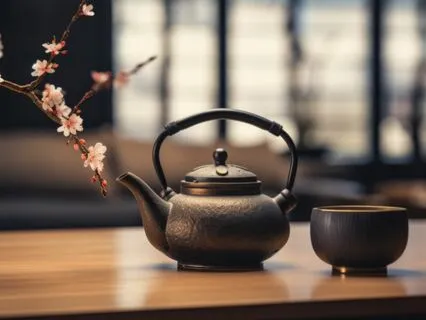
When he happened upon an ancient tea kettle,
Lying rusty and dirty,
And half forgotten,
In a corner of a poor shop in a back street.
An ugly bit of old metal,
Says the holy man to the shopkeeper,
But it will do well enough to boil my humble drop of water of an evening.
I'll give you three rin for it.
This he did,
And took the kettle home,
Rejoicing,
For it was of bronze,
Fine work,
The very thing for the Chanoyu.
A novice cleaned and scoured the tea kettle,
And it came out as pretty as you please.
The priest turned it this way and that,
And upside and down,
Looked into it,
Tapped it with his fingernail.
He smiled.
A bargain,
A bargain,
He cried,
And rubbed his hands.
He set the kettle upon a box,
Covered with a purple cloth,
And looked at it so long,
That first he was fain to rub his eyes many times,
And then to close them all together.
His head dropped forward,
And he slept.
And then,
Believe me,
The wonderful thing happened.
The tea kettle moved,
Though no hand was near it.
A hairy head,
With two bright eyes,
Lipped out of the spout.
The lid jumped up and down.
Four brown and hairy paws appeared,
And a fine,
Bushy tail.
In a minute,
The kettle was down from the box,
And going round and round,
Looking at things.
A comfortable room,
To be sure,
Says the tea kettle.
Pleased enough to find itself so well lodged,
It soon began to dance and to caper nimbly and to sing at the top of its voice.
Three or four novices were studying in the next room.
The old man is lively,
They said.
Only hark to him.
What can he be at?
And they laughed in their sleeves.
Heaven's mercy,
The noise that the tea kettle made.
Bang,
Bang,
Thud,
Thud,
Thud.
The novices soon stopped laughing.
One of them slid aside the Karakami and peeped through.
Ara,
The devil and all's in it,
He cried.
Here's the master's old tea kettle,
Turned into sort of a badger.
The gods protect us from witchcraft,
Or for certain we shall be lost.
And I scoured it not an hour since,
Said another novice,
And he fell to reciting the holy sutras on his knees.
A third laughed.
I'm for a nearer view of the hobgoblin,
He said.
So the lot of them left their books in a twinkling and gave chase to the tea kettle to catch it.
But could they come up with the tea kettle?
Not a bit of it.
It danced and it leapt and it flew up in the air.
The novices rushed here and there,
Slipping upon the mats.
They grew hot,
They grew breathless.
Ha,
Ha,
Ha,
Laughed the tea kettle.
Catch me if you can,
Laughed the wonderful tea kettle.
Presently,
The priest awoke,
All rosy,
The holy man.
And what's the meaning of this racket,
He says,
Disturbing me at my holy meditations and all?
Master,
Master,
Cried the novices,
Panting and mopping their brows.
Your tea kettle is bewitched.
It was a badger,
No less.
And the dance it has been giving us,
You'd never believe.
Stuff and nonsense,
Says the priest.
Bewitched?
Not a bit of it.
There it rests on its box.
Good quiet thing,
Just where I put it.
Sure enough,
So it did,
Looking as hard and cold and innocent as you please.
There was not a hair of a badger near it.
It was the novices that looked foolish.
A likely story indeed,
Says the priest.
I have heard of the pestle that took wings to itself and flew away,
Parting company with the mortar.
That is easily to be understood by any man.
But a kettle that turned into a badger?
No,
No.
To your books,
My sons,
And pray to be preserved from the perils of illusion.
That very night,
The holy man filled the kettle with water from the spring and set it on the hibachi to boil for his cup of tea.
When the water began to boil,
Ay,
Ay,
The kettle cried,
Ay,
The heat of the great hell.
And it lost no time at all,
But hopped off the fire as quick as you please.
Sorcery,
Cried the priest.
Black magic?
A devil,
A devil.
Mercy on me.
Help,
Help.
He was frightened out of his wits,
The dear good man.
All the novices came running to see what was the matter.
The tea kettle is bewitched,
He gasped.
It was a badger.
Assuredly,
It was a badger.
It both speaks and leaps about the room.
Nay,
Master,
Said a novice.
See where it rests upon its box,
Good,
Quiet thing?
And sure enough,
So it did.
Most reverend sir,
Said the novice.
Let us pray to be preserved from the perils of illusion.
The next day,
The priest sold the tea kettle to a tinker and got for it twenty copper coins.
It's a mighty fine bit of bronze,
Says the priest.
Mind I'm giving it away to you.
I'm sure I cannot tell what for.
Ah,
He was the one for a bargain.
The tinker was a happy man and carried home the kettle.
He turned it this way and that and upside down and looked into it.
A pretty piece,
Says the tinker,
A very good bargain.
And when he went to bed that night,
He put the kettle by him to see it first thing in the morning.
He awoke at midnight and fell to looking at the kettle by the bright light of the moon.
Presently it moved,
Though there was no hand near it.
Strange,
Says the tinker,
But he was a man who did things as they came.
A hairy head with two bright eyes looked out of the kettle's spout.
The lid jumped up and down.
Four brown and hairy paws appeared and a fine bushy tail.
It came quite close to the tinker and laid a paw upon him.
Well,
Says the tinker.
I'm not wicked,
Says the tea kettle.
No,
Says the tinker.
But I like to be well treated.
I am a badger tea kettle.
So it seems,
Says the tinker.
At the temple they call me names and beat me and set me on fire.
I couldn't stand it,
You know.
I like your spirit,
Says the tinker.
I think I shall settle down with you.
Shall I keep you in a lacquer box,
Says the tinker?
Not a bit of it.
Keep me with you.
Let us have a talk now and again.
I am very fond of a pipe.
I like rice to eat,
And beans,
And sweet things.
I'm willing,
Says the tinker.
Thank you kindly,
Says the tea kettle.
And as a beginning,
Would you object to my sharing your bed?
The night has turned a little chilly.
Not the least in the world,
Says the tinker.
The tinker and the tea kettle became the best of friends.
They ate and talked together.
The kettle knew a thing or two,
And was very good company.
One day.
.
.
Are you poor,
Says the kettle?
Yes,
Says the tinker.
Very poor.
Well,
I have a happy thought.
For a tea kettle,
I am out of the way.
Really very accomplished.
I believe you,
Says the tinker.
My name is Bambuku Chagama,
And I am the very prince of badger tea kettles.
Your servant,
My lord,
Says the tinker.
If you'll take my advice,
Says the tea kettle,
You'll carry me round as a show.
I really am out of the way,
And it's my opinion you'd make a mint of money.
That would be hard work for you,
My dear Bambuku,
Says the tinker.
Not at all.
Let us start forthwith,
Says the tea kettle.
So they did.
The tinker bought hangings for a theater,
And he called the show Bambuku Chagama.
How the people flocked to see the fun,
For the wonderful and most accomplished tea kettle danced and sang,
And walked the tight rope as to the manner borne.
It played such tricks,
And had such droll ways that people laughed till their sides ached.
It was a treat to see the tea kettle bow as gracefully as a lord,
And thank the people for their patience.
The Bambuku Chagama was the talk of the countryside,
And all the gentry came to see it,
As well as the common all-tea.
As for the tinker,
He waved a fan and took the money.
You may believe that he grew fat and rich.
He even went to court,
Where the great ladies and the royal princesses made much of the wonderful tea kettle.
At last the tinker retired from business,
And to him the tea kettle came with tears in its bright eyes.
I'm much afraid it's time to leave you,
It says.
Now don't say that,
Bambuku dear,
Says the tinker.
We'll be so happy together,
Now we are rich.
I've come to the end of my time,
Says the tea kettle.
You'll not see old Bambuku any more.
Henceforth I shall be an ordinary kettle,
Nothing more or less.
Oh,
My dear Bambuku,
What shall I do?
Cried the poor tinker in tears.
I think I should like to be given to the temple of Morinji as a very sacred treasure,
Says the tea kettle.
It never spoke or moved again.
So the tinker presented it as a very sacred treasure to the temple,
And the half of his wealth with it.
And the tea kettle was held in wondrous fame for many a long year.
Some persons even worshipped it as a saint.
The Good Thunder The texts say that Raiden,
The Thunder,
Is an unloving spirit,
Fearful and revengeful,
Cruel to man.
These are folks who are mortally afraid of the storm,
And who hate lightning and tempest.
They speak all the evil they can of Raiden and of Raitaro,
His son,
But they are wrong.
Raiden Sama lived in a castle of cloud set high in the blue heaven.
He was a great and mighty god,
A lord of the elements.
Raitaro was his one and only son,
A brave boy,
And his father loved him.
In the cool of the evening,
Raiden and Raitaro walked upon the ramparts of the castle cloud,
And from the ramparts they viewed the doings of men upon the land of reed plains.
North and south and east and west they looked.
Often they laughed,
And very often sometimes they sighed.
Sometimes Raitaro leaned far over the castle walls to see the children that went to and fro upon earth.
One night Raiden Sama said to Raitaro,
Child,
Look well this night upon the doings of men.
Raitaro answered,
Father,
I will look well.
From the northern rampart they looked,
And saw great lords and men at arms going forth to battle.
From the southern rampart they looked,
And saw priests and acolytes serving in a holy temple where the air was dim with incense,
And images of gold and bronze gleamed in the twilight.
From the eastern rampart they looked,
And saw a lady's bower where a fair princess and a troupe of maidens clad in rose color that made music for her.
There were children there too,
Playing with a little cart of flowers.
Ah,
The pretty children,
Said Raitaro.
From the western rampart they looked,
And saw a peasant toiling in a rice field.
He was weary enough,
And his back ached.
His wife toiled with him by his side.
If he was weary,
It is easy to believe that she was more weary still.
They were very poor,
And their garments were ragged.
Have they no children?
Said Raitaro.
Raiden shook his head.
Presently.
Have you looked well,
Raitaro?
He said.
Have you looked well this night upon the doings of men?
Father,
Said Raitaro,
Indeed I have looked well.
Then choose,
My son,
Choose,
For I send you to take up your habitation upon the earth.
Must I go among men?
Said Raitaro.
My child,
You must.
I will not go with the men-at-arms,
Said Raitaro.
Fighting makes me very ill.
Oh,
Say you so,
My son.
Will you go,
Then,
To the fair lady's bower?
No,
Said Raitaro.
I am a man.
Neither will I have my head shaved to go and live with the priests.
What then?
Do you choose the poor peasant?
You will have a hard life and scanty fare,
Raitaro.
Raitaro said.
They have no children.
Perhaps they will love me.
Go.
Go in peace,
Said Raiden-sama,
For you have chosen wisely.
How shall I go,
My father?
Said Raitaro.
Honorably,
Said his father,
As it befits a prince of high heaven.
Now the poor peasant-man toiled in his rice-field,
Which was at the foot of the mountain Hakasan and in the province of Ichizen.
Day after day and week after week the bright sun shone.
The rice-field was dry and young rice was burnt up.
Alack and alas,
Cried the poor peasant-man,
And what shall I do if my rice-crop fails?
May the dear gods have mercy on all poor people.
With that,
He sat himself down on a stone at the rice-field's edge and fell asleep for very weariness and sorrow.
When he woke,
The sky was black with clouds.
It was but noonday,
But it grew as dark as night.
The leaves of the trees shuddered together,
And the birds ceased their singing.
A storm,
A storm,
Cried the peasant.
Raiden-sama goes abroad upon his black horse,
Beating the great drum of the thunder.
We shall have rain in plenty,
Thanks be.
Rain in plenty he had sure enough,
For it fell in torrents with blinding lightning and roaring thunder.
At this bright lightning,
O Raiden-sama,
Said the peasant,
Saving your greatness,
This is even more than sufficient.
At this,
The bright lightning flashed anew and fell to the earth in a ball of living fire,
And the heavens cracked with a mighty peal of thunder.
Aye,
Aye,
Cried the poor peasant-man.
Hwan-on,
Have mercy on a sinful soul,
For now the thunder-dragon has me indeed,
And he lay on the ground and hid his face.
Howbeit,
The thunder-dragon spared him,
And soon he sat up and rubbed his eyes.
The ball of fire was gone,
But a babe lay upon the wet earth,
A fine fresh boy with the rain upon his cheeks and his hair.
O Lady,
Lady Hwan-on,
Said the poor peasant-man,
This is thy sweet mercy,
And he took the boy in his arms and carried him to his own home.
As he went,
The rain still fell,
But the sun came out in the blue sky,
And every flower in the cooler air shone and lifted up its grateful head.
The peasant came to his cottage door.
Wife,
Wife,
He called,
I have brought you something home.
What may it be?
Said his wife.
The man answered,
Rytaro,
The eldest son of the thunder.
Rytaro grew up straight and strong,
The tallest,
Happiest boy of all the countryside.
He was the delight of his foster-parents,
And all the neighbors loved him.
When he was ten years old,
He worked in the rice fields like a man.
He was the wonderful weather prophet.
My father,
He said,
Let us do this and that,
For we shall have fair weather.
Or he said,
My father,
Let us the rather do this or that,
For tonight there will be a storm.
And whatever he had said,
Sure enough,
It came to pass,
And he brought great good fortune to the poor peasant man,
And all his works prospered.
When Rytaro was eighteen years old,
All the neighbors were bidden to his birthday feast.
There was plenty of good sake,
And the good folk were merry enough.
Suddenly Rytaro was silent and sad and sorry.
What ails you,
Rytaro?
Said his foster-mother.
You who are the happiest boy,
Why are you silent,
Sad and sorry?
It is because I must leave you,
Rytaro said.
Nay,
Said his foster-mother,
Never leave us,
Rytaro,
My son.
Why would you leave us?
Mother,
Because I must,
Said Rytaro in tears.
You have been our great fortune,
You have given us all things.
What have I given you,
What have I given you,
Rytaro,
My son?
Rytaro answered,
Three things you have taught me,
To labor,
To suffer,
And to love.
I am more learned than the immortals.
Then he went from them,
And in the likeness of a white cloud,
He scaled heaven's blue height till he gained his father's castle,
And Raiden received him.
The two of them stood upon the western rampart of the Castle of Cloud and looked down to the earth.
The foster-mother stood,
Weeping bitterly,
But her husband took her hand.
My dear,
He said,
It will not be for long,
We grow old apace.
Sweet dreams,
My friend,
Sleep well.