Shalom,
Baruchim Habaim,
Welcome to Awakening Torah,
Musar,
Mindfulness.
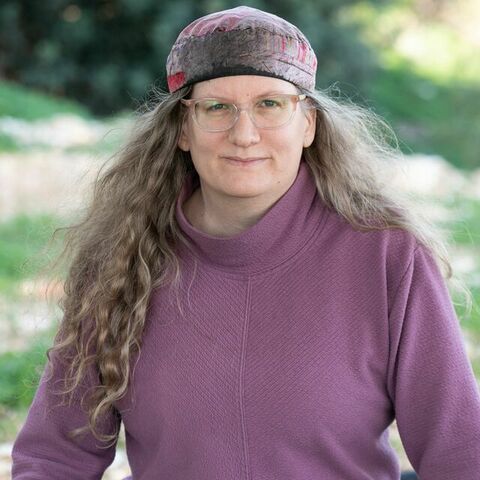
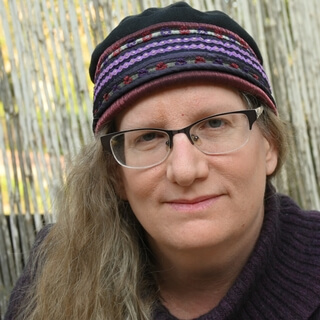
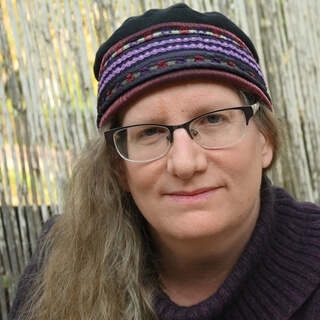
I'm Rabbi Chassi Uriel Steinbauer,
The founder and director of the Institute for Holiness,
Where we offer three paths of practice and meaning on the path towards holiness.
The synergy of the Dharma and Musar in Judaism,
Learning from these two ancient traditions together,
The path of only Musar for those who want strictly the Musar tradition and the Jewish tradition,
And the path of the Dharma,
Musar,
Of mindfulness and mindfulness meditation and the path there.
So welcome as we meet together in our weekly practice on Sundays at 7.
30pm Israeli time.
And today is Sunday,
July 9th,
2023.
It is the 20th Kaf of Tammuz,
Of the Hebrew month of Tammuz.
And we are going to jump into the parasha,
The weekly Torah portion,
Known as the Hebrew Bible and academia and the academy for yesterday,
Shabbat,
Saturday,
July 8th,
2023.
And it was the 19th of the month of Tammuz.
And the parasha is called Pinchas,
Named after the grandson of Aharon,
The former high priest,
Whereas you may recall Aharon had passed away and his son Elazar took over as high priest and Elazar's son Pinchas is who this Torah portion is named after.
Specifically for Pinchas' behavior in the last part of last week's parasha of Balak.
We will go into a summary of this Torah portion as we usually do,
And then we'll delve into what we want to learn from it today from our ancestors and from God.
B'zrat Hashem,
God willing.
And before we do that,
This will be our 38th sitting together.
So it's a blessing.
We always cover our kavanot,
Our intentions for today's session.
So for those of you watching by video,
Joining us right now,
Live stream on our YouTube channel,
Please subscribe or in the Zoom room from the link and the blog on the website of kehilatmussar.
Com or any other social media,
You will see on the screen before you our three intentions,
Our three kavanot that we cover every week.
For those of you without vision or who are listening to podcasts or audio file,
You will hear me read these.
So we see this practice together every Sunday,
This public offering by the Institute for Holiness to the community.
That's a real act of radical self-care to spend this 45 minutes together,
Delving into learning and practice together.
And so we say this is something I am doing to strengthen my own soul in order to be of benefit to others in the future.
So let's just hold that kavanot for a minute,
That intention,
May we merit fulfilling it today.
And then we also see this as an act that we're doing for others,
Because if we're strengthening ourselves,
That's so that we can be of service to others.
We say we're doing this to strengthen my relationship to others,
So I can be a better conduit of God's good to others when they need me.
Beautiful way to orient one's life here in the Jewish tradition and in the Musar tradition,
It's seen as a few,
An obligation that one wants to fulfill in order to fulfill what God wants from us and to bring God's good to others.
And finally,
The last kavanot,
The last intention is that we're doing this to strengthen our relationship with the divine,
However we define the divine and that relationship.
So we say this is something I'm doing to strengthen my relationship with the creator,
So that I can be a better conduit of God's good to others when they need me.
So as I said before,
May we merit all of this and our learning together and in our practice of mindfulness meditation after the talk,
After the teaching.
Okay,
So let's just jump into our summary as we usually do.
And I invite you,
If you are new to this,
What you want to do during this week from today to the coming Shabbat is you want to read the next week's Torah portion,
Which is known as matot.
And you'll go ahead and read that,
Read the parashanim commentators on it.
They have them in translation in English and in languages all over the world,
Whatever your native tongue is or what you're comfortable learning in,
Or if you want to learn in the Hebrew,
That's best because the Torah is written in Hebrew and we should try to really learn the Hebrew and understand it from its original language.
And then you are also welcome to hear any d'varshot commentaries that are given in Jewish communities throughout the world on Shabbat in a minyan,
In a quorum,
In synagogue or online.
There are so many services available now.
So do search that out.
It's always good to hear it chanted,
Read out loud on Saturday morning,
Usually around the services usually begin around nine,
Some earlier,
Some later.
And therefore the Torah reading would be around 10 a.
M.
Okay,
So let's jump into our summary.
So if you recall what happened last week in parashat Balak is Pinchas,
Well,
God commands Moshe and the leaders,
Most likely the Leviim,
The Levites,
To find the ringleaders,
The ringleaders who have joined the Midianite women in the worship of Baal Peor,
Another god and idol,
And have committed acts of idolatry in the form of either marriages or intercourse in the same,
In the effect of cultic practice towards Baal Peor.
And God is incensed by this.
This is in the Bible and in the Torah and in the ancient Near East,
You will know that this is like considered the worst sin against God.
It's like,
It's just a great violation to the Breit,
The covenant that it's almost,
It's like a marriage contract between the children of Israel and God,
And then therefore worship another God is a grave sin.
We've witnessed this throughout the desert,
Throughout the wilderness up until now.
So at the end of last week's parasha,
They're all commanded to find leaders who led some of the people of Shre to worship this other God of the Midianites,
And they are ordered to murder them and to impale them.
So you'll notice the arc of violence and the call for violence is gotten more violent and stronger.
If you'll recall after the golden calf,
It wasn't God that had commanded that Moshe,
Moses and our beloved ancestor Moshe Rabbeinu,
That he's the one that caused the people to drink from the golden calf being melted down into water.
He's the one that ordered the Levites to murder 3000 of their own brethren.
You don't hear this from Hashem,
From God.
But here in the Torah,
You hear the command that they are to murder these leaders and impale them.
No one's been impaled up until now.
So the policy of murder and terror in order to cause a certain effect for the rest of the population is getting more extreme.
So Pinchas,
None of the other leaders have followed this command.
If anything,
You'll find Moshe at the end of the parasha at Bala has gone into freeze mode,
Maybe even flight.
If we look at freeze,
Flight,
Fight or fawn,
The classic response is to basically a stimuli that the person can't incorporate.
So depending on their personality and past habituated behavior,
Some of us will fight,
Some of us will run away.
That's the flight.
And some of us will freeze like the deer in the headlights.
And the fawning is the person who tries to kind of placate the abuser or enemy or whoever's causing the stimuli that's not wanted,
Which could be unpleasant and even traumatic.
So what happens here is you find Moshe freezing.
He's weeping with the people.
He's not stepping into his leadership role.
He's not taking up enough space.
He's not balanced in the midah and the character trait of humility known as anava in Hebrew.
So who takes up arms?
Pinchas,
The grandson of Aharon,
Takes his weapon.
He's already,
He was already as a levy.
He was already on guard for the Mishkan and the whole area there.
That was what he was doing at the time.
He sees an Israelite man,
One of our ancestors,
Take Kosbi,
A Midianite princess,
Into a private tent area to have intercourse together.
And he sees them go to do this together,
Worshiping the god of Baal Beor.
And he takes his spear and he stabs both of them in the middle of the sex act.
This violence stops the plague that God had sent to the rest of the people with God's wrath.
And so Pinchas is seen and interpreted as saving the children of Israel,
Bnei Israel,
From a plague.
And he actually is awarded,
We can talk about this later,
We will delve into this,
With something called a Brit Shalom,
A covenant of peace,
Which sometimes gets translated in English as a covenant of friendship between God and him and his ancestors.
They will forever,
It gets interpreted as,
They'll forever serve in the priesthood.
And it most likely means they will forever serve in the high priest role.
So I will briefly touch on this to say,
Wasn't that already going to happen?
He was a Kohen,
He was a priest,
He was born into the priestly family,
Not just any priestly family,
But that of Aharon as the first high priest,
The first priest in general.
He is the grandson.
Like,
Wouldn't he already be in line for this and his children?
Is this really anything new?
It gets discussed a lot and there's a lot of passionate reactivity to this covenant.
But really in the end,
If you question it,
It's like,
I think he was already going to be in line for the priesthood and not only priesthood,
The high priesthood.
When Al-Azhar passes away,
It's going to be Pinchas,
Right?
I mean,
That's the assumption.
So what is this Brit Shalom?
So what else happens?
After this violence happens,
The plague is contained,
It's time for another census.
Why?
Because so many people have been murdered and their lives have been lost.
So the total number of Bnei Israel,
This means the men over the age of 20,
It's counted excluding the tribe,
The Shevet of Levi.
And then this information from the census is actually used to divide Eretz Israel,
The future land of Israel that will take over the land of Canaan from the Canaanites,
To divide it fairly among the 12 tribes.
And there will be a lottery in order to split up this land.
And the bigger families will,
The bigger tribes,
The bigger families will get more land and the smaller families less.
And so this is,
They're beginning to really do this architecture,
This planning,
Really about to enter the land.
And then the five daughters of Selofarch,
They're known as Banot Selofarch,
And they want to know whether they can inherit the land on behalf of their father,
Because he has,
He doesn't have any male children,
Male heirs.
And the way the structure was socially back then is majority of women did not inherit land.
There are some ancient Middle Eastern cultures that did happen.
So there might have been a little bit of awareness of this on behalf of the daughters that they felt they could approach Moshe and leadership with this claim that they would like to inherit the land.
And so the daughters,
The Banot Selofarch,
They asked Moshe,
Moshe asked God,
And God answers that yes,
They can inherit their father's land.
It's not as if they just inherit by themselves and it's theirs forever.
It's a,
It's almost like a on loan that until they marry a man from their own tribe,
It's meant to be kept in their own tribe.
They'll marry in their own tribe,
And then it'll be passed on to the husband and the sons from there.
So then God tells Moshe,
It's time to return to the ancestors to climb the mountain,
The mountain of Avarim.
And he's allowed to look at Eretz Israel from the distance.
He's allowed to look upon the promised land.
Then he's reminded that he will not be able to enter.
I don't,
Did he need that reminder?
No,
Obviously God felt God had to say it.
Not sure why,
Other than again,
A kind of continuation of the punishment.
And then Yehoshua will be appointed the new leader.
And why?
Because Moshe in his great,
In his last moment where he could have been full of greed,
Hatred and delusion,
He's not.
He is very clear.
He remembers who he is and what his role is.
And he turns to Hashem and says,
Appoint a shepherd,
Appoint a leader for this people,
Someone willing,
Someone that will be able to protect them and take them into the land and lead them.
And Yehoshua is assigned as the leader.
And you may recall who is Yehoshua?
He was the young boy who was the attendant to Moshe in his tent all along.
He was the one that was super passionate when he witnessed two men in the camp doing prophecy.
He was very concerned on behalf of Moshe,
Ran to him and said,
They're doing prophecy.
And you may recall that Moshe was like,
May all of B'nai Israel be given that ability.
He was exhausted.
You can see his bucket was full.
So and then Yehoshua was one,
We think,
We believe that he was one of the spies that entered the land.
And when he came back,
He had a good word to say about it,
To defend it with Kalev.
He's always demonstrated loyalty,
Faithfulness,
Courage,
Just great concern.
And that all demonstrated that he should be the next leader.
And finally,
The parasha closes with details of the korbanot sibor,
The communal sacrifices that are commanded to be offered daily,
The two times a day.
Also on Rosh Chodesh,
The new moon every month and during the holidays.
And that is how the parasha concludes.
So obviously,
There's many different angles that we could take this and look at it.
I think the most important thing to address at this point,
Because it's so triggering for most people,
There's a lot of reactivity to this section.
I mean,
Last week,
What to the action that actually happened in last week's parasha and balak with Pinchas,
But this parasha.
OK,
So,
You know,
As I said,
God rewarded Pinchas Zil by granting him and his offspring known as the Sado-kites in English,
The priesthood,
And that his family line will basically control the spiritual and civil lives of the people and that the victims,
The people that Pinchas is commanded to attack,
Will turn out to be from the leading families of their own respective nation.
So,
Again,
This is their own respective nations.
Levites attacking other Levites.
Some of this might be a power dynamic going on.
And so.
What happens,
We tend to see two paths,
Two reactivity or responses to this parasha and to Pinchas' behavior.
The first is generally falls within orthodoxy and within the parasha name and within the commentators for the past 2000 years,
Which is his behavior is rewarded by God.
He's given a great shalom.
Therefore,
He did what he was supposed to do.
He didn't do it for selfish personal reasons.
It wasn't like he was being a sociopath or psychopath murdering people.
And that,
You know,
His anger,
His rage,
His zeal,
Which could be the enthusiasm and his chaos,
His anger,
His wrath is seen as matching that of God's lifting it up almost as holy service.
This this wrath and this zeal to behave in ways that that he did the right thing.
And that's how it's generally in that camp.
And then you have the non-orthodox camp,
Which has a lot of reactivity to Pinchas' his behavior.
They see him as a zealot,
As someone who took up arms by himself.
There's a great concern even on the rabbis over some of the rabbis,
Parshanim over the 2000 years,
Do have concern with his what appears to be him taking up arms himself and committing murder.
But I feel like all of this is a little off simply because you have to read the parasha together,
The different Torah portions,
And to understand that before Pinchas acted,
He was actually commanded by God in the Torah to hold the ringleaders responsible,
To murder them,
To impale them.
And he was just following the command.
He was doing what he was supposed to be doing.
And the problem,
If anything,
We should be looking at,
It's not that I agree with this.
OK,
I'm just analyzing this for you.
Do I agree with Pinchas murdering a Jew and a non-Jew for them committing adultery?
No.
Would I have back then?
I'm not even going to say that we should even judge our ancestors' behavior in that way.
We were not living in those times.
We weren't living with God being in direct relationship with us.
So to judge it that way,
Like they shouldn't behave that way,
I don't think it's so fruitful or helpful.
And we can't really say how we would behave if we were back there today.
If I was behaving right here today and where I live in Eretz Israel and someone took up arms to murder a Jew who happens to be worshipping another god with a non-Jew and engaging in a sex act,
I don't think that they should be murdered.
And I wouldn't agree to that.
OK,
So that's just clear ethically that out of the way.
But that's less of the concern.
The concern is where was everyone else?
Where was all the rest of the leadership?
Where was Moshe?
Where were the other Levites?
But particularly,
Where is Moshe,
Right?
His raising,
His inability to take up space and act.
Creates a vacuum of leadership.
And we saw that we saw this coming and Balak also,
Right?
It creates a vacuum.
And so you have someone,
It looks like someone's taking matters into his own hands.
But he was commanded,
Along with the other Levites,
With Moshe,
The leaders,
To round up the ringleaders and act.
Supposedly,
Maybe that command,
To be honest with you and Balak,
Of God commanding to round up the ringleaders and impale them.
That maybe you could interpret it very narrowly because it does say in Pasuk 4,
Chapter 25,
4 and back in Balak that the Lord said to Moshe,
He's speaking directly to Moshe,
Take all the ringleaders and have them publicly impaled before the Lord so that the Lord's wrath may turn away from Israel.
Right.
So instead of having Aharon's beautiful makel stick full of almonds and the beautiful flowers associated with it,
We now are going to impale people and see if that has the desired effect on Bnei Israel.
So then Moshe then turns to what are known as the,
Let's see here,
Bnei Israel,
Let me read it for you.
Moshe turns to the Shoftei Israel,
The head of the tribes,
What gets translated into English as Israel's officials.
And says each of you slay those of his men from his own people,
His own tribe,
Right,
Who attach themselves to Baal Peor,
Similar commandment to the Levites back in the Golden Calf.
OK,
So they're commanded to do this.
He says this to all of them.
Where are,
Where are these Shoftei Israel?
Where are they?
They are in freeze mode with Moshe.
There's no gathering the ringleaders and impaling them.
It is just Pinchas,
Just Pinchas,
Who just lost his grandfather,
Right?
He was gathered to the ancestors,
Just Pinchas.
So it makes you,
What's going on?
What's going on with our ancestors?
Where are the rest of them?
We always keep talking about how the bucket was full for Moshe.
Maybe the bucket was full for all those leaders also.
They have witnessed and done by their own hands,
So much blood on their own hands through this journey,
Through the wilderness.
That's it.
My interpretation,
My suggestion for you is that they have had enough.
They can't even act anymore.
They can't get up and get their own people who are involved in Baal Peor and murder them and impale them.
It's done.
They have witnessed so much violence.
They don't act.
Pinchas acts.
OK,
So what's going on here?
Right.
Like we're witnessing this vacuum in leadership.
We see the zealot,
What appears to be the zealot,
Taking up arms in his own hands.
But he's really not.
He was commanded.
We see Boshe kind of slowly disappearing.
And what we have left is Yehoshua is going to rise.
And what you're going to have left are those who are courageous,
Who do have fidelity,
Who are faithful to God and the people will gather and prepare for what is coming next,
Which is essentially the generation of conquest,
Of entering the land of Canaan and taking it over,
Which will be the central theme of the final 11 chapters in the book of numbers in Bami Bar.
OK,
Is this a occupation of the promised land?
So,
Yeah,
What I want us to hold for that is to witness this large communal shift that's happening.
And what that what that does for us,
For those of us who've been following bit by bit,
Very closely following our ancestors,
Their stories,
Our stories,
The narrative.
For some of us,
Just like when we shifted from the stories of Bereshit to Shemot,
Where we went from the individual stories of Avraham and Yitzhak and Yaakov,
Sarah,
Rivka,
Rachel,
Zolaia,
Silta,
Bilha,
Everyone else,
To the children of Israel,
We move from individuals to tribes with Moshe and Aharon and Miriam leading generally.
Yehoshua starts to appear.
And now we're seeing another shift to the people,
Right,
The people who are ready,
Who are courageous,
Who are faithful with Yehoshua leading.
Shift,
Shift and shift and shift and narrative and story.
And for some of us,
There's going to be a moment of mourning,
Of grief,
Of loss to feel that,
To recognize it.
I'm not ready to let go of Moshe.
I'm not ready to let go of Miriam.
I'm not ready to let go of Aharon.
I'm not ready for all this murder.
And violence in the desert,
In the wilderness,
And still digesting it,
Still dealing with it,
Right,
To shift to war and conquest that's going to happen and entering the land.
And so we're not there yet.
There's a lot that's coming in.
Zavarim,
Moshe,
You think Moshe is about to go to the ancestors.
Well,
He has a lot that he,
He has his final breath that he is,
Will move to share with us still.
But where he,
He moves from,
You know,
Allowing Yehoshua to take over.
And then we'll move into the settlement of Transjordan.
So I just want to honor.
You should pause right now and then we're going to move into our practice of mindfulness meditation.
But part of this practice in Musa mindfulness is for us to become mindful of the felt sense of these narratives,
These stories,
Their effect on us,
What we feel that we're supposed to learn from them.
And where is the felt sense?
Where do we recognize it?
Can we allow it?
Can we accept it?
And.
It's very important,
Especially at this shift,
To know that we are pivoting in the story and can we pivot with them?
Can we be ready to say goodbye?
And hold it as part of this practice today.
And also notice if you had any reactivity to Pinchas and the narrative,
The story.
How do you feel about it?
When you did a close read of the Torah,
Did you also feel that he was in alignment with being commanded by God or that he was this religious zealot who took matters into his own hands?
Why does it matter?
What what's behind it?
Why does this trigger so many people?
Why is there so much reactivity?
And what what can we learn from it?
How can we hold it in space?
So with that,
I invite you into one of the four postures classically of mindfulness meditation,
Which is could be sitting in this chair like I am here.
I would move to the edge,
Be upright,
Dignified as you are created in the image and likeness of the divine,
But not stiff at ease.
Even allowing the shoulders to fall some.
You're welcome to stand if that posture is more comfortable for you.
You're welcome to just simply walk back and forth or lie down if needed.
I encourage you to keep your eyes open if you have vision,
If you lie down so you remain awake and alert.
For the rest of us.
I want you to close your eyes unless you need to keep them open,
Which is fine,
Absolutely,
Especially if any active or trauma that you are still addressing.
And they take care of yourself.
And lower your gaze.
So that you experience less visual distraction.
And we're going to move into our meditation.
Begin with three deep cleansing breaths,
Inhalation,
The gift of oxygen.
Even raising the shoulders.
Exhalation,
Letting the shoulders rest and lower.
Inhalation,
Breathing in ease.
Exhalation,
Exhaling ease.
Inhalation,
Breathing in ease.
And exhalation.
Fully arriving,
Letting your hands rest,
Safe and comfortable.
I'm actually going to hold mine on my belly because this,
This Torah portion,
Both Balak and Pinchas really affect me in my belly.
For others,
You may hold the traditional posture hold or rest them on your thighs,
Holding your heart.
With the sense of compassion.
With kindness.
We want to approach this meditation with curiosity.
You're like you have that beautiful inner distance that you can pull yourself back and look at yourself.
With curiosity with what we call the beginner's mind.
Noticing how the breath,
The whole body breathing is breathing in.
And breathing out.
Simply recognizing,
Are you here in the present moment.
If you're not invite yourself here to the anchor of my voice.
Or to your own breath.
Noticing the felt sense of the body anything calling for your loving attention.
You may even practice,
Naming Pinchas saying it out loud to yourself and noticing,
Where do you feel his name in your body.
Most,
Where do you feel most.
Even God and God's wrath.
Where do you feel that in your body.
In your body.
And practice the arts of mental noting.
Just gently naming,
Whatever comes up for you.
Pain.
Hotness in the belly.
Cramping.
Tightness.
Whatever your experience may be.
Simply naming it while observing.
And also noticing that whatever sensation you have right now.
Will shift and change.
That is the nature of our practice known as impermanence.
Is recognizing the true state of the world of cause and effect.
And in some ways that is what God and our ancestors are teaching us through the stories of the Torah is impermanence.
Everything changes.
Everything shifts.
Everything pivots eventually.
And eventually,
Even Moshe,
Moshe Rabbeinu dies.
Can we be present for it all.
Can we recognize the impermanence.
Can we be present for it without reactivity.
And if we can't right now.
Can we practice self compassion.
Recognizing the common humanity that others are just like us who are not ready to accept the impermanence of all of this.
Being kind and loving towards yourself.
Being kind and loving towards yourself.
No need to push away any unpleasant emotion or sensation or even thought.
Rather just simply witness it without identification without reactivity.
What is here for you right here and right now.
And if your mind begins to wander which it will from time to time.
As our beloved teacher Joseph Goldstein teaches,
Simply begin again.
Bring your full awareness to this present moment.
This moment.
And I invite you to bring metta,
Chesed,
Loving kindness,
A goodwill,
An ayin tova,
Good eye to our ancestor Pinchas right now.
Young man,
Probably not much older than 20 just starting his service as a Levite.
The enlightenment of the Kohanim,
Grandfather just passes away.
And he wants to do what's right and just what's been commanded.
And his makel,
His is one of violence.
Of sparing two human beings of blood,
Having the ground swallow blood again just like his ancestor Cain.
Who caused the first murder recorded in the Torah of his own brother.
And imagine this young 20 something Pinchas pulling his spear out blood on the spear,
Blood on the ground,
The ground crying out yet again to God.
The wrath,
The plague stops.
Holding that spear in his hands.
Trusting and knowing he did the right thing because the plague stopped.
But all at the same time quivering with that spear in his hand knowing he will never ever live up to a harun.
Who held a makel of almonds of sprouting beautiful flowers and almonds against the others to know that he was chosen by God to serve as the high priest.
To know that he Pinchas committed murder with God's wrath with God's permission with God's support.
To knowing that in some sense,
It will be very challenging to serve as high priest with blood on his hands near a dead body.
Near a dead body.
Our own not once committed murder.
Not even to stop a plague.
He took his own fire pan and ran to stop the plague.
He gave an offering.
Close be in the Israelite were not an offering.
So again we step down that ladder.
We move away from the closeness to the aspirations to that which our own had done well.
And we honor that.
Now we can see why God offers a breach alone.
A covenant of peace for Pinchas and his heirs,
His children and grandchildren and great grandchildren,
Because they're going to need it.
Because they will have to choose at every point in their life where they choose the path of our own,
Or they choose the path of Pinchas.
May we all merit to choose the path of our own.
The one that causes less harm and suffering.
We will sit in silence for two minutes and I will ring the bell and become out.
Now this time to nurture yourself giving yourself the love that you need.
That you may turn after this practice to bring God's good to others to bring your own compassion and love.
Less judgment.
Less judgment.
Gently and slowly open your eyes if you have them closed.
Allow yourself a deep inner bow to your practice to God,
To the teachings of the Buddha to taking refuge here together in community here with the Institute for holiness.
Bowing to our teachers and to our ancestors.
Do give so that we may continue to offer these public offerings be in touch with us at our website you'll see areas for donations for trauma for Donna.
You support awakening Torah Musa mindfulness.
Thank you for your practice today.
I look forward to learning and practicing next Sunday.
God willing.
Take care.