Welcome,
Baruchim Habaim,
To Awakening Hidrurut Torah Musa Mindfulness.
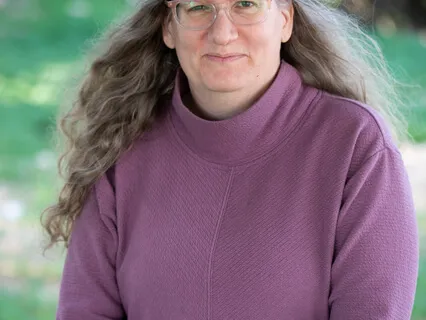
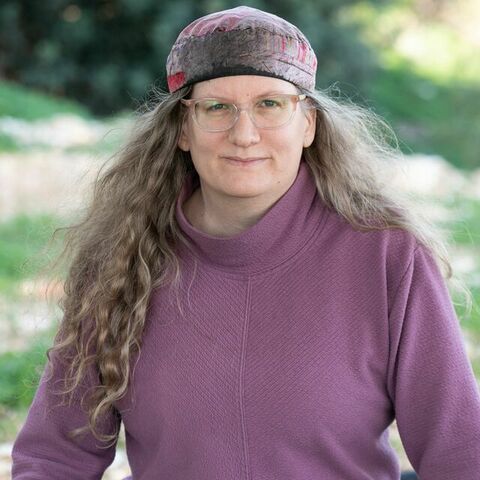
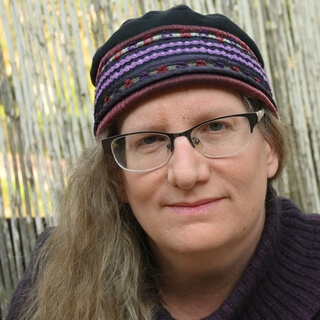
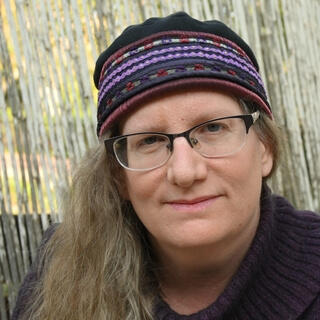
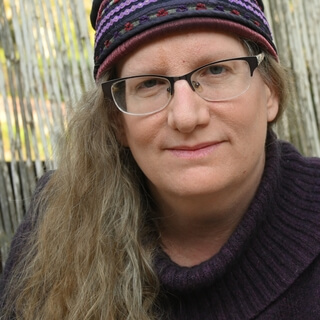
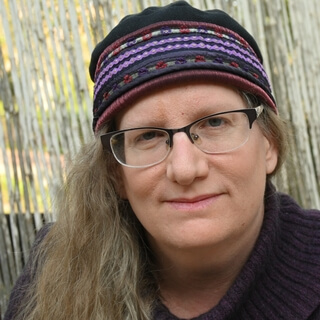
I am Rabbi Chassio Uriel Steinbauer,
Founder and director of the Institute for Holiness,
Kihilat Musa Mindfulness.
So delightful,
So honored and privileged to have you join us,
Either through our Zoom link from our website or live streaming at our YouTube channel.
Please subscribe.
Please also subscribe on our website to receive newsletters and announcements.
You can also find us on LinkedIn and Twitter and Facebook.
We meet every Sunday,
Bezrat Hashem,
God willing,
At 1230 Eastern Standard Time,
930 Pacific Standard Time,
And 730 PM Israeli Standard Time.
So we begin today.
Today is an intense day on the fourth day of Pesach,
In the middle of this awesome Chag Herut,
This festival of freedom,
Where so many of us struggle for what is freedom?
How do we reach it?
Why is there suffering?
How do we relieve the suffering?
All the master narrative,
Master questions that all of us must face as those created in the image and likeness of the Divine.
And so before we begin,
We always begin with our Kavanot,
Our intentions for today's practice.
I'm going to cover a little bit about who we are as an institution and then name who today's session is being sponsored by with great honor.
So I'm going to share now,
As I usually do,
Screen for those of you who are watching by video.
For those of you who are joining us through audio or the podcast,
You will be able to hear me read these Kavanot,
These intentions,
Which we do every single week.
May we merit fulfilling them.
Okay.
So what we have before us are three Kavanot,
Three intentions.
So we see this act of us joining together,
Taking refuge in community together to really address the weekly Torah portion from the lens and ancient traditions of both Theravada Buddhism of mindfulness and Musar in the Jewish tradition of really coming together in Musar mindfulness to see what God and ancestors want us to take from this master narrative,
This master text to guide our lives,
To guard our practice.
So we see this as doing a radical act of self-care because when we engage in this study,
Again,
With community taking refuge,
We really are caring for the self.
It's quite a beautiful thing,
Actually,
That we're able to nurture ourselves,
Offer self-compassion,
See this as a path and not a destination,
See this as something that we cherish and we'll practice and grow together.
So we see this as doing an act of radical self-care.
We also see this as an act of strengthening our relationship with others and strengthening our relationship with the divine.
It really is that threefold triangle,
Very strong relationship where we say this is something that we are doing to strengthen our soul,
Our relationship to others,
Our relationships with the divine in order to be of benefit to others in the future,
In order to be a better conduit of God's good to others when they need us.
That's very profound to be able to wake up in the morning to realize that your purpose and intention for being here on this earth is to be a conduit of God's good to others,
To be a benefit to others,
To bear the burden with others.
This is our calling,
Our path of practitioners of Musar Mindfulness.
So this is how we begin.
This is how we begin every week.
May we merit fulfilling this today.
Very excited to say.
So first,
I'll share that today first is being sponsored by a practitioner and a student of Musar Mindfulness,
Alfa Cortes,
Wonderful dear soul.
Her grandmother-in-law passed away during the Pesach Seder,
The Passover Seder,
And she passed away at 101 years old.
May her neshamah have an aliyah.
May she have great comfort from Hashem and may the whole family be comforted during this time of mourning.
And we're grateful for the sponsorship in memory of Amelia Soto.
So that is our first sponsorship.
The second,
And it's a great,
It's a beautiful thing to be able to honor the life and memory and then and let me hear memory be for a blessing and that we're going to include that in our blessing today.
Someone who was able to live a long,
Fruitful life to 101,
Amelia Soto.
So you are in our heart and in our teachings today.
And the other side of the spectrum that of what is being also sponsored today is actually with a very heavy heart.
It's the opposite extreme that you wouldn't ever want to have to offer sponsorship in memory of someone or some people.
So today in memory of Maya Esther and Rina Miriam,
Two young,
Beautiful girls and women,
Ages 15 and 20,
Who were murdered by a Palestinian terrorist and have lost their lives.
And their mother,
Leah Bat-Sipora,
Was also harmed and is trying to struggle to stay alive in Hadassah Hospital in Yerushalayim in Jerusalem.
So regarding Leah Bat-Sipora,
We really ask today that you send your prayers for Refua Shlema,
Full health and healing,
Speedy recovery,
And even more importantly,
That you do a good deed in her honor to lift her up,
That you learn in her honor,
That you pray in her honor and do beautiful acts of chesed,
Of metta.
So may we all merit lifting up Leah Bat-Sipora and may her beautiful two daughters,
Maya Esther and Rina Miriam,
May their neshamot have aliyot to Hashem,
May they be comforted,
May the whole family be comforted during this time of mourning.
And we dedicate the session today to all three,
To Amir Yasoto,
Maya Esther and Rina Miriam,
That we merit bringing and making their memories for a blessing and the gift that we are still alive,
All of us right now,
Here taking refuge in community.
The fourth day of Pesach,
The fourth day of Passover,
To realize how fragile life is.
So we're going to answer together.
So you may be wondering,
What happened yesterday?
What happened on Shabbat,
On Saturday,
The 8th of April,
2023?
It wasn't a regular Torah portion,
Right?
We didn't follow the same pattern of moving through now a Vayikra,
A Leviticus,
To the next portion,
Which is common.
This is what happens during festivals.
Instead,
We read those sections coming from Shemot,
Exodus,
And also Bami Bar,
Numbers,
That cover what is commanded in the Torah regarding that festival.
So this is about Chag Hamatzot,
The festival of the flat bread that our ancestors carried with them out of Egypt.
And it covers the laws and the practices and traditions around that.
And so today,
On Sunday,
April 9,
2023,
Today's date is the 18th of Nisan.
Yesterday was the 17th,
Yad Zayin of the Hebrew year,
Tafshin Pei Gimel 5783.
So today,
We're going to focus on the master narrative of Pesach,
Of what we are supposed to do with it.
Why is it that we do this over and over again,
Every year,
It's commanded to do so,
That's been passed on for thousands and thousands of years from our ancestors?
What is it?
What is this memory?
What is this deed?
What is it that we're doing?
And how do we use it as a spiritual practice today?
And we'll move into a meditation practice around this.
It'll be less mindfulness meditation and more of a contemplation meditation coming out of the Musar tradition.
And there'll even be some visual contemplation for those who want to use it.
And there may even be a little chanting.
So we'll take this ride,
This journey together.
So let's jump in.
What is this?
What are we doing here?
What do we read in the Haggadah?
What is our project?
So it's quoted in each generation,
Dor v'Dor,
Right?
In each generation,
A person must envision herself or himself as if he or she were liberated from Egypt.
Okay?
You might be thinking immediately,
Okay,
I'm going to view myself as if I'm being liberated.
There's so much commentary on this throughout the generation.
Some people immediately,
When we have our immediate reactivity,
Which we should pay attention to in our practice,
Immediately will come up for those who are more on the melancholic bent,
Will say,
We can't do this,
Right?
How on earth are we supposed to envision or be as if that we've been liberated from slavery when we were actually not enslaved in Egypt?
How could we even do this?
Right?
And then those who are more on the sanguine bent,
Who try to see the cup as half full,
Will say,
Of course,
You can treat this as a practice of imagination and engaging in really being present with us and taking this as a practice.
I want us to do something completely different with this.
I want us to hearken back to the very beginning of the Torah,
Where we entered Bereshi together in a beginning.
Some translate in the beginning,
But it's really in a beginning.
And we start to know our ancestors,
Starting even from Adam Rishon and Chava,
Moving 10 generations later to Noah,
10 generations later to Avraham,
Who will become Avraham,
The father of the Jewish people.
And the father of three major faiths,
Obviously,
Right?
So,
And our ancestors,
Starting with Avraham,
And even his son,
Yitzhak,
And I believe even Yaakov,
And especially the midwives,
Shifra and Pua in Egypt,
Use this term that they fear God,
That there's a fear of God.
And when we hear in the English language,
Particularly if you live in the West,
You hear fear,
And you think of the trembling fear of repercussions,
Fear of a reckoning,
Fear that God is going to punish you,
Right?
But I think this fear is something much more profound,
And I've touched upon this in earlier sessions.
This fear,
When it's described,
For instance,
When Shifra and Pua are described,
The two midwives,
Why they won't engage in genocide,
Commanded through executive order by the emperor,
By Par-O,
Why they won't go ahead and murder Hebrew baby boys,
It's because they have a fear of God.
And you might think,
Okay,
They had a fear that God would punish them if they murdered the baby boys.
I don't think that's it.
Maybe they did have part of that.
Fear of God is a description of not only of an interior world,
But one's behavior on the outside that are completely mirroring one another.
There is full integrity.
It is an internal,
Deep,
Strong,
Upright,
Righteous,
Moral compass that is a gift from God that all of us are born with.
It is innate,
And that it teaches us and it knows right from wrong,
Good from evil.
So when the midwives are said that they had a fear of God,
They're going to be the ones to punish them.
They knew that this order of genocide,
That they were supposed to murder the baby boys was so evil and wrong.
It wouldn't even be contemplated.
It wouldn't even be something as an option,
Like a Ba'khira point,
A choice point.
Okay,
Maybe I'll murder the boys.
What's the benefit I'll get from it?
Or maybe I won't.
And I'll have to face that,
Right?
If anything,
If you do want to go the fear route,
Meaning like pacha,
Total fear,
Scared of God punishing you,
They had to deal with the potential that they were going to be murdered by paro,
Right?
Through executive order.
When you don't follow through of what the king or emperor says,
You can be executed in that system.
So obviously their fear of God,
Maybe the repercussion by God was stronger than their fear that they might be executed by paro.
Whatever it is or combination,
It doesn't have to be either or it can be,
And that's the beauty of us having hindsight and this tradition to be able to look back.
That's in this strong internal moral compass is saying,
No way,
That it's not even an option.
I don't care if I ended up being murdered by paro.
And in some ways I don't even care whatever consequences might be or rewards,
Rewards from God for this behavior.
That's not the motivating fake factor.
When someone says I have a fear of God,
Or there's no fear of God here.
So Avram and Avraham in his behavior and his journey,
His journey,
When he begs essentially his wife,
Sara,
Sarai at the time,
To lie and say that she is his full blood sister so that he will be considered a brother and not a husband,
Then he won't be murdered.
He won't be murdered by the Egyptians and later on by the Canaanites.
And so he,
And then later on when he's confronted by both paro and also later the Canaanites of why did he lie?
Why did he say he was a brother when he clearly is the husband of this woman of Sarai,
Of Sara?
He says there was no fear of God in this place.
So then you're wondering,
What is he talking about?
Right?
If fear is something that you're walking around trembling,
Walk around trembling of the consequences of your behavior,
That there'll be a final reckoning,
Perhaps.
How would you witness that in the population?
I don't think that's what we mean when we're talking about fear of God.
I think when he says there's no fear of God in this place,
He's witnessing behavior among the population that is not moral,
Is not ethical,
Is not upright,
Is the opposite,
Which is what we call harm and suffering,
Is causing harm and suffering to others.
Right?
So there's no fear of God here.
There's no deep,
Strong,
Internal moral compass.
They are not living by that internal compass.
They are living by some other value,
Maybe some hindrance,
Some obstacle,
Whatever it might be.
And so I think there's strong evidence that when we say fear of God,
Which gets later on by our ancestors,
Especially the Musa tradition,
Understood as that pahad,
As that fear of a reckoning.
I think there's something much more profound here that we can work with this idea of yirah,
Of fear and awe,
Reverence that come together,
That you can't translate into the English because it means two words,
Two meanings.
If we take my proposal and my meaning that fear of God,
It means I walk around with a deep moral compass that I live by and informs how I operate in the world.
And I actually live through that.
It's not as if it's just something internal,
Some value,
And then I actually don't live it and live with it.
But I live it and I'm living this strong,
Internal moral compass.
Then it makes total sense that you also are going to be awake to the awe of life,
The awe that you're given another day to live by this strong moral compass,
The awe that you are living with such deep integrity that your inside matches the out behavior and the out behavior matches who you are inside.
There's just quite a gift of not only equanimity of a menuchat ha-nefesh,
A deep peace and calmness of the soul when someone's living in that alignment,
Right?
That they have this fear of God,
This great internal moral compass and therefore awe and reverence.
And that comes out in a balanced midah of yirah,
Which gets translated as both fear and awe,
And it really is both in the Musa tradition.
So when we say in every generation,
The whole Dor vador,
That a person must envision himself and herself as they were liberated from Egypt,
What are we being told to do?
We're being told to remember who liberated us,
Right?
It's not that we're just to remember that we were liberated and we walked out of Egypt,
We left the institution of slavery.
No,
That we were saved by the Almighty,
But the Almighty really came through as an entity in history to be in relationship with humans and with our ancestors.
But when recalling that there is a God who liberated us,
It's to remind us who we are and what that God planted in all of us,
That we're all created in the image and likeness of the divine,
And that all of us have this internal moral compass that we are to live by this fear of God,
And that is to guide us.
And so that's what we're recalling every Pesach,
Every Passover,
When we are entering Hag-Herut,
The festival of freedom,
Of liberation,
Is to realize that the root of our suffering,
As taught even in Theravada Buddhism and the Dharma and mindfulness tradition,
Right,
That there's suffering,
And that suffering is deeply rooted and often caused by our own reactivity and not living in an alignment with the internal and the external,
That one might be really caught up in living through the obstacles,
The hindrances,
Maybe having a lot of attachments or denial or sloth and torpor,
Different ways of looking at this and realizing that the suffering that we all need to leave,
That narrow place when we say sar,
From Mitsrayim,
Is to awaken to the suffering,
The suffering that we perpetuate and may even take a partnership in and causing through our reactivity,
Is realizing that that liberation,
How does it come,
That there is an end to the suffering through our responding,
Through wisdom,
Through insight,
Through wise discernment,
Through living the internal and the external as a whole on a path,
And that path is what we call fear of God,
Which means this deep,
Strong,
Internal moral compass.
And so this is what we're working on all year,
All of our life,
But especially during these seven days,
Eight days outside of Israel,
What is this project that we're doing that just,
It doesn't happen just on the night of one Seder or two Sederim,
If you're doing two or have done two,
That's not the only thing that we are working through on that one or two nights,
That it is a week-long practice to look at,
Okay,
What did I practice during the Seder?
What questions did I ask?
How did I get closer to liberation?
How did I get closer to moving away from my reactivity and less suffering?
How did I cause less suffering and harm in others or to others?
Am I living with integrity,
The inside matching the outside?
How is that happening?
How is my midah,
My soul trait of Yirvah,
Is it balanced?
Do I need to look at that and perhaps practice more of my internal moral compass,
Which I call fear of God,
More awe,
Waking up to the majesty,
Right?
The majestic,
Awesome,
Unbelievable world of gods that we inhabit and take care of.
Or are we having too much,
Too much fear,
Too,
Trying to live so upright that we're not able to act?
There is a fear that therefore it's causing us to freeze.
We look at the whole model of fight,
Freeze,
Fawn.
There's a fourth one.
I can never remember them all.
It'll come to me.
But basically,
We want to be looking that we're not freezing and not able to act and not able to be awake to that which is good and is before us.
So with that,
I'm going to move us into a very special practice that practice over time really can assist us with balancing our midah of Yirvah and really in more even more importantly,
Is really bringing to the center,
This deep alignment and insight and just beauty of holding that fear of God,
That internal moral compass and living by it,
Right?
There's nothing,
There's nothing more beautiful or profound than just knowing this is right and this is wrong,
Right?
And I'm not going to cause harm and suffering to others,
Not going to cause it to myself.
At the root of it all is Rahamim,
Is compassion for others,
Self-compassion for ourselves,
Which is really love,
Right?
Deep,
Deep love.
God loved us and liberated us,
Right?
God loves when people live on that path and head towards liberation,
Right?
So the arc,
It may be long,
But it's heading towards that.
So I invite you now to your posture that is best for you.
It could be sitting on a chair at the edge so that you're upright.
It can be lying down if you have any low back pain or any issues that you need to rest.
I recommend keeping the eyes open if you have vision.
If you need to walk,
Go please do a walking meditation,
Or you can even stand like in a strong mountain pose.
So for those of us who are not seated on a zafu,
On a meditation cushion,
I invite you,
As I said,
To the edge of your seat and ground your feet so you really feel held by Mother Earth,
Okay?
Contained in here.
It's very important.
And so what I'm going to do here,
I invite you to close your eyes if you have vision and if you feel safe and ready to do so.
And you should be upright and really feeling that you are created in the likeness and the image of the divine,
Right?
That sense that you know who you are,
You're in alignment with your purpose.
And I want to invite three deep cleansing breaths,
Inviting the inhalation of presence now,
And exhalation.
Notice if your shoulders dropped at all.
Inviting awareness,
Waking up to this moment,
Letting go whatever is here,
Inhalation and exhalation.
You can even make a sound on the exhalation,
That deep breath.
Noticing if you're starting to come to stillness,
Coming to silence,
Arriving,
Inviting with great Kavanagh intention,
I'm arriving.
Inhalation and exhalation.
Notice if a smile emerges,
One where you feel grateful to be alive,
To be here in the present moment,
To be able to be taking refuge in this practice and this path together.
Refuge in our Vād-Sangha community,
Refuge in these beautiful teachings that guide us.
Towards Kheirut,
Towards liberation.
So allow your breath to begin to fall to its own natural rhythm,
No need to control it.
And then in order to help us arrive as this practice,
We do a short body scan just to see what is here for us.
Starting at your toes,
You can even wiggle them to bring your attention to that area,
Directing your breath all the way down to your toes,
Moving through your feet,
Up your legs.
Notice if there are any strong emotions or sensations in the body calling for your loving,
Compassionate,
Kind attention.
Whispering to yourself,
I can be with this,
Whatever it is,
This too shall pass.
Moving up the legs to the sit bones and the whole pelvic region,
Inviting your calm attention there.
Noticing if there are any strong sensations in the body,
Both pleasant and unpleasant.
What is here for you?
Can you be awake to it without reacting?
No need to over identify with whatever is going on in the body.
No need to deny it.
Whatever is here for you right now,
Accepting all with grace,
With the gift that you are alive,
Moving up your low back and your stomach region into the chest and the upper back,
Doing that beautiful flow through your shoulders and down your arms,
Taking that journey all the way down to your fingertips,
Traveling back up with your kind attention to your neck and your head,
Your forehead and all the muscles in your face,
Even into your mouth and your tongue,
Letting your jaw relax,
Fully present.
So I move us into a practice called Shaviti.
And for those of you who want to have the practice of the visualization of the contemplation before you,
You will see before you what's called a Shaviti.
A Shaviti is traditionally a beautiful painting or carpet that's been loomed and that hangs usually on the Eastern wall.
It can be on the Western wall,
Depending on where you are located in the world that is facing Yerushalayim,
That is facing Jerusalem.
And it's usually very intricate,
Very beautiful.
And it always has the words Shaviti Adonai or Shaviti Hashem,
Whatever your practice is,
L'Negdig Tamid.
And that means I place Hashem,
I place God before me always.
So we see here in the English in this contemplation here in this visualization on the screen before us,
It says,
I have set the Lord continually before me.
This is coming from Tehillim,
From Psalms 16.
8.
So I put this image before you if you do want to use it,
Where you can just stare at it and stare at the words and bring those words to your mind's eye or see them,
Feel them in your heart.
This is not a cognitive exercise.
You're not thinking about the words.
You are more really setting the Kavanah,
The intention to internalize this message.
And what does it mean for you?
How would you live this out?
How would you practice it?
So it is a practice to contemplate on this and meditate on it in our traditions and to say Shaviti Adonai L'Negdig Tamid.
And I will take you through a chance with this after we move through a meditation of it.
And you're welcome to chant with me to practice it or just listen quietly.
See what can enter your heart to open to be open to whatever the experiences what arises for you.
So we begin.
We begin with I place God before me always.
Shaviti Adonai L'Negdig Tamid.
I place God before me always.
And when we say fear of Hashem,
Fear of God,
Meaning a strong,
Deep,
Profound,
Upright,
Righteous moral compass,
That is placing God before you always.
That is God as a verb.
That is God as energy,
Righteous,
Beautiful,
Just energy.
That is a gift that's in all of our neshamot,
All in all of us as souls that flows.
I place God before me always.
That Nikodat Hashem,
That spark of the divine is in all of us.
And it flows.
I place God before me always.
I live by this fear of God.
I live by this internal moral compass.
I live with this and there's great reverence and all for all life.
For all sentient beings.
This is the path.
This is the tradition.
So we're going to sit with this and you're welcome to look at these words and this beautiful image.
There are many Shavitis all over the internet if you wish to look later on.
For those of you who want to just remain in the meditation with your eyes shut.
We will just sit in our meditation sometimes moving through silent meditation of this I place God before me always Shavita tonight and I did tell me I place God before me always.
I place Hashem before me always.
I place Hashem before me always.
Shaviti Adonai L'Negdi Tami.
Shaviti.
Shaviti Hashem.
Shaviti Hashem.
Some of you may want to put your hand on your heart and even rub.
Bringing in that self compassion like you're your own best friend.
Really honoring your body as a temple housing your soul.
The gift to be able to use the body and practice to care for others to bear the burden with others.
This is our practice right now.
I place Hashem before me always.
I place God before me always.
As we contemplate what good deed what act of chesed of metta what learning what prayer I can do we can do in memory of these three beautiful souls before us that we honor today and practice in memory of them and that their memory may be a blessing.
We begin with I place Hashem before me always.
I place God before me always.
And of course I'm going to do what is just and right.
Of course I'm going to honor these souls.
Of course I'm going to try to bring less harm and suffering to the world and to myself.
Of course I'm going to unite with others on this path to strengthen each other.
Shavit Yadonai L'Negdik Tamid Shavit Yadonai L'Negdik Tamid Chant in whatever way is appropriate to you to break open the heart.
To really get this inside.
This is it.
All of us sitting here together sharing the oxygen,
The gift from God,
The gift of breath,
United souls that we place God before us always.
That we place this strong moral compass,
This fear of God and reverence and all balancing our midah of Yirah together.
What a gift.
Just beautiful.
Amelia Soto,
Maya Esther,
Rida Miriam.
We dedicate our practice to giving our liyo,
To raising our souls up.
Their memory will be for a blessing.
And Leah Abatzipora,
Who is lying in the hospital at Hadassah in Yerushalayim.
We pray for your full health and healing and speedy recovery and all those who are experiencing harm and suffering.
All of us,
All of our prayers go,
All of us,
Shavit Yadonai L'Negdik Tamid,
We place Hashem before us,
We place what is moral and upright before us.
We live this path.
We live creating this beautiful world in partnership with Hashem.
Allow the next minute in silence before I take you out with the bells.
I will remove the shaviti as we sit in silence.
Take this moment right now to place Hashem before you.
If it in our bow to whatever is the divine source for you,
About to your practice,
About to your teachers and this path and our ancestors who provided all this to us about to the ability that we are able to connect on zoom and to do this practice together,
Bringing in anyone who is in need of health or healing.
Anyone who has passed that you want to honor in this moment,
Bring them into your heart.
Always feel free to share with us,
Either in the chat or later via email,
Anyone you want to bring in.
We welcome your sponsorships as today from Erso Cortes in memory of her grandmother-in-law,
Amiria Soto,
And in memory of the two beautiful daughters of Lea Batsipora and for health and healing,
Her sponsored by the community of the Institute for Holiness.
So grateful for your practice today.
May you continue this practice,
Especially throughout Pesach,
Sitting for five,
10 minutes,
If you don't have time for more of doing the shaviti.
I place the divine before me always.
I place this path,
I place this fear of God,
Of the strong moral compass before me,
This obligation,
This duty,
This joy,
This privilege.
So thank you so much.
I look forward to practicing and learning and being together,
B'shah t'shom,
God willing,
Next Sunday,
Where we return to our regular learning schedule,
Which I will tell you now,
I have this briefly in front of me.
And we move in April.
And let's see here.
I'm trying to see if we actually do move back to our regular schedule.
Maybe not because of all the,
Yeah,
We'll have to see.
I can make an announcement on the website for you,
But it seems like it's as if we should.
Pesach mini,
Yes,
We'll move to the eighth day on the 15th.
That's Shabbat,
And then we'll meet on the 16th.
So with that,
Strengthening you in your practice during shaviti,
You can also include it in your observance of the Sfirah to Omer,
Counting the Omer,
Aligning yourself as best you can in this practice,
Knowing that it is one day at a time.
So delighted again to connect with you and be with you.
And thank you for supporting the Institute for Holiness,
Kihilat Musa,
Mindfulness.
I'm Rabbi Chassi Uriel Steinbauer,
Founder and director.
You take care of yourselves and modi'im vesimcha.
May you continue to enjoy,
Really enjoy this Chag Heru,
This festival of liberation and freedom.
Bless.