Welcome to Awakening Torah Musar Mindfulness.
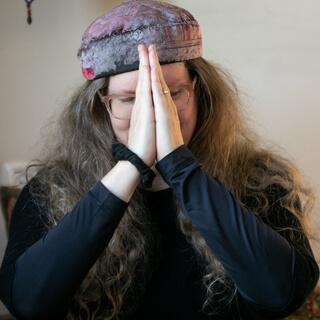
I am Rabbi Chassi Oriel Steinbauer,
The founder and director of the Institute for Holiness,
Kehillat Musar Mindfulness.
You are joining us on Sunday,
June 18,
2023,
Which in the Hebrew Jewish calendar is the 29th of the month of Sivan.
As we enter this evening,
Once you see sundown,
Will be Rosh Chodesh Tamuz,
The new month of Tamuz,
A very important day on the Jewish calendar as we celebrate the new moon and move into the new month.
So welcome.
Welcome.
As we always do we cover the Torah portion from yesterday on the Israeli calendar which is different than the diaspora outside of Israel right now.
So of course,
Last yesterday in Jewish communities in Israel on the 28th of Sivan in the Hebrew year 5783,
We entered the parasha of Korach,
Named after a man named Korach,
Who throughout rabbinic history is very controversial,
Seen as a rebel.
So we will be able to delve into that and jump in.
Before we do,
We always share our Kavanot,
Our intention for today's session.
So I'm going to go ahead and share screen for those of you who have vision and are watching by video.
Otherwise,
You can hear me read it on audio or podcasts or if you don't have vision.
So,
What we have here.
We bring this time together during this practice of awakening,
Really bringing the lenses of Musa in the Jewish tradition and mindfulness of the Dharma and Theravada Buddhism and what's often known as insight Buddhism or the pasana.
And we want wisdom of both these ancient traditions to learn more from our ancestors and from God what we can get out of the weekly Torah portion of the Hebrew Bible.
So this is an act of radical self care,
Because we're doing this and taking refuge in community and doing it in a way that strengthens us and supports us.
Instead of studying alone or only relying on the classic rabbinic commentators that we might rub up against or they might not completely see and understand,
Especially from our modern Western perspectives.
So this is a radical self care,
We say this is something I'm doing to strengthen my own soul,
In order to be a benefit to others in the future.
If we can't practice proper self care,
We're not going to be able to care for others.
But we're also doing this as an act to care for others,
Right?
We're doing this on behalf of others.
One,
To strengthen our connection to this Torah,
Dharma,
Teachings and traditions and communities,
Taking refuge in the Vat and Sangha,
Being here together,
Building this shared practice and tradition and vocabulary,
So that we can really support one another.
So we say this is something I'm doing to strengthen my relationship to others,
So I can be a better conduit of God's good to others when they need me.
Think about that.
A conduit of God's good to others when they need us.
And we finally see this as an act of strengthening our relationship with the divine,
What I might call Hashem,
Another name of God in the Jewish tradition.
So this is something I'm doing to strengthen my relationship with the Creator,
So that I can be a better conduit of God's good to others when they need me.
So we hold all three of these Kavanot,
These intentions,
We bring them to attention,
So that we may merit fulfilling this and supporting and learning together.
Okay,
So on behalf of all beings,
May it be so.
So let's jump in.
Oh,
A little bit of allergies,
Excuse me.
So let's give a summary as we always do this Torah portion,
And then we'll focus on what we need to.
I'm going to give,
I don't want to call it a disclaimer.
I always say it's a disclaimer but I'm just going to say this right out.
I think this is one of the most difficult,
Challenging,
Unpleasant Torah portions for me.
It started last week with Shalach Lacha.
I'm very triggered,
Right?
There's a lot of reactivity around the punishment for the spies and them not having faith in and trusting God.
And in this Torah portion,
The reactivity of God,
Of Moshe,
Of Aharon,
Of our tradition over these 2000 plus years of rabbinic exegesis,
Rabbinic commentary,
Is full of reactivity towards Korach,
Towards the Tanvay Aviram,
Towards the 250 of the community that join Korach.
So,
I have to practice self compassion and learning this and I hope to model and extend that for you.
So I just want to honor that if you also were triggered or had reactivity around this Torah portion that I'm here with you,
And that we can learn and get through this together.
So,
What is it?
Korach is a man,
It's not just any man,
He's actually the first cousin of Moshe Rabbeinu,
Our teacher and leader Moshe.
He is a Levite,
A Levi,
And he leads a rebellion.
I mean,
They call it a rebellion.
I don't see it as a rebellion,
We'll get to that.
He's known by most rabbinic commentary that he leads a rebellion against Moshe and Aharon.
He's joined by Tatan and Aviram and 250 others.
Okay,
So a total of 252 other people,
Men,
Leaders of the community.
Moshe sets up a test,
Aharon and the 250 others will bring a Kotorit,
This kind of incense offering that's done in a Maktot,
Which is a fire pan,
Actually fire pans,
It's plural.
And everyone,
This is all done publicly,
Right,
In order so that we will see.
We know so much about the experience in the wilderness and then coming out of the institution of slavery out of Egypt,
So much is about seeing,
Being a witness to,
And that seeing has to translate into knowing,
And that knowing has to translate into fear of God,
Of ethical and moral behavior.
And so,
Everyone will see which Kotorit God chooses.
Okay,
This is what's set up by Moshe.
So what happens in the Parsha as it goes on?
The earth opens up and swallows Korach and those who supported him,
Who stuck with him.
And then a fire comes after that and consumes the 250 people holding the Maktot,
The fire pans.
This should remind you a little bit of Aharon's two sons,
Who are also consumed by bringing strange fire in their own fire pan,
Some time ago.
Okay,
So the Maktot,
The fire pans from the Kotorites are actually then hammered into a cover for the Mizbeach,
For the altar,
As a reminder of this event.
So it's like,
It's almost operating as an ot,
As a sign to remind you not to do that which is a sword,
Right,
To not maybe go after one's eyes.
We had the commandment of the sitzit,
The wear the religious fringes on one's garment in order to remind us of the mitzvot,
And I actually posited it's actually to remind us to pause and to be mindful.
So now we have this altar to also remind us.
So we have to think about that.
We have to think in our own Musa mindfulness daily practice.
Do we have something,
Perhaps something that we came from our shadow self that we had to struggle with that we didn't agree with that we felt was not in alignment with our values and we had done in the past where we had sinned,
Where we had been off the mark.
Do we take and have something from that in our lives,
Either as ritual items as religious item as something that's visual before us to help us remember to not have down that path.
Maybe we don't,
And it might be a useful practice to consider having and doing.
And so,
A,
The Benin Israel continue to complain right after this event.
And God then sends a third thing so first the earth swallows,
Then there's a fire now there's a plague and our own the high priest stands in front of the people who had not yet been killed died to protect them and he uses the same couture to stop the play his own fire pan.
Moshe then collects a staff from each shivit from each tribe,
Including from our own for shivit levy,
And the next morning our own staff miraculously blossoms with almonds for all to see again very visual.
And so this is pretty much one full of visual imagery I mean could you imagine the earth opening up and you witnessing that.
Could you imagine the fire consuming people,
Could you imagine the plague,
Moving through taking people's lives and now we have this amazing staff producing almonds.
Lots of visual imagery lots of the things that are meant to be associated with certain behavior or lack of things that are to remind us okay we also have the knees back the altar that's now going to be from this hammered down of the fire pans.
So finally,
In conclusion,
It's clear that God chooses the Kohanim,
The priests,
And the Levites.
And the Parsha describes some of the gifts and privileges that they receive in exchange for the work that they do in the Mishkan.
Now don't be fooled,
They do a lot of really laborious work.
So that's what is ending here.
Okay,
Now,
What's going on here.
So the theme of this entire Parsha,
With your following along we're in the book of numbers,
Which is known as Vemibar,
And we're in the Parsha Korach in chapters 16 to 18.
So if you haven't studied them yet,
Say you're in the diaspora and you're just starting to,
Maybe in Shabbat afternoon you started learning for the next week's Parsha,
Which for you will be Korach,
This can be part of your learning and practice.
So,
The theme of this entire Parsha is really what is seen as kind of like an encroachment on the tabernacle,
That's one view of it.
And Korach is really seen as vying for power,
With Aharon for the priesthood,
That's the first issue.
This leads to a rebellion as is seen by the chieftains.
Now,
Who are the chieftains,
Right?
Let's think back to this.
First we have the chieftains that Moshe selected based on,
Remember the tens,
The hundreds,
The thousands,
The 10,
000s that his very wise father-in-law suggested that he do.
Okay,
So he chose wise God-fearing men.
Okay,
Those are the first.
Then you have,
Coming in Bami Bar at the beginning when they take a census,
You have a whole new list.
You have a whole new list of leaders of each Shabbat,
Of each tribe that are listed there.
And Shalach L'chah,
Who is chosen as the leaders who will do the campaign in the future land of Israel,
Right,
Where the Canaanites live.
There are other chieftains and leaders that are listed there.
We're witnessing either different layers of leadership and they all exist at once,
Or we're seeing a revolving,
Changing leadership over time.
Maybe some have passed away.
And so now what happens here is that you suddenly have this whole new set,
Or what seems as new,
250 tribal chieftains who also kind of lead this,
What is seen as a rebellion with Korah.
They are basically incinerated by the divine fire,
As I told you,
During their incense offering.
And Dathan and Aviram also have their own uprising against Moshe that gets woven into this narrative.
And when the people complain,
So then the people complained about the death of these chieftains,
Which of course you would.
Like,
First you had the death of the chieftains after Shalach L'chah.
There's been many deaths of chieftains and leaders throughout this journey in the wilderness.
They complain,
And then they are afflicted with a deadly plague.
And then Moshe keeps coming up with test after test to try to put a pause on this and to contain it and to do a lot of visual evidence,
A lot of visual testimony that they are in the right,
That God has chosen them for this leadership to do this.
And so at this point the people panic.
Now when did the people panic last?
Last time.
The people panic last week in Shalach L'chah when they are told,
Neged k'neged,
Right,
As a punishment for the spies 40 days in the land of Israel,
That the people,
For not having faith,
The spies not having faith,
That they are going to get 40 years in the desert,
Almost like a prison sentence,
And they will die.
They will die in the desert.
They're not going to enter the land,
Ages 20 and up.
And so you had like a group of people who panicked.
I mean,
Lots of people panicked and they cried and they mourned,
But there was a particular group that panicked and said,
We have sinned,
We were wrong,
And we're ready to go up and take the land.
They're not forgiven,
They're not supported,
They run up to go fight to enter the land.
Moshe says,
Don't do it.
God's not with you,
The tabernacle's not with you,
Don't go up.
And they go.
And they end up being murdered by the Canaanites who come down to do so.
And so,
In the same now in the next week's Parsha,
Which is now,
The people panic.
So having witnessed the massacre of their leaders,
Essentially,
At the tabernacle and the massacre of the fellow Israelites in the plague,
There is now chaos.
There's fear that they too,
If they enter the tabernacle,
That they'll be guilty of encroachment.
There's something now that is untouchable.
And even with divine assurance,
Right,
That as long as the priests and the Levites do their job to guard it,
Assume a responsibility for encroachment,
That the Israelites can worship at the tabernacle without fear.
That doesn't help.
And so,
This is a line that's been crossed.
Maybe one that God is not either aware of or doesn't want to accept.
And the same thing with Moshe,
And maybe even with the people.
So,
Basically,
This has reached a real demoralized state and report and situation in the wilderness.
It's painful to read,
It's painful to witness on behalf of our ancestors,
That the people,
As I said,
Were demoralized from the scouts coming back with the report that they had,
And that they were condemned to die in the wilderness by God.
And so,
You know,
The people's,
The Persian name and the commentators kind read,
Even modern commentary,
Will say,
Oh,
The people were really demoralized and therefore they were like psychologically receptive to demagogic appeals,
Like to leaders like Korah,
Who were going to attempt to overthrow leadership and return to Egypt.
You know,
We really have what is seen in the traditions as four separate rebellions,
And I'm going to kind of go through these with you.
And this is where I'm going to pause and kind of end the summary of what you find in this Torah portion.
But that's to say with a grain of salt that there is so much reactivity on all sides,
That they cannot even meet eye to eye.
They can't even get out of the narrative and storytelling to realize what they're doing and what their behavior is in order to meet the moment,
In order to be in the present moment.
So,
I want to first start in honor and say,
Which I have yet to find a commentator,
If you find one,
Please,
Please do send us your comments and questions in the chat box or also on our YouTube channel.
Please subscribe and you can write comments there too or email us later,
But I have yet to find a commentary,
One that's full of compassion for Korah and the 252 men,
And also the people.
But I feel like you can't read what is happening in Korah without knowing what came in Shalach L'cha right before.
If you had been condemned to die in the wilderness and that you were not going to enter the land has been promised to you as a descendant of Avraham Yitzhak Yaakov,
That you've carried this ancestral knowledge and tradition for 450 years in the institution of slavery in Egypt,
And you are coming out believing in this God and following,
And you are told you will not enter,
You're going to die in the wilderness,
You can bet there's going to be unbelievable reactivity,
Even for master practitioners of Musar Mindfulness,
It would have been a moment,
If not many days of mourning,
Of loss,
Of what is next.
Can I pull myself out of this mourning to be present for my children and family that's under age 20,
Who actually get to enter the land?
Will I be able to raise them before I die,
So that knowing that they get to enter to celebrate them and their life?
Can I not see this as a complete death sentence?
That takes a lot.
So this is where our ancestors are coming from so much so that they're ready,
They want to assign a new leader,
They want to return to Egypt,
They want to return to what they know.
Right.
They also want to return to human leadership that didn't necessarily murder all of them,
Even though they attempted genocide and murder of the baby boys.
There's so much violence and murder that happens in the wilderness because they don't follow,
Or they do the wrong thing or they complain,
That you can imagine the demoralization of the people.
And that they come into this situation,
Right,
In the first rebellion as it's called,
Really,
Are the Levites,
The very siblings and cousins and families of Aharon,
Korach being the first cousin of Moshe.
It is usually power against power,
Right,
Leadership against leadership.
Think about the Levites who were the ones during the Golden Calf who sided with God,
Sided with Moshe,
And then were assigned to murder and kill 3000 of their own brethren who had committed,
Who had basically,
They partook in the building and celebration of the Golden Calf,
Which is really about finding a new leader because they feared Moshe was not coming back.
I'm not even sure it had to do with worshipping another god.
It had about,
It was about getting a leader,
Right,
To lead them.
So,
That's the first rebellion,
Right,
Is Korach coming against Aharon,
Which is really a way of saying we've decided we want new leadership and not because we want new leadership to enter the land because that's done.
I think they've accepted that because we want to return to Egypt,
Right?
There's this beautiful thing hanging.
The second event of Datan and Aviram against Moshe,
They very specifically say,
You have to look at the language and be very clear about this.
They say,
We will not go up.
We will not come to you.
But the very language is we will not go up.
So,
He says,
Come and speak to me,
Have a conversation.
He says,
We will not go up.
They say it twice.
It's there in the text.
Now,
If you think back to Shalach L'cha,
The people who kind of freaked out in reactivity that they were destined to die in the wilderness and said,
No,
We sinned,
We made a mistake.
We will go up now.
We'll go up now and we'll fight and we'll take the land.
We believe we will go up.
What is Datan and Aviram saying?
We won't go up.
It's almost as if they're not even saying to Moshe,
We're not coming to speak to you.
We're not going up.
We're not going to enter that land with you and take that land.
That land is no longer ours.
God destined us to die in this wilderness.
We're not going to go up.
We're going to go back.
We're going to return.
Hey,
You have to watch that language.
Very,
Very powerful.
Moshe doesn't pick it up.
Moshe kind of makes it about himself.
It's very angry.
A lot of reactivity,
No anger management.
Okay.
Then the tribal chieftains who are supporting Korach,
They're their own leadership.
It's known in the tradition.
The tradition always has to find a reason for their behavior,
Their arrogance as they see it,
That they stood up and spoke up against God and Moshe and Aharon.
They always have to tie it to something else in the tradition that they see some other Shevet tribe had done wrong or one of the other ancestors.
Of course,
They say these tribal chieftains come from the tribe of Wuven.
To remind you way,
Way back in Be'er Sheet and Shemot,
Wuven is the eldest son,
The firstborn to Leah and Yaakov.
He was supposed to receive all the blessings and the firstborn privilege.
Unfortunately,
In his own act of reactivity and rebellion,
He sleeps with his mother,
One of his father's wives.
He loses that privilege.
His father removes it from him.
You get Yehuda and Yosef who are going to take over as that firstborn privilege and power.
These chieftains,
The tradition says that they are acting up against Aharon because they want some of that leadership back that Wuven was supposed to get.
I don't buy that one instance because they would have demanded it early on just coming out of the institution of slavery.
They would have demanded this much earlier.
Instead,
What they're saying is we've watched chieftain after chieftain be murdered or killed,
Be taken because they questioned,
Because they feared,
They wouldn't be listened to,
They want a new leadership,
They want a return,
And that's not acceptable.
It makes you question why couldn't they just be allowed to assign a new leader and return?
There are over 2.
2 million people in the wilderness with our ancestors,
With Bnei Israel,
The Jews.
They wouldn't have lost all those people.
Why?
Why did they have to be murdered and taken and destined to die?
Why couldn't they just return?
What would have happened?
You could probably say,
Oh,
It would have been horrible.
They would have returned to the institution of slavery and God wouldn't be seen as God.
We can all have this.
But what I want to realize is that when God in the Torah makes a decision to either take life or condense someone to a certain prison sentence with death,
With an essential execution at the end,
You have this aversion on that.
You have this aversion on behalf of our ancestors and the commentators to have to justify it.
Because you have to,
In our tradition,
Side with God.
You have to validate that.
You have to understand and accept what's been handed down.
And so they come up with specific reasons.
Oh,
This one was the cousin of Moshe and wanted the power of Aharon.
This one was a Reuven and wanted the birthright.
And so we can remember that.
We can see it.
We can accept it.
We can even investigate the felt sense of it.
We can practice around it.
And we can also notice that actually the people were just given a very difficult sentence of essentially passing in the desert over 40 years in the wilderness.
And that is probably enough for their behavior.
I believe so.
That's what I'm positing here with you today.
At the end,
What happens is the whole community again,
The whole community is against Moshe and Aharon.
Totally fearful,
Totally out of reactivity.
You know,
They say that the Levite Korach was the one who either instigated or is associated with all four of these rebellious groups.
The punishment is swift and dreadful,
As I told you,
Swallowed by earth,
Encroaching the chieftains with divine fire.
You know,
The community,
Some of it is saved from destruction from Moshe and Aharon,
Particularly Aharon running with his fire pan.
It's really interesting because we think back,
I mean,
In some ways I think this might be a tikkun for a repair for Aharon because if you think back to the Golden Calf,
When he didn't intervene,
He didn't stop.
He participated in building it.
And then when the people were,
Essentially Moshe commands and tells the Levites to kill the 3000 who are involved in the Golden Calf,
You don't find Aharon with a fire pan or anything intervening and saying,
Allow the people to do teshuva,
Let's stop this murder.
So now you have him finally,
Even in his silence as he usually is,
He acts and his actions speak more than his words.
He goes and intervenes with his fire pan to stop the plague of God,
Risking his own life.
It's very powerful.
It's very powerful that he,
The father of two sons who were taken by God from fire,
From strange fire in the fire pan,
Is the one going out with his fire pan and almost saying to God,
Die,
It's enough.
Painful.
Painful.
Okay.
So,
I just want to close with one thing,
Which is for the people who support Korach and the Tananaviram today,
When they do,
When they do support him as a,
For their own reasons,
Maybe.
They say that they like that he came and said Korach,
You know,
We're all holy,
Everyone's holy.
This is a very popular idea and term today that,
Kiddushim tiyu,
You shall be holy,
That all of us are holy,
That there shouldn't be this kind of hierarchy of the,
Of the high priest and the priesthood and the Levites and Moshe,
That it,
We're all holy,
We're all here.
And what I really love is,
Again,
One of my favorite teachers,
As you know,
Nachama Leibovitz,
In her commentary on Bami Bar,
On this Torah portion,
She says that when God says kiddushim tiyu,
You shall be holy,
She says that you should be holy,
Show yourselves holy by your deeds.
Right?
That you are holy unto the Lord,
And that the Lord has chosen you to be a special people,
Right?
In the sense that you should be doing this honor of deeds of holiness,
Right?
That these are not titles of distinction,
Conferring privileges upon us,
Or even on Korach or on Moshe or anyone.
Instead,
They,
This is really like a charge for a spiritual mission to perfect ourselves to be on this path towards holiness,
Carrying the divine commandments,
Right?
Instead of the way Korach and others worded that the whole congregation is holy,
Every one of them,
Not realizing that there is such a charge behind it,
Right?
That it's not a clamoring for rights.
It's a charge that we are to live up to.
You shall be holy,
Kiddushim tiyu.
And so with that I want us to move into our mindfulness meditation practice.
I want you to assume one of the four postures,
Or any posture that is dignified,
Upright,
Honoring you.
One in which you really feel the sense that you are created in the image and likeness of the divine,
The gift that we have even been given that knowledge.
Internalizing so if you're like me you're sitting on the edge of the seats,
Be planted and held by Mother Earth.
Really feeling rooted.
Feeling the heaviness in your symptoms if you are seated.
Coming fully presence right here and right now with me.
Noticing whatever sounds emerge to just be part of the practice and the curriculum,
Whatever arises,
Knowing that we can be with it and be present.
Noticing the breath,
Bringing your kind loving attention to the inhalation and the exhalation whatever is present for you right here and right now.
Noticing if you're caught up in whatever came before this session or maybe what I shared during.
Maybe for you.
You're planning for the future,
Or caught up in certain sensations or emotions in the body.
Just being fully present even asking yourself,
Can I be with us,
Can I be here,
Inviting your loving attention to this present moment.
Simply begin again.
Ready your loving attention to whatever emotional states are arising in you right now.
Maybe did during the teaching and lesson.
Is there any grasping any wanting or clinging any wanting things to be different than what they are,
Or how they were for our ancestors in the Torah.
Is there any versions arising.
Any fear,
Anger,
Hate,
Any form of pushing away.
Any restlessness any jumpy energy or agitation.
Any sloth or torpor kind of sleepy sinking states of mind and body which is really a form of running away it's a form of aversion.
And finally,
Maybe one of the final last of the five classic challenges what we call hindrances.
Doubt the mind state that says it's no use Torah will never change God will never change this will never work this practice,
I can't maybe there's an easier way.
So right here and right now,
Seeing what is present for you.
These are all universal body,
Mind,
Energies,
And experience by all of us all humans.
And when we're caught in them,
It's difficult to see with wisdom and clarity.
And we recognize that in themselves they are not a problem it's similar to when we have a me dad like an ava humility.
That's not balanced.
That's not an ava by itself or humility or even the unbalance is not the problem.
The energies and the unbalanced me though it only become hindrances.
Because our conditioned habit.
To identify it with it or to ignore it or resist it and judge or to try to control these states.
And yet,
When we can meet them with mindfulness,
With care,
Self compassion.
These same energies become an immediate gateway to increased awareness and spiritual awakening.
And in your breathing practice now.
If you encounter one of these challenging energies.
It may be useful to name it silently to yourself,
For example,
Grasping,
Grasping,
Or fear,
Fear.
And in a strong state,
Rather than pulling away.
Allow your intention.
Be to bring your full attention to what is arising.
What is happening as sensations in the body.
Neither getting lost in the experience or pushing it away.
The four elements of the acronym rain of our recognize a accept or allow.
I as investigates and as non identification and nurturing.
Let's investigate what is arising and meet the experience with an intimate compassionate attention.
And in about a minute 30 seconds whatever state you're experiencing will pass.
Everything is impermanent,
Everything that arises has a certain shelf life,
And will pass.
And the investigates return to the primary anchor of your meditation or rest in the natural presence.
Sometimes the energy is too strong.
And it's not wise or compassionate to try to stay in the present moment with it.
It's not true if you've been traumatized and are experiencing deep fear or anger.
If it feels like too much.
Shift the attention to something that brings a sense of balance,
Safety and love.
You might open your eyes.
Remind yourself where you are.
Listen to sounds.
What works again through your body.
You might bring to mind someone who loves and understands you.
And since their care surrounding you.
You might reflect on our beloved ancestors.
Our beloved God Hashem Hashem carries us for some of you it may be the Buddha,
Or the bodhisattva of compassion can be a grandmother,
Be your favorite tree.
You might offer phrases of loving kindness to practice with this vulnerability.
Meditate on any expression of loving presence that helps you feel less separate,
Less afraid.
We will sit in silence for one minute before I read the bell.
Our hands are closed.
Gently and slowly open them to meet us back in this sacred zoom space or live streaming on our YouTube channel,
Or if you're meeting us live on any of the social media,
Facebook or LinkedIn or Twitter.
Thank you for your practice today.
Thank you to all of you for committing to this path.
We're delighted to receive your inquiry and joining the community and subscribing to our newsletter,
So that we can be all in this journey together to be impressed practice groups together.
So,
I invite you to reach out to fill out an interest form.
Thank you.
I look forward to seeing you,
God willing,
Next Sunday.
Wishing you all health and well being.