Welcome.
We will begin in one minute.
Please make yourself settled.
We're just arriving right now.
Please allow yourself to settle,
Come into the space,
Leave behind whatever came before.
We welcome you.
Welcome.
We will begin shortly.
Delighted to have you.
Wonderful.
Shalom.
Welcome.
Allow yourself to arrive and settle.
Delighted to have you here on Zoom or live stream on Facebook and YouTube.
Where else?
All the locations.
Can't keep track of social media anymore.
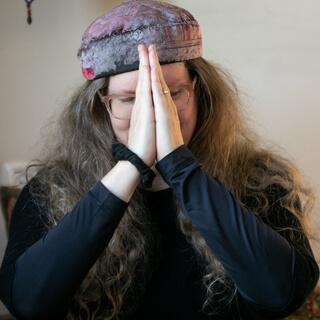
I'm Rabbi Chas Yuriel Steinbauer,
The founding director of the Institute for Holiness,
Kehilat Musar.
We're delighted to have you.
We are in our 40 days Elul practice,
Musar mindfulness.
So for those of you just joining us,
Elul is the Hebrew Jewish month that is before the new year of Rosh Hashanah and the Jewish calendar.
And it is our practice to begin on the new moon of Elul,
A 40-day practice leading to the Day of Atonement,
To Yom Kippur,
To kind of really begin that introspection,
That self-examination,
To really look back on our year to see where we need to forgive and ask for forgiveness,
To do what's called teshuvah,
A repentance,
A returning to the source,
So that we know that we are pure and good inside.
We're returning home to ourselves,
A sense of belonging.
And so we are in this process now.
I can't believe it.
We are on day 22.
Where does the time go?
And we are in the fourth week where we are really now starting to love the difficult relationships that we have,
The ones,
And in particular one this week.
But for some of us,
It can be much more than just one.
It's that person that although we are definitely in relationship with,
There's tension,
There's unpleasantness.
We might've caused them suffering this past year.
They might've caused us suffering.
It's where we have our work.
We've been,
You know,
Up until now,
We've been working on self-forgiveness,
Which is a very important part of our life.
We've been working on self-forgiveness,
Which is very important that self honor,
And also looking at an easy relationship,
Someone that is just works easy with us and that we can forgive easily and,
You know,
Just let go of things.
And then,
You know,
Of course the acquaintance,
The neutral person.
And so now we're here and we started,
We started yesterday together.
And so I want you to recall that person for you.
You can narrow it down to one,
But you can,
Of course,
This whole week in your practice,
Bring up any,
And you can journal this also.
And it's important to just begin to really use all the toolbox of Musa practice in Judaism,
Which is really looking at key meadot soul traits of honoring someone,
Seeing them created in the image of God.
And then we're also going to look at compassion or rachmin,
Because when we can't pull up that honor,
When we can't actually see them as created in the image of God,
We have to turn to compassion and mercy,
How we would want to be treated ourselves.
Because as much as we think it's always the other that is causing unpleasantness or suffering,
I'm sure in our own lives,
We have been that person for someone else.
And so someone else out there is doing that work of forgiving us.
And so letting go,
This is all part of the process.
So we will look at some texts on honor today.
So before we jump into the practice,
We always begin with our kavanah,
Our intention for today,
Which I will share briefly.
Okay.
You should see in front of you kind of a purplish document.
Thumbs up.
Thank you.
Okay.
So we have here before doing acts of caring for the self,
We say now before I even read this as a reminder that this act that we are doing,
This half hour of dedicating our practice is self-care for the benefit of the other so that we can be acting out with our values and being how we want to be in the world.
And so it's very important this practice,
It's for the good of everyone that we engage in our practice.
So here we say it together.
This is something I am doing to strengthen my own soul in order to be of benefit to others in the future.
And with that,
I will move to the text I want to share with you today to kind of frame where we're going to be.
Now,
As I said,
Sometimes this person that we're calling to mind where we're having a hard time forgiving or letting go,
Sometimes we just can't even pull on or up.
We can't let it see them.
We can't see them in their totality.
We can't remember their good deeds.
We can't remember where the kindness is there.
So you see before you a document called compassion.
Can you give me a thumbs up if you see it?
Okay.
Forgive me about the highlighting.
It's a little crazy.
It's an old text.
This comes from one of my teachers,
Dr.
Alan Marenus,
Who is the founder of the Mussor Institute in his book,
Every Day Holy Day.
And he talks about compassion,
Which is rachmin,
Okay,
Coming from a reccem,
The womb that we are to really see ourselves as united with this person,
Which is really hard to do when someone's very difficult in our lives.
Okay.
Compassion is a reaching out to give to the other based on the divine essence and you recognizing the divine soul and the other.
Now we just said that's part of honor and that might be really hard to do.
So whether that person has earned your care or is even worthy of it,
It is not relevant to acts of compassion and Jewish moose.
Our practice that's really important to keep in mind because we're not we're not looking for feelings of compassion.
That's part of it,
But this is really about acts and deeds.
So we are really as a practice,
Which is challenging to us to really pull from the well of that,
Of that shefa,
That abundance given to us by God,
We are really to have this compassion,
Even when this person's not worthy of it.
Okay.
And remember that there are times where people have been compassionate with us when we weren't worthy of it.
We always have to do this practice and remember.
So an open heart peers beyond superficial realities to perceive that the very essence of the never person,
That deep dimension of the other to which the heart responds compassionately is the soul and the Shama,
Which is made in the image and likeness of God.
Now I love this statement below it by Rob Solonter.
He is basically considered am the founding father of the modern moose,
Our movement based in Lithuania.
And he is dates are 1810 to 1883.
And he says,
Compassion is the foundation of belief for a person who isn't compassionate.
Even the belief in God is a kind of adultery.
Okay.
That's a really strong statement.
It's basically saying if you're not acting out with compassion,
Then your relationship and belief in a God is really off the there.
It's not,
You're not being and behaving in the world the way we are supposed to be.
So let's hold that in mind.
If we have any.
Stockness any difficulty of really letting go of that burden and forgiving.
And that's where our practice is today.
And that's what we're going to hold together in this sacred space together.
We're stronger in our practice.
We're going to rely on one another.
So come to your comfortable upright position.
Alert,
But not stiff.
Dignified,
Created in the image of God.
Do you need to stand please do so or lying down with your eyes open.
When you feel ready,
Shut your eyes.
If you don't feel safe right now,
Just lower your gaze.
Allow yourself to arrive to stillness by allowing your breath to be your anchor right now.
Three long,
Deep breaths.
Today we engage in an honor compassion practice.
For those of you new to sitting meditation,
You'll just follow my words.
And if your thoughts carry you away,
Which they will,
That is the practice,
You'll bring them back yourself to the present moment to your breath as your anchor.
Maybe it's sensations in the body that are also driving you away.
Maybe you're sore or uncomfortable.
Sometimes it can even be emotions like I'm feeling bored,
Whatever it might be.
Just noted and come back to the present moment.
Come back to your breath.
This compassion practice really is building our emotional resilience.
And it is health related just as much.
It is all tied into the care that you can then extend to others.
And building this muscle over time with this practice is so important because eventually we stop reacting so quickly,
So strongly.
There's eventually a space between the match and the fuse.
We can then choose to respond and how to.
And when we think of this person right now,
When we bring up that difficult relationship,
The one that has caused us some suffering in the past year,
We really want to use that muscle,
That balance meter of compassion,
Really practicing and being mindful of it.
This practice is used with phrases that I will eventually share with you that you will repeat,
Wishing kindness,
Honor and compassion,
And even goodwill to this person.
It is our practice now to recall what is good about this person.
There is something.
They too are created in the image of God.
Recall anything.
Maybe it's their smile,
Their sense of humor.
Maybe that they're trying.
Whatever you recall,
Open to any kindness that is opening your heart.
Whatever feelings arise,
We recognize and we allow.
We notice any tension that may be arising both in body and mind.
With every breath,
We send a calm,
Relaxing ease.
We can even invite a smile.
A sense of humor is very key to this ongoing daily practice.
It adds an element of humility,
Of anava,
That we can understand that they are human and we too,
And we both have our moments.
Sending a message of ease and safety into the body.
It is key both in the dharma and the Buddhist practice and even Jewish Musa practice that one must have a sense of calm,
Awareness before they can even come to mindfulness.
That's why this practice daily is so important because you are calming your whole nervous system.
Allowing there to be space between the stimuli and your response.
Like with both practices,
We are growing in wisdom,
Kindness,
Acceptance.
From time to time,
You will hear me go silent for anywhere up to 45 seconds.
Allow yourself to use your breath as your anchor.
Recall now with this person that we have a difficult relationship.
One unpleasant interaction.
One thing that you're still holding on to in your heart.
Know that you can meet this.
You have the heart space to do this practice.
We set our intention to honor and hold any difficult feelings or sensations in the body with care,
Compassion,
And understanding.
You are not alone.
So many of us pray for you.
You are not alone.
You are not alone.
So many of us right now are sitting and doing this practice.
We share this human experience.
And now you will repeat these phrases to yourself.
Recalling this difficult moment,
This moment of unpleasantness,
Of suffering.
May I be safe.
May I let go of the stress of my own suffering.
May I be safe.
May I let go of the suffering.
May I be kind to myself.
May I forgive.
You might breathe in an intention right now,
A wish for yourself,
That over this week of practice,
You will feel your heart soften.
You will feel this burden ease.
Vividly recall this person in your heart and in your mind,
Open to whatever bodily sensations arise.
Again,
Meeting whatever you experience with kindness,
Acceptance,
And compassion.
And as they stand before you,
You repeat these phrases.
May you be safe.
May you let go of this burden.
May you be kind to yourself.
May you know that I am ready for you to ask for forgiveness.
Forgive me.
If this practice evokes strong feelings or emotions,
You can come always to the awareness of your breath and return to your phrases only when you are ready.
Remember that this person needs you to care for yourself,
To take responsibility for your feelings,
Your reaction,
Or they can't meet you halfway.
We will take this next five minutes to sit in silence together.
You may repeat your phrases or use your breath as your anchor.
I will ring the bells when we are to join together again.
Allow yourself to feel and take in any compassion that you have towards this other person.
How you can see them perhaps more in their full humanity created in the image of God.
Do not beat yourself up if you do not have any feelings or if you have negative feelings towards them right now.
This just simply means you are not ready in this moment.
Like all things,
It will change.
Be sure to honor yourself and your practice.
We are never forcing,
Particularly with the difficult relationships,
The ones where there is more tension,
More unpleasantness,
More of a challenge.
Appreciate your efforts and your intention that you brought today,
Cultivating this kindness,
This compassion,
This ability,
This Africa- this kindness,
This compassion.
Over time,
This will open your heart more and will change this relationship one day at a time.
This is the work of the Elul 40 days practice that we have engaged in together and will continue.
When you are ready,
You can gently open your eyes and meet us back in this amazing zoom online live stream world.
Thank you.
Honor yourself on your practice on our God.
Taking refuge in this community,
And the Muhsarn Torah,
The Dharma.
Being together is very important.
We have our practice of our prayer that we say each evening.
So important during the month of Elul.
It's important every evening,
But particularly during this time to help us move towards forgiveness.
We see before you the Shamal,
Before sleep at night.
Thank you.
And we say together,
I hereby forgive anyone,
In particular,
This person that we're thinking of,
Who is anger me,
Provoked me,
Or sinned against me,
Physically or financially,
Or by failing to give me due respect,
Or in any other matter relating to me,
Involuntarily or willingly,
Inadvertently or deliberately,
Whether in word or deed,
Let no one incur punishment because of me.
May I forgive them.
They forgive me if I need to ask for forgiveness this week,
For any suffering I caused the past year.
May we both learn to let go of any stuckness,
Anything that we are holding on.
That's really stopping both of us from allowing our full humanity and the shining of our souls to come through.
So important to be fully who we are.
So that's how we bring God's good to the world to others.
The difficult practice,
But worth it every minute.
So honored to have you all here.
Thank you so much.
And this Vata sham God willing,
We will be together again tomorrow at the same time.
130 Eastern Standard Time.
And I thank you again for being here.
Take care of yourself.