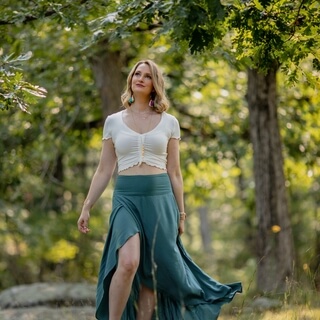
Hello.
Hello.
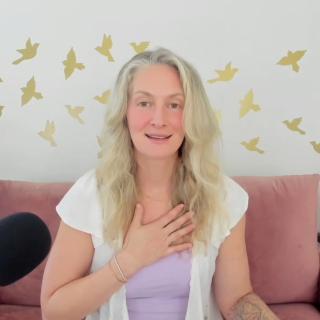
My name is Orit Krug.
I'm an award-winning board-certified dance therapist.
And for over 11 years,
I've worked with over 5,
000 clients,
Helping them release trauma from their bodies through dance and movement.
And more specifically,
In the last three and a half years,
My team and I have worked exclusively online with women all around the world,
Helping them access trauma from their bodies,
Releasing them through dance and movement so that they can have healthy,
Lasting,
Loving relationships with their partners and beyond.
And I'm super passionate about this area because it's my own personal transformation story.
If you've been here with me before,
You've heard a bit about that,
But I experienced my own trauma as well for many,
Many years.
And I did not know what healthy love looked like or felt like,
Or yeah,
That just,
All I knew was abuse and trauma and drama.
And that's what my nervous system was adapted for.
So by the time I met my now husband,
Who is this gentle,
Loving,
Kind,
Healthy person,
My nervous system was freaking out.
And even though he had done nothing to show me he would leave or cheat or do anything to hurt me,
I just,
All I could worry about,
Have anxiety about is him abandoning me and rejecting me because of my abandonment wounds in my body.
And it was so bad.
My anxiety and my fear was so bad to the point where I was very controlling and jealous and I pushed him away to the point where he broke up with me.
And that was a real,
Yeah,
That was a,
That was a very hard day,
But it did help me go and get more the right kind of support to heal my trauma.
Because even though I'd been in therapy for a while at that point I didn't need to talk more about my problems and what was going on and how my trauma contributed to it.
I needed to really heal it for my body so I can really change my patterns.
So I did a local dance therapy program six,
Seven years ago and finally healed my trauma and broke unhealthy patterns.
And now we've been married for four years together for eight and we have a 15 month old son.
So I know what it's like to feel like,
You know,
I'm damaged,
I'm broken.
I'm never going to change.
I'm just,
I'm going to be alone forever.
And I also know what it feels like to finally heal even through all the doubts,
All the self doubt and really have the love and the healthy love that I know I always literally dreamed of.
So yeah,
I see manually you're resonating with that story.
That's me,
Except I'm the one that broke up and now she's hurt and doesn't want me back.
Yeah.
You know,
I think I think if my husband back then didn't break up with me,
I would have probably would have found a way to break up with him.
And I hear that from a lot of the clients that we work with when we start working with them.
It's like they,
They they're tempted to break up the relationship just to relieve the anxiety that comes with it.
So whether you've been broken up with or you you're pushing away your partner,
Or they have now pushed you away because of you pushing them away.
All of that is a really strong sign of your abandonment wounds playing out in the relationship too.
So yeah,
I'd love to hear if anyone else resonates with my story,
Or maybe there's something else that brings you here today.
You know,
We're working on,
We're going to explore healing abandonment wounds in the body today.
So yeah,
What brings you here?
Is it something similar to what I shared?
Or do you have something else that's calling you here today?
You can share in the chat box.
And while you do,
I just want to bring your attention as well to my profile picture here on Insight Timer.
It's the picture of me in the circle.
I don't know if you see it the same way I do.
If you click on that picture,
There's a follow button and you can follow me if you already know that you want to want to and need to explore more of this right healthy patterns and relationships and how trauma is playing out.
I do lives every week twice a week around this topic.
What did I do yesterday?
Yesterday we did dealing with rejection in relationships and I have a whole meditation library around,
You know,
Relationship anxiety and anxious attachment and feeling safe to love after trauma.
So if you feel like you might not be able to stay or you might have to leave early but you want to stay in touch,
Click the button,
Click on my picture and follow me so we stay connected.
Similar with me,
Belinda,
Here you.
Hi,
Heather,
My mother left us when I was a tiny child and now I can't build healthy romantic relationships for some reason.
Yeah.
I mean,
It sounds like,
Right,
That trauma of abandonment from a very young age is still in your body.
It's still that fear is still very much there.
It doesn't matter how long ago your trauma happens.
And the reality is our trauma usually keeps repeating itself throughout our life until we heal it.
But it doesn't matter how long ago it happens.
If it's never been truly accessed and released from the body and the nervous system,
It will always be there.
Even if you get really good at,
You know,
Practicing gratitude or positive thoughts and you like push down the trauma event with positivity or whatever it is that you're coping tools,
It doesn't matter.
It's still there.
And those kinds of things like the mindset stuff and all of that,
It can help like a Band-Aid.
It can kind of get you through for awhile,
But,
Um,
Graham just said,
You're reading about the body keeps the score.
I don't know if you're up to this part,
But one of the things that vessel Vander Cook talks about in that book is that no matter how much you kind of tell your mind that you're fine and say,
Everything's good now,
Oh,
The trauma happened so long ago.
If you still have trauma in your body,
Your body and your nervous system will keep registering danger threats in your environment.
Even things that aren't really dangerous,
Right?
Like,
Oh,
My partner gave me a weird look.
Oh my God,
Like that's really dangerous.
Um,
That sets off alarms that they're going to leave,
Even though it meant nothing.
And that wasn't,
It wasn't even really a look there at all,
But your body keeps registering danger threats and that releases cortisol.
It weakens your immune system and it eventually makes people really sick.
Um,
You know,
My team and I have worked with a lot of people who have diagnoses that have no medical,
Like no real medical explanation,
MS and other autoimmune diseases,
Fibromyalgia.
And when they work with us,
Those symptoms are alleviated.
I'm not here making a claim and saying,
You know,
If you heal your trauma,
You'll heal your medical stuff.
But just saying there's a,
There's been a correlation,
At least with the work that we do with our clients,
Because it's all connected.
I truly,
Uh,
Truly believe that and there's good amount of research that's leaning that way as well.
Um,
My father was not emotionally available and I've been left alone.
Yeah.
So whether like you had a parent who physically left or you just had,
Um,
Not just,
Or you had a parent who was never really there emotionally,
Like that's all under the umbrella of abandonment.
Um,
How has wound healing and trauma healing different?
Um,
They're just like in terms of what I'm bringing you today,
Like I named this live healing abandonment wounds in the body.
Um,
It's just a different way of wording it.
That's a lot of stuff.
Like if you're,
If you do a lot of research,
If you do a lot of like social media scrolling and you follow a lot of different therapists and all that,
All of there's so many different terms and there's new age terms and there's like all the different kinds of attachment styles that you can look into.
If you get confused or overwhelmed with that,
Just like,
Just realize that when you cut underneath,
That's the right word.
But when you get to the base of all of that,
It's trauma,
It's just trauma fueling these patterns.
It's trauma fueling this anxious attachment pattern.
It's trauma that's making this wound or whatever word we want to put on it.
So it's all comes down to experiencing trauma.
Um,
I have a client who shared,
I had a client,
I have a client and a former client.
She's currently a client in the last thing love sisterhood,
She also did my bigger program,
Let love in.
Um,
So she had major anxiety,
Major relationship anxiety specifically.
And once she healed her trauma through,
Let love in her anxiety was gone and it is gone.
I mean,
We all have and need like some short term level of anxiety just as humans,
But that constant anxious feeling and dread is gone because she healed her trauma and the trauma underneath was fueling this anxiety.
So,
Um,
I'm a hundred percent a believer and,
Um,
Preacher that's mental health diagnoses and all the things like labeling attachment styles,
Including something as general as anxiety,
It comes down to healing your trauma.
We are never anxious for no reason.
We can have short term anxiety,
Alarming us that like something's off in our environment,
But if you have chronic or constant anxiety,
That's trauma.
I'm going to go back to the chat,
Um,
The chat here.
Um,
Your partner had a,
Her share of abandonment too.
So trying to heal yourself while trying to somehow make her trust me again.
Well,
I think those are synonymous.
I think as you heal and you,
Um,
Yeah,
As you heal,
You will be able to create that trust again,
Co-create that trust.
And Nancy,
My fiance still doesn't understand very well how the trauma be inflicted on me is still stuck in my body.
And I feel everything when I'm triggered.
Yeah.
Yeah.
Hello.
Don't worry.
We're chatting.
We're going to move soon.
Um,
My wife was court ordered to leave her home after being arrested twice for domestic violence.
I grew up with a violent father.
Oh,
Wow.
So what's,
Um,
Art.
Well,
What's the situation there.
Exactly.
Graham.
Is she,
Is she doing domestic violence or is she the perpetrator or vice versa?
It wasn't clear on that.
Uh,
Nancy today,
I was able to clearly see and reflect upon,
Uh,
All of my relationships have had several characteristics that my father had.
Yeah.
Then that I've been recreating some of my parents' dynamics between each other.
Yeah.
So that's,
That's like,
That's a clear example of how,
Wow,
We really do.
We really do,
Um,
Repeat our trauma patterns over and over again until we resolve it.
I,
Um,
Even though I'm with like a really wonderful husband,
A really wonderful person partner,
Um,
I still see some characteristics of,
Um,
My father too,
Like nothing,
Nothing at all,
Because my father is a narcissist and yeah,
All that stuff,
But there's still like some,
Some,
Some qualities that I think we can get attracted to,
Um,
Or in patterns where we,
Yeah,
We repeat that.
And so it's,
It does take healing your trauma to really stop that cycle.
Um,
And to know the difference,
Like I could see there's an edge in my partner,
Which I like,
Um,
But that edge isn't so far that he is anything near abusive or narcissist or anything like that.
All right.
I'm going to read a few more comments and then we'll,
We'll,
Um,
We'll move together and then we'll,
We'll talk a little bit more,
Uh,
Finally started having relationships after coming out here.
So life long longing and started dating anyone recently and being broken up with by the folks I felt so deeply for still can't figure out how I'm so full of love and can't put it anywhere.
Oh yeah.
I mean,
I think you,
I imagine you can,
You can bring that love into a healthy relationship,
But I wonder,
Yeah,
I wonder what your body will tell you today.
Cause that,
That like that statement alone,
I can't put it anywhere.
I'm very curious about that.
Bethany.
Um,
Yeah.
Manually resonate with that.
So much love to give and yet I keep,
Can't read today and yet I keep pushing people away.
Yeah.
Yeah.
I resonate too.
Um,
I did that all of the time,
All of the time before I healed my trauma too.
I mean,
There was a part of me that was like,
Didn't trust myself to be a good partner,
Healthy,
Good,
Healthy partner.
And then I think there was a part of me that was like,
But now I think I can be like really good to somebody.
That's hard when you know you have both of those qualities.
Graham.
She's the perpetrator.
Okay.
Thank you for clearing that up.
Oh,
I'm so sorry,
Graham.
That is so rough.
You're a numb understand,
Understandable.
Trying to get back in touch with my feelings.
Well,
I think,
Um,
Yeah,
We're gonna,
We're gonna connect to the body today,
Which is a really direct way of connecting to feelings,
But also just,
You know,
For you,
Graham,
For anyone else,
Take it slow.
Um,
And I say that because you're kind of,
You're in an active situation that is abusive.
And I,
Um,
I usually don't,
Um,
Usually don't gear my,
My content towards that,
But,
Um,
But I want to make sure that,
So I want to make sure that you'll feel safe today.
So just take it slow and I'll,
I'll help you.
I'll guide you to do that.
Um,
Elect I claim or push someone away if I really like them.
Yeah.
Cause what would happen if,
What would happen if,
Um,
You know,
There was true intimacy,
If there was a real close relationship,
Again,
That fear of abandonment comes right back.
It's too scary.
Even if your mind is like,
Oh,
It's fine.
It's fine.
Nervous systems like freaking out.
This is too scary.
The last time you got got close to someone,
You got really hurt.
Hey,
Pauline.
Good to see you.
Oh,
It's been a year now.
Hmm.
Yeah.
I'm glad you were safe.
It does sound like you're still very much grieving in beginning stages of grieving,
Which is understandable.
Um,
So yeah,
Let's see,
Let's start moving together.
Sending love,
Lots of love for Graham.
I see in the chat box.
Um,
Sherry hello 62.
And finally realized I need to address my childhood traumas,
Which have caused me many bad decisions.
Yeah.
One of the things I say is like,
When you make decisions that don't feel like you,
That feel like you've become another person,
That's how you know,
It's trauma.
Like we see,
We kind of see movies like that too.
Like we see some characters or,
Um,
Yeah,
Archetypes and movies where it's like they,
Something happens and they become this monster and then maybe they don't remember.
And that that's like a real trauma response where you overreact and you don't remember what you did,
Or you had a fight with your partner and you don't remember what happened or what you said.
Yeah.
39 realize the same thing.
Well,
I'm really happy that,
You know,
You are here.
I think,
You know,
Especially as we get older,
We can just be like,
This is the way I'm going to be,
And this is it.
So whatever this is,
There's so many people who are,
Who have that kind of attitude and you're here and you've realized,
And it doesn't feel like it's too late because it's not too late.
So I'm really happy that you're here and you're working on,
On your,
You know,
You're working on working on yourself summer 73 in here,
So much respect to you,
To all of you.
Um,
I was just talking with one of my best friends today.
Sorry.
I said,
I know we will move soon.
I'm talking to one of my best friends today who like,
She really wanted her mom to go and get help,
Go and get some therapy because of some really unhealthy patterns.
And,
You know,
She texts me,
She's like,
She's not going.
I thought she would.
And I so resonate with that.
Cause I wish my mom would go as well.
And you know,
For the last 10 years or so she's like,
You know,
I'm stuck in my way is like,
It's fine.
She,
She will not go.
So I always feel so like,
Just so grateful when I meet and connect with anyone at any age,
Who's ready to ready to change,
Ready to heal.
It's never too late.
That's right.
Oh,
So much love and support in the chat box.
And I love you all so sweet.
All right.
Um,
I'm loving this,
Loving your,
Loving your love.
Um,
We'll move a little bit and then we'll come back to talking a little bit more and um,
Yeah,
If you haven't moved with me before,
I will guide you safely through the whole thing.
So to start,
You can just choose a position that feels comfortable for you,
Whether you want to start sitting,
Lying down or standing up,
Any one of those is okay.
And the reason we,
We explore through movement is because,
Um,
Our minds are really good at filtering what we need to know,
What needs to be revealed and the insight and clarity.
People come to these lives and say,
They've learned more for me in 10 minutes than in 10 hours of therapy,
Because we could literally spend decades.
And I I've had clients who have spent over 30 decades in therapy,
Um,
Not getting anywhere or maybe getting a little bit somewhere,
But pretty much hitting a wall.
And,
Um,
Yeah,
We could talk forever about our issues and our feelings,
But if we don't actually connect with them through the body or move with them,
Nothing really changes because our bodies are the vehicle for which we behave and act,
Interact within ourselves and within our relationships.
So,
Um,
We're going to move so that you can get,
You know,
You can gain deeper clarity and understanding faster and more than talking about this could ever provide.
We're not healing trauma here.
This live is not designed to heal trauma.
Um,
It's just not possible in this kind of structure,
But you'll get a taste of what it's like to connect to your body and get more clarity on how you need to like what you need to do next to heal your abandonment wounds for hopefully for good.
So yes,
Get comfortable.
I'm getting my music now.
I have some water.
So yeah,
I'm going to guide you through first a simple movement warmup just to get connected to our bodies.
And then we'll go deeper into,
Sorry,
My desk was hard to push back.
We'll go deeper into a movement exploration around abandonment wounds and healing them.
So we're going to start now by taking three breaths together,
Breathing in and breathing out.
Again,
Breathing in and breathing out.
One more time,
Breathing in.
You can invite a stretch or some kind of movement here with this one.
And breathing out.
We're going to start with our heads simply connecting and move our way down to our feet.
So right now you can follow exactly what I'm doing or you can do what I'm doing a little bit smaller or slower or faster or bigger.
There's no right or wrong here.
We're really doing this just to connect,
Connect to your body,
Build some kind of foundation of connection here today so we can more deeply explore healing abandonment wounds in the body.
So you might just play,
You might just be curious.
How does my head want to move?
And let your body lead you,
Let your body lead you through this warmup.
And if you feel ready,
You can slowly transition to moving your shoulders.
Music is a bit irritating.
Okay,
Does anyone else feel that way?
I can lower it.
It's not my music so I'm not offended if you don't want it.
I also don't know how it sounds for you so let me know.
I can turn it off.
So you can move your shoulders one at a time.
You can move your shoulders both at the same time.
I'll put something else on actually.
Something a little bit slower.
A bit too much of a party vibe.
Gotcha.
Alright,
Moving your shoulders.
Hopefully this is better.
Always open to your feedback.
How do my shoulders want to move right now?
Awesome,
Thank you.
You can invite your arms to start moving here.
How do my arms want to move?
If you're feeling mellow,
You can move a little slower.
If you are feeling more like you want party vibe in your movement,
You might want to move faster.
So remember there's no right or wrong here.
And you can also start moving your waist.
How does my waist want to move right now?
How do I want to connect to my waist right now?
Answering that with your body,
Not your mind.
You might choose to move your waist in a circle.
You might choose to change directions.
You might move side to side.
Maybe doing a stretch you're familiar with.
And slowly moving down to your feet.
How do your legs want to move?
You can ask yourself,
How do my legs want to move right now?
You might feel the natural urge to do a stretch.
Or you might have a little more energy and feel that.
Step it out a little faster.
I think my legs want to move right now.
Remember the only thing you need to do here is connect to your body.
There's no other expectations.
No other requirements.
If you find yourself judging or shooing yourself,
Putting shooed on yourself.
Try to let those go.
Don't feel like moving much.
Just bringing comfort.
Yeah.
Really no requirement here for how much you need to move.
How much you should move.
Maybe you don't move at all.
Maybe you gain plenty from just listening and letting the words move through you.
Now we can move our feet.
Warming up your feet.
How do my feet want to move right now?
I am just playing around with pointing and flexing.
I didn't make a conscious decision to do that.
I'm just letting my body lead.
Try to let your body lead here.
Maybe you scrunch your toes.
Maybe you wave to yourself with your feet.
Or you could,
I'm rubbing my feet against the rug.
You can find some kind of sensory experience that feels good for you if that's what you're looking for right now.
Anything is okay as long as you feel safe.
Then for the next 30 seconds to a minute,
See if there's any other movement that you want to do.
It could be a movement you already did through the warmup.
It could be something different that your body has just led you.
Every time I try to move,
I find myself massaging my body.
Nothing wrong with that.
I do it all day.
Maybe not all day,
But I do it throughout the day.
Massaging my back.
You can see if you're doing that from a place of self-nurturing and self-care and self-love.
Or is it more like I got to get this knot out of my shoulder?
Because there's a difference in that quality,
Right?
The point here is just to connect with yourself without trying to fix or solve anything.
You can also notice that in your warmup.
Whatever you're doing right now,
Come to naturally slowing down.
You can find stillness here for the next part,
Or you can keep some gentle movement.
I like to keep a very subtle,
Gentle sway,
Even through the next part where I'm going to bring you through visualization.
Find yourself to slowness or stillness,
And maybe allow your body to bring you to a certain pose.
Doesn't matter what it is.
Just let your body bring you there.
If your eyes aren't closed,
You can close them now or lower your gaze.
Again,
If you're just wanting to watch and listen,
That's fine too.
Let's take a deep breath in together here and take a breath out.
I'm going to ask you a question,
Just a little self-assessment here as you have just connected with your body and are a bit more tuned in.
On a scale of one to 10,
One feeling the least intense,
10 feeling the most intense.
How intense does abandonment feel in your body?
I'm going to write that down.
One is least intense,
10 is most intense.
On a scale of one to 10,
Just write the first number that comes to you here in the chat box.
How intense does abandonment feel in your body?
Don't question that number that comes up.
Just take it from your mind to the chat box here.
Seeing numbers coming in.
Once you've shared your number,
Come back to your pose,
Your slight movement or your stillness.
If you have a really good memory,
Just remember your number.
If you think you might forget it,
Write it down really quickly somewhere else next to you.
We'll check in on it again later.
For those of you still writing your number on a scale of one to 10,
One being the least intense,
10 being the most intense.
How intense does abandonment feel in your body?
Now I'm going to guide you through a visualization and we'll go right back into movement.
Closing your eyes again or lowering your gaze.
Tune in again to abandonment and how that feels in your body.
You don't need a specific answer.
You just ask yourself,
How intense does abandonment feel in my body?
And then identify the first sensation that comes up in response to that question.
What sensation comes up when you ask yourself or you think about the abandonment wounds in your body?
Once you grab a hold of that sensation,
Maybe you see it in your mind's eye,
Maybe you just feel it in your body.
Start inviting movement in.
Yeah.
We'll share more later.
Now we're just going to kind of go through responding to that sensation in your body.
So yeah,
Whether you felt back pain,
Felt upset stomach,
Wave of weakness,
Spreading down your legs.
Yeah.
Show up as anything.
I'm going to ask you now,
Right?
Just start moving your body in response to that.
Even if you're not sure what that means,
Just kind of see how does my body naturally organically want to move in response to the sensation.
So if you felt back pain,
You might find that your body naturally wants to sway in response to that.
If you found that you had upset stomach sensation,
Maybe you have a natural urge to bring your hands to your stomach.
You had a way of weakness spread down your legs.
Maybe you have a natural urge to shake out your legs or to follow that movement with your hands,
Like rubbing your legs.
And if you got zoned out,
Move to that.
That's okay.
That was a sensation you felt.
Does that feel like how does your body naturally want to respond?
Maybe it's moving your head and trying to,
I don't know,
When I heard the word zoning out,
This is the movement I did.
Don't try to figure it out with your mind.
Just start moving,
Moving in response to that sensation and then continuing to move in response to your movement.
So essentially you're continuing to move.
Maybe you're doing the same movement over and over again.
Maybe it's slowly,
Gradually evolving into something else.
So if you started with a sway in response to back pain,
You could stay a sway or maybe you have the natural urge to bring your arms into it.
The reason I'm asking you to do this is so that you're there for yourself right now,
Instead of your mind trying to push away this feeling or solve it or avoid it or check out or disconnect.
I'm asking you right now to feel the sensation of the abandonment and be with it and move with it so that you're not abandoning yourself in this moment.
Because that's what often happens.
Abandonment feels even worse,
Not only because we fear the abandonment from others,
But we abandon ourselves.
So can you just explore and explore being with your body or explore being moving with your sensation right now?
Yeah.
So if you know you usually abandon yourself,
How can you move your body in this moment organically letting your body lead?
You felt that initial sensation of abandonment and instead of checking out,
Instead of pushing it away,
I'm asking you here to move with it.
And whatever you're doing,
However you're moving may not make logical sense.
That's okay because I don't want you to be in your rational logical brain now.
Your rational logical brain will just try to find solutions to fix it or make it go away.
But right now we're going to be with it.
And again,
You could just be repeating the same movement.
Like here I am swaying,
My hands are on my heart.
This is how I'm showing up for myself now,
Even through that abandonment feeling.
I wonder how that might feel different for you right now.
I wonder how this might be a different experience than what you usually do when you feel abandoned or when you fear abandonment.
Remember your mind is going to likely try to interject,
Let your body continue to lead.
And if you're happy with this,
This is enough for you today.
You can continue just doing this,
Whatever this is for you.
Everyone's going to be moving differently right now.
You want to take it a little step further.
I'll bring you through another visualization that you can explore through a little bit more movement just for a few minutes.
So going back,
Closing your eyes,
Lowering your gaze.
I want you to imagine or visualize a version of you that has already healed the abandonment wounds from your body.
No longer fear abandonment.
You're securing yourself.
You really know and feel trust.
You can almost watch this version of you as if you're watching a movie of this version of yourself,
Or you're playing back in video and look and see how,
How are you moving your body differently now that you're free of your fear of abandonment,
Your trauma of abandonment.
How are you moving your body differently?
How are you gesturing differently in relationship?
How's your posture looking?
You know,
How are you holding your body differently?
Having a hard time visualizing.
Maybe just try what's easy for you right now.
What's the easiest thing for you right now?
It could be breathing,
Something as simple as breathing.
Go back to what's easy and then you can try.
You can maybe try again or maybe try another day.
It's okay.
Sometimes it's hard to get into this.
All right.
So if you are visualizing this version of you who is free of your fear of abandonment,
Who feels secure and worthy of love and of being committed to lifelong partnership,
All the things you really want.
Imagine a version of you that has that now and see how you're moving differently and start actually moving that let your body naturally move again in response to this visualization.
How are you moving differently?
What are you doing differently in this moment?
I'm making a lot more self contact,
Physical contact with myself.
To me,
This indicates that this version of me who doesn't fear abandonment really there and connected with myself.
That feels really good.
So just see what naturally comes up.
Maybe this version of you who is free of fearing abandonment and free of the abandonment trauma,
Just more flow.
Maybe you move with more fluidity.
You're not scared of everything.
Everything's like a really danger danger.
Stop.
It's like everything's flowing more.
Maybe you see that in your body.
Breathing,
Smiling,
Moving,
Smiling and hugging myself.
Yeah.
So what's different about this version of you right now in the way you're moving?
Maybe you take up more space.
Maybe now because of this fear so strong,
You stay small,
You don't really use your voice,
Don't really speak up.
But this version of you who is free of that abandonment room takes up more space.
So you can literally do that in movement right now.
Maybe this version of you is more heard and seen so you might play with making more sounds.
Worthy of being heard,
Worthy of being seen.
Your movements don't have to be big or loud,
By the way.
There's no better or worse or right or wrong.
It could really simply be like,
Yeah,
I see you holding,
Right?
Hugging,
Holding myself.
Hugging your stomach and rocking and stretching your back with long arms.
I see you,
Dema.
Feels like I'm moving my body instead of someone else moving it.
Amazing.
Trauma will make you feel like someone else is in charge of your body.
Like something else keeps hijacking your body.
But yeah,
This version of you who's healed from that is actually you in command of your body.
You can make any choice you want right now,
Any choice that you're making in movement right now,
That's you being in command of your body and your behaviors.
That's beautiful.
Cram softness.
So it's different in this version of yourself.
It's more softness.
Smiles and stretches.
And yeah,
I hear more connected to your body.
Yeah,
Maybe there's more softness.
So how could you explore softening your body?
Maybe you find that there's more slowing down.
This is really common amongst my community and my clients who've gone through trauma.
They're so adapted to moving really,
Really,
Really fast.
So maybe you're discovering here in this moment that this version of you free of abandonment moves slower and is comfortable with that.
Or maybe it's the opposite for you.
Maybe you move so slow because you feel lethargic or heavy.
And now you could even get up here.
You could stand up and do like a little leap or feel more light on your feet.
You could play with different walks.
Do a lighter walk.
You can do more like a forceful walk or powerful.
Move this version of you for another minute.
Yes.
Do another minute.
Just want to check back in with you,
Carol,
And see if you're okay.
I don't know if you're still here.
I wonder what happened after you shared that you're having a hard time visualizing.
Maybe you're just noticing that your movements are creative and spontaneous.
And that's something different.
Because when we're so stuck in fear,
The only thing that's really in charge is our survival system.
And we can't be creative when we're just in survival mode.
We're just thinking about surviving and saving our lives.
So maybe this version of you who is free from abandonment wounds,
Like fear and that,
Is more creative and spontaneous and daring.
Thank you for updating,
Carol.
There's a thing.
I don't know what it's called,
But one of my clients has it.
She literally can't visualize things.
So I don't know if that's what it is.
But just in case anyone didn't know that,
That is a thing.
Thank you,
Esther.
Aphantasia.
All right.
Whatever you're doing,
However you're moving right now,
Slow it down gradually,
Slowly,
Incrementally.
Don't rush this.
We're transitioning out of this movement experience,
Coming to stillness.
We really don't want to rush it.
So slow it down slowly until you reach a gradual,
Satisfying ending.
And that could take a while.
It's okay.
Allow yourself to come into a pose or a gentle movement.
Something that,
You know,
Maybe you do one pose and it's not quite right,
You can change it.
And when you find a satisfying end here,
Close your eyes again if they're not already,
Or lower your gaze and take a deep breath in and breathe out.
And I'm going to ask you again on a scale of one to ten,
While you're here still tuned into your body,
On a scale of one to ten,
One being the least intense,
Ten being the most intense,
How intense does abandonment feel in your body?
If you did take a number before,
Write your number,
What it was before to what it is now,
Your number may have gone up,
May have become more intense,
Or it may have gone down,
Becoming less intense.
Both instances are normal.
Or it could stay the same.
Thanks.
Yes.
Once you share your numbers,
Also do anything else that you need to do to just kind of come back more into the verbal space.
Maybe that's stretch,
Maybe that's a breathing a little bit,
Maybe looking around your physical space,
Bringing your back to this physical present moment,
Maybe a little bit more self-touch.
So again,
The scale of one to ten,
One being the least intense,
Ten being the most intense,
How intense does abandonment feel in your body?
All right.
So I'm going to check in.
Belinda,
I'm feeling more stiff and repetitive.
Do you mean through your movements in your body?
And what's,
What's,
Is there anything wrong with repetitive?
Just wondering how you're viewing that.
Esther,
I see your number.
Esther,
I see your number.
Manuela and Carol,
Nancy or two.
I wonder what you were before.
Michael,
Five to four.
Graham six to a three or four or five.
A little indecisive.
That's okay.
And even as we're just sitting here and out of movement,
It could be coming back up,
But maybe tuning into your body.
It was lower.
Hi Susie from an eight to a seven from ten to nine lighter,
But harsher.
I'm curious what that,
What that means for you.
Nancy went from a 10 to about a five.
Your number dropped a lot.
Michelle.
I don't feel abandonment.
So you're at a zero have this painful crush sensation in my heart,
My chest and heart.
So yeah,
Let me also explain that when you two things,
Two things commonly happen when we go into movement,
Connect our body through something as sensitive as this.
If you normally just connect from your body,
If you normally escape your emotions and your feelings and you dissociate,
Then moving and connecting to your body through this very specific intention to focus on abandonment can make you feel all a lot more intense feelings because you're actually,
You're actually connecting.
You're actually,
I've asked you to connect to the feeling and move with it instead of escape it.
So now if you're feeling like,
Wow,
Like now I feel even more,
That's totally normal.
I want to make sure though that you feel okay.
You feel safe.
So see like what's,
What's what's a movement or a pose or something that usually makes you feel safe in your body.
See just see if there's anything you can do here right now and know that if you are feeling more than usual,
I know it doesn't feel good,
But it's a really like,
It's a really courageous thing.
And it's also really,
It's really great.
It's really,
Really good that you're allowing yourself to feel,
If you,
If you don't feel you can't heal.
So,
You know,
You have to,
You have to be able to feel if you want anything to change,
Even though it doesn't feel good when you first start feeling.
So I hope that's,
I don't know.
How does that feel for you Manuela?
I know you're feeling this,
You know,
This difficult feeling in your chest.
Feels a bit awkward,
But I'm in a safe space to watch and observe.
It feels awkward that you don't feel abandonment.
I think it's inspirational.
So yeah,
I would love to hear more about your experience,
Like whether your numbers stay the same or it went up or down,
What feels significant to you?
What did you find about your,
The way that you moved or the way that you connected to yourself that feels important that you want to take away?
So yeah,
Share with us in the comments and while you do yeah,
While you do I'll also just remind you that you can follow me.
So if you follow me,
We'll get connected.
We'll stay connected and you'll get updates whenever I schedule and plan to go live.
So if you are,
If you know,
This is an area area you want to continue working through abandonment wounds,
Relationship anxiety,
Learning how to feel safe to love,
Learning to deal with rejection,
All of these things,
And click on my picture here,
Right here in this live.
And when you click on my picture,
There's a button where you can follow me if you aren't already.
So follow me and yeah,
Let's stay connected.
Esther,
That the number is low to start with like yesterday.
Yay.
Yes.
I noticed that too.
You're welcome.
You're welcome,
Heather.
You're welcome,
Carol.
If any of you are interested in learning more deeply about how trauma gets stored in the body and how to rewire your nervous system and break unhealthy patterns,
I have a free training where you can learn all of that in a much deeper and more clear and effective way than,
Um,
Than many,
Many years of therapy could really teach you and help you understand.
That's at least the feedback that I get from so many people who take my free training is that it's helped them more than many years of therapy.
So if you want to take that free training,
It is at or eat crude.
Com wrote my name in the chat box.
Thank you so much,
Nancy,
For your donation.
I really appreciate it.
Thank you.
And thank you so much,
Graham.
Thank you for your donation.
Um,
Thank you.
Yes.
Thank you,
Abigail.
I'm so glad that you had a powerful experience.
Um,
So yeah,
What I was saying,
Yes.
If you want to learn more,
So a lot of people feel stuck.
Um,
A lot of people feel like,
Ah,
Even though I've tried a lot of different therapy and I've tried to heal for so long,
Like things just won't change.
So what I share with you in this free training is,
Um,
You know,
I got a brain map that is easy to understand and I help you understand why actually you're not damaged goods.
You're not going to be stuck forever.
There's just a way that you must connect through your body and through movement in order to truly shift and heal trauma in a way that lasts so that you can be and soften into the best version of yourself and have create,
Create healthy,
Lasting love.
So again,
That free training is at a RE or reach crew.
Com.
There's three videos.
It's less than an hour long,
And there's a workbook that comes with it so that you can identify how your trauma is coming out in different nervous system reactions and why you keep repeating the same patterns and how to be able to finally change it.
Um,
Thank you so much,
Karen,
For your donation,
Nancy,
You went from a seven to two.
Amazing.
I'm hooked.
Yes.
Come back.
I'll be here every week.
I'm still doing lives next week on Monday and Wednesday.
So I know a lot of people are like,
Oh,
I'm done with wives for the year,
But I love coming here.
I love moving with you.
Even though I can't see you like the energy and the love here is so beautiful.
So yeah,
I'm coming back again twice next week.
Um,
I know I'm doing one on,
Um,
We're being worthy of love and,
Um,
I can't remember what the other one was,
But yeah.
Also if you,
Um,
Identify as a woman,
I have a circle here at insight timer too,
And that's called women feeling trauma.
And I am also coming out with a course really soon.
I'm just working on editing it.
So I'll keep you posted.
Thank you so much,
Everyone.
Thanks for all your love and support to each other.
It was a really,
Really beautiful space.
And thank you for trusting me to guide you and hold this experience until next time you deserve to be able to let healthy,
Lasting love in.
Bye.