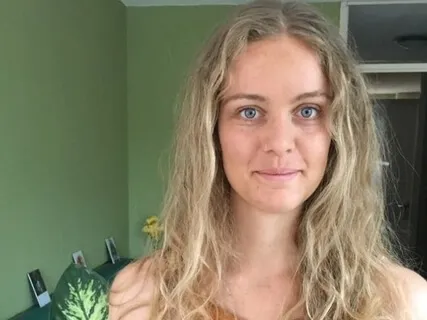
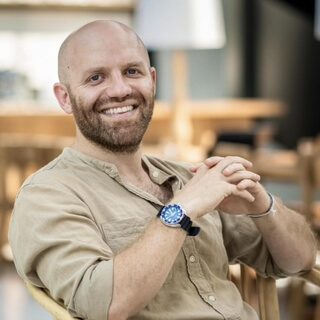
Today's guest is Eris Tio-Sofina,
Who teaches cycle and sexual well-being.
We had a really fun conversation about women's bodies,
About menstruation,
About birth,
About hormones,
All sorts of stuff.
Something that I think is really important,
And before you tune out because you think,
Oh,
I don't have a woman's body,
I don't have to listen,
I think this is one of the most important things for men,
But also all people,
I think even women,
Are undereducated about women's bodies.
I go into this a little bit in the episode,
But it's a real shame that many of the norms of society really deny and are actually counter to the nature of a female body.
I think it's actually true for men too.
I mean,
Undubbed society has affected us in a way that's such that we've disconnected from our inner nature.
This is not a new idea,
But a lot of our illnesses,
Our anxieties,
Our mental illnesses come from this fact.
Digging into this with Eris,
And I actually tell this story right in the beginning of the episode,
But she and I connected because I was working on this project dealing with menstruation because I was dating a woman who really opened my eyes.
The importance of men understanding the menstrual cycle,
And I say this to my male clients when they're dating women all the time,
If there's one thing that you need to understand is the female cycle because,
Especially when you're coming up against something that seems irrational in terms of mood or behavior,
If you understand where she is in the month,
A lot of things will be understandable.
I think on a greater whole beyond dating,
Beyond men or women,
It's important for us to understand the cycles of human being,
The cycle of nature.
I mean,
We've gotten out of touch with a lot of things,
And I do have some questions.
I do find menstruation and birth to be very interesting topics.
One quick announcement,
If you caught episode 44 with JoDooCard,
I mentioned a charity that I am a part of the founding of.
The Neighbor Fund is a collectively driven charity where for a donation of $10 a month,
You can be part of a membership group where you can vote on how the collective funds are used.
Last month,
Without any promotion,
We raised $1,
000,
Which maybe is not a huge amount,
But I think it's pretty good,
Actually,
Considering we kind of just whipped it together.
We raise money for people,
Causes,
And magic,
Just creating enchantment in the world.
Something I'm very excited about because both,
I mean,
For my own enjoyment,
Wellbeing,
Spirituality,
If you will,
Something that has changed a lot in my state of being when it comes to money and abundance and recognizing gratitude on a concrete level is allocating resources that have money,
Time,
Energy to things where they can make an impact.
So anyway,
I don't mean to rant too much on that,
But if you're interested in something like that,
You can check out theneighborfund.
Com.
It's a little plug.
Right now you're listening to episode 047,
Iris Josefina,
Cycle and Sexual Well-being.
You're listening to the Ruwando Podcast,
Perpetual orgasm,
Infinite play.
Please subscribe on iTunes and enjoy the show.
All right.
So this is our first time actually speaking,
Even though we've been interacting on the interwebs for a little over a year,
Right?
Our Facebook friend,
This past.
Yeah.
So I actually wanted to start by sharing how we connected because I think it will lead into everything in your work.
I guess a little over a year ago,
I was helping my ex-girlfriend with a menstrual journal project.
You probably remember this part.
Of course,
You're part half of the story.
And I was researching people who maybe have done it already and I came across your website and I believe you had like a PDF on menstrual something at the time,
Like an ebook.
Yeah.
The menstrual manifesto I wrote.
Yeah.
That's what it was.
I said,
Ah,
Damn it.
Someone's doing something similar.
I was researching you.
I saw we had a mutual friend,
Nolaia,
Who hasn't been on the podcast,
But we've made videos together when I was in Peru.
So we reached out and then you got pretty pissed at me.
I want to share.
That's how we really connected.
I mean,
Yeah.
Well for me,
It was connected to what happened here in the Netherlands.
So there was a guy who wrote a book on menstruation.
I was like,
Why would men go in,
Would want to go into this topic while they don't have the experience of actually having a cycle just by observing it from the outside.
And I've been,
I had been through that a couple of times that men would like approach me like,
Hey,
I want to learn.
I want to,
I'm like,
Dude,
No,
I just let us just do the work.
And then they want to learn like how to bleed.
Well,
No,
They just wanted to learn things about the menstrual cycle,
But would approach it like in very strange ways,
Very inappropriate sexual ways sometimes as well.
Like,
Yeah,
I find it very exciting.
And so natural that you are so busy with this topic and they would basically objectify me as a bleeding person and sexualize it on top of that.
And that was what I had a problem with.
So that was my default.
So when you approached me,
Usually the approach would be like very gentle and very kind.
And then from there they would dive in and it was just my default.
I thought you would do that too.
So why like they would send you like a bloody dick pic or something?
No,
Not that,
But they would,
Um,
Yeah,
They would say things like,
Yeah,
Funny,
Really arousing when a woman is in touch with her body and understand.
I understand,
But that is not the way you go about that.
So,
Gotcha.
Well,
Anyway,
I think that's how we became friends because I was like,
Oh,
You threw all this charge for me.
You did apologize a second later,
But I was like,
Okay.
I mean,
We have,
You have a fun person here.
And then,
Yeah,
So anyway,
That's when I really started paying attention to your stuff.
And I love your message on cycles and I am a man curious about it.
I do think it's important for men to date women to understand the cycle because I can't believe that I went 28 years without really being aware.
I mean,
You women bleed once a month,
But I wasn't really aware of like the changes in hormones and like how that can affect a relationship within a month and all sorts of stuff,
Which I think is fascinating.
And I still think someone in the world should make a menstrual journal.
I guess I'm not going to be the one to make it.
Someone should.
Yeah.
So how did you get into this actual line of work or making this message?
Because you're kind of,
You're kind of the biggest proponent or one of the big proponents of speaking about the cycle.
Yeah.
Well,
I took a little detour into that work.
I was doing research as an anthropologist in the field of medical anthropology in South India when I was pretty young,
I was 20,
21 something.
And I was researching birth,
Birth and pregnancy experiences,
But mainly how women experience their pregnant bodies.
And then I accidentally attended birth there in a very tiny small village in India.
Accidentally attended what?
Births.
So I was assisting birth processes in a very small hospital with blood everywhere and very,
Yeah.
Health-wise it was not the best circumstance.
And after that it got me thinking like,
Oh,
Maybe I should embark on a journey where I can study about birth and assist women in that process.
But as I started working in that field,
I did a training to become a doula.
So pregnancy,
Birth and postnatal support on top of midwifery care.
But when I started working for myself,
What I noticed,
What I was doing most was teaching basic biology,
Like while they're already pregnant.
And then I was like,
Maybe this work should start earlier because conception,
Pregnancy and birth is part of a greater cycle,
Namely menarche,
Fertility,
Conception,
And then pregnancy,
Birth,
Postpartum,
Menopause,
Postmenopause.
So I started to see that whole process of what our bodies are capable of in a longer timeline.
And I also realized that when women who are pregnant were already in tune with their menstrual cycle,
Accepting the birth cycle was easier and the conception,
Pregnancy,
Birth cycle.
So I just,
I've actually learned from clients.
I learned from people who were going through these processes of becoming mothers,
But were actually very far away from their own bodies when they needed to give birth to another body.
So that just got me thinking,
Like,
How amazing would it be if a woman could step into conception and pregnancy and birth unafraid because a lot of people are unafraid because they don't know.
So the knowledge,
Just the plain knowledge about the body,
Like plain physiology,
Anatomy,
And endocrinology of the body,
When you know that and when you know the manifestations of the body and what is normal and what is not normal,
It's way more easy to be at ease in that body doing all these kinds of things.
Yeah.
One thing I found interesting when I really started thinking about it was that menstruation is seen as such an inconvenience in society,
Like with work and it's this thing that gets in the way.
And then I was also thinking about birth in the last year or so,
That everything regarding birth in traditional,
I mean,
In conventional society,
Not traditional,
In conventional society is also seen as this huge inconvenience.
Labor,
Maternity leave,
The drugs that most people take in hospitals,
All the things that go along,
Like the cuts and all these things.
They're just like so out of whack as opposed to organizing it the other way around.
And it's kind of ridiculous.
I mean,
Again,
Like as an adult,
They couldn't believe that I only thought of this now and it seems like it's so backwards.
And I know this is probably stuff you've thought about for a long time,
But these were new realizations for me.
Yeah.
And what we've been doing over,
Let's say the past 100 to 200 years is very much medicalizing our bodies,
Our cyclical bodies,
And trying to match them with male bodies.
And also there's so much information,
There's so much to talk about when you speak of this and the root of the taboo is wide.
And where you go in the world,
It has different layers and different roots,
But what is a red thread in the whole menstrual part is that it is seen as something negative here and indeed what you say an inconvenience,
But what we forget is that we are cyclical beings in a linear society.
And that's basically similar for men and women.
So men are also cyclical,
But they go through different cycles,
But the adaptation in our society is more linked to the male cycle basically.
And to make women as productive as men,
Their bodies need to be altered a little bit to give them the same opportunities to be as productive.
But that goes past accepting how these bodies actually work and taking out the qualities that can be taken from it.
So if you look at a menstrual cycle,
Every part of the cycle has a different quality and a different set of skills connected to that.
So for example,
Around ovulation,
We are more outward,
We can communicate better,
We can get things done.
Whereas in the menstrual phase,
For example,
We tend to go more inward and our attention span actually goes more inward.
And just recently I was comparing this menstrual phase with the postnatal phase after birth.
So when a woman is postnatal and has given birth,
There is a singular focus on that new being and all the rest blurs.
And I was working with a client postnatally and I was just observing how her attention span was,
What she heard in a room when people said something,
What she didn't hear and how her focus was just there.
I was like,
Damn,
This is like the same thing I experience when I'm bleeding.
My focus is just inward.
It's such a smaller scope of focus that you have.
And it comes.
.
.
And it comes.
.
.
Hormones might be related to that focus.
I actually don't know how that would be connected.
I was reading this book on testosterone and how with men,
At least when their serum testosterone levels are going up or down,
They can actually hear less when their testosterone is spiked.
The whole cliche of a wife speaking to the husband while he's on TV and he can't hear it,
That's actually a thing when if he's watching football and his testosterone is up,
He actually can't hear sounds anymore.
And when a man's wife or partner has just given birth to his child,
His testosterone levels drop significantly,
Which makes him more empathetic and able to pay attention to a child more.
So I just thought that was interesting.
Wondering if there was.
.
.
Well,
I think postnatally is different than during menstruation because postnatally usually have like a very big rise and peak in oxytocin.
So when your oxytocin is high,
You're usually more intimate.
So the ways or the instances where oxytocin is released is like when people are close,
When people cuddle,
When we have sex,
When we give birth.
So in very intimate,
Tiny settings.
So postnatally,
That and prolactin would be the hormone that takes away the focus.
But also the brain plasticity of a woman changes as she's pregnant and when she's given birth.
And I actually want to research that.
I want to research whether during the menstrual cycle,
Something happens as well to the brain plasticity.
I have no clue,
But I'm very interested in how that works.
It goes up or it goes down?
It goes down,
But it expands as well.
So I was just hearing this interview recently that when a woman goes from conception all the way to postnatal,
The way the brain develops is actually as much as a person would do like a four-year college,
Four-year university study and it comes automatically.
And it's the idea that the plasticity drops by the time of birth because at that point she shouldn't be thinking about new ideas or doubting herself.
She needs to keep a child alive.
I was recently thinking about that and how magnificent that actually is,
How these bodies work and how they tell us where to focus should go.
And I noticed that when I'm bleeding as well,
There is no desire or whatsoever to be outward.
I'm just curious.
I'm just thinking of anecdotal stuff obviously,
But my friend Leah just gave birth in Peru and I think I mentioned it too.
The last time I saw her before she had her child was in New York and there's something very different about her.
For the first time I was like,
Wow,
She's a woman right now.
It turned out she was pregnant by three weeks and she didn't know it yet,
But we backtracked.
I have been wondering what was it that I was picking up on or something different about her voice and her posture and her case.
Was her brain changing?
Were her hormones just doing things?
I don't know,
But it's curious and interesting.
We usually don't pay so much attention to that,
But so much happens in the body.
So much is moving and the body is constantly in the hormonal flow from the crown all the way down to the pelvis.
It's constantly in service doing all these hormones.
What most people don't realize is that these hormones that are used for reproduction actually have like a one gazillion other functions in the body.
That's where for me,
A lot of problems start in medicalizing that cycle because the cycle is also responsible for other things,
The hormones like estrogens and progesterones.
They have other functions in the body as well.
It's not only for reproduction.
So when you go,
For example,
Suppress that with certain medications like hormonal birth control,
You're actually also suppressing the capacity of the body to function in the most optimal form.
And a lot of people don't know that when they go on birth control,
They're not given all the options and all the information so that they cannot support their cycles and their bodies because they don't understand the function of the actual cycle.
Have you heard of the sweaty t-shirt experiment?
No.
With control?
I don't remember when it was done,
But it's this experiment where they had a bunch of men of different body types,
Different genetics sweat into their t-shirts.
They had a bunch of different women smell this t-shirt and decide on the scent,
Whether they were attracted to the guy.
And I forget exactly,
They broke it down into like,
I think different phenotypes or something based on DNA.
And with like incredible accuracy,
The women were able to smell their ideal genetic match from the t-shirts,
Except for women on birth control,
Because on birth control,
They could not smell pheromones.
Oh yeah.
They were saying that one of the causes of high divorce rates is that women are on birth control.
They fall in love with the guy,
They get married,
They get off birth control and they smell him for the first time,
Realize that they're not a genetic match and suddenly it's just not touching them anymore.
And it's.
.
.
Yeah,
I've heard that before.
I didn't know it was an experiment,
But that's true.
And I've actually had it with clients that they were getting off of hormonal birth control.
And I wasn't,
I was coaching them to get off from one of birth control and I wasn't very aware because when I got off of a monobirth control,
I didn't have a partner.
So I didn't have that.
How do you say that?
I didn't have that experiment for myself that changed for myself.
So when I started working with people,
They would come to me and they would get off of the pill.
And then mentioning changes in their relationships,
I was like,
Oh,
That's interesting.
Then I started researching that.
I didn't know about that experiment,
But I read articles about it and yeah,
They were not attracted to the guy anymore.
And they got off the pill to get pregnant.
And I'm like,
How are you supposed to get pregnant with someone that you're not attracted to?
It's not a very good match.
So it influences way more than we think.
And I think if you even pull it more open on a bigger scale,
If you look at how the community and the society is built up,
It's basically,
I can't say it like that,
But I'm going to do it.
It's actually built up of fake connections,
Fake relationships,
Medicalized connections between people.
And that scares me sometimes.
That's what the new generation comes out of.
That's what creates the new generation.
And they just released the female Viagra in situations where they just don't want to have sex and now they can pop a pill and force their body to get aroused.
It's very interesting how that is all happening.
But for me,
The root of all of that is not being able to accept what is and be content with what is.
We always have to alter and to do more and to change and to adapt.
Because for some reason,
There is this disconnect that we're unable to connect to what is and to really truly accept what is.
I think we're in the right direction though,
At least since the industrial revolution.
Because that was the peak of this disconnecting from nature for the sake of productivity.
Now all these people are having these conversations and recognizing things like that.
It's this force of production.
I've mentioned this on the podcast a few times.
I feel bad for my female friends in their late 30s,
Early 40s who made this second wave feminist choice earlier in life that they were going to focus on a career and delay the family thing until much later.
But now they're running out of time.
Because their body doesn't follow that plan.
They went along with a societal thing as opposed to what they felt or what their body wanted.
It's a shame because now I could go back in time.
Yeah.
I see it a lot in my classes and in my practice.
People struggling with fertility.
Then also that has to be medicalized.
And if something is up with a cycle,
It needs to be medicalized.
We're not looking at the root causes of cycle problems and apparent infertility.
Because I believe that a lot of people are labeled infertile,
But actually aren't.
Because we don't dig enough to the root cause of what this apparent infertility can come from.
What have you seen that maybe isn't so common or that people don't know in terms of going from supposedly infertile to fertile?
That we completely disconnect the physical body with the emotional body.
So the way that we feel and the way we store trauma and the way we store memories of things that we've gone through in our lives,
We don't take that into consideration when we look at infertility.
Just to give you an example,
I had one client once who couldn't get pregnant according to the system.
When I looked at her charts,
Her cycle was like normal.
But what happened was that her mother had passed from ovarian cancer one year earlier.
Right after that,
She had a miscarriage.
And then she couldn't get pregnant anymore.
And when I started to dig deeper with her,
I found out there was just so much grief and fear that she would have the same journey as her mom.
That she would become infertile.
And there was so much grief in the body that was blocking the fertile way.
When we grieve or when the body has a lot to process,
What actually happens internally is that we go into a stress reaction.
We go into this stress response of the body.
The HBA axis is switched on.
For most people,
That's a default.
We don't alternate that with a cycle of calmness and restoring of the balance in the body.
And she was constantly in that loop.
Now,
The first system in the body that says,
Okay,
It's not safe to reproduce right now,
It's a reproductive system.
And the reproductive hormones are actually the last ones to get a piece of the cake of the energy that is there to be used up for the body.
The ones that get first axis are adrenaline and cortisol.
So for me,
It was very normal that her body was like,
Nope,
We can't get pregnant right now because you first have to move through your grief and process this.
This fear in the body,
Internal fear causes the same reaction,
Whether there's an elephant or a lion in front of you,
Or you have a fear,
The response of the body is the same that HBA axis is switched on.
So for the body,
There's no distinction.
But we don't pay attention to that.
And a lot of people are under so much stress in whatever form.
And the first system that just shuts down,
Closes the doors until it's safe again is a reproductive system.
So it's not being infertile,
It's the body being very smart and say,
Hey,
It's not safe for you energy wise to grow an entire human being right now.
But first stack up on your own stuff.
And then you're able to open up the body and serve another human being that needs to grow fully.
And for some people,
Some people say it's bullshit that I that I say it like that,
But I've seen many people who were considered infertile,
Even when the tests like the hormone tests in the in the hospital showed no issue of infertility,
They were labeled infertile.
But there's way more in the body that is happening and in the field of epigenetics that I don't know whether you heard of that.
So how that yeah,
So in epigenetics,
They work a lot with how does the environment that the body is in influence the internal functions of the body.
It has a huge influence and we don't pay attention to that.
And especially when we're put into this very vulnerable position,
And in this very vulnerable label of infertility,
Where you're basically fed the fact that your body is failing on you,
There is no support.
There is no support for for people who are in that position and the body is just seen as a machine that needs to be fixed with all sorts of hormones that need to be added.
But that actually brings the body more out of whack and more stressed because it's foreign things coming into the body.
Yeah,
That makes so much sense that a woman under emotional stress,
Even if it's just from like a high pressure corporate shop,
Won't be infertile because her body's probably like,
Hey,
You probably don't have room to really be a mother if you're dealing with this.
And it's kind of like peacocks,
Peacocks feathers,
Like,
The whole reason why it has these outlandish feathers is that it only can have outlandish feathers if everything else is covered,
All the security,
The organs are working well,
And then the extra resources,
Or as you said,
The last thing to get cake is the come mate with me thing on a peacock.
Like it makes sense on a woman that would be the same.
And the thing that I'm more familiar with personally is like how there's an epidemic with young men and erectile dysfunction right now,
Probably because of porn and a lot of things,
But it's like another version of kind of what you said,
Like,
These new kinds of stress for young people.
And of course,
The first thing to shut down,
I mean,
Erectile dysfunction is kind of like a version of infertility,
Like your body will not allocate resources to making more of you until you can fix yourself or be yourself.
Yeah.
Yeah,
And it indeed goes,
It goes both ways.
Yeah.
Yeah.
No,
I wanted to say it goes both ways.
It's both phenotypical female and phenotypical male bodies that are suffering from the way our society is structured.
And especially if we look at- Did you say phenotypical?
Phenotypical female and phenotypical male bodies,
Like the way the body is built to make it more inclusive.
I say that.
Gotcha.
Got it.
So,
Yeah.
I have a question,
It's more of a,
Well,
If society or conventions could be redesigned to fit,
Let's start with the female body for now,
But like,
How would you redesign the norms of society to fit?
So like,
So for instance,
Like the dilemmas that many women face,
I think a lot of people face between choosing production and fitting,
Like,
How would you,
If you could start from scratch,
What would you do?
Well,
How I always start is that we,
This is my personal opinion.
If we just look,
If we just look plainly at how we are built,
A body was our first home.
Our second home is our own body.
And then thirdly,
We are in community with one another.
So for me,
A new system was focused a lot on first getting to know that individual thing that you're in,
Like all of your life.
And from there,
Start moving into a new system because what is completely left out in the system that we have now is that every,
For example,
You go to a doctor,
There is only a focus on this,
This physical form and everything that goes on in it is not considered at all.
So I would just start by bringing people back home into their own bodies because a lot of people don't feel at home in their bodies.
They're alienated.
They're afraid of their own anatomy.
So that's how I would start like with what you have.
And I noticed that a lot.
Yeah.
I was thinking like if the work week were to be redesigned,
It'd be like a 28 day week with like a week off.
Like the five,
Two day things completely arbitrary and doesn't fit people's,
I was thinking like,
How would you redesign conventions?
What would that look like to match a woman's body?
I would support women into working according to their cycles and doing specific tasks in the time of their cycle when they're most able to do that.
And that's how I try to do my own work as well.
That's not always convenient for people around me.
But yeah,
That could be a start.
And also in the workspace,
Create a more cyclical schedule.
Like in this time of the month,
You do this and this time of the month,
You do that.
And yeah.
Gotcha.
Yeah.
I'm just going to turn off our video because we're getting a little bit of lag.
Yeah.
Yeah.
Because it makes me think like prior,
I think a lot of the issues we have in society come from us growing beyond the size tribes should be.
Everything's impersonal.
But like I imagine in the smaller tribes,
Presumably all or most of the women were synced up.
So the entire tribe probably had to run on a 28 or a menstrual cycles length of time because half of the people were bleeding for a quarter of it.
Or for instance,
Like that.
And that seems,
I would imagine that everything flowed a lot more organically in terms of work and expectations and connection in such a system.
Yeah.
And the thing is we've moved away from,
I mean,
It's,
I have never like read something that actually proves that what you're saying right now.
But I assume if I look two generations from now,
Like in the past,
Like how my grandparents lived and how they saw their own bodies as part of a greater body of the earth and that you lived in seasons more than we do now.
Yeah.
We completely lost that.
And we've molded the system in such a way that a lot of people might not even remember or might not even realize that that is a good way to live.
So to bring that back and that's how I noticed it in my,
In my workshops and in my one-on-one sessions,
You really have to take people by the hand and help them remember about their bodies.
So for me,
That's always the first thing to go back to because that's what people can relate to.
And then from there,
People usually come up with the answers themselves.
It's not me designing the system for them,
But when I guide them back home into their bodies and how they actually feel and when they learn about their bodies and how their bodies respond and that some responses of the body require like gentleness and attention instead of like going and being productive.
Basically it's very easy.
It's about kindness and kindness to the body.
And I believe that if everybody would do that for their own body and then recognize that in other people,
Society would change by itself.
But that's of course very,
In a very ideal situation.
Yeah.
Well,
We're working on it,
Right?
A little bit of the time.
Yeah.
And it goes,
It goes step by step and earlier I,
Things like that would make me very angry and then I would stay in the anger and nothing would change.
But right now what I see happening in the people around me is that things change gradually.
And that's also a cyclical thing.
Things go slow.
Things take time.
And I translate that to the changes in how we look at our bodies as well.
You can't change overnight,
But it takes like what we're doing right now,
Like sharing information,
Offering different perspectives.
And from there,
The system might change slowly.
And what I'm realizing with my own work,
I'm not changing the system.
I'm just creating an entirely new one to which people are drawn.
So that's like the Buckminster Fuller quote,
Like you can't replace a system,
But you can make a new one that makes the old one obsolete.
Yeah.
Yeah.
And,
And in that,
For example,
If I look at clients who are in IVF trajectories,
It's good for them to realize that they were,
They will never get like the empathy and the care and the sweetness that they need in that system.
But there is other systems that do offer that and they are complimentary.
So they need like the support in the hospital if they're,
If they're really infertile and they need to go into that process.
But then again,
There's other systems that can also be of support.
And it's usually very,
How do you say that,
Disappointing to people to be in a system that feels as if there is no support,
But they don't realize that there is other systems that do offer what they might need.
So it's just a little,
Little bit different way of looking and embracing other systems as well.
Do you find a lot of pushback,
Like when you work with,
I mean,
As a doula,
You work with women many months before their pregnancy,
Correct?
Yeah.
Do you ever get pushback of like,
I mean,
From the mother,
For instance,
On this new system or ideas?
I mean,
I assume if they reach out to you,
They're open-minded to these,
To a more natural way,
But does that ever come up?
From the clients I work with,
No.
But from their other caregivers,
Yes.
And how do you deal with that?
At first it would make me angry,
But then I realized that me being angry is not supportive of being in service of my client.
So how I go about this,
For example,
When I notice it in hospitals,
I understand that people are tired there and that they're understaffed and that they go through a lot,
But then still my client who is going to give birth there is going to remember that experience for the rest of her life.
And it will actually determine how she walks out of that room and starts her life as a mother.
So when I realized that there is a friction in the room or people are actively pushing me away out of the room,
Like you can be here,
I take them out onto the hallway and then I just ask them like,
Hey,
Do you realize that this experience will determine the rest of this woman's life and that every time she will see her baby,
She will also be traced back to the experience how the baby got here.
And then usually I see people like becoming blank,
Like,
Oh shit,
What?
So the way I do it right now is like bringing humanity and kindness back where it belongs.
And I try to act from kindness really and helping people remember how important this event is for that particular woman.
And yes,
It can be that they feel like they're in a factory and that they have to do birth after birth after birth,
But each of these separate experiences is the experience that that person is going to take as the onset of motherhood.
So I just try to break that down to people and help them remember.
And usually that works if you bring back like the kindness and empathy.
And when I say like,
Hey,
Look,
I understand that if you have been working for 10 hours straight and you didn't have a break and you didn't have a chance to pee,
I get it.
It's very tiring and you probably just want to go home,
But can we please now support this woman because she needs us.
So yeah,
If I go about it that way,
People usually understand because they're people and they feel it,
They have feelings.
So when I go about it like that,
I've never experienced an instance where that didn't work to go about it that way.
I usually also have to verbalize like,
Hey,
I'm not here to come and steal your work.
You have your job.
I have my job and we're both in service of this woman.
So can we please do our job together in service of her?
When you speak about speaking to the other person,
The other caregiver,
Are you talking about midwives or?
Midwives and nurses and obstetricians.
Yeah.
All of them.
Do you recommend,
I mean,
Do you ever recommend against hospitals for your clients or I kind of assume you're typically being a dual-sir or a home birth?
I am a doula for home birth and for birth center births and for hospital births.
I never recommend against something,
But I always give the information that I find useful for my clients.
And a hospital is initially designed to help bodies and people become better.
And when a pregnancy shows no sign of complication,
It's actually more dangerous to go into a hospital because the risk of complications is just bigger there.
Because I work a lot from a very minimalized way of looking at birth and what you need.
And I always compare birth to sex,
Like how do you want environments to be when you're going to have sex?
How many people do you want to have in the room when you're going to have sex?
How many people do you want to have walk in and out?
Because there are similar hormones that need to be produced to keep the body calm.
And usually when I make,
I paint the picture like that,
People are like,
Oh yeah,
Why would we want to be in a hospital actually?
We're healthy.
We can be home or we can be in the birth center.
In the birth center,
You have less people walking in and out.
You have your own room.
You can be there with your own midwife and your own doula.
So usually I just paint a picture and then I just let them choose what they feel most comfortable with.
And yeah,
That's it.
Are you planning on having children?
Yeah,
I do.
How do you think you'll go through the birthing process?
Right now I am actively supporting my body to optimize my fertility as much as possible.
So taking the right supplements,
Trying to have enough rest and sleep and drink enough water,
Keeping track of my cycle and monitor it and see how healthy it is.
And from there,
I think I would just let it happen.
And when I ever get pregnant,
I would want to work with a midwife that supports me.
And we can all have an idea.
I mean,
I have ideas of how my ideal pregnancy would be,
But you never know how that's going to be.
So you don't know how the pregnancy is going to unfold and how nauseous you're going to be.
But I think the most important thing I would want for myself and my baby and my partner is to have a midwife who supports our choices no matter what.
And it's very open and open in the way that she communicates and open in a way she provides information and that she steps in when it's needed.
Like,
For example,
When a true complication would happen,
I would want to know.
And I would want to know what my options are and what the pros and cons are of every choice that potentially needs to be made.
So for me,
In the whole process,
Communication is key.
And so communication with.
.
.
Yeah,
Go ahead.
Have you seen a lot of complications in home births?
That's one of my,
I guess,
Fears,
My hypothetical fears.
I like the idea of a more natural and minimalist birth,
But there's always the fear of,
Like,
I would be at the rush to the hospital for this or that or something.
How common is that?
It's not so common.
And it also depends on what you see as a complication.
But if you have monitored your pregnancy all throughout the nine months and there has never been an instance of a potential complication that could pop up,
Like,
So the baby is in optimal position,
Blood pressure is good,
Mother feels good,
Then there is no need why you need to think about many complications happening because the pregnancy didn't show it either.
So the risk is always there.
But I always say when there is a risk,
We have a risk toolbox and we have risk management toolbox that we have there that we can open when it is needed.
So every complication is also different.
So there are some complications that can happen at home and can be managed at home.
And then there is some more severe complications that need medical assistance.
And you know that,
You know,
And the hospital usually should be around the corner,
Maximum 15-minute drive.
So yeah,
I don't see any need to worry about that too much because it's a normal physiological process birth.
And yes,
There can be complications,
But when complications come,
A well-trained midwife should know what she needs to do.
And I've had it that the birth at home was like perfect and it was beautiful.
But then at the end,
For example,
The lady needed to have stitches.
She needed to be surtured and that the midwife is like,
Oh,
Maybe we should go to the hospital,
Let this be done by a gynecologist.
And that's not because it's a complication,
But then that is because at home you don't have enough light or the mother doesn't feel comfortable opening her legs on the bed,
But she needs some extra support for that.
So these are things that I've seen.
But yeah,
For me,
The thing is I trust birth and a lot of people don't.
So I also trust myself in observing and seeing what the body does and reading the body when there is assistance needed.
And I always do that in collaboration with the midwife and she has a medical responsibility.
But the thing is with birth,
Many people don't really trust it.
They're afraid of it.
And that for me is the root cause of complications also happening because fear is shared.
If a woman is birthing and somebody in the room is afraid,
She's going to feel it.
Yeah,
She's so open and exposed.
And that's what I see happening in the hospital.
A lot of people who work there think from pathology and they don't trust birth.
They just don't trust it.
They don't trust the process.
And that's sad because for most people,
It will be like a process that fits their bodies,
That fits their baby,
That fits the way they carried their babies and the way they were in their pregnancy.
But because people are afraid,
They act earlier.
Things need to speed up.
They're going to interfere with the process.
When you interfere with the process,
The body is going to go in stress.
When the body goes in stress,
It's way harder to stick to the process because it's interrupted all the time.
And yeah,
That's sad because it doesn't have to be that way.
The only thing we need to do is that we need to trust birth,
Trust women,
But they're able to birth.
And right now,
That's not the case.
That's how I see it.
What you just said is really important.
Beyond this birth conversation,
Maybe it's very zoomed in.
But everything,
What you just said in terms of trusting the process and not interfering can be applied to creativity,
It can be applied to our moods,
Regardless of gender or life situation.
I'm curious,
Do you ever do a postnatal,
Is there a postnatal,
I know there's postnatal midwives,
But I do work with the mother and the infant and I guess parenting assisting.
Especially here in the West,
The postnatal period is just ignored.
And what people forget is that that is usually the most challenging thing.
Some women have a challenging pregnancy,
But you have had your pregnancy,
You've pushed the baby out of your body,
Expanded in the widest ways possible,
And then you have no time to take some moments for yourself because you have to keep a child alive.
And for most people,
The fourth trimester,
For most people,
Pregnancy and birth is three trimesters,
But that's not true.
The fourth trimester,
The trimester,
Three months after birth are the most important to bond with your baby,
To heal your body properly.
And a lot of people don't heal properly after birth and then they get all sorts of issues and then they're so surprised,
Like,
Oh,
My pelvis,
Oh,
My back,
Oh,
My belly.
Yeah,
That's not strange because you didn't take care of your body.
Nobody taught you to take care of your body after birth.
Yeah.
Yeah,
And in the States,
Maternity leave is only three months,
Which is so ridiculous.
Yeah,
It's way too short.
The mother back into work while she's still lactating.
I'm curious,
I don't know if this is true or not,
But Mantak Jia,
Who's a Taoist sexuality teacher,
He was saying,
I was in one of his workshops and he was saying how when a woman breast feeds,
The suction of the baby on the nipple causes contractions in the uterus that brings it back to its original size.
Yeah.
Only a baby's suction can do that.
Her partner can't possibly,
An adult man's mouth or adult person's mouth can't possibly suck the way a baby does to create those uterine contractions.
Is that true?
Yeah.
And that's why it's important that a baby lactates soon after birth.
Oh,
That's the ideal situation,
Of course.
Someone going to have difficulties breastfeeding.
But that whole natural way of tending to the body and letting it do what it needs to do has a purpose.
It helps the body heal.
And as you say,
It helps the uterus come back to its natural position.
But then the way women are treated for after birth has completely changed.
But what their bodies need did not change.
So here in Holland,
For example,
Two generations ago,
Two and a half generations ago,
We had a concept called,
The literal translation is closing sheets.
So sheets from a bed.
So the woman would be laying on the bed and she would be wrapped in sheets and the sheets would be attached with safety pins to both sides of the bed to support her pelvis to close.
And in various traditions,
For example,
In Mexico,
You have the riboso closing ritual.
In Bali and Indonesia,
You have benkun,
Belly binding.
And in Morocco,
You also have ways of binding the belly to support the inner organs to come to their most neutral position again.
We don't do that anymore,
But our bodies still need that support.
And we just don't do that anymore.
And it's so important to support these bodies.
And even in the long run,
I actually want to work on a program,
Want to design a program for the working space and help people understand that when you support a woman heal after birth,
She will be able to,
Yes,
Come into the work field sooner and have less complaints and have less,
Will need less time off after birth for a baby because their health is constantly under threat.
That's what I'm seeing right now.
Women are not supported properly.
So I think if we would support them more,
Society would only benefit from that.
Yeah.
Yeah.
I mean,
That's ultimately what has me interested in all this stuff,
The menstruation,
The birth.
I mean,
I did mention to you,
I'm also curious.
I mean,
I definitely have ambitions to have a family soon.
Maybe ambition is not the right word,
So I'm pondering these things.
But in general,
I think everyone,
Men and I guess women as well,
Really ought to understand the female body more because the way society is built is so not conducive for women.
And it's like,
Wow,
That really,
Really sucks.
And the whole,
All of society would be better.
I think even dating would be better.
Like a lot of conventions would be better if we just took into account the female body as well.
Yeah.
So this has been fun.
I learned some good things.
I'm glad we got to speak outside of Instagram.
Is there anything you want to share?
I mean,
We,
Anything on menstruation or your work that you want to share with people?
Let me think.
Well,
The thing I always say to people is that the way we tend to our cycles is also the way we're going to tend to our bodies when they conceive and get pregnant and be pregnant and postnatal.
So I think the most important thing I always want to share is that these bodies do so much for us.
And we usually don't approach them with kindness and gratitude.
And I think we should do that more.
So,
Yeah.
Thank you.
Where can people find out more about your work?
I'm mostly on Instagram right now.
The name of my company is Cycle Seeds.
My website is still under construction.
I'm working on that.
And I do one-on-one sessions both here in my practice in Utrecht in the Netherlands,
But also globally online.
So people are also able to book,
Consult with me online for issues regarding their menstrual cycles,
Regarding their birth control options,
Regarding conception,
Fertility,
Pregnancy,
Birth,
And postpartum.
Awesome.
Yeah.
Well,
I think you're doing a very important thing in the world.
And I look forward to more of your posts on the interwebs.
Thank you so much.
And thank you for inviting me.
Thank you for having me.
Absolutely.
Hey,
Thanks for listening to the podcast.
If you want to catch the rest of my work,
Go to www.
Ruandoh.
Com.
Catch me on social media,
At Ruandoh.
And please do not forget to subscribe.