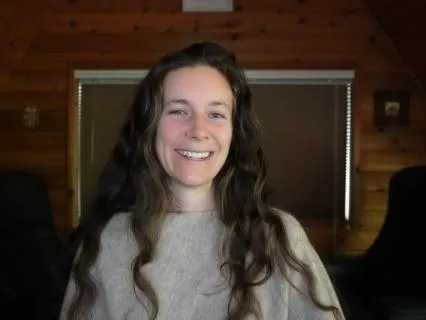
So we're going to start with our qigong,
Move into some breath work,
And then tune into our physiology.
So we're going to do some vocal massage,
And I'm going to talk about the different pieces of our throat and our faces that are imperative to keep relaxed and find release of tension.
And then we'll do some singing,
Of course,
At the end.
So I wanted to try,
You know,
Doing a bit of singing and then see how it feels and then do the massage and then sing afterwards and notice how it feels different.
Because for me,
It always feels better after the massage and to have that tactile experience of the before and after.
Is motivational.
Oh yeah,
I want a massage because I know it's going to make me feel better.
Find a standing position with me.
Or archi gong practice and I'll just bring this up a little bit.
And again,
For those of you who are new,
Wai Chi Gong,
It helps us get into our instrument,
Get into our body.
Feel the tissues,
Feel the energy moving through,
Which is all imperative to healing.
Our creative flow and our musical creation.
So finding yourself in a comfortable position with feet about shoulder width distance apart,
Maybe a little bit further,
And toes are at about a 45 degree angle outwards.
So they're not forward,
They're not totally sideways.
They're just kind of in between there.
So that if you were to bend your knee,
Your knee would kind of go over your big toe.
And this is a very supportive place to be.
So if you're still kind of like,
Where are my feet supposed to be?
Where are my toes?
All that,
Just finding a place that makes you feel like you are a rooted tree.
Where you can feel like your body isn't swaying too far forward or you're catching yourself back,
That you feel like you can just stand very tall.
And strong and rooted.
And to get started,
We're just going to start with our shaking.
Just a great way to Get everything moving,
So shaking the wrists and the fingers.
Shaking oh you can do big shakes like i'm doing or just gentle shakes depending on you know where you're at if you're a female body in your cycle or just feeling tired doing gently and if you're feeling like being invigorated like i am just really shaking it out Shaking out the shoulders.
Mm-mm-mm.
Shaking out the hips.
My hips are shaking!
Underneath my big blanket.
It's chilly here today so I'm under a blanket to be warm.
Maybe shaking the heels,
Like bouncing on the heels,
Shaking out the butt and the thighs.
Shaking out,
Going on one foot and really like shaking out the knee,
Kicking it out,
Kicking the ankle,
Kicking the foot.
What we're doing is we're increasing our circulation.
This is so important to our total well-being.
For digestion.
For healing.
Ha ha ha ha ha ha!
And just doing that with me,
Inhaling through the nose,
And then exhaling out the mouth with a bit of a sigh,
A bit of a sound.
If you're not feeling like making sound yet,
You can just exhale.
It can feel nice to have that audible release.
Fine.
Keeping the shaking going might feel like,
Why are we still shaking?
But just wait for it.
Wait for when we stop.
It'll feel so good.
Doing a little shaking to the head,
But not too much because it can be pretty irritating to the ears.
The neck muscles.
And then stopping,
And when we stop,
We're gonna tense our bodies.
We're gonna go up on our tippy toes,
Look up with our eyes,
Really stretch with the fingertips,
Coming into this like tense state.
Inhaling and then as you exhale,
Drop the heels and relax.
Like that.
And just let it go.
Coming to a still place,
Noticing.
The sensation in your body now the tingles.
The flow.
And we're going to rotate now doing some twists.
And letting your gaze follow your body.
So if you're,
You know,
Doing tiny twists,
That's okay.
If you want to really.
.
.
Start to look back,
You can even twist up on your heel,
So keep the ball of your foot on the ground and you twist your heel up.
Really twisting into the legs if you want.
And you can get more vigorous with your hands.
Oh,
I might have hit the microphone there.
And you can tap.
So there's different areas where you can tap with your hands.
You could tap your opposite hip as you're twisting.
You can tap your opposite shoulder as you're twisting.
You could bring a hand like a karate chop,
A very firm hand and just kind of slap your trap muscle up here.
It can feel really good.
That touches on the gallbladder meridian.
So.
Seeing what works for you today.
I like the hips.
I'm feeling like I want to bring some extra love to my hips.
And you're inhaling through the nose and exhaling out the mouth.
This is a part of the practice that we are clearing,
Clearing the body.
Moving things around.
It's alarming the body.
Very important first step to singing and caring for our voices.
Just enjoying this movement,
Making a present meditation of it,
Feeling.
Where in your body you feel the stretch.
I can feel it all the way down into my knees.
Into my ankles.
Up into my shoulders and my neck.
This is a gentle fascial stretch as well.
We're waking up this crystalline part of our body.
Watery part.
And just starting to slow your twists now.
Slowing,
Slowing,
Slowing.
Coming back to a center point.
Just doing it slowly so that you don't feel dizzy.
And then coming and placing your hands over your low belly.
And today I wanted to focus on our endocrine system.
So we're going to do a practice that supports our hormones,
Our adrenals.
Perpetuatory goes all over the body.
So we're going to use a a qigong healing sound and the movement looks like this.
So we always start with the movement and then we add on to it from there.
So you can keep your feet hip-width distance and the hands come up so the palms are facing up.
To the chest and then at the chest they flip.
And you go all the way up.
And the palms facing out,
You come back down.
Try that with me.
Palms facing up,
Drawing up to the heart.
Lifting the palms up to full extension of the arms.
My knees here,
But you don't have to do that.
I just want you to be able to see what I'm doing fully.
If you are wanting more warmth in the body and more invigoration,
Then do bend into your knees.
So just keep doing that,
Inhaling.
Inhaling.
And then the exhale is gonna be a sound he,
H-E-E.
Hmmmmmmmm.
Trying that sound out with me and you might find that you're smiling while you do it.
FUUUUUUUUUUUUUUUUUUUUUUUUUUUUUUUUUUUUUUU And you can imagine the color yellow.
Going all the way through your tissues,
Through your body.
Maybe imagining yellow on the top of your adrenals and a glow right here at your pituitary.
Mmmmmmmmm.
Your endocrine system is responsible for all this mood related tension and stress.
So back to the endocrine system.
These are the hormones that dictate our mood.
Our feelings of hunger and fullness,
The balance of the body,
How we tune into homeostasis.
So by doing this movement and this practice,
We're inviting the body to remember what it feels like to be in balance.
To have homeostasis and the sound too.
So just doing that a couple more times with me.
Just enjoying the movement.
Feeling like a happy Buddha smiling with a big belly.
Once more.
And then bringing the hands over the low belly.
And we'll just circle nine times.
In one direction.
And the other direction.
And then just brushing off the body.
And you can brush or you can do some taps.
Whatever feels good for you today.
Bringing attention and appreciation for your body.
Exactly as it is.
This wonderful,
Unique body that is you.
Is your instrument.
And then if you'd like coming to sit back down with me.
And for our breath practice today,
We're going to do our cobra breath.
So what this does is it helps us to remember that we can be letting go of air as we are holding air at the same time.
So we try to just extend the exhale as long as possible by letting out a tiny thread of air.
What I also like to do,
I'll bring this down a little bit so you can see my diaphragm.
Is hold my hands here so that my ribs stay.
So I'm inhaling,
Widening the ribs,
Bringing this breath 360 degrees in my body.
Feeling it in the back,
In the sides,
In the front,
In my pelvic floor,
Even in my chest,
Just feeling like I'm filling up like a balloon.
And then as I.
.
.
Breathe out with that.
I'm gently drawing air up,
Bringing the pelvic floor up,
Keeping the integrity of my ribcage.
Most of the air is coming out of my belly.
I'm using my core,
My low belly,
Engaging it to bring the air up and out of the body.
And just seeing how long you can do this for,
Maybe you can do it for 10 seconds,
Maybe you can do it for five seconds,
Maybe you could do it for 20 seconds,
Wherever you're at,
That's exactly where you need to be.
So just trying that.
So we're doing two things here.
I'll talk,
You can keep practicing.
We're working on this interoception,
Feeling the air all through our body where we can breathe and expand our lungs to the fullest.
And then we're working on leaving that air inside our body,
Keeping that space while exhaling.
We're using these core muscles,
Our back muscles,
Our lat muscles.
To support and hold the breath in and bring the breath out.
Yeah,
Lucy and Love,
There's been a slight delay today for some reason.
I don't know why.
Sorry about that.
Hope it's not too difficult to understand.
And really just inviting you to bring your hands to your body and feel.
Maybe you're placing a hand at your pelvic floor to feel it expanding on the inhale.
Feeling the tissues press into the hand and the seat below you,
And then exhale,
Feeling it draw up and in.
Maybe like me,
You want more tactile sensation on the ribs to remind you not to collapse into here.
We really want to keep this integrity and this width,
This strength here in the intercostals,
In the ribcage.
And if that's all working well for you and you want an added place of awareness,
Seeing if you can keep softness in the throat,
The jaw,
The eyes,
The cheeks.
And the way I like to do that is to actually just massage my occiput,
The back of my neck,
As I exhale.
You can massage your ears.
Because.
.
.
We don't want our tension to track up into this area.
All this area we want it to be is relaxed.
And as free as possible.
And then everywhere else is working.
The great description that one of my teachers,
Sonia,
Gave me was that we're a swan or a duck on the water.
You see this duck just gliding so gracefully.
But under the water,
Its feet are going.
It's working so hard.
So that's what's happening here is like you are working.
You're engaging your core.
You are really working these muscles.
But up here,
The muscles want to be relaxed and open,
Gliding across.
The lake of your breath,
The lake of your sound,
That it looks effortless.
But really,
There's a lot of energy that's helping to create the sound.
Okay,
Doing that one more time and then we're going to do a second breath practice because it's just one of my favorites and it's something you can do every day.
So just noticing,
You know,
Even bringing a phone,
A timer.
I don't know if you have a clock on your end.
Somewhere on your computer maybe that you can see.
How many seconds have gone by for your breath?
But it's nice to just keep track of where you are,
Not as a competition,
But just as a knowing,
Oh.
This is working.
Oh,
Great.
Okay and this second practice we also did last week and I'm just really wanting you guys to do it with me again.
So what we're going to do is we're going to exhale fully.
We don't need to inhale fully.
We're just wherever we are in our breath.
When I say go,
We're just going to exhale fully.
So it might be a little bit of breath or it might be a whole breath.
Doesn't matter and then we'll just allow the inhale to happen and we just allow our body to expand out so we've been really intentionally keeping this expansion here and now we're going to do the opposite we're actually going to contract it all in because one of the best ways it's like to show the body how small it can get,
Then it wants to expand out.
It's kind of like if you were to scrunch a,
I'm trying to think of a good example.
Like some sort of like bouncy wire if you were to squinch it in and then let go and it would just pop open again.
So just.
Using that sound,
The S-H,
To exhale all the air out.
Ready,
Go.
She's really squeezing it all out without creating tension here.
Just bringing the air back and just breathing a couple normal breaths here.
And don't rush this process,
This breathing afterwards and noticing.
Noticing if you can breathe more deeply or where you're breathing more deeply now,
I can feel it way more in my wings,
In my upper back.
I'm like,
Oh,
Those muscles were able to relax and open now.
And I just feel more relaxed too in my energy,
Which feels great.
Inhaling and exhaling out the nose if you can.
Hmm giving yourself a sigh like that if it feels good and if you feel like a yawn is coming at any time just letting it come hmm okay we're gonna do that one more time so just starting now to shut exhale all the air out even coughing at the end to make sure it's all out and then Just allowing the air to come back in.
Yeah.
That's wonderful.
Feels so good.
And just noticing.
Sigh.
You feel more relaxed now where you can.
Feel the breath.
There we go.
I'm getting relaxed.
The yawns are coming.
That's good.
Let the yawns come.
It's an extra wonderful stretch for the back of the mouth.
Great for singing.
And now we're going to move into our singing and then we're going to do a vocal massage and then sing again and just notice.
So I'm going to turn up the music here.
Just invite you to hum or make gentle sounds.
Ma sounds just warming up the voice softly making very soft sounds Bye.
Love.
And if you're opening to ma,
Can you just relax the jaw down as you sound?
The more open your mouth can be,
The less effort you have to make with your core to get the sound out.
A wider aperture,
Easier to see.
MWAH!
And bring an inner smile of your humming.
Sense of soft palate lifting in the back of the mouth like you do when you smile or when you yawn.
Home.
And when you do that,
You create this cavity in your throat that allows the sounds to spiral and the harmonics to vibrate all your tissues.
That's feeling too low for you.
Letting the yawns come,
They come.
So when we're just warming up or starting to sing,
We want to sing as gently as possible and in our most comfortable range.
So we're not trying to sing too low and we're not trying to sing too high.
Just finding a note that feels comfortable and easy for us.
Ah,
Feels good.
That's wonderful.
Yeah.
And the yawning over time stops.
Once you're all warmed up,
Your body will stop yawning,
Which is great.
So we're going to move into some vocal massage.
And so I've brought two products here with me.
One is just a hydrosol or a water and the other is a bit of oil.
You can use a lotion.
You can also just use your hands.
Um if your hens are like dirty from gardening or whatever you do.
Just inviting you to go clean them quickly here,
Because if you don't,
I find,
You know,
You can get acne and just irritated skin.
So it's good to have clean hands.
And I like to put my hair back.
And I use these just to protect the skin because if we're,
If we're manipulating it,
Then it's just softer to have some oil on there.
Just like if you were to go for a body massage,
They would likely use oil.
Um,
So that's what I recommend.
I'm just going to spray a little bit.
Moisten the tissues.
And this practice is really to help you get in touch with where you hold tension.
And what it feels like when that tension is softened.
How good it can feel.
And just to have connection to your body in a more intimate way.
Have this time to really care for your body.
So I'm just warming up the oil.
I'm just going to pat it on my neck.
Just gentle.
I know my face.
So when we're using pressure on these parts of the body,
Just using very gentle pressure like if you were to you know massage your arm for example you'd probably be getting giving it all you got to try and get those muscles happy and tender again.
Here we're doing like 30%,
30% pressure or less.
Because there's lots of lymph fluid,
We have our saliva glands in here and all of that.
Doesn't respond well to intense pressure.
It responds to gentle And if you're putting intense pressure,
Then you actually might be just creating more tension,
Which is not what you want.
Um.
.
.
So to get started.
I like to start with this muscle.
This is called the SCM,
The sternocleidomastoid.
So there's one on one side and there's one on the other side.
And it's a big ropey muscle.
It connects to your mastoid process behind your ear here.
And it runs all the way down your neck.
Underneath your clavicle and connects in down here.
So sternum,
Cledo,
Clavicle,
Mastoid.
Sternocleidomastoid muscle,
Huge ropey muscle.
And when this muscle is tense,
It's often tense because we tilt our heads forward a lot too much.
We might hold a lot of tension in our neck.
Like in our jaws areas when we're talking and then like you can see all this is starting to get inflamed and intense.
So just taking deep breaths when you can with me like that if it's feeling like it helps.
And what I do is I pinch.
So I just take my two fingers and I just pinch the muscle and I just go up and down it.
And if you can't grab it,
Then place this ear closer.
Bring your shoulder up and that'll loosen it out.
See how much lock I have now?
So just wait.
Grabbing and doing some little wiggles.
And it might feel really tight.
And this is where being really in touch with your body and making this an act of love and care for yourself.
Comes in,
So we're not trying to.
We're just trying to acknowledge that it's there.
And show that we love and care for our bodies with gentle touch.
You can see now I'm switching from the grab and jiggle to like a sliding action.
So I'm kind of doing that with my fingers,
One finger going up and one finger going down.
And if you're fair-skinned like me,
You might start to get redness on the skin.
That's from the friction.
That's why I use the oil.
It would be worse otherwise,
And that's okay.
That's just blood flow going to the area.
And then if you can,
We're just going to do one more.
And I like to use the same,
I think,
Arm for this,
Like the same size arm.
And I just grab and I pull it out.
I just hold one spot and while I do that I really relax my jaw.
So I'm going to stop talking.
See how my jaw just relaxes there?
Feels so good.
Finding spots that feel extra tender,
Just holding on to those spots for,
You know,
10 seconds or so,
Maybe longer.
And then we'll go to the other side.
So bringing your ear down to your shoulder.
Locating the muscle first.
And then just first.
Give me a little pinch and wiggles.
Going all the way up behind the ear if you can.
And then moving into this kind of squishing,
One finger going down,
Thumb going up.
Try to see if you can see it better if I put my hand like that.
And if you start to swallow a lot,
That's a great sign.
The saliva cleanser.
Working to clear the lint So this not only helps.
To give circulation to the muscles but it also helps to move lymph flow.
So if you've congestion.
And just let it go.
This movement.
And then we're going to pull it out,
Holding it at certain places of tension.
Really relaxing the jaw.
You're wanting to hold these spots for like 10 or 15 seconds.
Luxuriating in this opportunity you're giving yourself to give some self-love.
It is no small feat.
Okay,
So we've done those.
SCM muscles.
And now I just invite you to bring your hand and just gently touch the front of your throat.
Just combing the fingers down the throat and relaxing the jaw and the tongue.
And you're just barely touching here.
It's like a feather-light touch.
And then when you get to a place where you feel good,
Just taking both hands and pressing them into your sternum.
So the space below your clavicle here,
As you pull down and then you can start to like look up with your eyes and you might start to feel a lot of tension.
And if not you can start to lift your chin.
And there's a muscle that runs all across the front of the neck.
And this is just stretching that one out a little bit.
Even like,
You can see what I'm doing.
Kind of like,
Bring your chin forward.
It's like you're bringing your lower teeth in front of your upper teeth.
Like you're trying to be a turtle.
You can kind of look to one side.
I'm gonna look to the other side.
You don't want any of this to feel sharp.
The sharpness might just create more tension,
So it's really gentle.
Never going to your edge.
Staying in the comfort zone of like 30-ish percent effort,
30-ish percent intensity.
And then just relaxing the fingers down and taking a breath and just rolling the shoulders.
Hmm.
Okay,
Now we're going to go in and massage the tongue.
So placing the thumb underneath the chin,
So find the edge of your chin.
And this is like the edge of your jawbone here that's running all down here.
And just about this much space here,
There's like a squishy pad.
And that is the bottom of your tongue.
If you go too far back,
There's a bone,
It starts to be your throat.
So there's the hyoid bone that is a floating bone.
It's this really cool floating bone in here.
And you don't want to be pressing into that bone.
It'll make you feel like you have to cough.
It'll feel like achy if you press too far down and back,
Like here.
If I'm touching here,
I'm too far back.
So it's really just right here.
Under the chin.
Right behind the jawbone.
And you can sit like me,
Curious,
And just massaging in there with your thumb.
And as you do that,
Can you feel that sense of a yawn?
So you might yawn,
Which is fine,
But even just getting that sense of a yawn.
Oh,
Here I am.
And you can wiggle the thumb or you can just press it.
Try different techniques here.
So wiggling and then pressing.
Pressing in on the exhale.
And then I just like to take little tiny fingers and go all along the jawline.
All the way back to the ears.
So I'm just going all,
Just the bone is here.
I'm sneaking just under the bone.
And there's so much tension there,
So you can just kind of walk.
Like you're a cat padding.
A pillow or a tummy.
Or you can stay and hold in one area.
Just know that there's lymph nodes and there's salivary glands all around here.
So you don't want to press in super,
Super deep.
I just want to be gentle.
Make this loving.
Make this caring.
And then you can come up over top.
So we're going to go along the jawline here on the upper side,
Just doing little walks.
And then you can do circles near the back.
Near your ear where it's always super sore.
Rotating in one direction,
Rotating the other.
Huh.
And then two more.
We're going to do peace fingers on either side of the ear.
So one finger on one side,
One on the other.
And we're just going to relax the jaw down like that and then rub back and forth.
So this helps relax the jaw as well because our jaw muscles run all the way up here.
And it relaxes the SCM too because we're stimulating that.
Muscle in the back.
The mastoid process as well,
The bone.
And then the last thing we'll do is come into this area here and just play around with your lips.
So you might squish them.
Looks funny.
But it feels really good and this is a place that maybe you never even thought to massage.
I'm just squishing them together and take it and pull it out.
Just being silly and childlike here,
Seeing what feels good.
Creating circulation and flow.
All right,
I'm just taking a few breaths to notice how you feel.
Notice what it feels like to have the tingles.
So I'm going to turn up the music again.
And I'm going to invite us all to sing again.
Ma,
Maybe you even want to sing a particular thing,
A melody,
A song that you've been having in your mind.
Um and then just noticing how you feel differently singing now that you have all this fluid flowing All this tension released,
All this awareness increased.
So much knowledge and intimate connection to your body,
To your instrument.
Home.
Keeping the mouth wide if you're mine.
And if you want to do this in the mirror,
It might be helpful to really see what your body is doing while you sing.
Give you more information.
And I invite you now to just sing for your body.
Give your body the gift of your presence.
Mm-hmm.
All right,
And then opening up into a song if you haven't already.
Letting the music move you,
Maybe swaying in your body.
Bye!
Mom!
Ooh,
Ooh,
Ooh Yeah!
Mmmmm.
Oh,
Oh,
Oh.
Okay,
Letting this creation that you have started come to a close.
I turn the music down and just placing a hand.
Over your heart or over your belly or both.
Mmm.
Noticing if you feel more alive now,
If you feel Softer.
Happier.
Giving yourself a big hug.
Congratulations for showing up today and doing something caring and loving for yourself.
For digging into your curiosity.
Trying to learn something new about how your body works and how you can support yourself in your life,
This is a big deal.
Showing up in this way.
But let's just close with three breaths.
Breathe the first breath in for ourselves.
Filling up,
Sighing out what's no longer needed.
And we'll breathe a breath for someone we love who needs to take a deeper breath today.
Sigh.
And one last breath for the mystery,
For the universe,
For life,
For the earth.
Sigh.
Thank you so much.
For being here and for singing and taking care of yourselves.